
Echizen no Kami Minamoto Sadamichi Katana – Owari Province, Tenna Era (1681–1684) – Edo Period – NBTHK Tokubetsu Hozon Tōken & Tokubetsu Hozon Tōsōgu – Vermilion-Red Lacquer Uchigatana Koshirae
17th-century
A 17th-Century Masterpiece – One Katana, Two Tokubetsu Hozon Certifications, Exceptional Samurai Heritage.
Payment
Real beautiful Japanese Samurai Sword made by Echizen no Kami Minamoto Sadamichi Katana Owari Province, Edo Period
A Distinguished 17th-Century Japanese Katana with Magnificent Vermilion-Red Lacquer Koshirae
Double NBTHK Tokubetsu Hozon Certification Blade and Koshirae Four NBTHK Certificates
A Remarkable Edo-Period Samurai Sword
Kyodai Originals is proud to present an exceptional Japanese katana signed Echizen no Kami Minamoto Sadamichi (越前守源定道), a swordsmith associated with the Owari-Seki tradition during the Edo period.
Attributed to the Tenna era (1681–1684), this sword combines the refined craftsmanship of a 17th-century Japanese blade with an impressive traditional uchigatana koshirae, distinguished by its rich vermilion-red lacquer and finely decorated metal fittings.
What makes this ensemble especially appealing is its remarkable documentation. Both the katana and its accompanying koshirae have independently received NBTHK Tokubetsu Hozon certification, recognising the historical and artistic significance of the two components.
Furthermore, the ensemble is accompanied by two earlier NBTHK Kichō certificates dating from 1969, providing an additional chapter in its documented history.
The Swordsmith Echizen no Kami Minamoto Sadamichi
越前守源定道
Echizen no Kami Minamoto Sadamichi
Sadamichi was associated with the Owari-Seki swordmaking tradition, which developed from the influential Seki school of Mino Province.
During the Edo period, the swordmaking traditions of Mino spread into other regions, including Owari, where Nagoya became an important centre of samurai culture and craftsmanship.
The accompanying Japanese reference literature associates Sadamichi with the Tenna era, placing his activity around 1681–1684.
The blade bears the signature Echizen no Kami Minamoto Sadamichi, as recorded on its modern NBTHK Tokubetsu Hozon certificate.
With a blade length of approximately 65.15 cm, this katana displays elegant Edo-period proportions, combining a graceful curvature with a purposeful and dignified silhouette.
The Blade Refined Steel and an Expressive Hamon
The blade presents a graceful traditional sugata and an attractive, visibly undulating hamon.
The temper line runs along the cutting edge in a succession of soft, irregular waves, creating a beautiful visual contrast between the hardened cutting edge and the darker body of the blade.
Under suitable lighting, the hamon becomes especially expressive, revealing the character of the traditional differential hardening process.
The polished surface allows the blade's form and temper pattern to be appreciated, while the kissaki provides an elegant conclusion to the sword's silhouette.
The overall appearance reflects the aesthetic balance between functionality and artistry that characterises traditional Japanese swordmaking.
Magnificent Vermilion-Red Ishime Lacquer Koshirae
The accompanying koshirae is a particularly striking example of Japanese decorative craftsmanship.
Its most immediately recognisable feature is the beautiful vermilion-red saya, finished with a fine textured lacquer surface.
The rich red colour is enhanced by subtle variations within the lacquer, producing an attractive depth and visual character.
The scabbard is complemented by finely decorated metal fittings featuring cloud and dragon motifs, with contrasting dark metal surfaces and gold-coloured highlights.
The kojiri is especially impressive, displaying elaborate swirling cloud ornamentation and carefully worked decorative details.
The fittings create a harmonious contrast with the vivid lacquer of the saya.
The tsuka is traditionally wrapped, while the carefully arranged sageo complements the colours of the mounting.
Together, these elements form an elegant and visually commanding uchigatana koshirae.
Dragon and Cloud Motifs Symbolism in Japanese Art
The dragon occupies a prominent place in traditional Japanese artistic symbolism.
Associated with strength, wisdom, protection and the forces of nature, the dragon frequently appears in Japanese sword fittings and decorative metalwork.
Cloud motifs often accompany the dragon, emphasising its connection with the heavens, rain and natural power.
On this koshirae, the combination of flowing cloud ornamentation, contrasting metal surfaces and gold-coloured decorative accents creates an especially attractive visual composition.
The result is a mounting that reflects both the martial identity of the Japanese sword and the refined artistic tastes of Edo-period craftsmanship.
NBTHK Tokubetsu Hozon Tōsōgu Certified Koshirae
One of the most desirable features of this ensemble is the independent certification of its koshirae.
On 18 December 2025, the Nihon Bijutsu Tōken Hozon Kyōkai (NBTHK) awarded the mounting Tokubetsu Hozon status.
The certificate identifies the mounting as:
朱石目塗腰刻鞘打刀拵
Shu Ishime-nuri Koshikizami Saya Uchigatana Koshirae
A vermilion-red, stone-textured lacquer uchigatana mounting with a distinctive scabbard construction.
The certification records the decorative characteristics and materials of the various fittings.
This separate recognition is particularly significant because it confirms that the mounting is considered worthy of preservation as a historical work of Japanese craftsmanship in its own right.
NBTHK Tokubetsu Hozon Tōken Certified Katana
The katana received NBTHK Tokubetsu Hozon Tōken certification on 1 December 2025.
The certificate records the signature:
越前守源定道
Echizen no Kami Minamoto Sadamichi
It also associates the sword with Owari Province and the Tenna era.
Tokubetsu Hozon represents an important level of recognition within the modern NBTHK certification system, identifying traditionally made Japanese swords considered especially worthy of preservation.
The independent certification provides collectors with an authoritative Japanese assessment of the blade.
Historical NBTHK Documentation 1969
In addition to the two modern Tokubetsu Hozon certificates, the sword and its koshirae are accompanied by two earlier NBTHK Kichō certificates.
Both are dated 18 October 1969.
These historical documents are particularly interesting because they demonstrate that the blade and its mounting were already separately documented and recognised more than half a century ago.
The combination of earlier certification and modern Tokubetsu Hozon recognition provides an appealing documented history for the ensemble.
Specifications
Swordsmith: Echizen no Kami Minamoto Sadamichi
Signature: 越前守源定道
Province: Owari, Japan
Tradition: Owari-Seki
Period: Edo period, circa 1681–1684
Sword type: Katana
Nagasa: Approximately 65.15 cm
Blade: Traditionally forged Japanese steel
Hamon: Attractive undulating temper line
Mounting: Traditional uchigatana koshirae
Saya: Vermilion-red ishime lacquer
Fittings: Cloud and dragon decoration with gold-coloured accents
Blade certification: NBTHK Tokubetsu Hozon Tōken, 1 December 2025
Koshirae certification: NBTHK Tokubetsu Hozon, 18 December 2025
Historical documentation: Two NBTHK Kichō certificates, 18 October 1969
A Distinguished Addition to an Important Collection
This ensemble offers a compelling combination of Japanese swordmaking history and traditional decorative craftsmanship.
The signed 17th-century katana, the magnificent vermilion-red lacquer mounting and the finely decorated fittings together create a striking representation of Edo-period samurai culture.
The independent Tokubetsu Hozon recognition of both the blade and the koshirae is a particularly desirable feature, while the additional historical NBTHK documentation further enhances the appeal of the complete ensemble.
For collectors seeking a traditionally forged Japanese sword accompanied by an artistically distinguished historical mounting, this katana represents an attractive opportunity.
A refined Edo-period katana, an extraordinary red lacquer koshirae, and four NBTHK certificates a beautiful combination of Japanese history, artistry and craftsmanship.
Price: € 12,500
Available through Kyodai Originals.
Kyodai Originals Authentic Japanese Swords & Samurai Antiques
Related Pieces
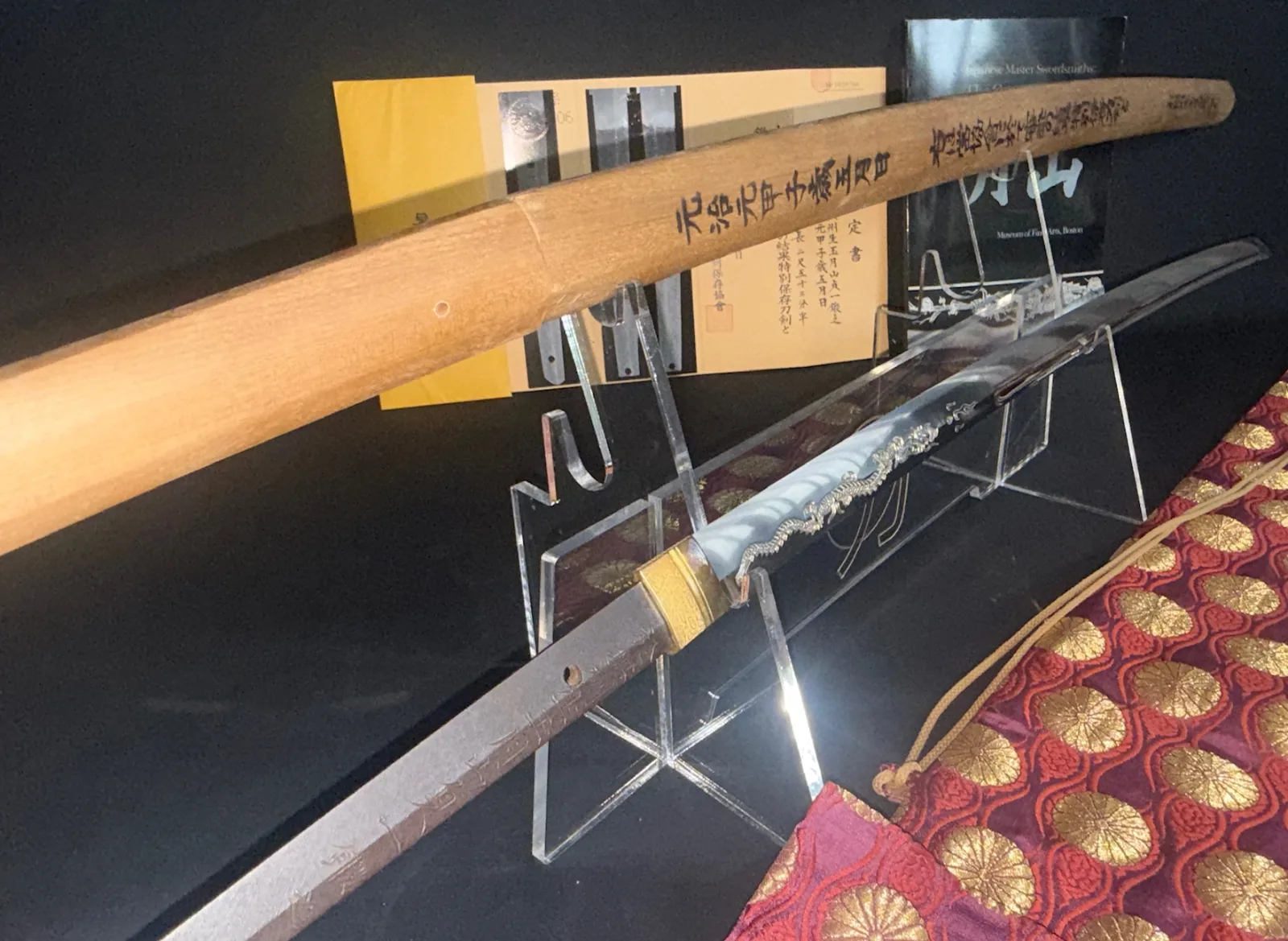
Japanese Masterpice Katana by Gassan Sadakazu NBTHK Tokubetsu Hozon Documented in Shin Shintō Taikan
1864

Izumi no Kami Fujiwara Kaneshige Katana Double NBTHK Tokubetsu Hozon
17th-Century Edo
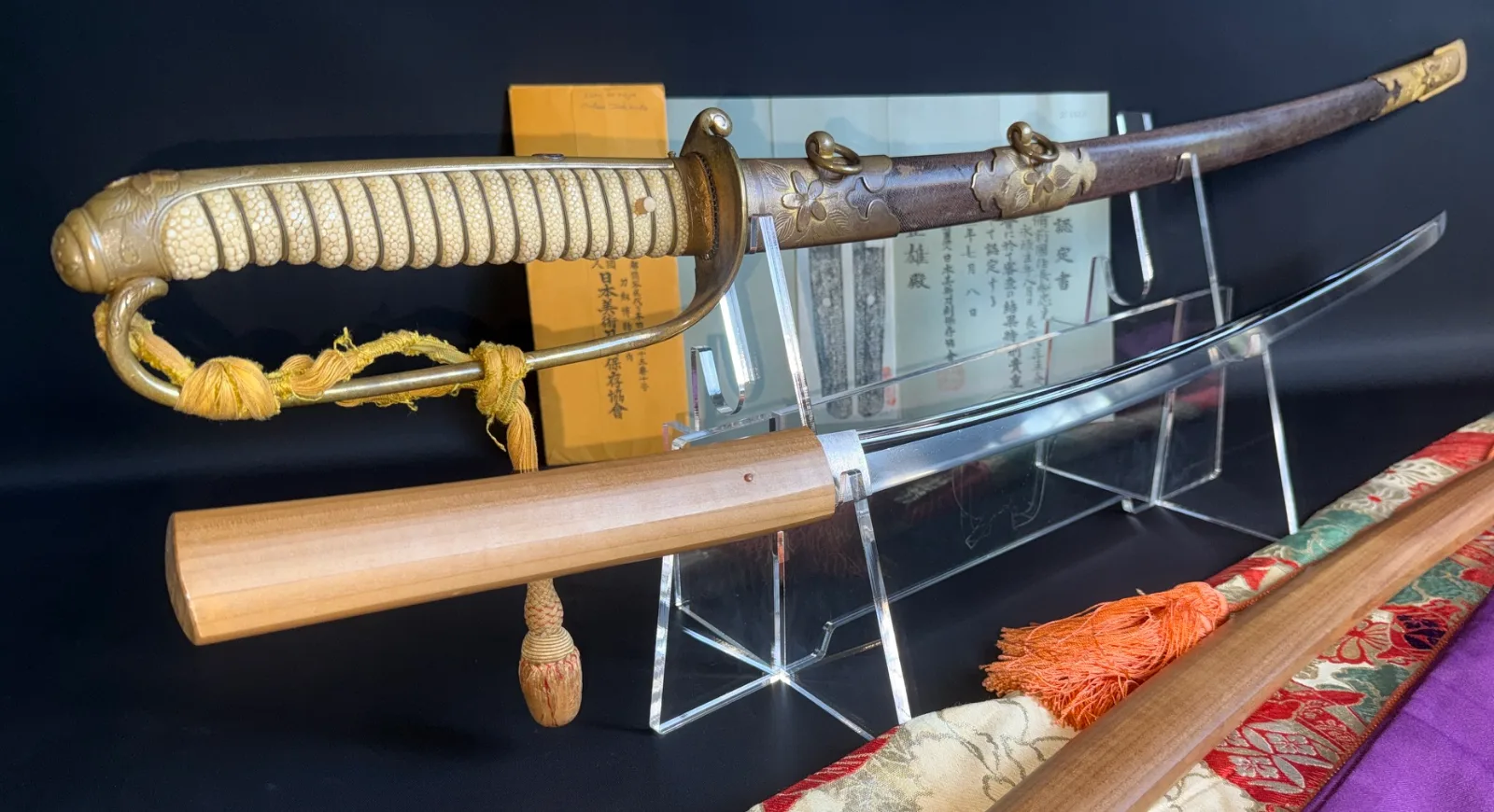
A 1562 Sengoku-period Bizen katana preserved as a Naruse family heirloom and later mounted for service in the Imperial Japanese Navy.
1562