
Edo Period Menuki Collection Nine Complete Pairs Shakudō, Shibuichi & Brass Original Kiri Box
Edo
Nine Pairs. One Collection. Centuries of Samurai Art.
Payment
Edo Period Collection of Nine Pairs of Menuki in Original Kiri Box
This exceptional collection of nine pairs of Edo period Menuki represents the refined artistry and symbolism that define the finest Japanese sword fittings. Carefully preserved in an elegant traditional Kiri wood storage box, this rare ensemble offers a fascinating insight into the decorative arts of the Japanese samurai.
Menuki are among the most personal and expressive elements of a Japanese sword mounting. Positioned beneath the silk wrapping of the Tsuka, they not only enhanced the grip of the sword but also reflected the taste, status, beliefs, and aspirations of its owner. During the Edo period, master metalworkers transformed these small fittings into miniature works of art, combining precious alloys with remarkable engraving techniques and exceptional attention to detail.
The nine pairs in this collection are unsigned, or Mumei, a characteristic frequently encountered in high quality Edo period fittings created by skilled craftsmen working for local workshops or distinguished schools. Each pair displays its own unique subject, executed in finely worked Shakudō, Shibuichi, or brass, enriched with delicate gold highlights that bring every composition to life.
The collection includes a beautifully engraved horse symbolizing strength, loyalty, and endurance, a bamboo design accompanied by a Kanji character representing resilience and wisdom, and a figure studying a book, expressing scholarship and the pursuit of knowledge. Another pair depicts ears of millet together with Japanese quail, a traditional symbol of prosperity, abundance, and harmony with nature.
Further highlights include a lively composition of mantises and a grasshopper, celebrating vigilance and agility, while two separate pairs portray the powerful Shishi, the mythical lion guardian revered throughout Japan as a protector against evil and a symbol of courage and authority.
An elegant depiction of an oxcart beside a straw rice bag evokes wealth, agricultural prosperity, and the importance of rice within Japanese society. Completing the collection is a refined Shibuichi pair illustrating Fukurokuju, one of the Seven Lucky Gods associated with longevity, wisdom, and happiness, accompanied by a figure holding a book, reinforcing the timeless connection between learning and virtue.
Each pair demonstrates the remarkable technical ability of Edo period craftsmen, whose mastery of carving, inlay, and alloy work transformed functional sword fittings into sophisticated expressions of Japanese art and culture. Together, these Menuki form a coherent and highly collectible ensemble that appeals equally to collectors of Nihontō, Japanese metalwork, and Asian decorative arts.
The collection is preserved in its traditional Kiri wood presentation box, measuring 13.2 cm in height, 28 cm in width, and 11.3 cm in depth. The Paulownia wood provides excellent protection against humidity and environmental changes while enhancing the historical authenticity and presentation of the set.
Rarely does such a complete Edo period Menuki collection remain together in its original storage box. It represents an outstanding opportunity to acquire a beautifully preserved group of authentic Japanese sword fittings that embodies centuries of craftsmanship, symbolism, and samurai tradition.
- Certification
- Rare Complete Set Edo Period
- Period
- Edo
Related Pieces
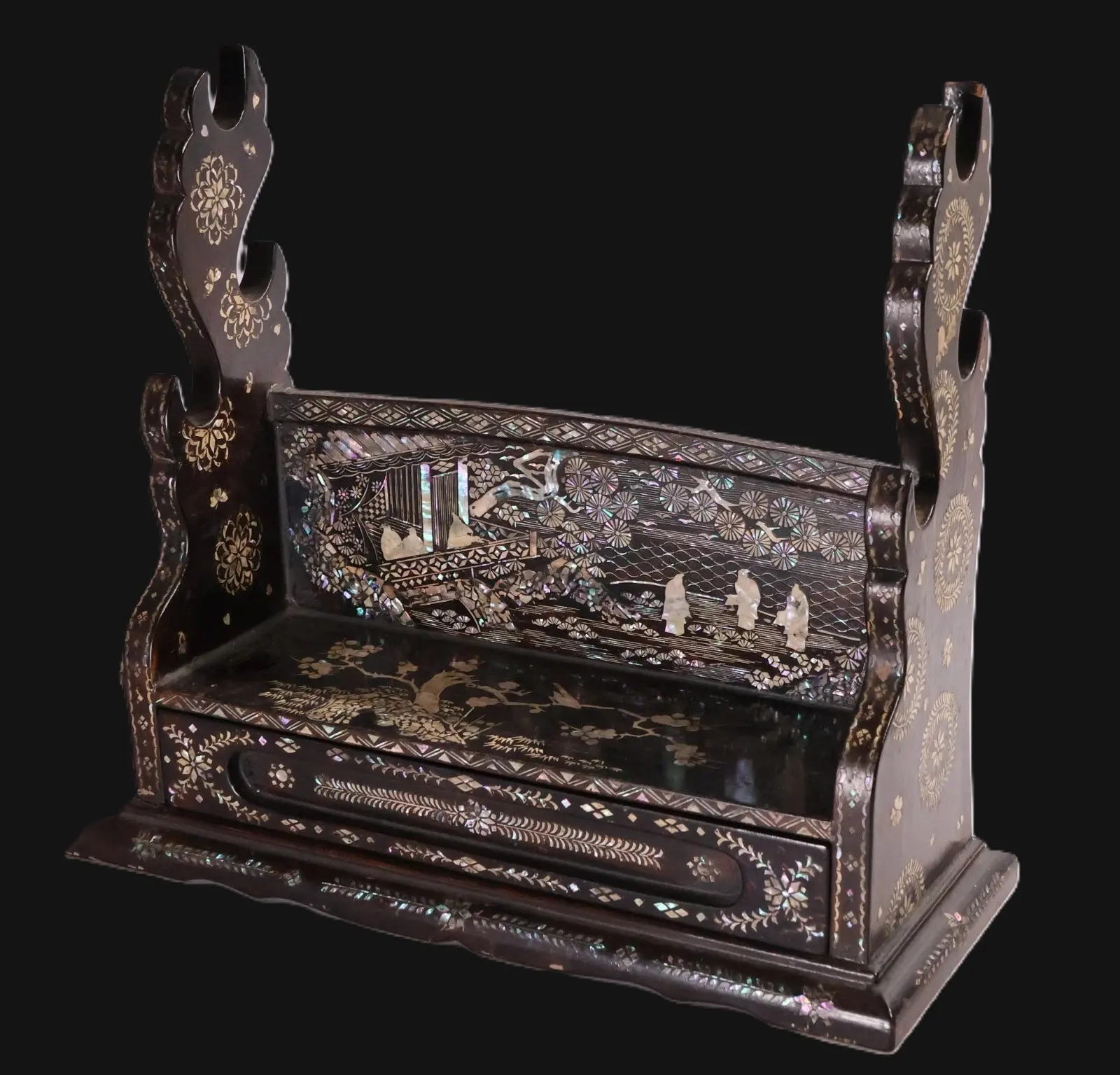
A real pice of Art Antique Japanese Silver Kake Three Sword Katana Kake with Drawer Meiji Period
1868–1912
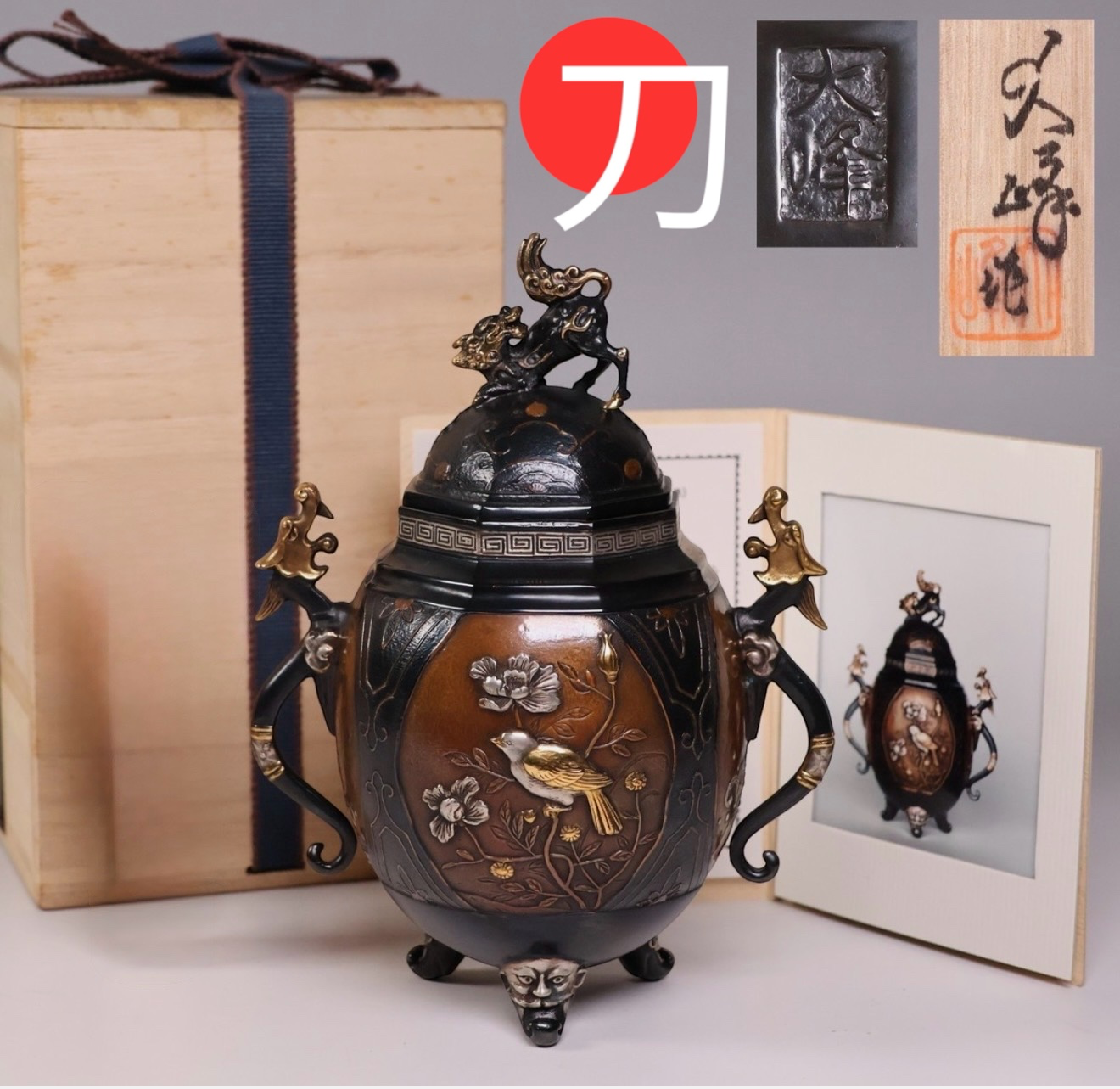
A masterfully cast Takaoka bronze koro where the auspicious Kirin, dragons and shimmering precious-metal inlay unite in a powerful expression of Japanese craftsmanship.
Shōwa Period
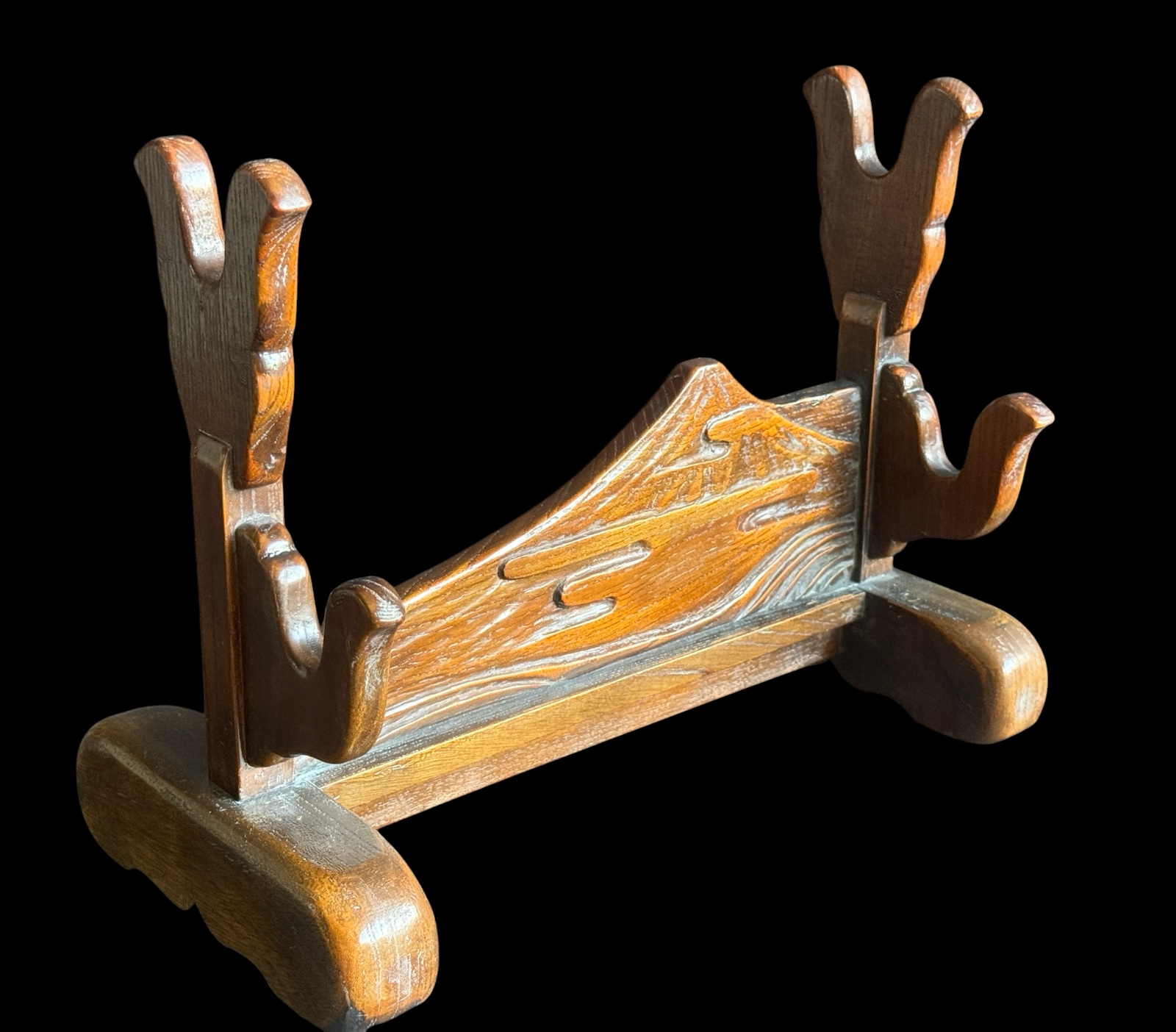
Handcrafted Japanese Double Sword Stand Unkai Fuji Style
End Edo period