
Antique Japanese Samurai Inrō Wajima nuri Maki-e Lacquer Edo Period c.1840
1840
"Museum-Grade Wajima Lacquer • Crafted for the Samurai Elite."
Payment
Antique Japanese Inrō
Wajima-nuri Lacquerware Late Edo Period Circa 1840
This exceptional Japanese inrō, crafted during the late Edo period around 1840, represents the refined elegance and technical mastery for which traditional Wajima-nuri lacquerware has been admired for centuries. Produced in the renowned lacquer workshops of Wajima on the Noto Peninsula, these masterpieces required months and often years of painstaking craftsmanship, combining durable construction with extraordinary artistic refinement.
The inrō features a beautifully executed nashiji ground, created by sprinkling fine gold flakes into successive layers of transparent lacquer, producing a warm, shimmering surface reminiscent of the skin of a ripe pear. Delicate maki-e decoration, applied with gold powder suspended in lacquer, demonstrates the remarkable skill of Edo-period lacquer artists. Every layer reflects the meticulous handwork that made Wajima one of Japan's most prestigious lacquer-producing regions.
Measuring approximately 10 cm high and 7 cm wide, this elegant inrō is both a functional object and a work of art. Traditionally, Japanese garments such as the kimono had no pockets. Men therefore suspended an inrō from the obi (sash) using a silk cord secured by a netsuke, while the compartments safely stored medicines, personal seals, herbal remedies, or other valuable small items.
During the peaceful Edo period (1603–1868), the inrō evolved far beyond its practical purpose. It became an important symbol of refinement, taste, and social status. Samurai, wealthy merchants, scholars, and officials commissioned increasingly sophisticated examples, transforming the inrō into one of the highest expressions of Japanese decorative art. The finest pieces were produced by celebrated lacquer masters whose work rivalled paintings and sculpture in artistic achievement.
The word inrō (印籠) literally means "seal basket", reflecting one of its historical uses for carrying personal seals. However, its function expanded considerably over time, making it an indispensable accessory in everyday life while simultaneously becoming a highly prized collector's object.
Today, authentic Edo-period Wajima inrō are increasingly scarce. Their historical significance, exceptional craftsmanship, and remarkable state of preservation make them highly desirable among collectors of Japanese art, lacquerware, netsuke, and samurai culture.
This beautiful example embodies the timeless harmony between functionality and artistic perfection that defines the finest achievements of traditional Japanese craftsmanship. More than 180 years after its creation, it remains a remarkable survivor from Japan's golden age of lacquer art—an object that continues to captivate with its elegance, history, and enduring beauty.
- Certification
- Inro
- Period
- 1840
Related Pieces
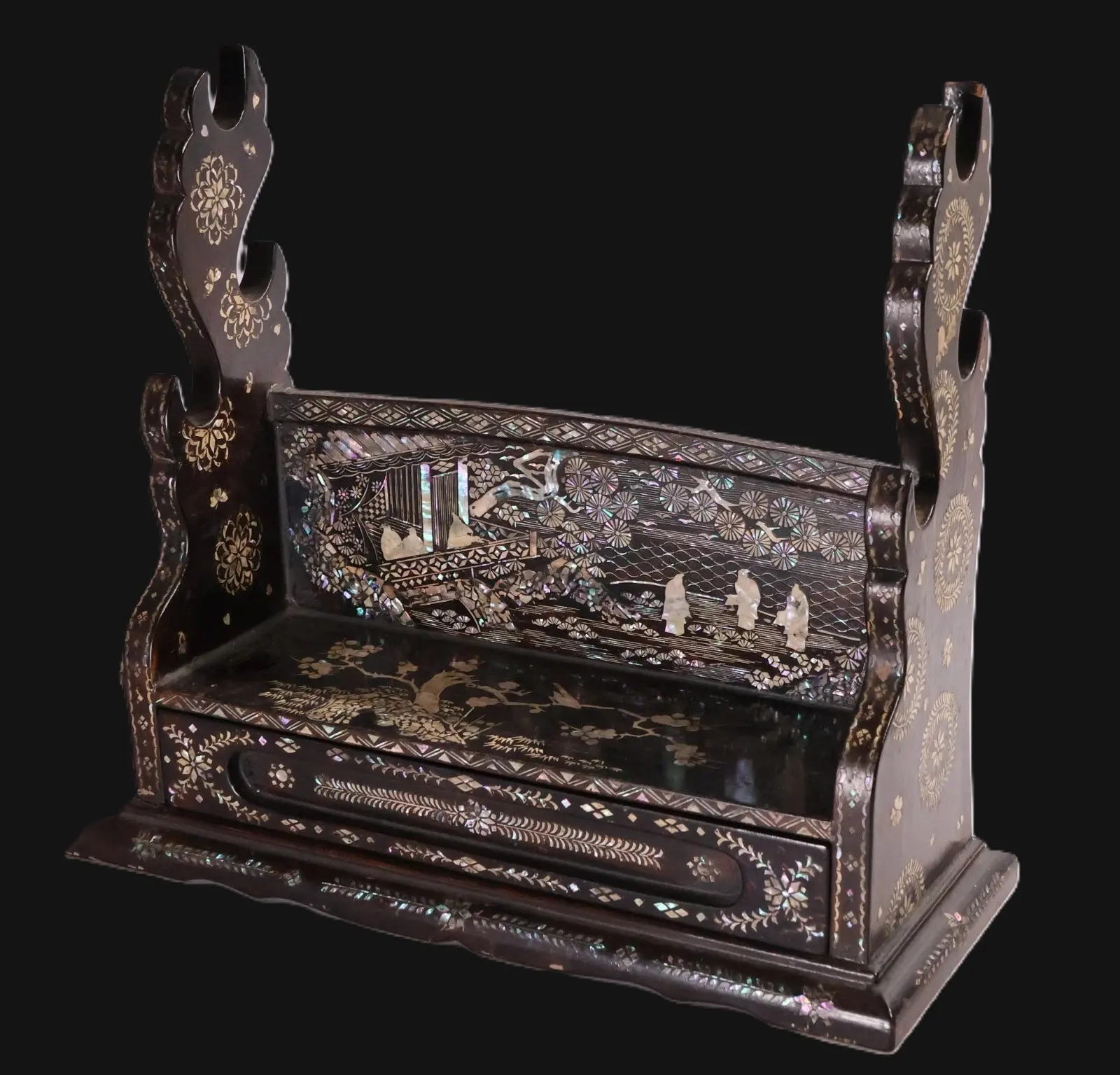
A real pice of Art Antique Japanese Silver Kake Three Sword Katana Kake with Drawer Meiji Period
1868–1912
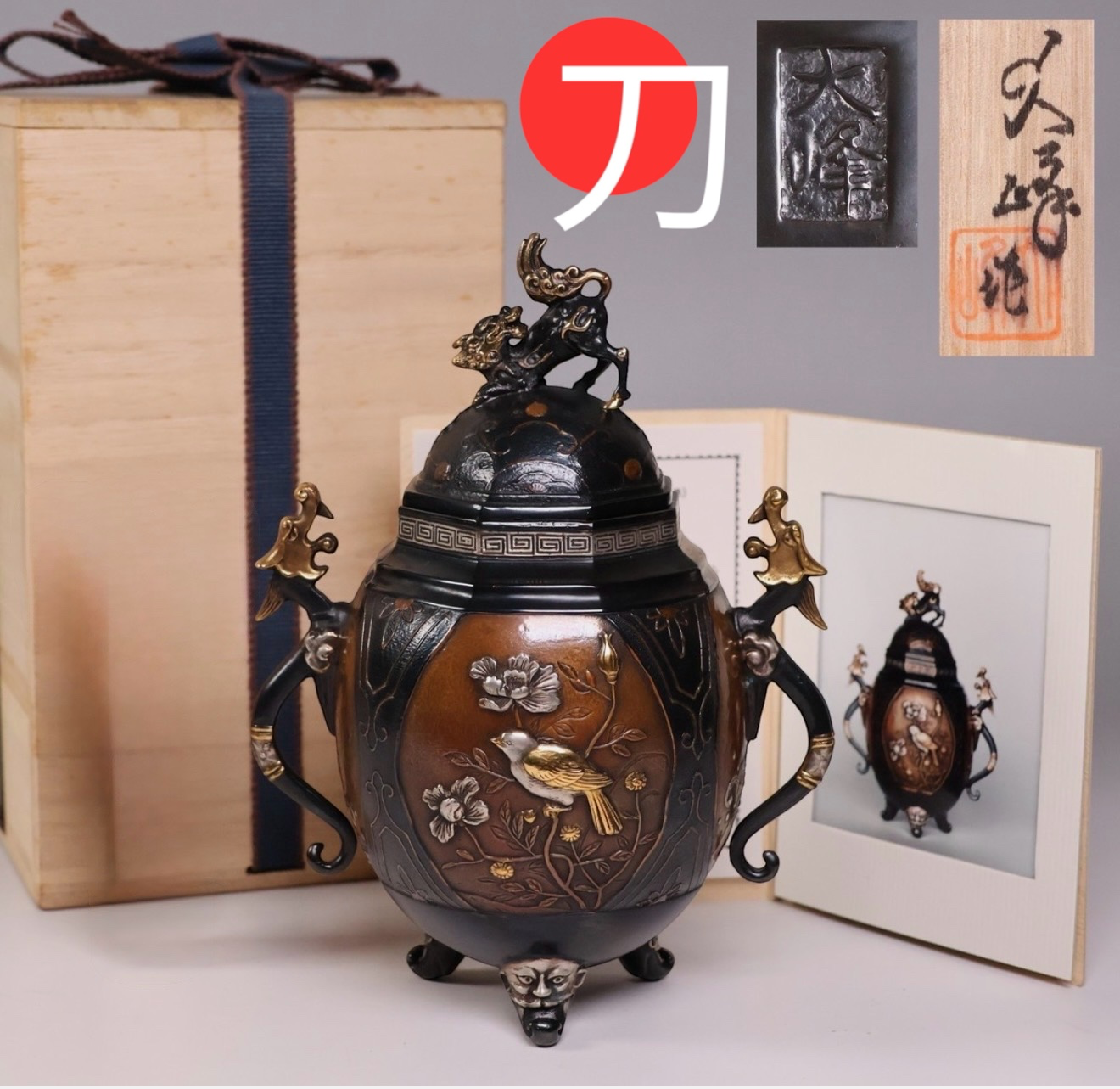
A masterfully cast Takaoka bronze koro where the auspicious Kirin, dragons and shimmering precious-metal inlay unite in a powerful expression of Japanese craftsmanship.
Shōwa Period
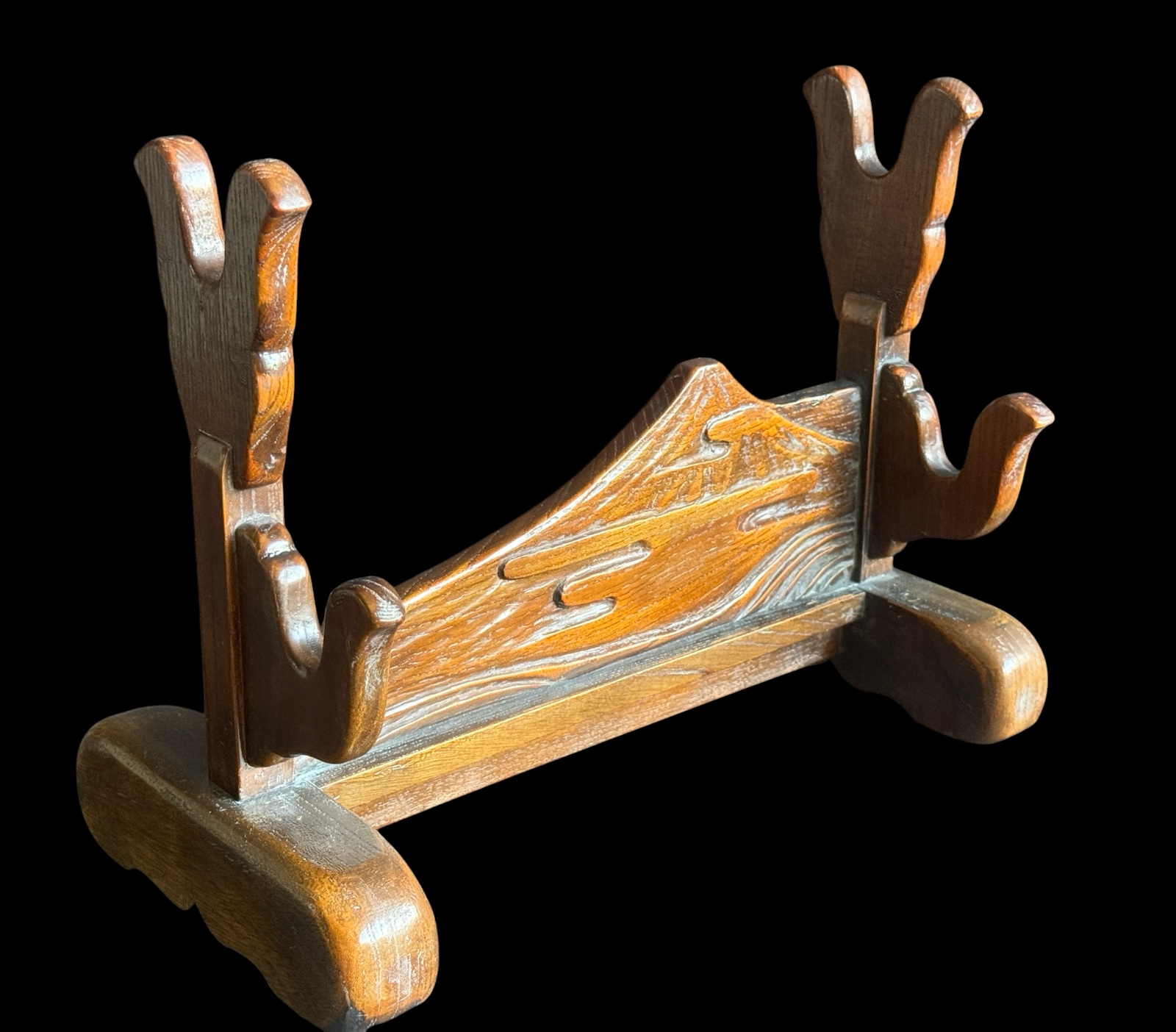
Handcrafted Japanese Double Sword Stand Unkai Fuji Style
End Edo period