
Taikei Naotane’s Final Masterpice Known Daishō NBTHK Tokubetsu Hozon , NBTHK Hozon Koshirae 1853
Edo 1853
Two Blades. One Master. One Final Legacy Naotane
Payment
Taikei Naotane’s Final Known Daishō
Forged in 1853 at the Master’s Stated Age of Seventy-Six
This exceptional daishō represents one of the most complete and historically significant surviving works of Taikei Naotane, one of the greatest Japanese swordsmiths of the Shinshintō period.
The katana and wakizashi were both forged in the second month of Kaei 6, corresponding to 1853. Both tangs bear Naotane’s name and the remarkable age inscription:
七十六翁 – Shichijūroku-ō
“Old man of seventy-six years”
Created during the final phase of his career, the pair is believed to represent Naotane’s final known complete daishō the last presently documented matching katana and wakizashi forged by the master as a deliberate pair.
The swords were examined together by the Nihon Bijutsu Tōken Hozon Kyōkai NBTHK and recorded on a single prestigious Tokubetsu Hozon certificate under the classification Daishō 大小. The ensemble is completed by a matching black-lacquered daishō koshirae, separately certified NBTHK Hozon Tōsōgu.
Taikei Naotane One of the Edo Sansaku
Naotane was born in Dewa Province in 1778. As a young man, he travelled to Edo and became a direct student of Suishinshi Masahide, the founder of the Shinshintō revival.
Masahide encouraged swordsmiths to return to the strength and artistic quality associated with the great swords of the Kamakura and Nanbokuchō periods. Naotane became one of his most accomplished students and achieved particular fame for his mastery of Bizen-den and Sōshū-den.
Together with Minamoto Kiyomaro and Hosokawa Masayoshi, Naotane is traditionally counted among the Edo Sansaku 江戸三作, the Three Great Swordsmiths associated with the height of late Edo-period swordmaking.
His finest blades are admired for their powerful construction, refined jigane and highly active hamon. This daishō demonstrates the graceful character of Bizen-den, displaying a fine ko-itame hada and lively gunome-chōji hamon.
A True Daishō
Many surviving daishō were assembled later from unrelated swords. This set belongs to a fundamentally different category.
Both blades were made by Naotane during the same month and year. Both carry the age inscription Shichijūroku-ō, while the wakizashi also bears the master’s personal kaō. Most importantly, the NBTHK examined and certified them together as one daishō.
Katana
Signature:
荘司美濃介直胤作
七十六翁
嘉永六年二月日
Translation:
Made by Shōji Mino no Suke Naotane
Old man of seventy-six years
A day in the second month of Kaei 6
* Nagasa: 68.7 cm
* Sori: 2.18 cm
Wakizashi
Signature:
美濃介直胤(花押)
七十六翁
嘉永六年二月吉日
Translation:
Mino no Suke Naotane, with personal kaō
Old man of seventy-six years
An auspicious day in the second month of Kaei 6
* Nagasa: 40.1 cm
* Sori: 1.05 cm
The inscriptions confirm that both blades were completed in the second month of 1853. The katana is dated “a day,” while the wakizashi records “an auspicious day” in that same month.
Joint NBTHK Tokubetsu Hozon Certification
The katana and wakizashi appear together on NBTHK certificate number 148466, issued on 13 June 2003.
The certificate identifies the submitted object as Daishō 大小 and confirms both blades as Tokubetsu Hozon Tōken, meaning “Japanese swords especially worthy of preservation.”
This joint certification is highly important. It officially preserves the relationship between the two blades and distinguishes them from a later assembled pair.
Both swords also retain consecutively numbered Japanese registration documents issued in Chiba Prefecture on 18 August 1963. Although these registrations are legal documents rather than authentication papers, the consecutive numbers prove that the katana and wakizashi were already preserved together forty years before receiving Tokubetsu Hozon certification.
NBTHK Hozon Daishō Koshirae
The swords are accompanied by matching mountings described as:
黒蝋色刻鞘大小拵
Kuro-rōiro kizami-zaya daishō koshirae
This translates as a daishō koshirae with carved or ribbed scabbards finished in polished black rōiro lacquer.
The koshirae received separate NBTHK Hozon Tōsōgu certification, number 4023421, on 2 July 2024.
Its principal decorative theme is the bat. The matching fuchi-kashira and menuki incorporate bats, while the wakizashi menuki combine bats with the moon. In East Asian symbolism, bats represent happiness, good fortune, longevity and protection.
The mountings also feature plain matching tsuba, black jabara-ito wrapping and kozuka decorated with an auspicious insect motif. The kozuka bear the name Yoshioka Inaba no Suke.
The black lacquer, restrained metalwork and celestial imagery create an elegant and dignified presentation worthy of Naotane’s blades.
A Final Daishō Legacy
Naotane continued forging individual swords after 1853 and remained active until shortly before his death in 1857. This pair should therefore not be called his final sword.
Its distinction is more precise: based on current documentation, it is believed to be Naotane’s final known complete daishō.
Forged during the closing years of his life and bearing his stated age on both tangs, the set has the character of a master’s late statement. It was also created in 1853, the year Commodore Perry arrived in Japan and the traditional Tokugawa world began its final transformation.
This extraordinary ensemble unites two matching blades by a great master, joint Tokubetsu Hozon certification, consecutive registrations and a separately certified daishō koshirae.
It is more than a pair of Japanese swords. It is the preserved legacy of an elderly master and a tangible survivor from the final age of the samurai.
Two blades. One master. One final daishō legacy.
- Certification
- NBTHK Tokubetsu Hozon
- Period
- Edo 1853
Related Pieces
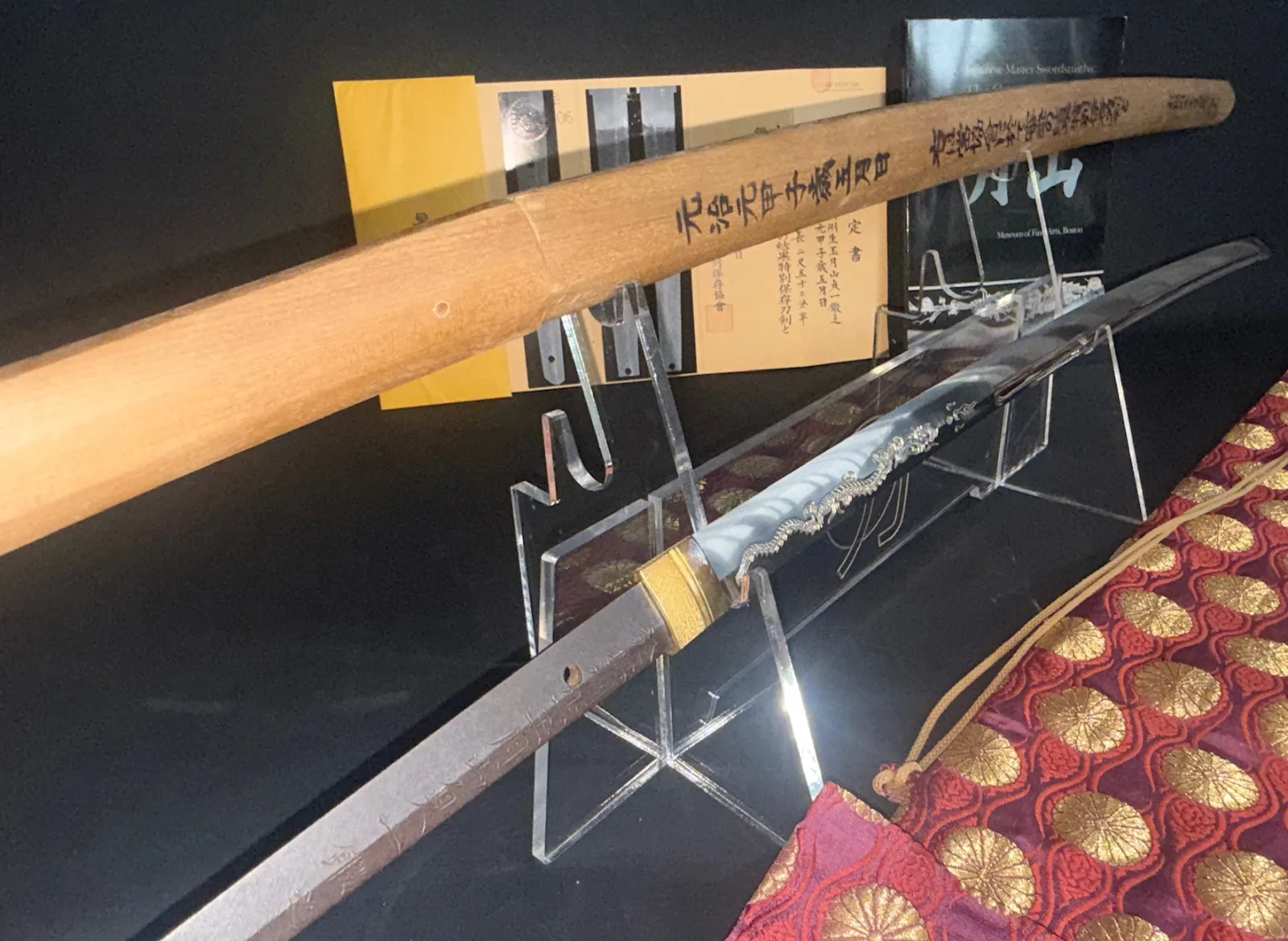
Japanese Masterpice Katana by Gassan Sadakazu NBTHK Tokubetsu Hozon Documented in Shin Shintō Taikan
1864
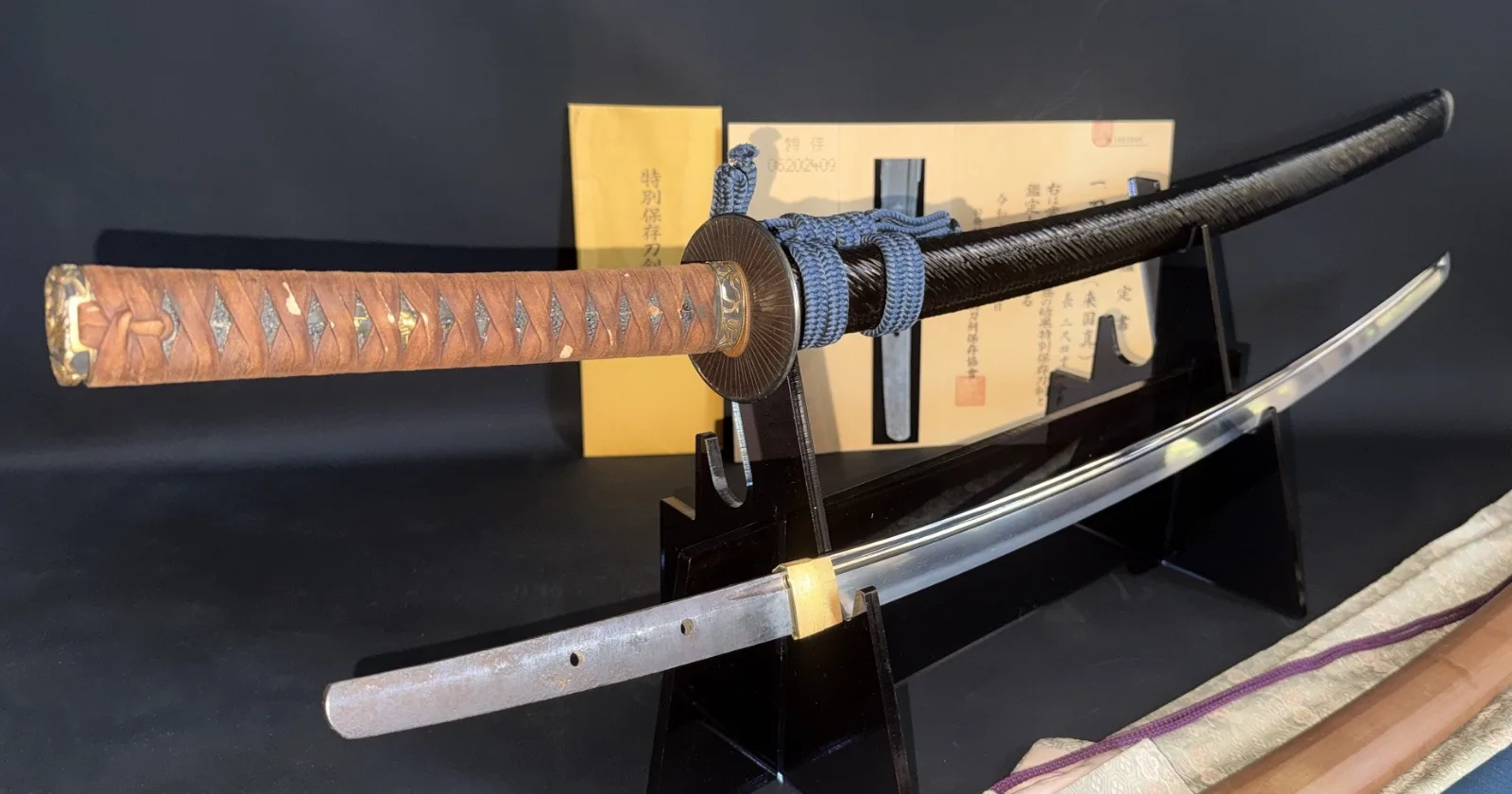
Kamakura Katana Rai Kunizane Tokubetsu Hozon
1290 – 1325
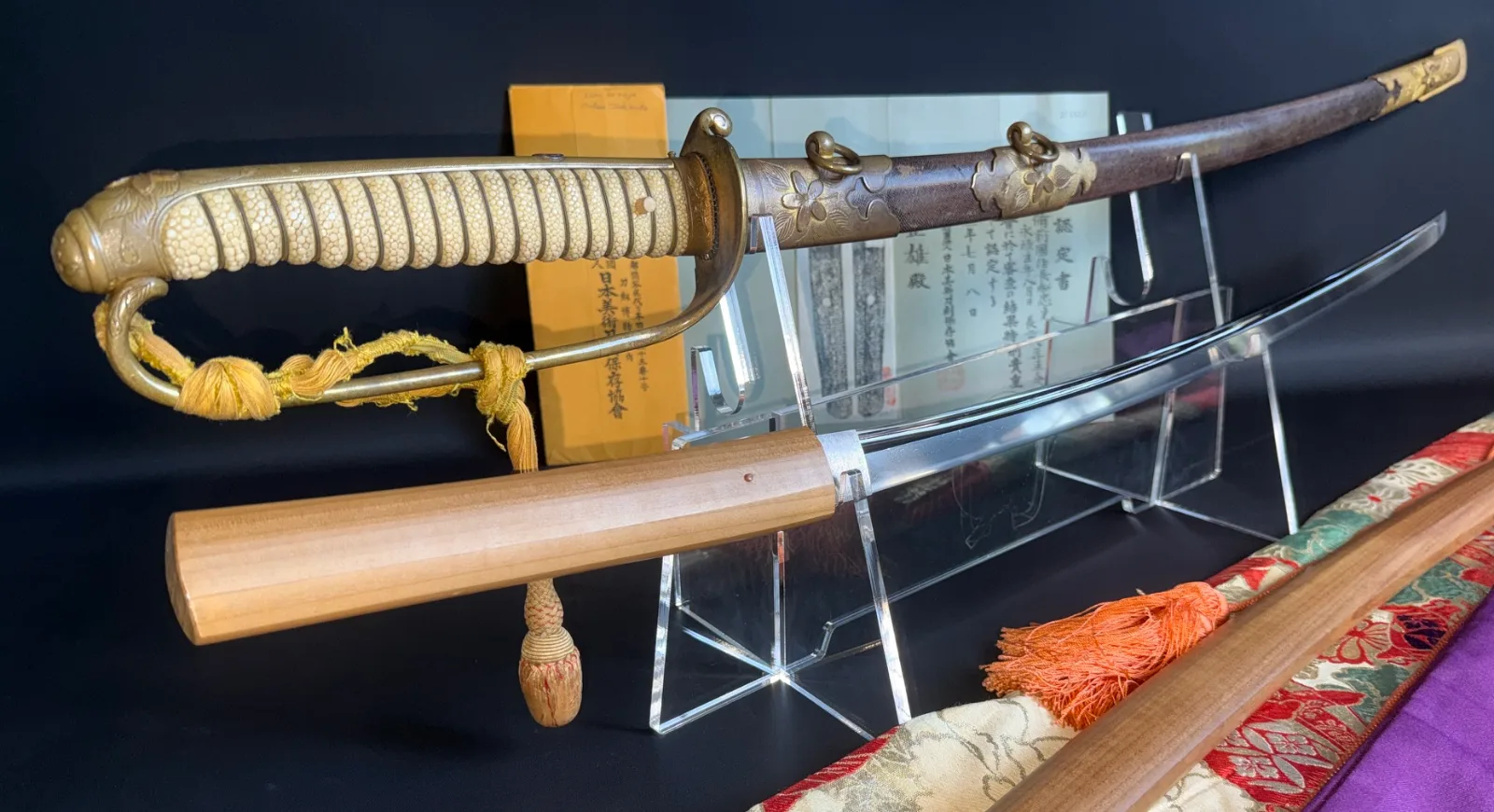
A 1562 Sengoku-period Bizen katana preserved as a Naruse family heirloom and later mounted for service in the Imperial Japanese Navy.
1562