Japanese Tanto made by Kawachi no Kami Hironobu Tantō NBTHK Tokubetsu Hozon with Imperial Kikumon 1661
1661
Imperial Elegance. Museum-Grade Quality An Exceptional Tantō of Imperial Distinction.
Payment
Kawachi no Kami Hironobu Tantō
A Rare Tokubetsu Hozon Masterpiece with Imperial Chrysanthemum Crest, Bonji Horimono and Historic Tokubetsu Kichō Provenance
Kyodai Originals Museum Collection
Among Japanese swords, there are blades that are beautiful, blades that are historically significant, and blades that are exceptionally rare. Every so often, however, a sword emerges that combines all of these qualities into a single masterpiece. This remarkable Tokubetsu Hozon tantō by Kawachi no Kami Hironobu belongs firmly within that exclusive category.
Forged during the Kanbun era (circa 1661–1673) in Yamashiro Province (present-day Kyoto), this tantō represents the refined elegance of early Edo-period swordsmithing. Measuring 25.4 cm, the blade displays the graceful proportions that made Kanbun-period tantō highly desirable among high-ranking samurai. Unlike many fighting blades of earlier centuries, this tantō was created as both a practical weapon and an object of refined artistic taste.
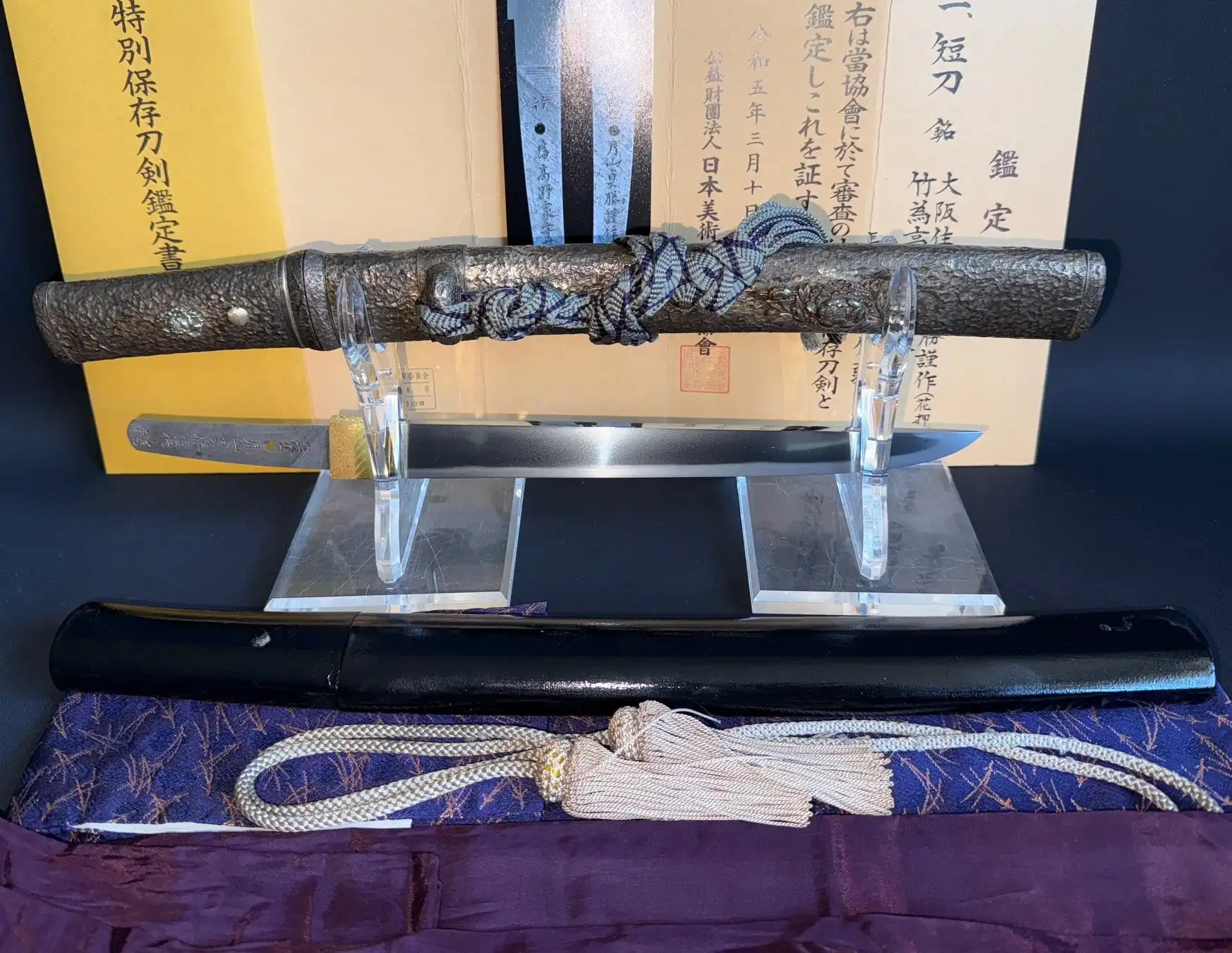
What immediately distinguishes this blade from virtually every other Hironobu tantō is its extraordinary combination of historical features. The tang bears the prestigious signature "Kikumon Kawachi no Kami Hironobu", accompanied by an exquisitely carved Imperial Chrysanthemum Crest (Kikumon), one of the most recognizable symbols of Imperial Japan. The reverse side carries a finely executed Bonji (Sanskrit seed character) together with the rare inscription:
"Ichiko Hachirōemon kore o tsukuru"
"Made by Ichiko Hachirōemon."
Such additional inscriptions are rarely encountered and provide an intriguing historical dimension that greatly enhances the individuality of the sword.
Kawachi no Kami Hironobu
The Hironobu lineage was one of the respected swordsmith families working in Kyoto during the early Edo period. Beginning in the Kan'ei era (1624), the school continued through several generations before disappearing in the early eighteenth century.
This tantō is attributed to the third generation Kawachi no Kami Hironobu, whose work is particularly admired for its elegant sugata, precise forging and refined workmanship. His blades demonstrate the sophisticated taste that characterized Kyoto craftsmanship during a period when swordmaking shifted from constant warfare toward artistic perfection.
The title "Kawachi no Kami" was an honorary court appointment bestowed upon accomplished swordsmiths and reflects the high regard in which Hironobu was held during his lifetime.
An Imperial Presence
Perhaps the most striking feature of this tantō is the beautifully engraved Imperial Chrysanthemum Crest (Kikumon).
The sixteen-petal chrysanthemum has served for centuries as the symbol of the Japanese Imperial House. Only a relatively small number of swordsmiths were permitted to incorporate this emblem into their work, making such blades especially desirable among collectors today.
The chrysanthemum engraving is executed with remarkable precision and immediately elevates the artistic significance of the blade.
Opposite the chrysanthemum appears a carefully carved Bonji, a sacred Sanskrit character introduced into Japan through Esoteric Buddhism. Bonji inscriptions were believed to invoke divine protection and spiritual strength, adding a profound religious dimension to the sword.
The harmonious combination of Imperial symbolism and Buddhist iconography is rarely encountered and reflects the spiritual and cultural sophistication of Edo-period Japan.
A Blade Certified Across Three Generations of NBTHK Scholarship
One of the most extraordinary aspects of this tantō is its exceptional certification history.
Unlike most Japanese swords, which possess only one certificate, this example has successfully passed NBTHK examination under three different historical certification systems spanning sixty years.
1966
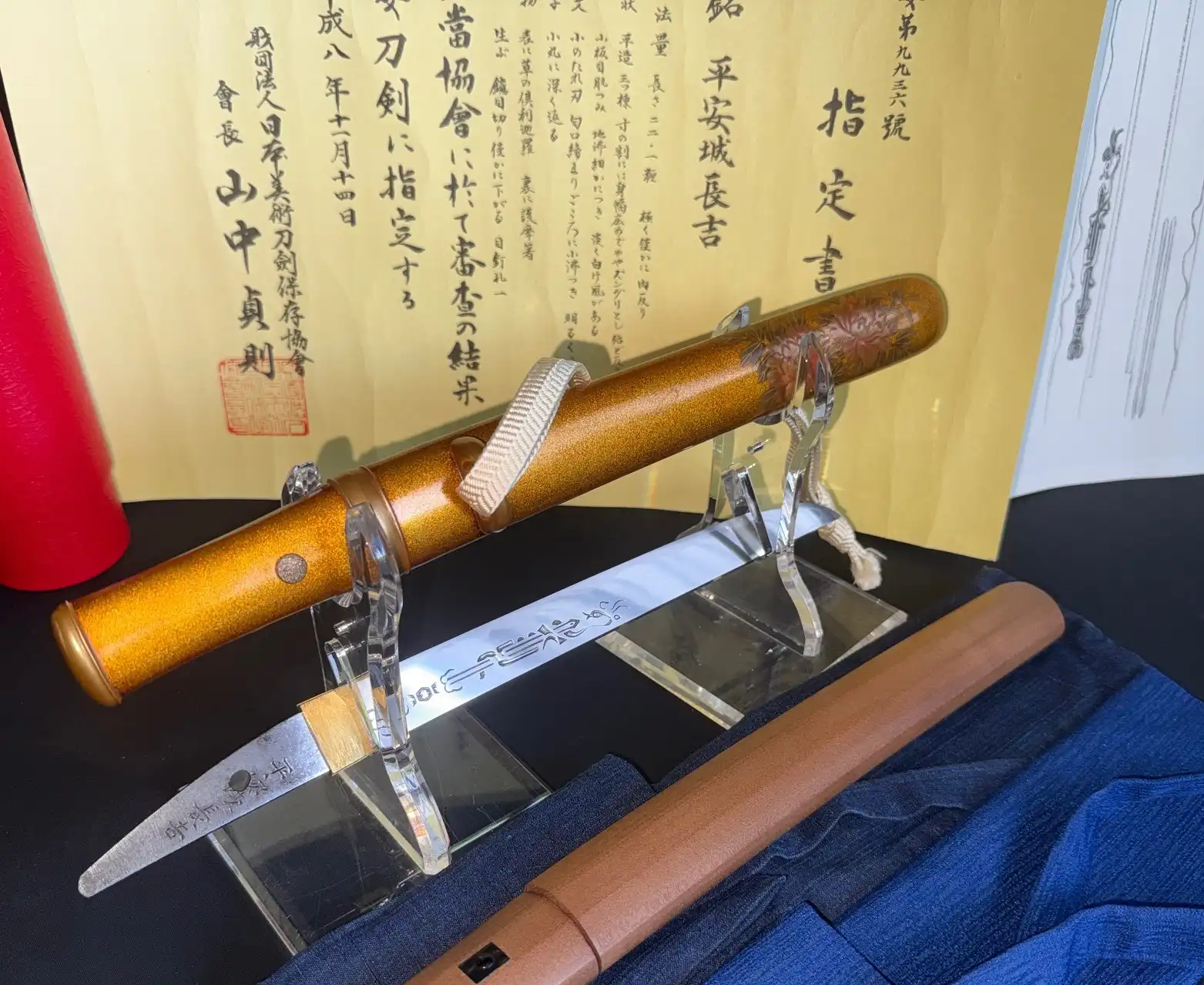
The magnificent Aogai Mijinnuri Koshirae was awarded NBTHK Tokubetsu Kichō Kodōgu, recognizing the mounting itself as an object of exceptional artistic importance.
1970
The blade received NBTHK Tokubetsu Kichō Tōken, the highest level of certification available under the original NBTHK system.
2026
After modern re-examination, the blade was promoted to NBTHK Tokubetsu Hozon Tōken, confirming that it fully satisfies today's far more rigorous standards for preservation and artistic quality.
This uninterrupted chain of recognition is exceptionally uncommon and demonstrates that the sword has remained highly regarded by successive generations of Japan's foremost sword scholars.
A Magnificent Aogai Mijinnuri Koshirae
Accompanying the blade is an exceptional Aogai Mijinnuri Saya Koshirae, itself officially certified by the NBTHK.
The lacquered scabbard is decorated with finely scattered fragments of shimmering mother-of-pearl, creating a subtle yet luxurious surface that changes beautifully under different lighting conditions.
The matching fittings complement the refined elegance of the blade and together form a complete Edo-period work of art rather than merely a functional weapon.
The fact that the mounting possesses its own independent NBTHK certification significantly enhances both its rarity and collectability.
An Investment in Japanese History
Finding a Tokubetsu Hozon tantō by Kawachi no Kami Hironobu is already uncommon.
Finding one with:
an engraved Imperial Chrysanthemum Crest,
a Bonji Sanskrit inscription,
the rare Ichiko Hachirōemon inscription,
an independently certified Tokubetsu Kichō koshirae,
historic Tokubetsu Kichō papers,
modern Tokubetsu Hozon certification,
and complete documented provenance spanning more than half a century,
is exceptionally rare.
Few privately available tantō combine such historical importance, artistic quality and documented authenticity.
For the discerning collector, this is not merely a Japanese dagger—it is a complete historical ensemble representing the finest traditions of Edo-period craftsmanship and over sixty years of recognition by Japan's leading sword authority.
Specifications
Smith: Kawachi no Kami Hironobu (3rd Generation)
Period: Early Edo Period, Kanbun Era (circa 1661–1673)
Province: Yamashiro (Kyoto)
Type: Tantō
Nagasa: 25.4 cm
Sori: 0.4 cm
Motohaba: 2.45 cm
Kasane: 5.1 mm
Mekugi-ana: 1
Signature: Kikumon Kawachi no Kami Hironobu
Additional Inscription: "Made by Ichiko Hachirōemon"
Horimono: Bonji (Sanskrit Seed Character) & Imperial Chrysanthemum Crest (Kikumon)
Certifications
NBTHK Tokubetsu Hozon Tōken (2026)
NBTHK Tokubetsu Kichō Tōken (1970)
NBTHK Tokubetsu Kichō Kodōgu (1966) – Aogai Mijinnuri Koshirae
- Certification
- NBTHK Tokubetsu Hozon
- Period
- 1661