
Echizen Kanetane Tantō Keichō Period 1596 / 1615 NBTHK Tokubetsu Hozon
1596 / 1615
Discover a signed 400-year-old Echizen Kanetane tantō, NBTHK Tokubetsu Hozon certified, with black lacquered aikuchi koshirae and shirasaya.
Payment
Echizen Kanetane A Distinguished Keichō Period Tantō
Signed Echizen no Kuni-jū Kanetane (越前国住兼植) | Early Shintō Period, circa 1596–1615 | NBTHK Tokubetsu Hozon Tōken
An exceptional, more than 400-year-old Japanese tantō from the celebrated Echizen-Seki tradition, accompanied by NBTHK Tokubetsu Hozon certification, an elegant black lacquered aikuchi koshirae and a traditional wooden shirasaya.
A Remarkable Japanese Sword from the Beginning of the Edo Period
Kyodai Originals is pleased to present this historically significant Japanese tantō, signed by Echizen Kanetane (兼植), a respected swordsmith associated with the Echizen-Seki school.
Forged around the Keichō period (1596–1615), this blade belongs to one of the most important transitional periods in Japanese swordmaking history. It represents the final years of the great age of samurai warfare and the emergence of the early Shintō tradition under the newly established Tokugawa shogunate.
With a blade length of 29.3 cm, this substantial tantō possesses an elegant yet powerful appearance. Its refined proportions, carefully executed double grooves and preserved signature demonstrate the craftsmanship associated with traditional Japanese swordmaking.
The blade is accompanied by an NBTHK Tokubetsu Hozon Tōken certificate, issued on 25 August 2023, confirming its recognition by Japan's leading sword preservation organisation.
Presented with a black lacquered aikuchi-style koshirae and a separate wooden shirasaya, this tantō offers a particularly attractive combination of historical importance, artistic craftsmanship and collector appeal.
Echizen Kanetane A Swordsmith of the Echizen-Seki Tradition
Echizen Kanetane belonged to the swordmaking tradition that developed in Echizen Province from the celebrated Mino-Seki school.
The Mino tradition was renowned throughout Japan for producing strong, practical and exceptionally effective swords. During the late Muromachi and early Edo periods, swordsmiths associated with this tradition moved to other provinces, bringing their forging techniques and artistic characteristics with them.
Echizen became an important centre of sword production, where the influence of Mino craftsmanship continued to develop into a distinctive regional tradition.
Historical swordsmith references associate Kanetane with Echizen Kanenori, also known as Echizen Kenpō, and place his activity in the Ichijōdani region of Echizen Province.
The historical records concerning the Kanetane lineage are not entirely uniform. Some references identify an earlier Kanetane active during the Tenbun era, while others recognise the Keichō-period Kanetane as the first generation of the Echizen line.
The Keichō-period swordsmith is traditionally recorded as having died in 1637, during the fourteenth year of the Kan'ei era, at approximately 68 years of age.
His surviving works represent an important continuation of the Mino swordmaking heritage during the formative years of the Shintō period.
A Swordsmith Renowned for Cutting Performance
Kanetane's reputation was not based solely on the appearance of his blades.
Traditional Japanese swordsmith references classify him as:
Chūjō-saku (中上作) – A respected ranking identifying a swordsmith whose work was considered above average in quality.
Ryō Wazamono (良業物) A historical sharpness classification associated with swordsmiths whose blades demonstrated very good cutting performance.
The Wazamono classifications developed from historical cutting-test traditions and became an important part of Japanese sword scholarship.
A Ryō Wazamono classification reflects the historical reputation of a swordsmith's work, rather than a cutting test performed on every individual surviving blade.
For collectors, this distinction adds an interesting historical dimension to the Kanetane name.
It connects the artistic qualities of Japanese swordmaking with the practical demands placed upon the weapons of the samurai.
Kanetane and the Samurai Aristocracy
One particularly fascinating account preserved in sword literature concerns the powerful Maeda family of Kaga Province.
According to historical tradition, members of the Maeda household assigned to ceremonial guard duty at the castle gate on New Year's Day were expected to wear a wakizashi made by Kanetane.
Whether this practice was universally observed cannot be established from the surviving account, but the tradition illustrates the esteem in which the Kanetane name was reportedly held.
Another historical association connects a Kanetane sword with Takeda Kanryūsai, a member of the famous Shinsengumi during the final years of the Tokugawa shogunate.
These historical references do not establish a direct provenance for the present tantō. Nevertheless, they offer valuable insight into the reputation of Kanetane swords within Japanese martial culture.
The Blade – A Refined Example of Early Shintō Craftsmanship
The tantō has a nagasa of 29.3 cm (11.54 inches), giving it a substantial presence while retaining the elegant proportions expected of a traditional Japanese short blade.
Its carefully formed sugata reflects the balance between practical construction and aesthetic refinement.
The blade features a distinctive arrangement of narrow parallel grooves, known as futasuji-hi, carved into the surface of the steel.
These grooves introduce an elegant visual rhythm and demonstrate the swordsmith's attention to the overall composition of the blade.
The polished surface reveals a fine steel texture, while the hardened cutting edge provides a contrast between the body of the blade and its tempered edge.
The photographs show a well-defined blade shape and an attractive polished appearance, although the precise characteristics of the jihada and hamon are best appreciated under appropriate lighting and during direct examination.
The kissaki is carefully shaped and complements the powerful yet graceful silhouette.
The nakago preserves the swordsmith's signature and contains two mekugi-ana, reflecting the blade's mounting history.
Original Signature Mei 越前国住兼植 Echizen no Kuni-jū Kanetane
Translation: "Kanetane, resident of Echizen Province."
The signature is recorded on the accompanying NBTHK Tokubetsu Hozon certificate.
This is particularly important for collectors, as the NBTHK's acceptance of the signed blade provides independent support for its attribution.
An Elegant Black Lacquered Aikuchi Koshirae
The tantō is accompanied by an attractive black lacquered aikuchi-style koshirae.
Aikuchi mountings are characterised by the absence of a conventional tsuba, allowing the handle and scabbard to meet in a smooth, uninterrupted transition.
This form of mounting is closely associated with Japanese tantō and reflects the traditional preference for refined proportions and restrained decoration.
The black lacquered saya creates an elegant appearance, complemented by decorative metal fittings and a yellow-gold cord.
The mounting's understated character allows the workmanship of the blade itself to remain the central focus.
Together, the polished steel and dark lacquer create a harmonious presentation suitable for a serious Japanese sword collection.
The precise age of the individual mounting components has not been independently established.
Traditional Wooden Shirasaya
In addition to the decorative koshirae, the tantō is preserved with a separate wooden shirasaya.
Shirasaya are traditionally made to house Japanese sword blades when they are not mounted for display.
Their simple construction provides an appropriate means of storing and protecting a carefully polished blade.
The presence of both shirasaya and koshirae offers the collector the practical advantages of traditional storage together with the visual appeal of a decorative mounting.
NBTHK Tokubetsu Hozon Tōken Certification
The tantō is accompanied by an original NBTHK Tokubetsu Hozon Tōken certificate.
The Nihon Bijutsu Tōken Hozon Kyōkai (NBTHK), or Society for the Preservation of the Japanese Art Sword, is Japan's foremost organisation dedicated to the study, authentication and preservation of traditional Japanese swords.
The Tokubetsu Hozon classification, meaning "Especially Worthy of Preservation", is awarded to swords that satisfy the organisation's requirements for authenticity, quality and preservation.
Certification details:
Classification: NBTHK Tokubetsu Hozon Tōken
Certificate number: 1021214
Date of certification: 25 August 2023
Recorded signature: Echizen no Kuni-jū Kanetane
Recorded blade length: 9 sun 7 bu
The blade also has documented Japanese registration information from Hyōgo Prefecture, dated 15 July 1993, under registration number 107729.
This registration is an administrative record and should not be confused with the NBTHK authentication certificate.
For international collectors, the Tokubetsu Hozon certificate represents an important independent assessment of the blade's historical attribution and preservation status.
Historical Context Japan at the Beginning of a New Era
The Keichō period was a decisive chapter in Japanese history.
During the closing years of the sixteenth century, Japan was emerging from generations of warfare between rival military families.
The death of Toyotomi Hideyoshi in 1598 created a struggle for political supremacy that culminated in the Battle of Sekigahara in 1600.
Tokugawa Ieyasu's victory laid the foundations for the Tokugawa shogunate, formally established in 1603.
The early Edo period introduced a new political and social order, transforming the role of the samurai from warriors engaged in constant military conflict into members of an increasingly structured ruling class.
Swordsmiths working during this transition preserved the technical achievements of the preceding centuries while developing the characteristics of the new Shintō tradition.
Echizen Kanetane belonged to this historically important generation.
His work reflects the continuation of established swordmaking techniques during a period of profound change in Japanese society.
More than four centuries later, this tantō remains a tangible connection to that remarkable era.
Technical Specifications
Description
Details
Sword type
Tantō (短刀)
Swordsmith
Echizen Kanetane (兼植)
Signature
越前国住兼植
Romanisation
Echizen no Kuni-jū Kanetane
Period
Keichō, circa 1596–1615
Swordmaking era
Early Shintō
Province
Echizen
School
Echizen-Seki
Nagasa
29.3 cm (11.54 inches)
Horimono
Futasuji-hi, double grooves
Mekugi-ana
Two
Swordsmith ranking
Chūjō-saku
Sharpness classification
Ryō Wazamono
NBTHK certification
Tokubetsu Hozon Tōken
Certificate number
1021214
Certificate date
25 August 2023
Japanese registration
Hyōgo Prefecture, 15 July 1993
Koshirae
Black lacquered aikuchi-style mounting
Additional housing
Traditional wooden shirasaya
A Distinguished Sword for the Serious Collector
This Echizen Kanetane tantō brings together several qualities highly appreciated by collectors of authentic Japanese swords.
Its Keichō-period attribution places it at the beginning of the early Shintō era, while its signed nakago connects the blade directly with a historically recognised Echizen swordsmith.
The traditional Chūjō-saku and Ryō Wazamono classifications add further interest, reflecting the reputation of Kanetane's craftsmanship and cutting performance.
The elegant futasuji-hi, refined blade proportions, black lacquered aikuchi koshirae and separate shirasaya contribute to the overall appeal of the piece.
Above all, the NBTHK Tokubetsu Hozon Tōken certification provides a respected independent assessment of the sword's authenticity and historical significance.
For the discerning collector, this is an opportunity to acquire a signed Japanese tantō with more than four centuries of history, preserved as both an important cultural object and a remarkable example of traditional Japanese craftsmanship.
A distinguished and historically fascinating Echizen-Seki tantō, combining samurai heritage, traditional swordmaking excellence and NBTHK Tokubetsu Hozon certification.
Free shipping.
Kyodai Originals Authentic Japanese Swords, Samurai Art & Historical Japanese Antiques.
Related Pieces
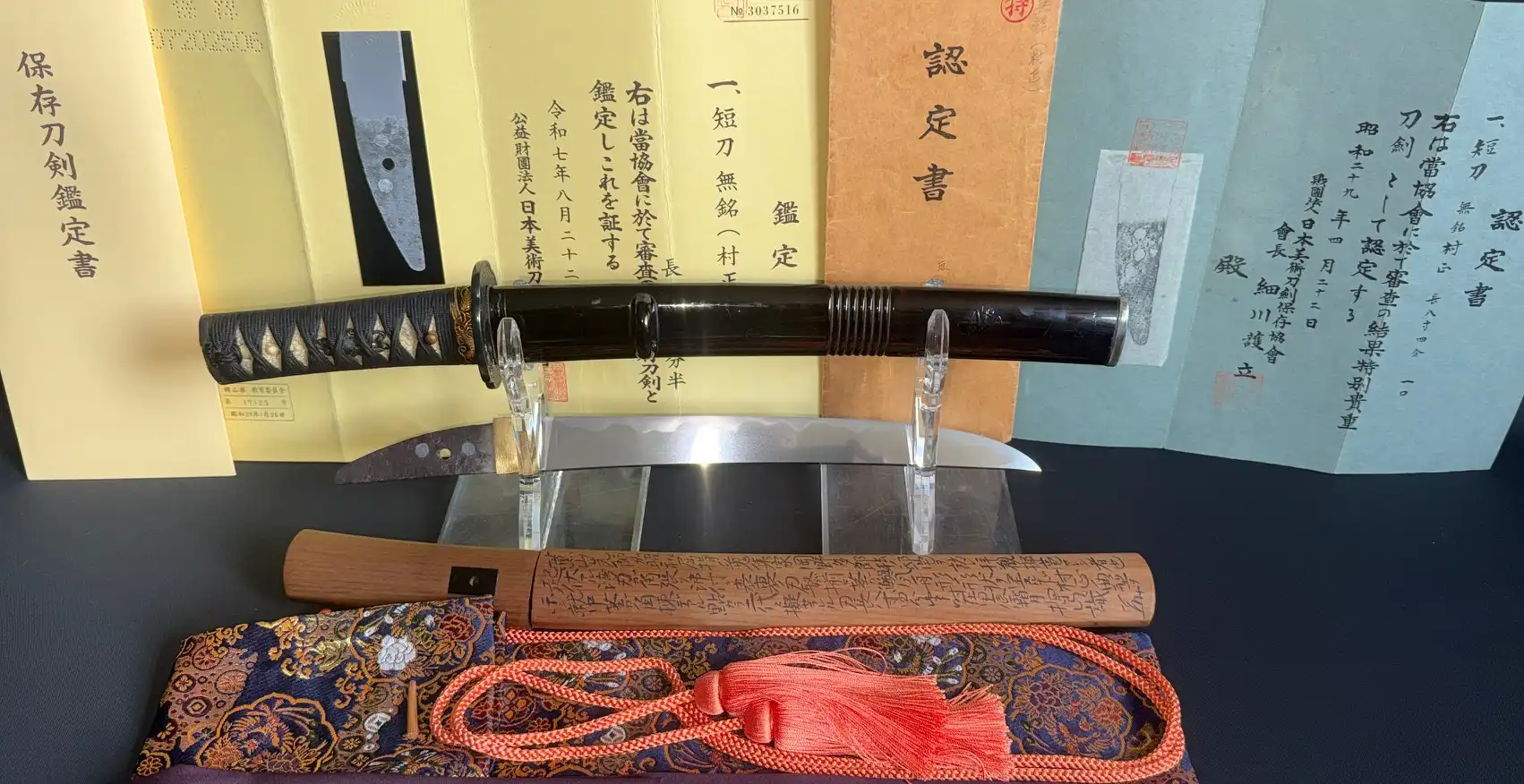
Second generation Muramasa (Nidai Muramasa 1532–1555) Sayagaki written by Tanobe Sensei NBTHK Hozon certification, Tokubetsu Kichō papers
1532–1555
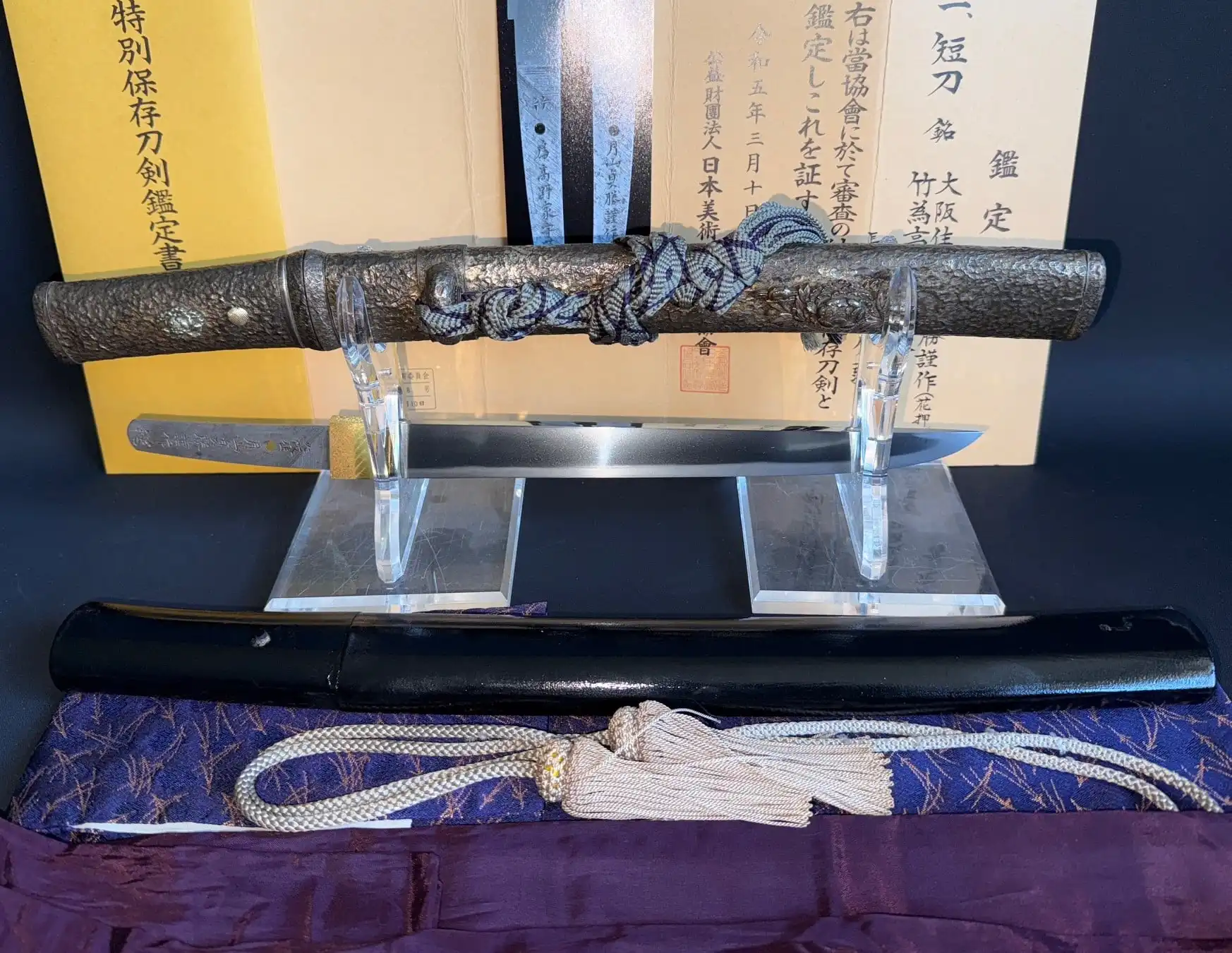
Japanese masterpiece Tanto made by National Treasure Gassan Sadakatsu NBTHK Tokubetsu paper
1941

A Masterpiece Tantō by Muramasa Late Muromachi Period Ise Province NBTHK Tokubetsu Hozon Muramasa Demon Steel The Legend of Muramasa
Muromachi 1501 / 1504