
Kamakura Katana Sword Attributed to Rai Kunizane NBTHK Tokubetsu Hozon
1290 – 1325
Kamakura Katana Sword Attributed to Rai Kunizane NBTHK Tokubetsu Hozon
Payment
Kamakura Katana Rai Kunizane
NBTHK Tokubetsu Hozon Tōken
With Fine Edo Period Koshirae
Among the finest traditions of classical Japanese swordsmanship, few schools command greater admiration than the Rai School (来派) of Yamashiro Province. Flourishing during the Kamakura period, the Rai masters forged swords renowned for their refined elegance, impeccable craftsmanship, and graceful proportions. Today, authentic Rai blades are regarded as some of the most desirable works of the Kotō period.
This remarkable katana, attributed by the NBTHK to Rai Kunizane, is an outstanding example of that tradition. Preserved in excellent condition and accompanied by an elegant Edo-period koshirae, it represents a rare opportunity to acquire an important work from one of Japan's most celebrated sword-making lineages.
The Blade
Forged in shinogi-zukuri with a refined iori-mune, the blade possesses beautifully balanced proportions in both width and thickness. Although shortened (ō-suriage) during its long history, it still retains an impressive nagasa of 73.6 cm, preserving the graceful silhouette of a late Kamakura tachi.
Its elegant koshizori and compact ko-kissaki immediately evoke the classical Yamashiro style, reflecting the sophisticated aesthetics that distinguish the Rai School from all other medieval traditions.
The shortened tang displays sujikai yasurime with a straight nakagojiri, while a beautifully executed katakiri-style bōhi continues seamlessly into the tang in kakinagashi, an uncommon feature that enhances both the visual harmony and historical character of the blade.
Jigane and Hamon
The jihada is exceptionally refined, consisting of finely forged ko-itame mixed with delicate masame, richly covered with bright ji-nie. Across the surface appears a soft, mist-like utsuri, one of the defining characteristics of high-quality Yamashiro workmanship.
The hamon is based on an elegant chū-suguha, gently enriched with subtle ko-notare and ko-gunome. Fine ashi, delicate yō, abundant nioi, and scattered ko-nie create a temper line of remarkable refinement. The nioi-guchi remains deep and consistent throughout, while both the ji and ha are bright, healthy, and exceptionally well preserved.
The bōshi forms an irregular ko-maru with a short return, perfectly consistent with classical Rai workmanship.
Although minor surface roughness can be observed in isolated areas, the blade is entirely free from significant flaws and remains in excellent overall condition.
Rai Kunizane – One of the Great Masters of the Rai School
Rai Kunizane (来國真), whose personal name is traditionally recorded as Togorō (藤五郎), was one of the foremost swordsmiths of the Rai School during the late Kamakura and early Nanbokuchō periods.
Traditional Japanese scholarship generally identifies him as the son of Rai Kunitoshi, although historical sources differ regarding his precise relationship within the Rai family. Regardless of genealogy, there is broad agreement that he belonged to the inner circle of the Rai lineage and inherited the sophisticated forging techniques that made the school famous throughout Japan.
Kunizane is ranked among the Jō-saku (Superior Makers) of the Kotō period. Only a small number of signed works survive today, making authenticated examples exceptionally rare. Consequently, most surviving blades attributed to him are mumei, identified through careful appraisal of their distinctive workmanship.
His swords closely resemble those of Rai Kunimitsu, displaying refined ko-itame hada, brilliant ji-nie, graceful suguha-based hamon, delicate ko-gunome, chōji, yō, and ko-ashi. These characteristics embody the quiet elegance that has made the Rai School one of the most admired traditions in Japanese sword history.
Several works attributed to Rai Kunizane have been designated Important Cultural Properties and Important Art Objects, reflecting his enduring importance within the history of Japanese swordsmithing.
Edo Period Koshirae
Complementing the blade is a beautifully preserved Edo-period koshirae, whose quality and condition significantly enhance the historical integrity of the sword.
Fittings
Habaki: Double-layered copper with gold foil finish
Tsuba: Round iron plate with sun motif and silver rim
Fuchi & Kashira: Copper with gilt decoration depicting cattails
Menuki: Cloud dragon and pagoda motif
Tsuka: Black lacquered samegawa wrapped in dark brown deer leather
Saya: Black lacquer finished with fine diagonal grooves
Complete Kamakura-period Yamashiro swords preserved together with high-quality Edo-period koshirae are exceptionally scarce, making this mounting an important part of the sword's history.
Specifications
School: Rai School (Yamashiro Province)
Smith: Rai Kunizane (Attributed)
Period: Late Kamakura Period
Certification: NBTHK Tokubetsu Hozon Tōken
Nagasa: 73.6 cm
Sori: 2.2 cm
Motohaba: 28.7 mm
Sakihaba: 16.5 mm
Motokasane: 6.8 mm
Sakikasane: 3.9 mm
Mekugi-ana: Two
Blade Weight: 623 g
Mounted Weight (without saya): 882 g
Conclusion
This katana embodies everything collectors seek in a museum-quality Yamashiro masterpiece: elegant proportions, beautifully refined steel, a graceful suguha-based hamon, and an attribution to one of the Rai School's most respected masters. Combined with its NBTHK Tokubetsu Hozon certification and its exceptionally well-preserved Edo-period koshirae, it stands as a rare survivor from the golden age of Japanese swordsmithing.
More than seven centuries after it was forged, this remarkable blade continues to express the timeless refinement, technical mastery, and quiet dignity that have made the Rai School one of the highest achievements in the history of the Japanese sword.
- Certification
- NBTHK Tokubetsu Hozon
- Period
- 1290 – 1325
Related Pieces
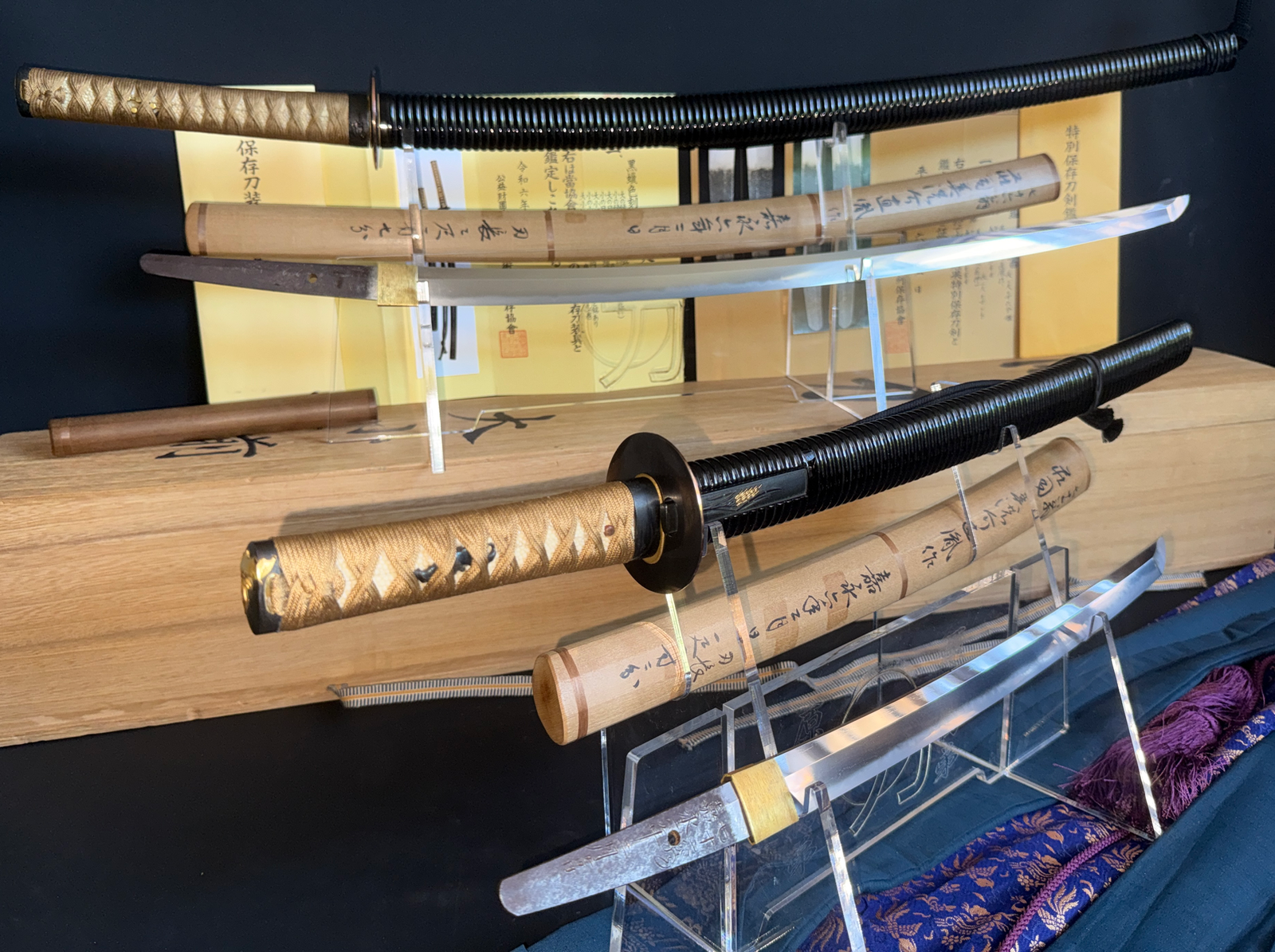
Taikei Naotane’s Final Masterpice Known Daishō NBTHK Tokubetsu Hozon , NBTHK Hozon Koshirae 1853
Edo 1853
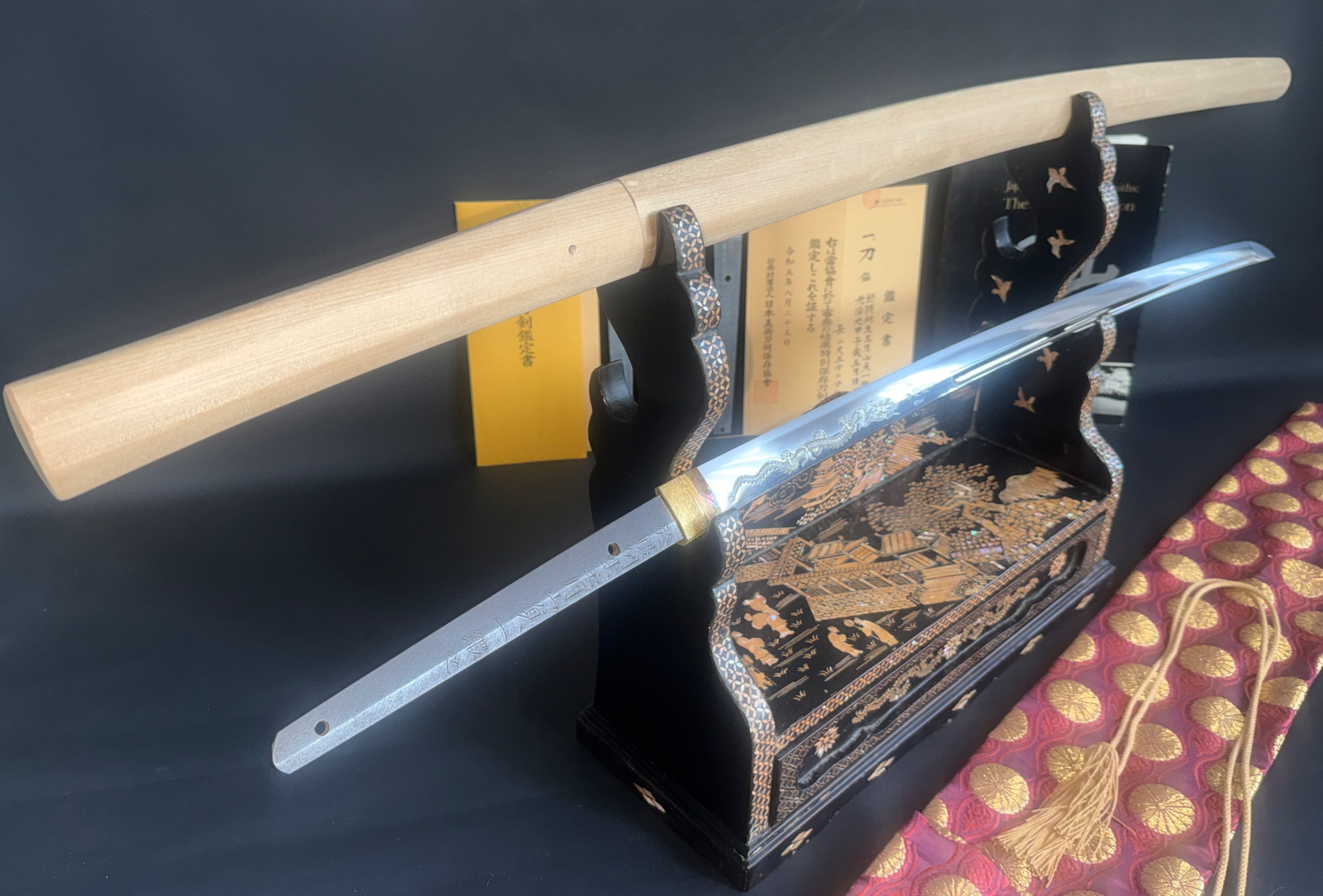
Japanese Masterpice Katana by Gassan Sadakazu NBTHK Tokubetsu Hozon Documented in Shin Shintō Taikan
1864
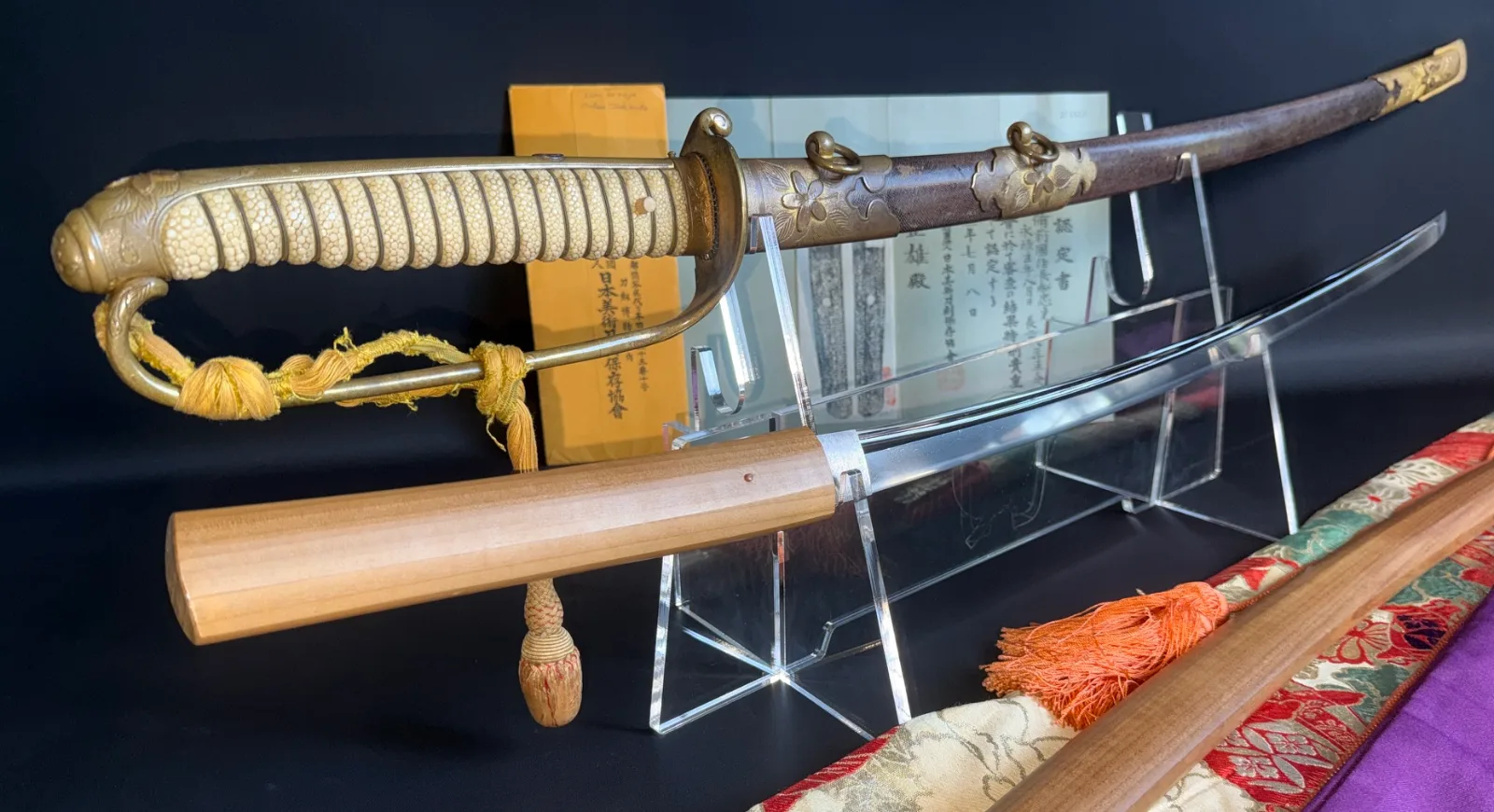
A 1562 Sengoku-period Bizen katana preserved as a Naruse family heirloom and later mounted for service in the Imperial Japanese Navy.
1562