Antique Japanese Three-Sword Stand (Katana-Kake) with Gold Maki-e Landscape and Paulownia Crest
late Edo to Meiji period (19th century)
An elegant three-sword katana-kake with detailed gold lacquer landscapes and a paulownia crest.
Payment
Antique Japanese Three Sword Stand Tokugawa Aoi Mon Gold Maki-e Lacquerwork
An Exceptional Japanese Sankake with Traditional Gold Maki-e Landscapes and Tokugawa Aoi Family Crest
This magnificent antique Japanese three-sword stand (sankake) is a remarkable example of traditional Japanese decorative craftsmanship, combining elegant architectural design with richly detailed gold maki-e lacquerwork.
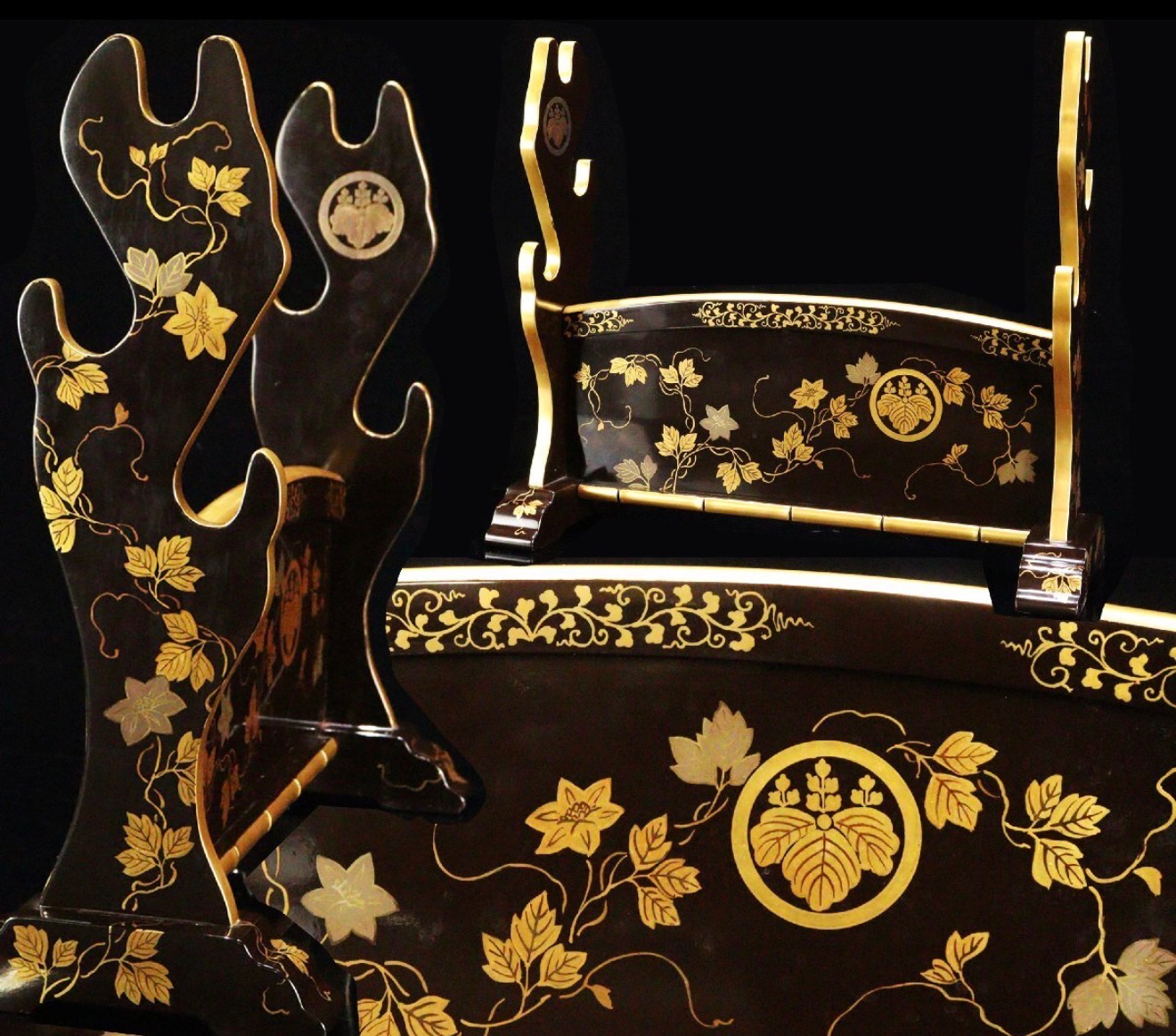
Possibly dating from the late Edo to Meiji period, this impressive sword stand features an elaborate black lacquered wooden structure decorated with delicate gold floral scrollwork (karakusa) and beautifully executed Japanese landscapes.
One of its most distinctive features is the Mitsuba Aoi mon, the celebrated three-leaf hollyhock crest historically associated with the powerful Tokugawa shogunate, which ruled Japan from 1603 until 1868.
The presence of this prestigious family emblem adds considerable historical and symbolic interest, reflecting the artistic traditions and cultural refinement associated with Japan's samurai aristocracy.
Exquisite Gold Maki-e Decoration
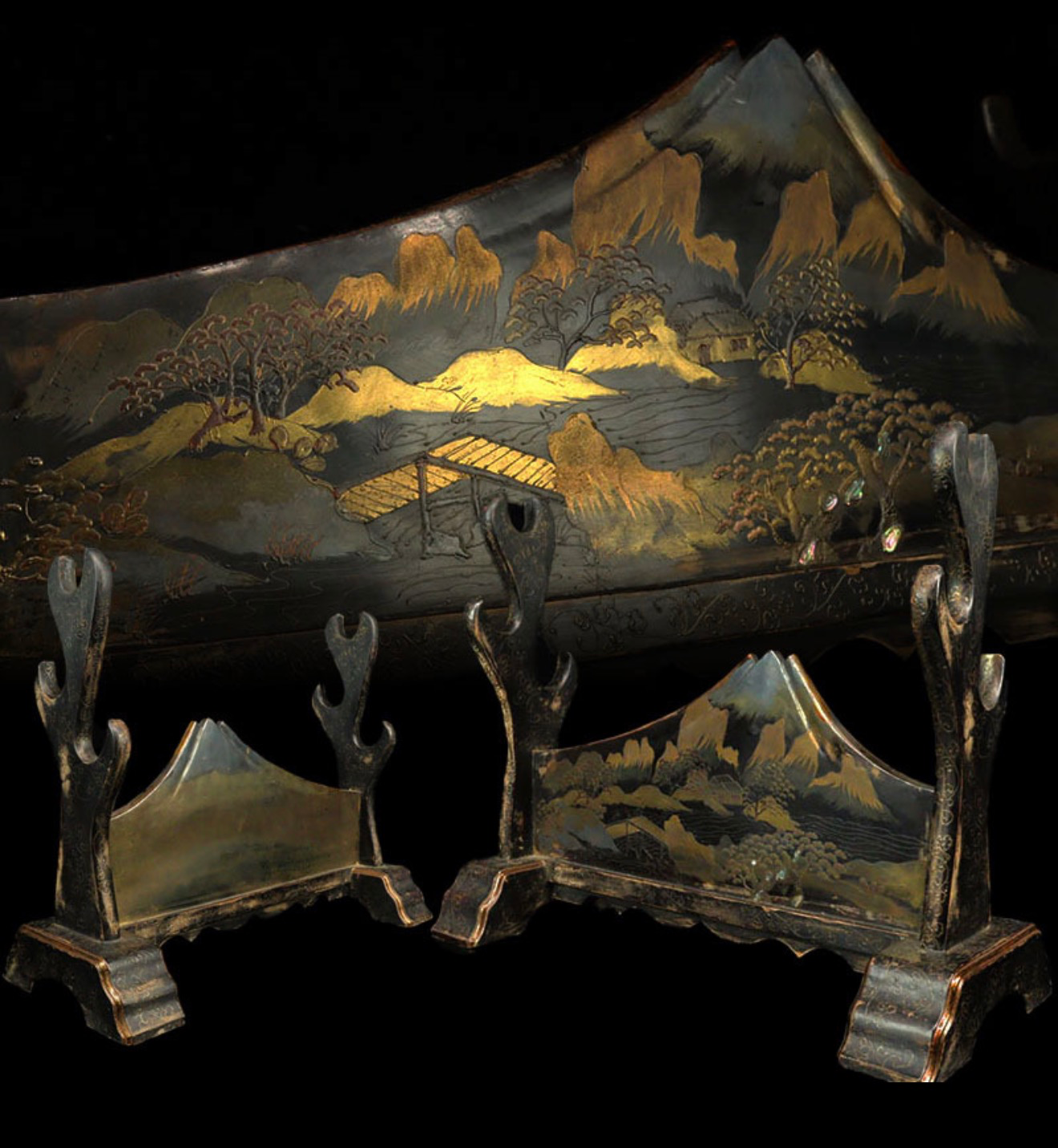
The two decorative panels on the front display beautifully detailed traditional Japanese landscapes, featuring rolling hills, winding pathways, rural dwellings, trees and distant mountains.
Executed against a warm golden background, the landscapes create a wonderful sense of depth and tranquillity, capturing the timeless beauty of the Japanese countryside.
The entire wooden structure is further embellished with elegant gold karakusa patterns, extending across the upper sword supports, vertical pillars, lower framework and reverse.
Particularly attractive is the contrast between the deep black lacquer and the delicate golden ornamentation.
The Tokugawa Aoi Family Crest
The reverse features a finely rendered Mitsuba Aoi crest, one of the most recognisable symbols in Japanese history.
Closely associated with the Tokugawa family, this emblem symbolises the authority and prestige of the shogunate during the Edo period.
Although the presence of the crest does not establish direct ownership by the Tokugawa family, it gives this sword stand an additional dimension of historical significance and visual distinction.
A Refined Display for Three Japanese Swords
Designed to accommodate three Japanese swords, this elegant sankake provides a distinguished setting for displaying a collection of nihontō.
Its unusual asymmetrical arrangement, gracefully curved supports and richly decorated surfaces make it much more than a functional sword stand.
It is a decorative work of Japanese art in its own right, equally suited to an important sword collection, a traditional Japanese interior or a carefully curated display of samurai antiques.
Details
Origin: Japan
Period: Possibly late Edo to Meiji period (19th century)
Type: Antique Japanese three-sword stand (sankake)
Material: Lacquered wood
Decoration: Gold maki-e landscapes and karakusa floral scrollwork
Family Crest: Mitsuba Aoi mon, associated with the Tokugawa family
Width: Approximately 57 cm
Height: Approximately 43 cm
Depth: Approximately 20 cm
Weight: Approximately 2.6 kg
Condition
Antique condition with visible signs of age and use, including surface wear, scratches, age-related marks and some cracking to the lacquerwork.
These characteristics are consistent with an older Japanese lacquered object. Please examine the photographs carefully for a detailed impression of its condition.
Kyodai Originals Japanese Art & Samurai Antiques
A beautifully decorated Japanese sword stand combining traditional lacquer craftsmanship, refined landscape painting and the historic symbolism of the Tokugawa Aoi crest.
An attractive and distinctive addition to any serious collection of Japanese swords, samurai antiques or traditional Japanese art.