
Monumental Shinshintō Shrine No-Dachi Attributed to Takahashi Naganobu (1817–1879) NBTHK Hozon Rare Ceremonial Japanese Sword
1830–1860
A Monument Forged for the Gods A Rare Ceremonial No-Dachi of the Late Edo Period Jinja Hōnō Tachi Naganobu
Payment
Monumental Shinshintō Shrine No-Dachi Attributed to Takahashi Naganobu
NBTHK Hozon | Rare Ceremonial Offering Sword | Complete Aikuchi Koshirae
Few Japanese swords immediately command attention through their sheer presence. This magnificent Shinshintō-period No-Dachi, attributed by the NBTHK to Takahashi Naganobu (高橋長信), is one of those exceptional works. Measuring an impressive 90.5 cm in blade length and housed in a remarkable 133 cm ceremonial Aikuchi koshirae, it represents an extraordinary combination of religious devotion, technical excellence, and historical importance.
Unlike battlefield No-Dachi intended for combat, this monumental sword was almost certainly forged as a dedicatory offering to a Shinto shrine or Buddhist temple. During the late Edo period, wealthy patrons, influential samurai families, and religious institutions commissioned exceptional swords as sacred offerings to express gratitude, seek divine protection, or commemorate important events. These ceremonial blades were never intended for ordinary use; they were created as enduring symbols of faith, prestige, and master craftsmanship.
The blade has been preserved in its original ubu condition and retains its full monumental proportions. With two original mekugi-ana and no forging flaws or fukure, it is an outstanding survivor from the Shinshintō period. Large shrine swords of this quality are exceptionally scarce, particularly examples that remain complete with their original ceremonial mountings.
The sugata is magnificent. Forged in elegant shinogi-zukuri with generous width, powerful thickness, and graceful curvature, the blade possesses remarkable authority while maintaining refined proportions. Its impressive dimensions immediately reflect the ambition of its maker and commissioner.
The jihada displays beautifully forged itame-hada interwoven with flowing masanagare, enriched throughout with abundant ji-nie and brilliant ara-nie, demonstrating the sophisticated forging techniques that distinguish the finest Shinshintō masters.
Equally striking is the vibrant gunome-midare hamon, executed in brilliant nie-deki. Thick crystalline nie, energetic hataraki, and vivid activity animate the entire temperline, creating an impression of movement and power that remains visible under changing light. The workmanship reflects the revival of classical Koto traditions that defined the greatest swordsmiths of the nineteenth century.
Completing the blade is an exceptionally high-quality two-piece gold-foil wrapped habaki, a fitting detail for a sword of ceremonial importance.
An Extraordinary Ceremonial Aikuchi Koshirae
Perhaps even more remarkable than the blade itself is its extraordinary mounting.
The sword is mounted in an exceptionally rare Aikuchi koshirae, a style traditionally reserved for tantō and almost never encountered on a No-Dachi of this monumental size. This unusual configuration strongly supports the theory that the sword was created specifically as a religious offering rather than a practical weapon.
The magnificent black urushi lacquer saya is fitted with finely polished buffalo horn mounts, including the fuchi, kashira, kaeshizuno, and kojiri. The unusually long 33 cm tsuka is wrapped in black silk over lacquered samegawa, giving the mounting a dignified and understated elegance appropriate for ceremonial use.
The fittings further elevate this exceptional koshirae. High-relief shakudō dragon menuki enriched with gilding symbolize divine protection, wisdom, and imperial authority within Japanese culture. Completing the ensemble is a rare Muromachi-period kogai, dating to approximately the sixteenth century, decorated with refined floral motifs and delicate gold highlights—an extraordinary historical addition that bridges two important periods of Japanese craftsmanship.
The sword is accompanied by its original shirasaya together with a tsunagi, ensuring both long-term preservation and historical completeness.
Takahashi Naganobu
Takahashi Naganobu (1817–1879) ranks among the distinguished swordsmiths of the late Edo period. Born in Izumo Province as Sezaki Zenzo, he initially studied under the fifteenth-generation Fuyuhiro before continuing his education in Edo under the renowned Chōunsai Tsunatoshi of the prestigious Katō tradition.
Naganobu became celebrated for producing blades of extraordinary cutting ability and technical refinement. Historical rankings place his work among the finest practical swords of the period, with examples associated with the highly respected Saijō Ō-Wazamono tradition of exceptional cutting performance.
His devotion extended beyond swordmaking itself. Naganobu is remembered for forging one of the largest sacred Ken swords preserved in Japan, measuring approximately 150 cm, which remains enshrined at Naritasan Shōrinji Temple. This monumental achievement further reinforces his close relationship with religious commissions and explains why shrine-dedicated works attributed to him are held in particularly high regard.
NBTHK Authentication
The blade is accompanied by NBTHK Hozon papers, confirming both its authenticity and its historical significance.
The attribution recognizes the blade as an authentic work closely associated with Takahashi Naganobu and acknowledges its importance as an exceptionally preserved ceremonial sword from the Shinshintō period.
Specifications
Swordsmith: Attributed to Takahashi Naganobu (高橋長信)
Period: Shinshintō, circa 1830–1860
Province: Izumo / Bushū Edo
Certification: NBTHK Hozon
Blade Length (Nagasa): 90.5 cm
Overall Mount Length: 133 cm
Curvature (Sori): 2.0 cm
Base Width (Motohaba): 3.7 cm
Thickness (Kasane): 0.84 cm
Weight (Blade): 1306 grams
Condition: Ubu, two mekugi-ana, excellent preservation
Hamon: Gunome-midare in vibrant nie-deki
Jihada: Itame with flowing masanagare, ji-nie and ara-nie
Habaki: Two-piece gold-foil wrapped
Koshirae: Monumental ceremonial Aikuchi mounting
Saya: Black urushi lacquer with buffalo horn fittings
Tsuka: 33 cm, black silk over lacquered samegawa
Menuki: Gilt shakudō dragons
Kogai: Muromachi period, circa 1500
Accessories: Shirasaya with tsunagi
A Rare Opportunity
Monumental shrine swords of this quality seldom appear outside Japan. The combination of impressive dimensions, exceptional preservation, rare ceremonial Aikuchi koshirae, prestigious NBTHK authentication, and attribution to Takahashi Naganobu makes this one of the most remarkable Shinshintō religious swords available on the international market.
For the advanced collector, museum, or connoisseur of Japanese arms, this No-Dachi represents far more than a weapon. It is a preserved cultural treasure that embodies the spiritual traditions, artistic excellence, and master craftsmanship of nineteenth-century Japan.
- Certification
- NBTHK Hozon
- Period
- 1830–1860
Related Pieces
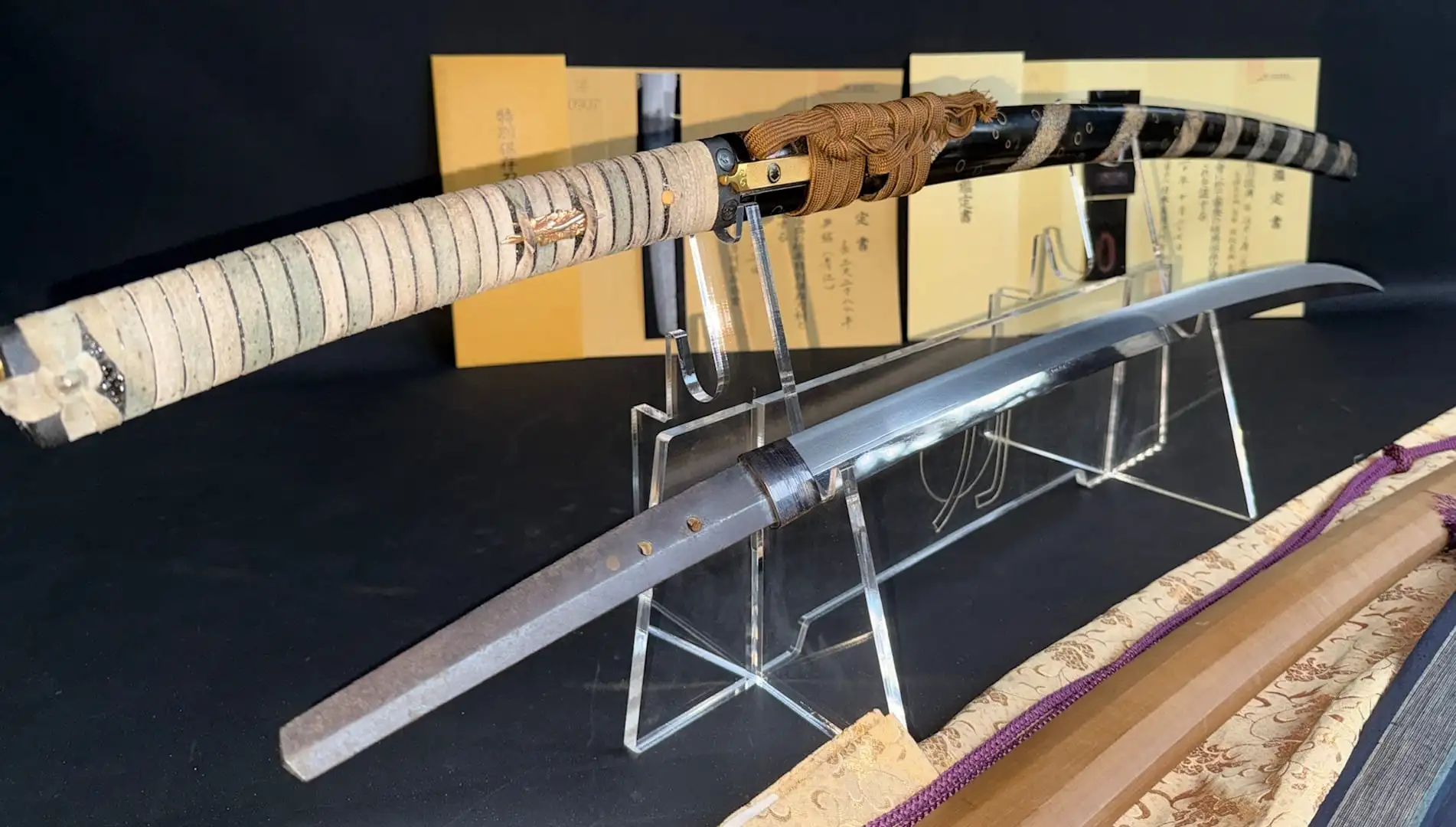
Aoe School Nagamaki-Naoshi Kamakura Period Kareki 2 (1327) NBTHK Tokubetsu Hozon Tōken
Kamakura (1327)
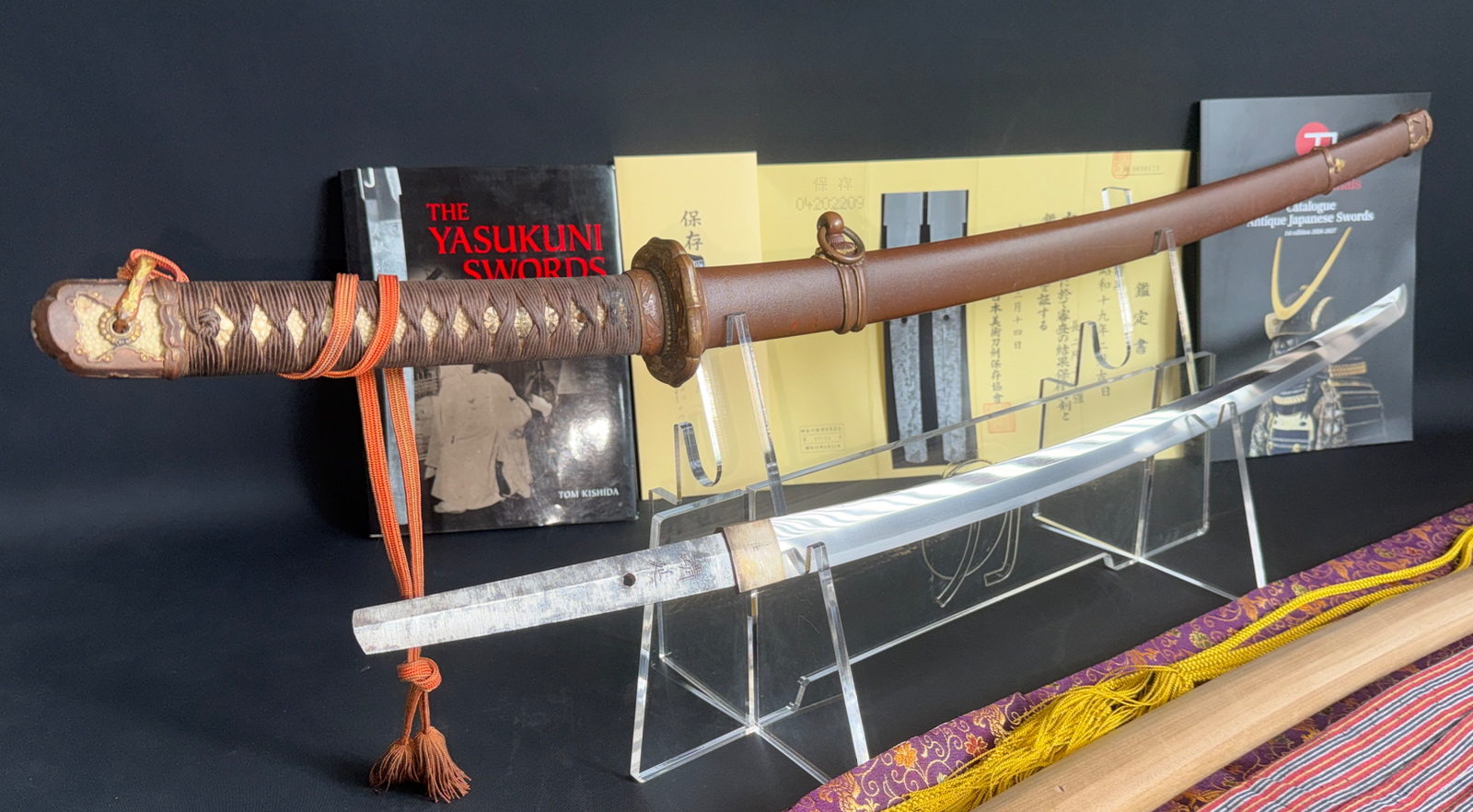
Rare 1944 Yasukuni Shrine Gendaitō by Murakami Yasunobu NBTHK Hozon, Complete Type 98 Mounts
1944
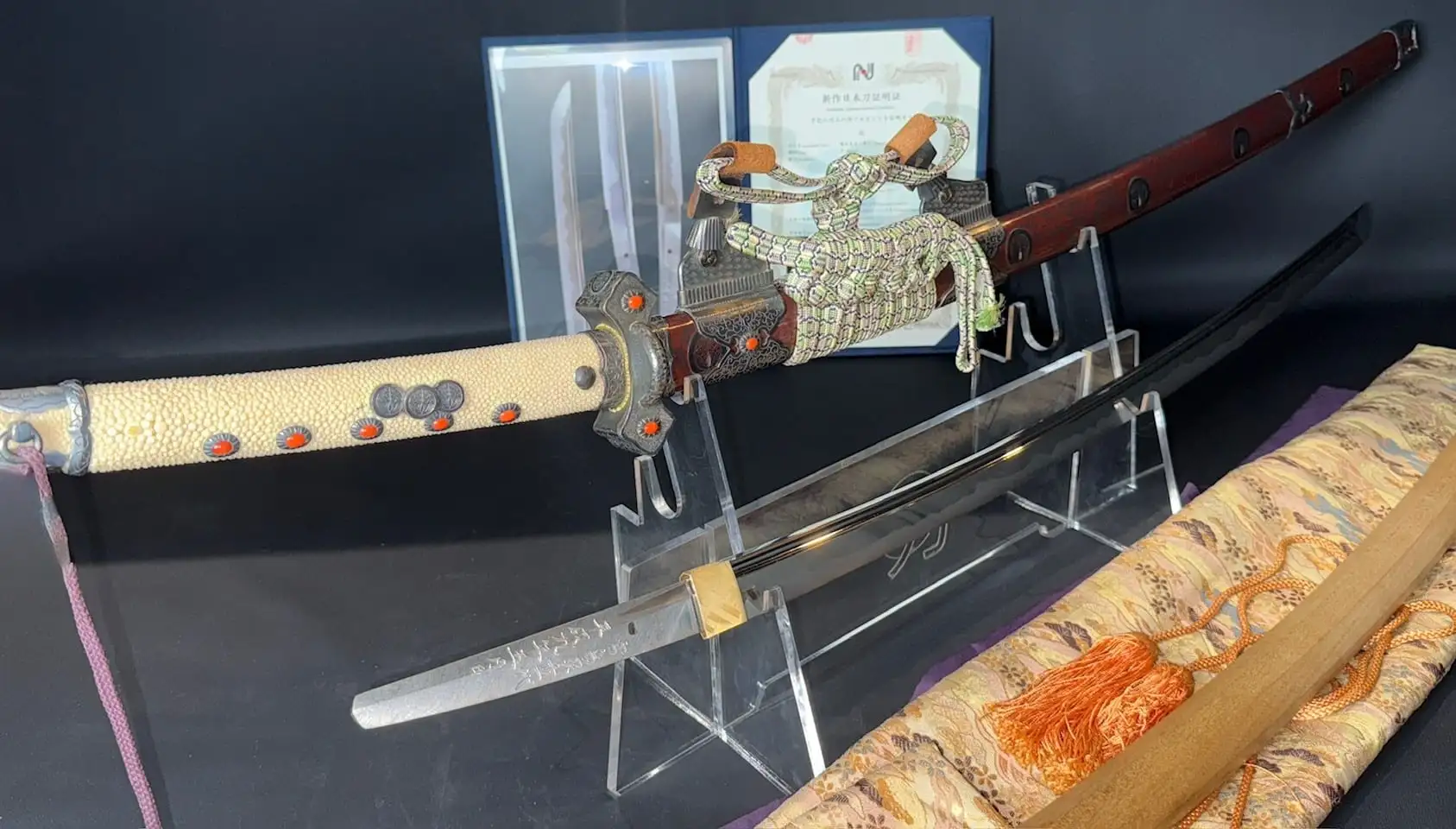
Forged Beneath Mount Fuji The Collaborative Tachi Katana Sword of Izu ju Yusuishin Sadayoshi / Sadahito Gassan (Heisei 9 / May 1997)
Heisei 9 (1997)