
A Remarkable Silver Skull Tantō by Ryūjin Minamoto Sadakazu ONE-OF-A-KIND COLLECTOR'S PIECE
Heisei
A Striking Silver-Mounted Tantō by Ryūjin Minamoto Sadakazu Where Traditional Japanese Swordsmithing Meets Exceptional Metal Art
Payment
RYŪJIN MINAMOTO SADAKAZU TANTŌ
A Remarkable Contemporary Japanese Art Sword in Silver Koshirae
Swordsmith: Ryūjin Minamoto Sadakazu (龍神源貞和)
Personal name: Adachi Kazuyoshi (安達和喜)
Province: Kii present day Wakayama Prefecture
School Tradition: Ryūjin swordsmith tradition, closely connected with the Gassan lineage
Period: Contemporary Heisei Reiwa period
Type: Tantō Shinsakutō
Nagasa: 19.3 cm
Blade weight: 118 g without habaki
Total weight with koshirae: 372 g
Mei: Sadakazu (貞和)
Mounting: Exceptional silver aikuchi-style koshirae
Horimono: Skull and plant motif
A True Japanese Art Object
This extraordinary tantō by Ryūjin Minamoto Sadakazu is far more than a Japanese blade.
It is a complete work of art in which swordsmithing, sculpture, metalwork and symbolism have been brought together into one remarkably harmonious composition.
The blade was forged by the contemporary Japanese swordsmith Adachi Kazuyoshi, who works under the sword name Sadakazu (貞和) in Ryūjin, Tanabe City, Wakayama Prefecture.
Sadakazu belongs to the living tradition of Japanese swordmaking in Ryūjin, a lineage with close historical connections to the celebrated Gassan tradition.
The Blade
With a nagasa of only 19.3 cm and a blade weight of just 118 grams without habaki, the tantō is remarkably refined and elegant.
Its small dimensions should not be mistaken for simplicity. On the contrary, this blade was conceived as an artistic object in which every detail contributes to the overall composition.
The nakago bears the signature:
貞和 Sadakazu
Perhaps the most striking feature of the blade is the beautifully executed horimono.
A skull appears among delicately carved vegetation, creating an image that is both dramatic and deeply evocative.
The skull can be interpreted within the long Japanese artistic tradition of contemplating impermanence and the transience of human existence.
Rather than merely decorating the blade, the horimono establishes the central theme of the entire tantō.
Exceptional Silver Koshirae
What elevates this piece into something truly spectacular is its extraordinary silver aikuchi-style koshirae.
The darkened and subtly patinated silver creates an almost monochromatic appearance. Under changing light, however, the surfaces and raised decorations reveal themselves beautifully.
The mounts incorporate finely executed relief decoration, mon-like elements and sculptural details. Particularly attractive is the contrast between the subdued silver surface and the brighter highlights of the raised metalwork.
The skull imagery of the blade and the sculptural decoration of the mounting appear to have been conceived as a unified artistic composition rather than as unrelated additions.
Even the proportions contribute to this impression.
The complete tantō weighs 372 grams with its koshirae, giving this compact work a surprisingly substantial presence when held in the hand.
The Ryūjin Swordsmith Tradition
Sadakazu works in Ryūjin Village in Wakayama Prefecture, an area with its own fascinating modern swordmaking history.
He is officially recorded by the All Japan Swordsmith Association as:
Adachi Kazuyoshi (安達和喜) Sadakazu (貞和)
The Ryūjin tradition is particularly interesting because of its connection with the modern Gassan school. Sadakazu worked alongside his cousin, the swordsmith Adachi Shigefumi Ryūjin Tarō Minamoto Sadashige, whose training included approximately three years under Living National Treasure Gassan Sadakazu II.
This places the Ryūjin smiths within an important continuation of traditional Japanese swordmaking in the modern era.
A Living Tradition
Unlike an unsigned ancient blade whose attribution must be reconstructed centuries after its manufacture, this tantō represents the living Japanese sword tradition.
Its maker is a registered contemporary Japanese swordsmith whose identity and working location are documented.
For this reason, the absence of NBTHK papers does not detract from the straightforward identification of the signed blade as a contemporary work by Sadakazu. The mei on the nakago provides the maker's signature, while the swordsmith himself belongs to the officially documented community of contemporary Japanese tōshō.
A Collector's Showpiece
This is not the type of tantō one encounters every day.
Its appeal lies not simply in the blade, nor simply in its silver mounting, but in the remarkable unity between them:
the compact traditionally made blade, the Sadakazu signature, the dramatic skull horimono and the elaborate silver koshirae all combine into a single artistic statement.
At only 19.3 cm nagasa, it has an intimate character, yet visually it possesses enormous presence.
For the collector of contemporary nihontō, Japanese metalwork or unusual sword fittings, this tantō represents something especially desirable: a traditional Japanese blade transformed into a complete and highly individual work of art.
A true collector's piece and without question a spectacular centrepiece for any collection of Japanese sword art.
Related Pieces
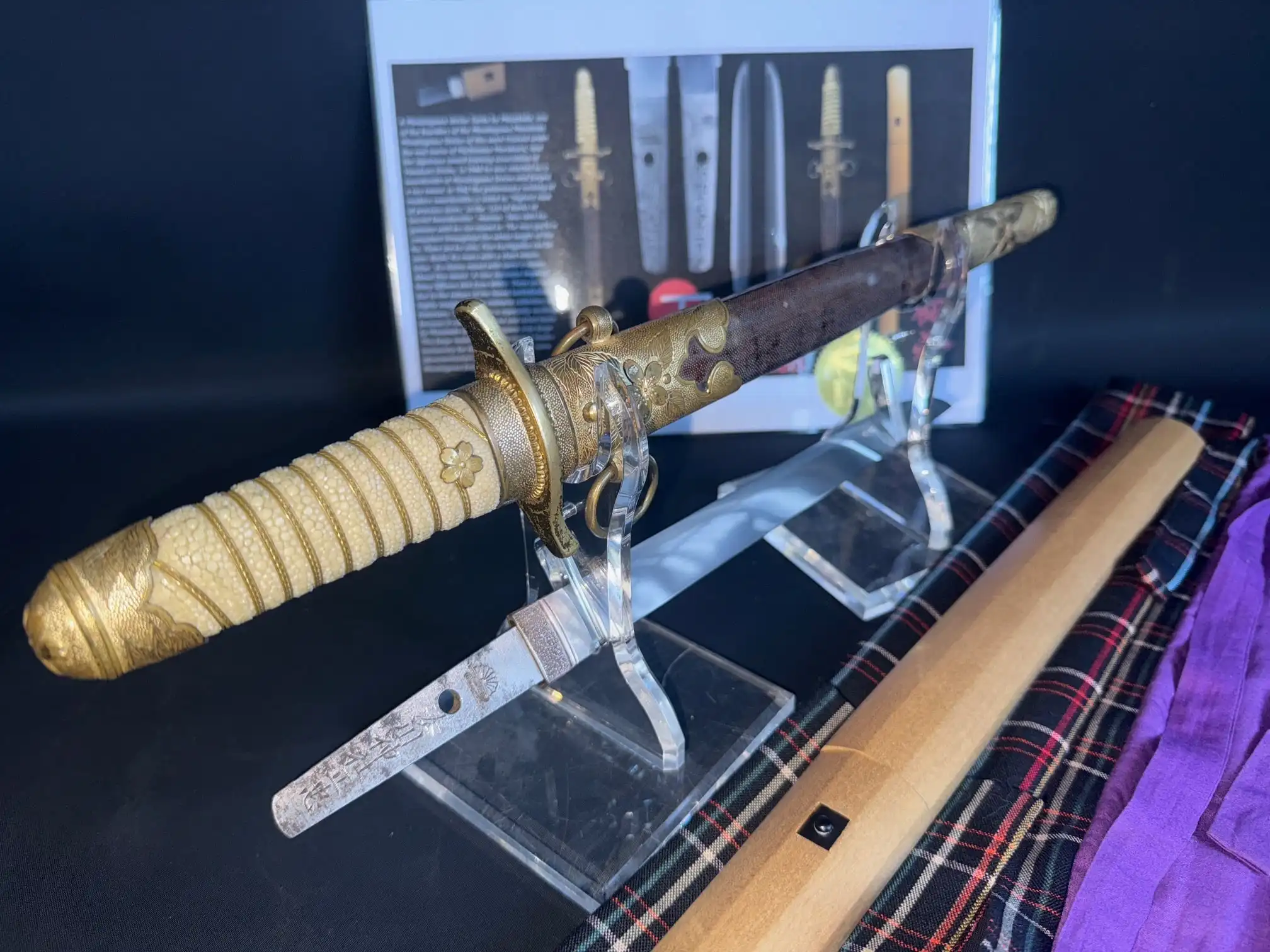
Rare Original Japanese Minatogawa Shrine Navel Tanto by Masatada with original koshirae (Showa 17 January 1942)
Shōwa 17 (1942)
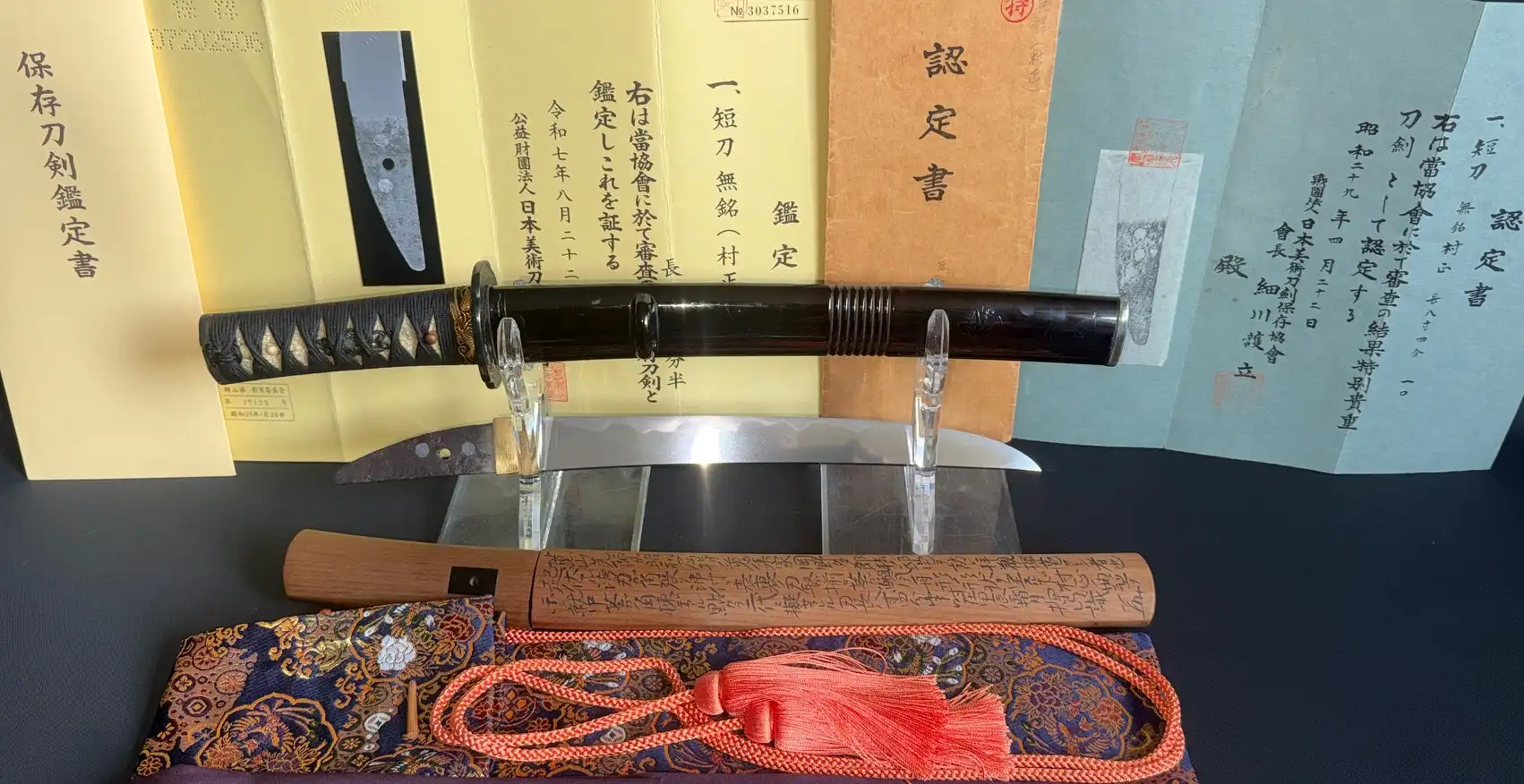
Second generation Muramasa (Nidai Muramasa 1532–1555) Sayagaki written by Tanobe Sensei NBTHK Hozon certification, Tokubetsu Kichō papers
1532–1555
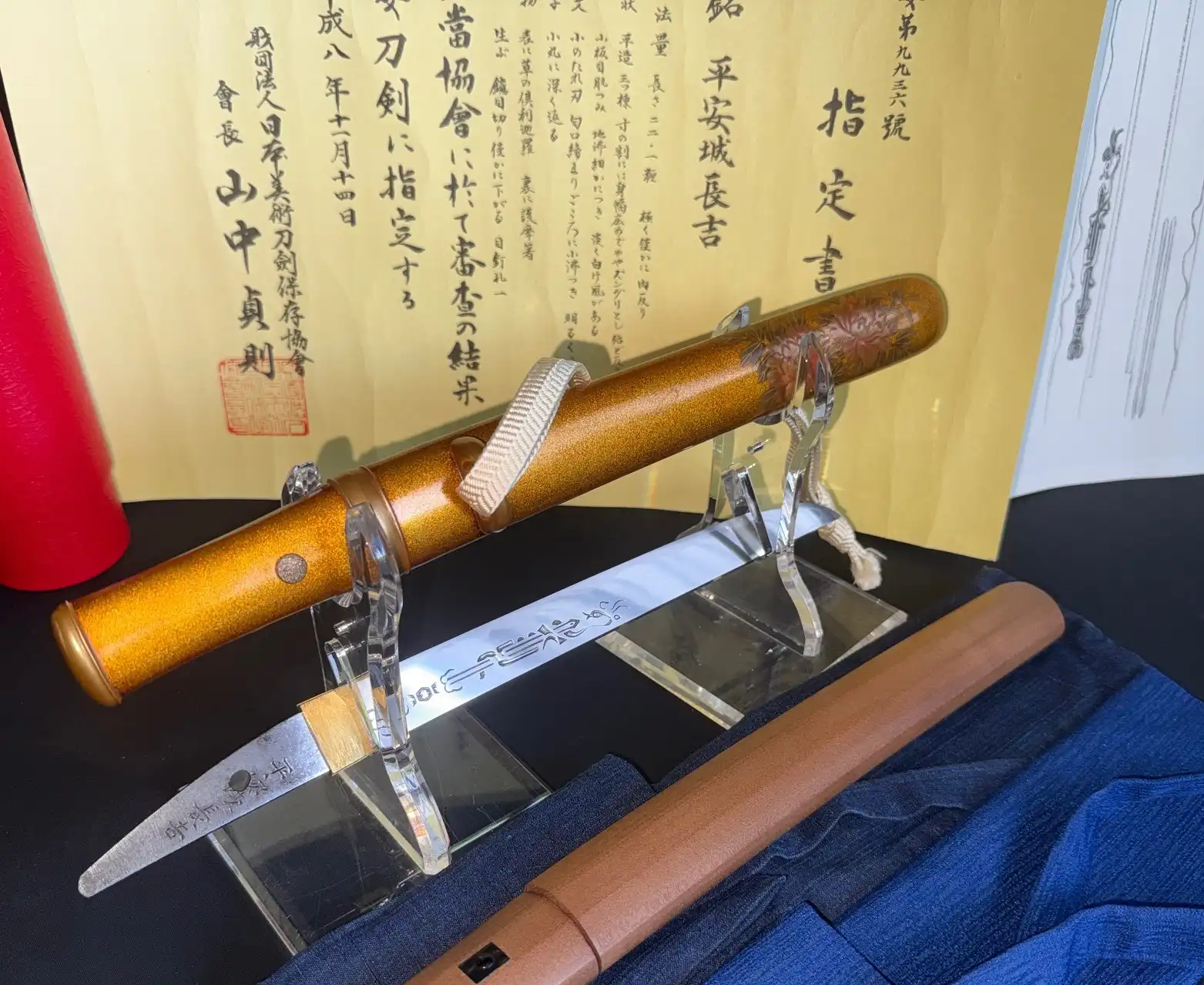
NBTHK Jūyō Tōken Tantō by Heianjō Nagayoshi
Muromachi 1469