
€ 9.000,00
1 in stock
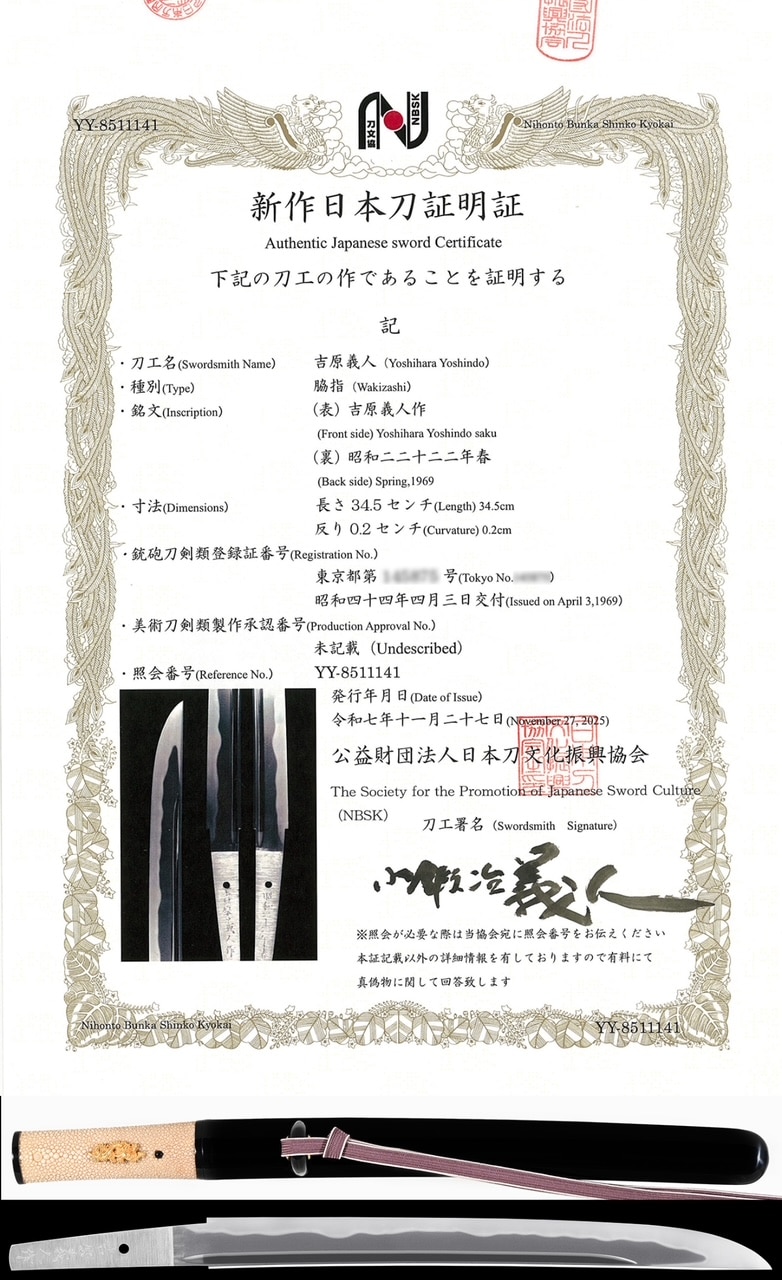
Showa 44 (1969), Spring NBSK Certified
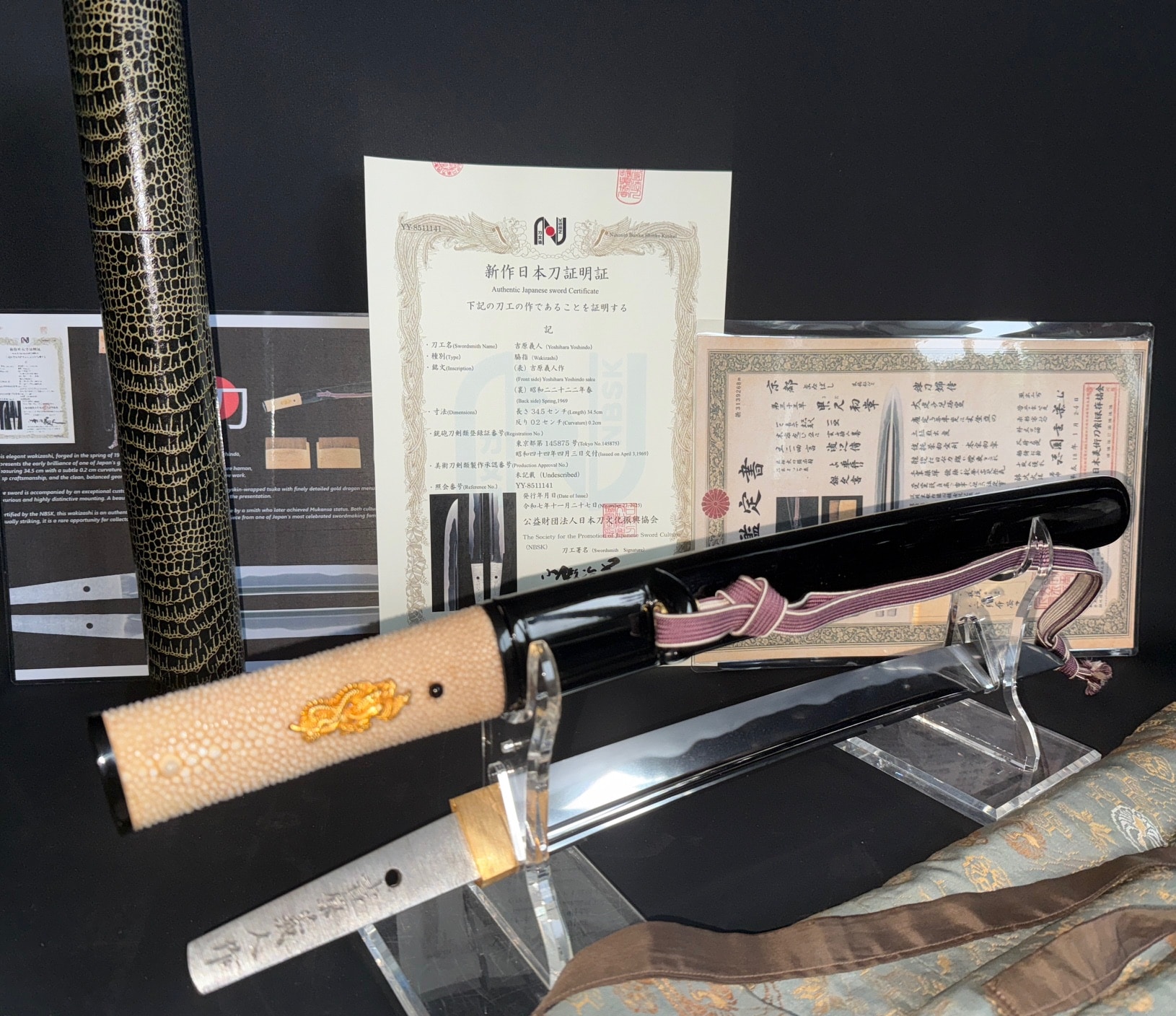
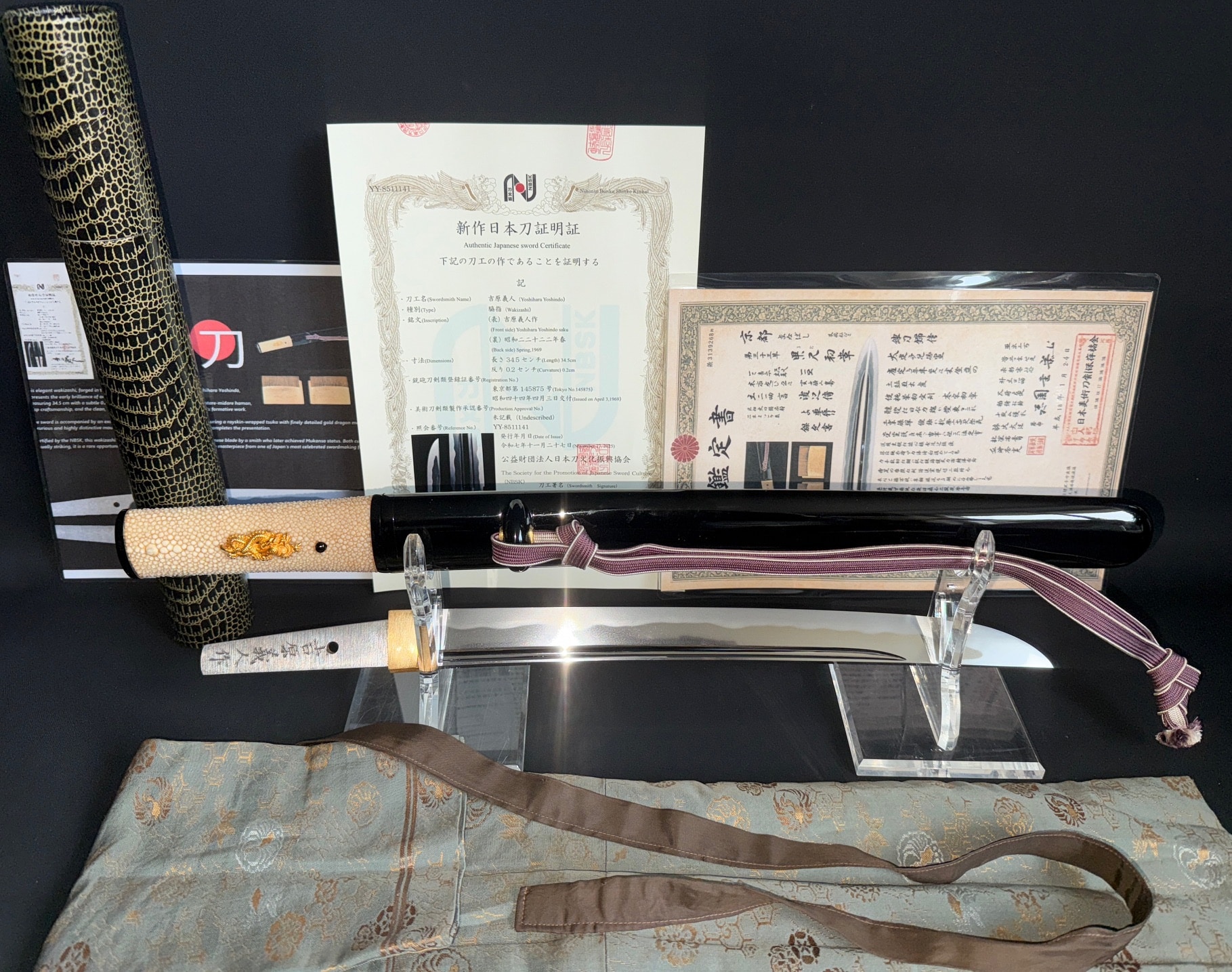
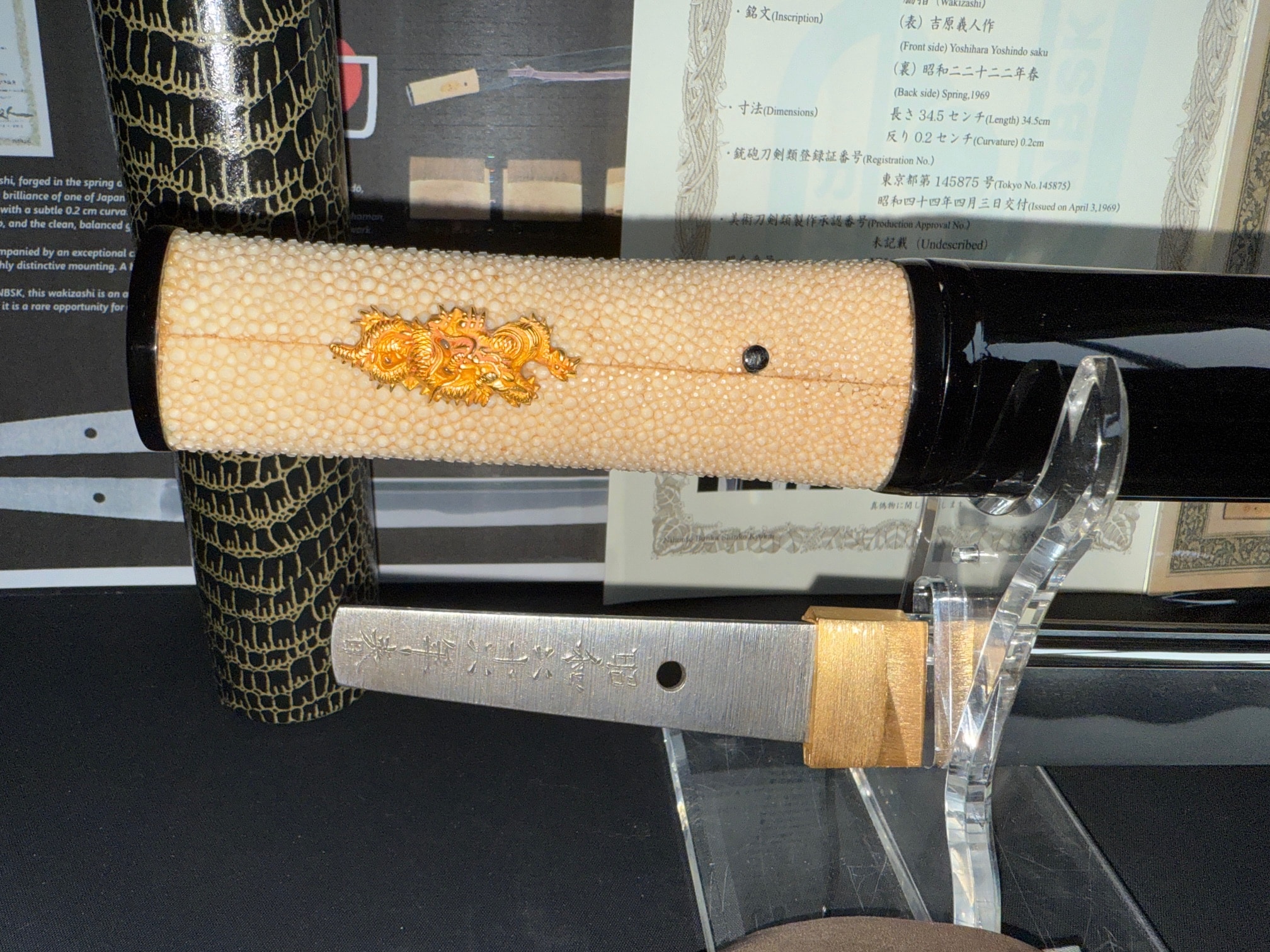
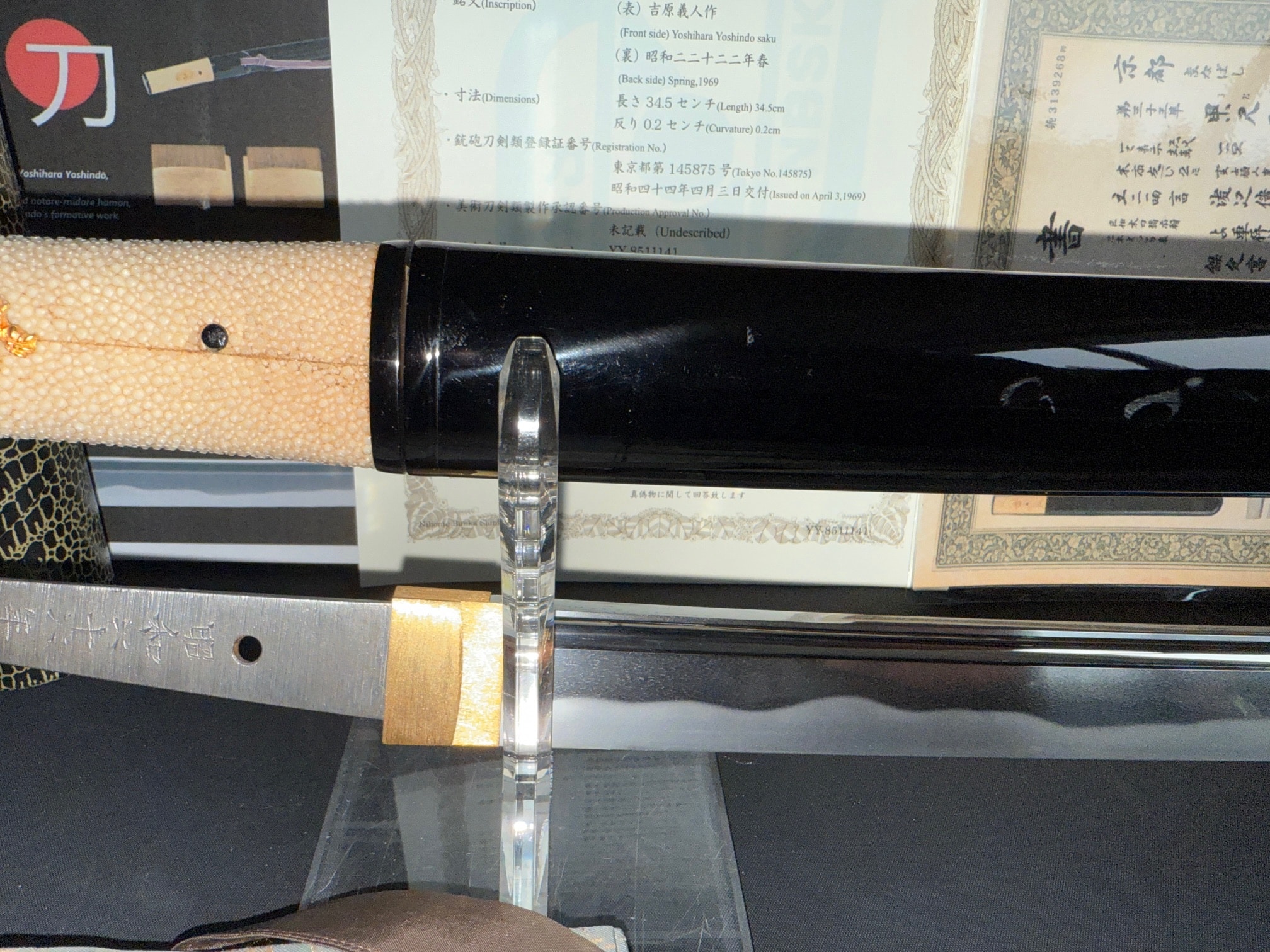
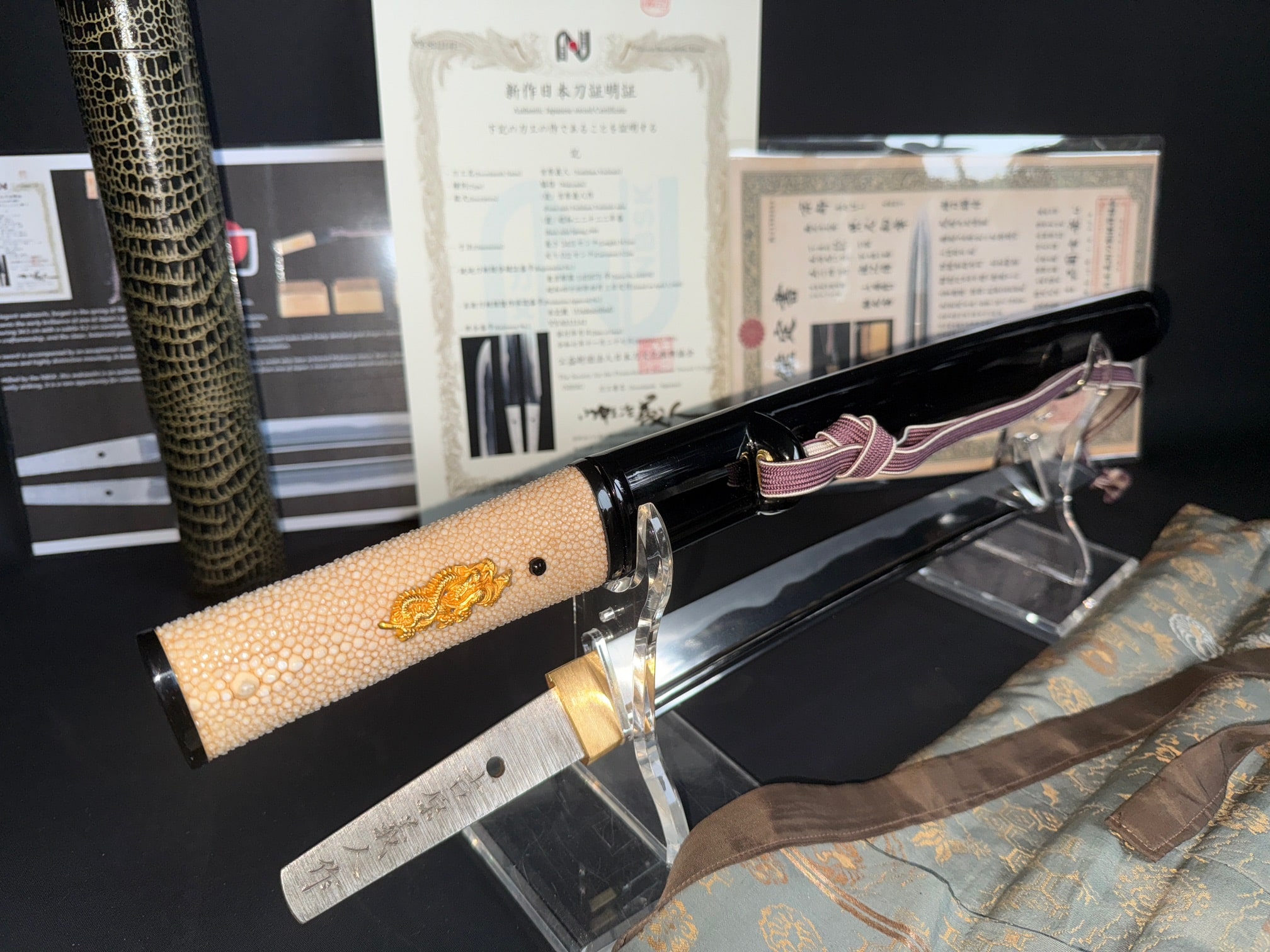
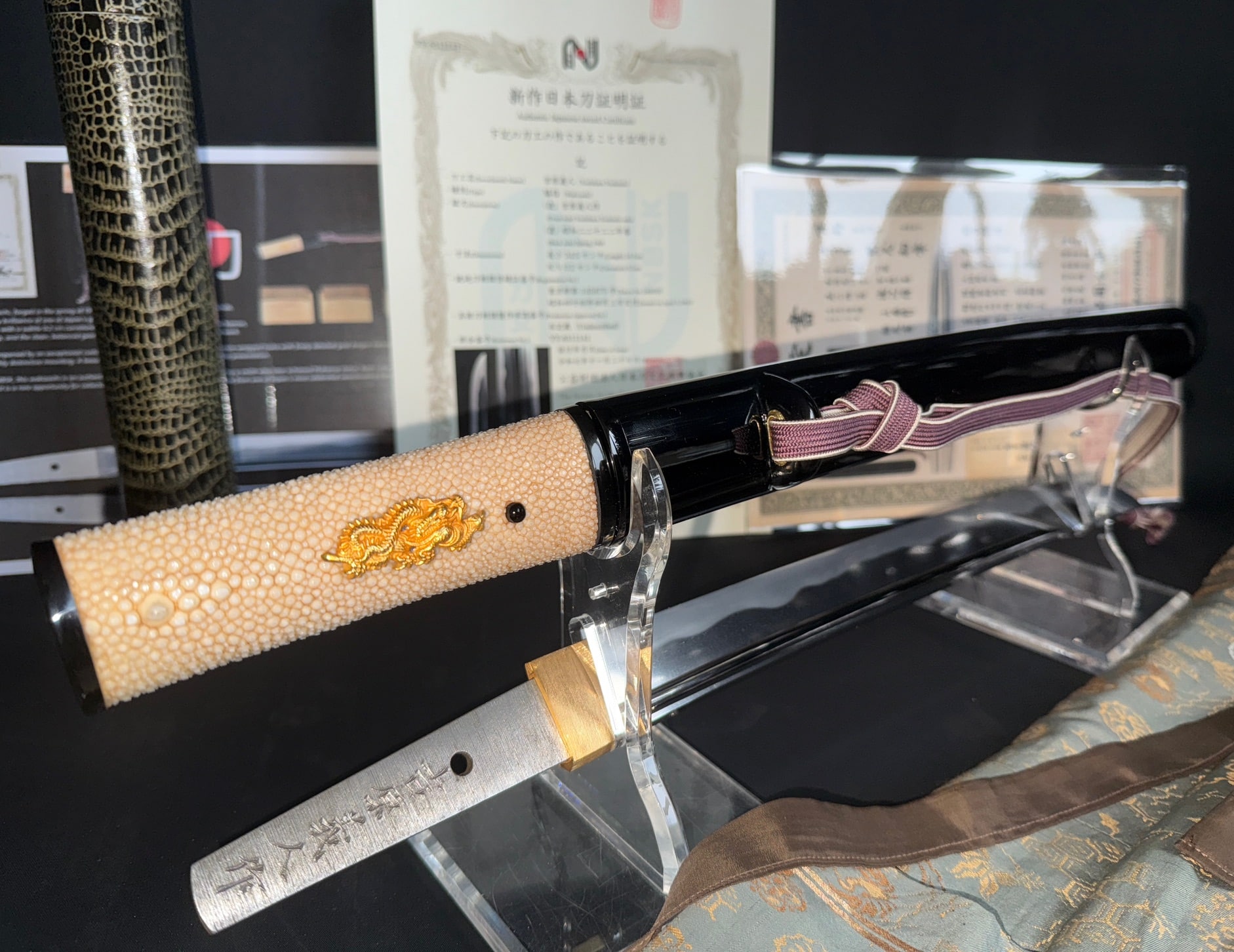
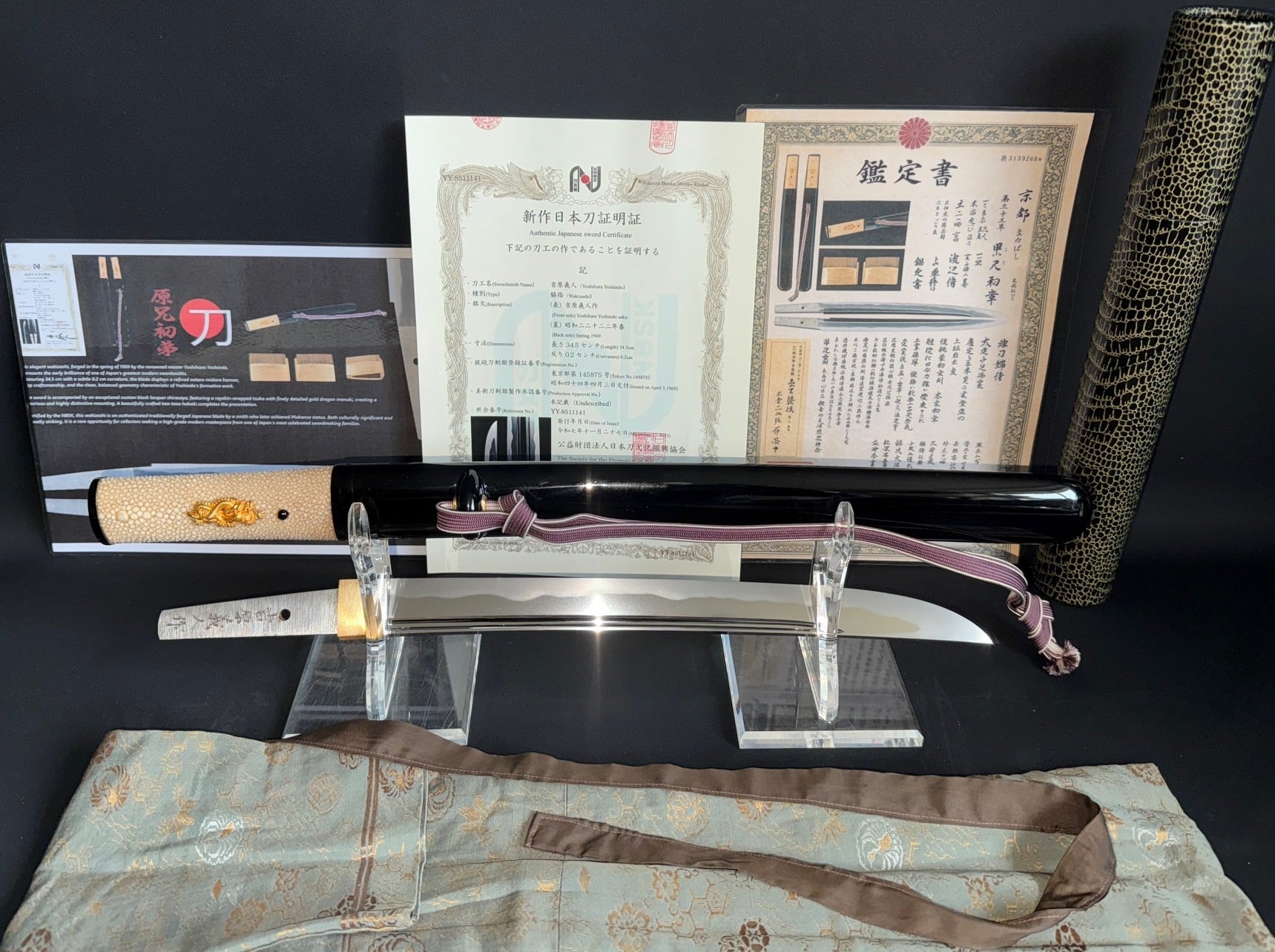
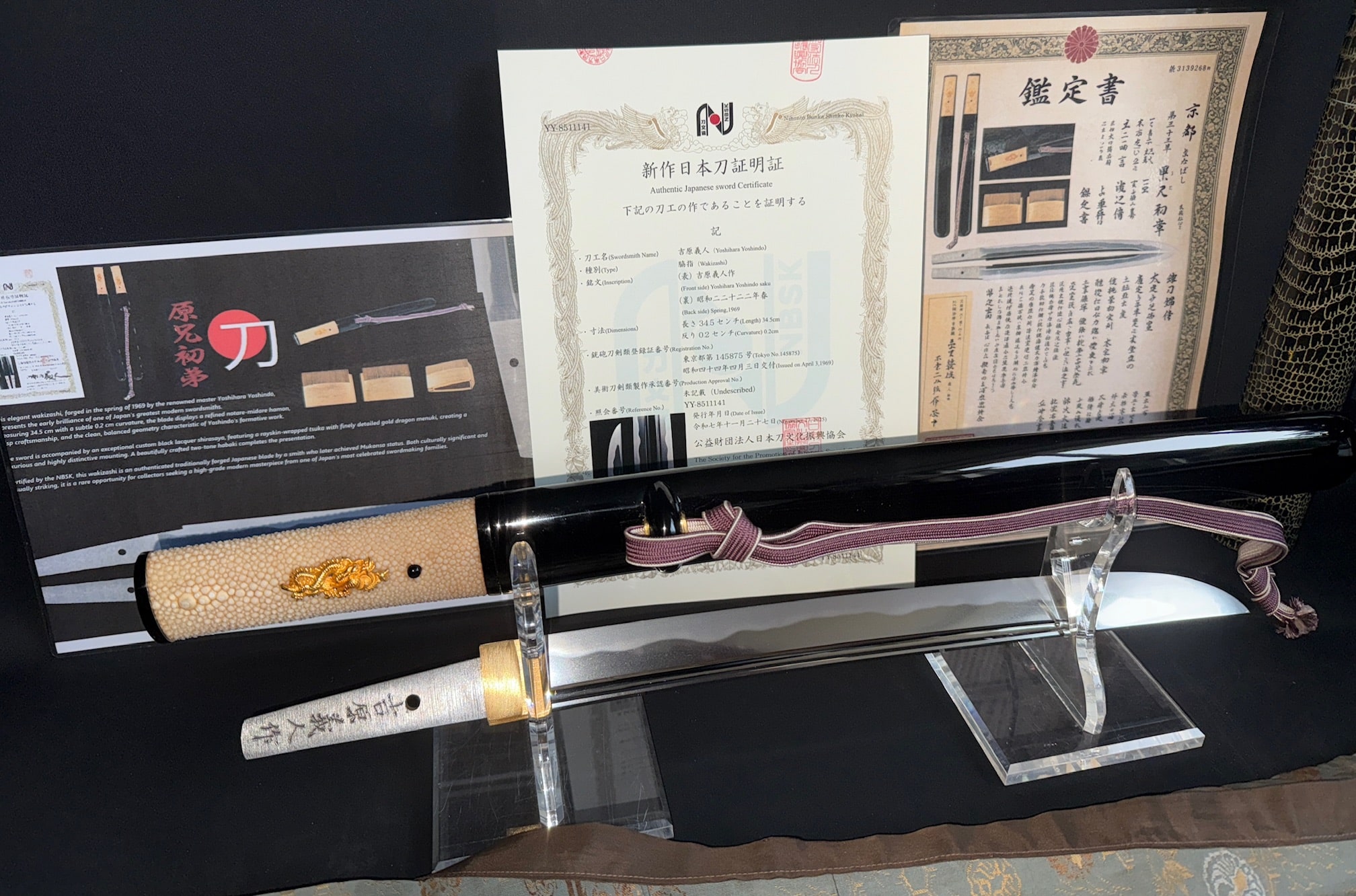
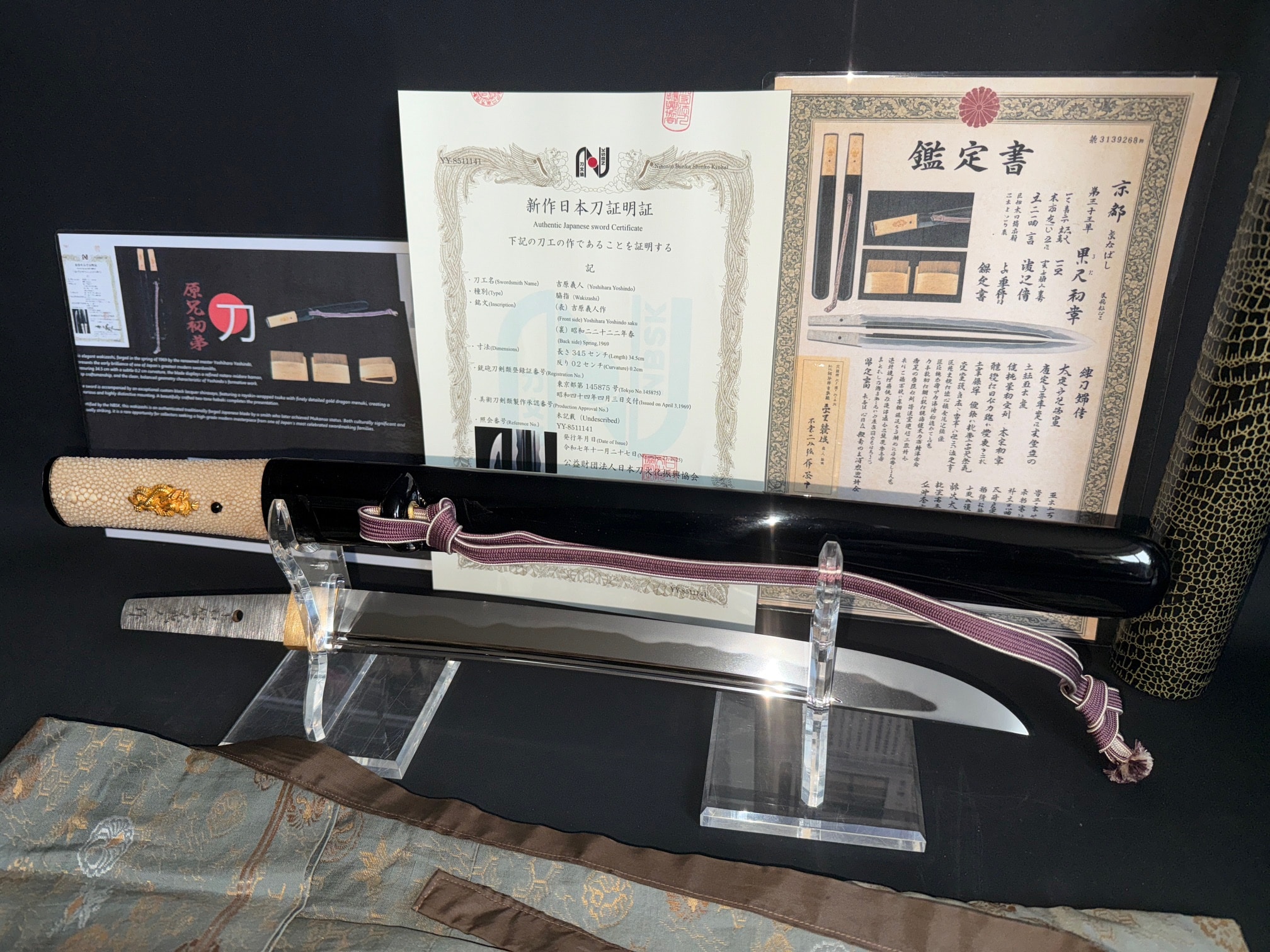
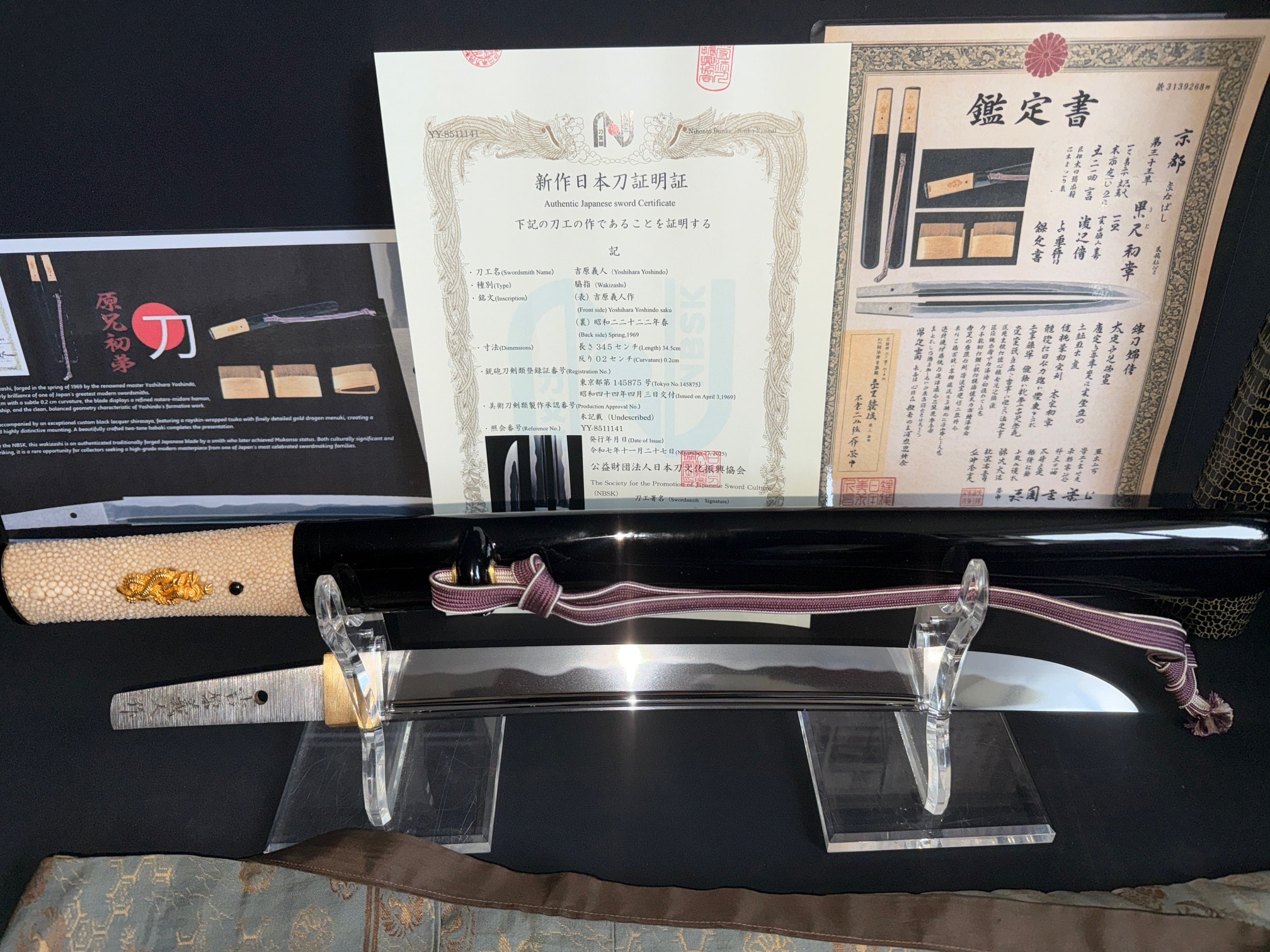
With Custom Black Lacquer Shirasaya and Gold Dragon Menuki**
This exceptional wakizashi is a refined and elegantly mounted example of the work of Yoshihara Yoshindō, one of the most celebrated swordsmiths of the modern era and a nationally recognized master of traditional Japanese forging techniques. Dated Spring of 1969 (Showa 44), the blade represents an early but already remarkably mature stage in the career of a craftsman who would later achieve Mukansa status, meaning that his works were considered to be beyond competitive judging due to their consistently superior quality.
Accompanied by full documentation from the NBSK (Society for the Promotion of Japanese Sword Culture), the sword stands as both a cultural artifact and a highly collectible modern masterpiece. Its beautiful polish, flawless proportions, and exquisite custom shirasaya make it an outstanding addition to any high-level collection of gendaitō.
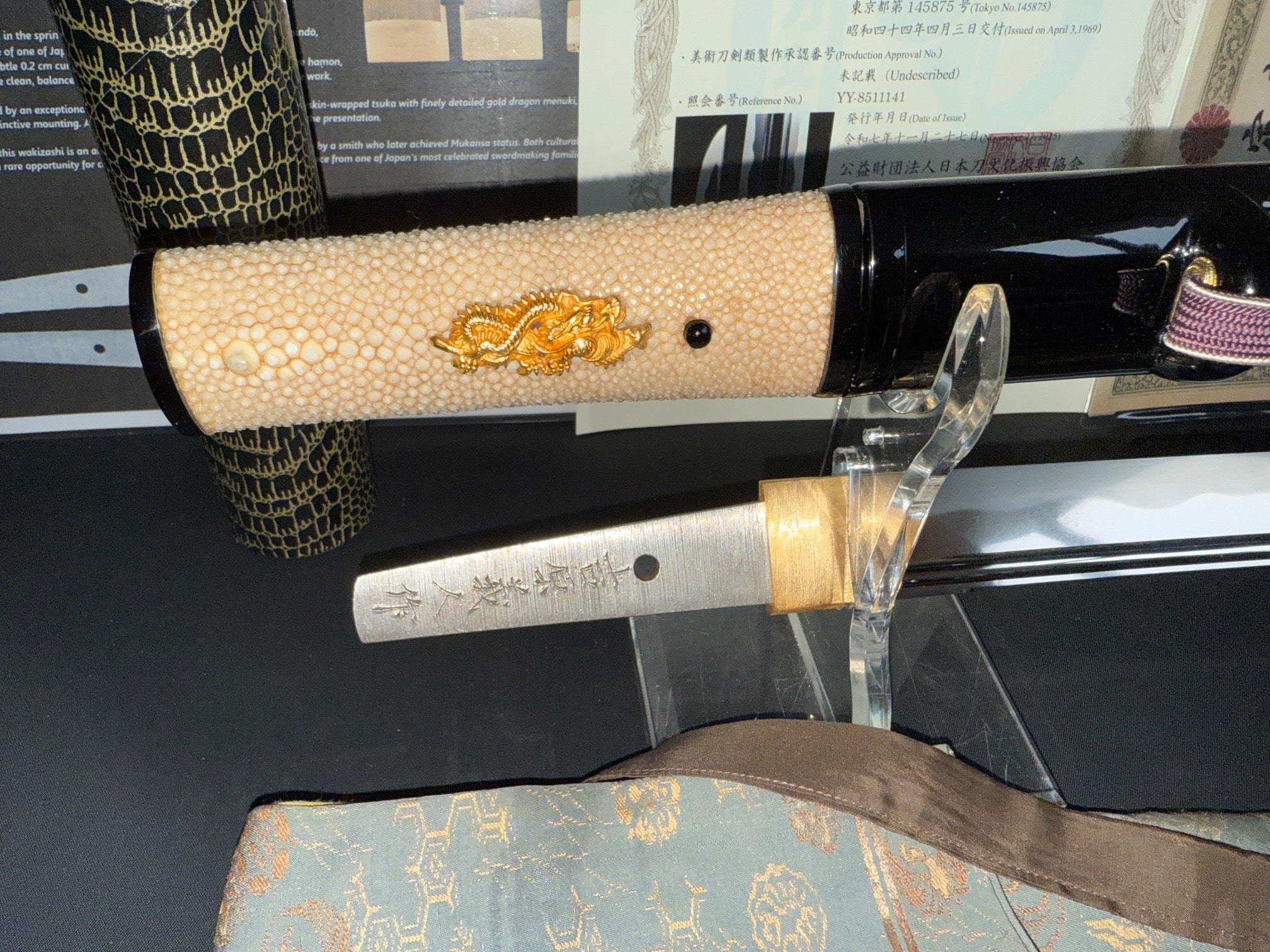
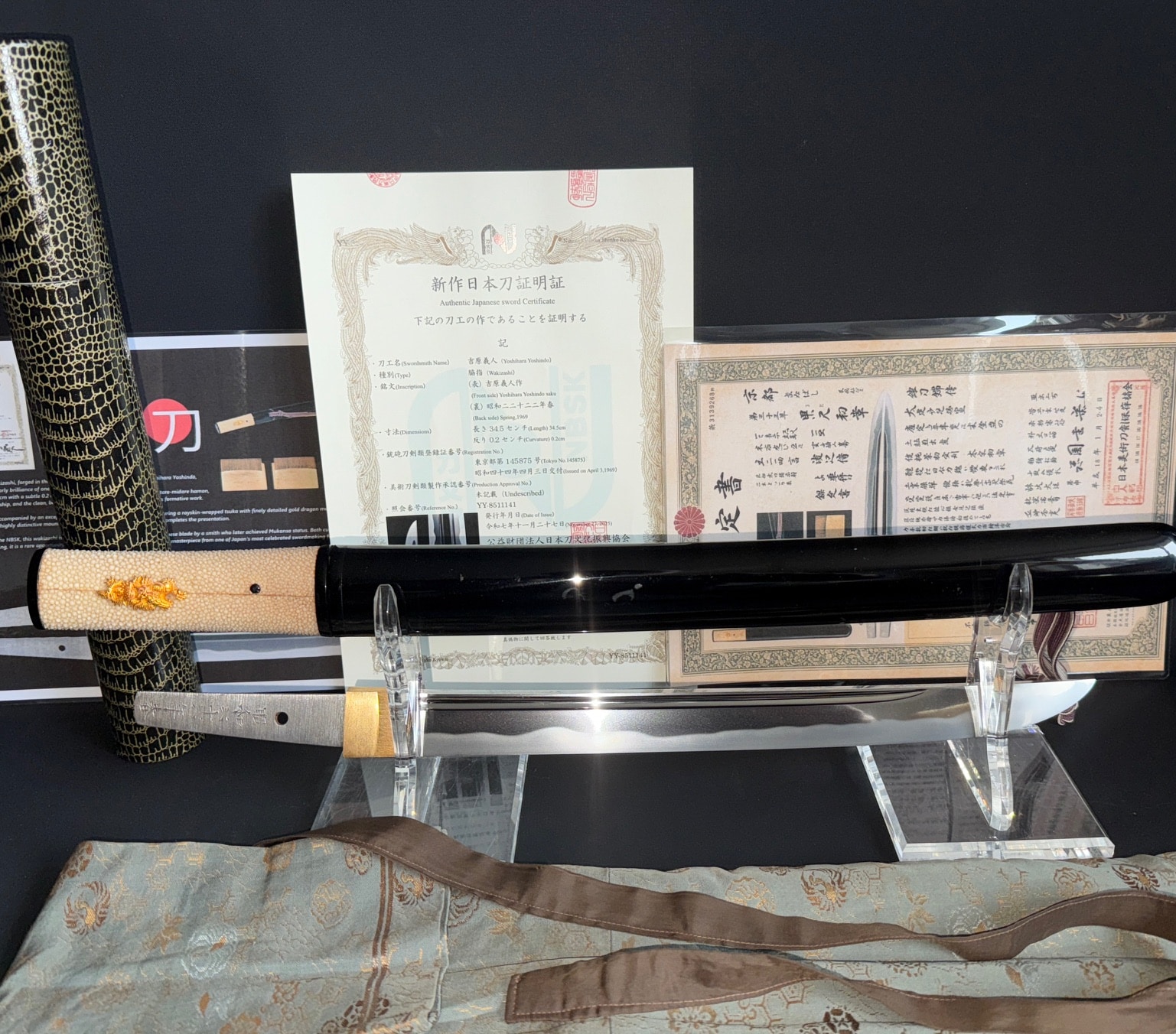
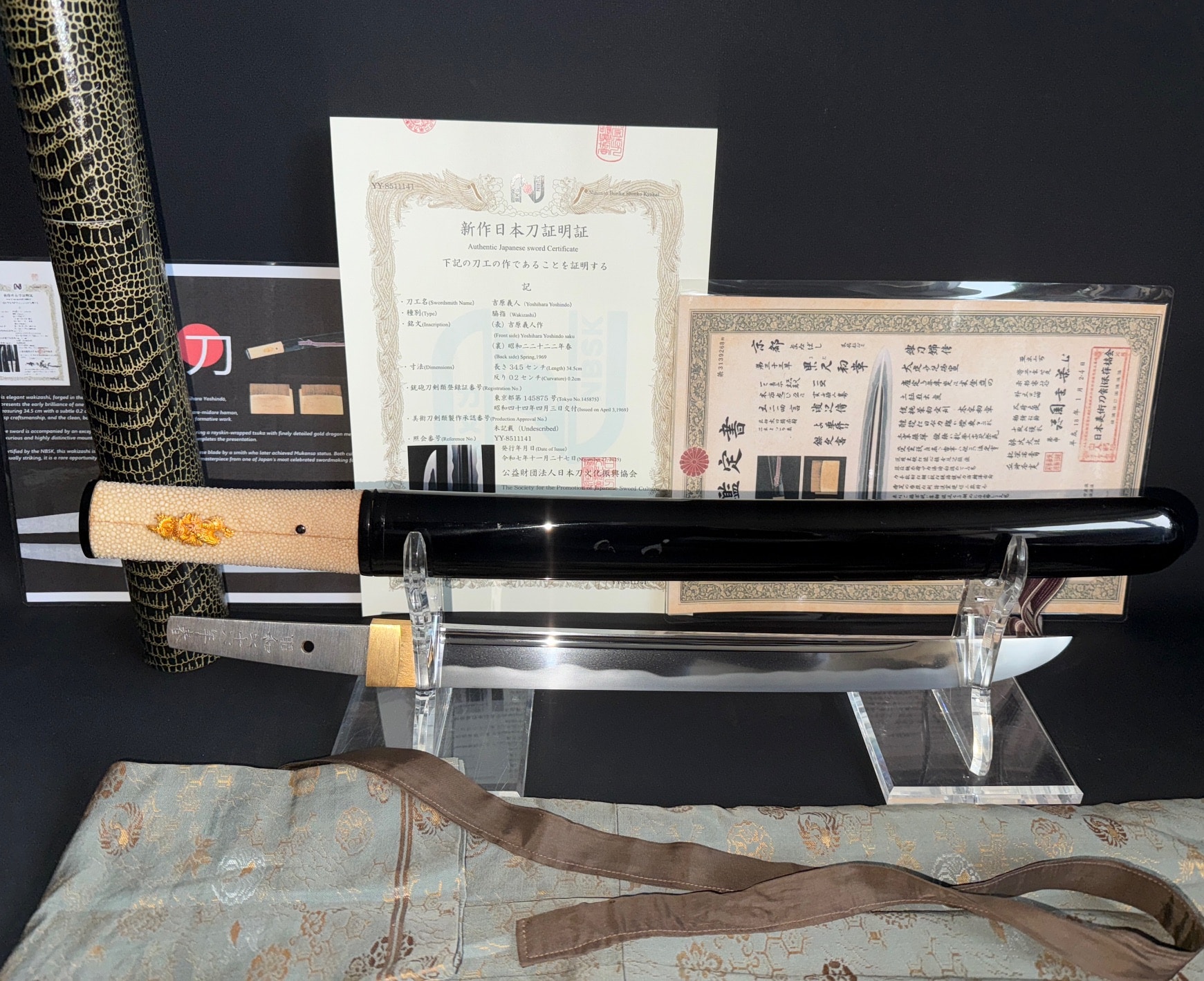
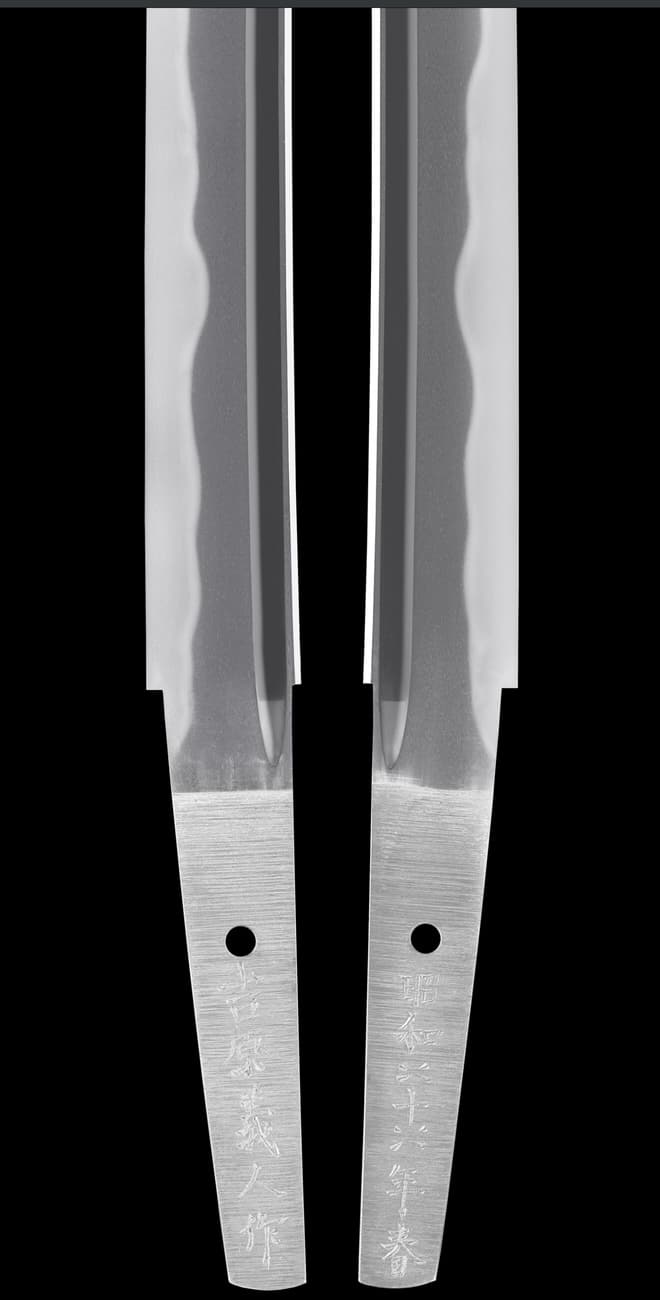
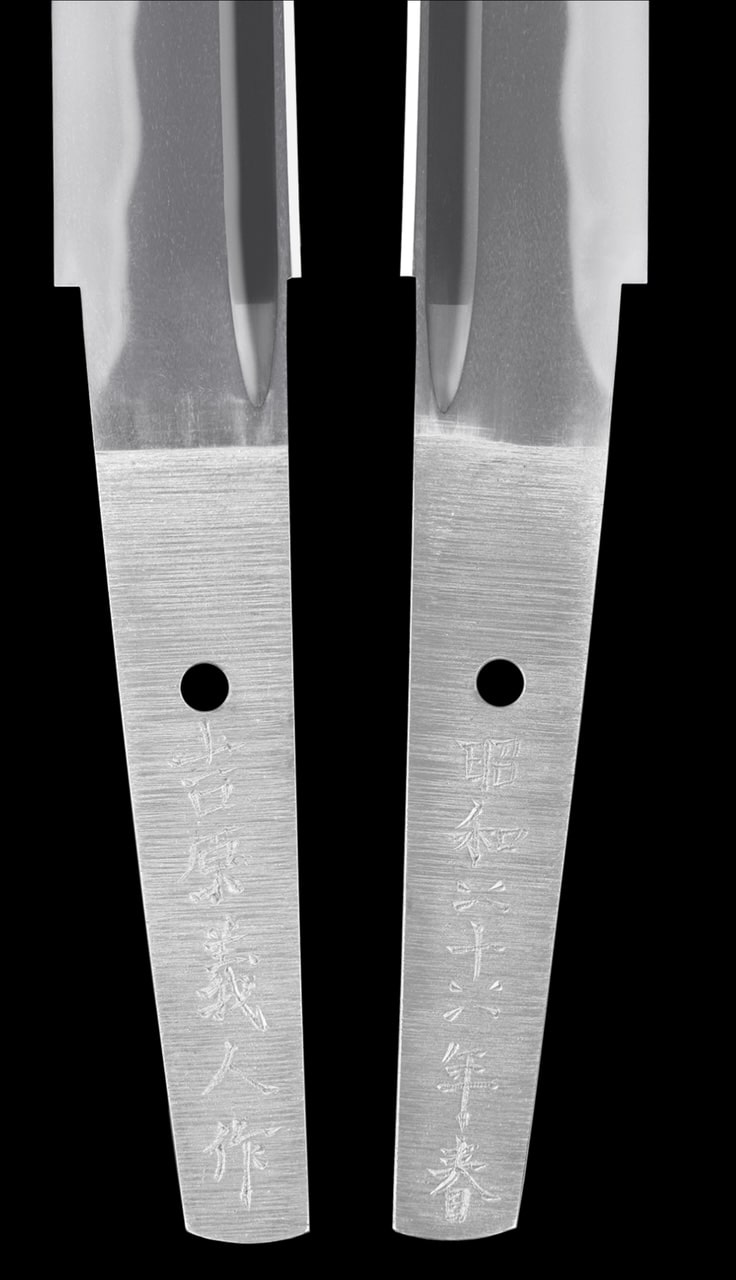
The blade measures 34.5 cm (1 shaku 1 sun 3 bu), a classic and harmonious wakizashi length, with a subtle curvature of 0.2 cm. Its proportions follow the dignified, elegant style that Yoshindo would later become famous for: a clean, powerful silhouette with crisp geometry and a superbly defined shinogi. The blade features one mekugi-ana, and the nakago bears Yoshindo’s clear signature on the omote, with the date inscribed on the ura.
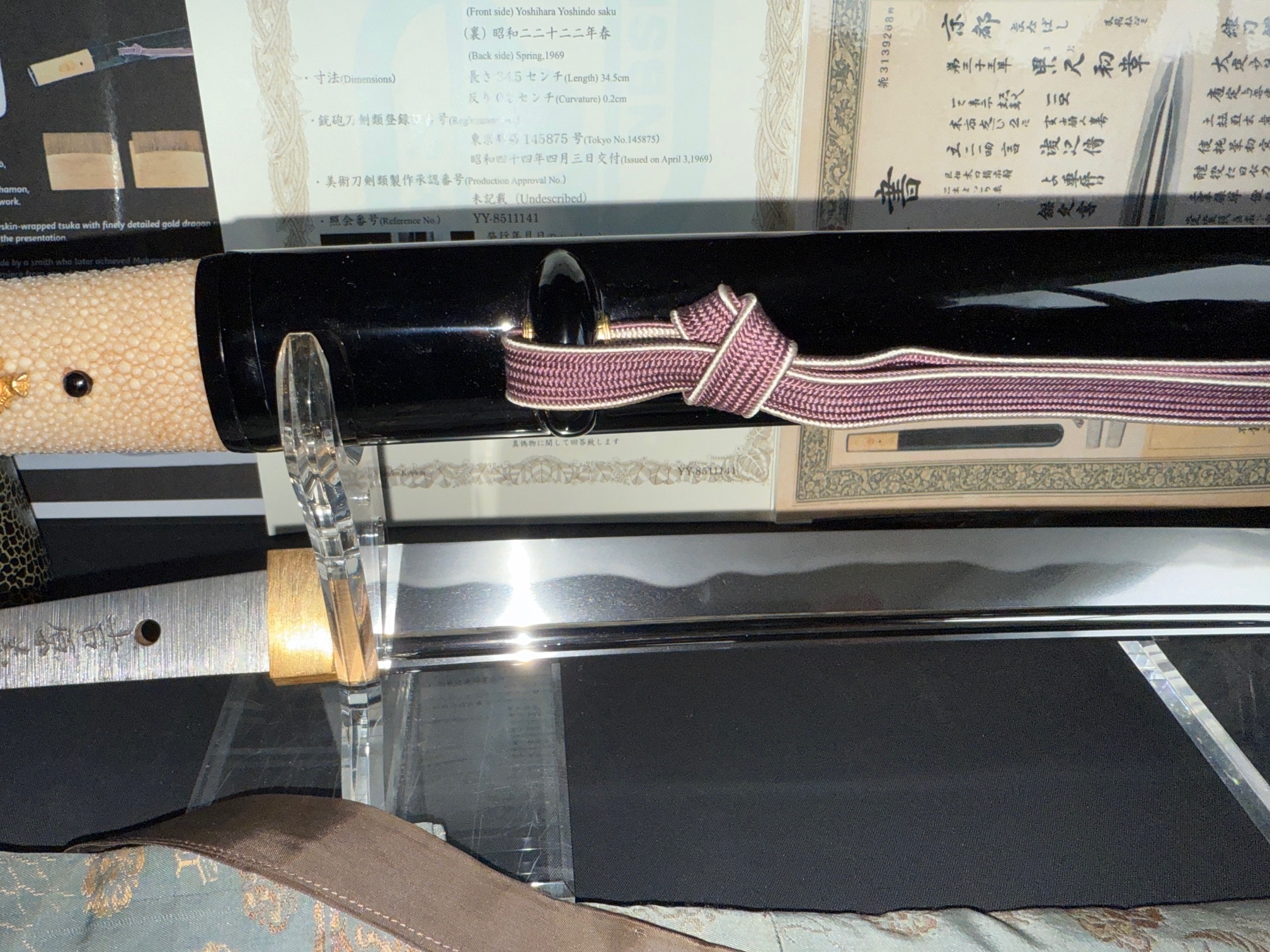
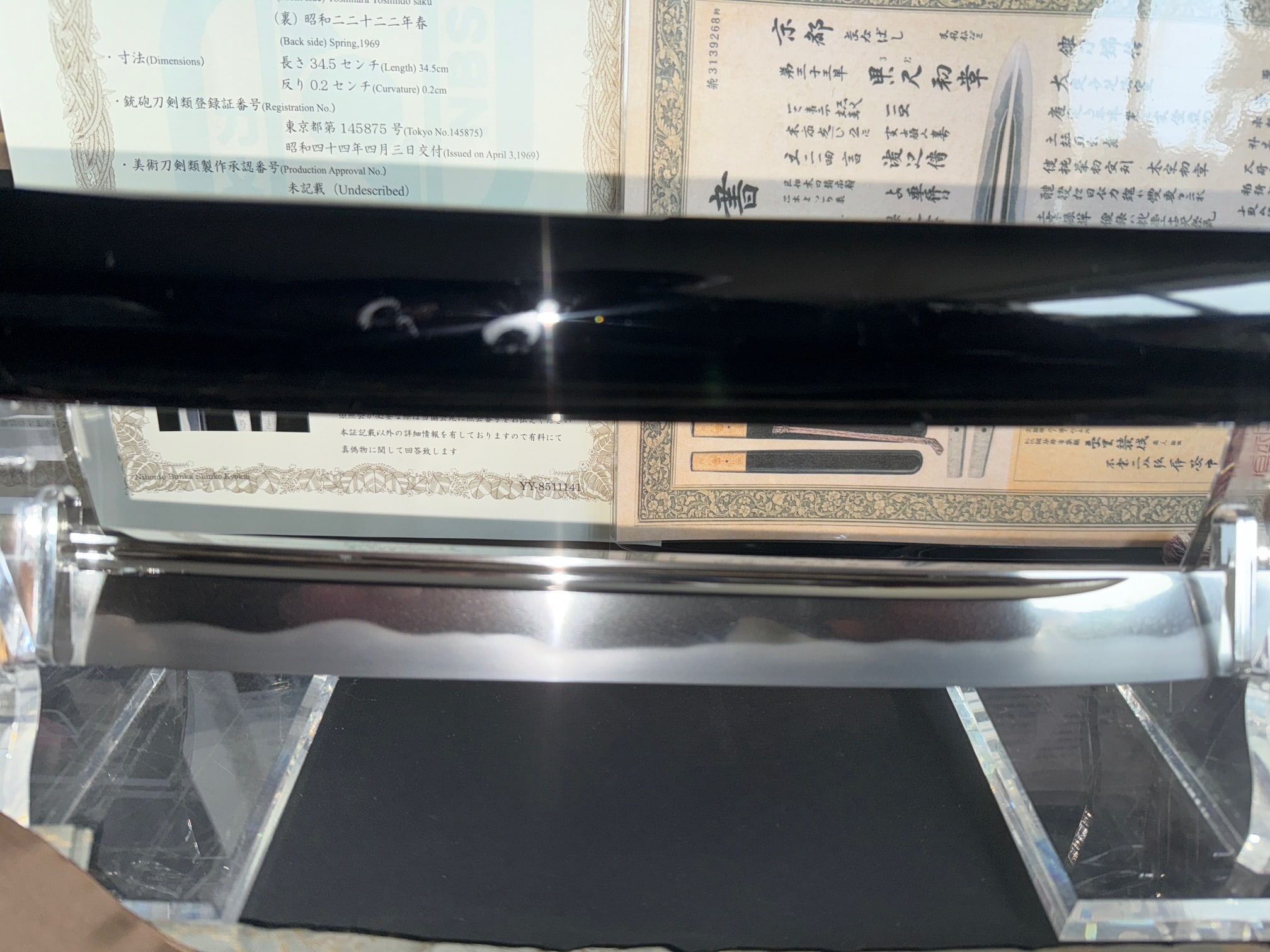
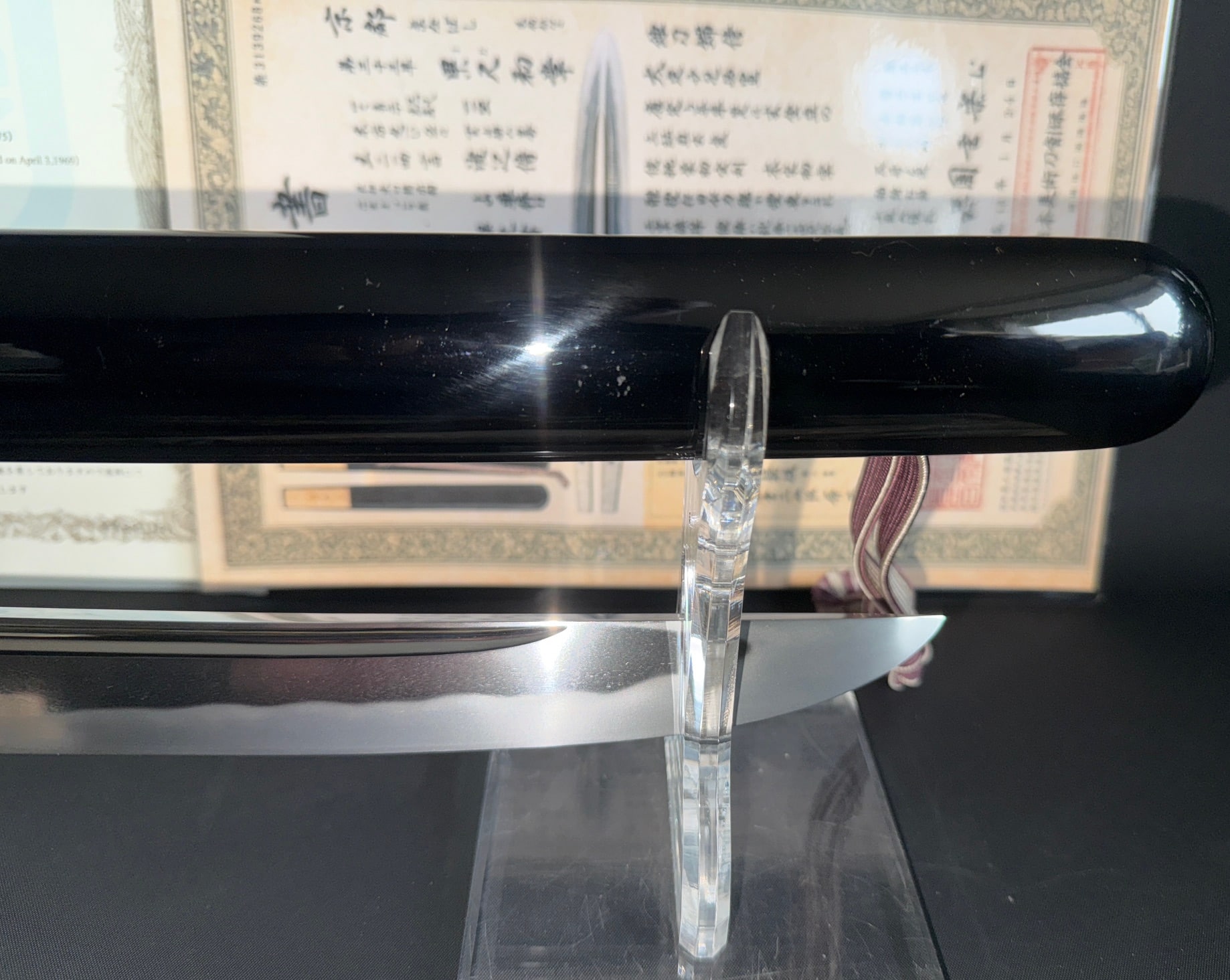
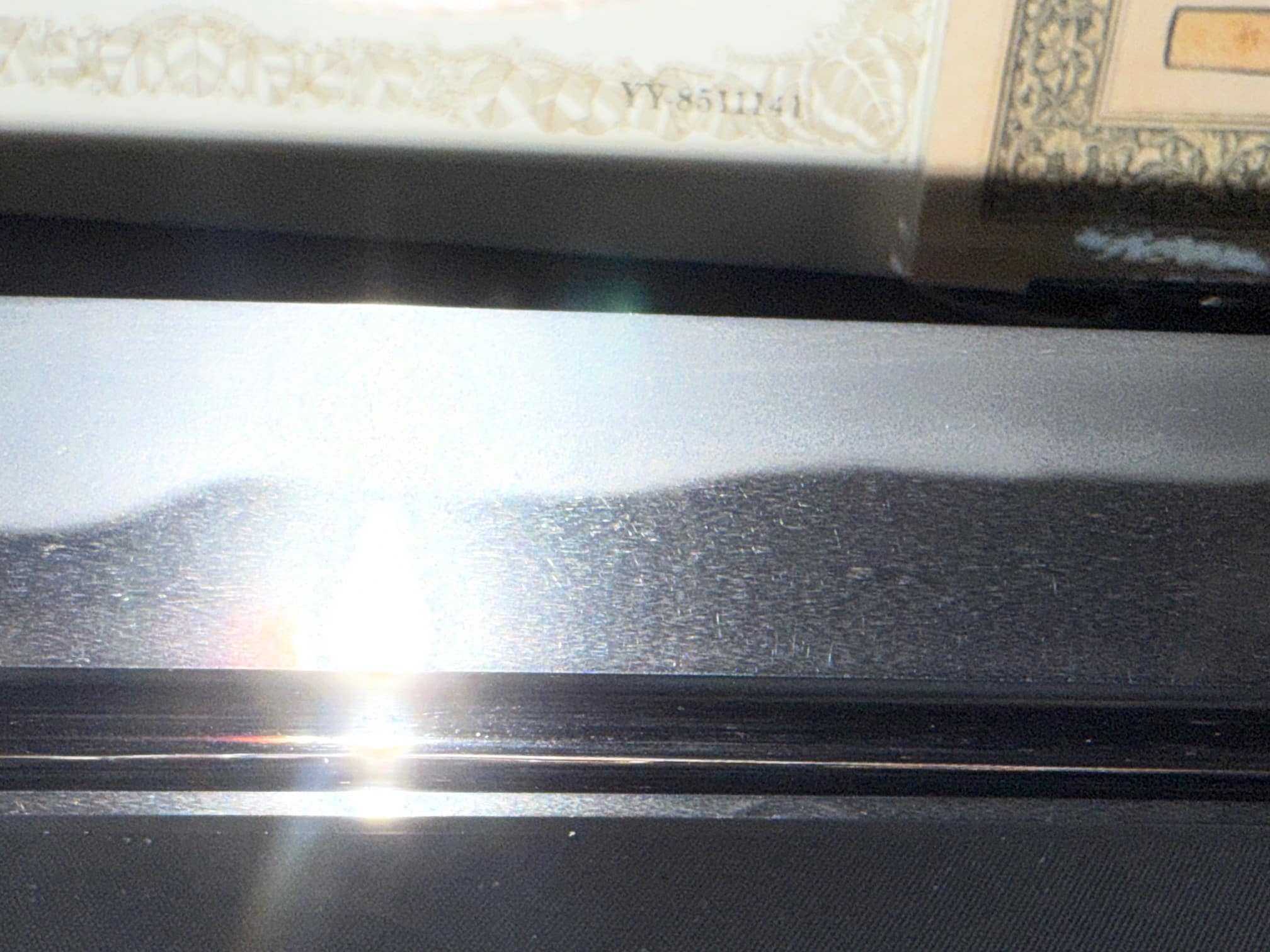
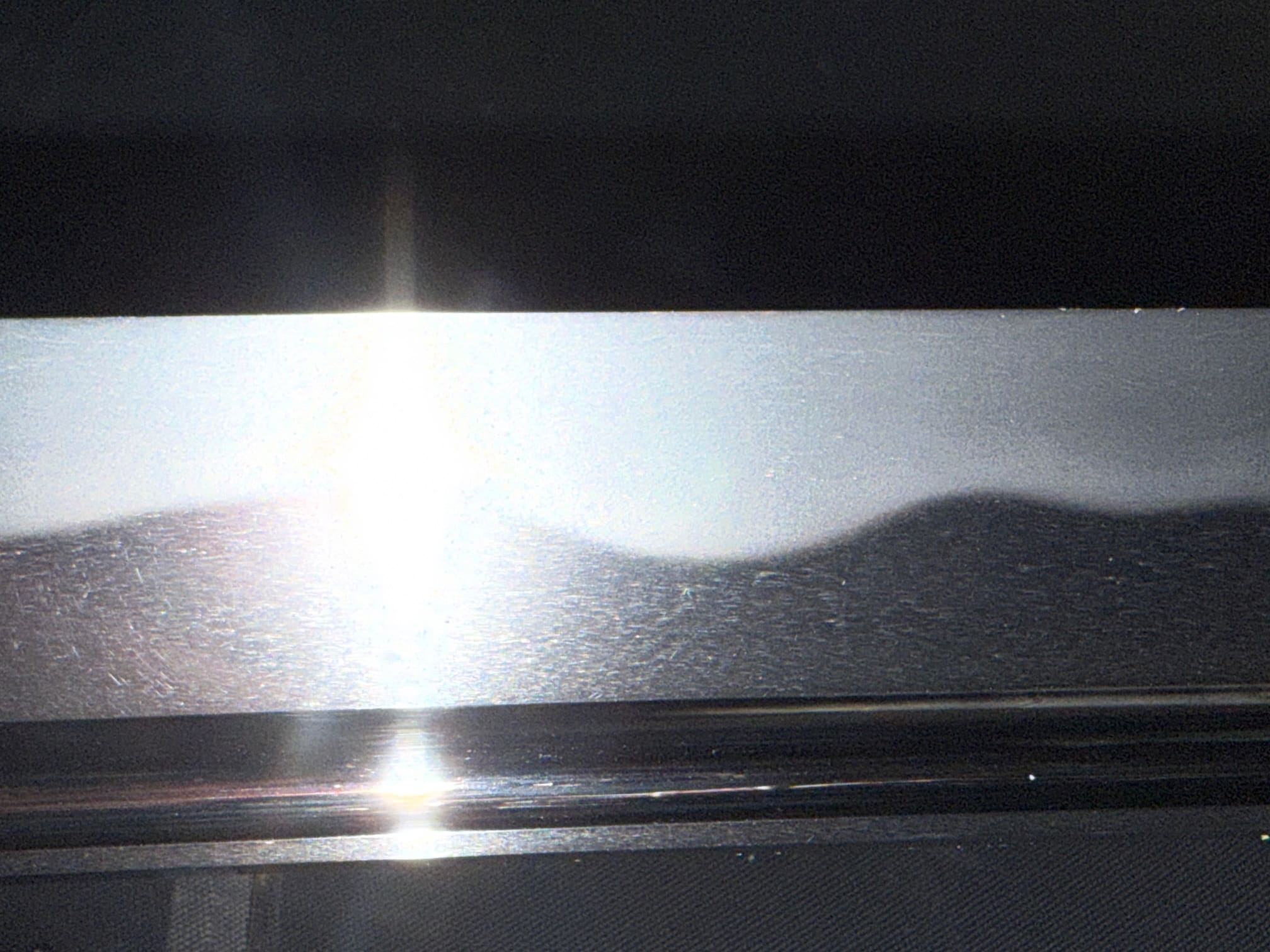
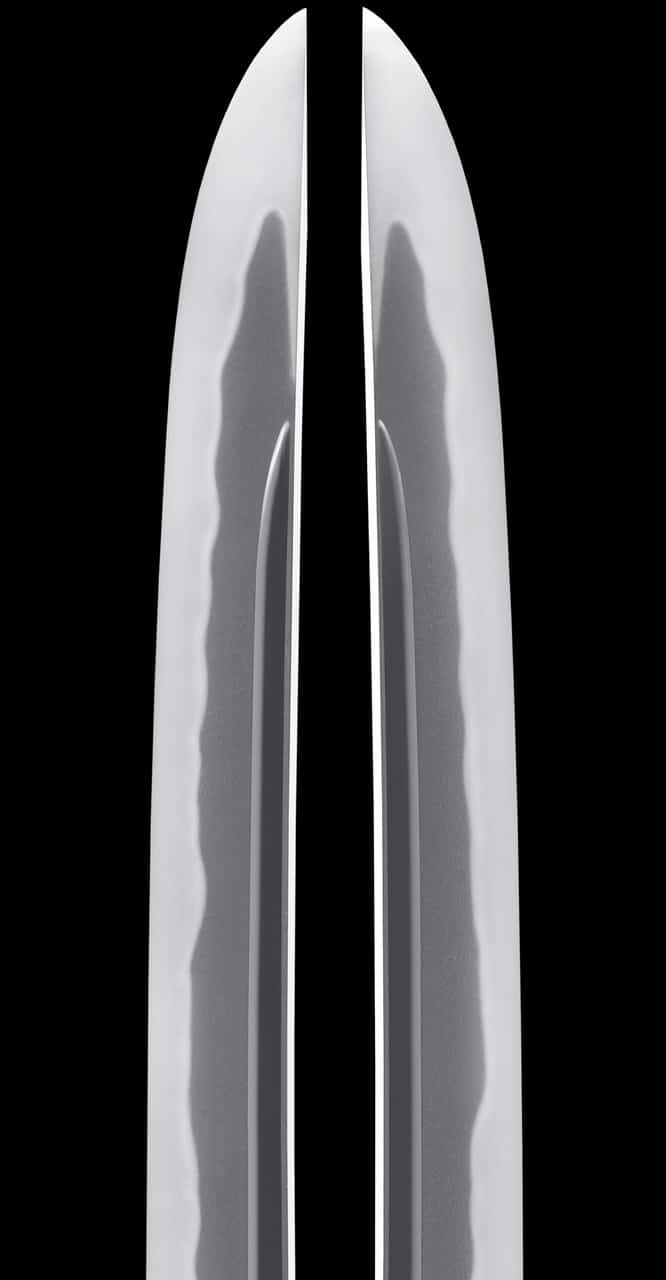
The hamon displays a flowing, well-controlled notare-midare reminiscent of classical traditions but executed with the characteristic brightness and clarity of Yoshindo’s early Showa-period work. Even at this stage in his life, his mastery of temperature control, yakiba shaping, and steel refinement is unmistakable. The jihada appears tight, luminous, and beautifully polished, suggesting a careful forging process with high-quality tamahagane.
The kissaki is well proportioned, with the boshi flowing naturally from the midare line before rounding deeply and returning with precision. These features demonstrate Yoshindo’s commitment to studying koto and shinshintō forms while adapting them into modern work of excellent artistic coherence.
Born in 1943 in Tokyo, Yoshihara Yoshindō is widely regarded as one of the most influential swordsmiths of the 20th and 21st centuries. He trained under his grandfather, Yoshihara Kuniie, and later worked closely with his brother, Yoshihara Shoji (Kuniie II), forming one of the most respected swordmaking families in Japan.
Through tireless dedication to reviving classical forging traditions after the war, Yoshindo became a central figure of the modern Nihonto renaissance. His blades have been exhibited internationally and collected by world-renowned institutions such as the Metropolitan Museum of Art and the Museum of Fine Arts, Boston.
In 1982, Yoshindo was awarded the prestigious Mukansa title, placing him among Japan’s highest-ranked smiths. This wakizashi, created more than a decade before that honor, already shows the qualities that would establish him as a master: precision, purity of line, and an artistic sensibility rooted deeply in tradition.
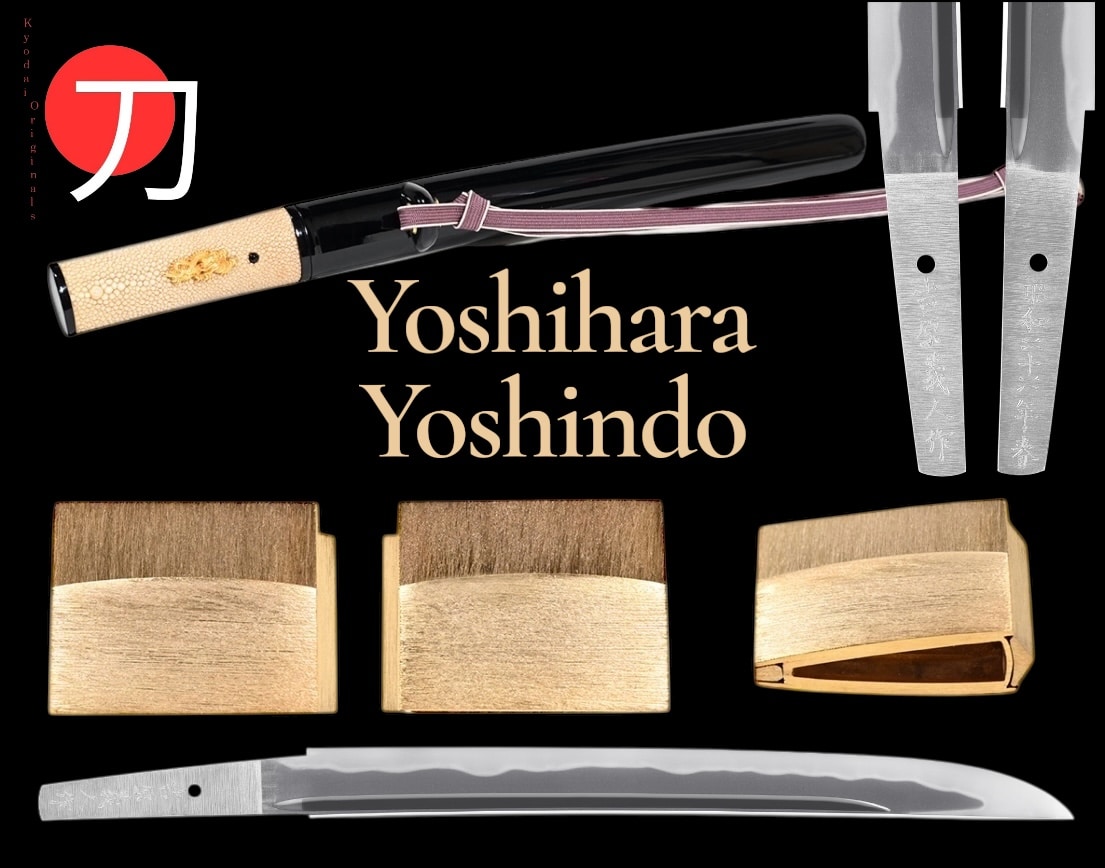
The mounting accompanying this wakizashi is a remarkable highlight in itself. It features:
Smooth, reflective, and finished to a mirror standard, the saya displays a level of craftsmanship consistent with premium custom shirasaya used for exhibition and preservation.
The tsuka is wrapped with beautifully uniform samegawa, offering a contrasting pale, natural tone against the black lacquer. This unusual combination gives the mounting a luxurious yet restrained aesthetic.
Each side of the tsuka is adorned with an intricately detailed dragon menuki crafted in gold. The carving displays excellent depth and dynamism, giving the mounting a sense of vitality associated with the dragon as a symbol of power, protection, and imperial energy.
The transitions between rayskin and lacquer are expertly executed, with smooth lines and impeccable precision—details rarely seen on standard shirasaya.
A refined accent that adds to the dignified overall presentation.
Together, these features elevate the piece from a simple storage mount to an artistic statement in itself—elegant, ceremonial, and worthy of display.
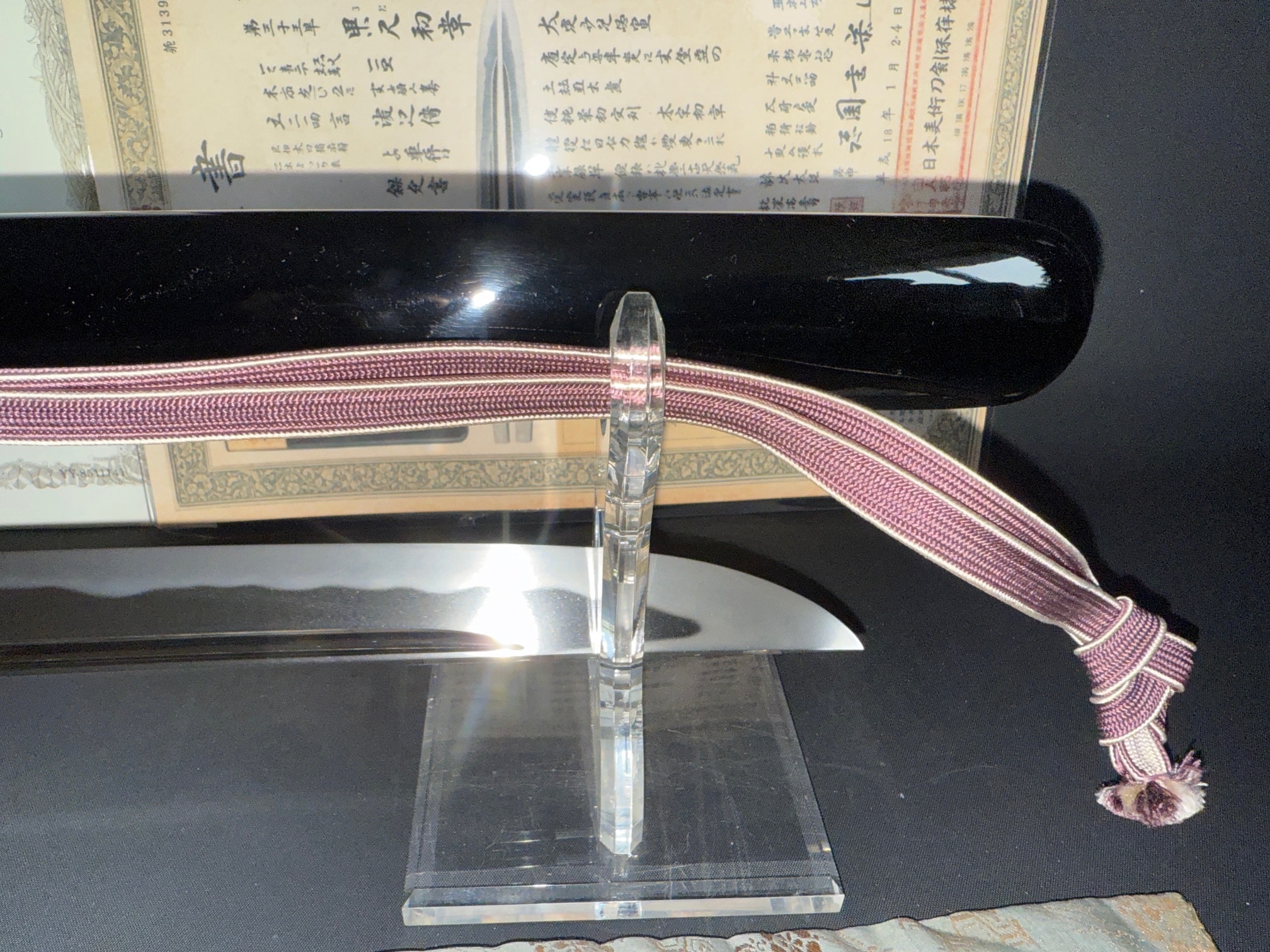
The sword includes a beautifully crafted two-tone habaki, showing brushed texturing on the upper section and polished smoothness on the lower. The lines are clean, the fit is tight, and the symmetry speaks to high-quality craftsmanship. This type of habaki is typically reserved for blades of importance and prestige.
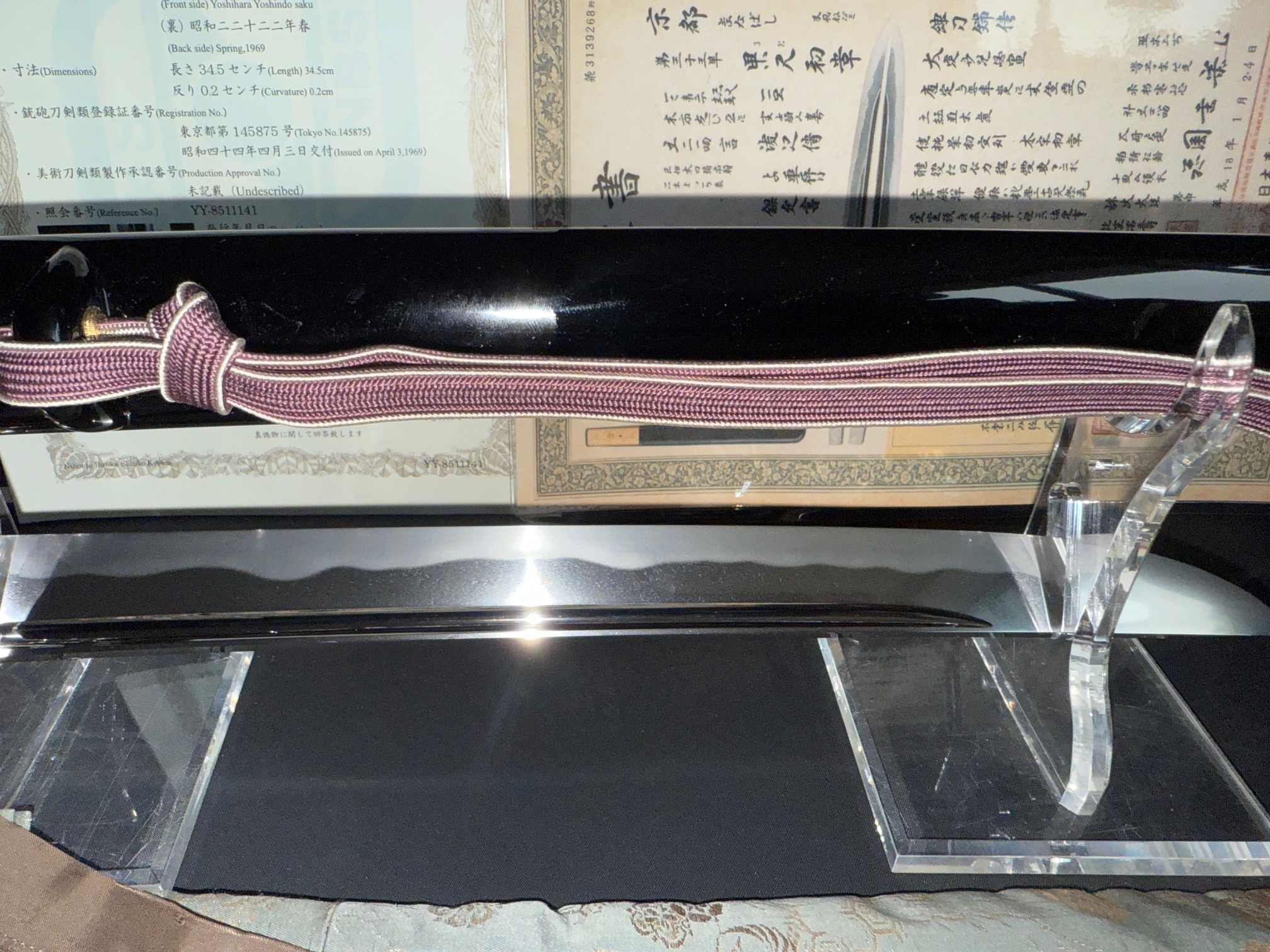
The sword comes with a full Authentic Japanese Sword Certificate (Shinsaku Nihonto Shomeisho) issued by the NBSK, documenting:
Sword type: Wakizashi
Swordsmith: Yoshihara Yoshindō
Date of forging: Spring, Showa 44 (1969)
Length: 34.5 cm
Curvature: 0.2 cm
Registration details and approval numbers
This certificate confirms that the blade is an authenticated, traditionally forged Japanese sword by a recognized master.
This Yoshihara Yoshindō wakizashi is a rare and superbly preserved example of early work by one of Japan’s greatest modern smiths. With its elegant blade, flawless polish, and extraordinary custom shirasaya featuring rayskin and golden dragon menuki, it embodies the harmony of martial tradition and artistic refinement.
For collectors of gendaitō, Yoshindo’s work occupies the highest tier of desirability, and a wakizashi mounted and certified to this standard is exceptionally hard to find. It represents an opportunity to acquire a piece worthy of museum exhibition, reflecting both the legacy of the Yoshihara family and the enduring spirit of the Japanese sword.

© 2025 Kyodai Originals is made with ❤ by Nieuwblik.com


