

€ 17.000,00
1 in stock
Ono Yoshimitsu stands among the most respected and accomplished swordsmiths of modern Japan. Recognized as a Mukansa swordsmith, a rare honor granted only to masters whose work is considered beyond competitive evaluation, he represents the very highest standard in the living tradition of Japanese swordmaking. His swords are admired for their flawless craftsmanship, classical beauty, and deep spiritual presence, embodying the timeless essence of the Japanese blade.
Ono Yoshimitsu was born in 1948 in Niigata Prefecture, a region long associated with fine metalwork and traditional craftsmanship. His journey into swordmaking began in 1969, when he entered apprenticeship under two legendary figures of the modern era: Yoshihara Yoshito and Yoshihara Shōji. These masters were instrumental in the revival and preservation of traditional Japanese swordmaking after World War II, and their influence shaped Yoshimitsu’s technical precision as well as his philosophical approach to the craft.
During years of rigorous training, Yoshimitsu learned not only the physical demands of forging—steel selection, folding, shaping, and differential hardening—but also the deeper values of patience, humility, and respect for tradition. This balance between skill and spirit would become a defining feature of his work.
In 1975, he received official authorization from the Agency for Cultural Affairs to produce art swords (bijutsu-tō), marking his full entry into the professional world of Japanese swordsmithing. That same year, he debuted at the prestigious Shinsaku Meitō Exhibition, where he was awarded the Encouragement Prize, an early recognition of his exceptional talent and promise.
Over the following decades, Ono Yoshimitsu consistently distinguished himself at the highest level. His works earned numerous prestigious awards, including:
The Takamatsunomiya Award, one of the most esteemed honors in modern swordmaking
The Commissioner of the Agency for Cultural Affairs Award, recognizing outstanding cultural contribution
Mukansa Certification (1987), confirming that his work had reached a level of mastery exempt from judging
The Mukansa title places Yoshimitsu among a very small group of elite swordsmiths whose craftsmanship is universally acknowledged as exemplary. From that point onward, his blades were no longer evaluated in competition, but rather regarded as reference works of the tradition itself.
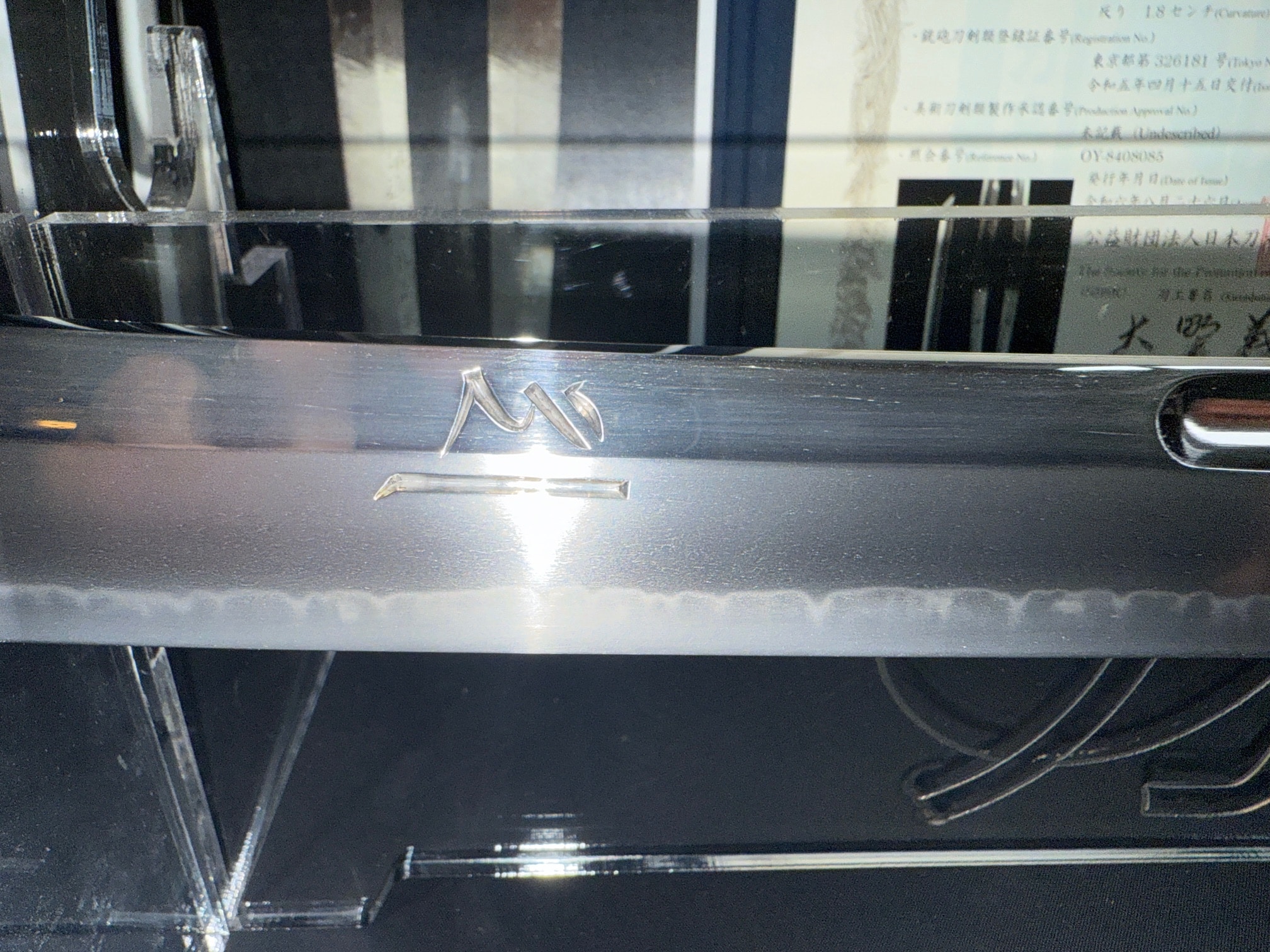
Ono Yoshimitsu’s swords are renowned for their elegant sugata (overall form), refined jigane (steel surface), and vibrant yet controlled hamon (temper line). His work reflects a deep understanding of classical schools, particularly the traditions of the Kamakura period, while remaining unmistakably his own.
One of his most celebrated expressions is the Ōno Chōji hamon, a luxurious interpretation of the traditional clove-pattern temper line. This style is characterized by rhythm, balance, and depth, demonstrating both technical mastery and artistic sensitivity. The hamon appears lively yet dignified, never exaggerated, revealing the smith’s disciplined control.
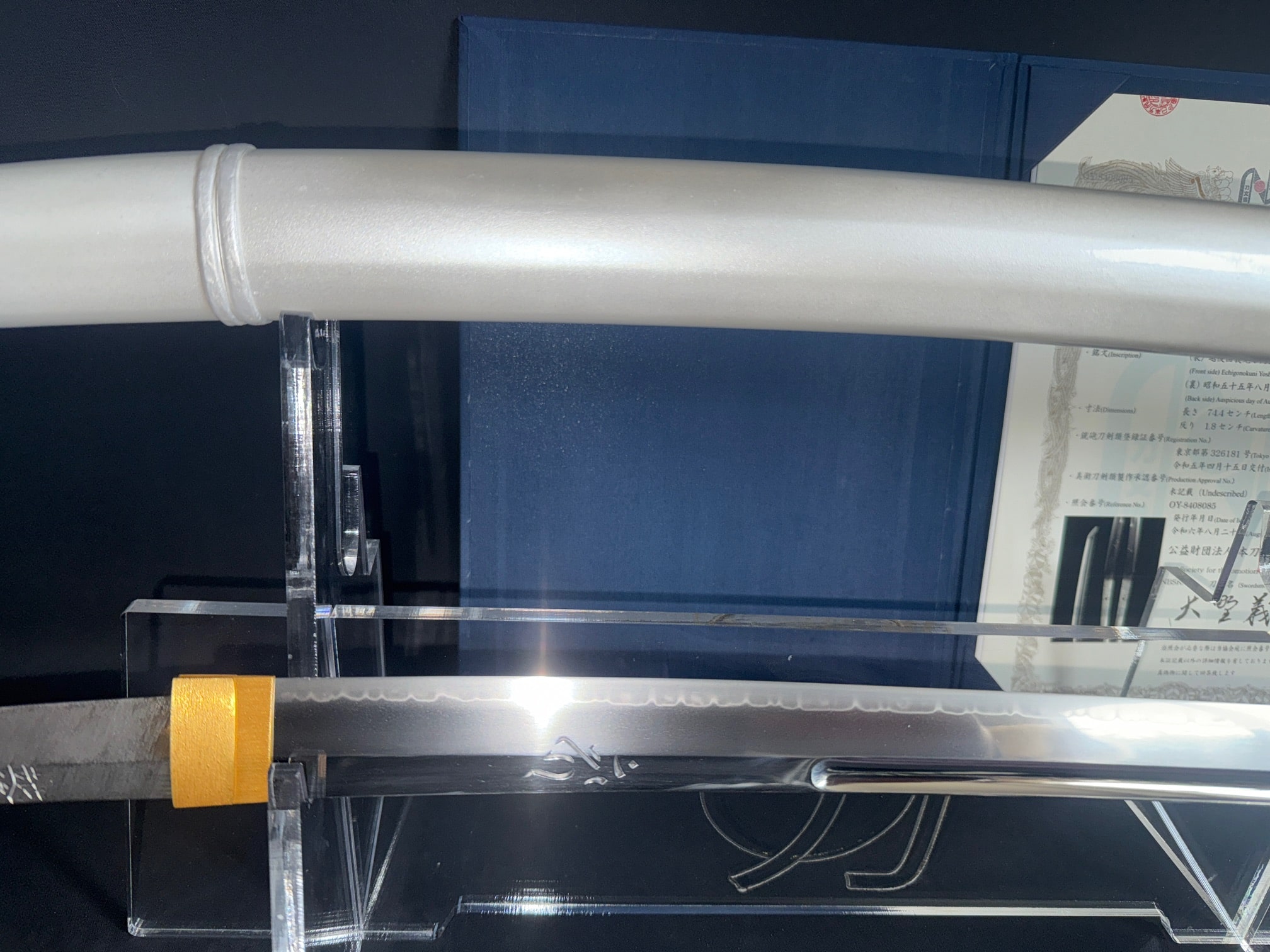
Equally admired are his Yamadori-ke replicas, inspired by early Kamakura masterpieces. These blades are noted for their exceptionally refined nioi-guchi, the luminous, mist-like crystalline boundary along the cutting edge. Achieving such clarity and consistency is considered a hallmark of supreme swordmaking skill.
Every blade forged by Yoshimitsu reflects a perfect union of function, beauty, and spirit—qualities that lie at the heart of true Nihontō.
Despite his fame and accomplishments, Ono Yoshimitsu is known for his quiet humility. Among collectors, scholars, and fellow swordsmiths, he is often described as a “swordsmith among swordsmiths”—a title that reflects not only his technical ability, but also his character and dedication.
His philosophy emphasizes patience and respect for process. He believes that true quality cannot be rushed or forced, and that each step in forging must be approached with sincerity and care. For Yoshimitsu, the sword is not merely an object, but a vessel of intention, discipline, and spirit.
Today, his works are held in important private collections, displayed in international exhibitions, and studied by aspiring swordsmiths as benchmarks of modern excellence. Since the Meiji period, very few smiths have achieved such enduring recognition, securing Yoshimitsu’s place as one of the most important living figures in Japanese swordmaking.
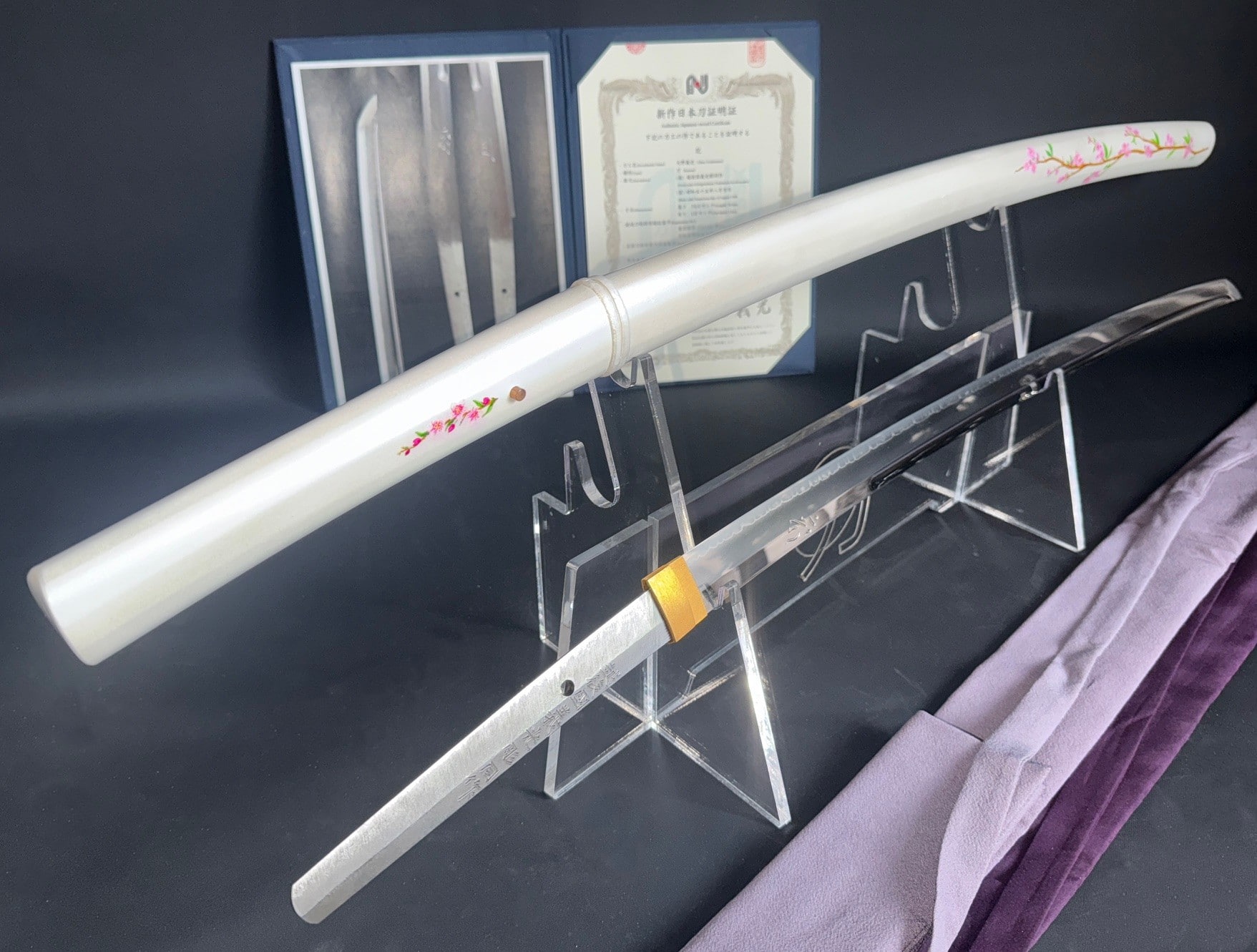
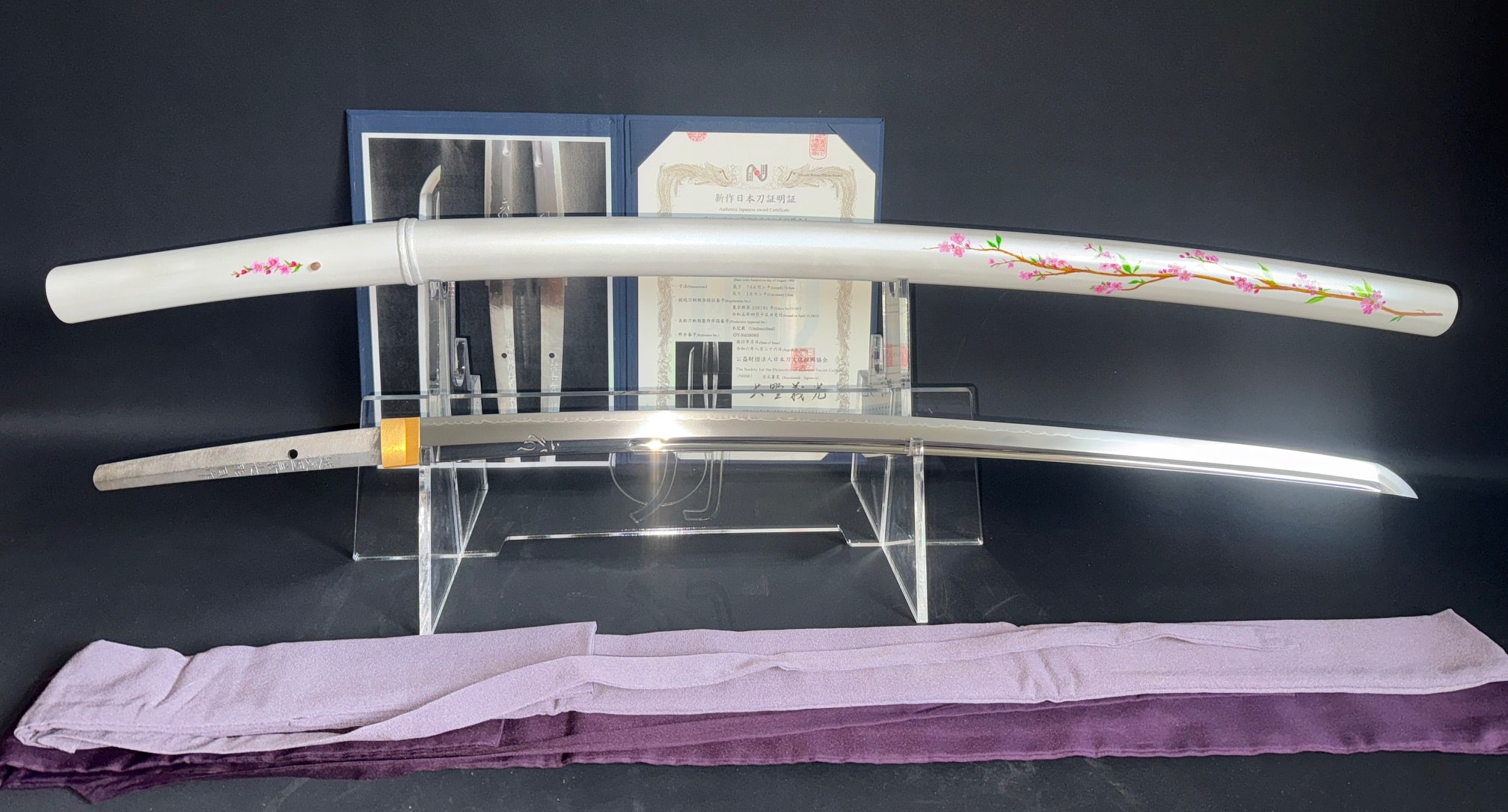
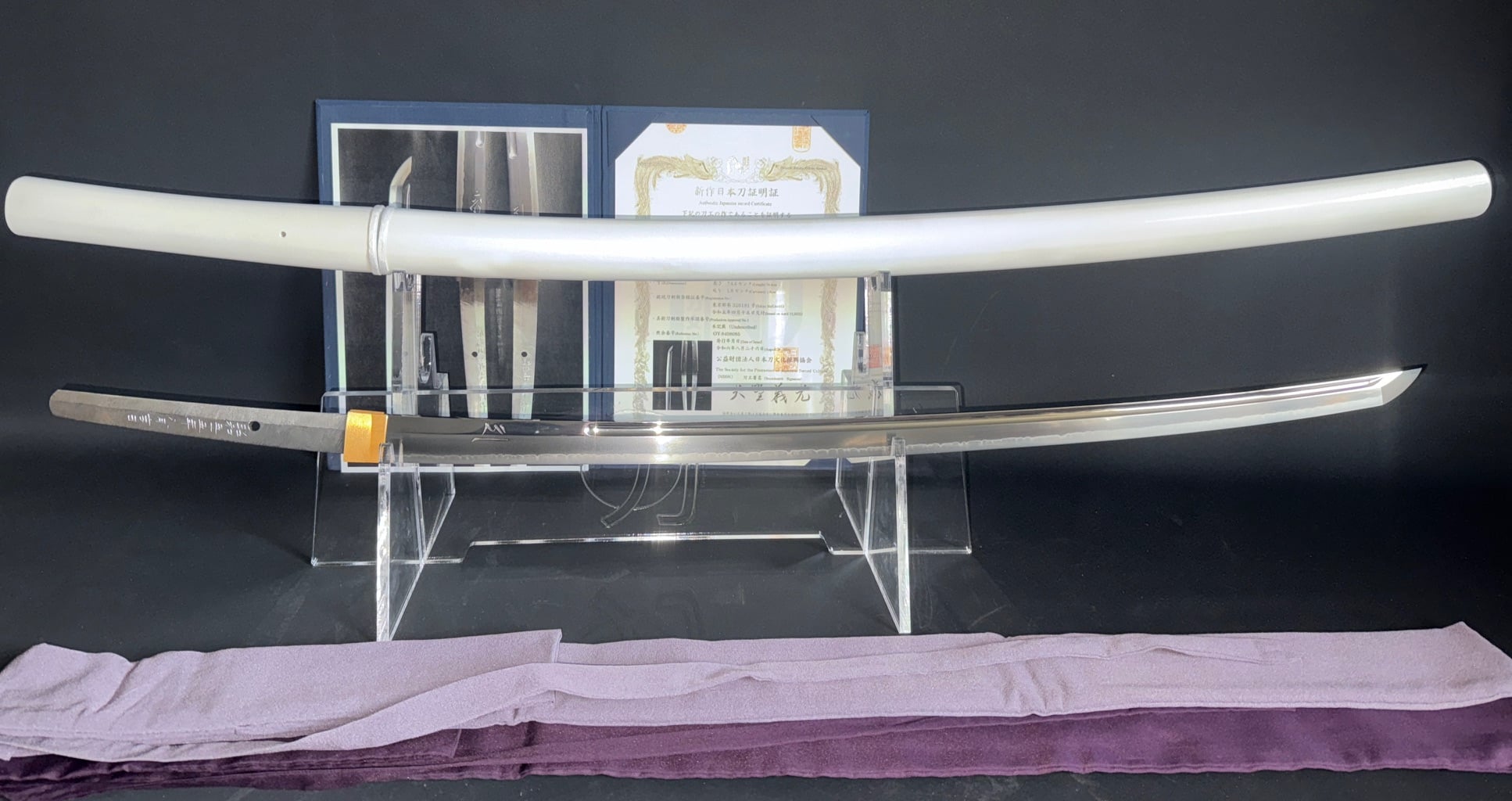
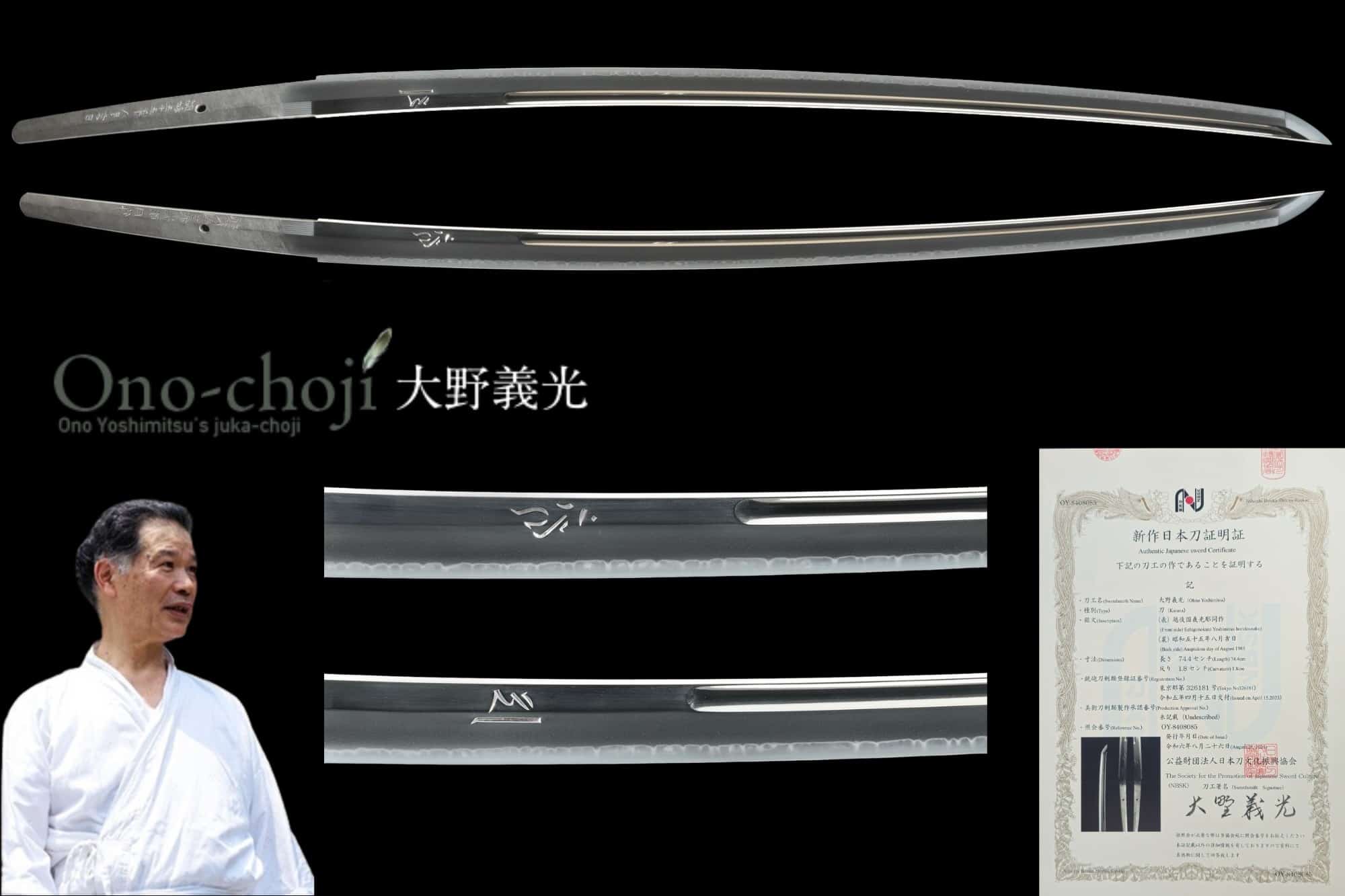
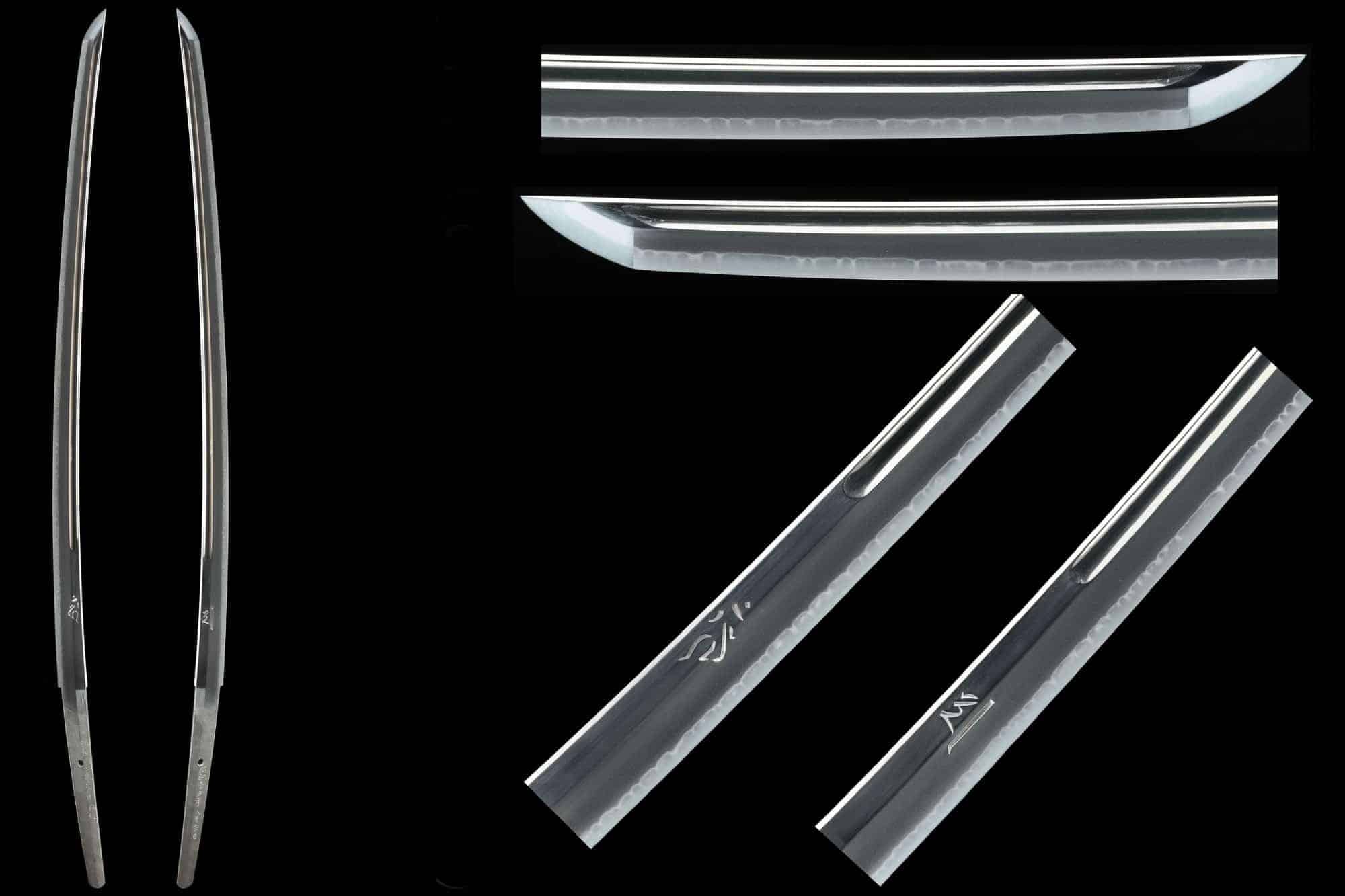
The katana presented here is an outstanding example of Ono Yoshimitsu’s mature work.
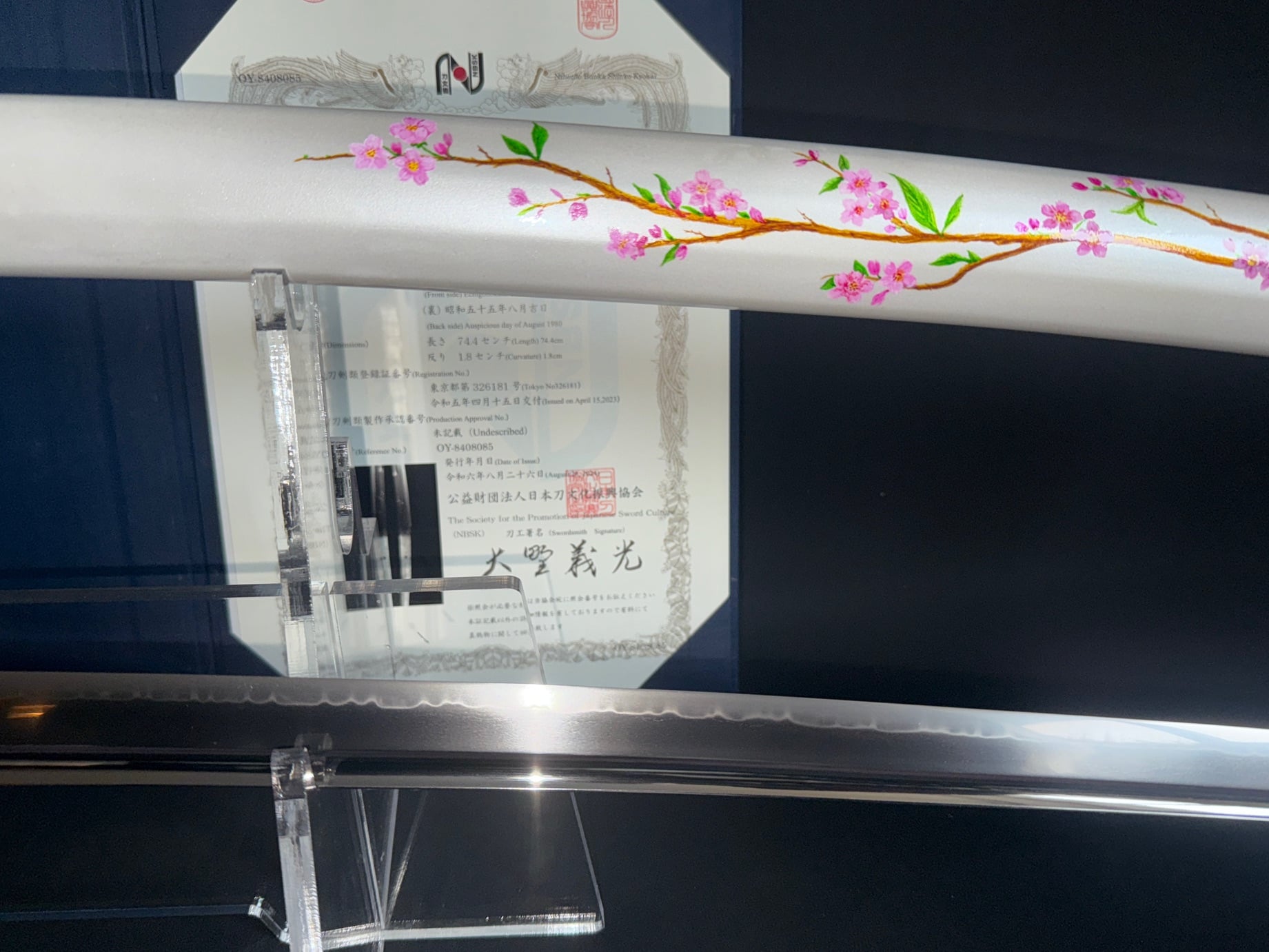
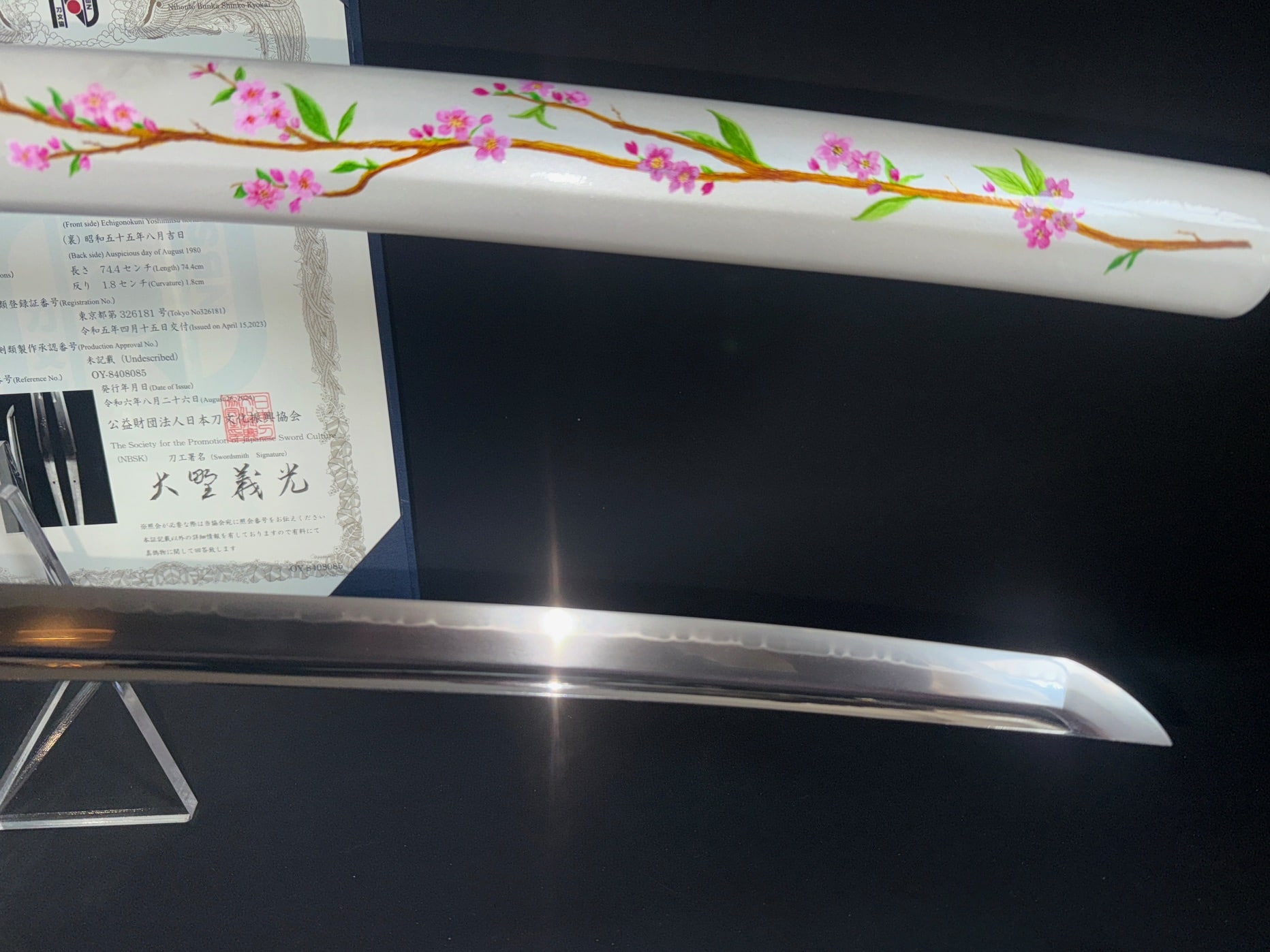
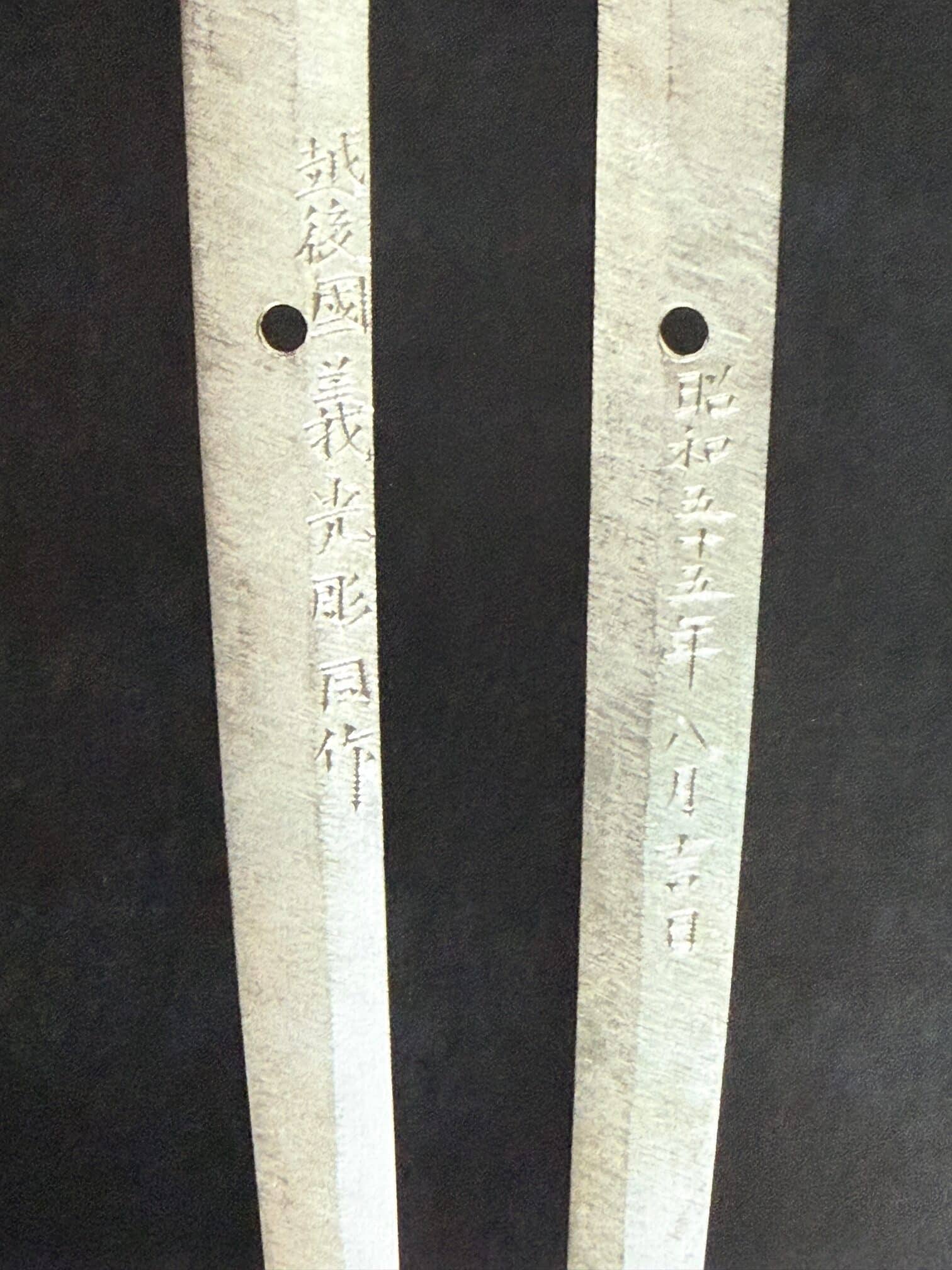
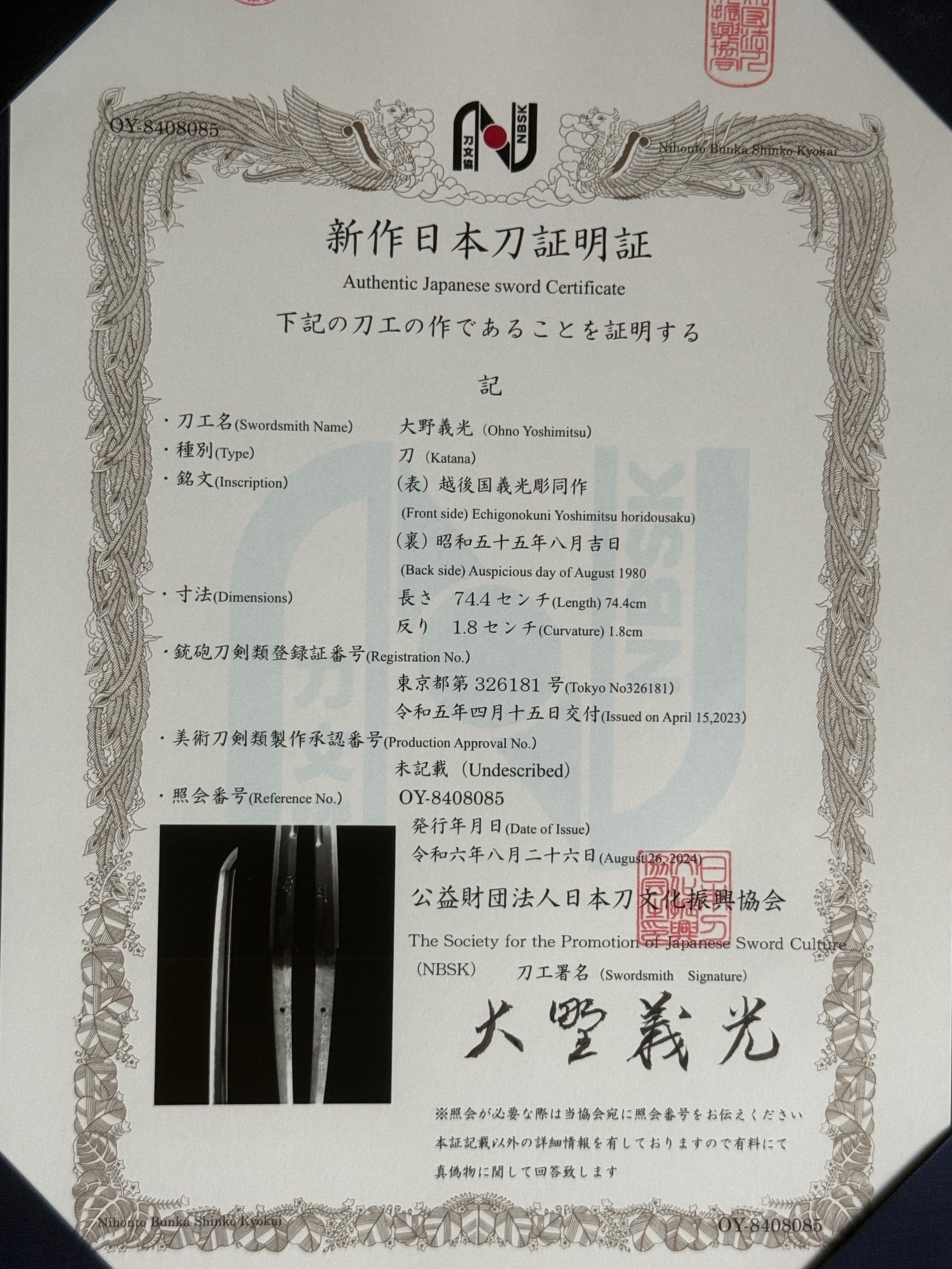
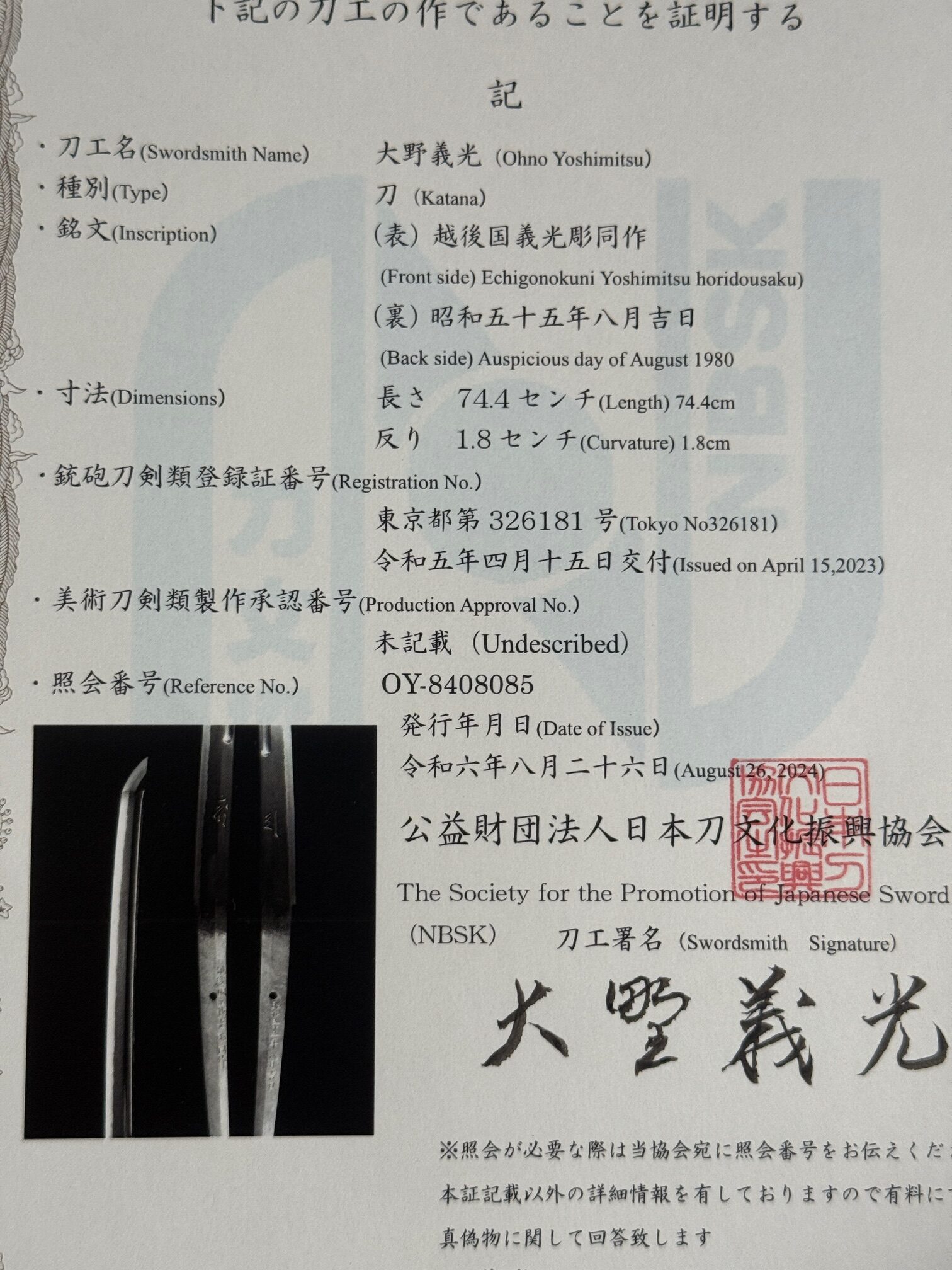
Smith: Ono Yoshimitsu (Echigo no Kuni Yoshimitsu)
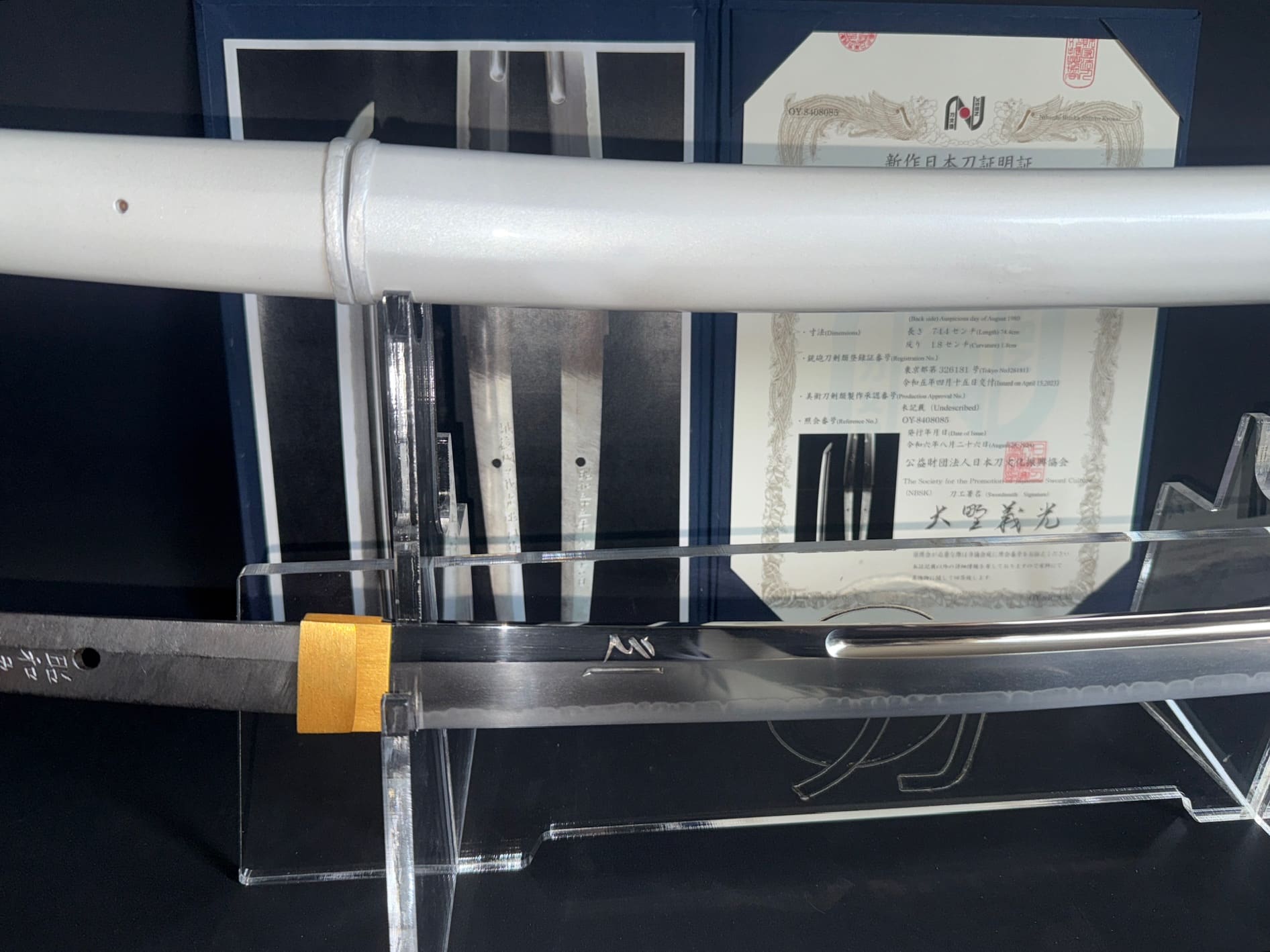
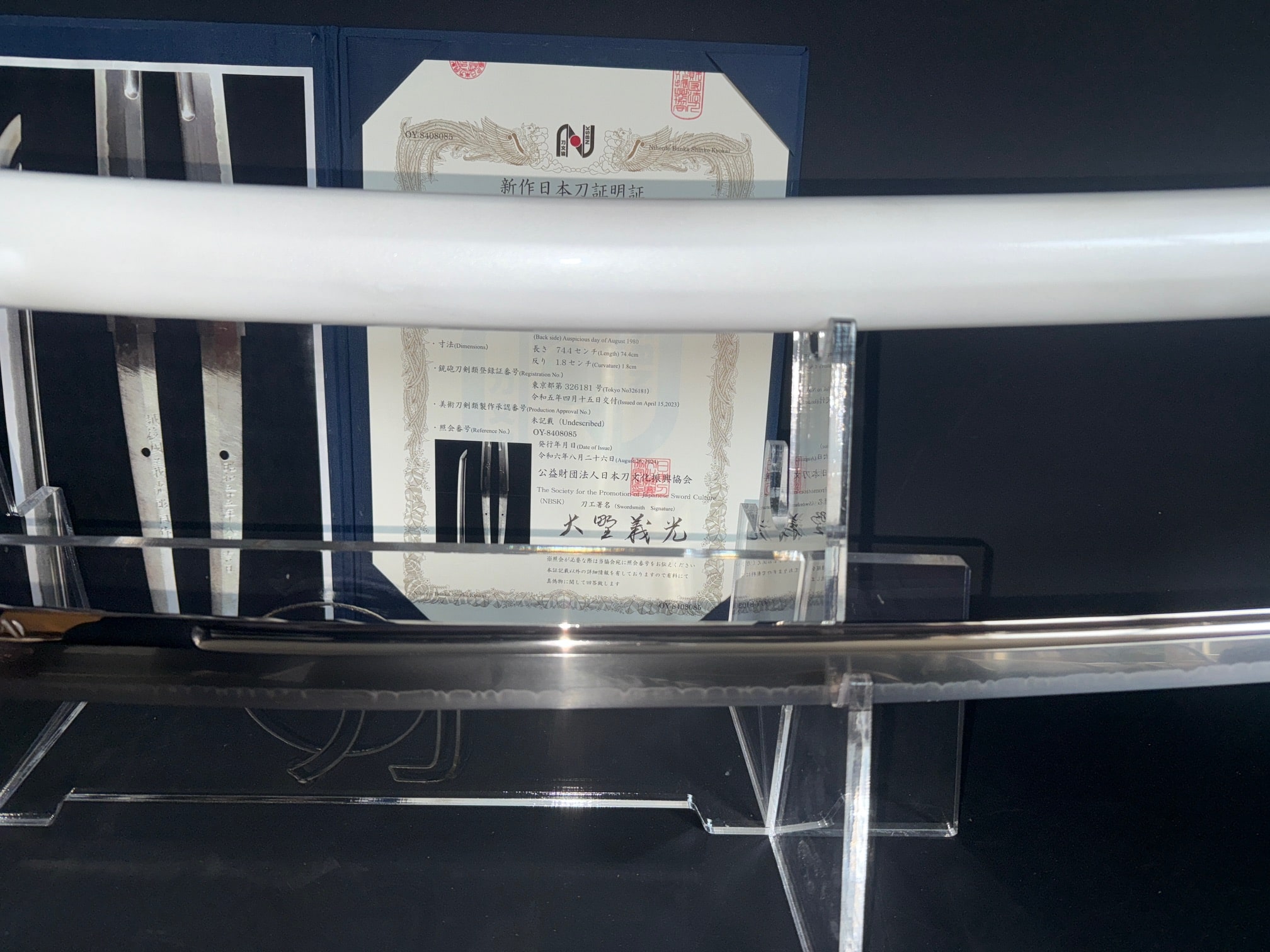
Date: Auspicious day, August 1980 (Shōwa 55)
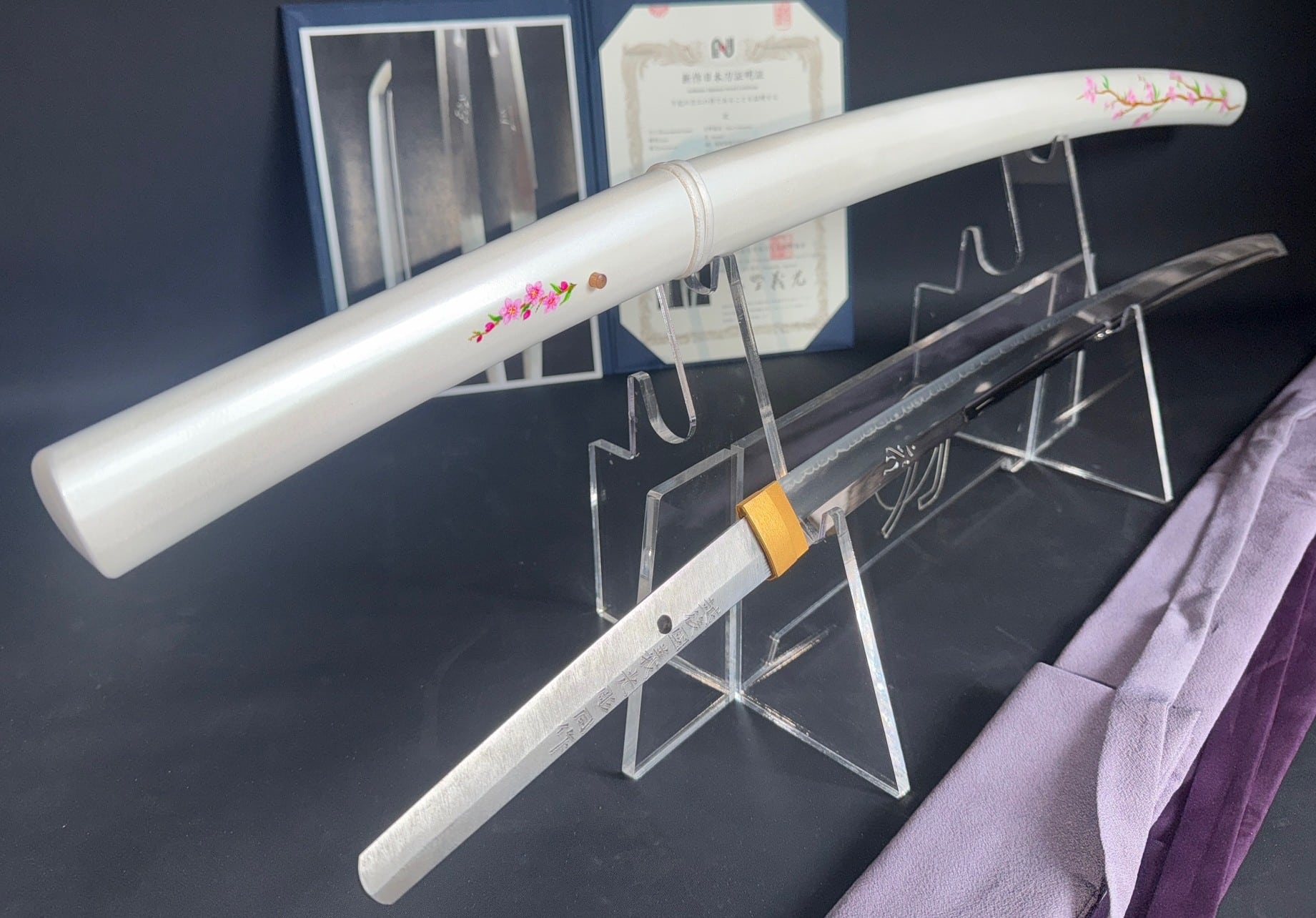
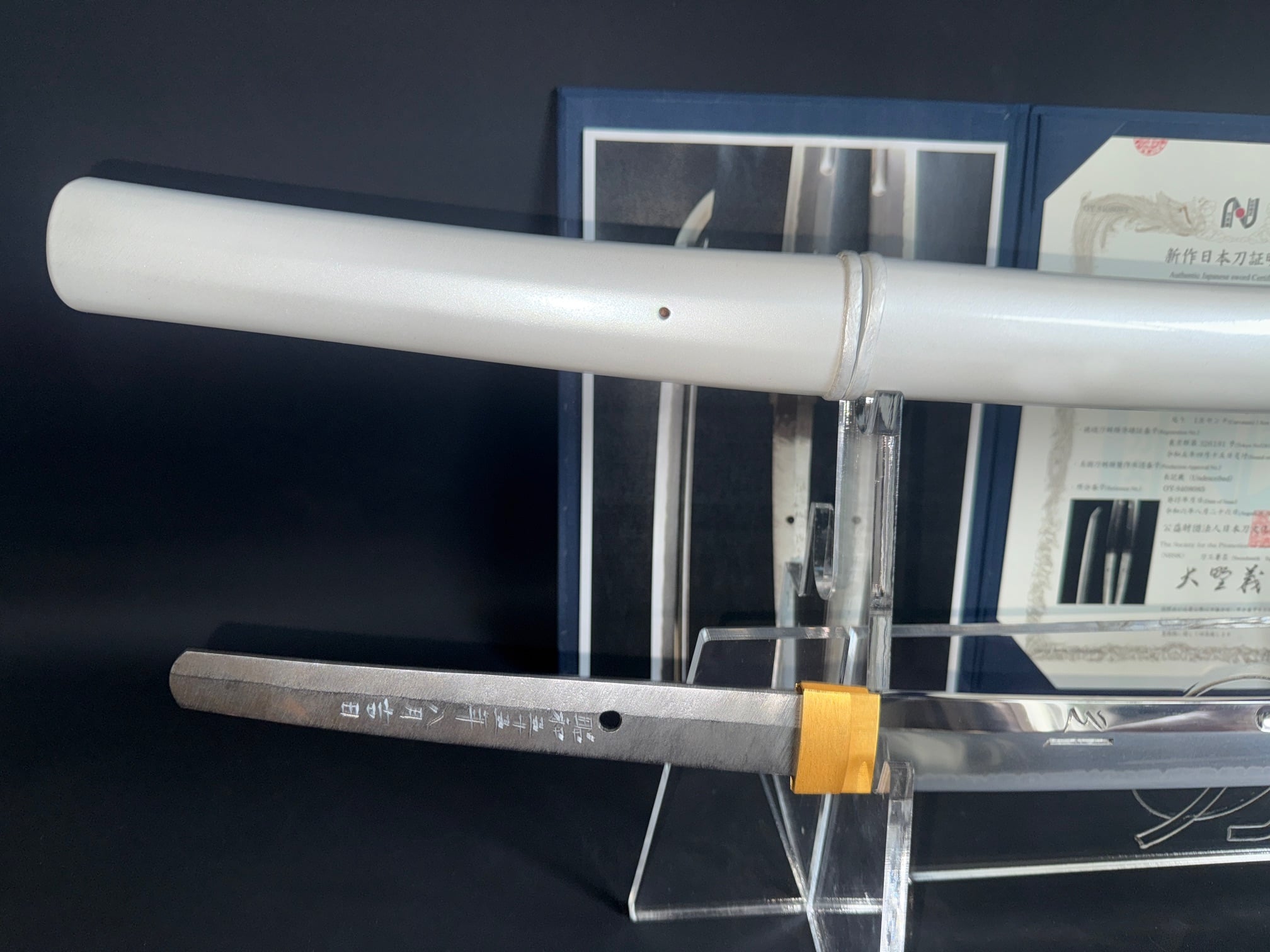
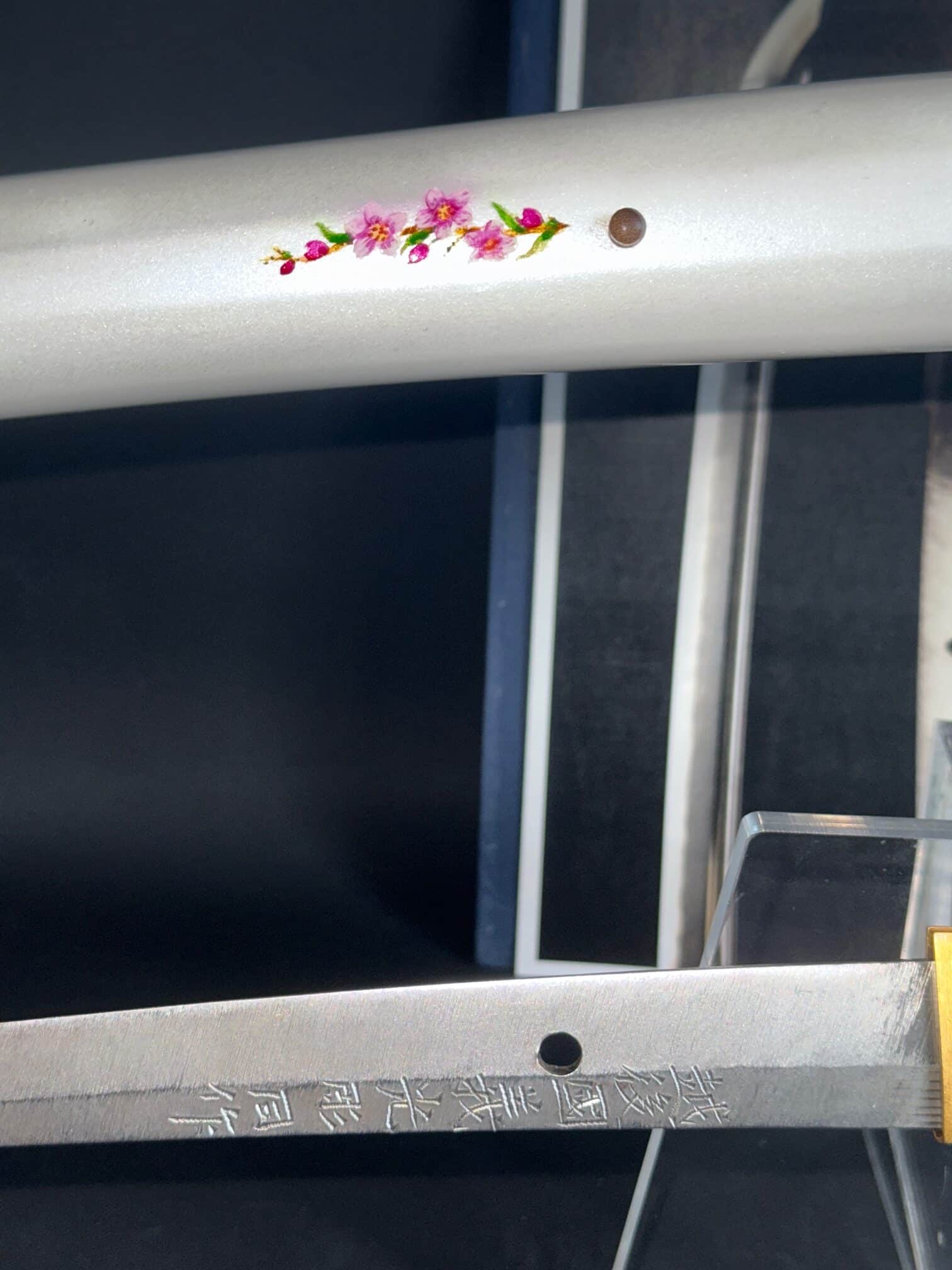
Signature (Omote): 越後国義光彫同作
Signature (Ura): 昭和五十五年八月吉日
Nagasa: 74.4 cm
Sori: 1.8 cm
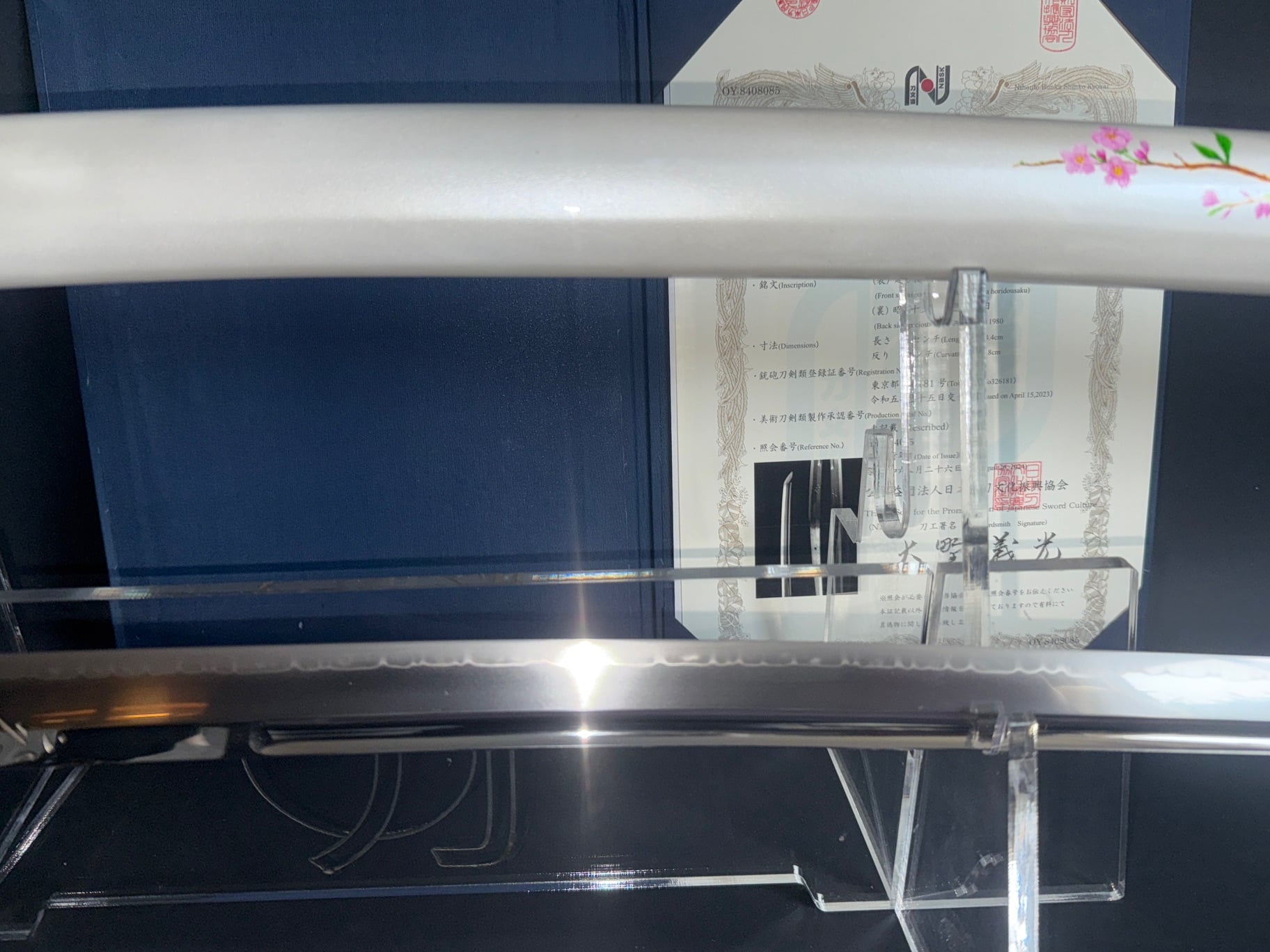
Certification: NBSK Special Certificate
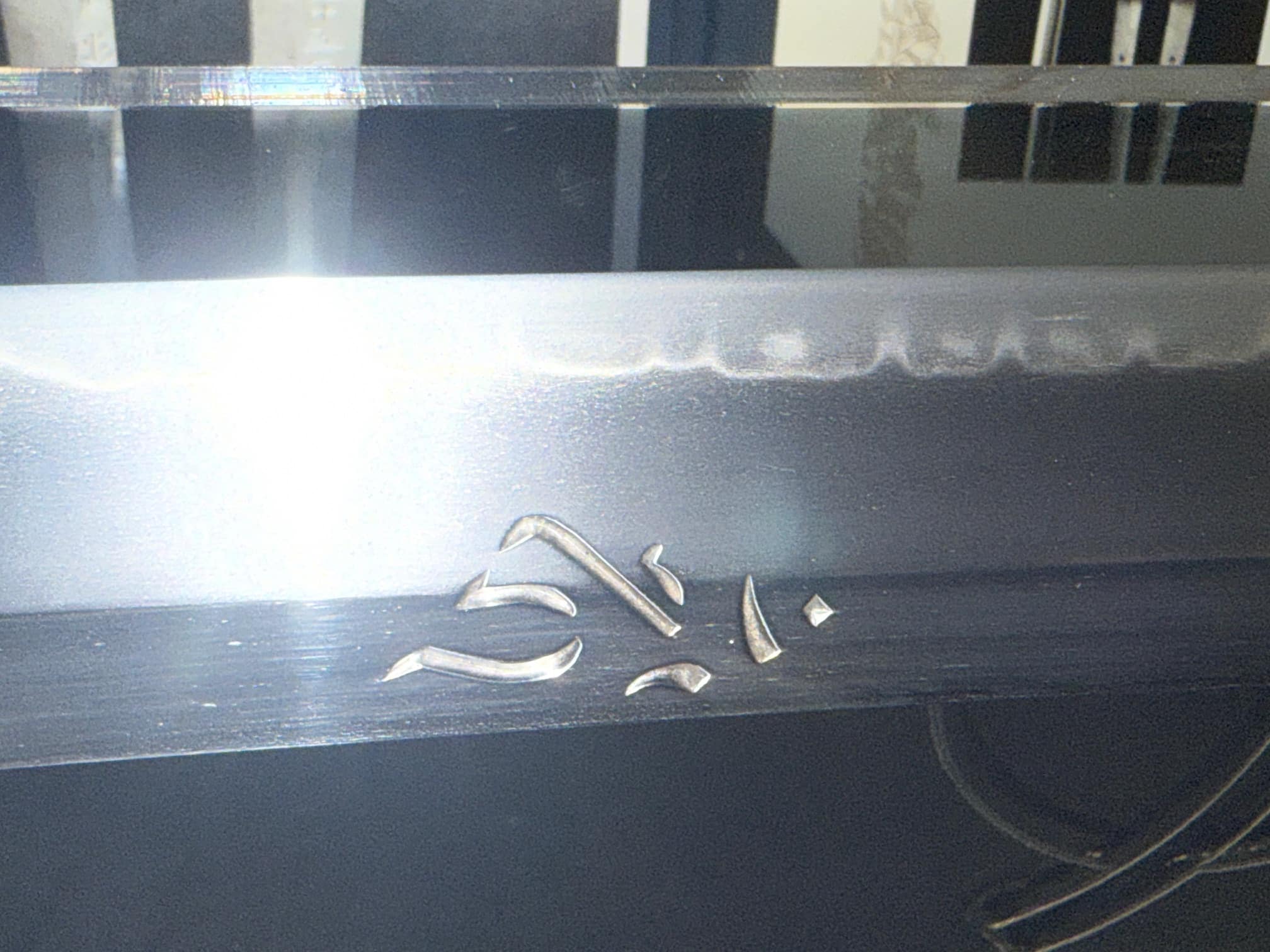
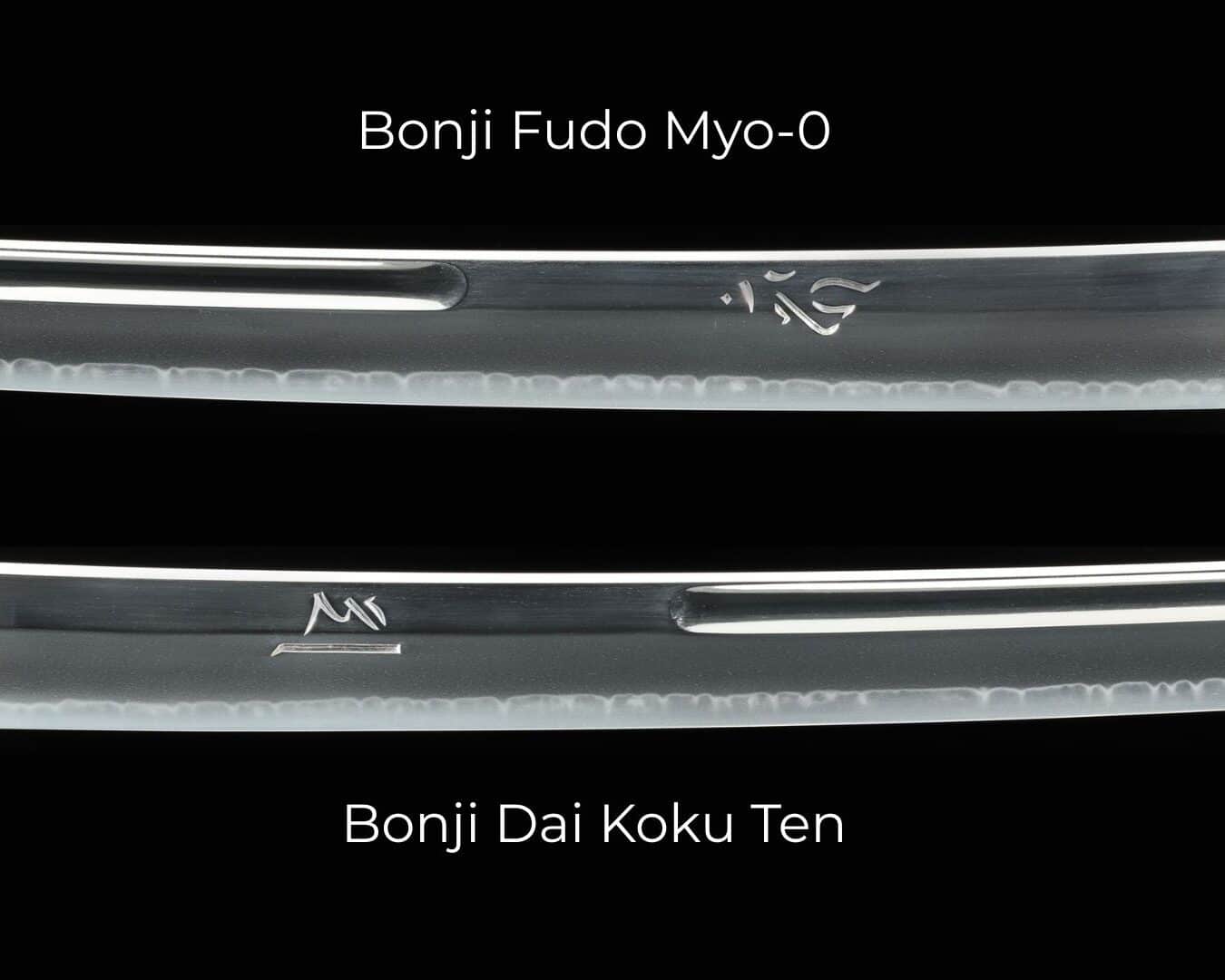
The blade features finely executed horimono carved personally by the smith (horidōsaku), including Bonji Dai-Koku-Ken and Bonji Fudō Myō-ō, powerful Buddhist symbols associated with protection, discipline, and spiritual strength. These carvings add profound symbolic depth, elevating the sword beyond its martial function.
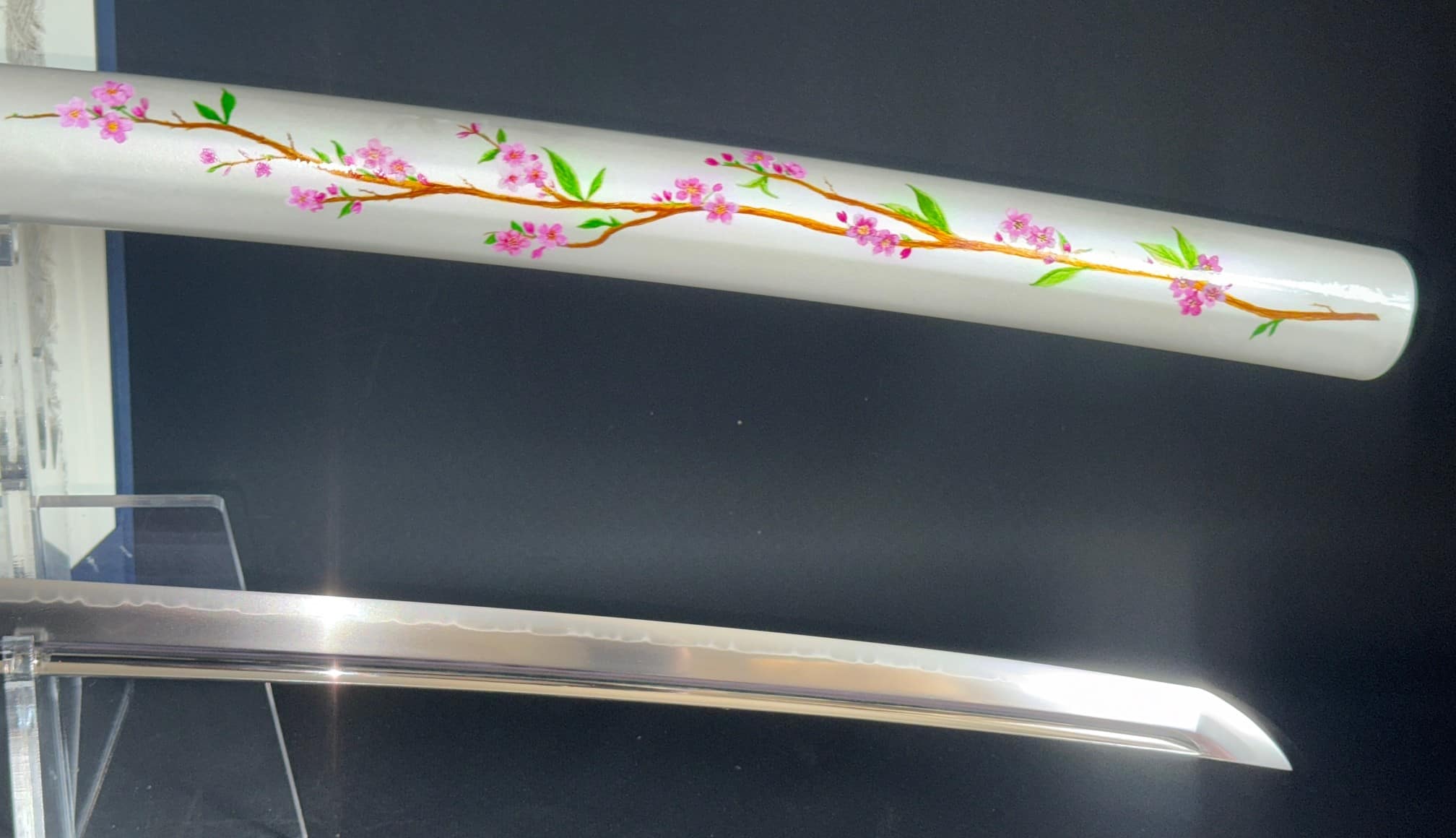
The katana is housed in a beautifully hand-painted shirasaya, executed in a traditional Japanese style. The mounting itself is a refined work of art, perfectly complementing the blade and emphasizing its status as a masterpiece of modern Nihontō.

© 2025 Kyodai Originals is made with ❤ by Nieuwblik.com


