

€ 48.500,00
1 in stock
Late Muromachi period (Tenbun era, mid-16th century)
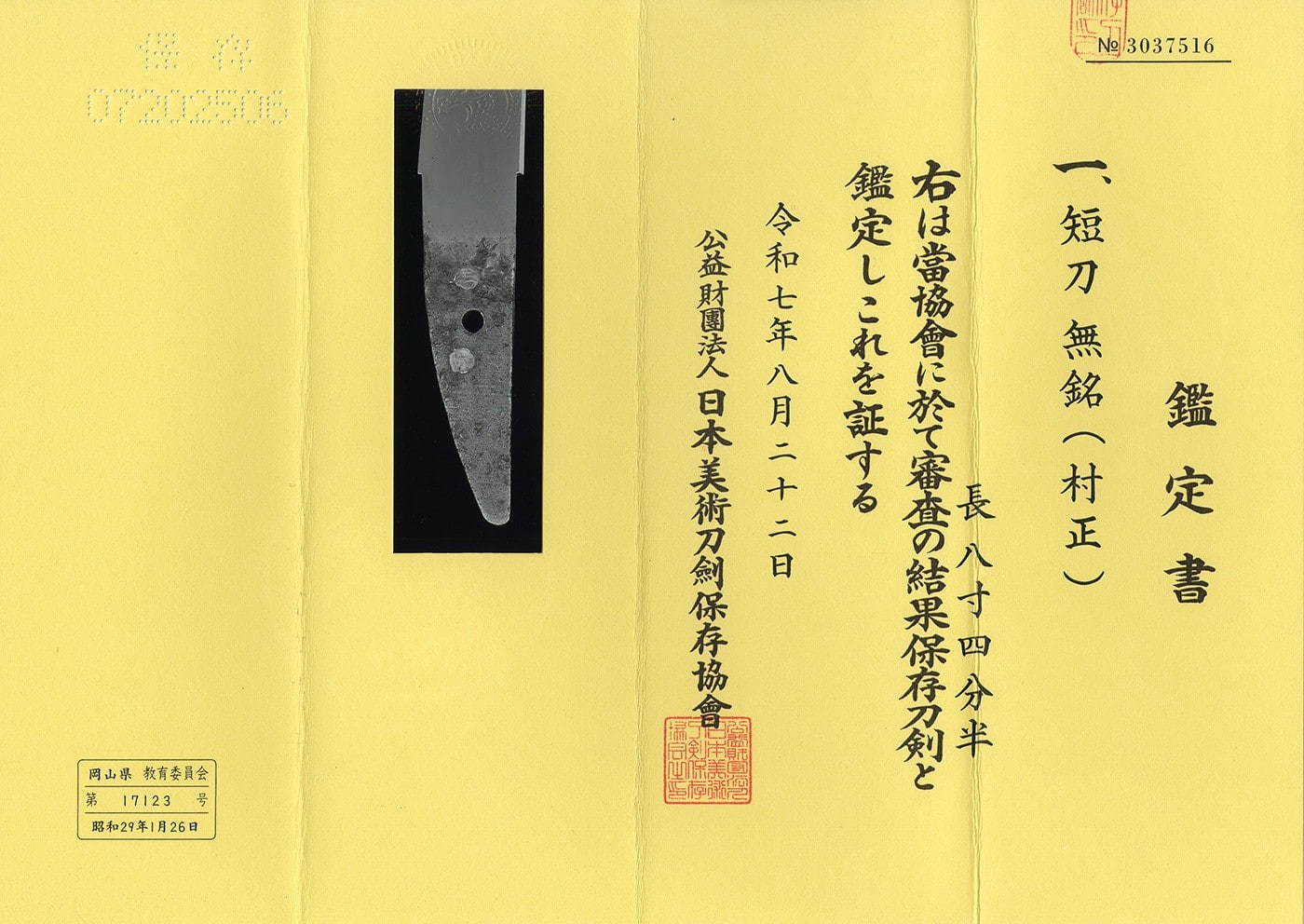
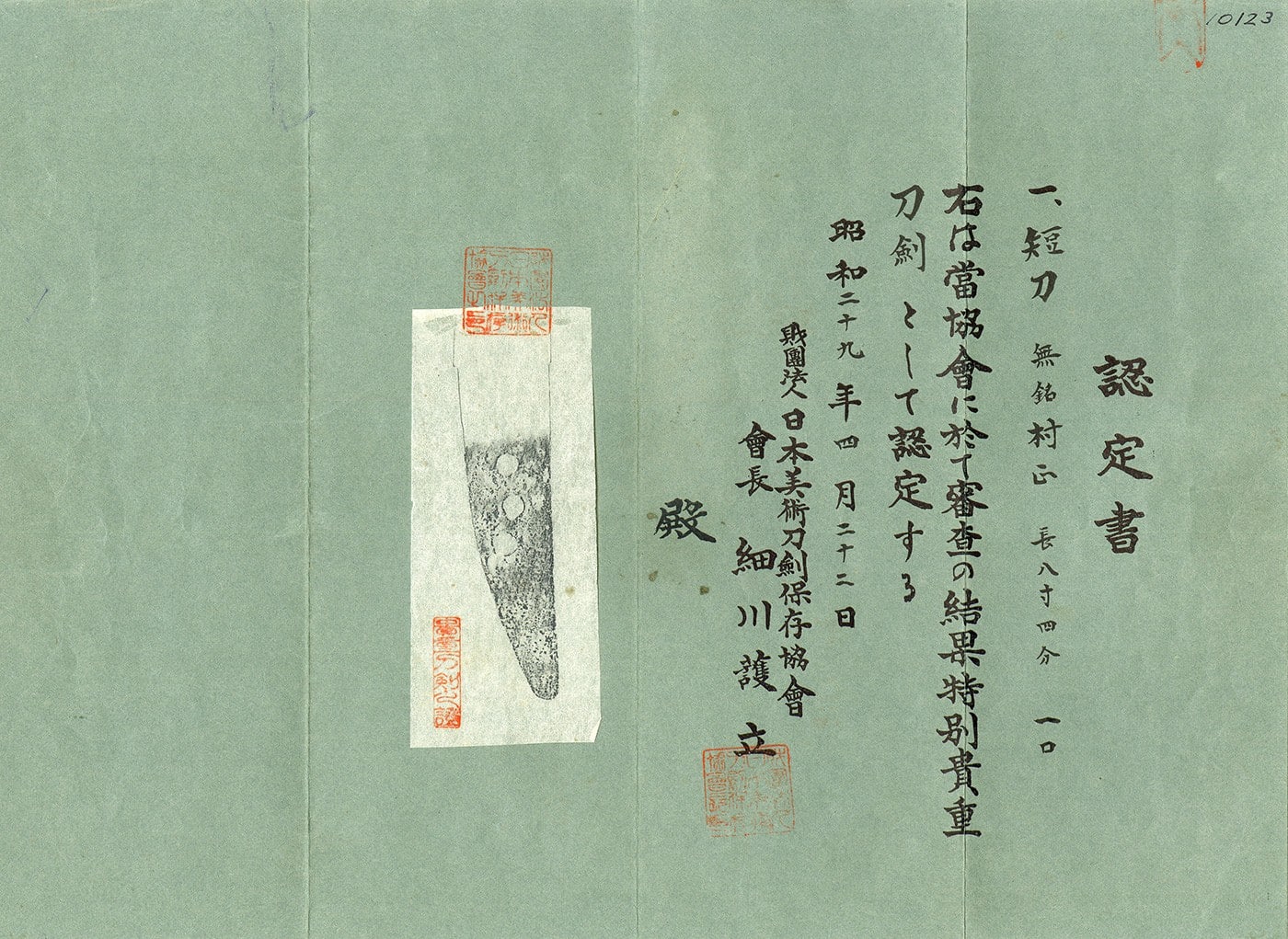
NBTHK Hozon Token – former Tokubetsu Kichō Token
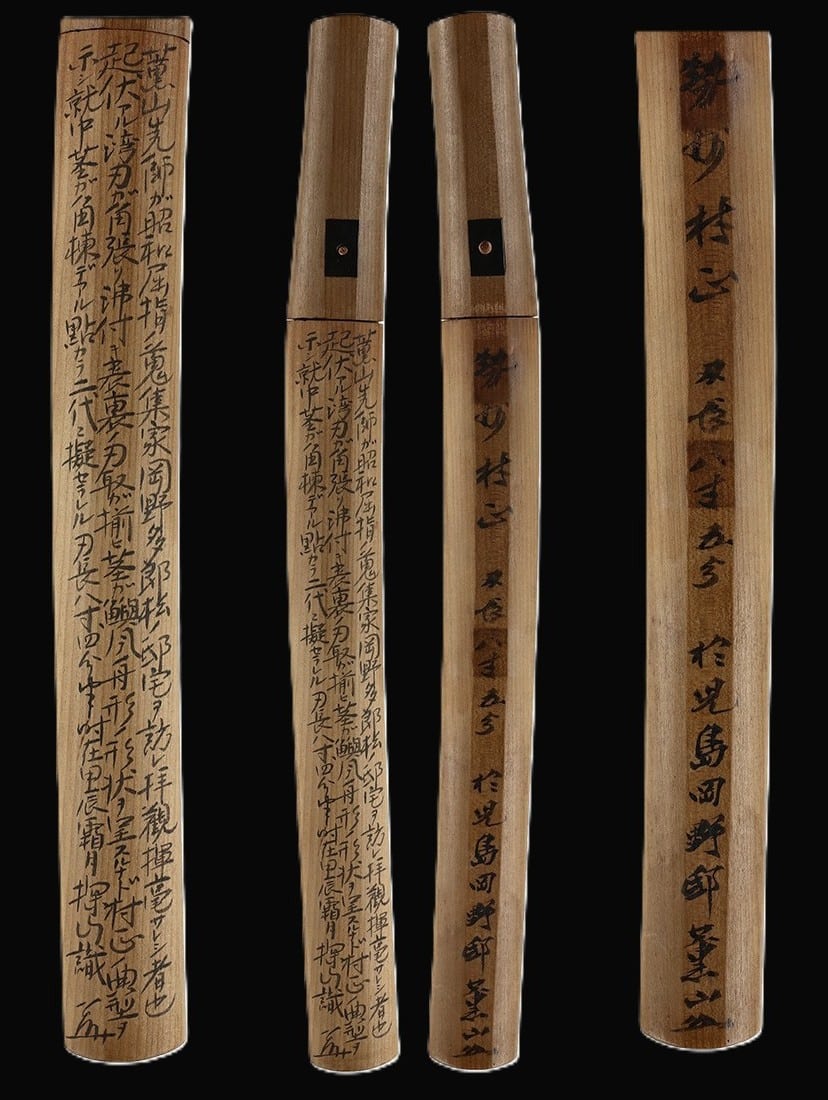
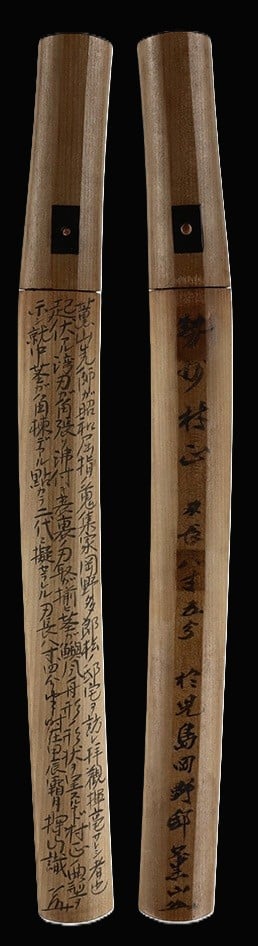
Sayagaki by Tanobe Michihiro (Kunzan) – with koshirae
Among the most iconic names in the history of Japanese swordsmithing, Muramasa of Ise Province occupies a position unlike any other. Revered for exceptional cutting performance and feared through centuries of legend, Muramasa blades embody the uncompromising spirit of the Sengoku period. While later folklore cast them as “cursed,” historical reality tells a different story: Muramasa swords were highly prized weapons, carried by samurai who valued reliability, sharpness, and battlefield effectiveness above all else. Today, authentic Muramasa works are rare, highly studied, and fiercely sought after by advanced collectors worldwide.
This outstanding tantō is attributed to the second generation Muramasa (Nidai Muramasa, active circa 1532–1555) and represents a powerful and highly convincing example of this celebrated tradition. The blade is accompanied by NBTHK Hozon certification, confirming its authenticity, as well as earlier Tokubetsu Kichō papers, demonstrating long-standing recognition within the Japanese appraisal system. Further strengthening this attribution is a detailed sayagaki by Tanobe Michihiro (Kunzan), one of the most respected modern authorities on Japanese swords, who personally examined the blade in the residence of the renowned Showa-period collector Okano Taromatsu.
The sugata of this tantō reflects its origin in one of the most turbulent periods of Japanese history. Compact, thick, and purpose-driven, the blade was designed for close combat and maximum effectiveness. The proportions convey strength and decisiveness, characteristics synonymous with Muramasa workmanship.
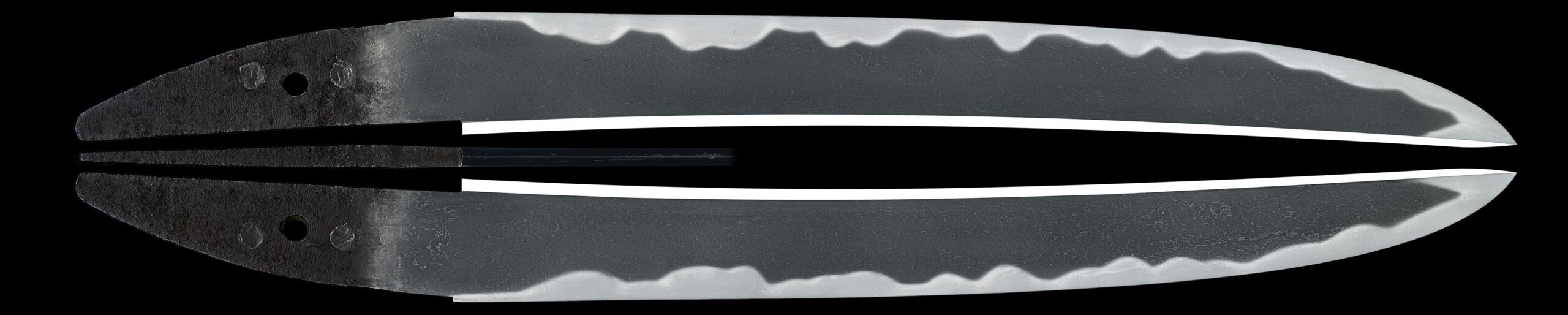
The jihada is finely forged, displaying a tight and well-controlled grain structure with ji-nie that gives the steel a luminous and refined appearance. This level of forging indicates both technical mastery and careful material selection, hallmarks of high-quality koto blades.
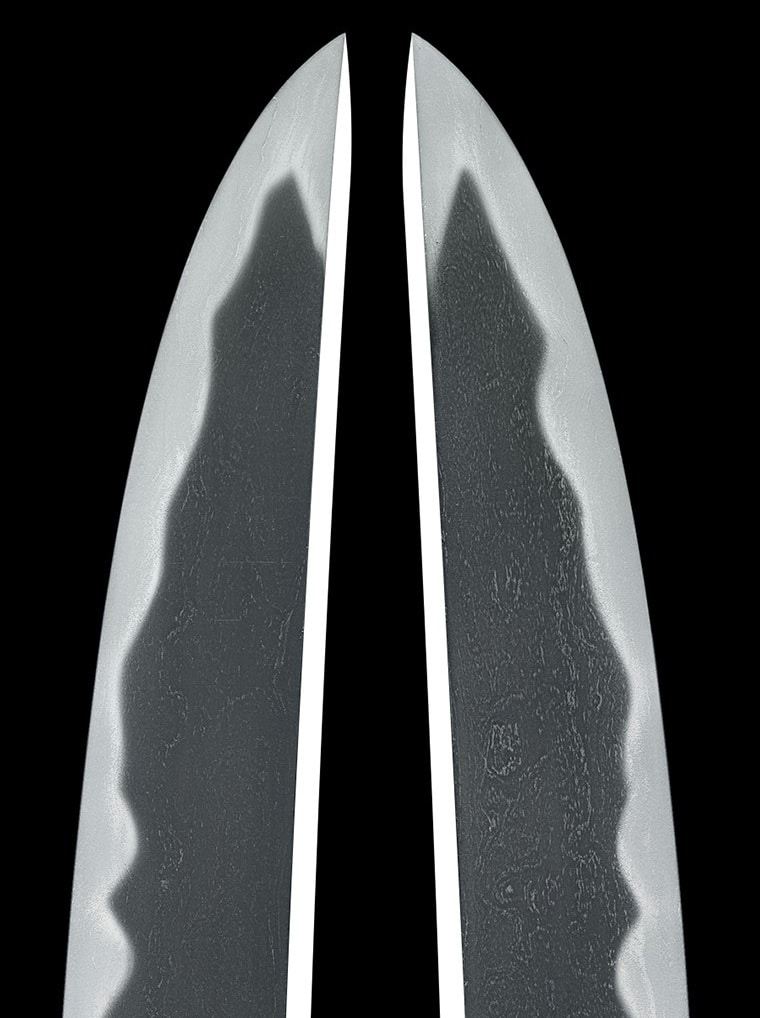
The hamon is particularly striking and unmistakably characteristic. A notare-midare pattern undulates along the edge, enriched with bright nie and subtle angular elements that give the temperline a dynamic and energetic presence. The yakiba runs evenly and consistently along both sides of the blade, demonstrating a high level of control during the yaki-ire process. Rather than excessive decoration, the emphasis here is on functional beauty a blade forged to perform.
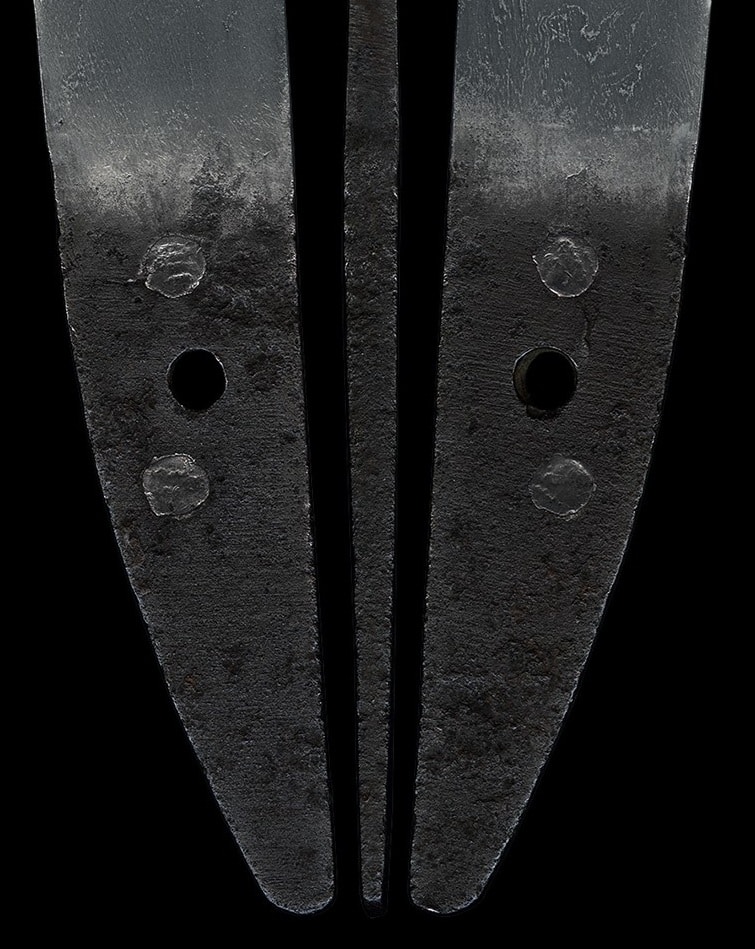
The most important element in the attribution lies in the nakago. It exhibits the distinctive tanago-bara (fish-belly) shape, a well-known feature associated with Muramasa blades. More importantly, the nakago displays a square mune (kaku-mune) a highly significant kantei point.
This structural detail is explicitly noted in the sayagaki by Tanobe-sensei and is widely recognized among experts as a defining characteristic of the second-generation Muramasa. This feature allows a more precise attribution beyond general school classification, elevating the blade from a broad “Muramasa tradition” identification to a much more specific and desirable generational attribution.
Such clarity in kantei is rare and significantly enhances both scholarly and market value.
The sayagaki provides exceptional added value. Tanobe Michihiro (Kunzan), former Chief Researcher of the NBTHK, is regarded as one of the leading authorities in modern sword scholarship. His inscriptions are reserved for blades of quality and importance.
In this case, the sayagaki records that the blade was examined at the residence of Okano Taromatsu, a prominent and highly respected collector of the Showa period. This connection not only reinforces the authenticity of the blade but also places it within an important historical collecting lineage.
The combination of NBTHK certification, historical Tokubetsu Kichō papers, and Tanobe sayagaki creates a layered and highly reliable provenance rarely found together in one piece.
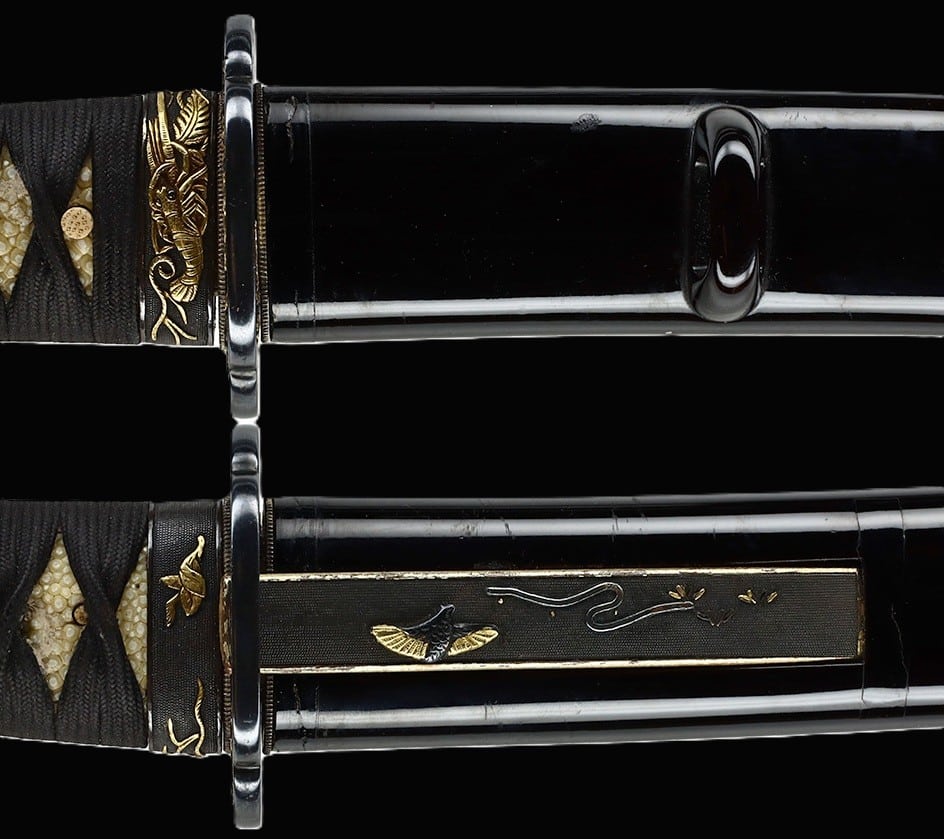
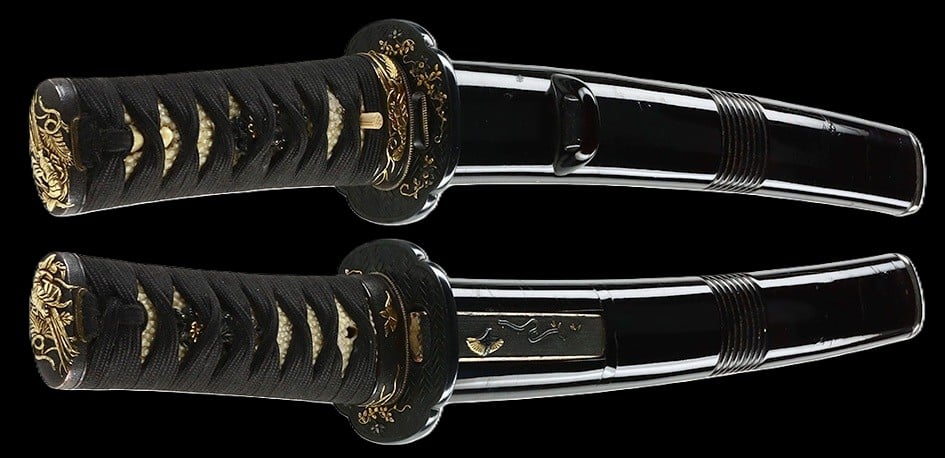
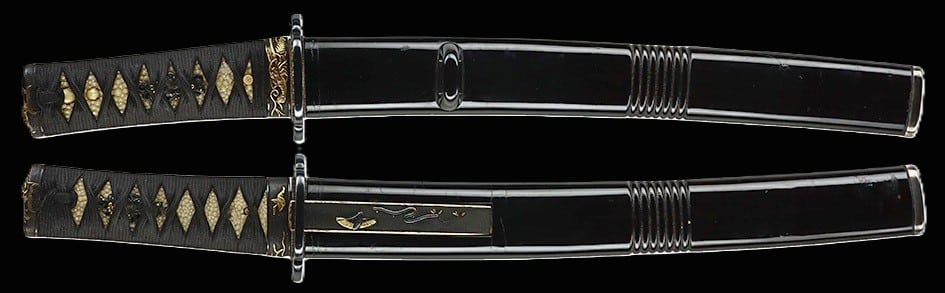
The tantō is accompanied by its koshirae, which complements the blade and enhances its presentation as a complete historical object. Together, the blade and mounting offer both aesthetic and cultural completeness, suitable for display or advanced collection.
Muramasa blades occupy a unique position in the world of nihontō. Their combination of historical importance, technical excellence, and legendary reputation makes them one of the most recognizable and desirable names among collectors.
Within this already rare category, blades attributed to the Nidai Muramasa are particularly valued. This generation is widely considered to represent the most classic and refined expression of the Muramasa tradition.
The presence of a clearly identifiable kantei feature, confirmed by one of the foremost authorities in the field, elevates this blade beyond typical attribution examples.
This tantō represents an exceptional opportunity to acquire a genuine Muramasa blade with strong scholarly backing and clear generational attribution. It embodies the functional beauty of the Sengoku period, the precision of master craftsmanship, and the enduring fascination of one of Japan’s most legendary swordsmith lineages.
For the serious collector, this is not merely a Muramasa it is a Nidai Muramasa, supported by NBTHK certification and Tanobe sayagaki, with historical provenance and outstanding kantei characteristics.
A rare and compelling piece suitable for advanced collections, investment, or museum-level appreciation.
Nagasa: 25.8 cm
Motohaba: 2.77 cm
Kasane: 0.48 cm
Weight: 145 g
KvK: 51964147
C.W. Slok - Kyodai Originals
Bank: NL25 KNAB 0509 1310 18
BIC: KNABNL2H
© 2026 Kyodai Originals is made with ❤ by Nieuwblik.com


