
€ 8.000,00
1 in stock
Dated Shōwa 55 (1980)
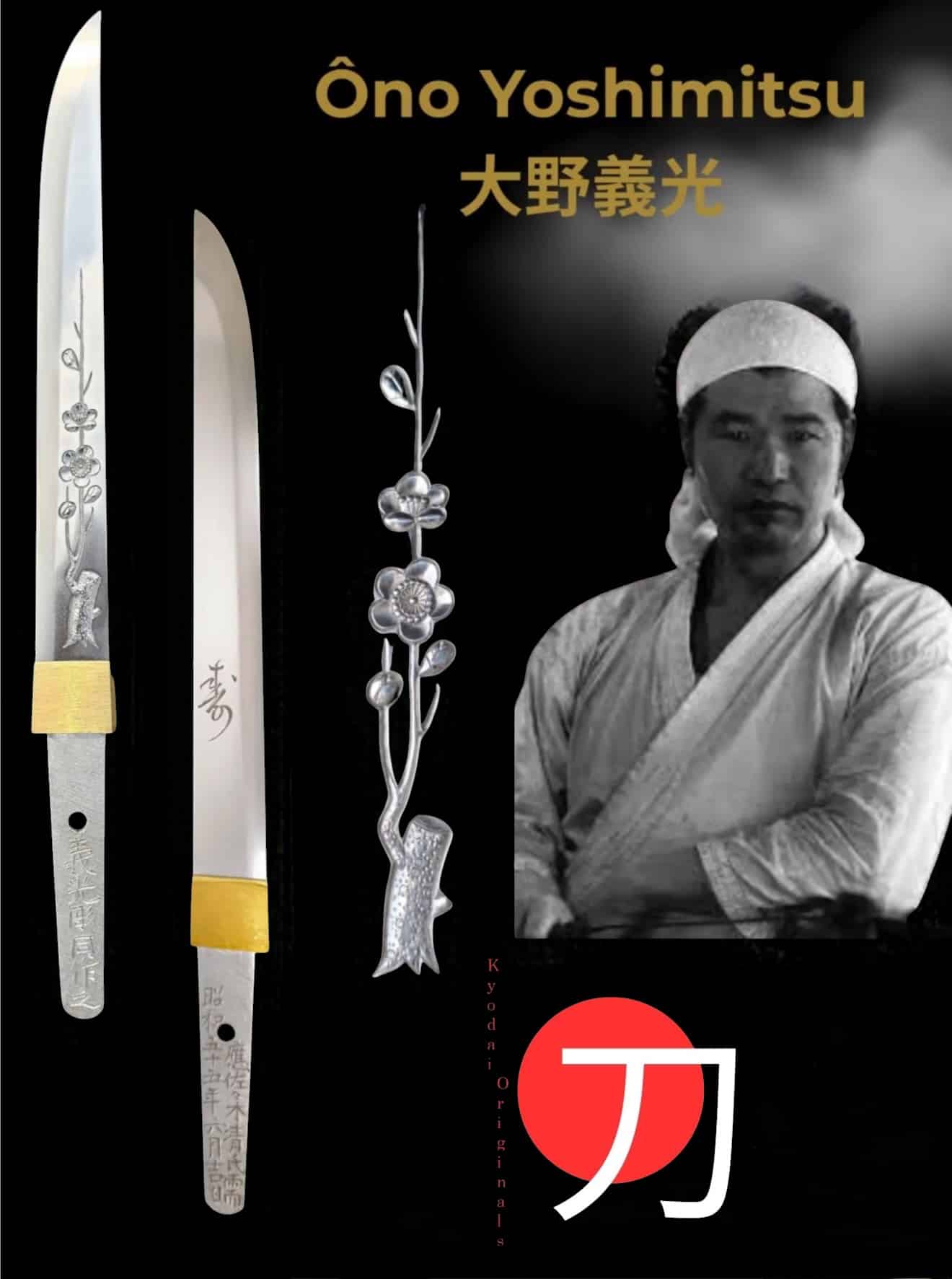
Among the most distinguished swordsmiths of modern Japan, few names command the respect and admiration afforded to Ōno Yoshimitsu (大野義光). Recognized as a Mukansa Master Swordsmith, Yoshimitsu belongs to an elite group of craftsmen whose work has transcended competition and achieved the highest level of artistic recognition within the contemporary Japanese sword world.
This exceptional tantō, forged in 1980, represents a beautiful example of Yoshimitsu’s mature craftsmanship and his lifelong dedication to preserving the classical traditions of Japanese swordmaking while elevating them to the highest modern standards.
Born as Yoshikawa Mitsuo in Niigata Prefecture in 1948, Yoshimitsu developed a deep fascination with Japanese swords from an early age. In 1969 he entered formal apprenticeship under the celebrated swordsmith brothers Yoshindo Yoshihara and Shoji Yoshihara, two of the most influential figures in the revival of traditional Japanese swordmaking during the post-war era.
After years of intensive training, Yoshimitsu received his official swordsmith license from the Japanese Agency for Cultural Affairs in 1975. His exceptional talent quickly became apparent. From 1976 through 1980 he received consecutive awards at the prestigious Shinsaku Meitō Exhibition, Japan’s foremost exhibition for newly made swords. His achievements culminated in the awarding of the highly respected Takamatsu-no-miya Prize, one of the greatest honors available to a modern swordsmith.
In 1987 he was granted the coveted title of Mukansa, a distinction reserved for masters whose work has reached such an extraordinary level that it is exhibited without further judging. This status places Yoshimitsu among the most accomplished swordsmiths of the modern era and confirms his position within the highest echelon of contemporary Japanese craftsmanship.
Yoshimitsu’s artistic vision is profoundly inspired by the legendary Yamatorige, one of Japan’s most celebrated National Treasure swords. Rather than creating direct reproductions, he seeks to capture the spirit and elegance of the great Kamakura-period masterpieces. His blades frequently display refined nioi-based tempering, delicate ko-nie activity, flowing ashi and yō, and subtle utsuri, all hallmarks of the finest classical Bizen traditions.
What distinguishes Yoshimitsu further is his scholarly approach to swordmaking. He is renowned for studying the interaction between blade and polish, often commissioning multiple polishers to work on blades of similar style to better understand how polishing techniques influence the visual expression of steel and hamon. This dedication reflects his belief that a Japanese sword is not merely forged but artistically completed through the harmonious collaboration of master craftsmen.
His reputation earned him commissions of exceptional importance. In 1984 he was invited by the Grand Shrine of Ise, Japan’s most sacred Shinto shrine, to forge a ceremonial sword for the 61st Shikinen Sengū reconstruction ceremony. Five years later he was again entrusted with the creation of a sacred yari spear for the same revered institution, a rare honor bestowed upon only the most respected swordsmiths of their generation.
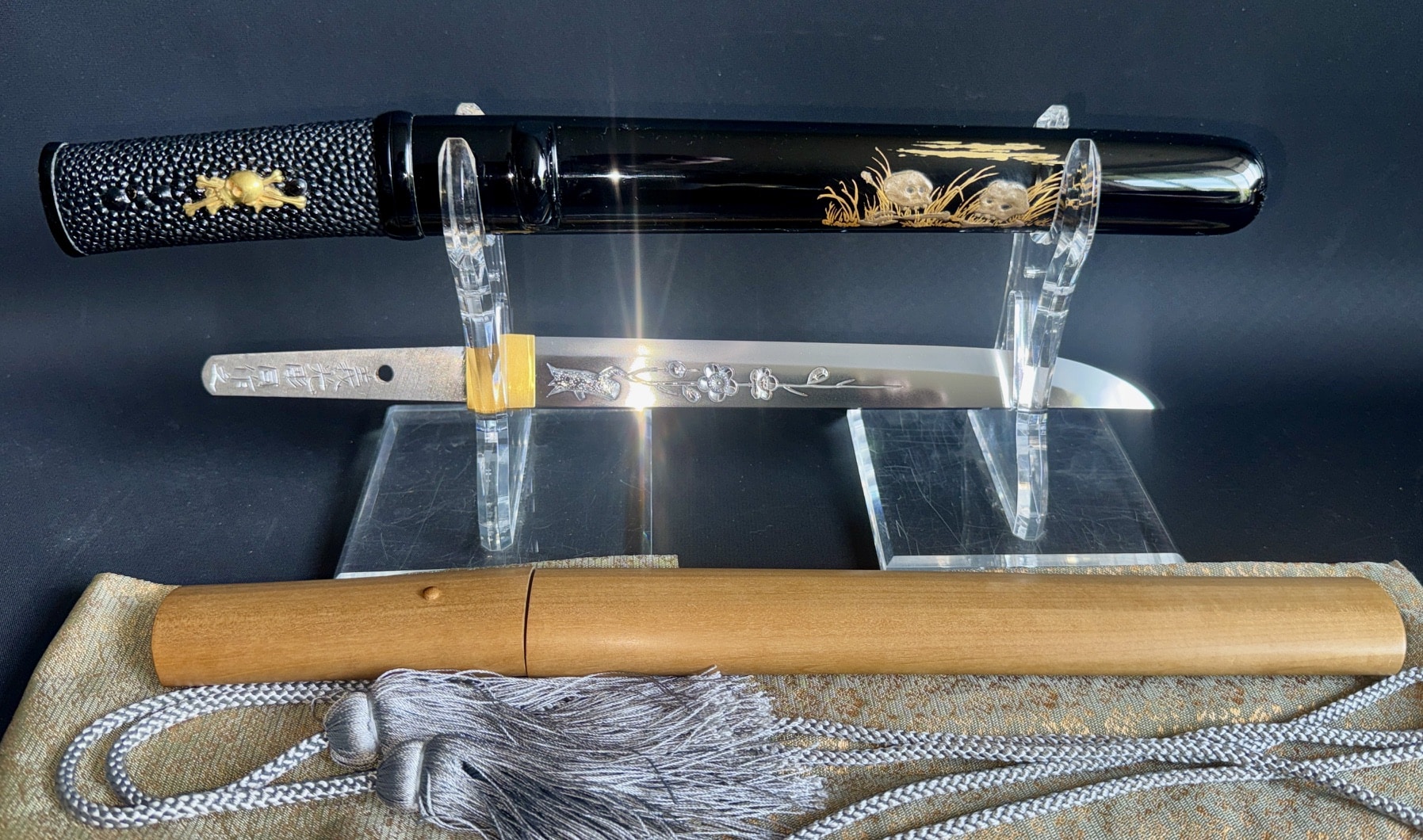
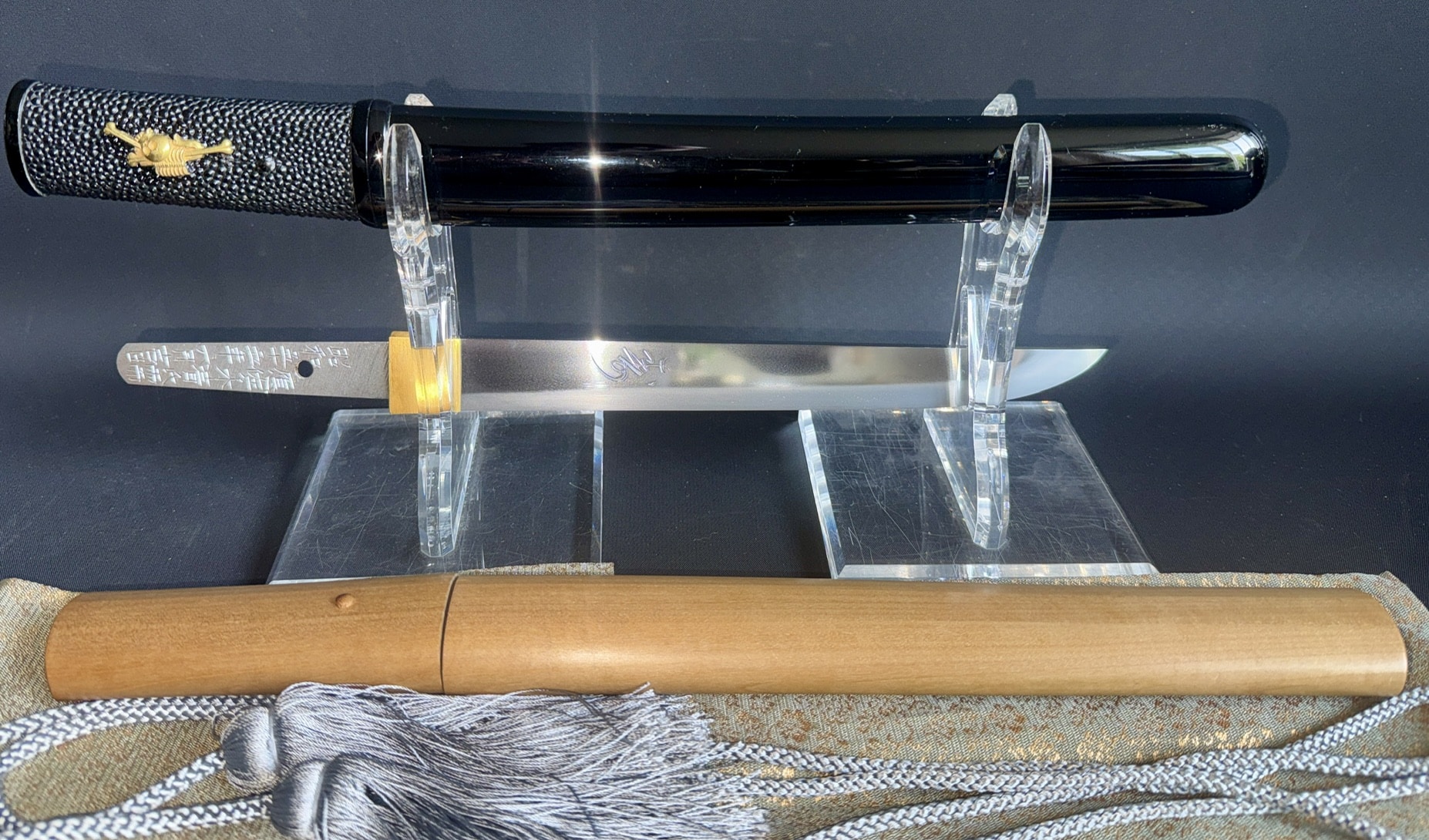
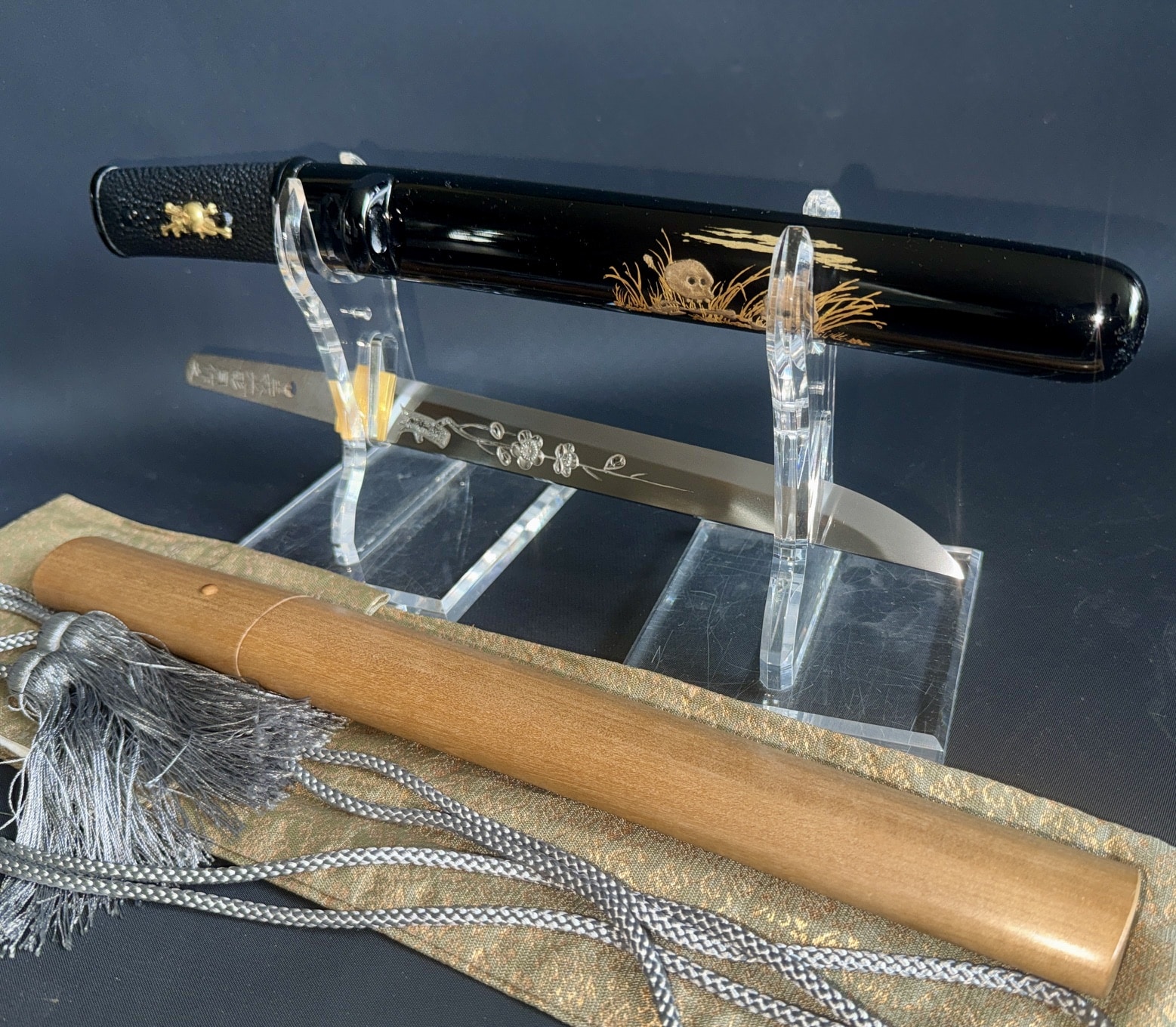
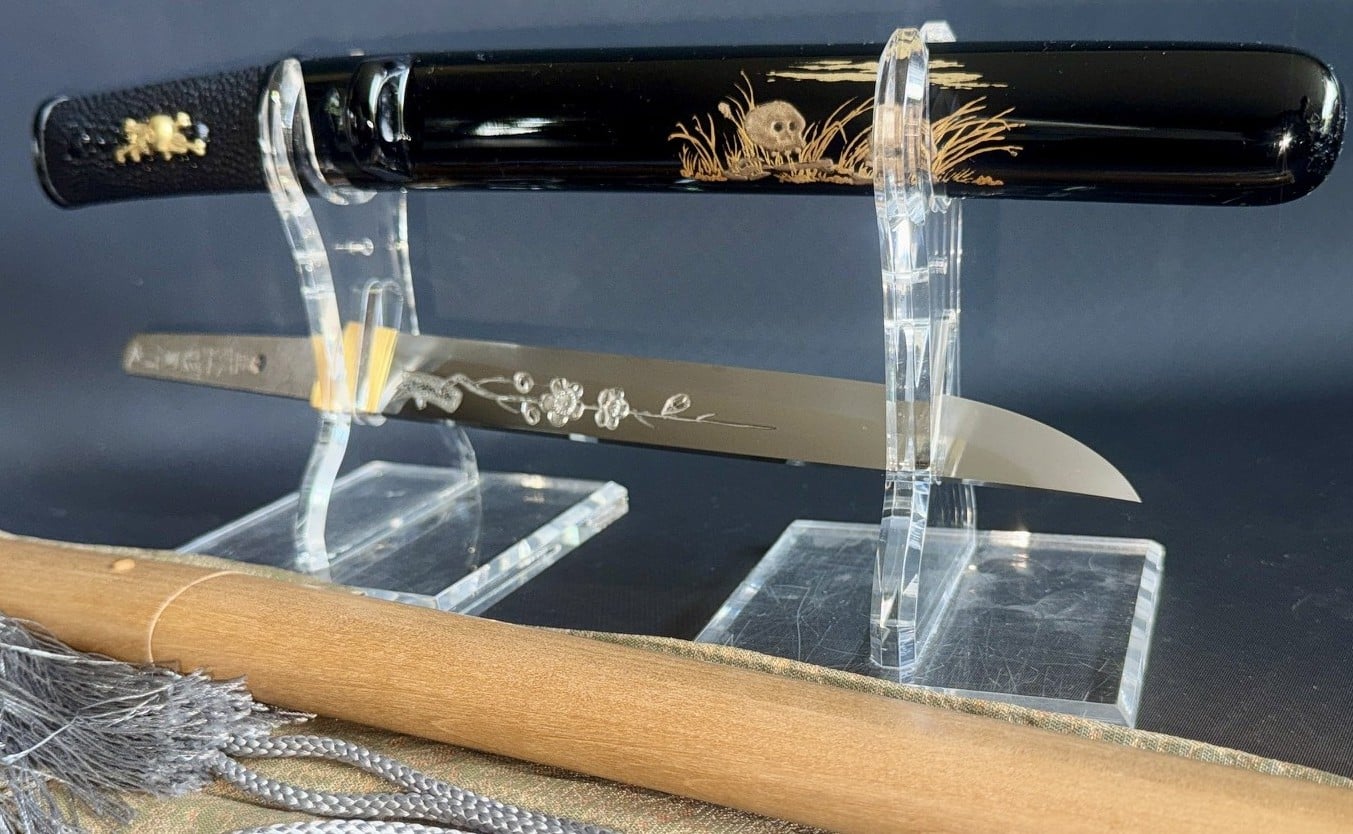
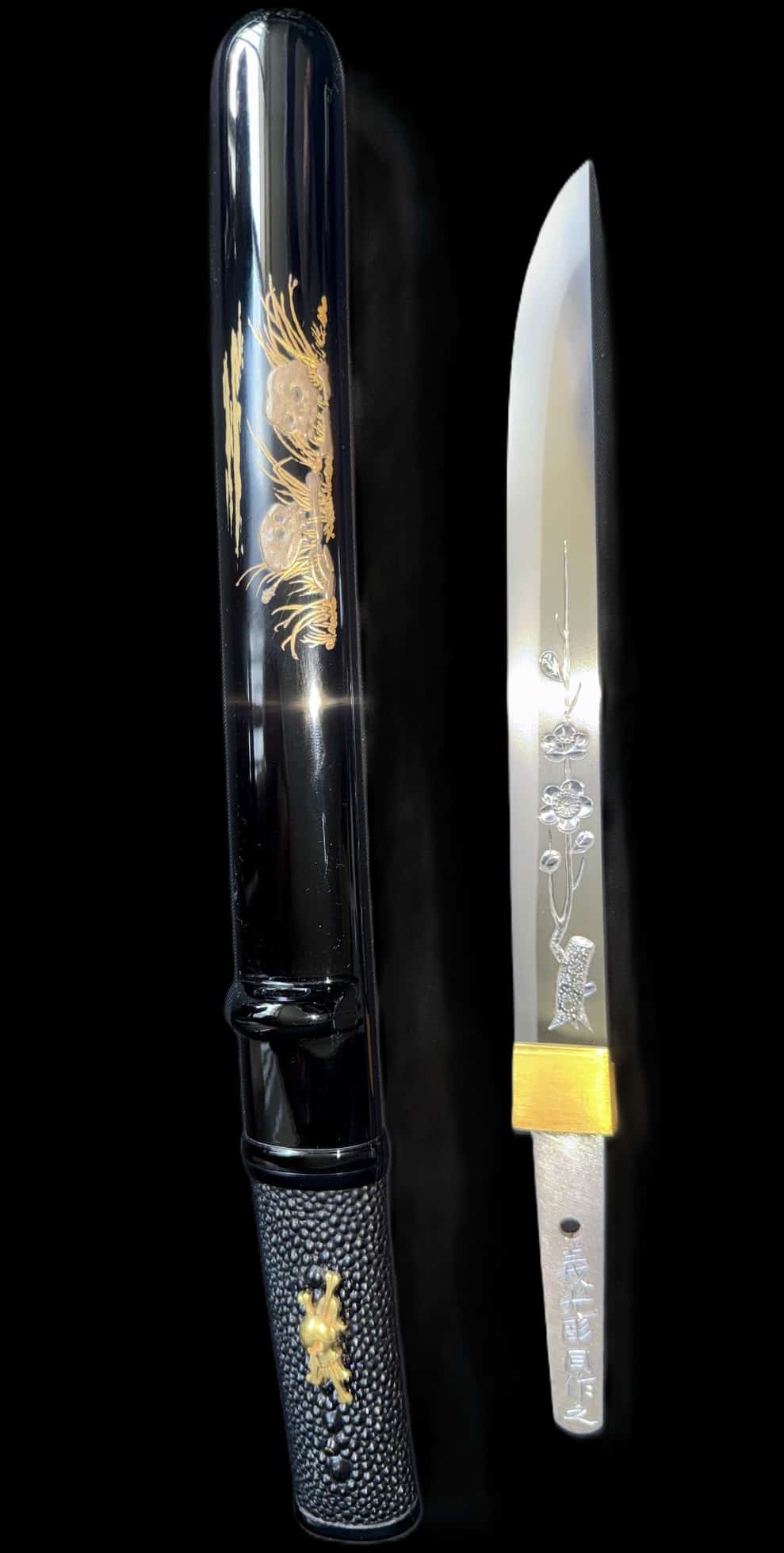
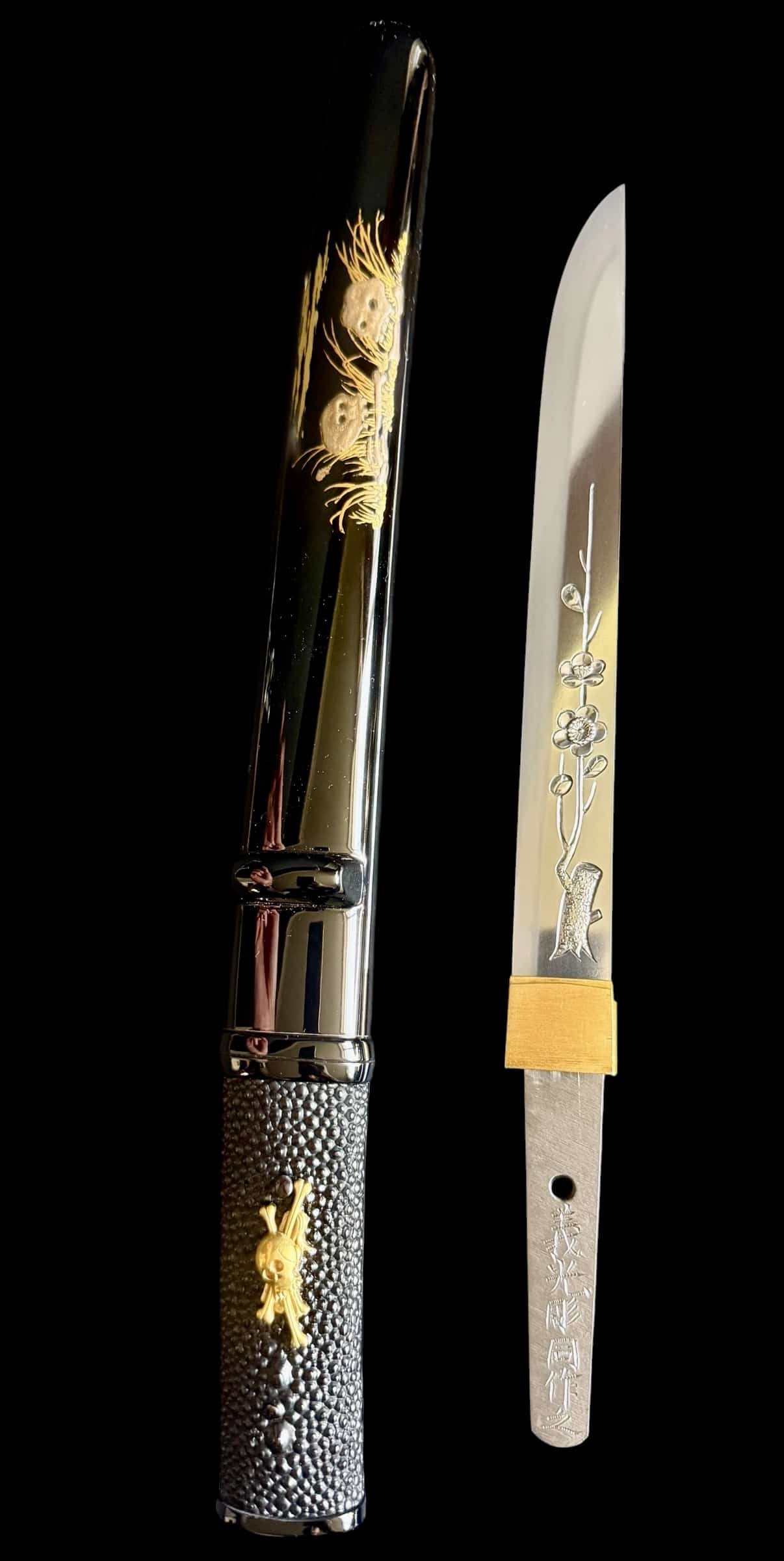
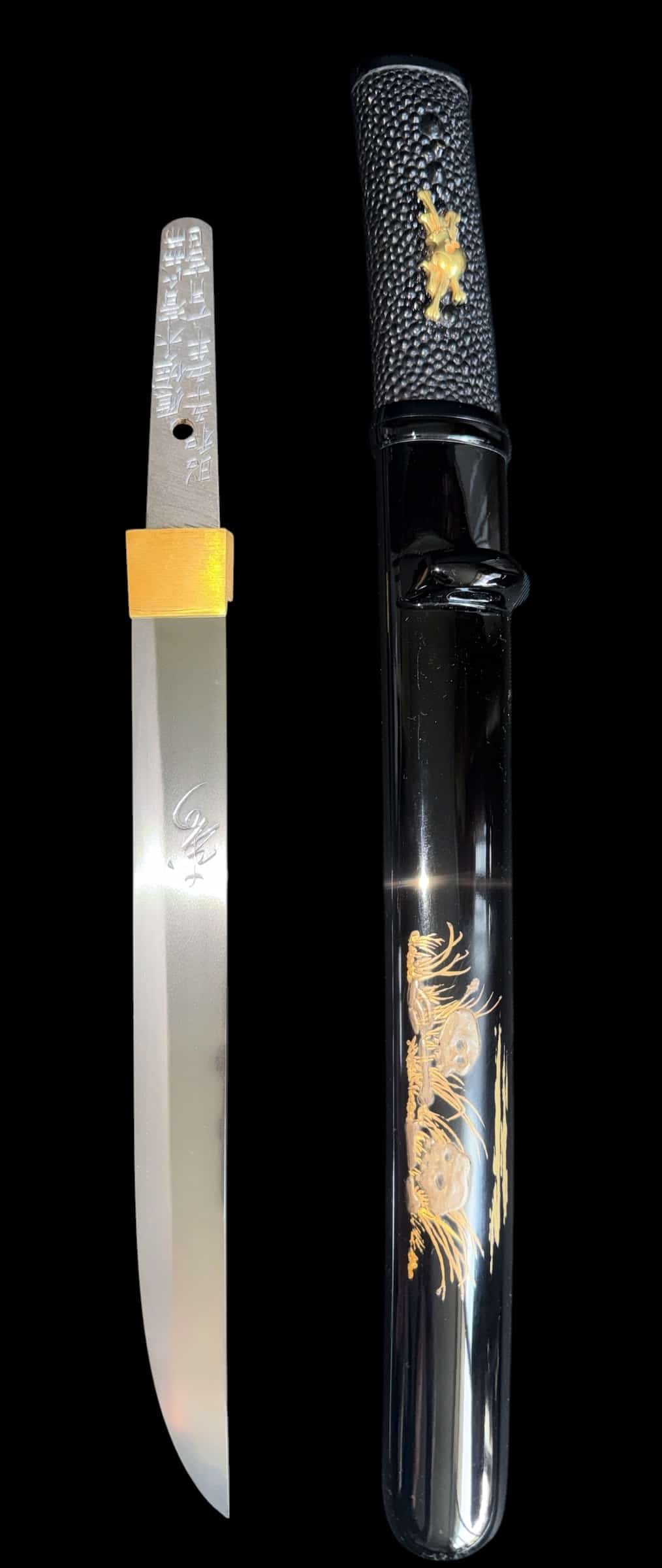
The present tantō embodies the refined elegance for which Yoshimitsu is celebrated. Compact and perfectly balanced, the blade displays superb proportions and a graceful presence that immediately reflects the confidence of a master craftsman working at the height of his abilities.
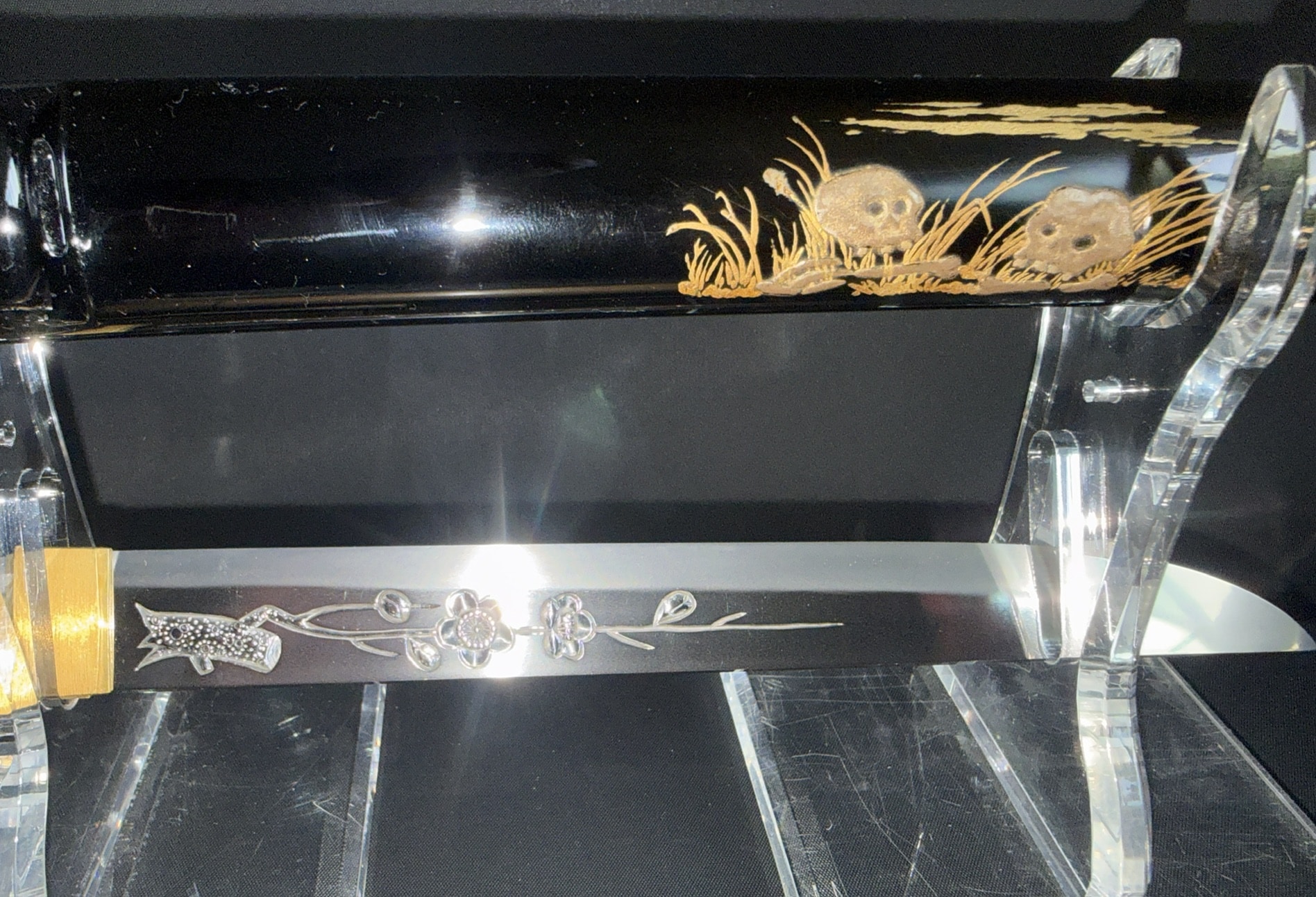
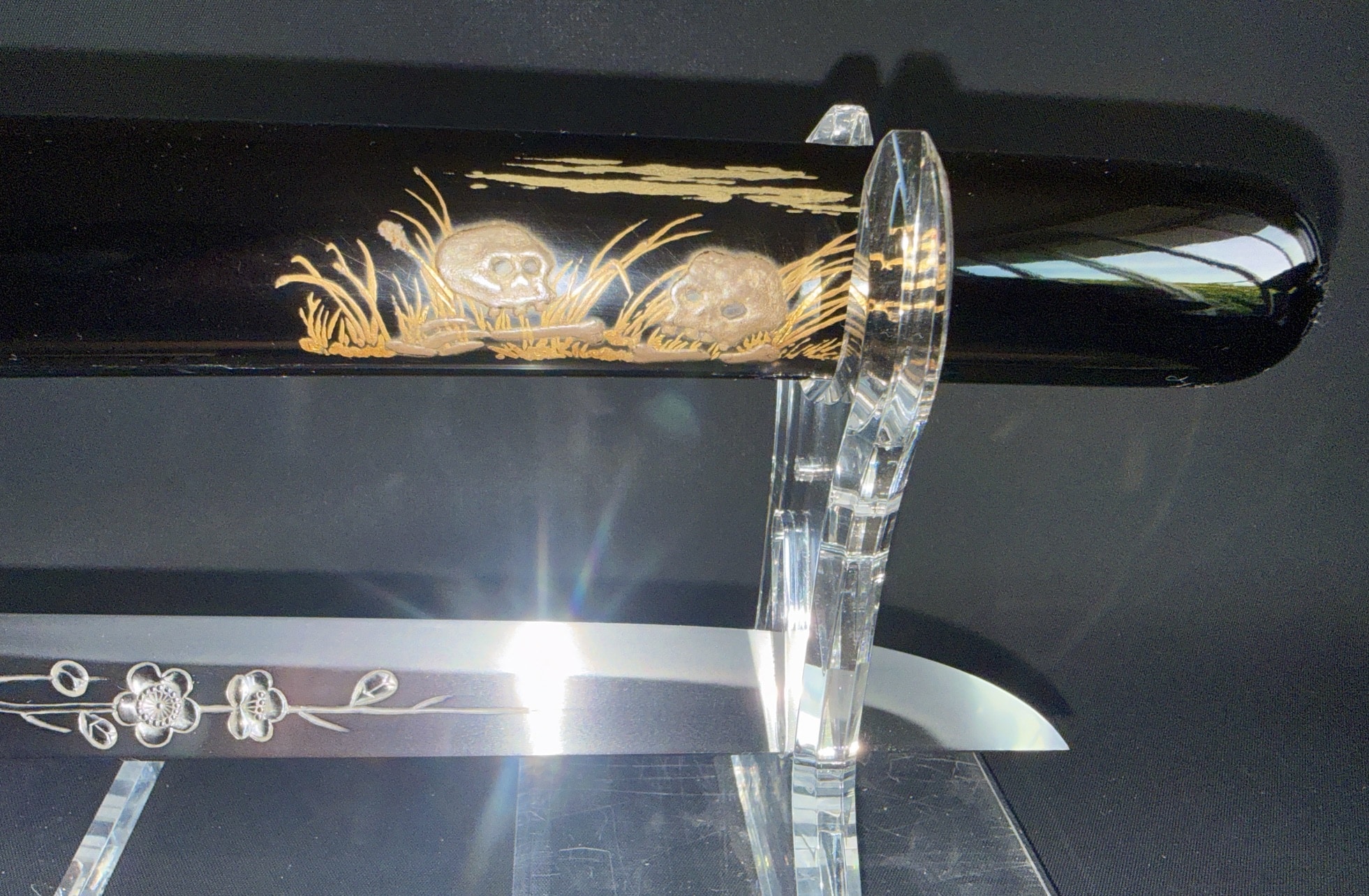
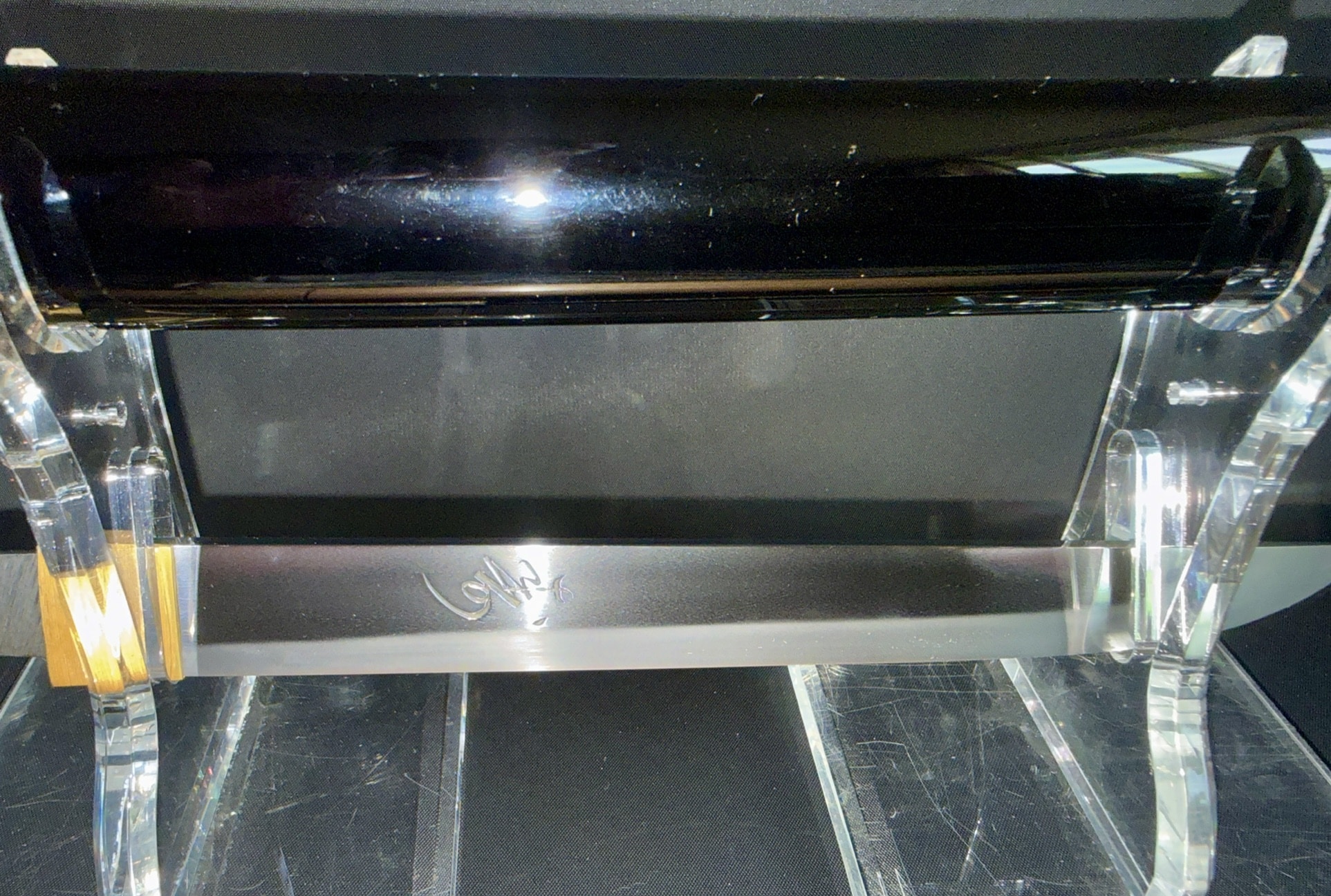
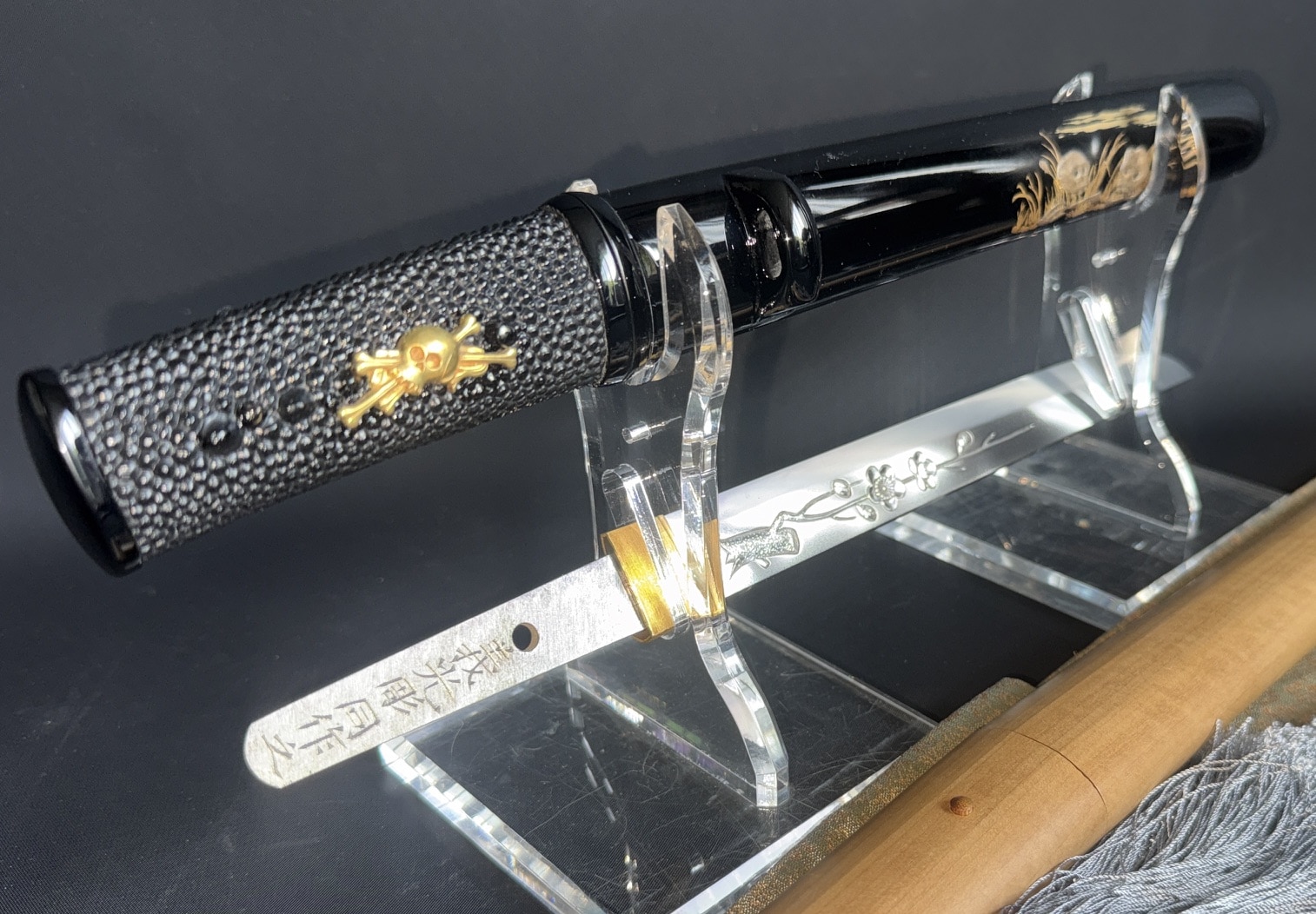
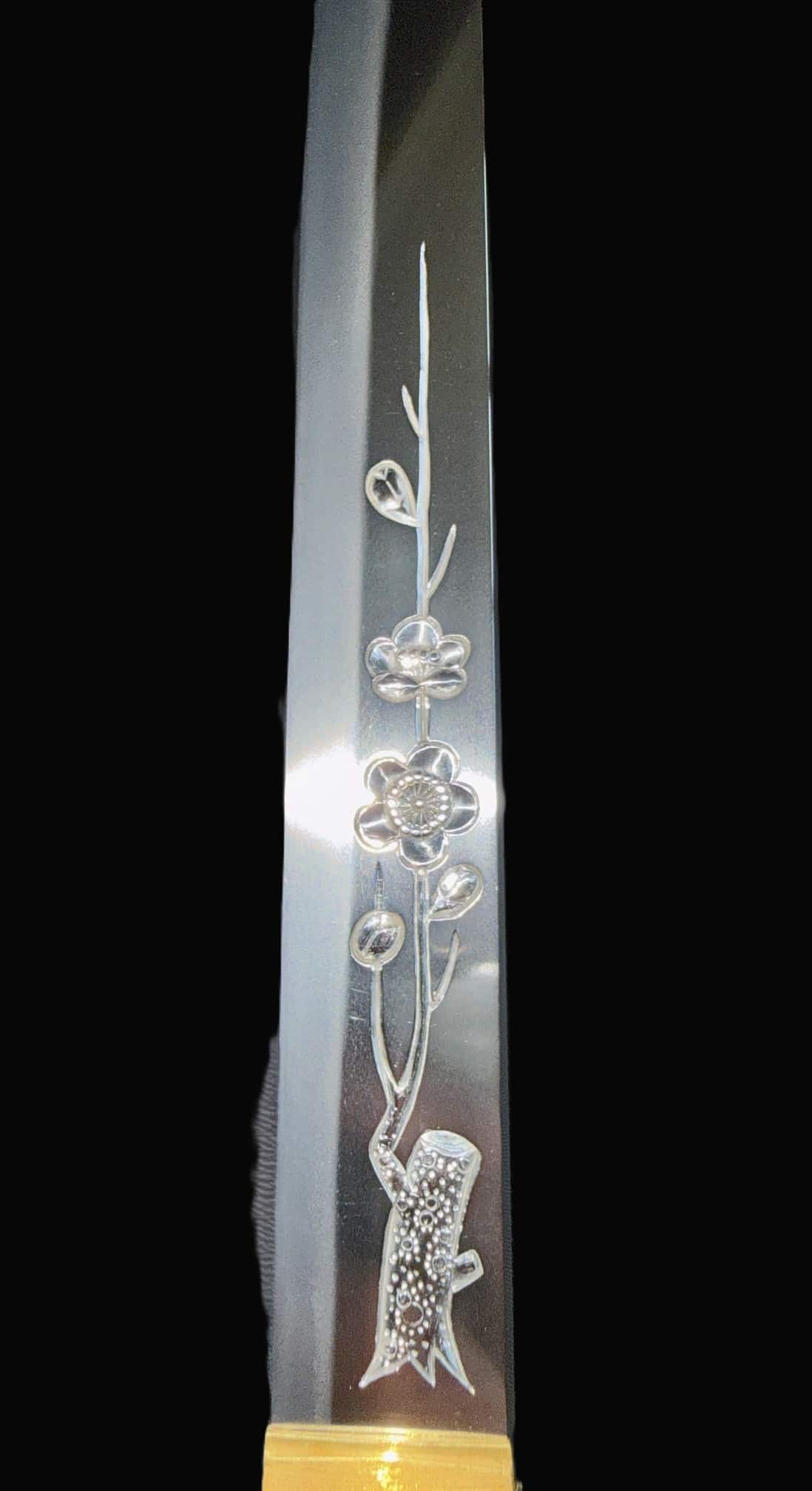
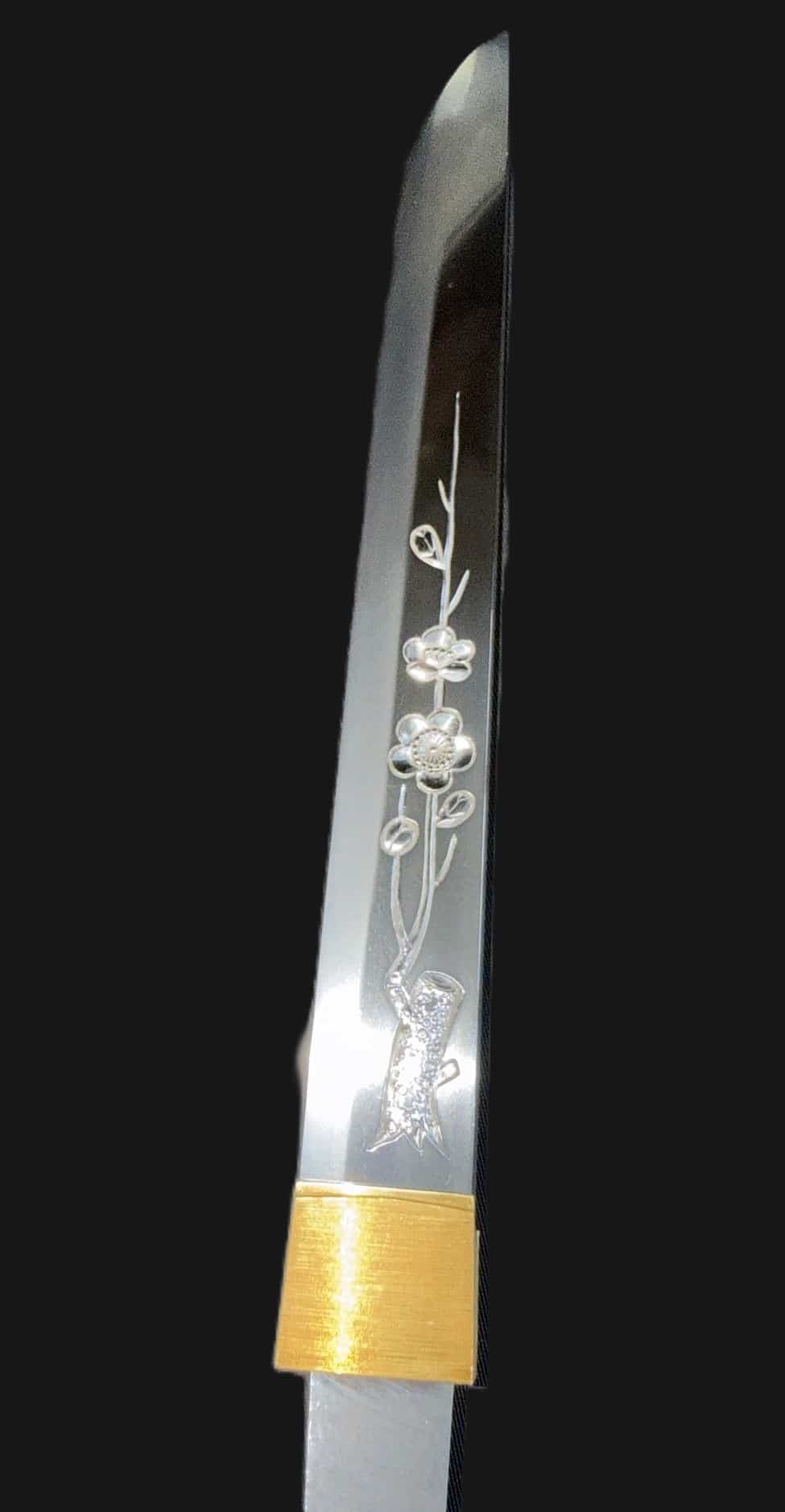
A particularly noteworthy feature is the finely executed horimono, personally carved by Yoshimitsu himself. The engraving depicts three Japanese plum blossoms, a traditional symbol of resilience, renewal, and the arrival of spring after the hardships of winter. The execution is remarkably delicate and demonstrates the smith’s mastery beyond forging alone. Carving directly into a finished blade requires extraordinary precision, as the decorative work must enhance the sword aesthetically without compromising its structural integrity.
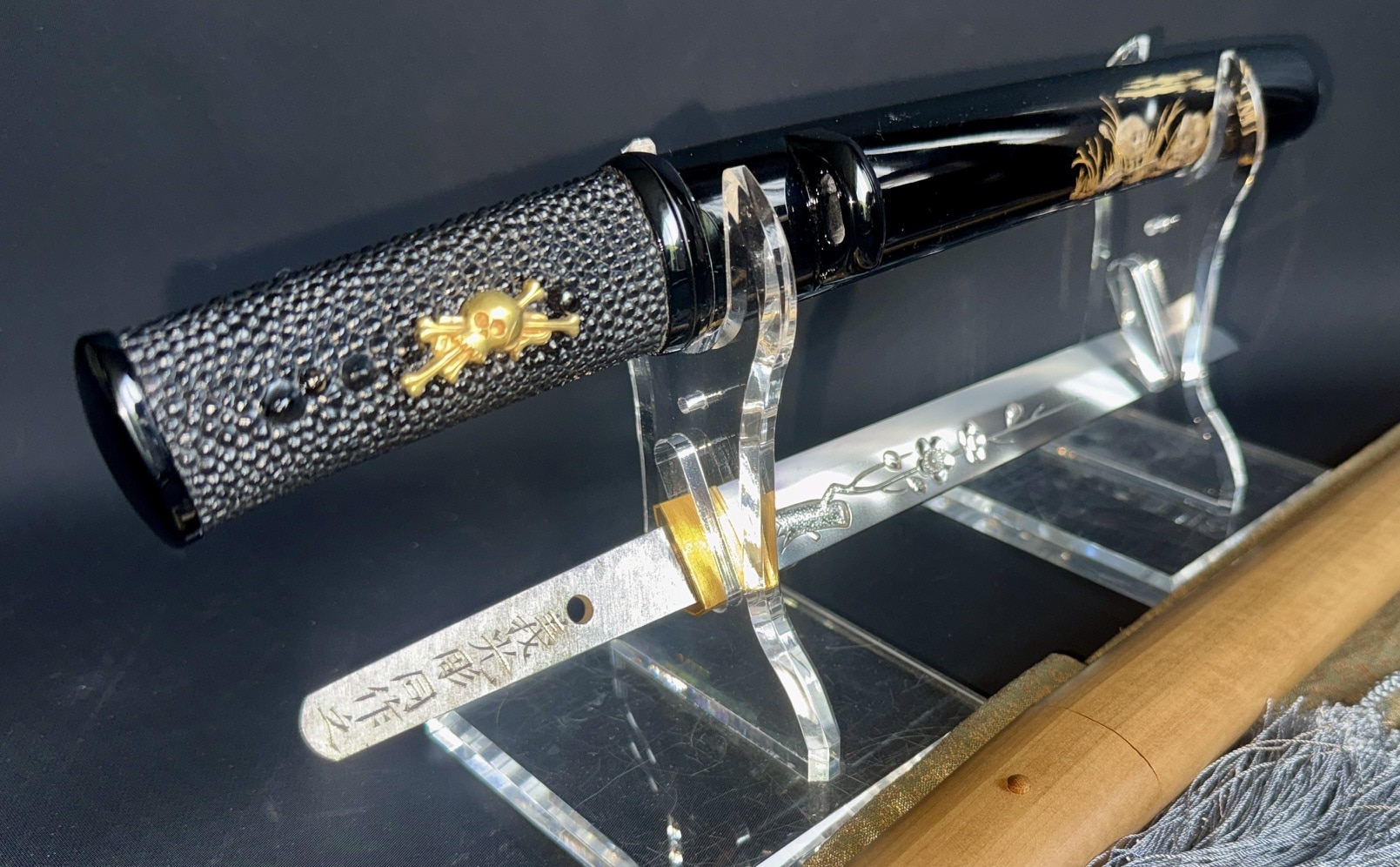
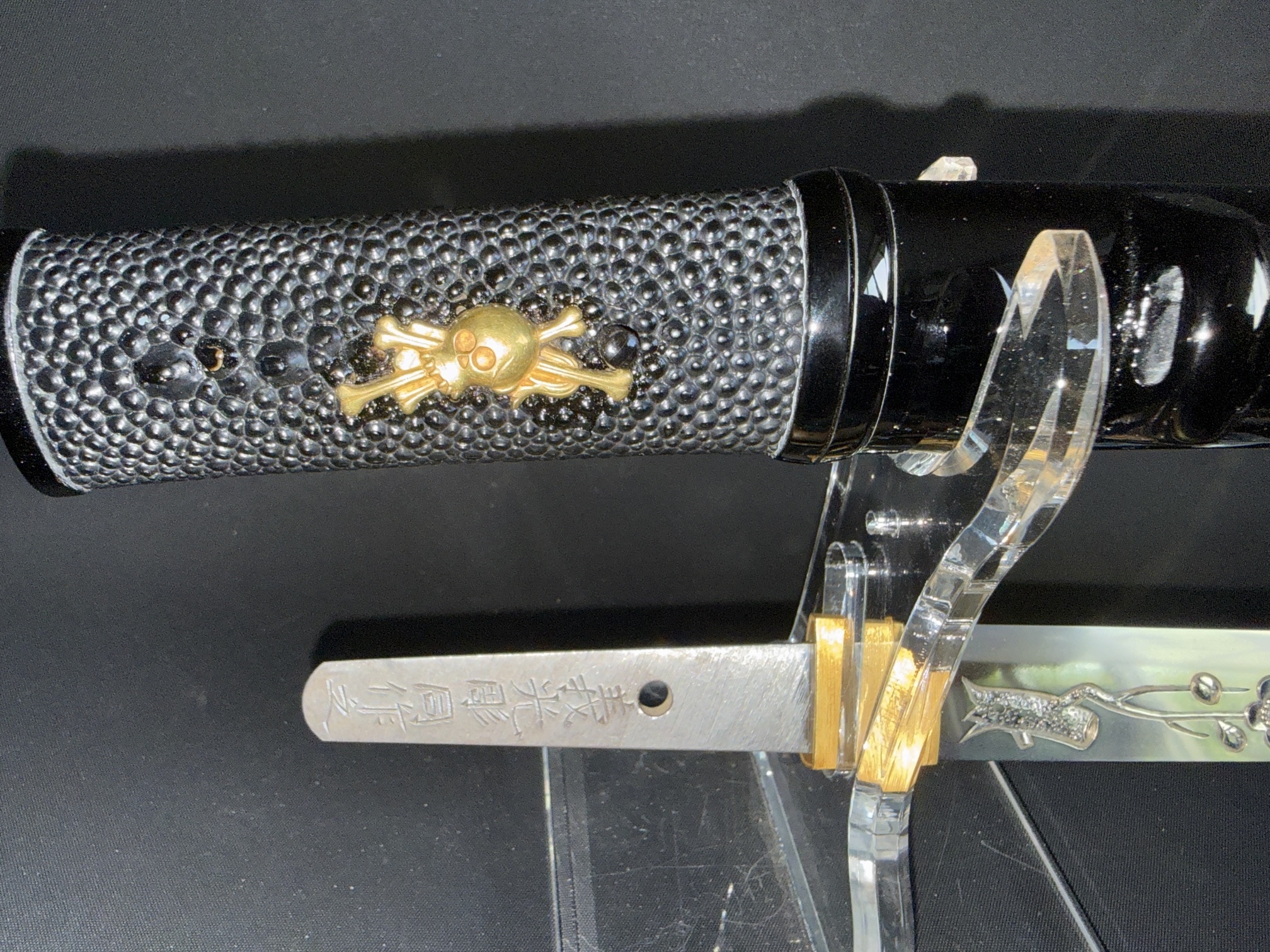
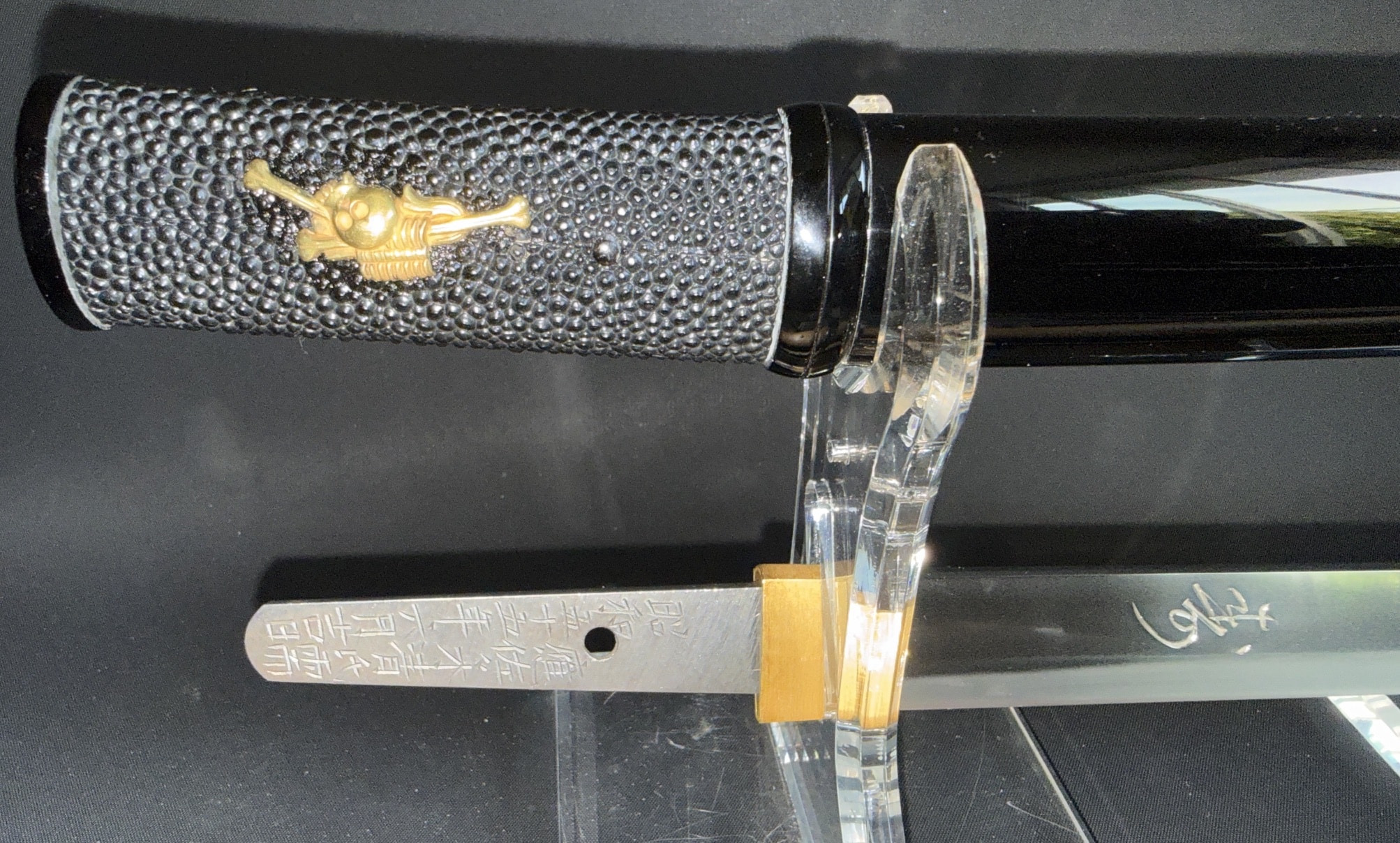
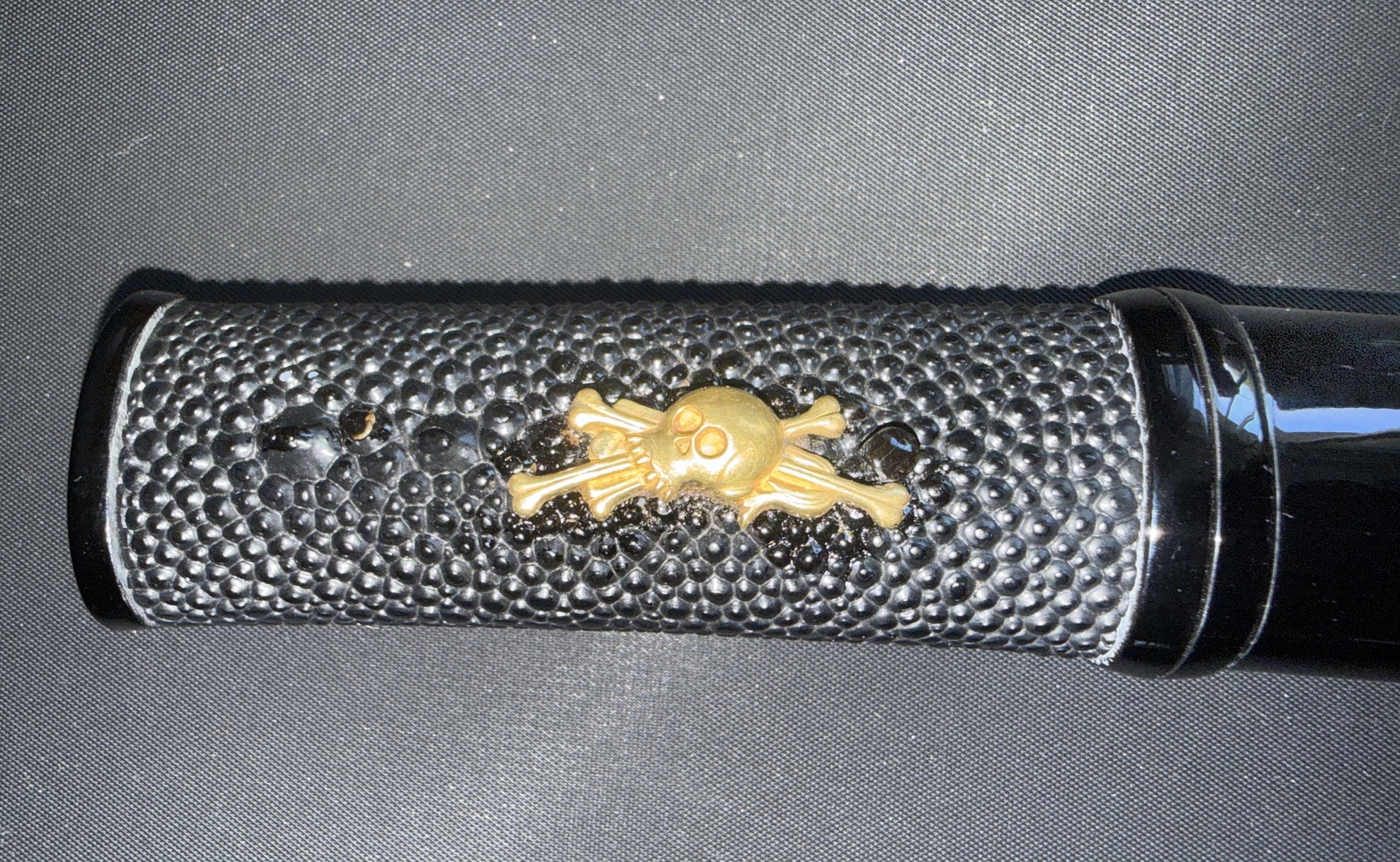
The tantō is mounted in an elegant black koshirae of exceptional quality. The fittings feature striking solid gold menuki depicting skull and bone motifs, an unusual and highly symbolic design associated with the samurai understanding of mortality, impermanence, and acceptance of fate. The motif continues throughout the mounting and is executed with remarkable detail and refinement. A finely crafted gold-covered habaki completes the mounting, while a traditional shirasaya accompanies the blade for long-term preservation.
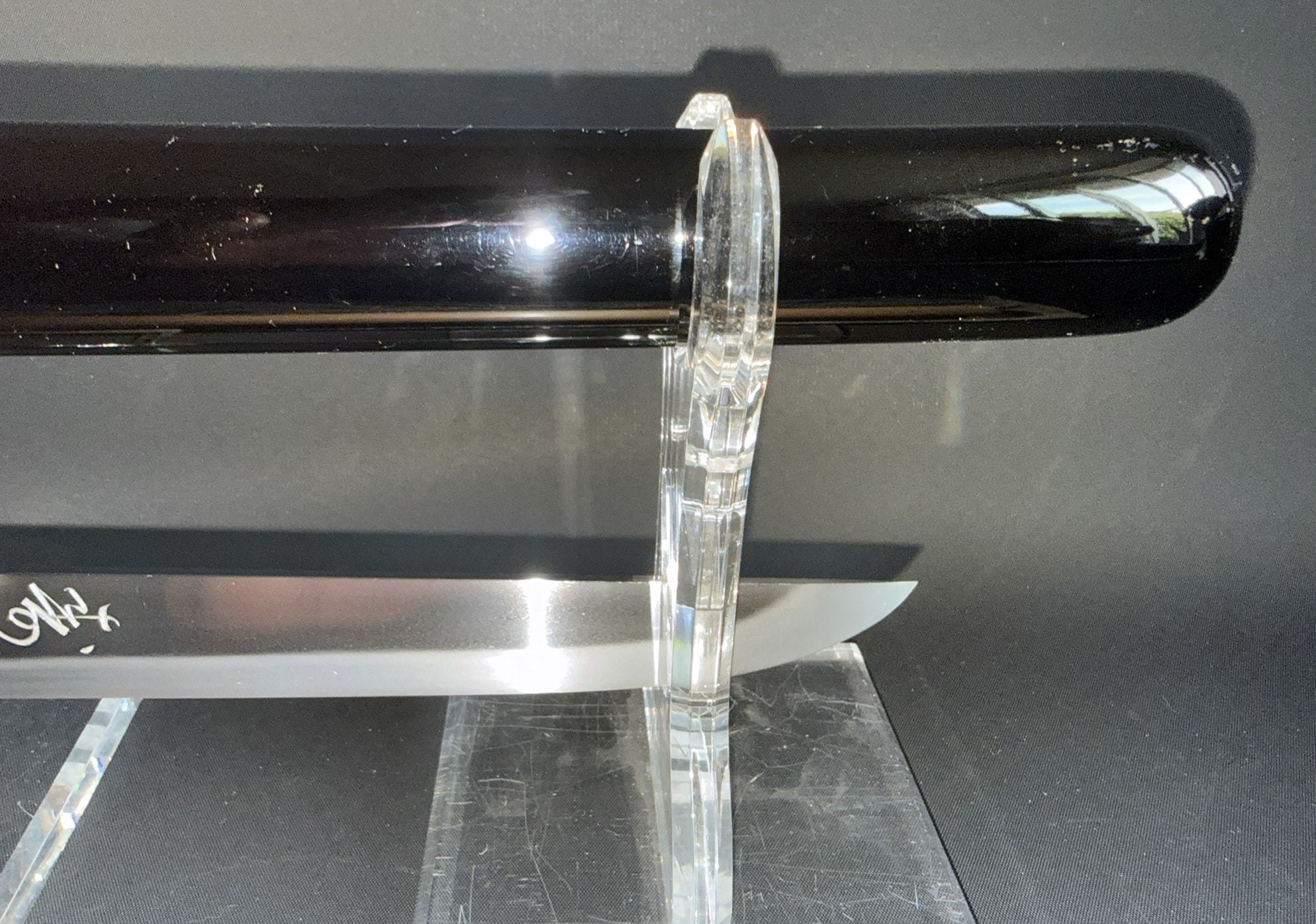
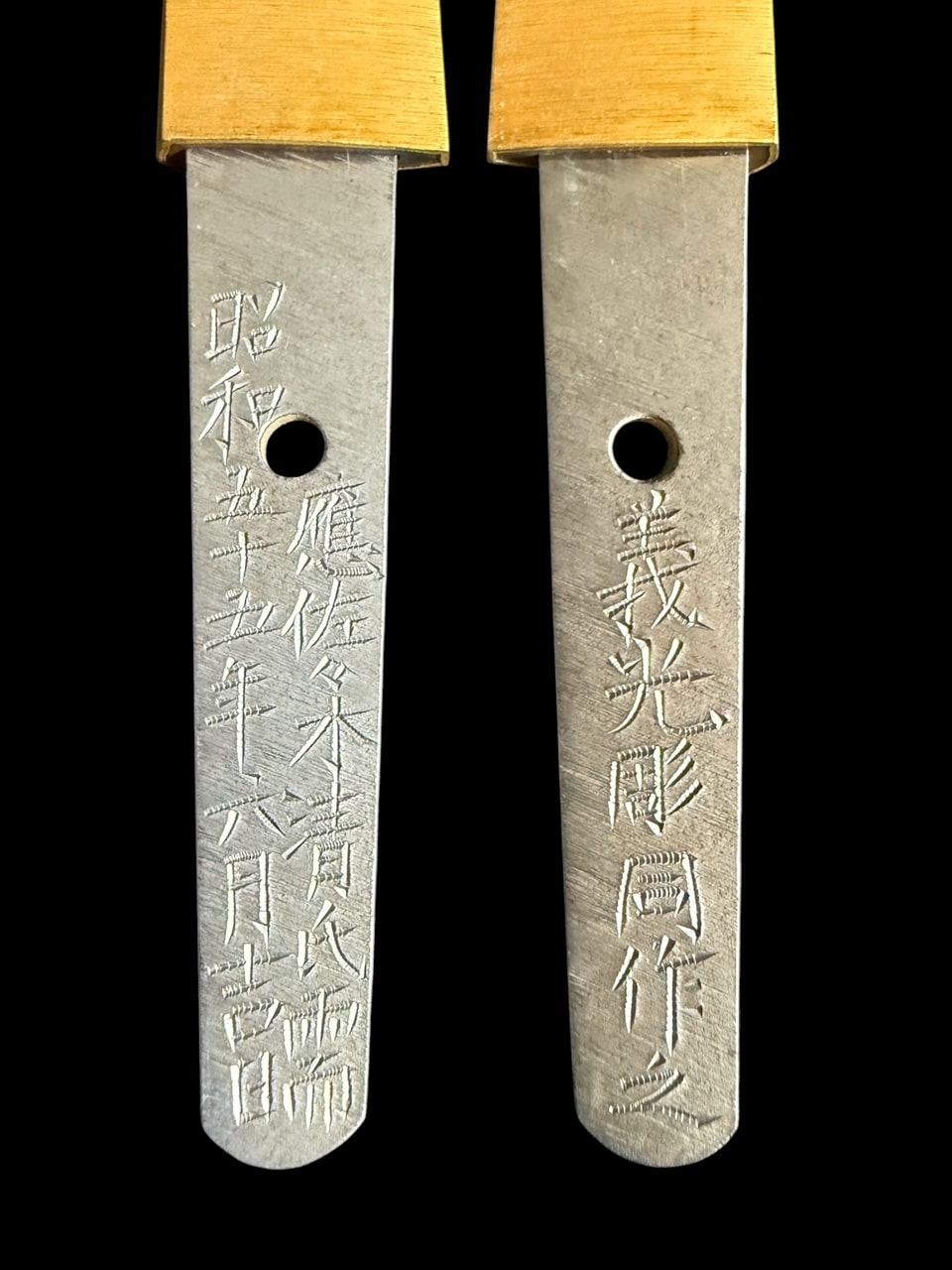
The tang bears an important inscription recording both the commission and the smith’s direct involvement in the horimono:
昭和五十五年吉日 A lucky day in Shōwa 55 (1980)
慶佐々木清氏需 Made at the request of Mr. Kiyoshi Sasaki
義光彫同作之 Horimono carved personally by Yoshimitsu
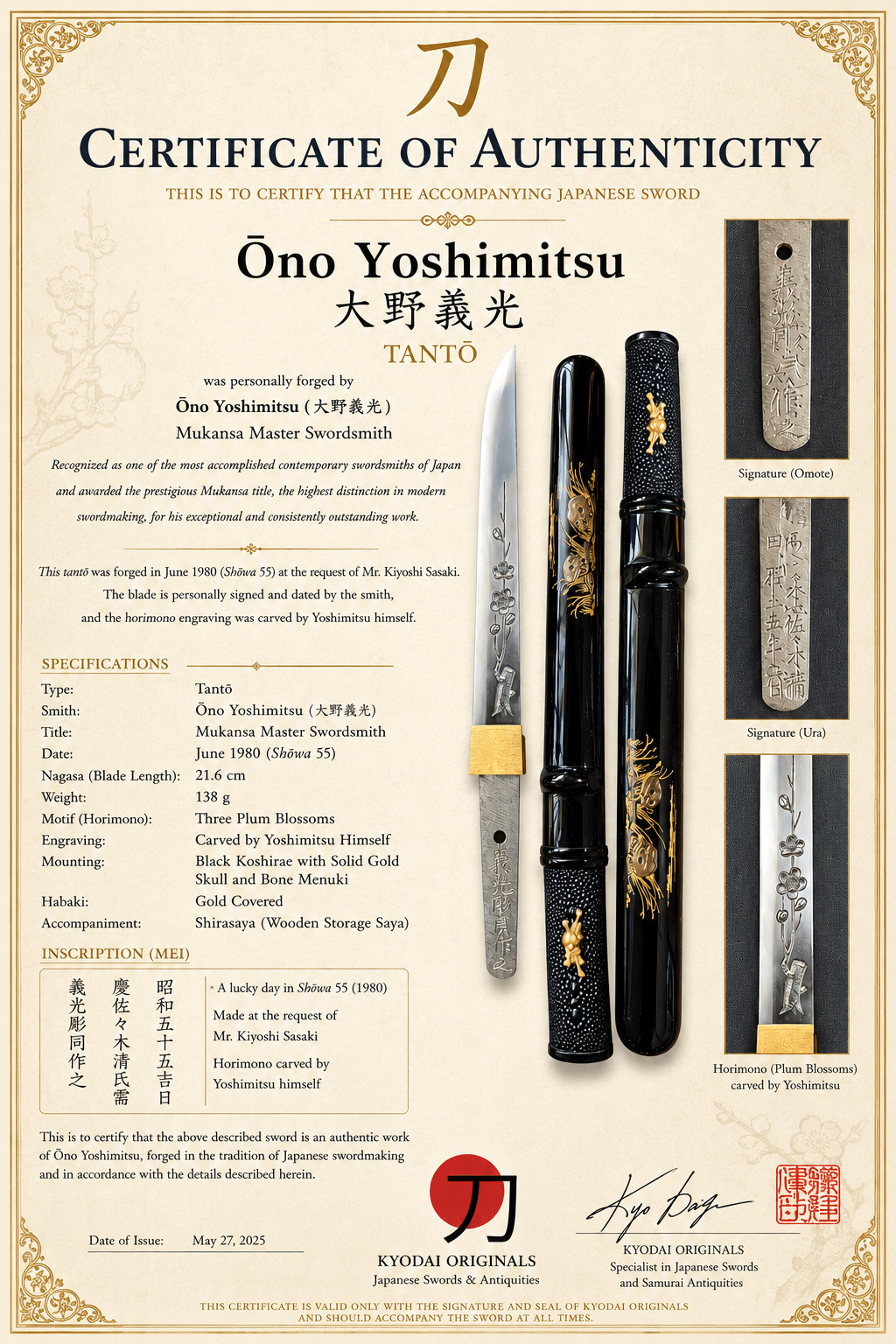
Sword Type: Tantō Smith: Ōno Yoshimitsu (Mukansa) Date: Shōwa 55 (1980) Nagasa: 21.6 cm Weight: 138 grams Mounting: Black koshirae with solid gold skull-and-bone menuki Habaki: Gold-covered habaki Additional: Accompanied by traditional shirasaya
This remarkable tantō represents far more than a finely forged blade. It is the work of one of Japan’s most celebrated modern swordsmiths, created during a period when Yoshimitsu was establishing the reputation that would ultimately earn him Mukansa status.
Combining elegant proportions, personally carved horimono, symbolic high-quality mountings, and impeccable craftsmanship, this tantō stands as a superb example of contemporary Japanese sword art. It successfully bridges the centuries-old traditions of classical nihontō with the mastery of a modern artisan whose work is recognized among the finest of his generation.
An exceptional collector’s piece and a significant work of modern Japanese swordmaking, worthy of the most advanced collections of contemporary nihontō.
KvK: 51964147
C.W. Slok - Kyodai Originals
Bank: NL25 KNAB 0509 1310 18
BIC: KNABNL2H
© 2026 Kyodai Originals is made with ❤ by Nieuwblik.com


