
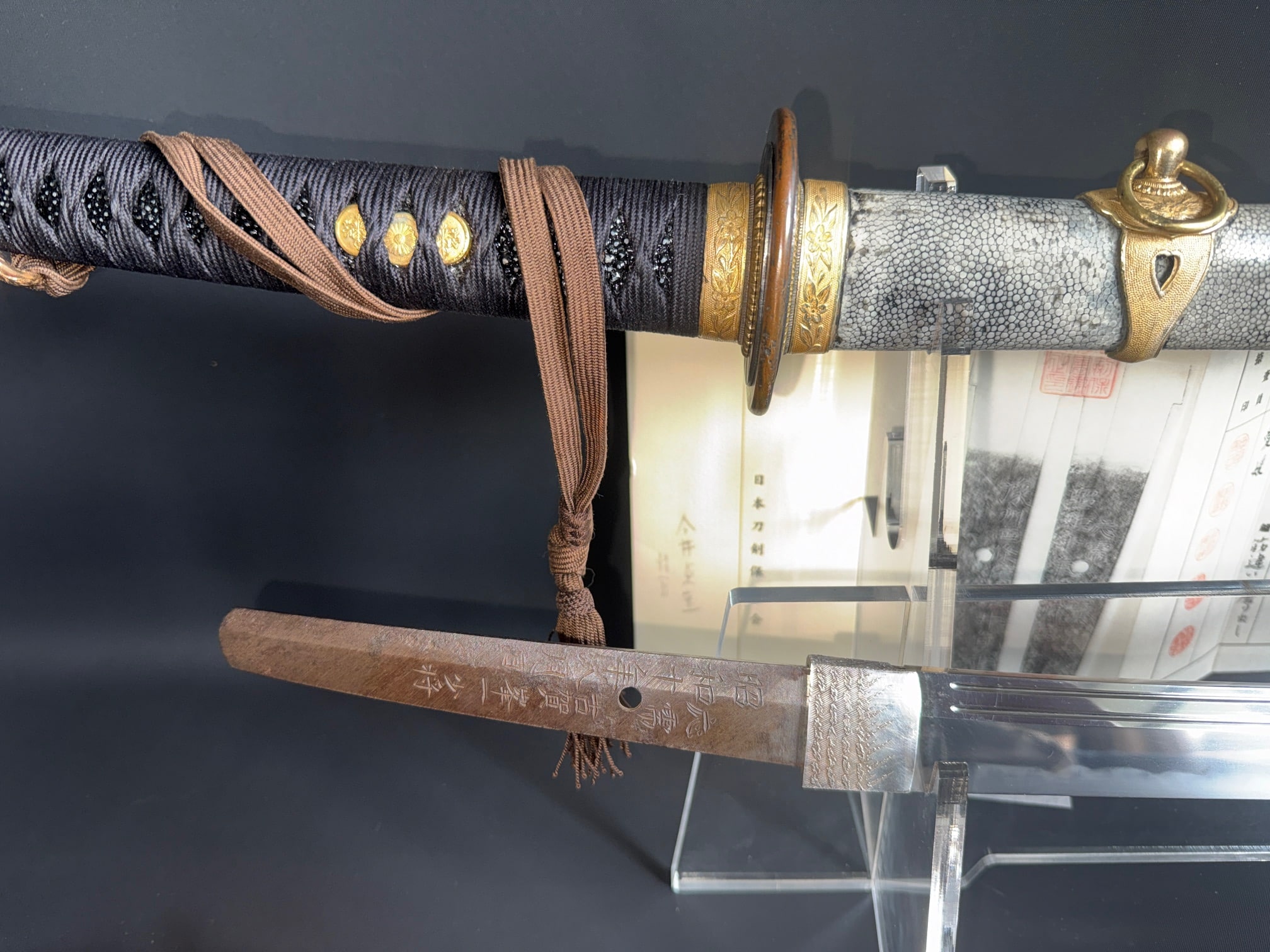
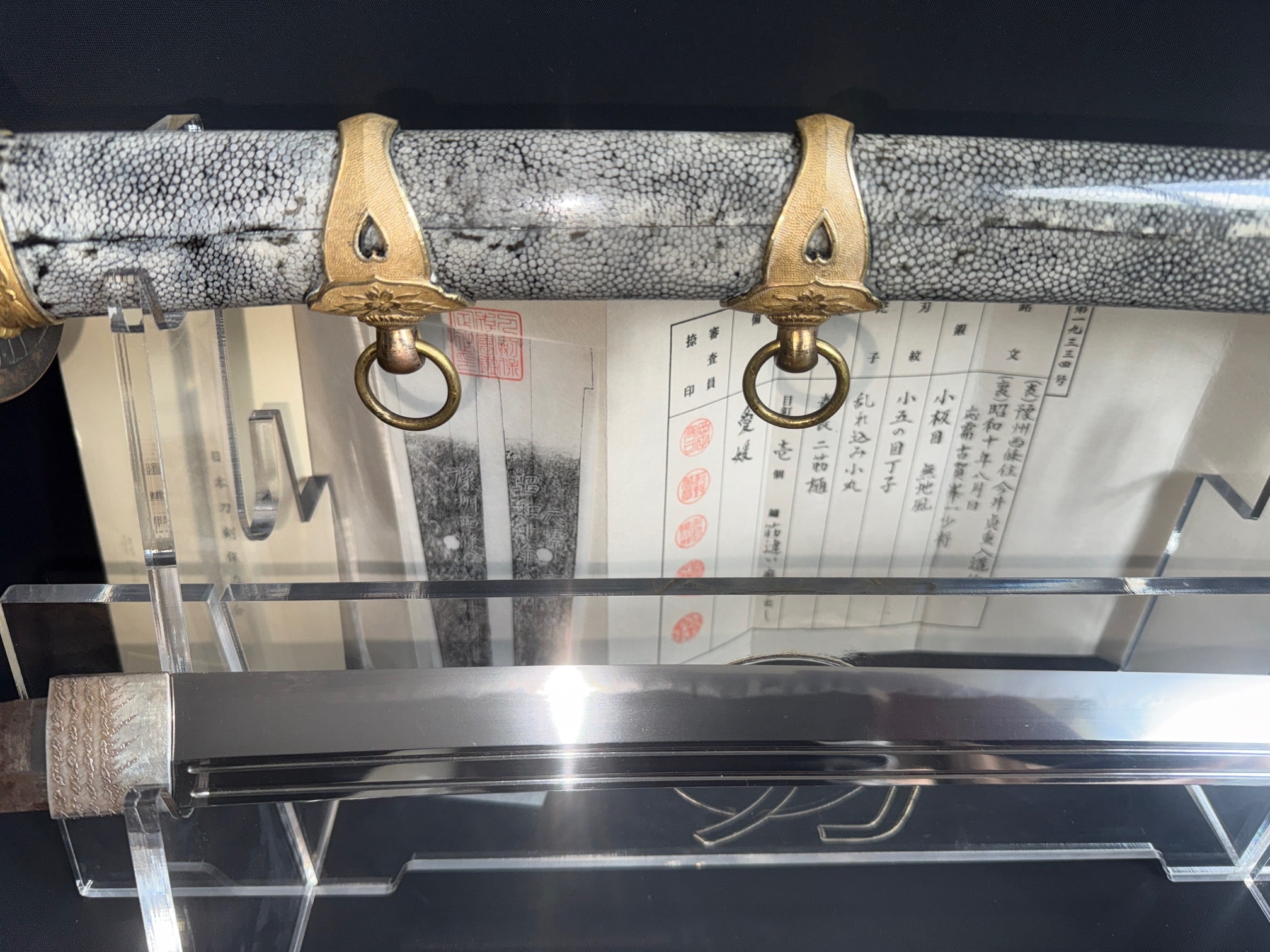
€ 32.500,00
1 in stock
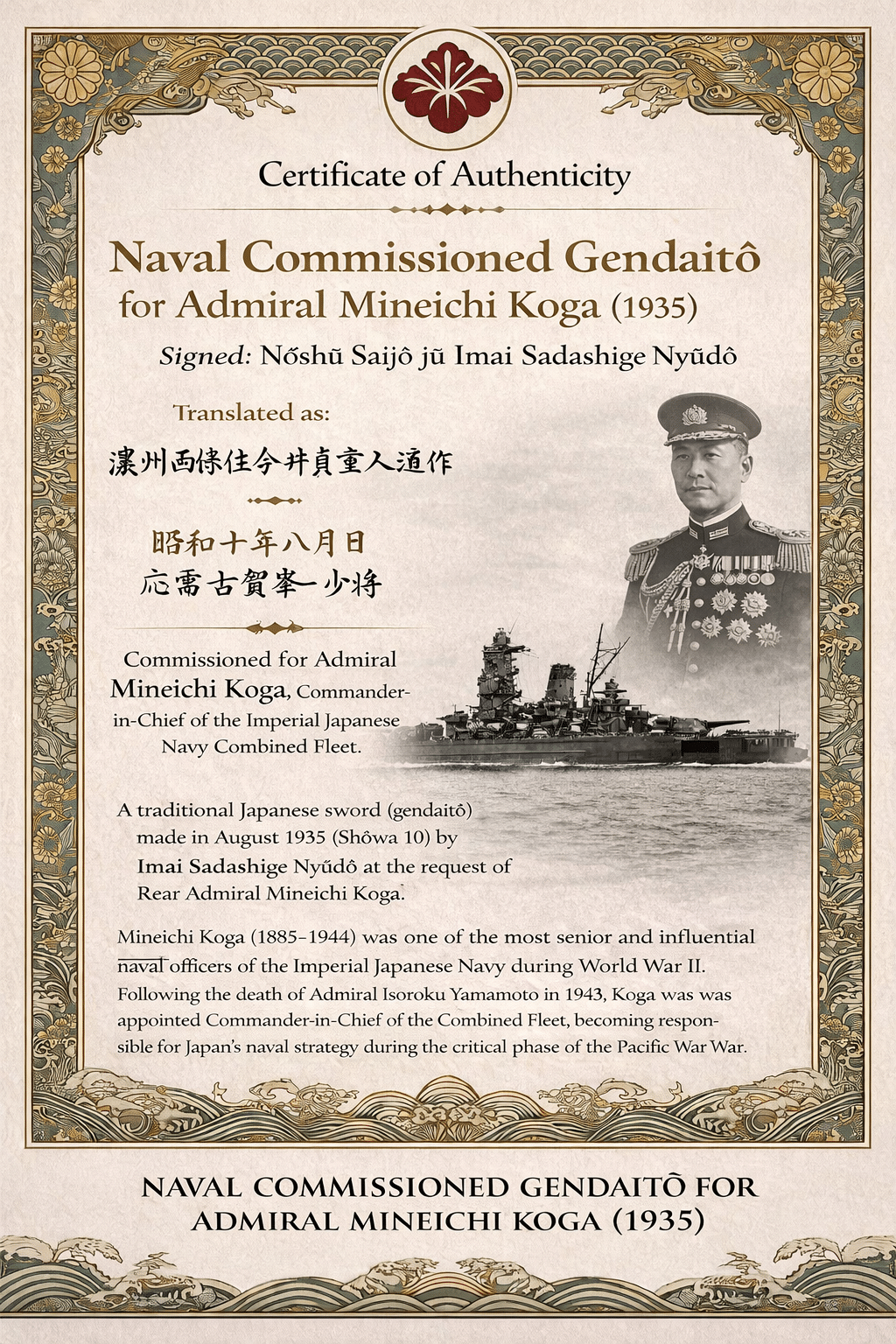
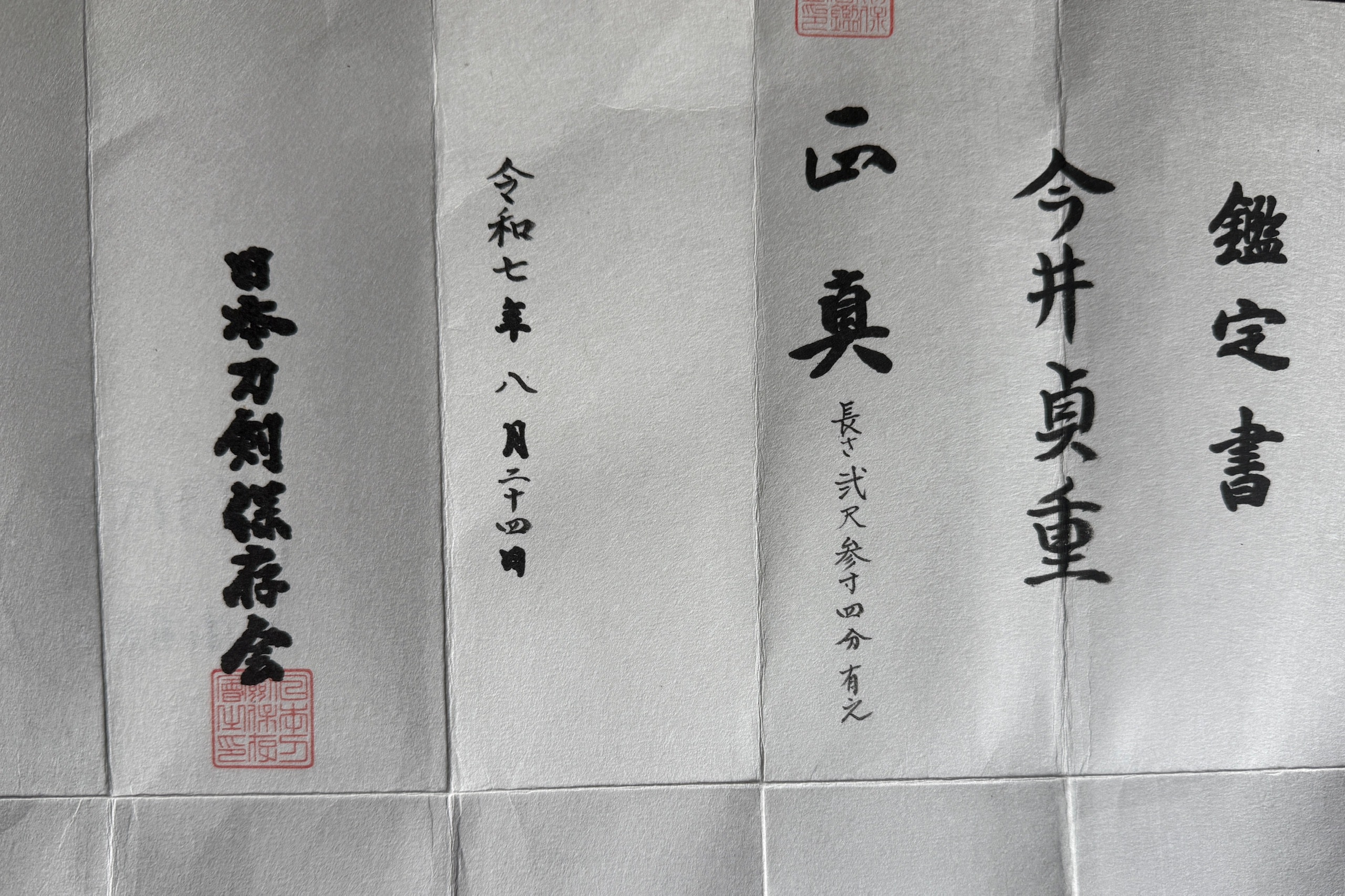
Forged by Nyūdō Imai Sadashige (1891–)
Made for Rear Admiral Mineichi Koga (1885–1944)
Japan, August 1935 (Shōwa 10)
There are swords that represent craftsmanship.
There are swords that represent history.
And, on rare occasions, there are swords that embody both.
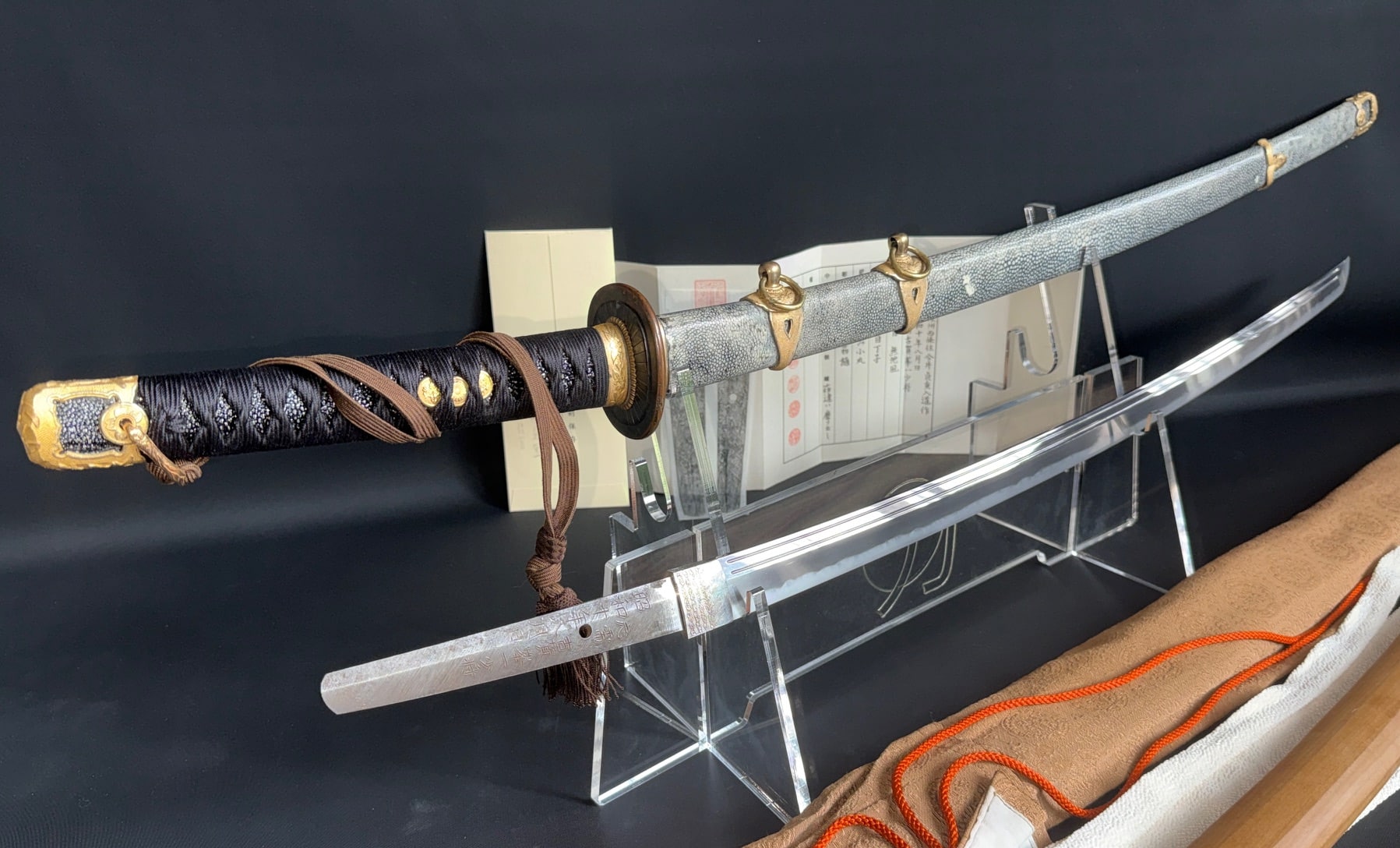
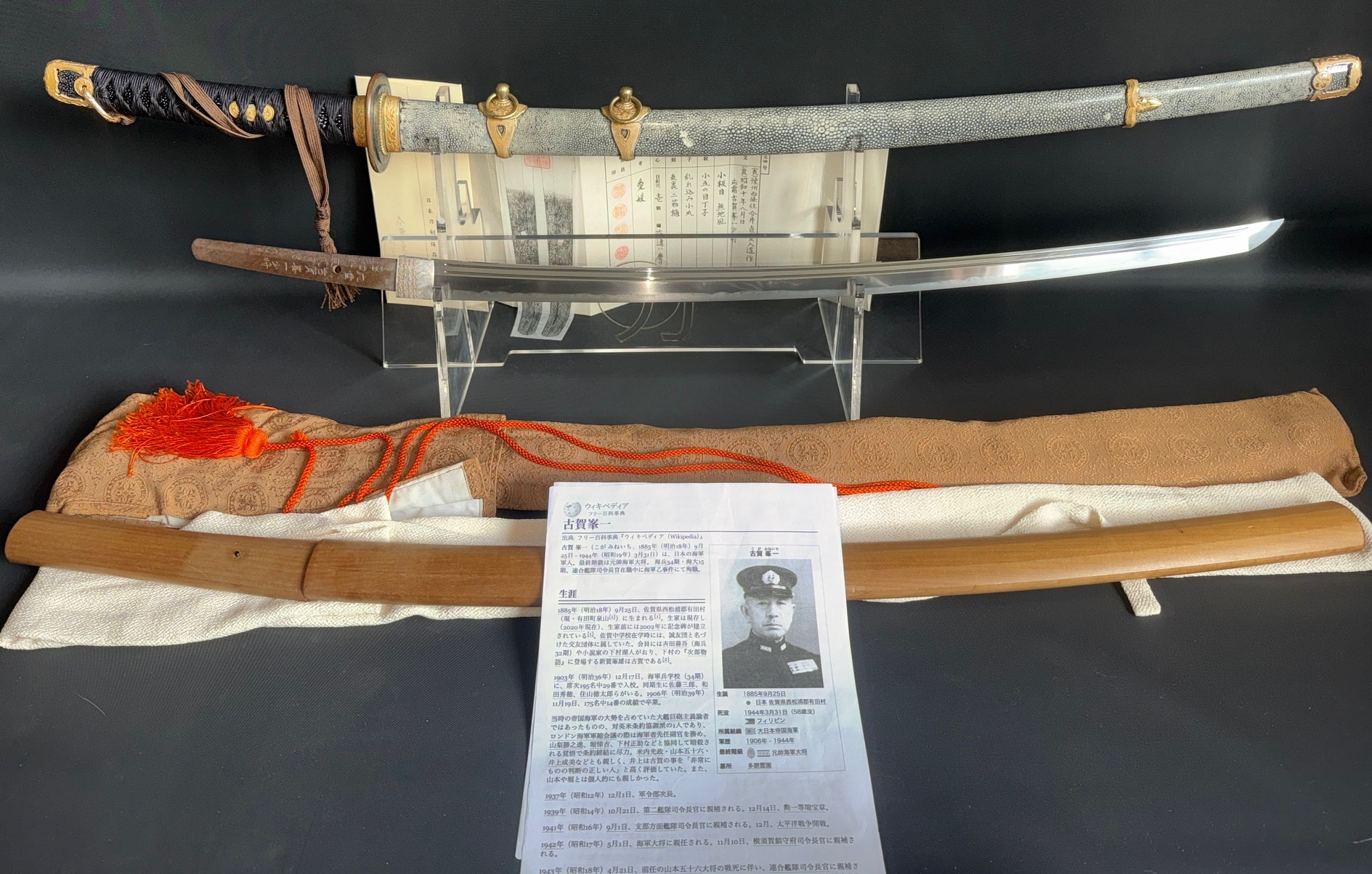
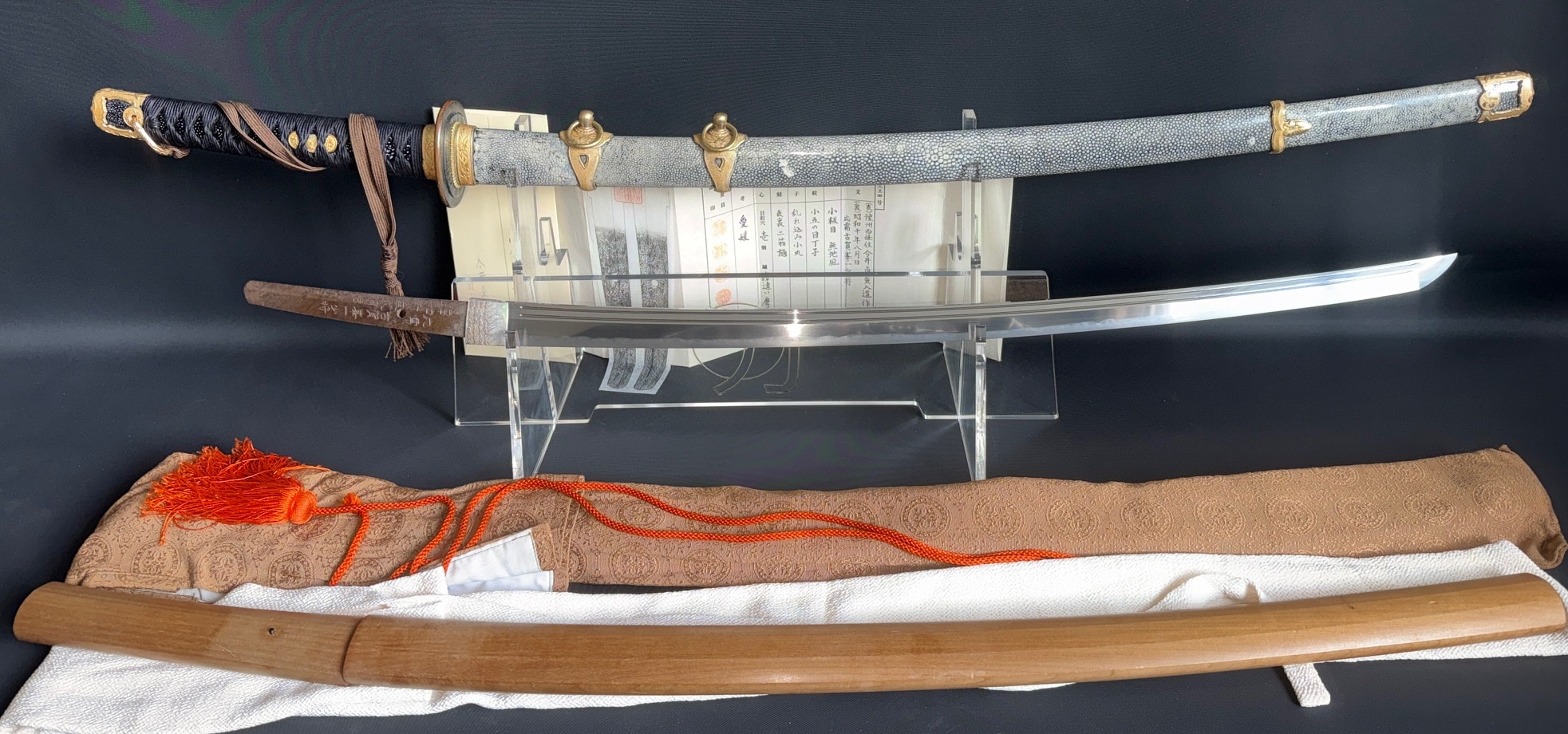
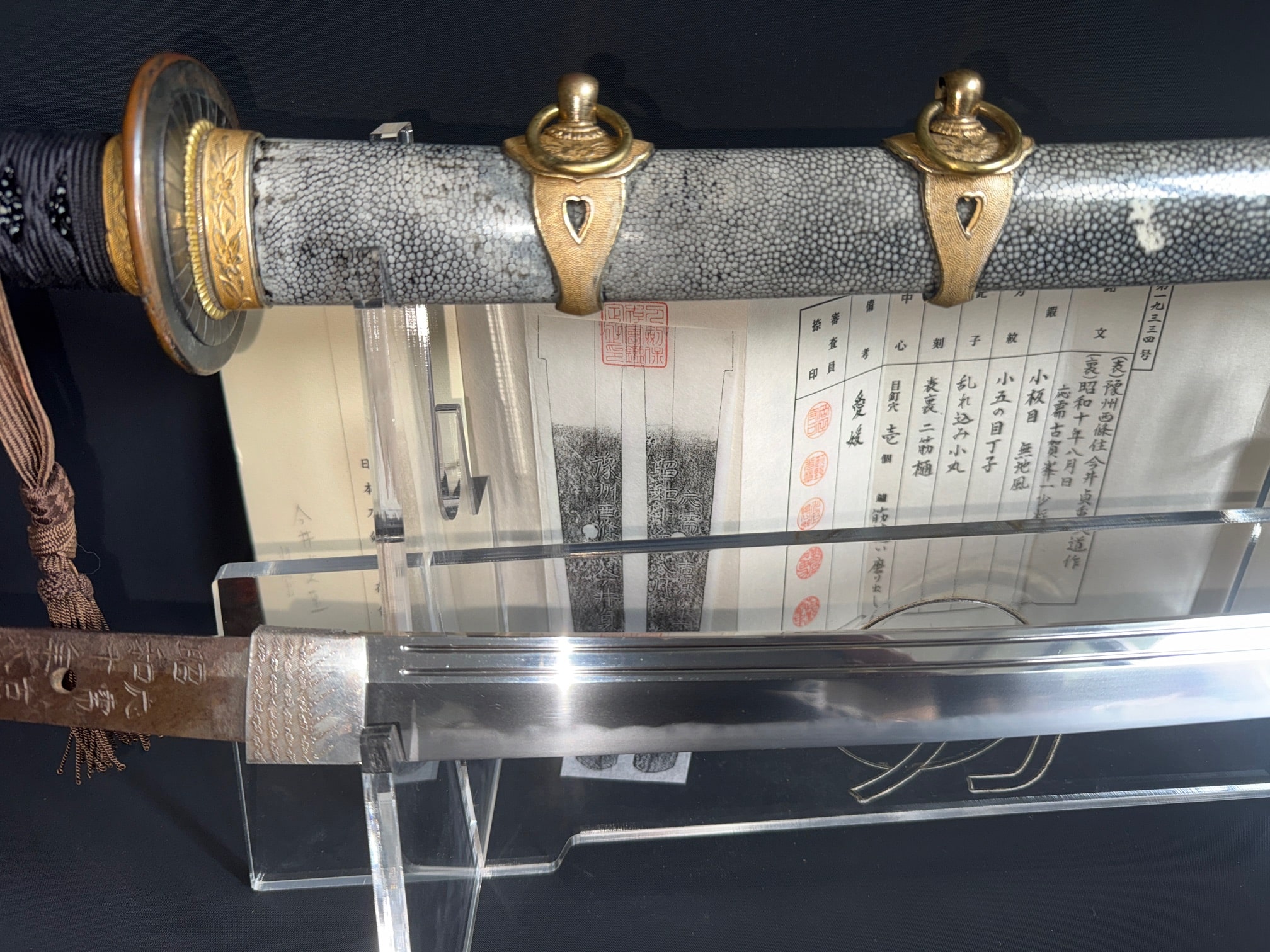
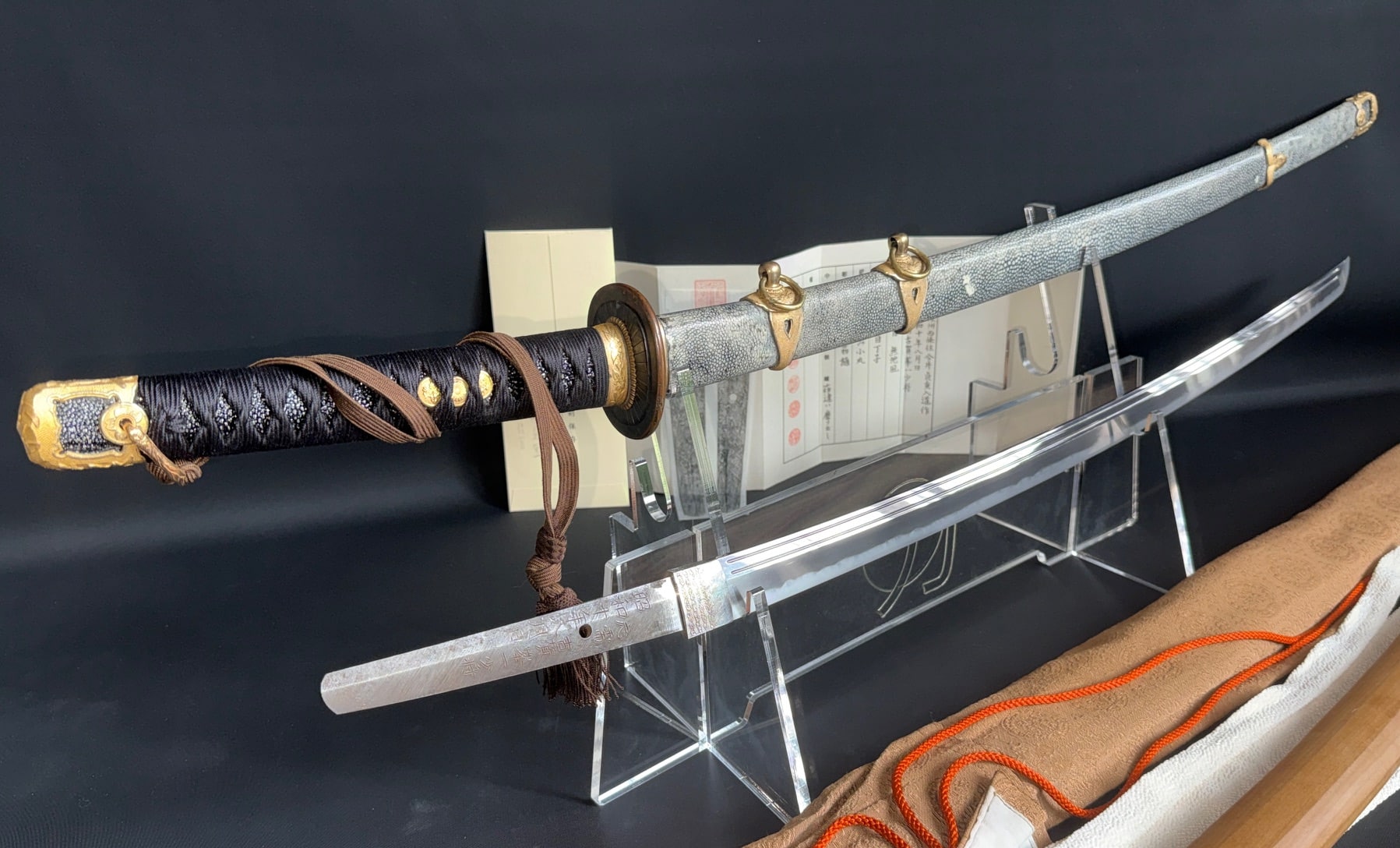
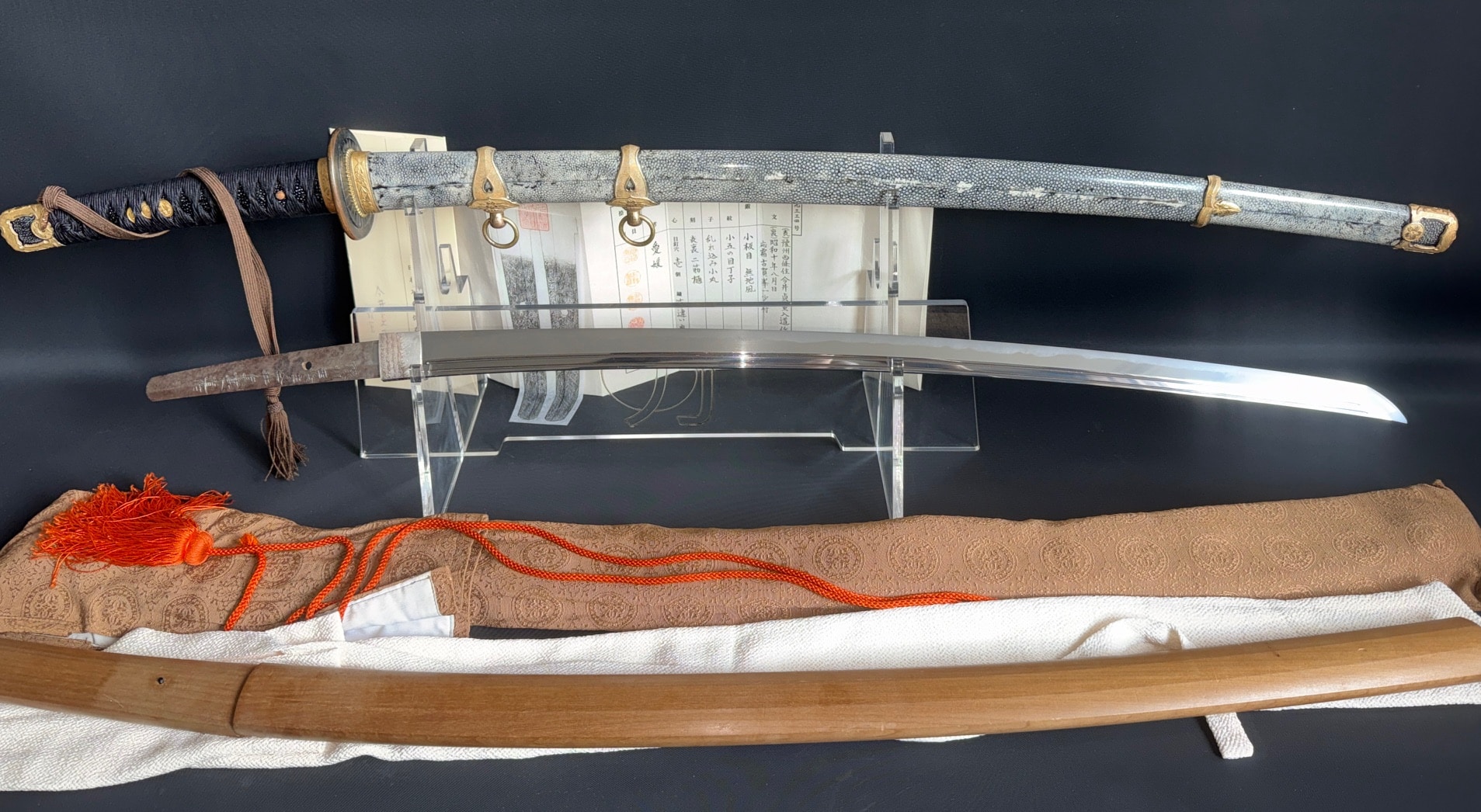
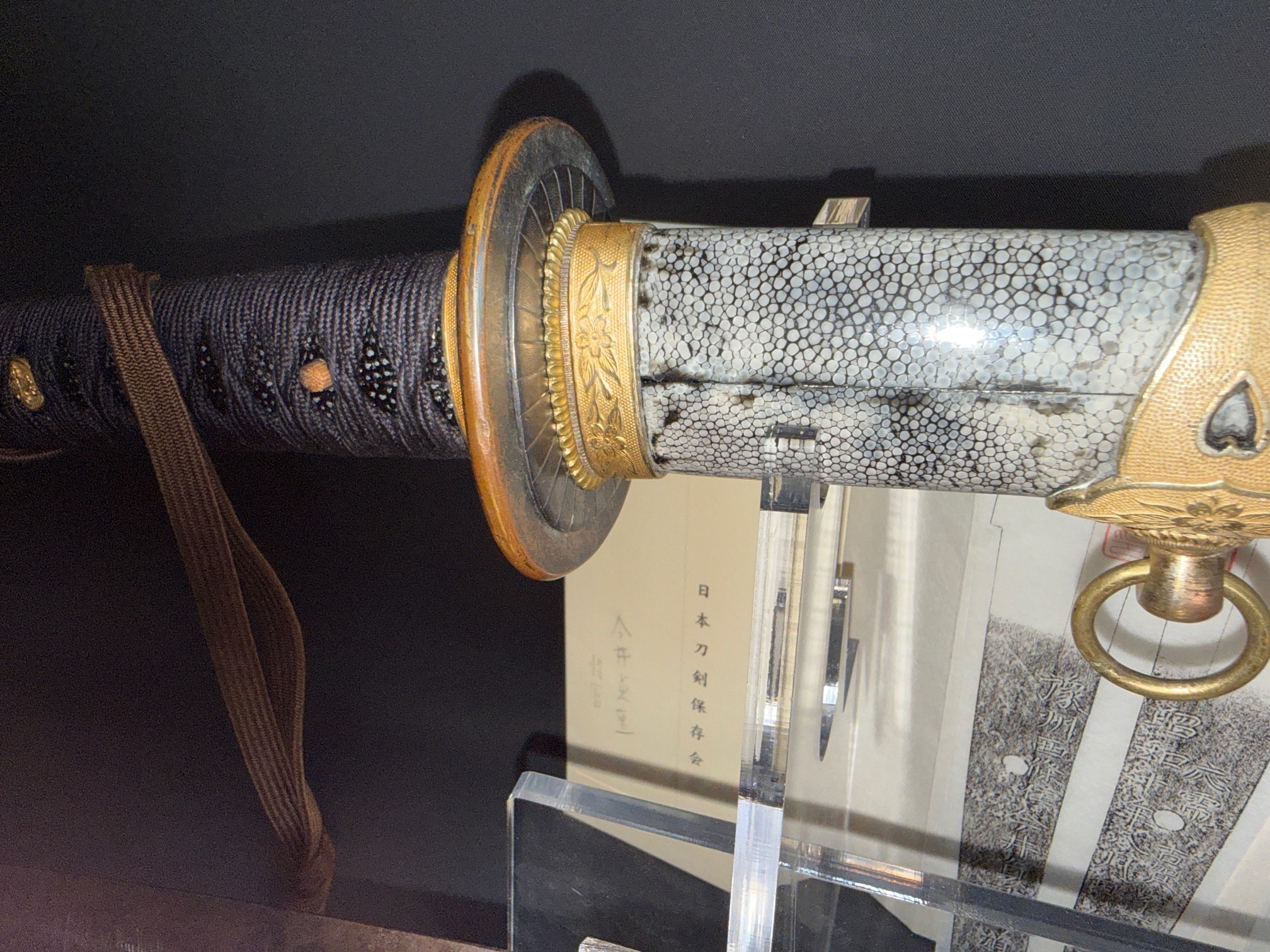
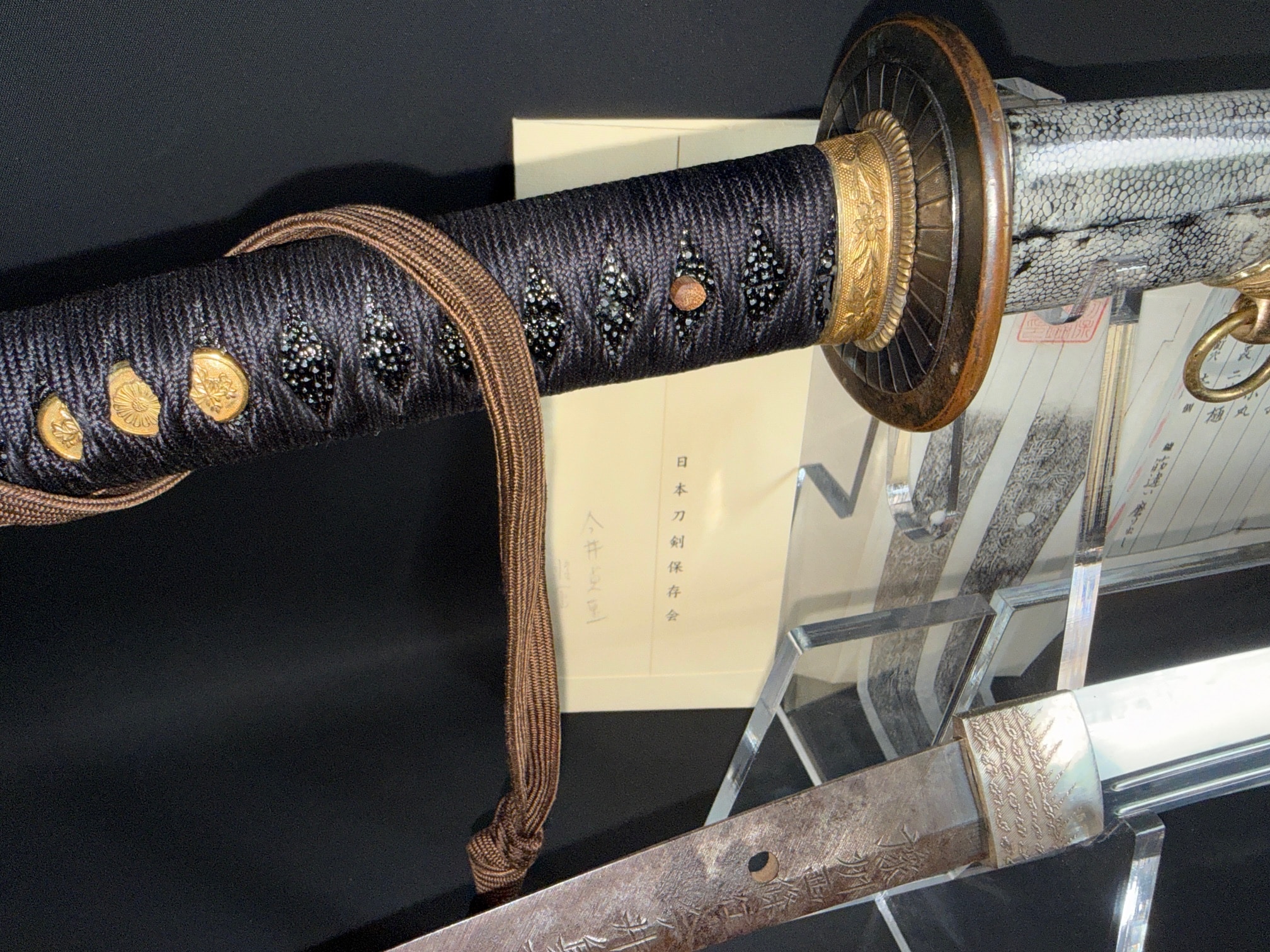
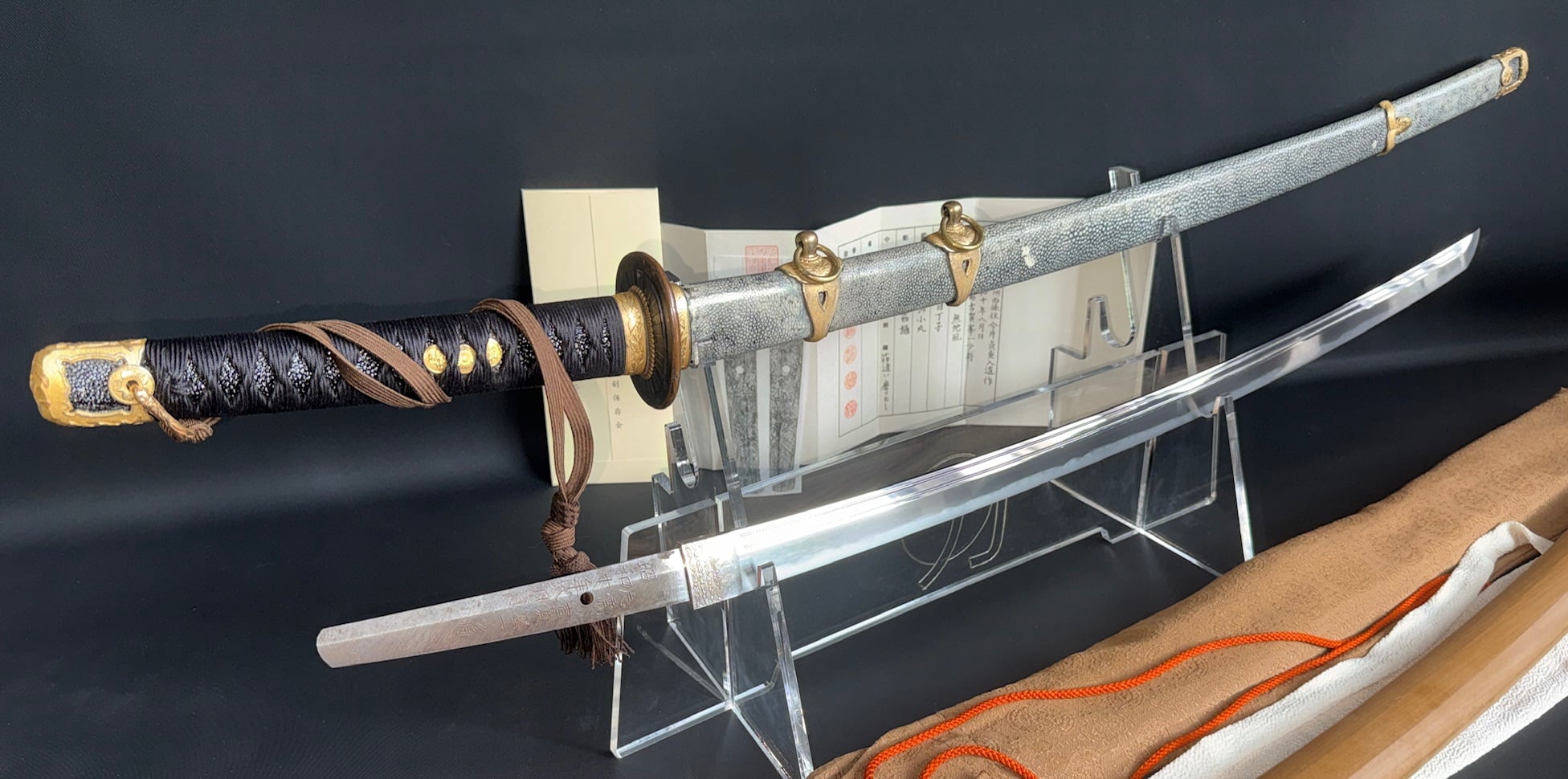
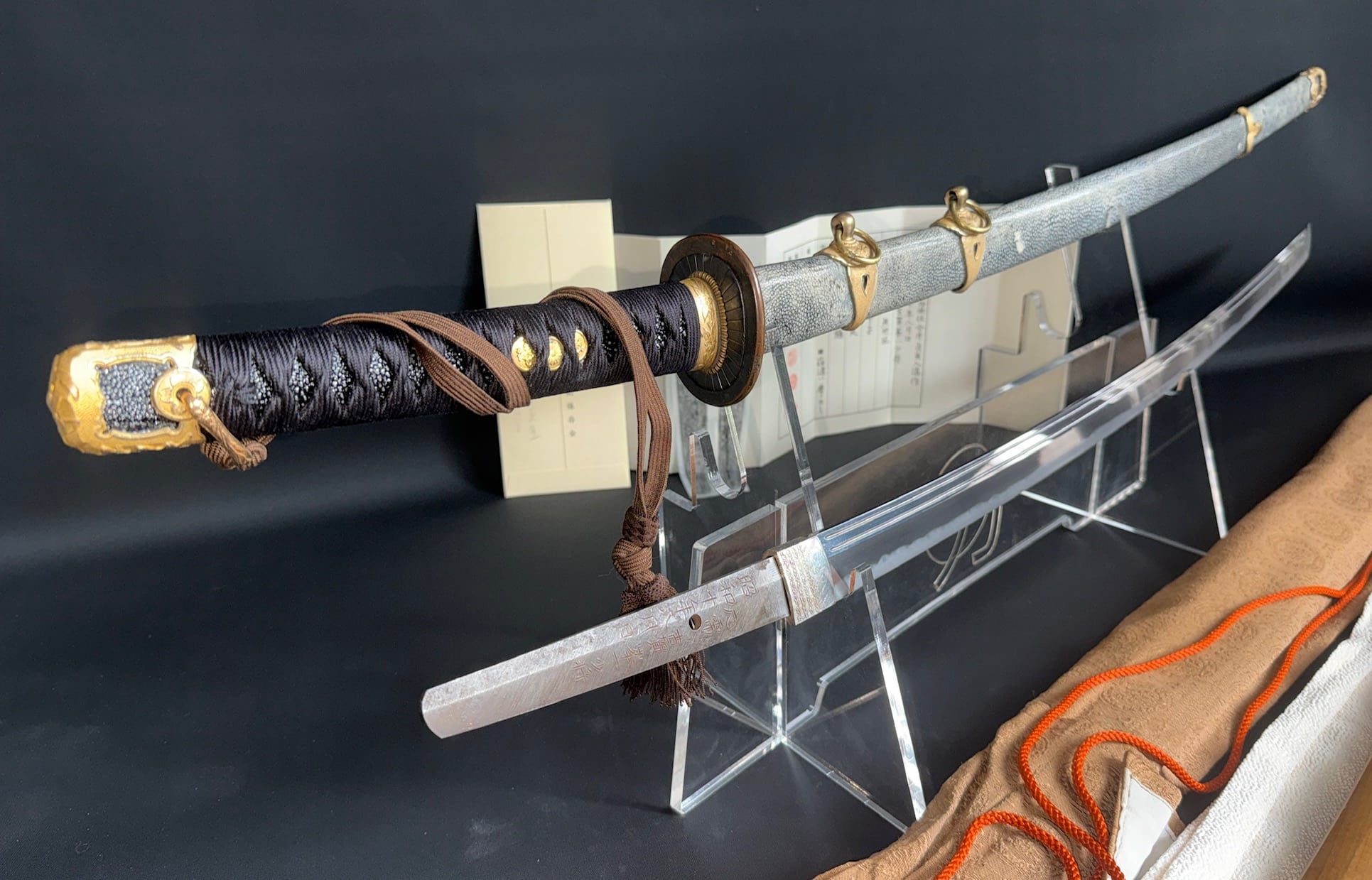
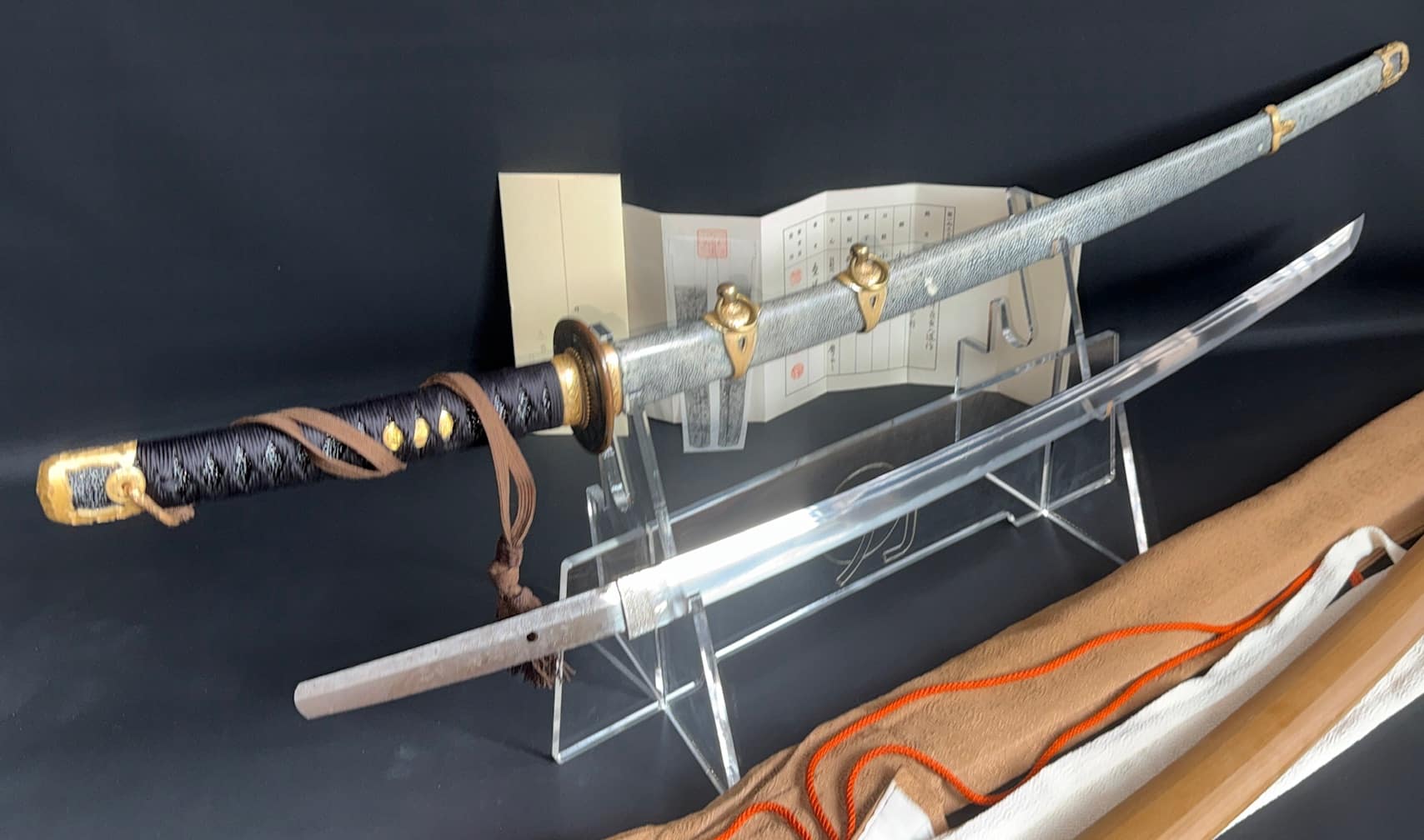
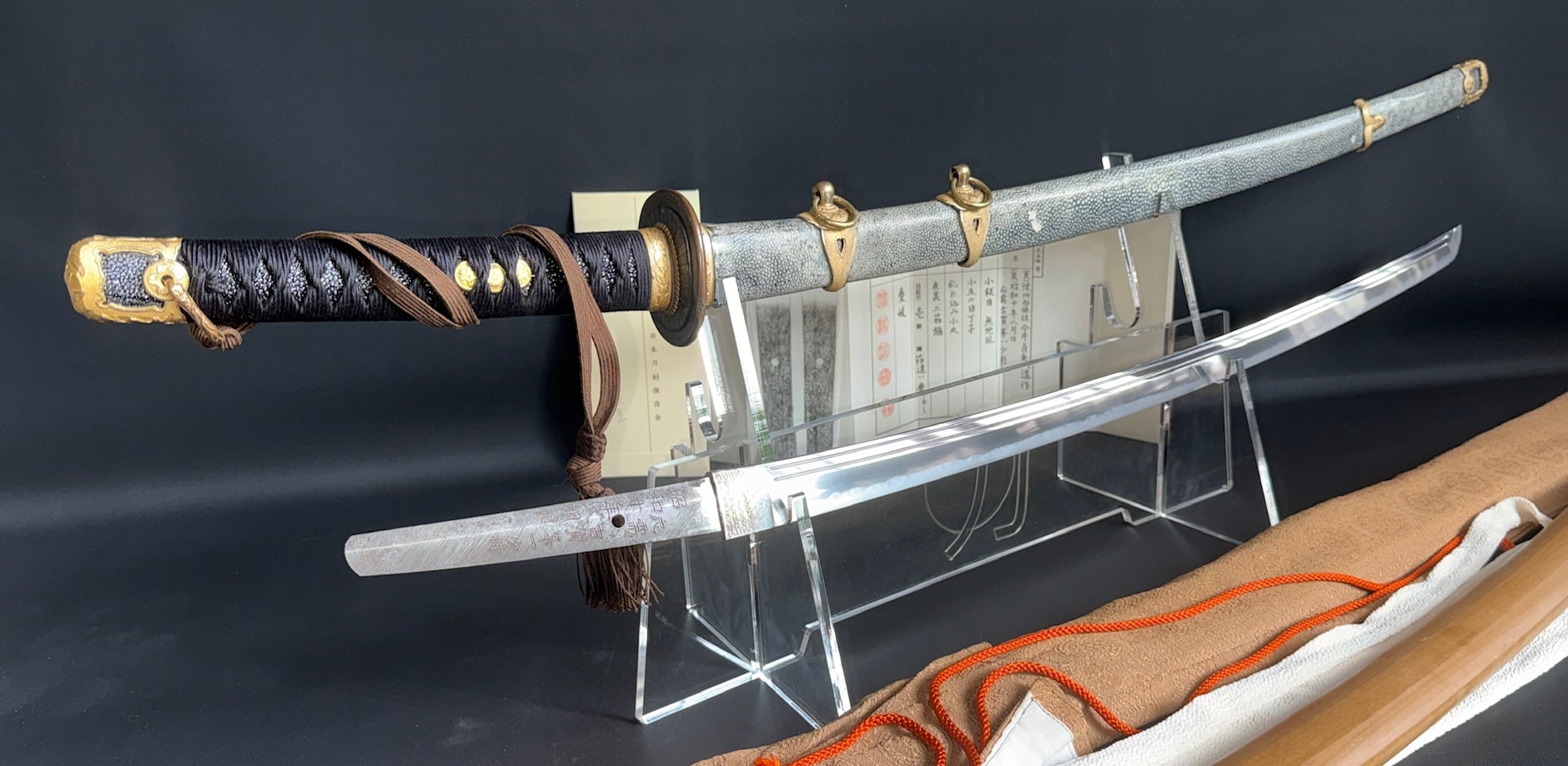
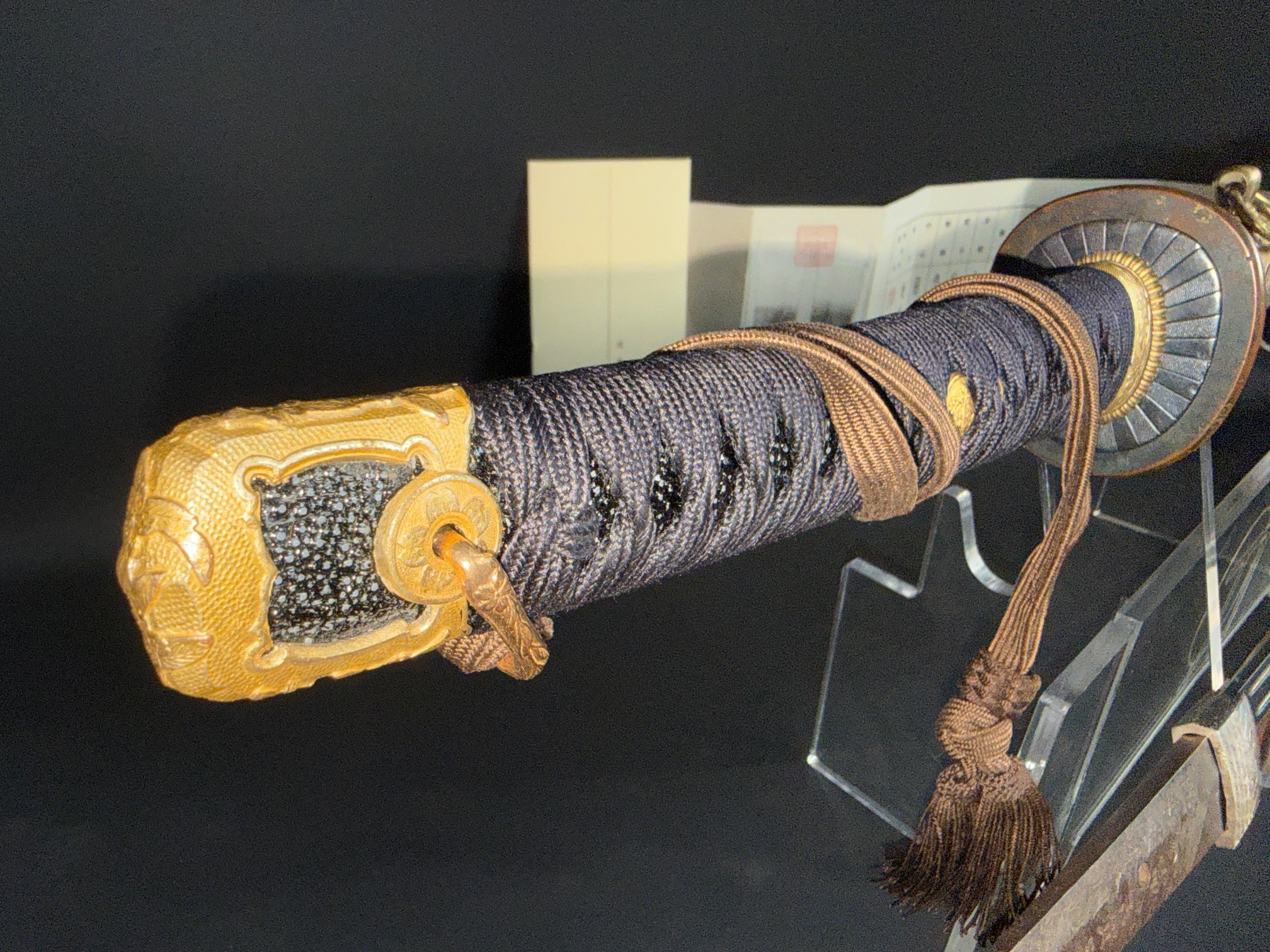
This exceptional gendaitō is one such piece a singular work that unites the refined tradition of Japanese swordsmithing with the commanding presence of one of the most powerful naval figures of the Second World War.
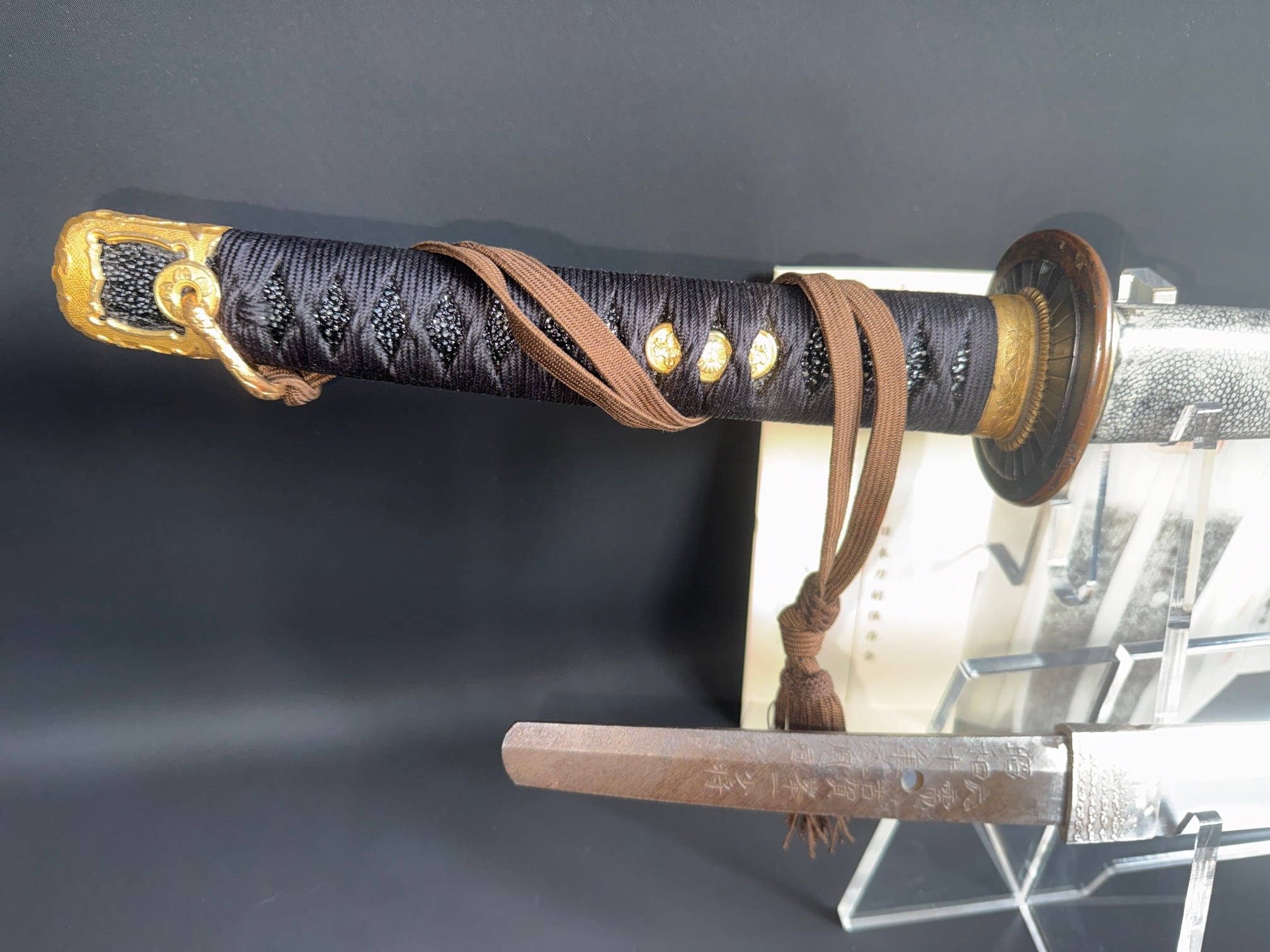
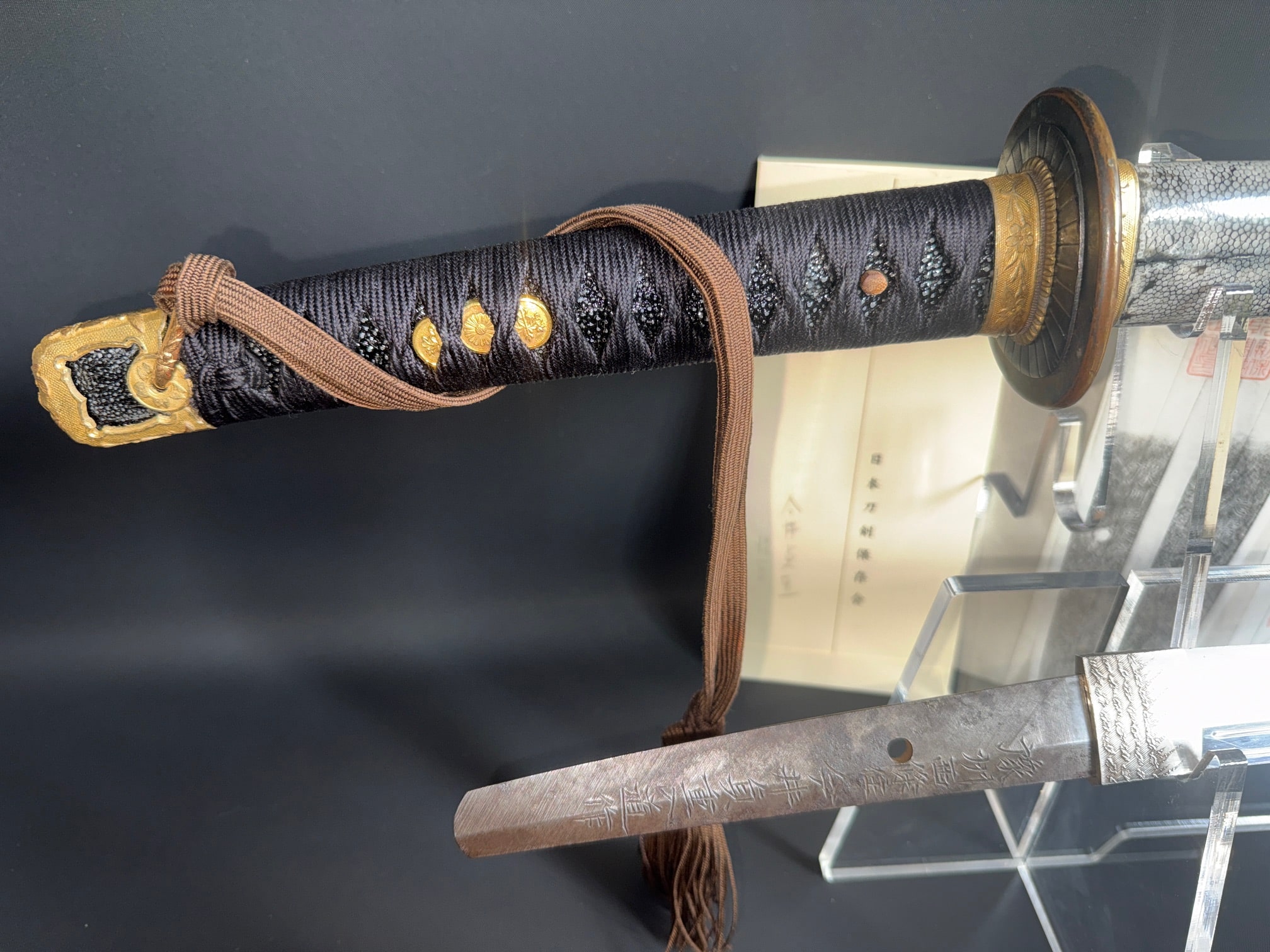
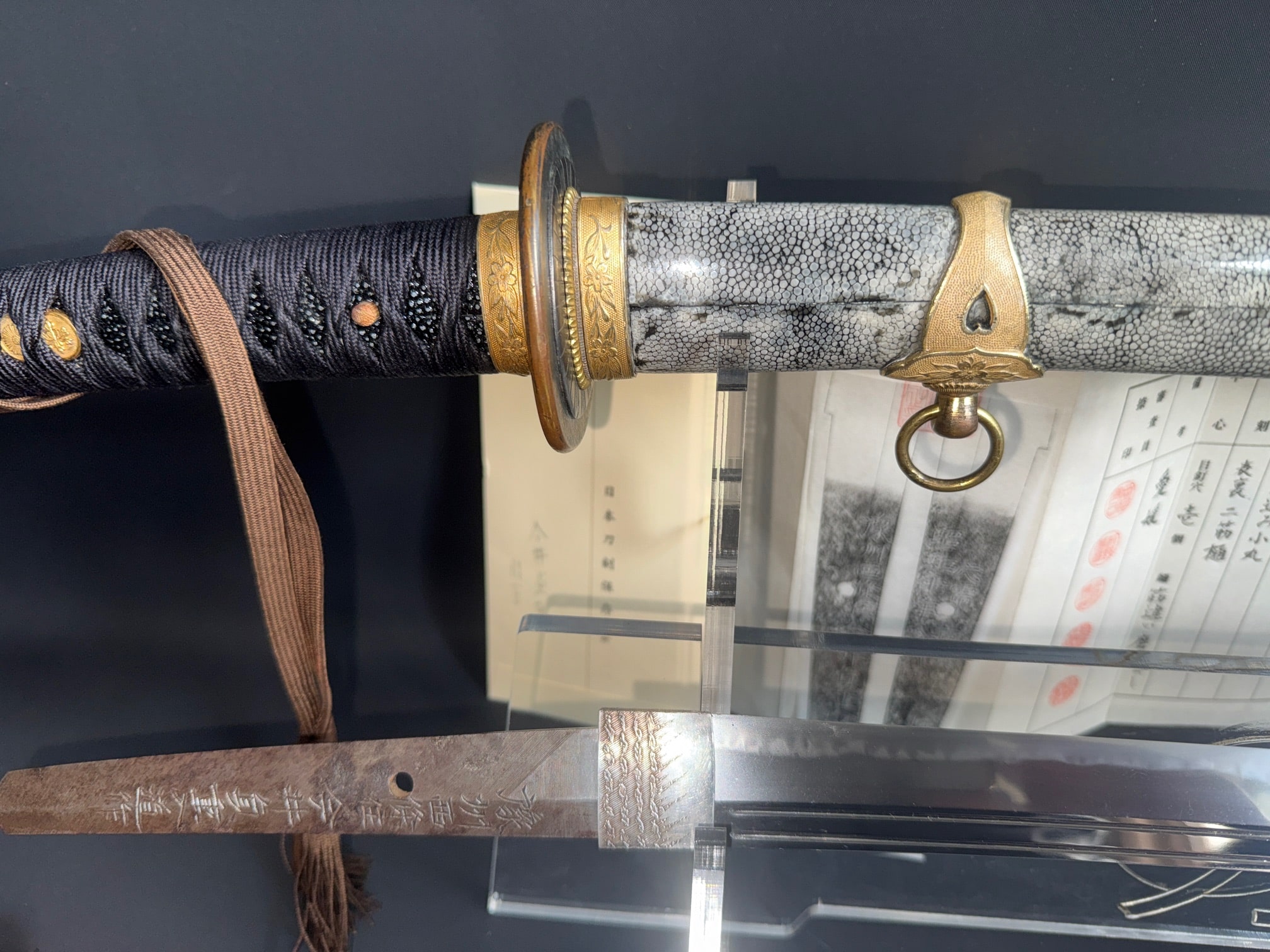
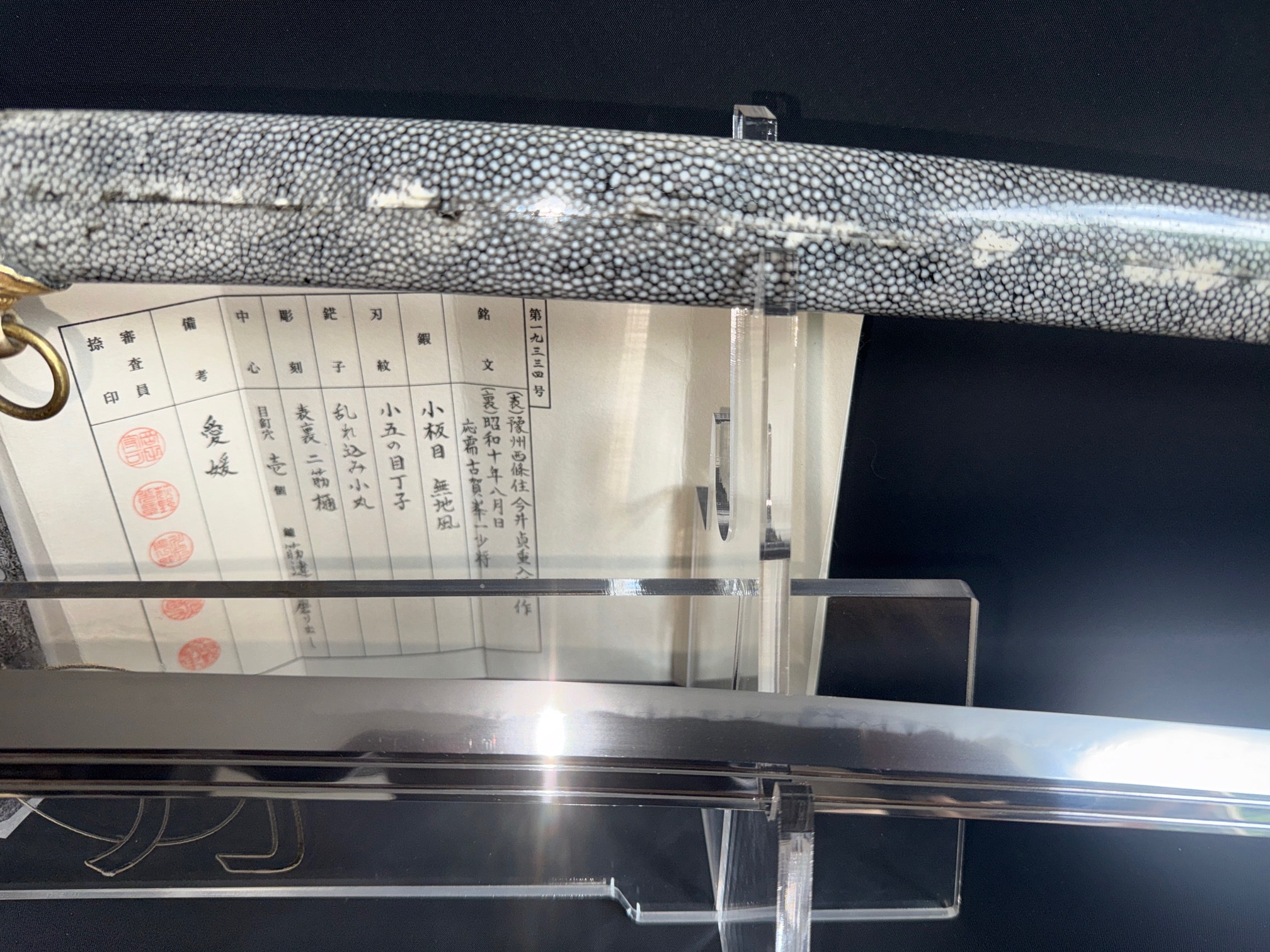
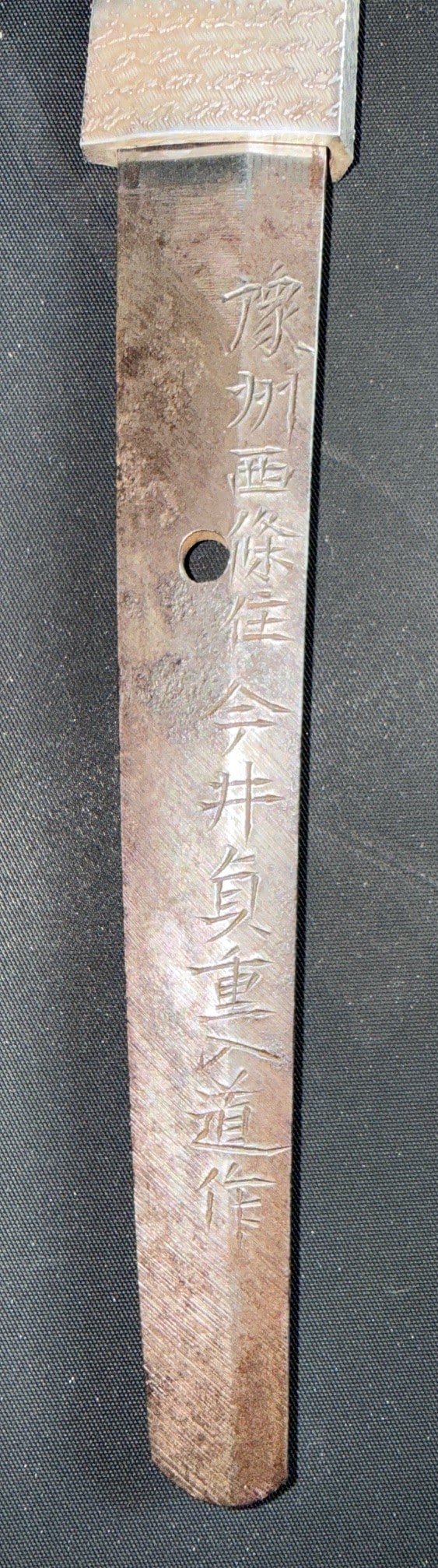
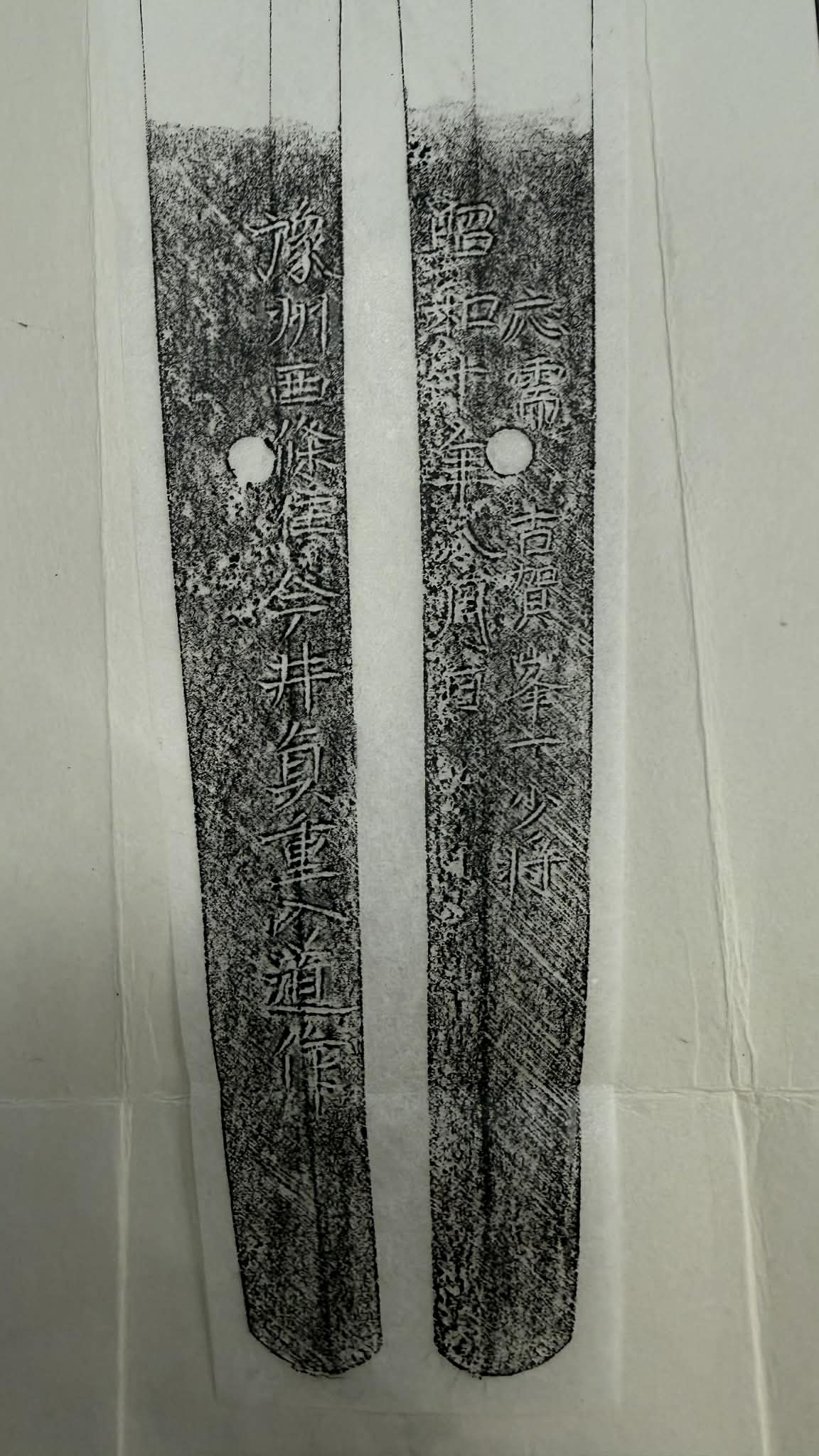
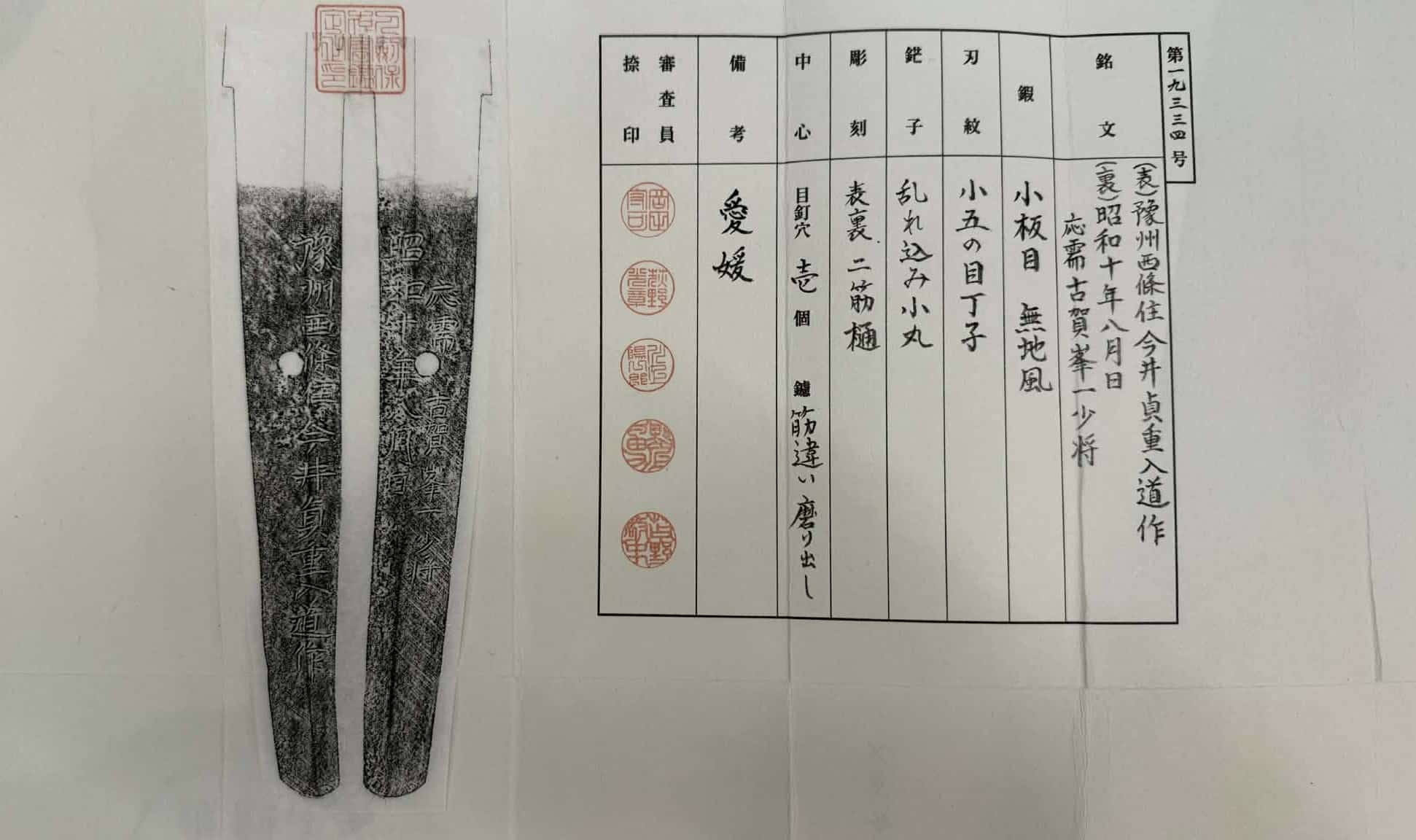
Forged in August 1935, this blade bears a clear and confident signature:
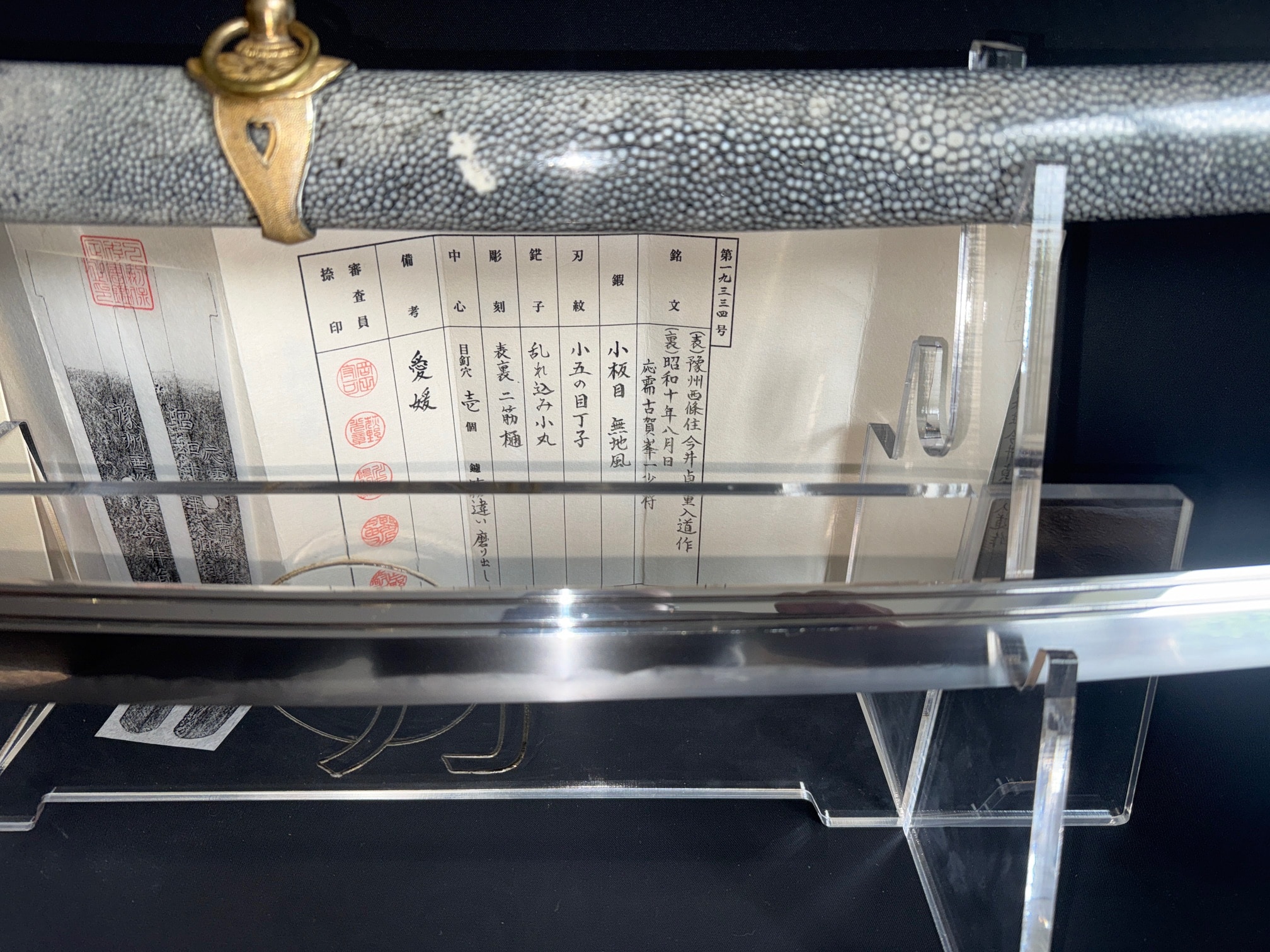
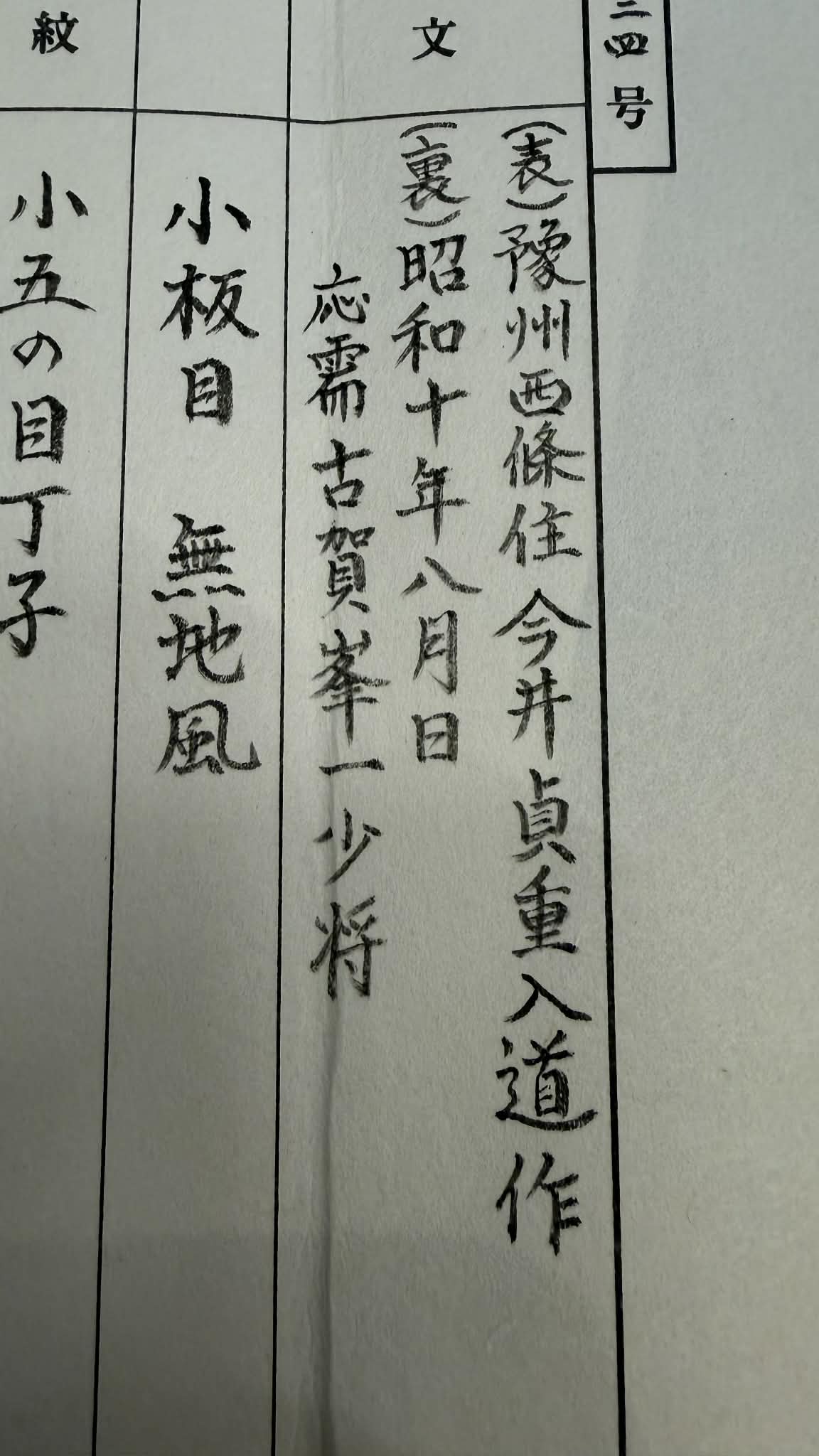
濃州西條住今井貞重入道作
“Made by Nyūdō Imai Sadashige, resident of Saijō.”
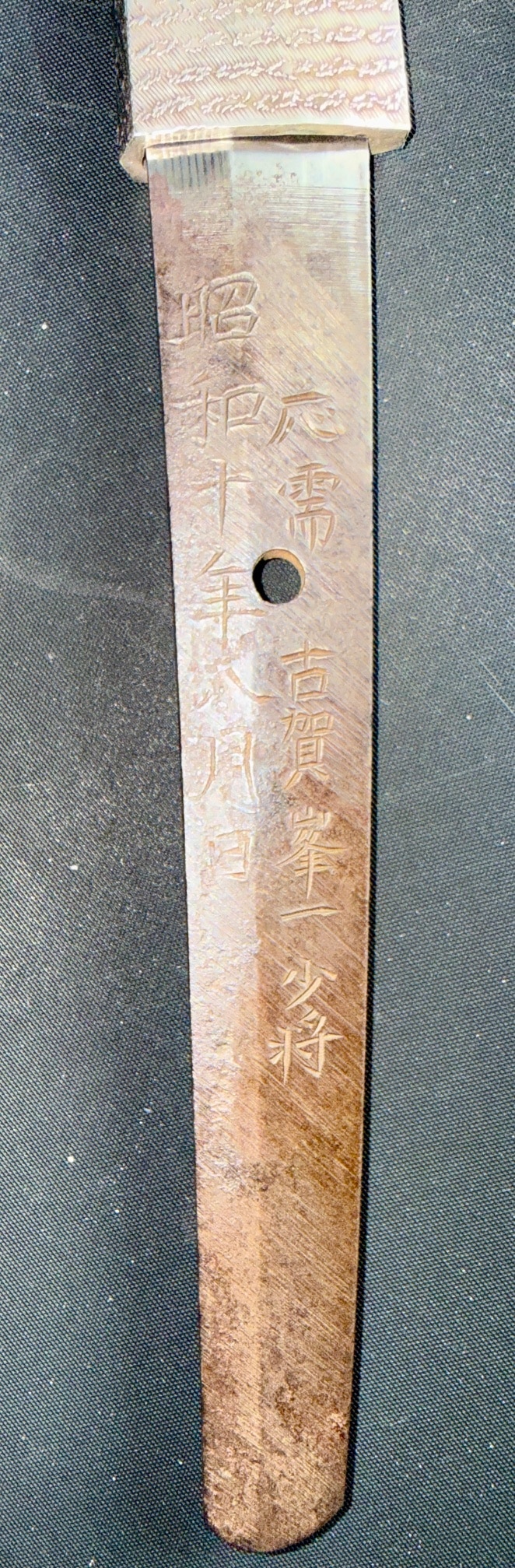
On the reverse, a rare and highly significant inscription appears:
昭和十年八月日 応需古賀峯一少将
“A day in August 1935, made on request of Rear Admiral Mineichi Koga.”
The presence of the term 応需 (ōju) immediately elevates this sword beyond the realm of ordinary military production. It confirms that this blade was personally commissioned, a work created for an individual of rank, status, and importance.
Such inscriptions are scarce and when linked to a figure of historical consequence, exceptionally so.
The smith behind this blade, Imai Sadashige Nyūdō, was born in 1891 in Saijō, Iyo Province (modern Ehime Prefecture). He stands among the modern swordsmiths who preserved the ancient traditions of Japanese swordmaking during a time of rapid industrialization.
Trained under Takahashi Yoshimune and influenced by the legendary Gassan Sadatsugu, later designated a Living National Treasure, Sadashige belonged to a lineage dedicated to the revival and continuation of classical nihontō craftsmanship.
Working as a gendaitō smith, he forged blades using traditional methods: folded steel, careful temperature control, and differential hardening. His work reflects strong ties to the Mino tradition, known historically for producing highly effective cutting swords with elegant and dynamic temper lines.
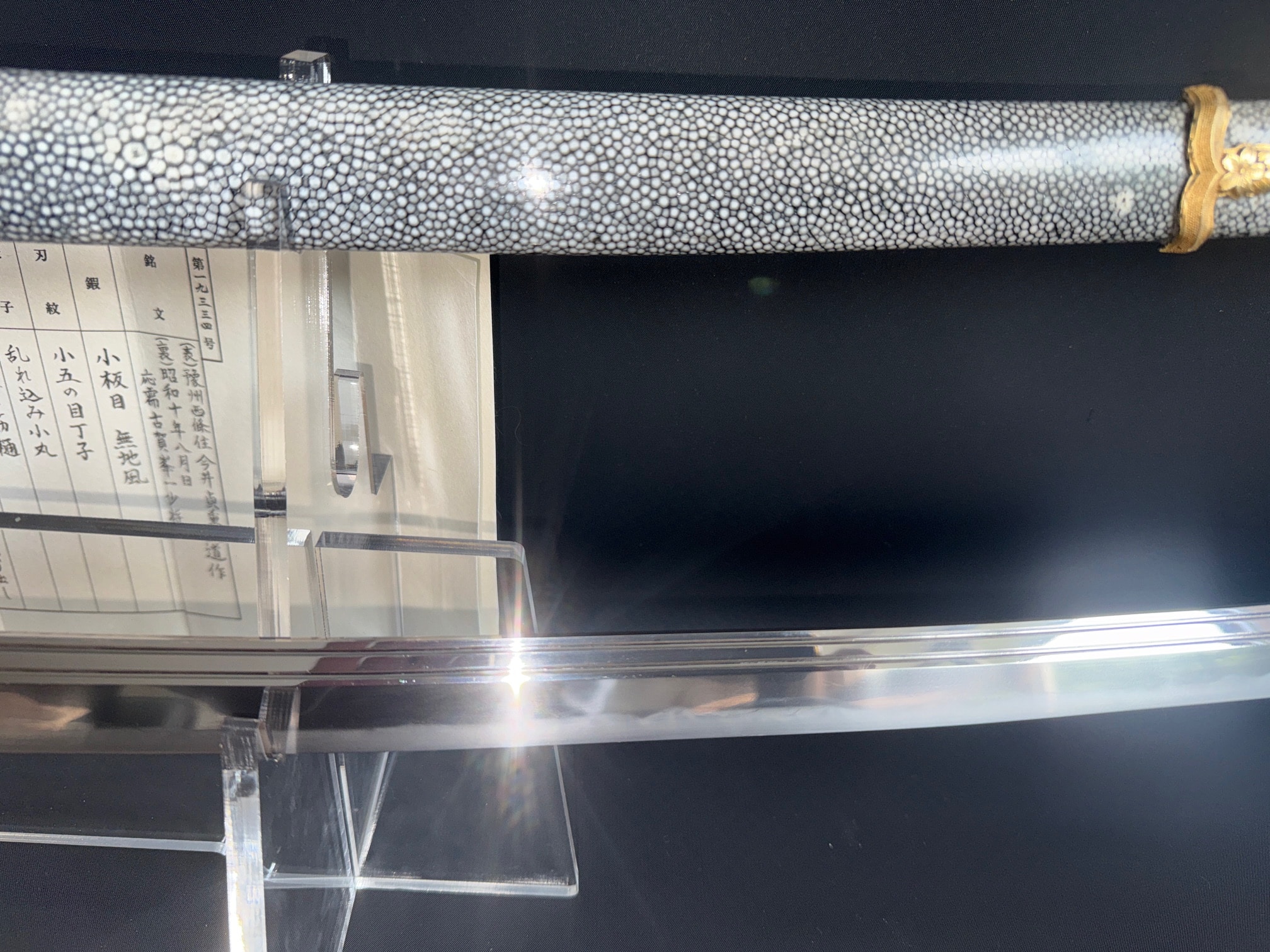
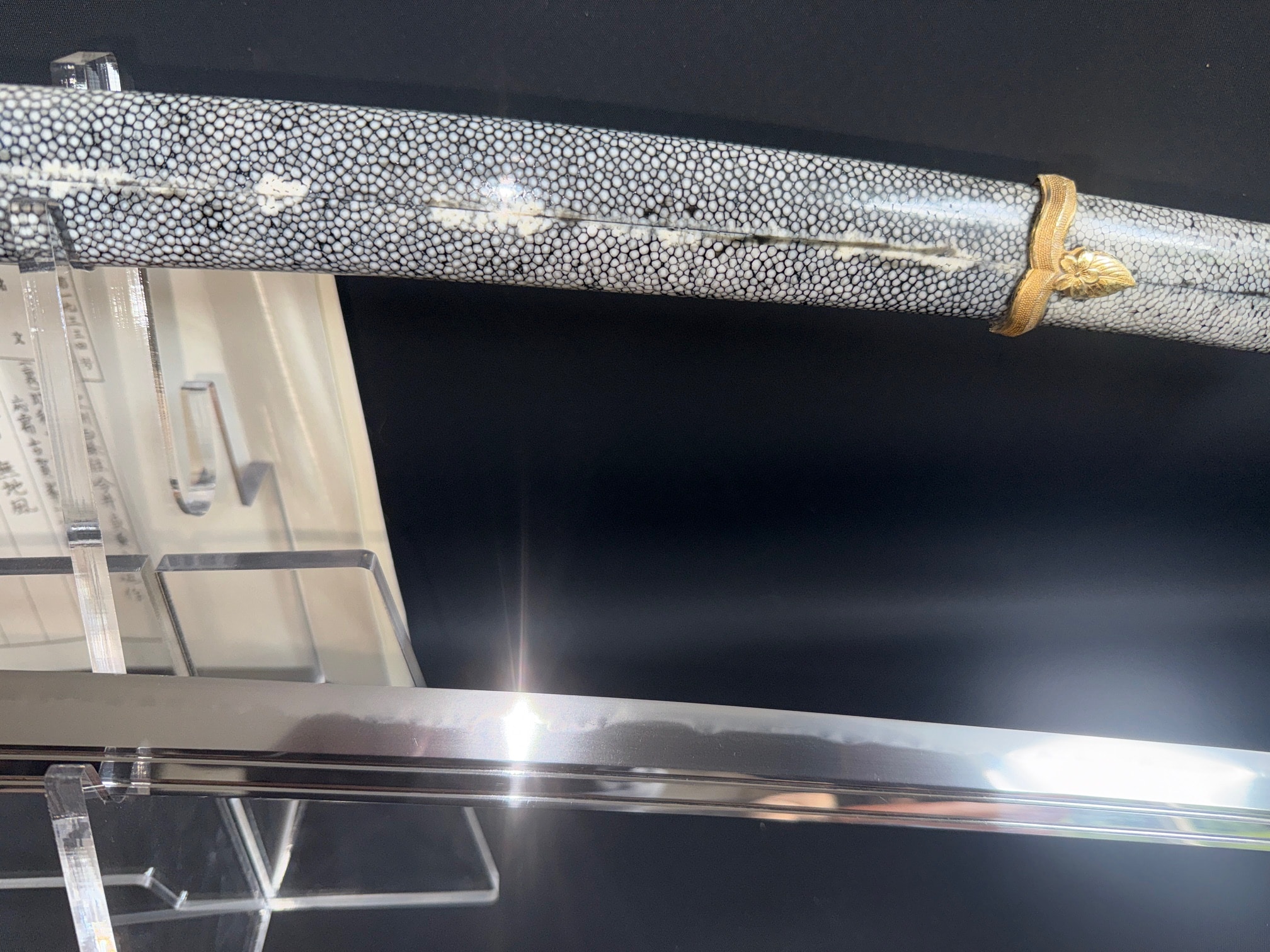
This blade displays a refined ko-itame hada, almost muji in its tightness, and a lively gunome-chōji hamon, executed with control and artistic sensitivity. The boshi flows naturally into a ko-maru return, and the double bo-hi enhance both balance and visual presence.
It is the work of a smith who fully understood both tradition and purpose.
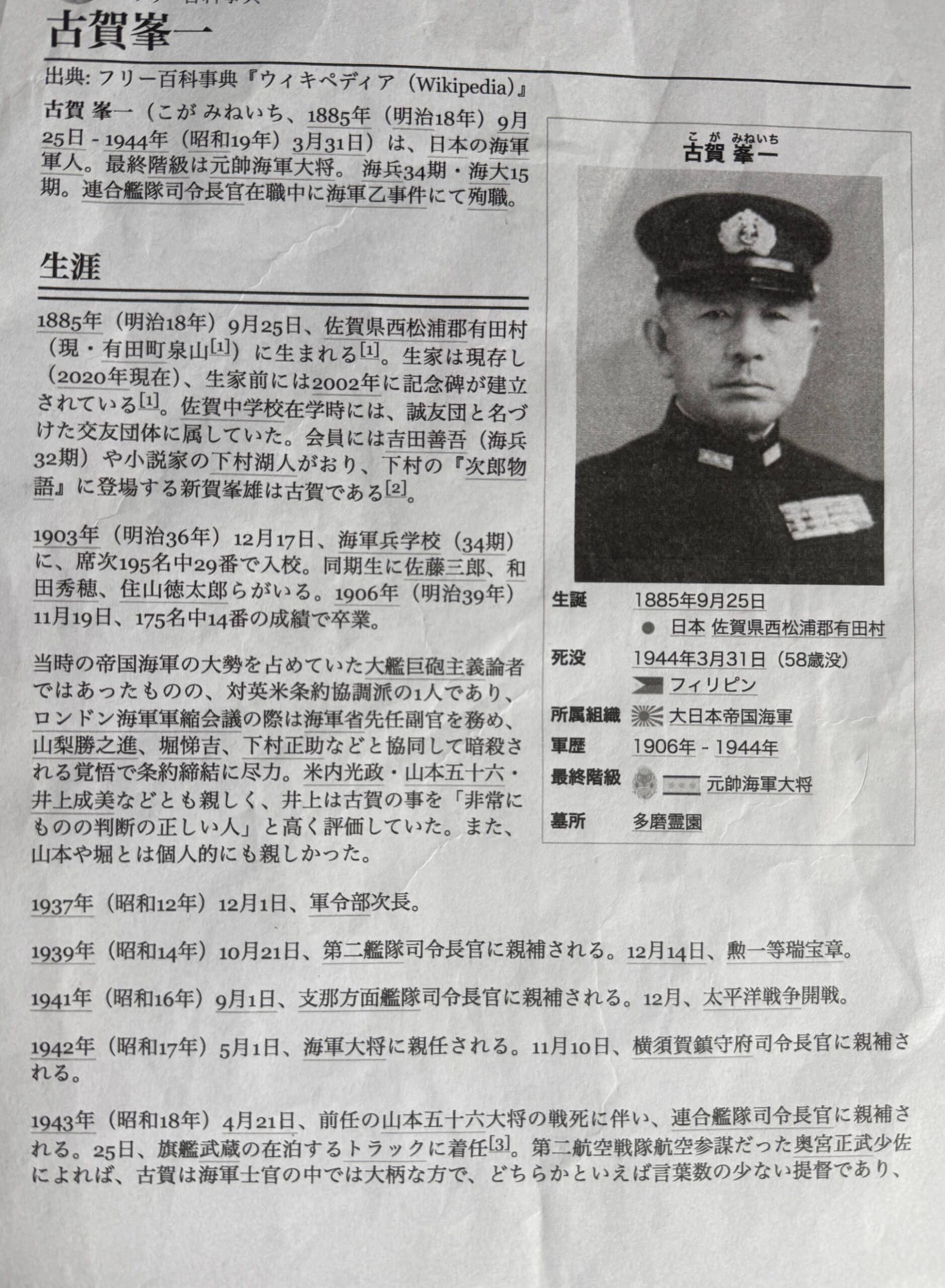
The recipient of this blade, Rear Admiral Mineichi Koga, was not merely a naval officer he would become one of the central figures in Japan’s wartime command.
Born in 1885, Koga graduated from the Imperial Japanese Naval Academy and rose steadily through the ranks. Known for his discipline, strategic insight, and calm authority, he became a key figure within the Imperial Japanese Navy.
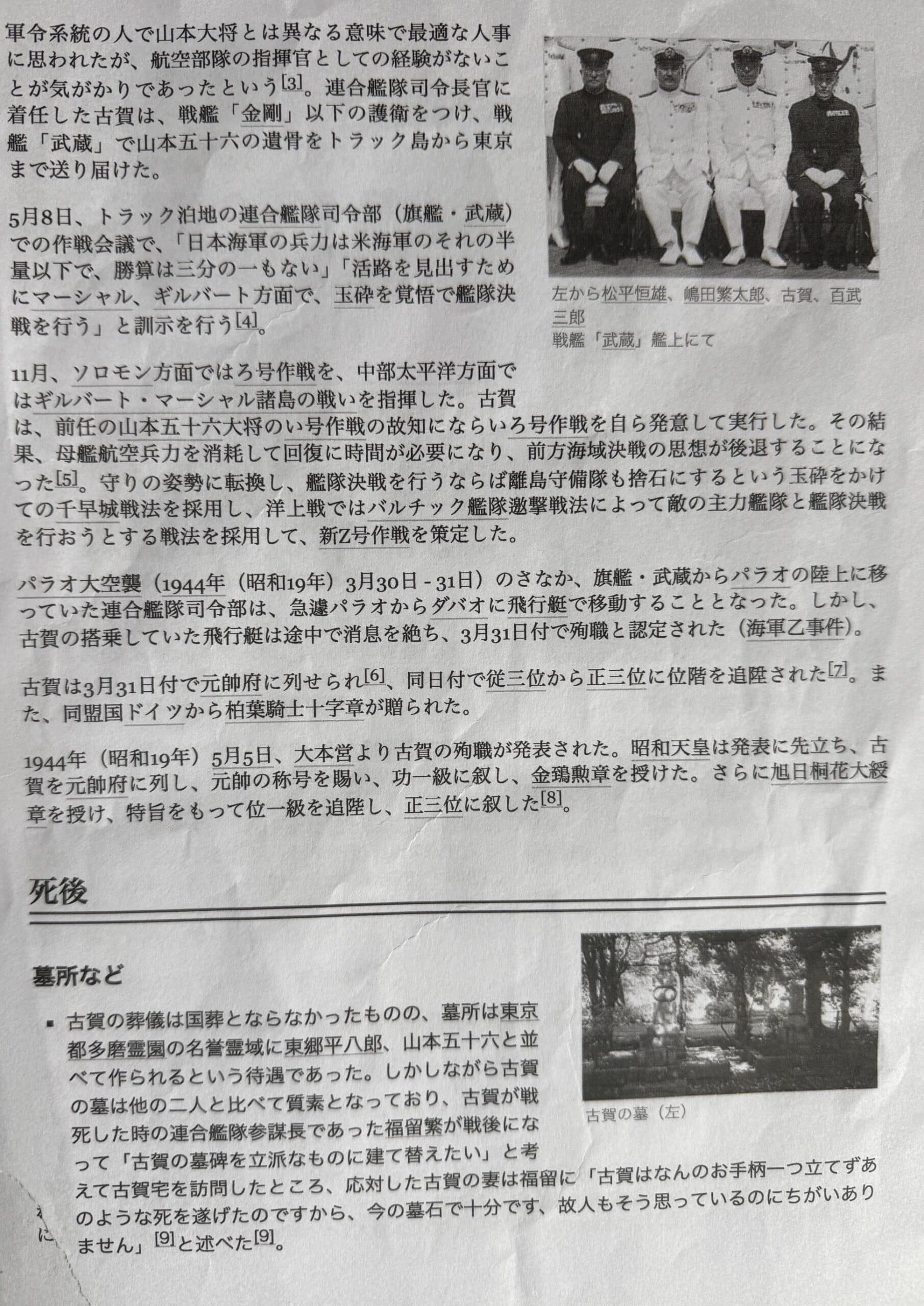
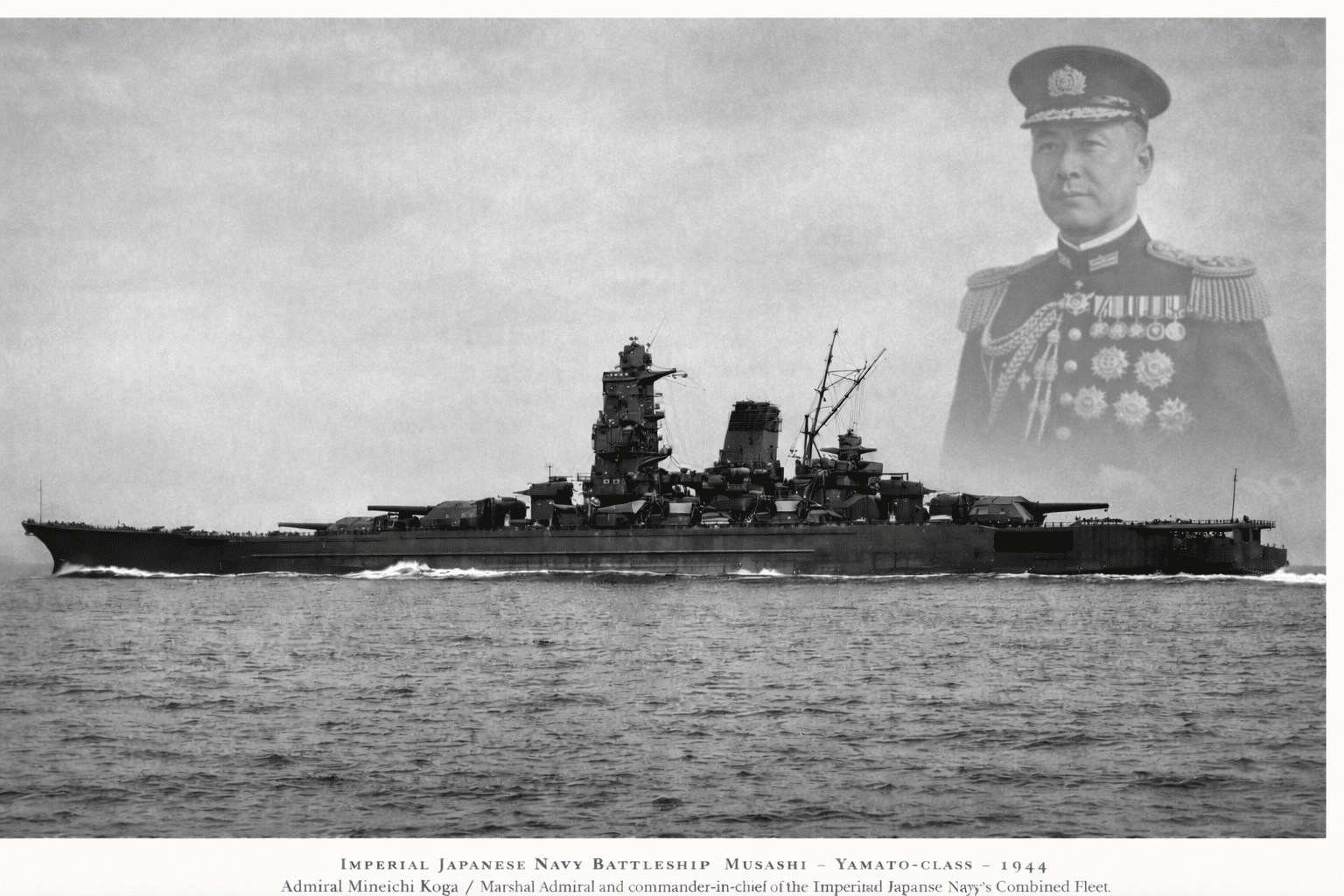
In April 1943, following the death of Admiral Isoroku Yamamoto, Koga was appointed Commander-in-Chief of the Combined Fleet the most powerful naval command in Japan.
In this role, he directed Japan’s naval strategy during one of the most critical phases of the Pacific War. His tenure was marked by attempts to reorganize and stabilize Japanese naval forces as the balance of power shifted decisively.
In March 1944, Koga’s life and command came to an abrupt end when his aircraft disappeared in a typhoon near the Philippines. His death marked the loss of one of Japan’s highest-ranking naval leaders.
For officers of Koga’s rank, a sword was more than a weapon. It was a symbol of authority, tradition, and personal identity.
A commissioned blade such as this would have been worn as part of formal military attire, carried as a reflection of both rank and heritage. Unlike standard-issued guntō, this sword represents a personal object, chosen and created for a specific individual.
It stands at the intersection of:
While many swords were produced during the Shōwa period, only a small number bear inscriptions confirming that they were made on request for a named high-ranking officer.
Fewer still can be directly linked to a figure of the stature of Mineichi Koga, Commander-in-Chief of the Combined Fleet.
And among those, even fewer survive in identifiable and documented condition.
This makes the present sword not simply rare but unique in its historical narrative.
This blade is more than a finely forged gendaitō.
It is:
A sword such as this does not merely belong in a collection it belongs in a narrative of history itself.
KvK: 51964147
C.W. Slok - Kyodai Originals
Bank: NL25 KNAB 0509 1310 18
BIC: KNABNL2H
© 2026 Kyodai Originals is made with ❤ by Nieuwblik.com


