
€ 29.500,00
1 in stock
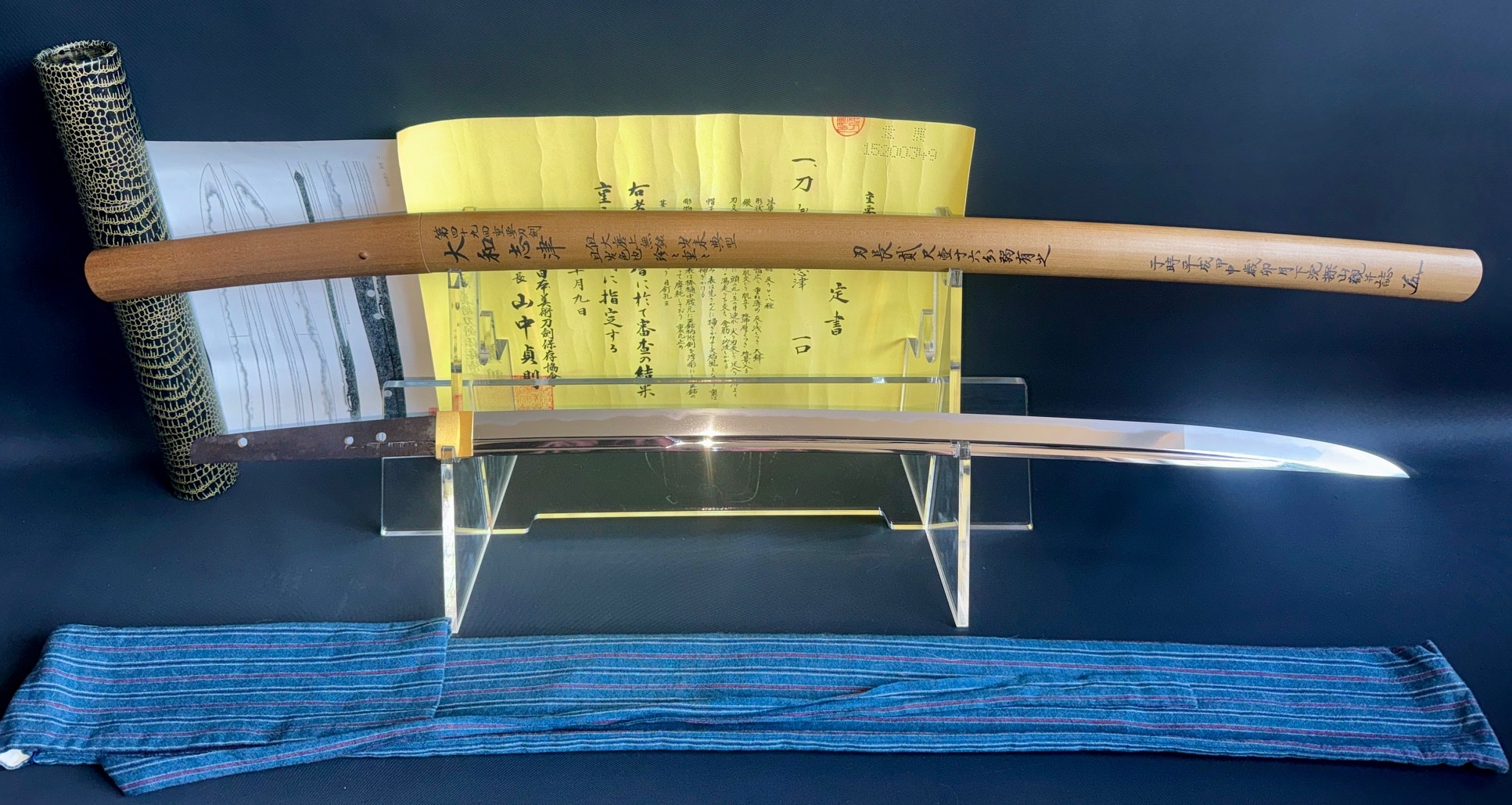
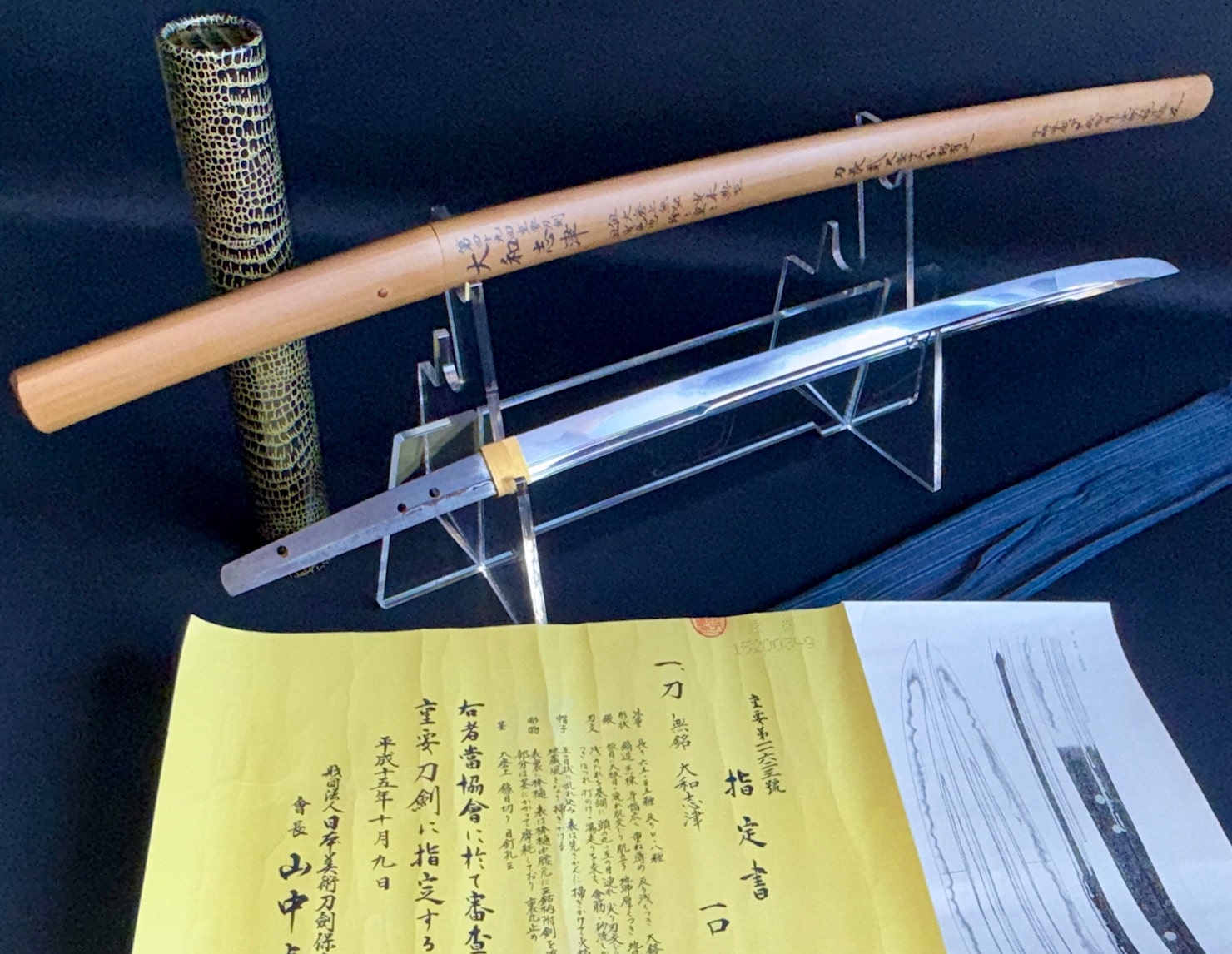
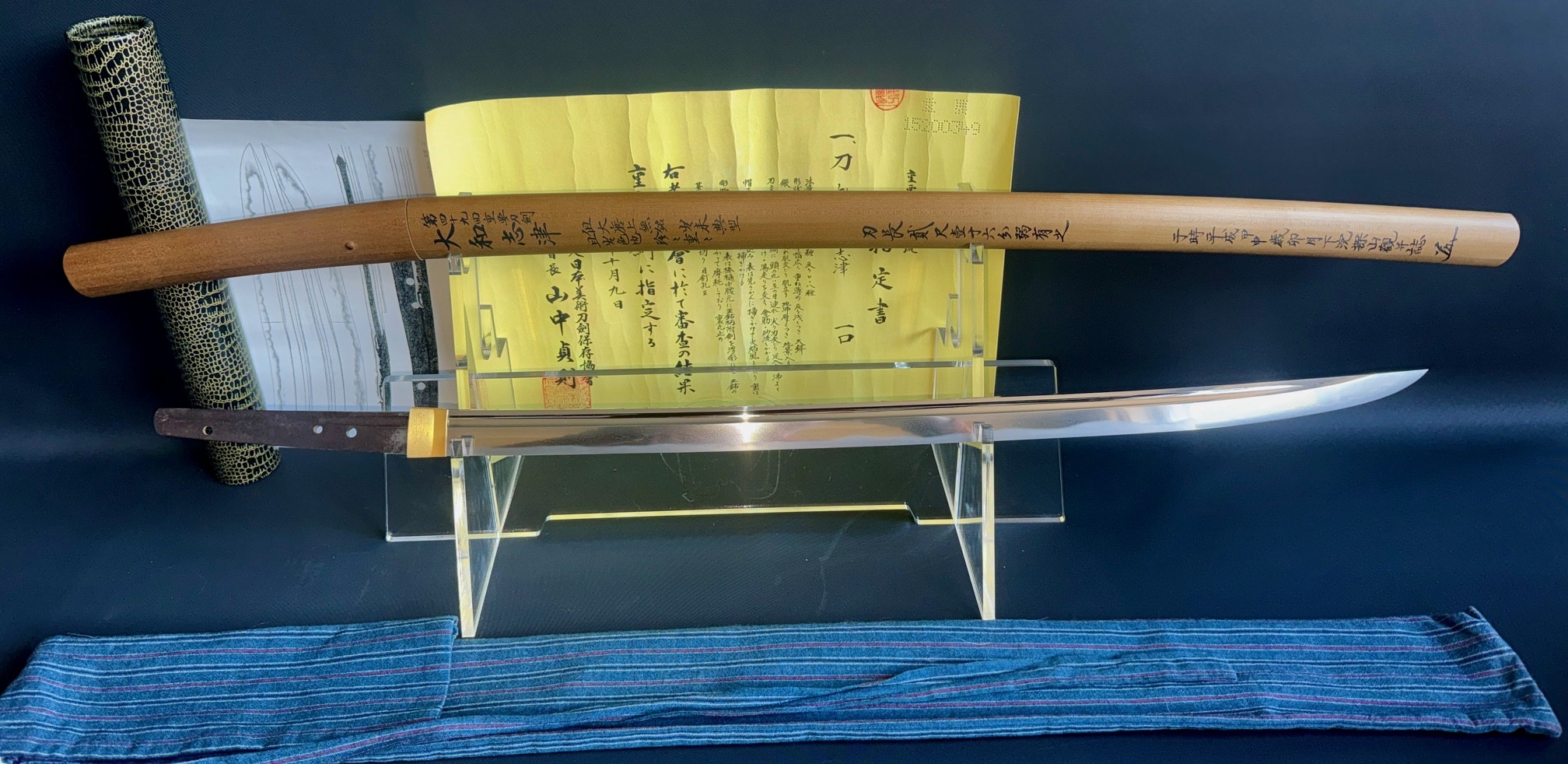
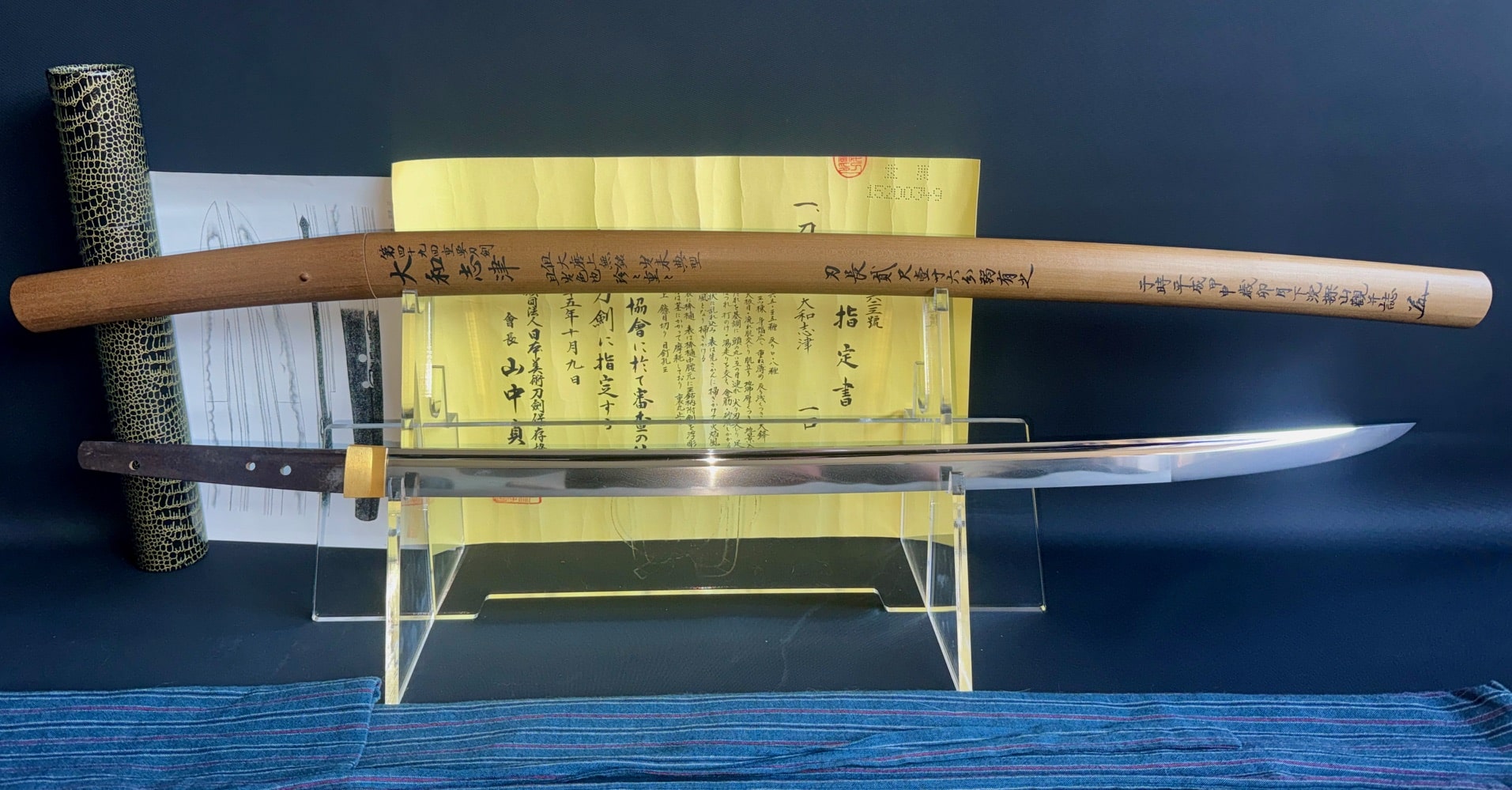
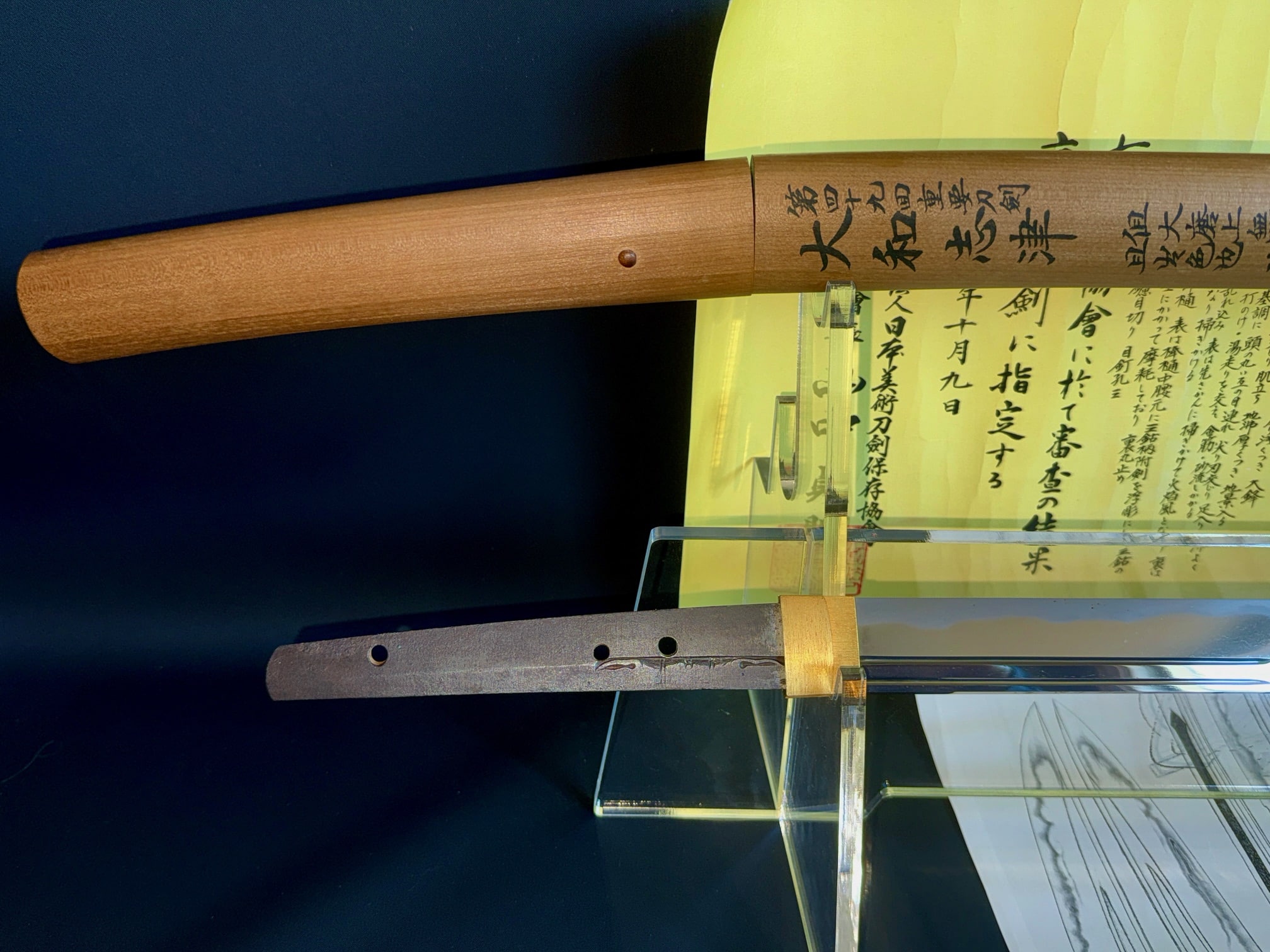
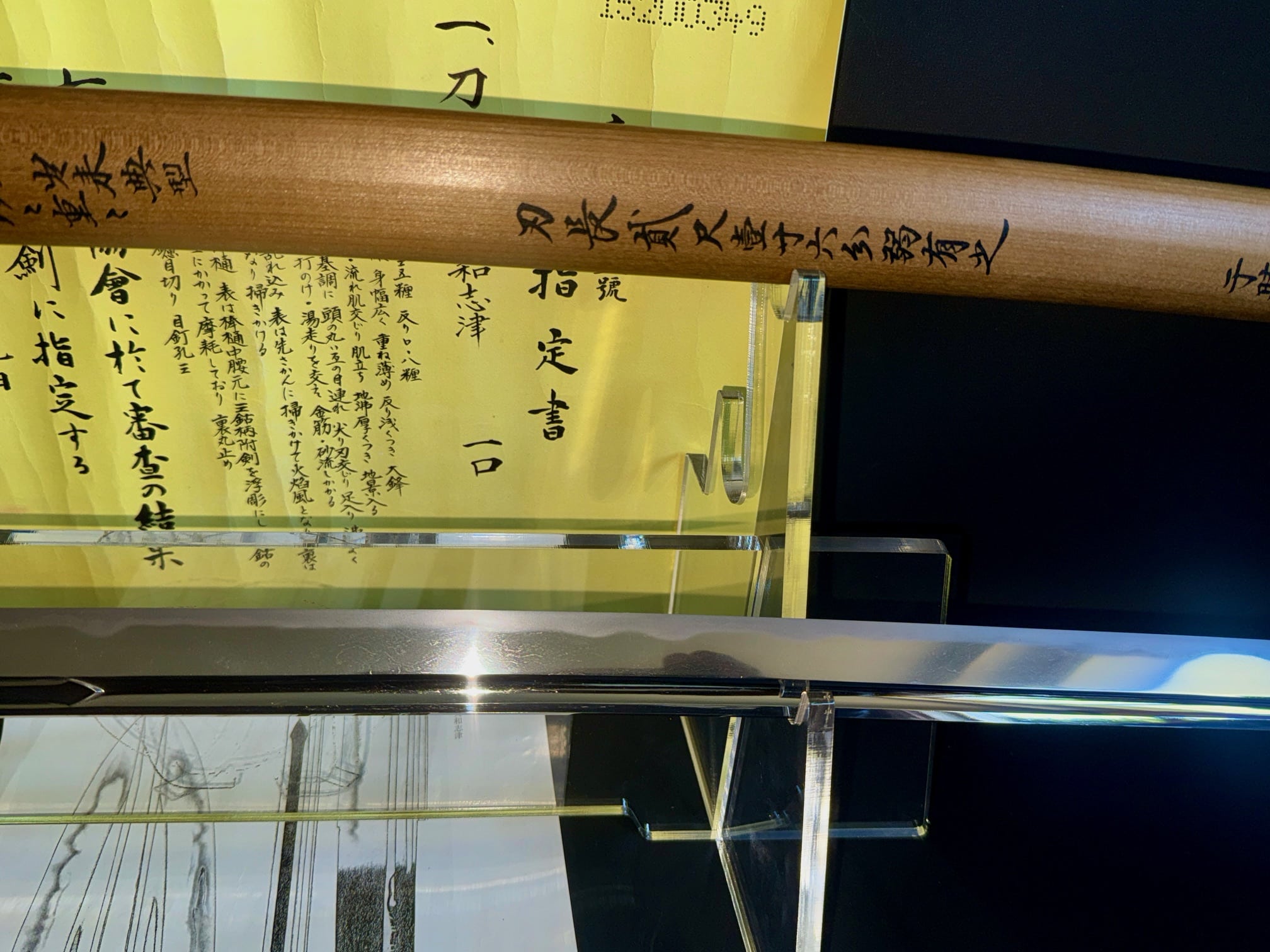
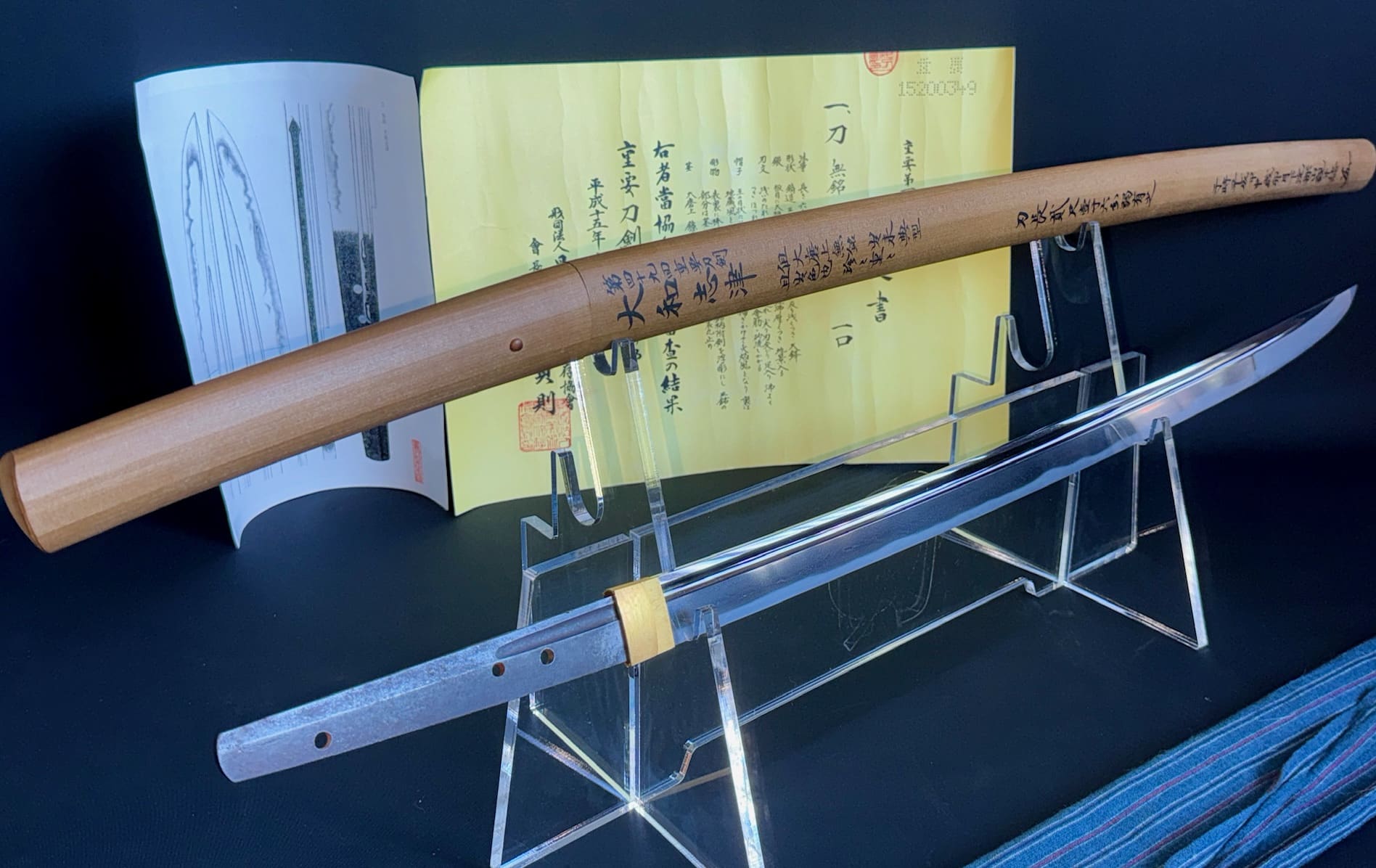
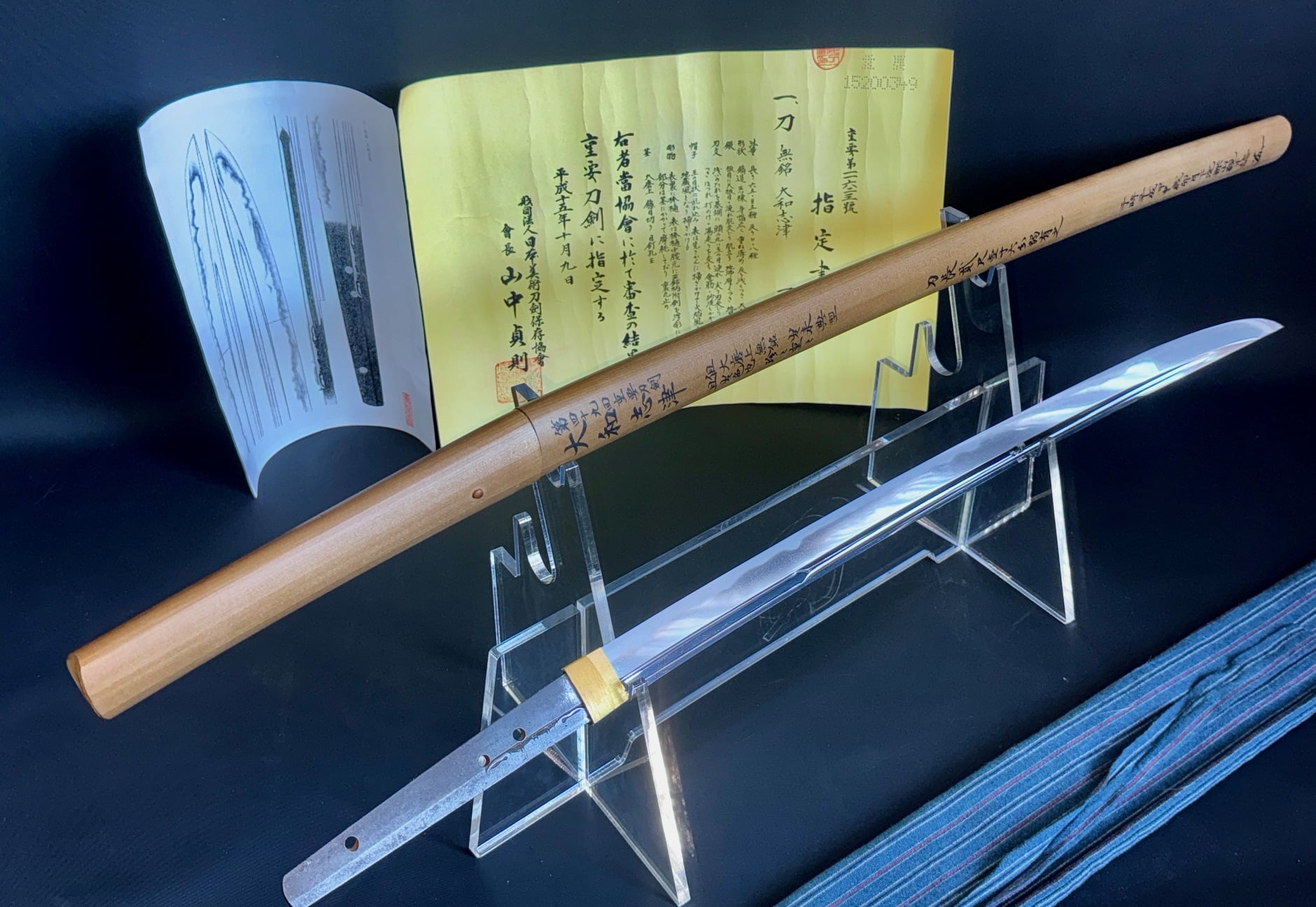
A blade that does not merely survive from the 14th century it speaks. Here is power rendered in steel, restraint expressed in every forged grain, and history concentrated into 65.35 centimetres of extraordinary Japanese craftsmanship.
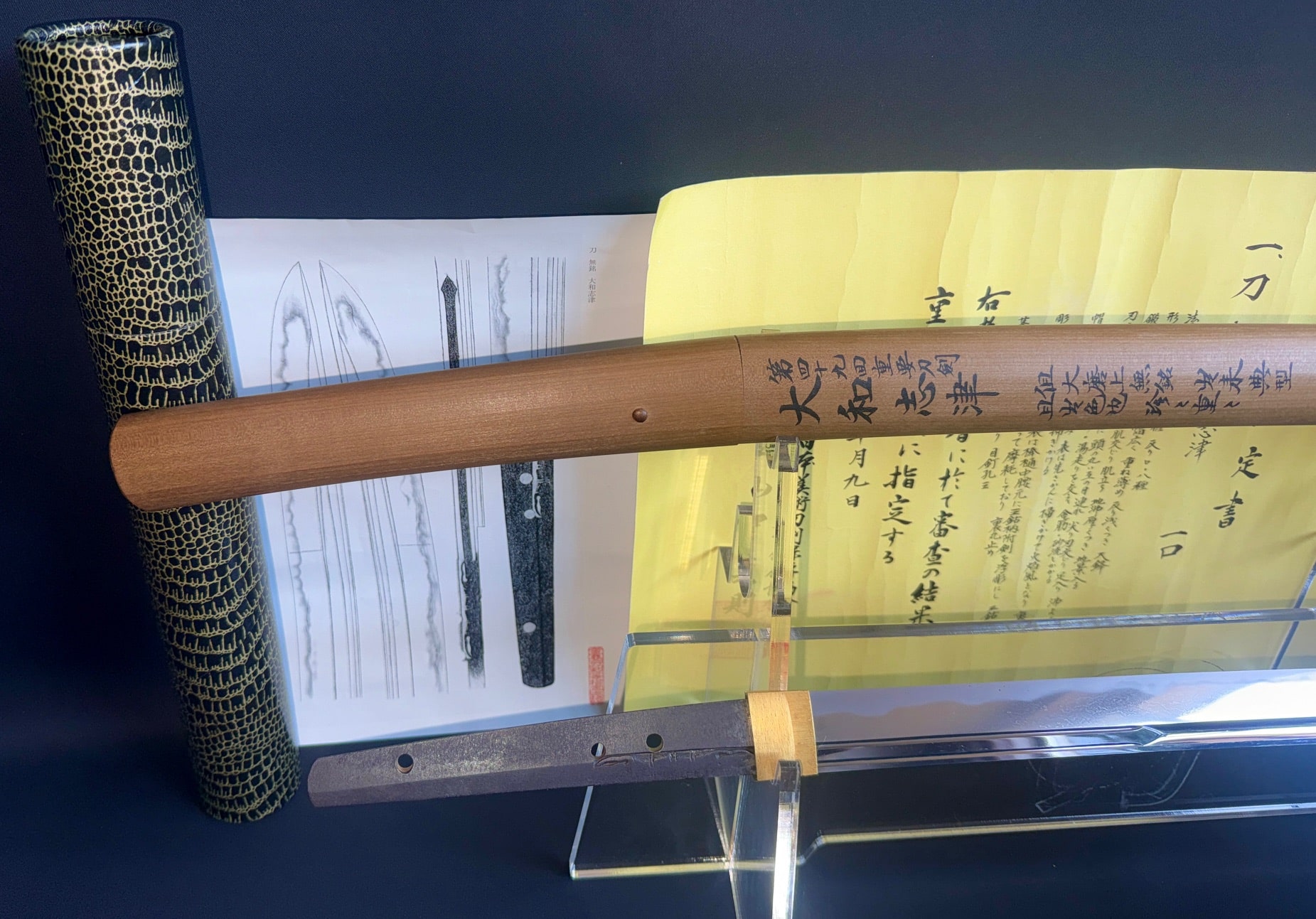
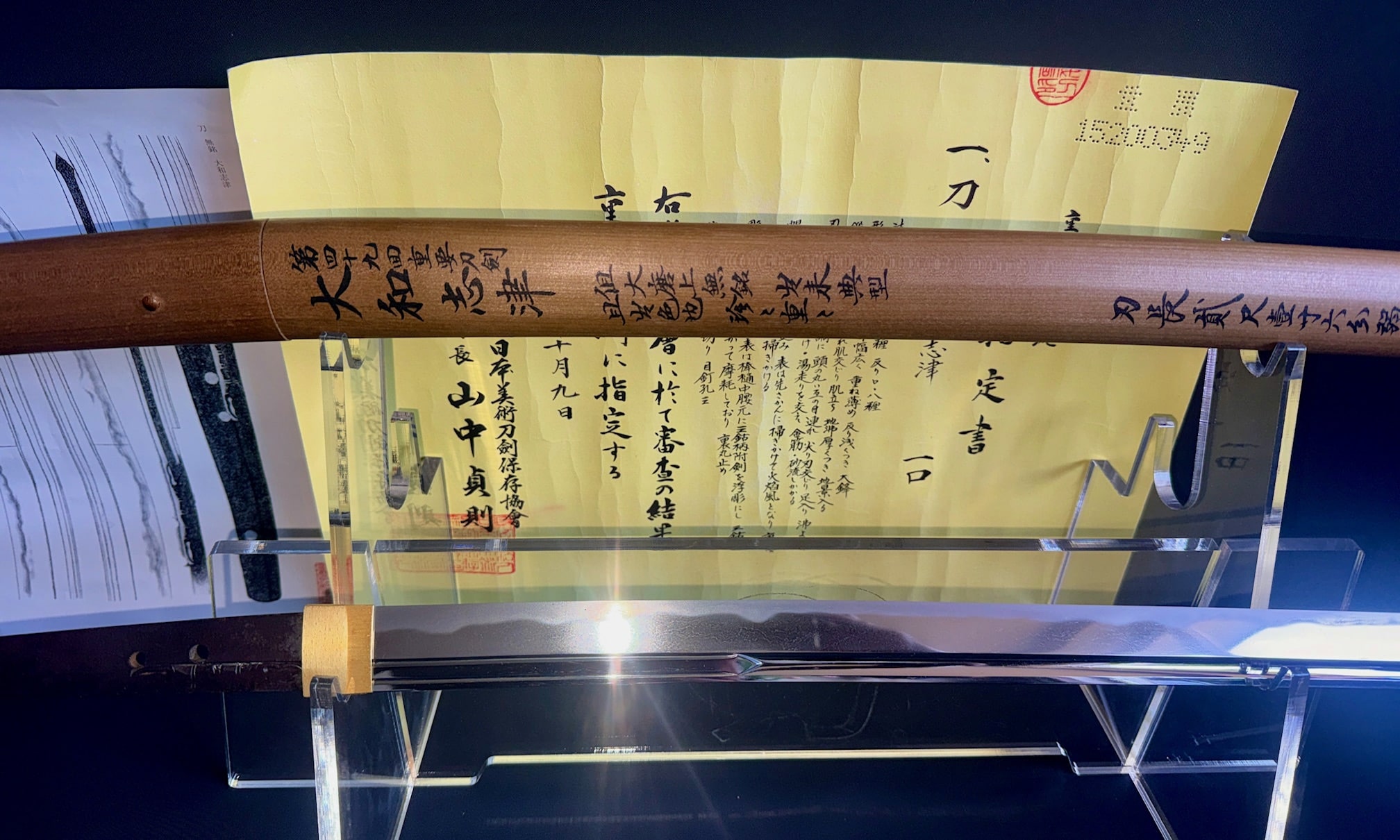
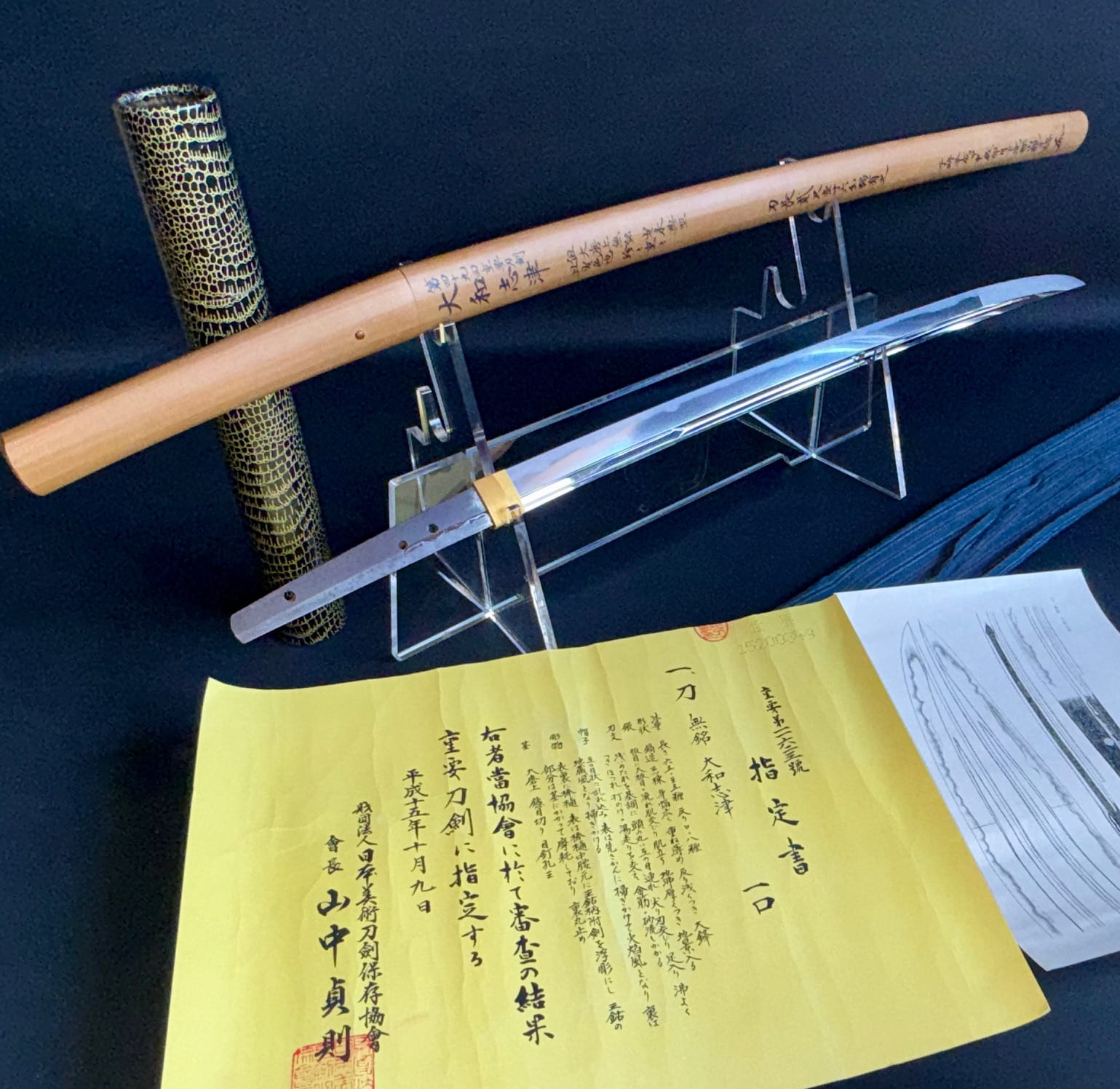
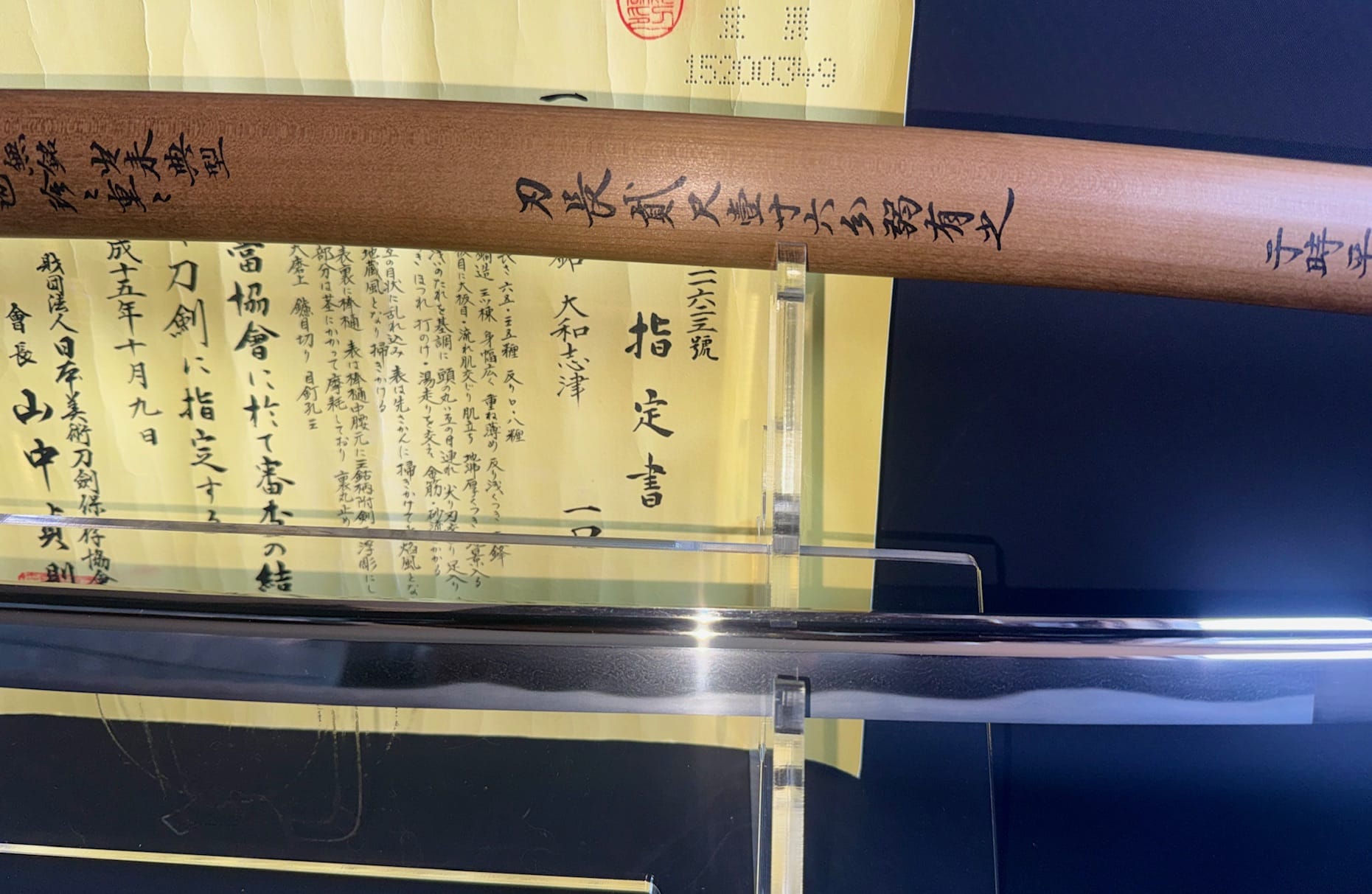
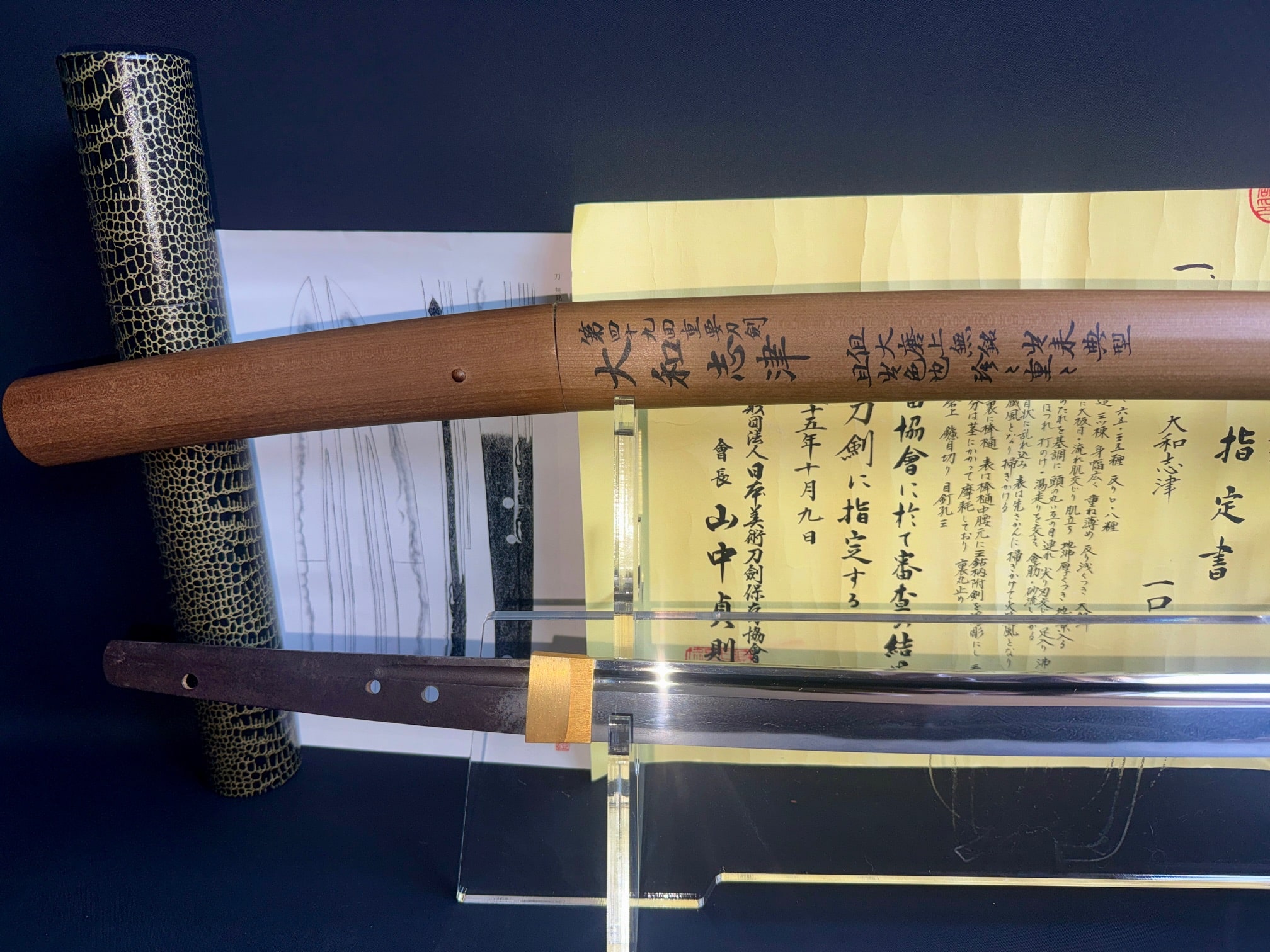
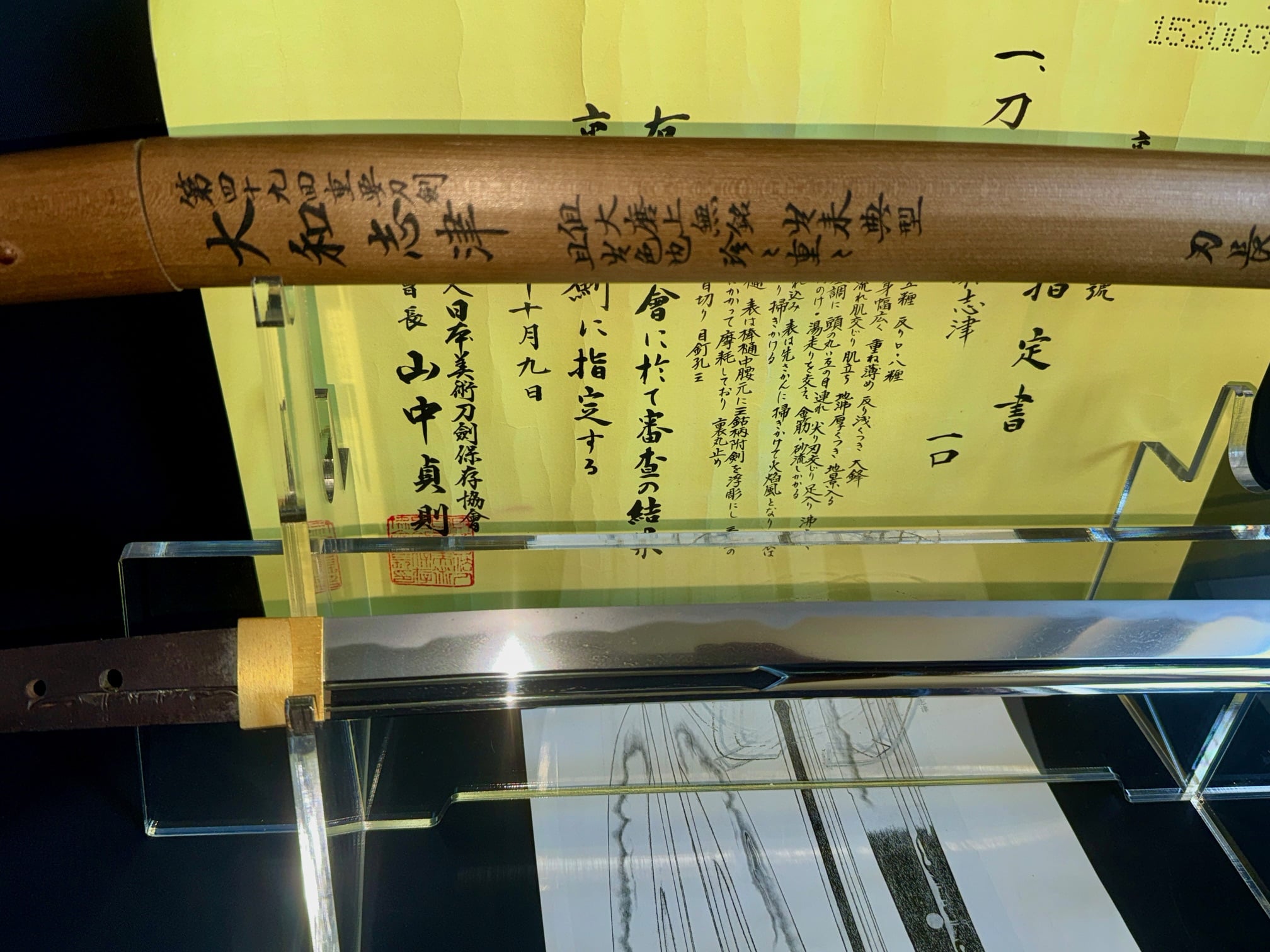
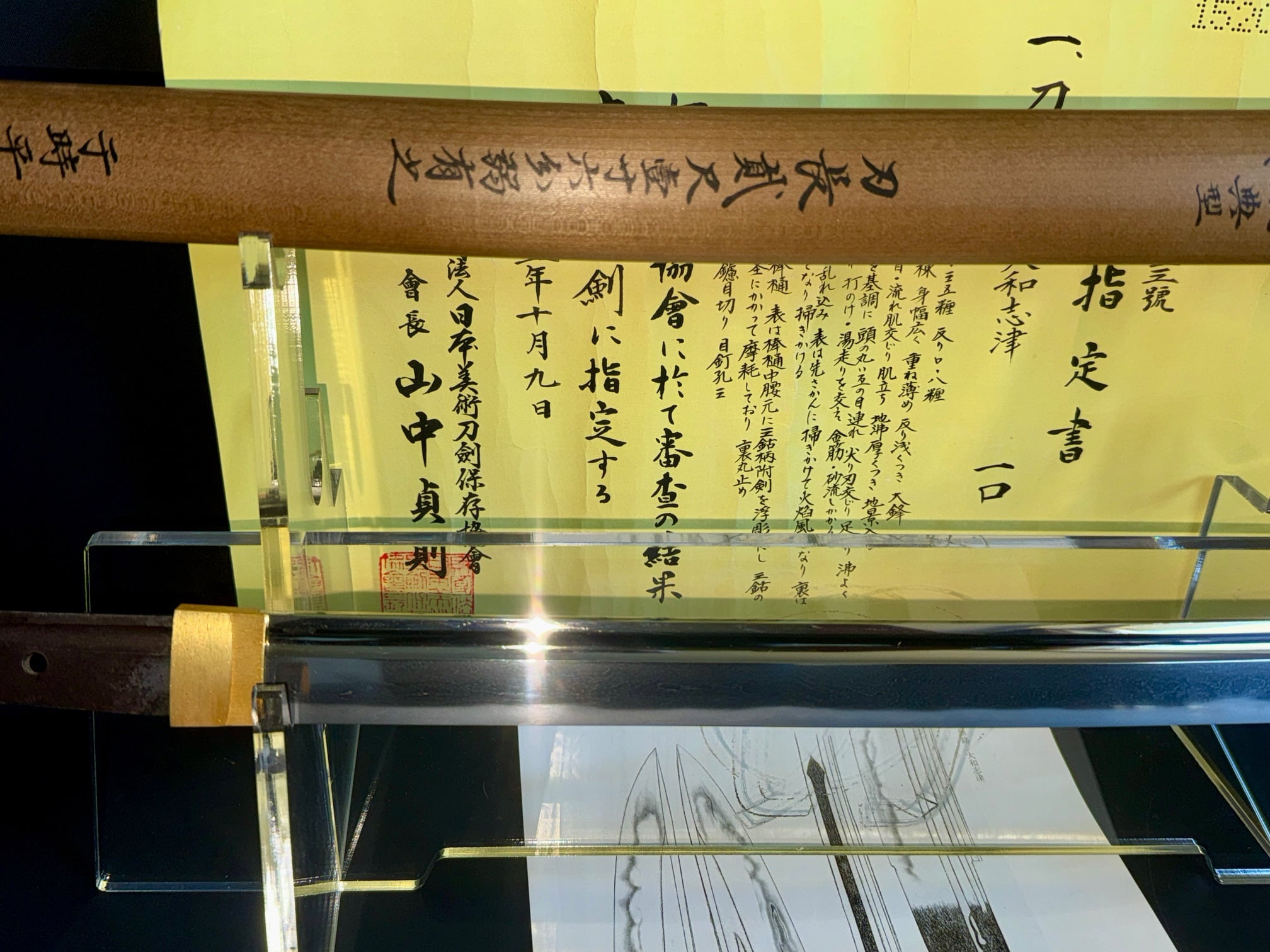
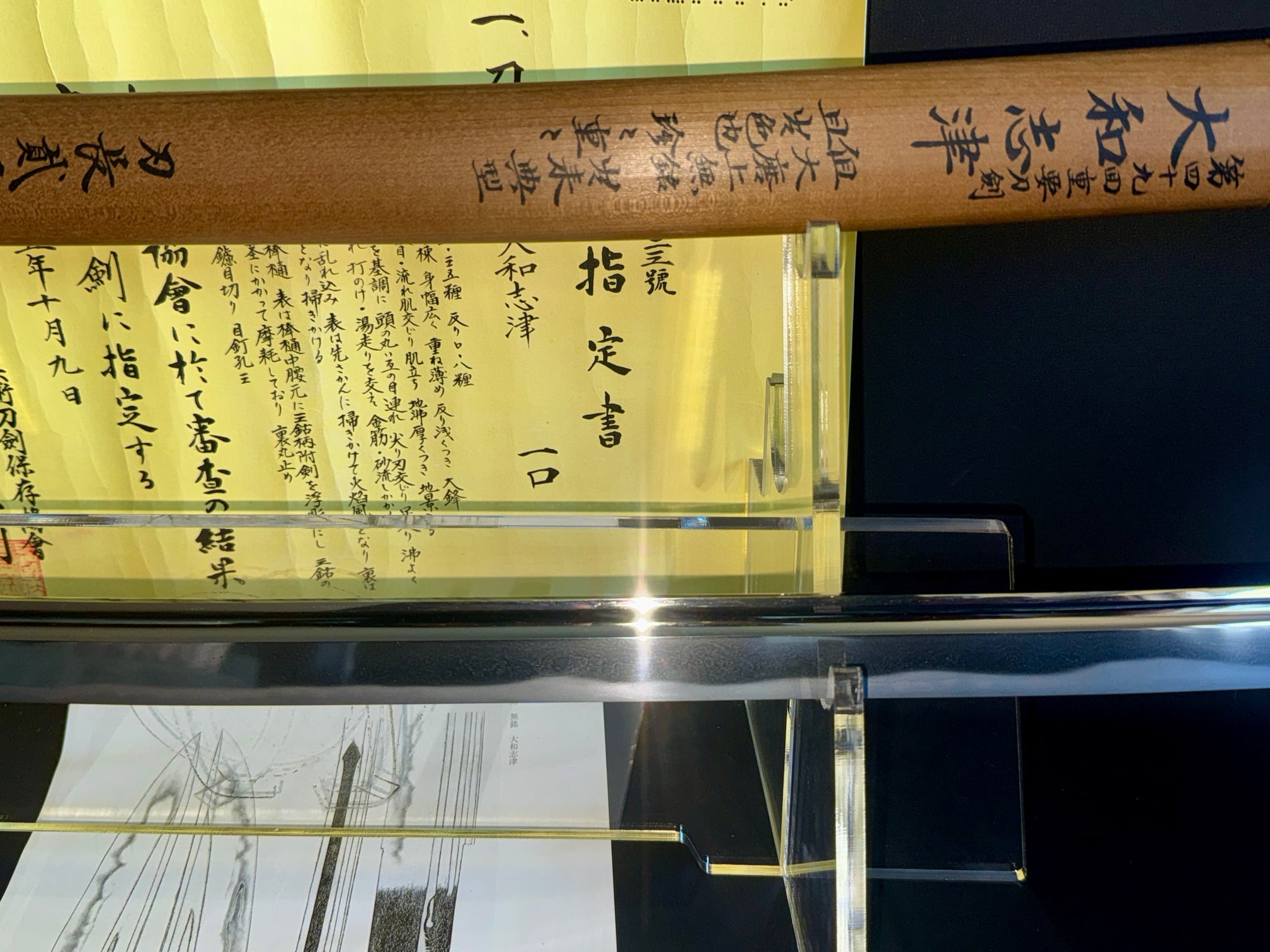
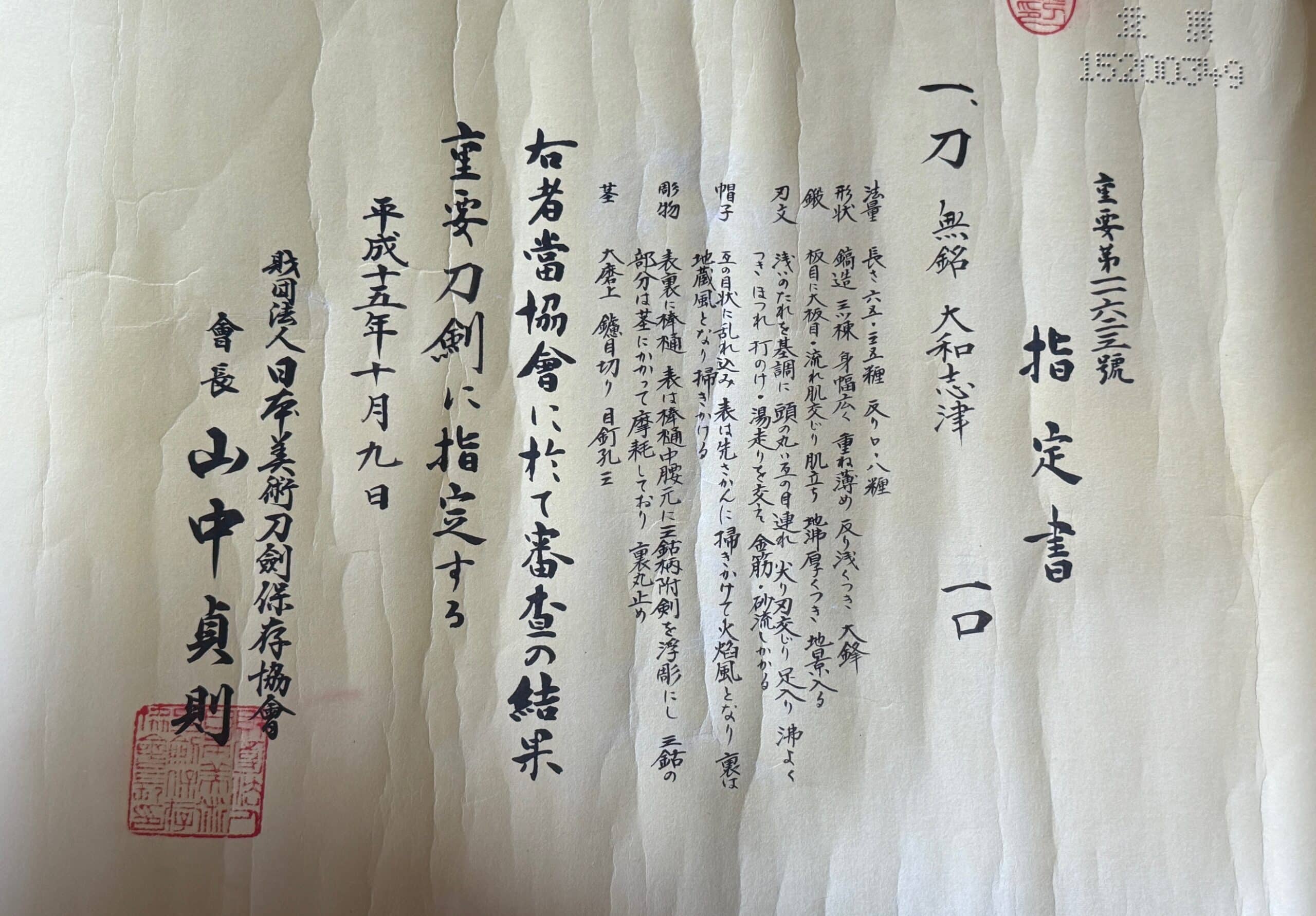
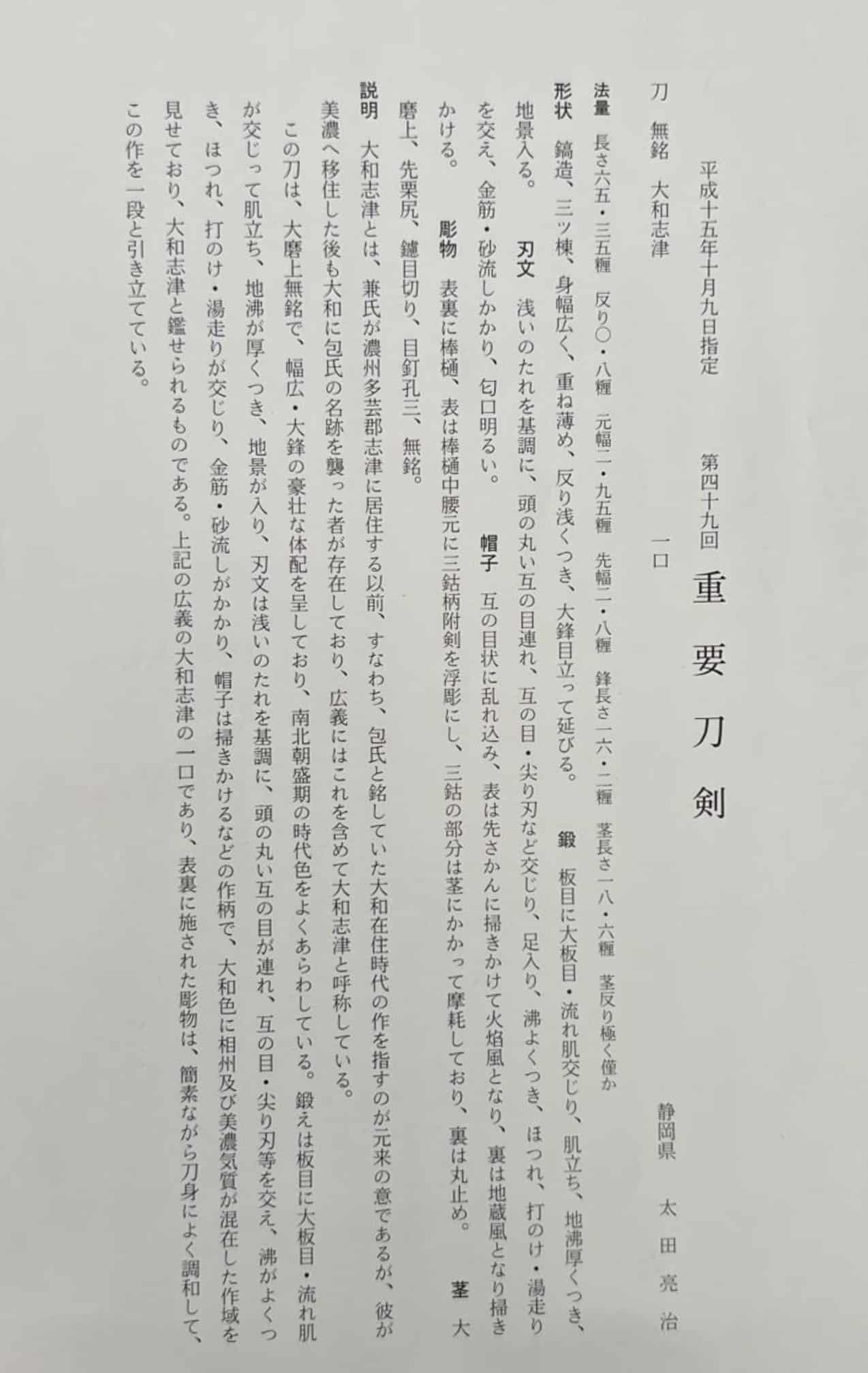
Designated Jūyō Tōken at the prestigious 49th NBTHK Jūyō Shinsa in 2003, this katana stands among the most important surviving examples of Yamato-Shizu workmanship. It captures a singular, unrepeatable moment in sword history the precise point at which the ancient discipline of Yamato tradition began its transformation into what would become the dominant Mino school.
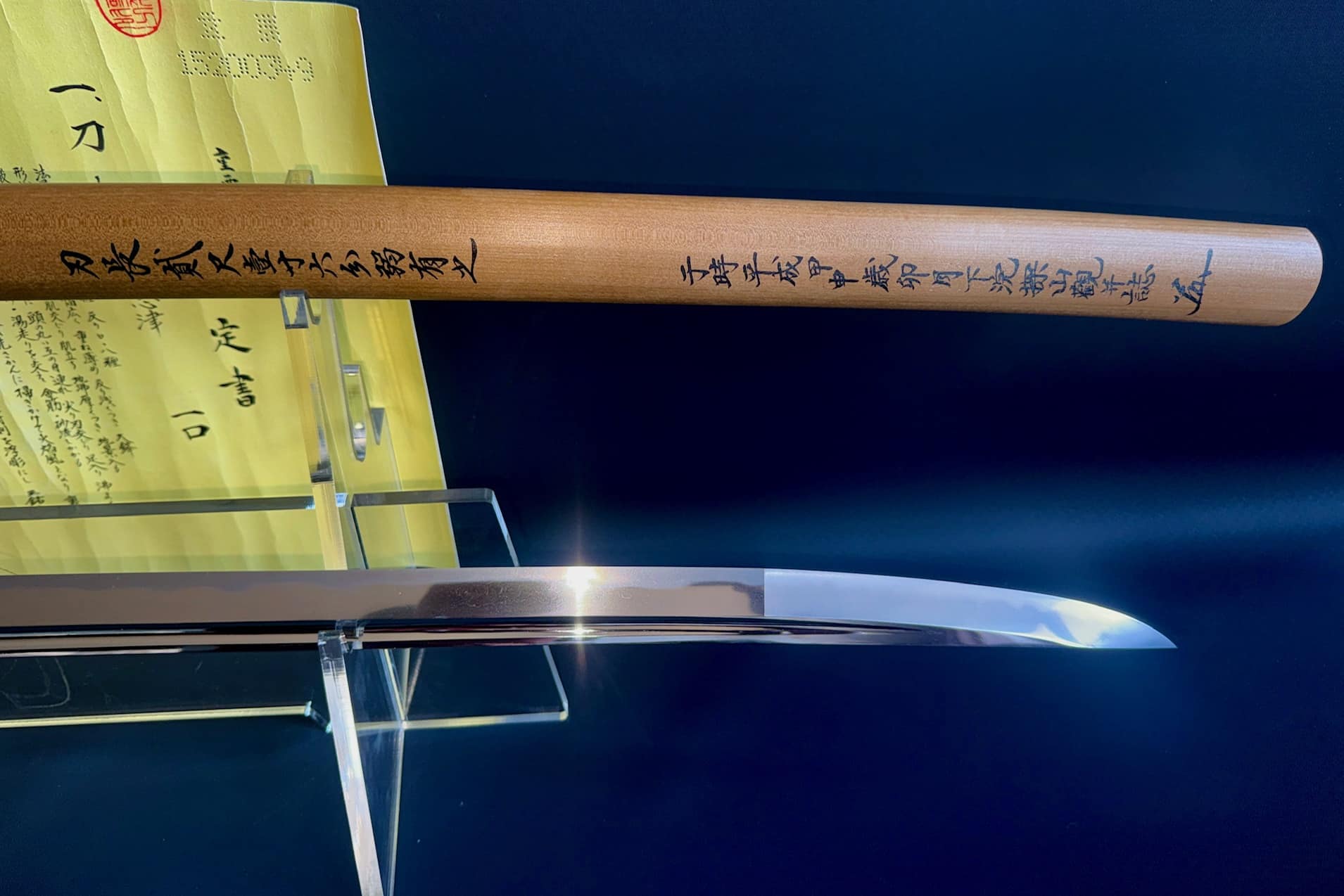
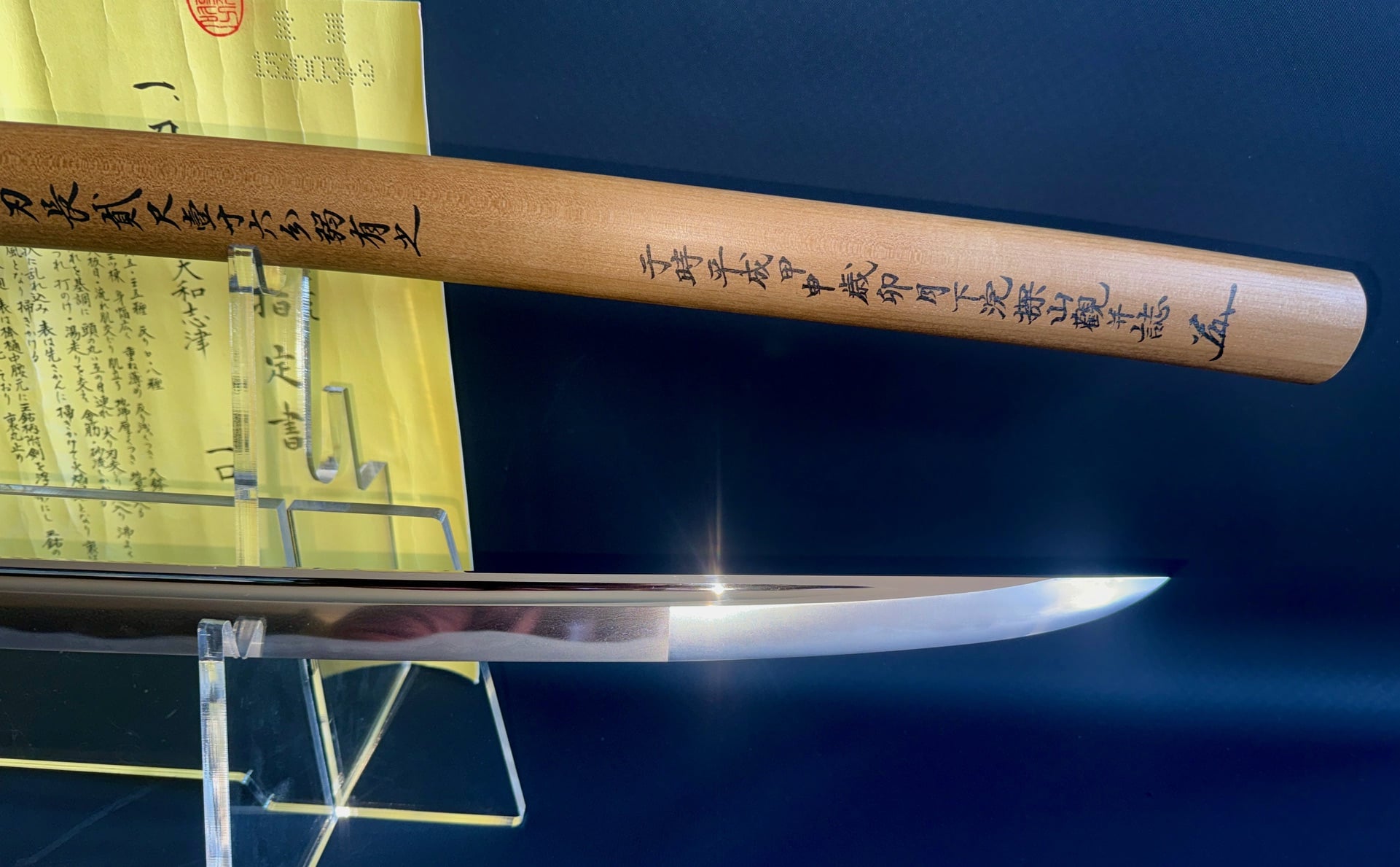
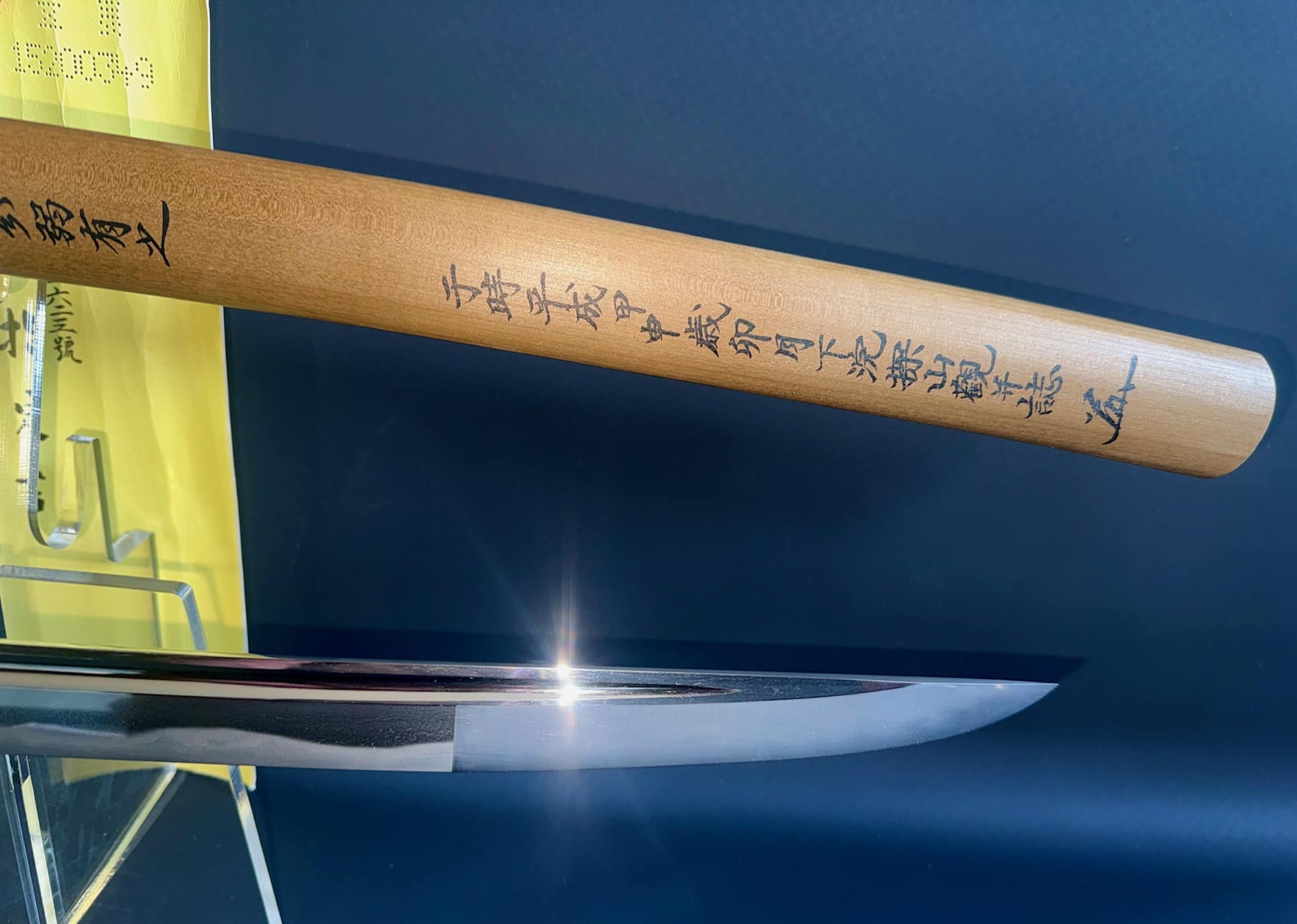
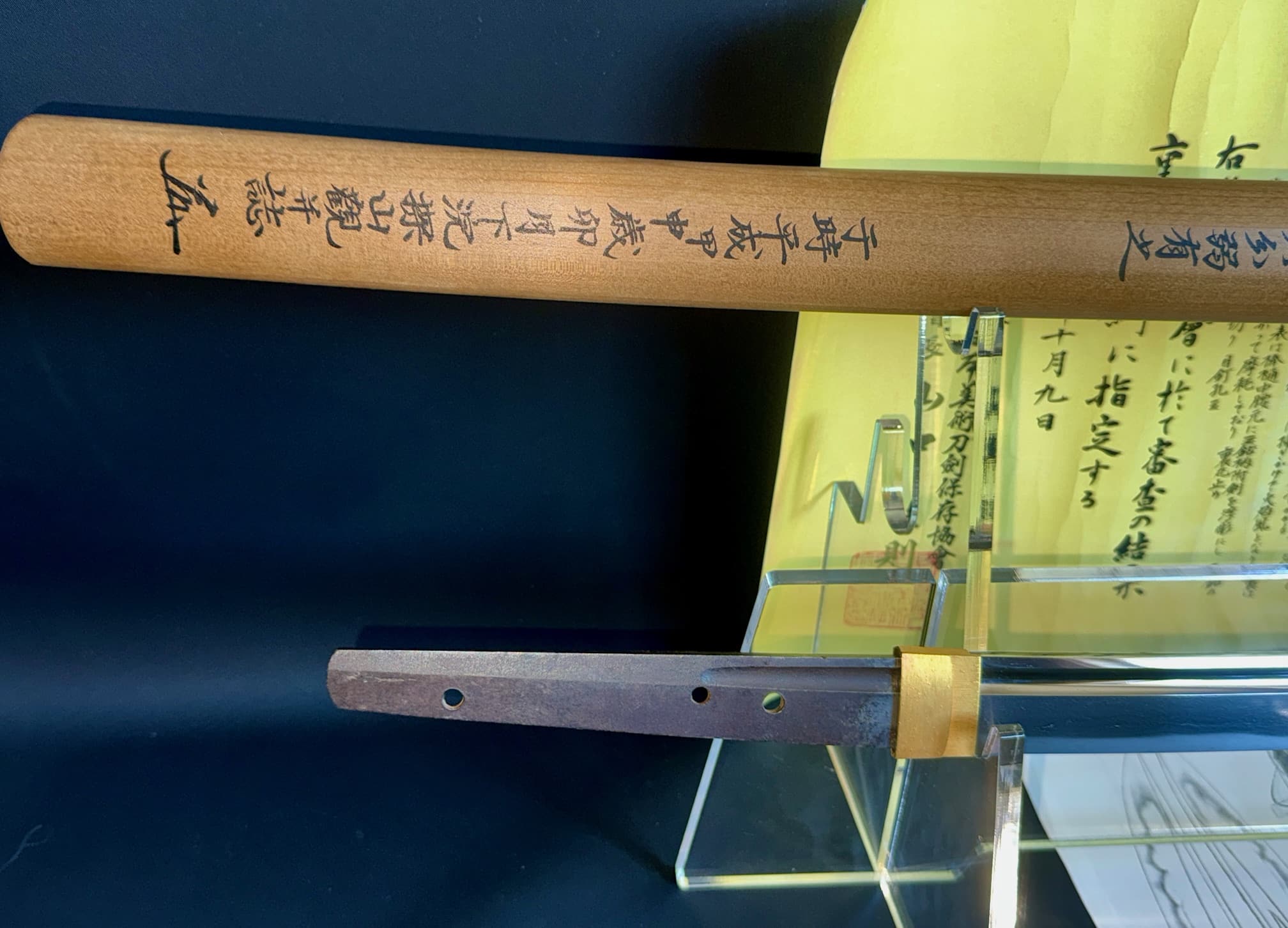
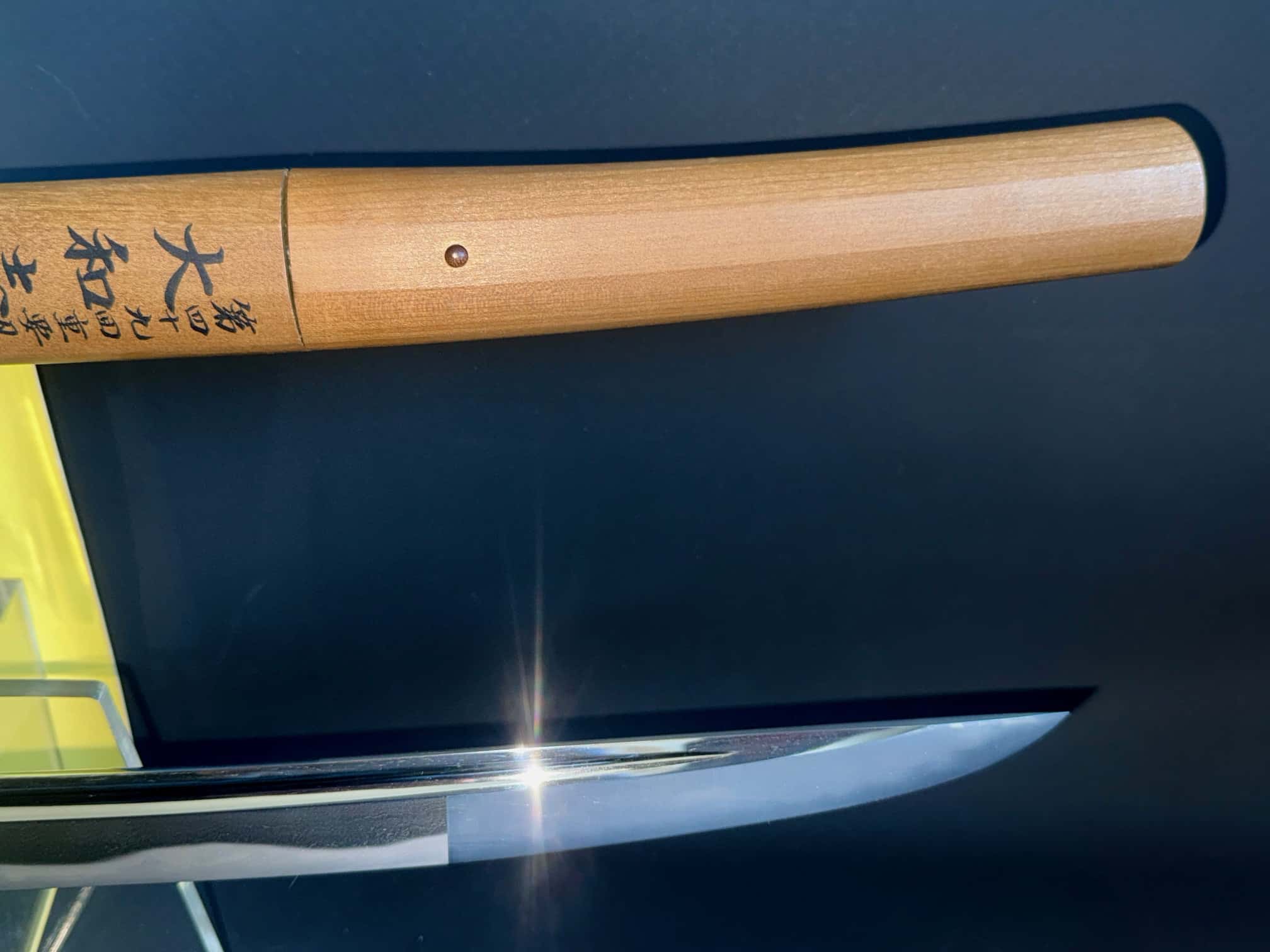
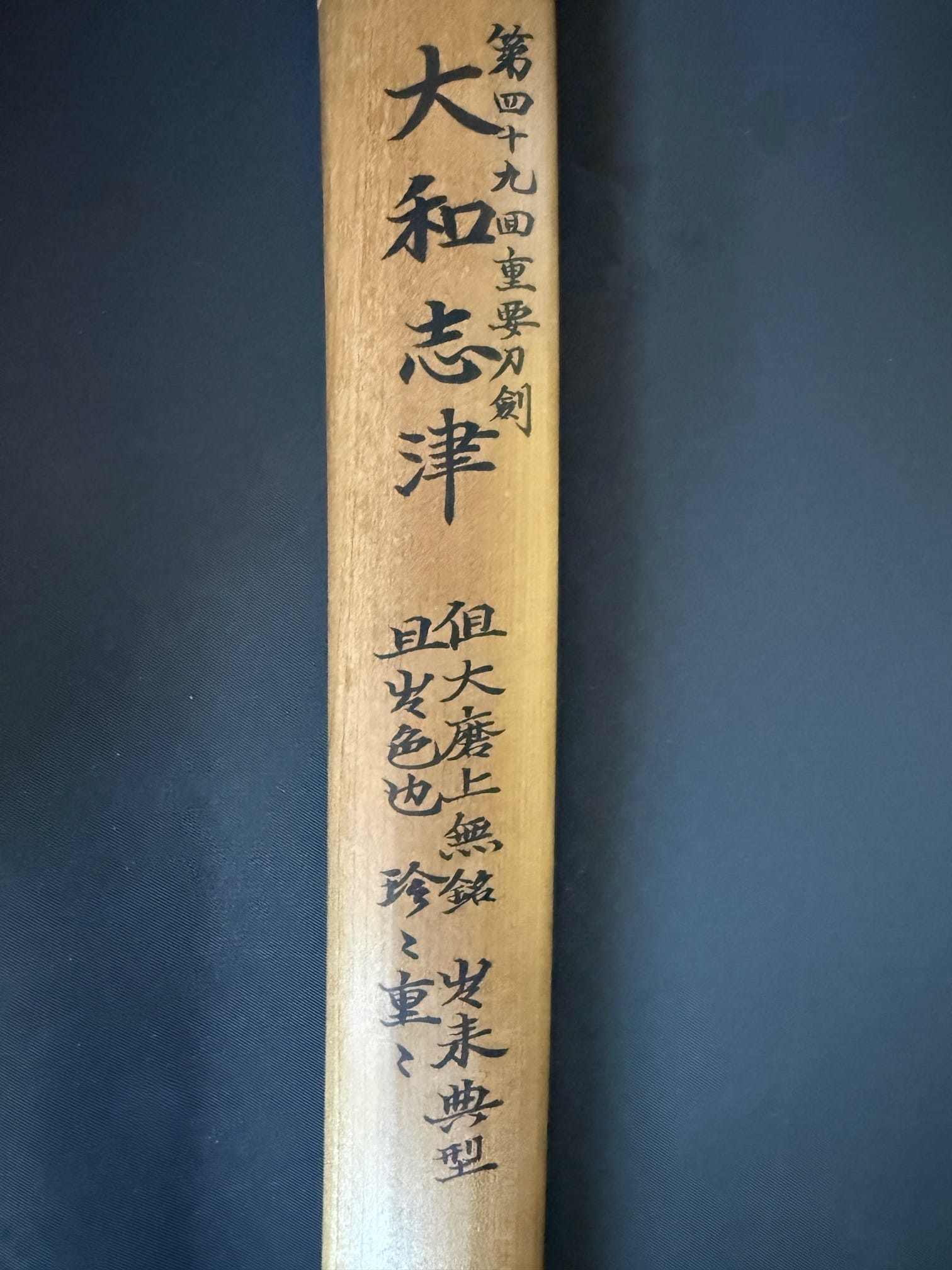
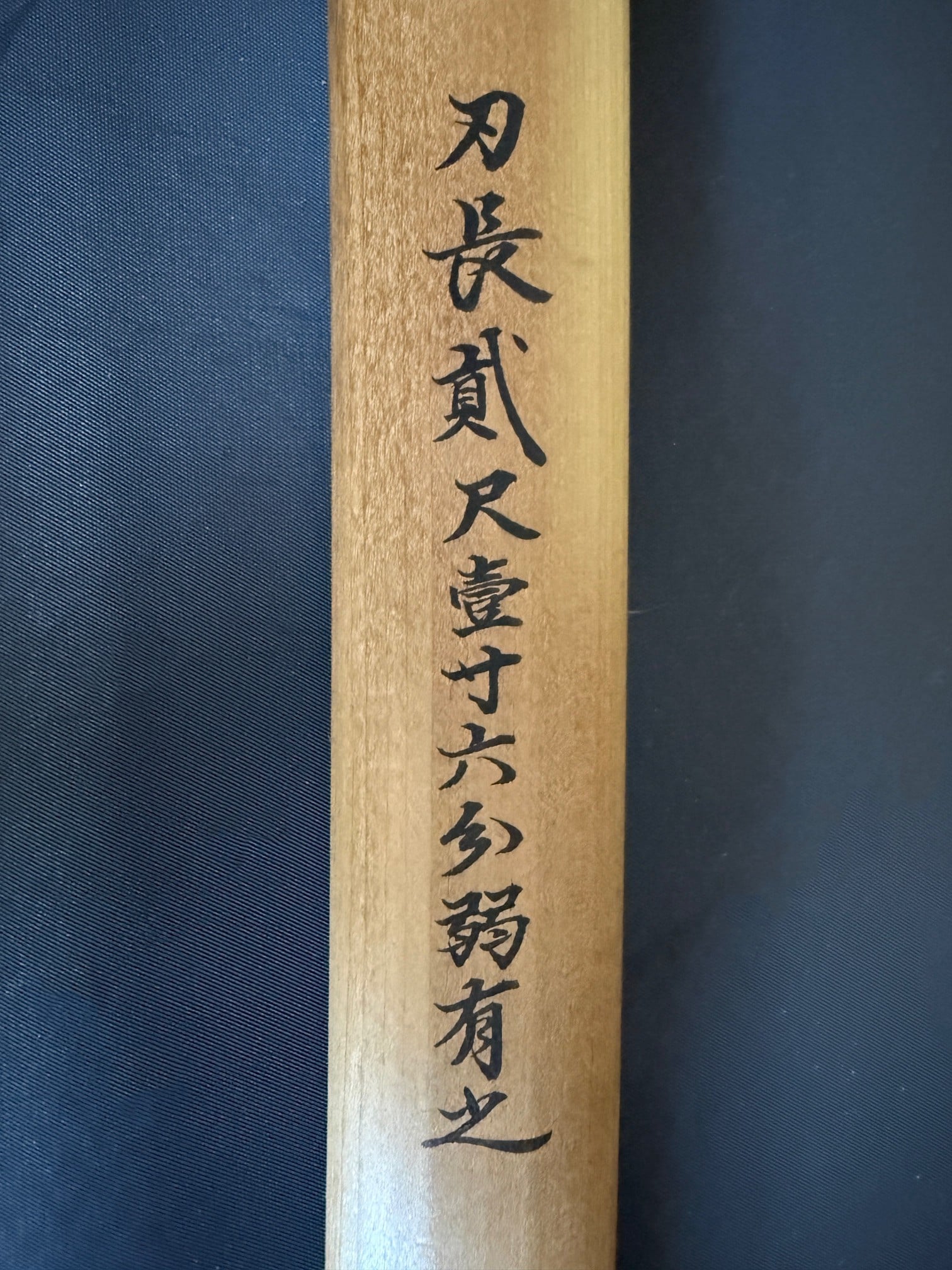
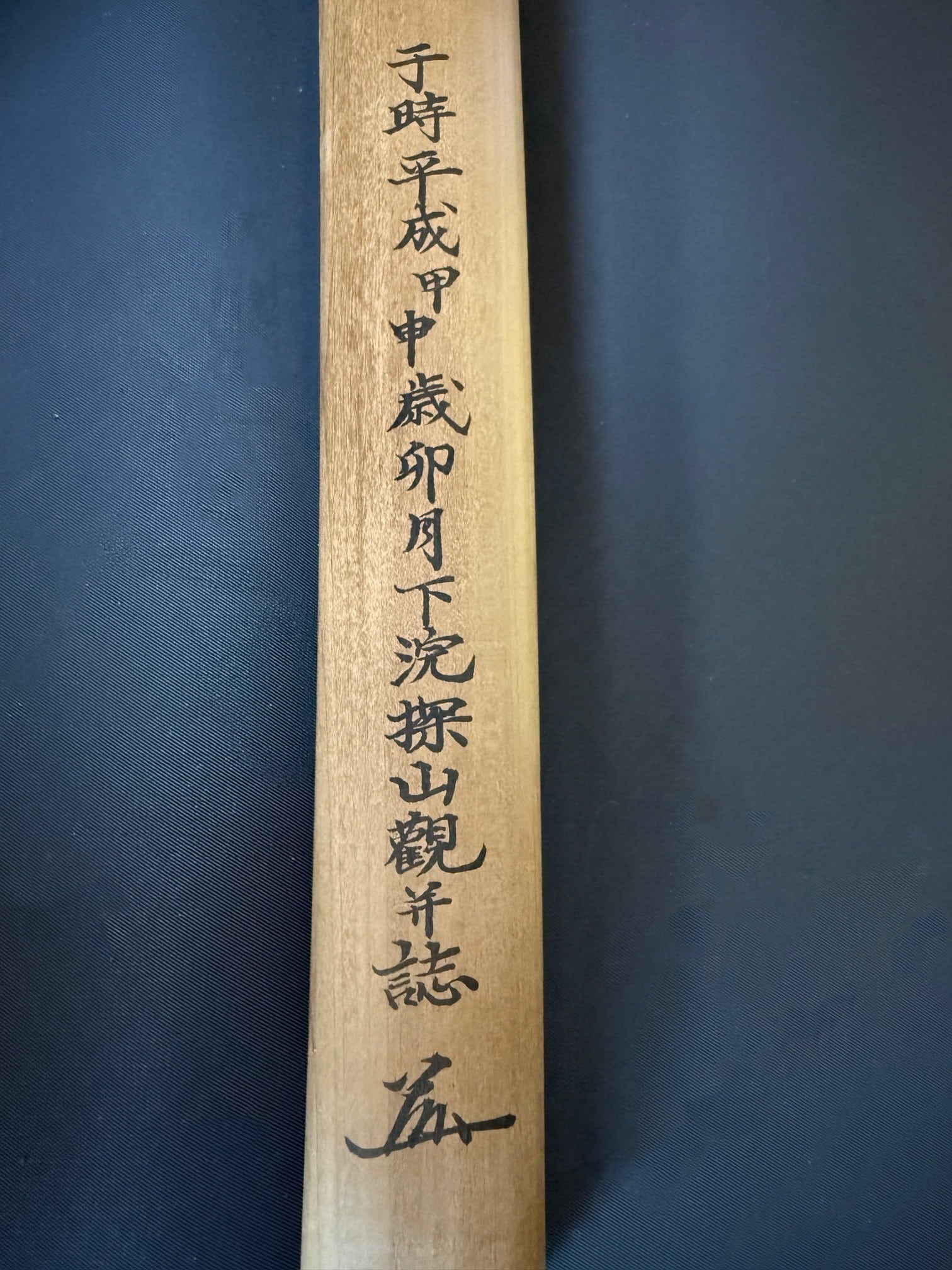
The blade bears a sayagaki by Tanobe Michihiro Sensei, the foremost living authority on classical Japanese swords. His personal inscription written in late April 2004 under his art name Tanzan certifies this katana as not merely important, but as a quintessential and outstanding example of its school: rare, precious, and historically irreplaceable.
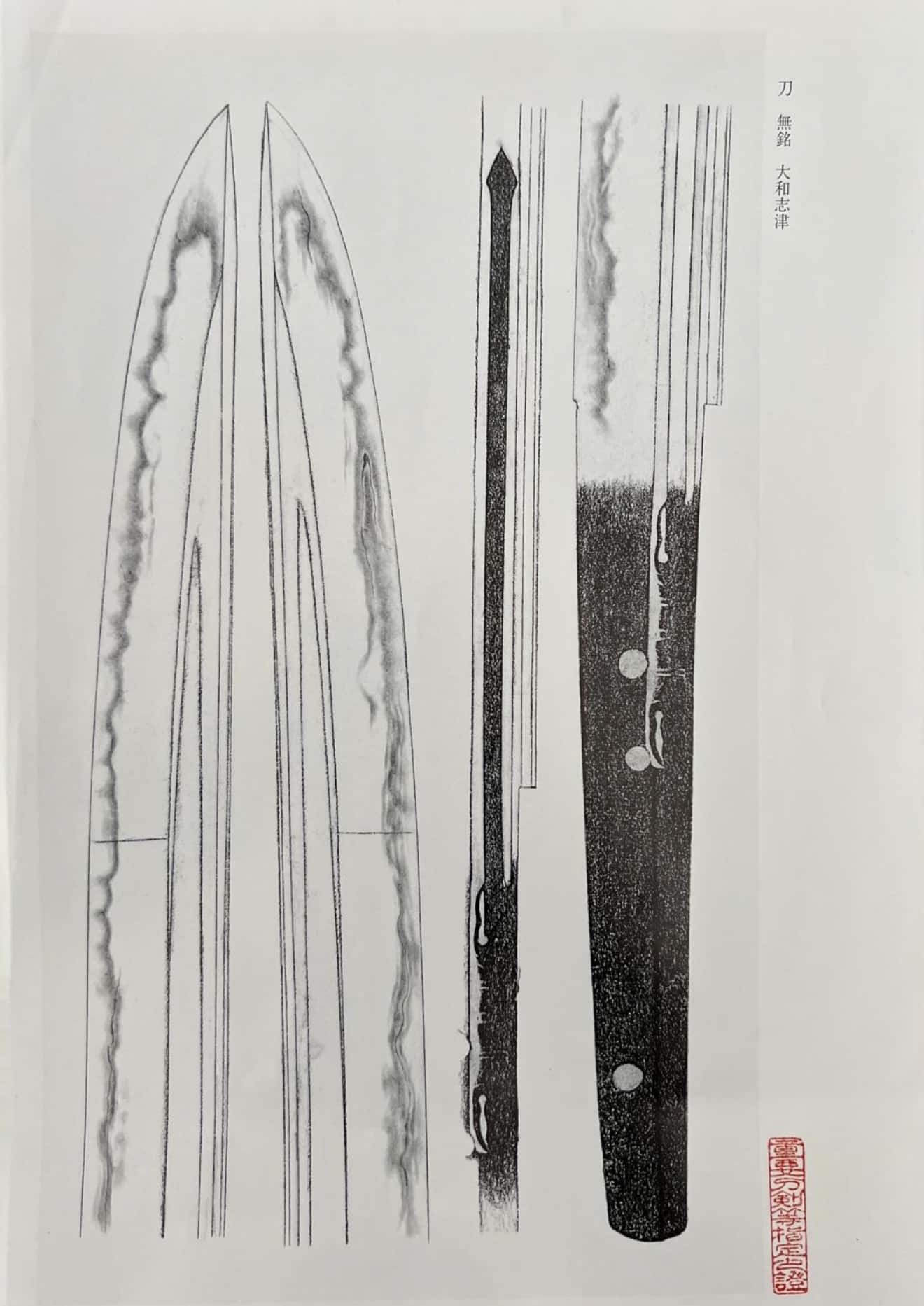
The jihada is a commanding ō-itame bold, flowing, alive under light interwoven with areas of nagare and enriched by chikei and abundant ji-nie. The hamon, a sophisticated nie-based notare-chō, moves with controlled grace along the edge, concealing within it ashi, yubashiri, kinsuji, and sunagashi that reveal themselves only to those who look closely. This is not surface beauty. It is depth.
The bōshi offers a further layer of mastery: midare-komi with vigorous hakikake on the omote, a composed jizō form on the ura a deliberate, expressive asymmetry that distinguishes works of the highest order. Both sides carry bōhi, and the omote bears a finely carved sankozuka-ken extending into the nakago, a symbol of protection drawn from Buddhist iconography.
Although ō-suriage greatly shortened over its centuries of active life the blade loses nothing of its original authority. The wide mihaba, the thin kasane, the commanding ō-kissaki: each element speaks clearly of the Nanbokuchō spirit, bold and innovative, designed for a world in which both beauty and function were non-negotiable.
For the serious collector, this katana represents something beyond acquisition. It is an act of stewardship a responsibility to preserve and honour a work of cultural, artistic, and historical significance that cannot be replicated and will never come again.
Translation from the Sayagaki by Sensei Tanobe.
Chin chin Cho cho

KvK: 51964147
C.W. Slok - Kyodai Originals
Bank: NL25 KNAB 0509 1310 18
BIC: KNABNL2H
© 2026 Kyodai Originals is made with ❤ by Nieuwblik.com


