
€ 29.500,00
1 in stock
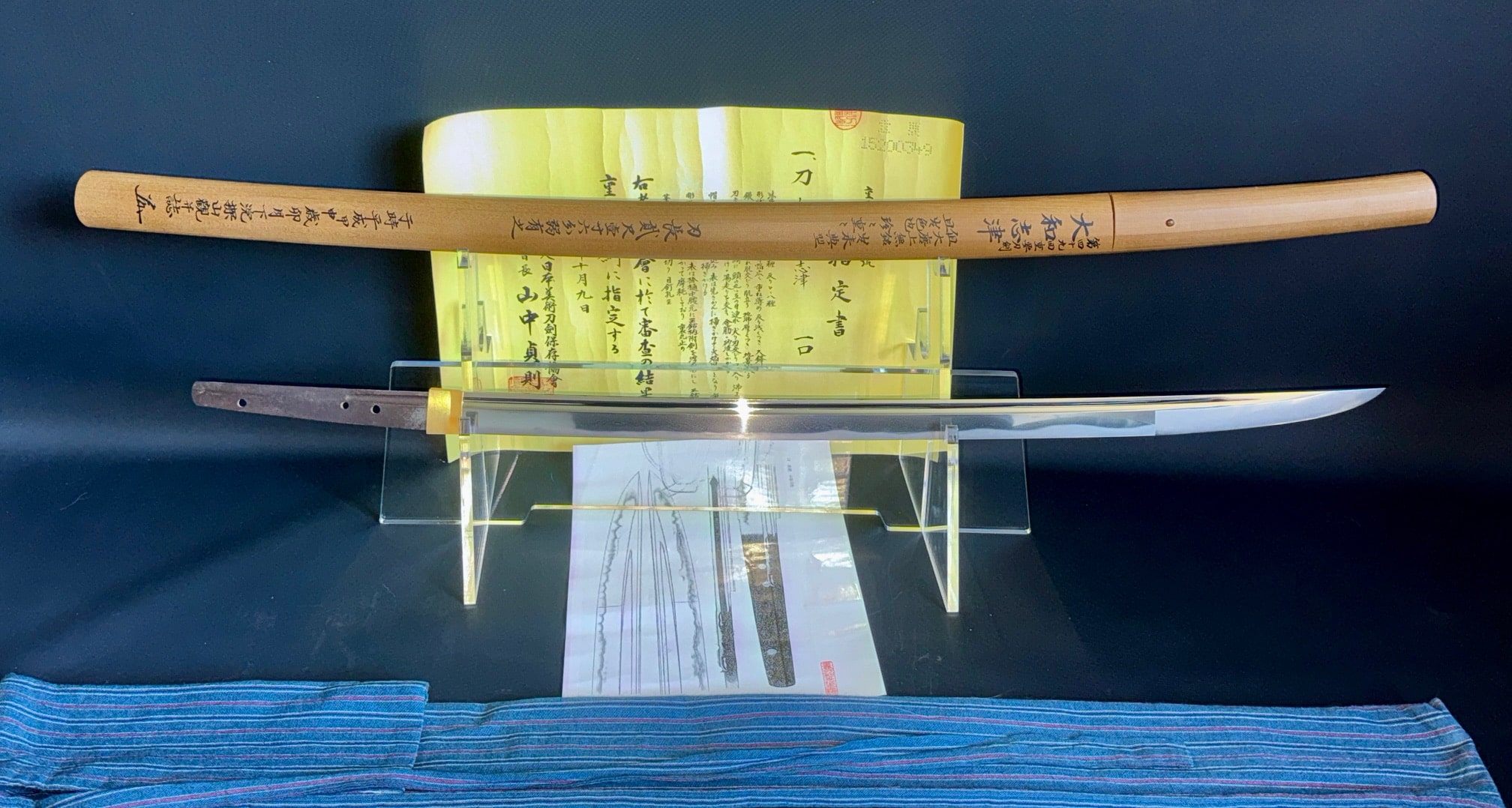
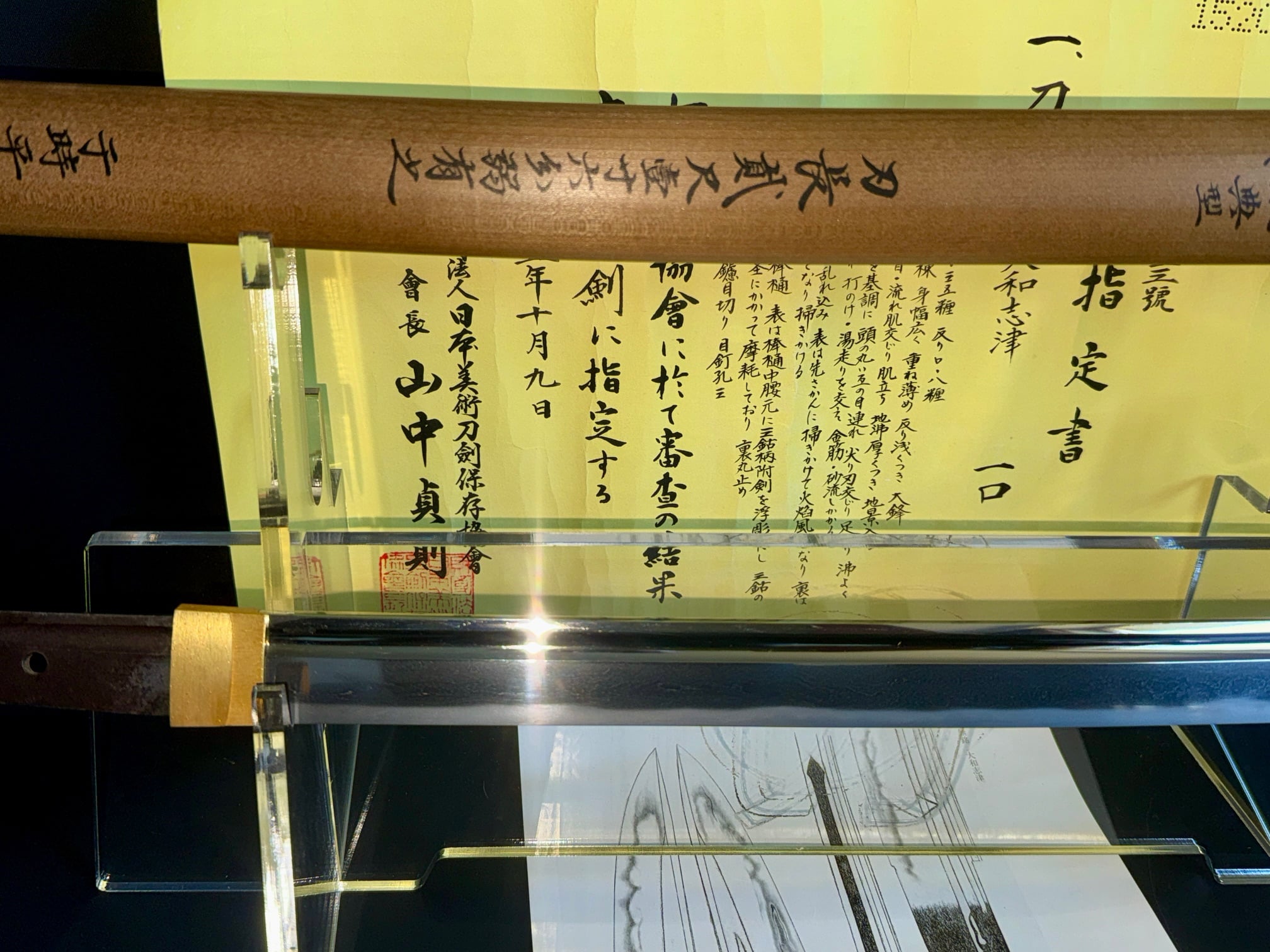
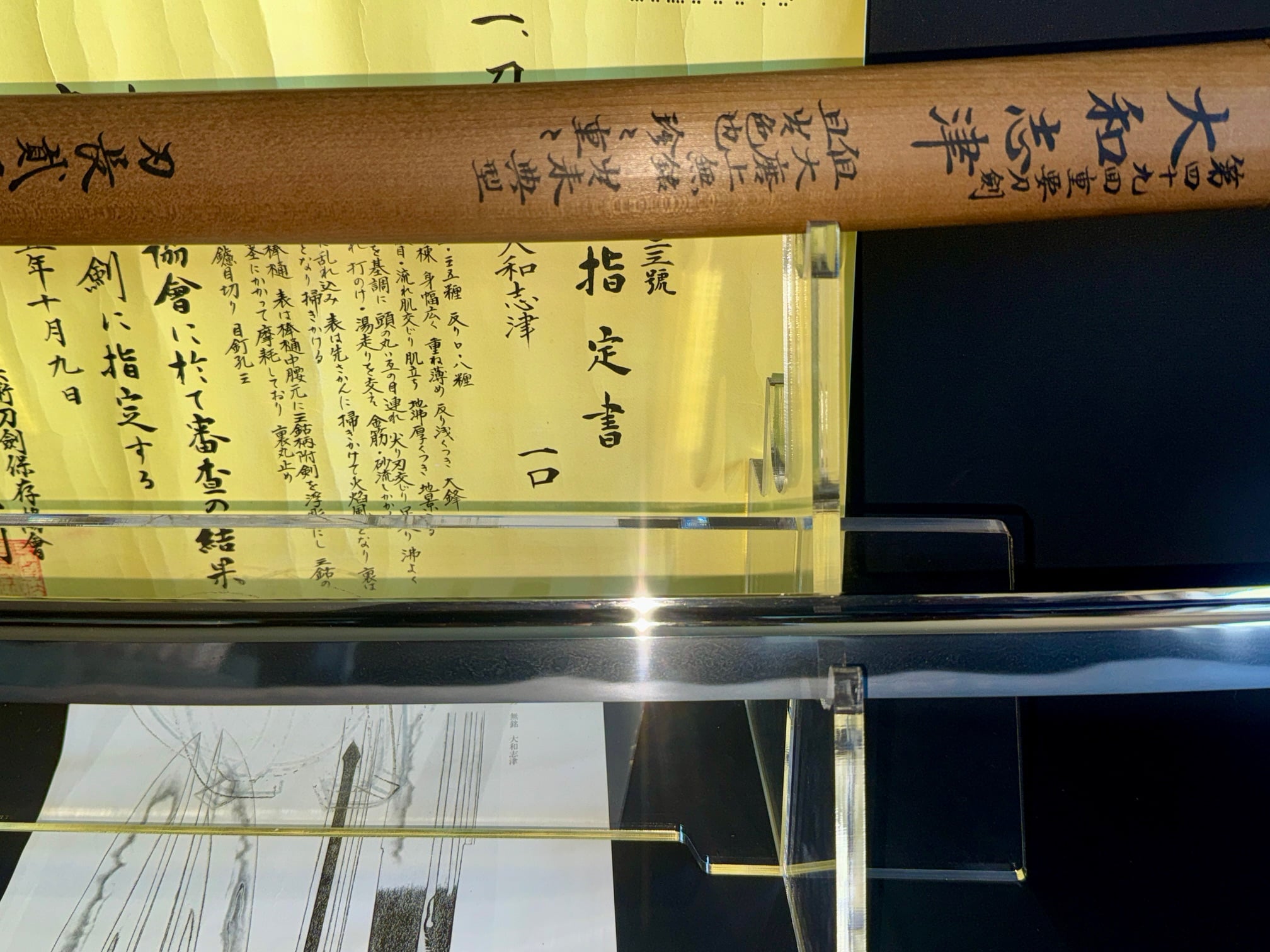
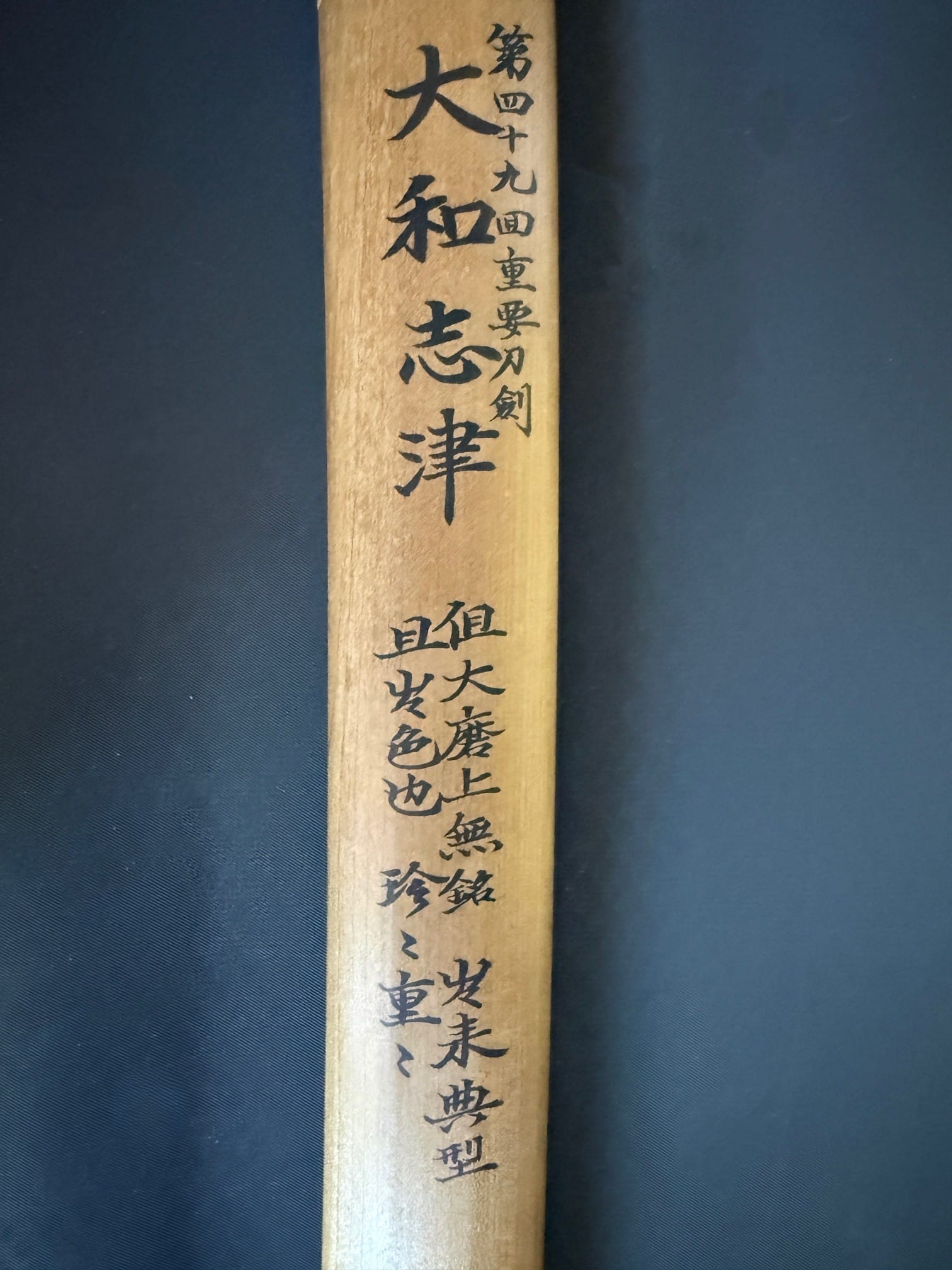
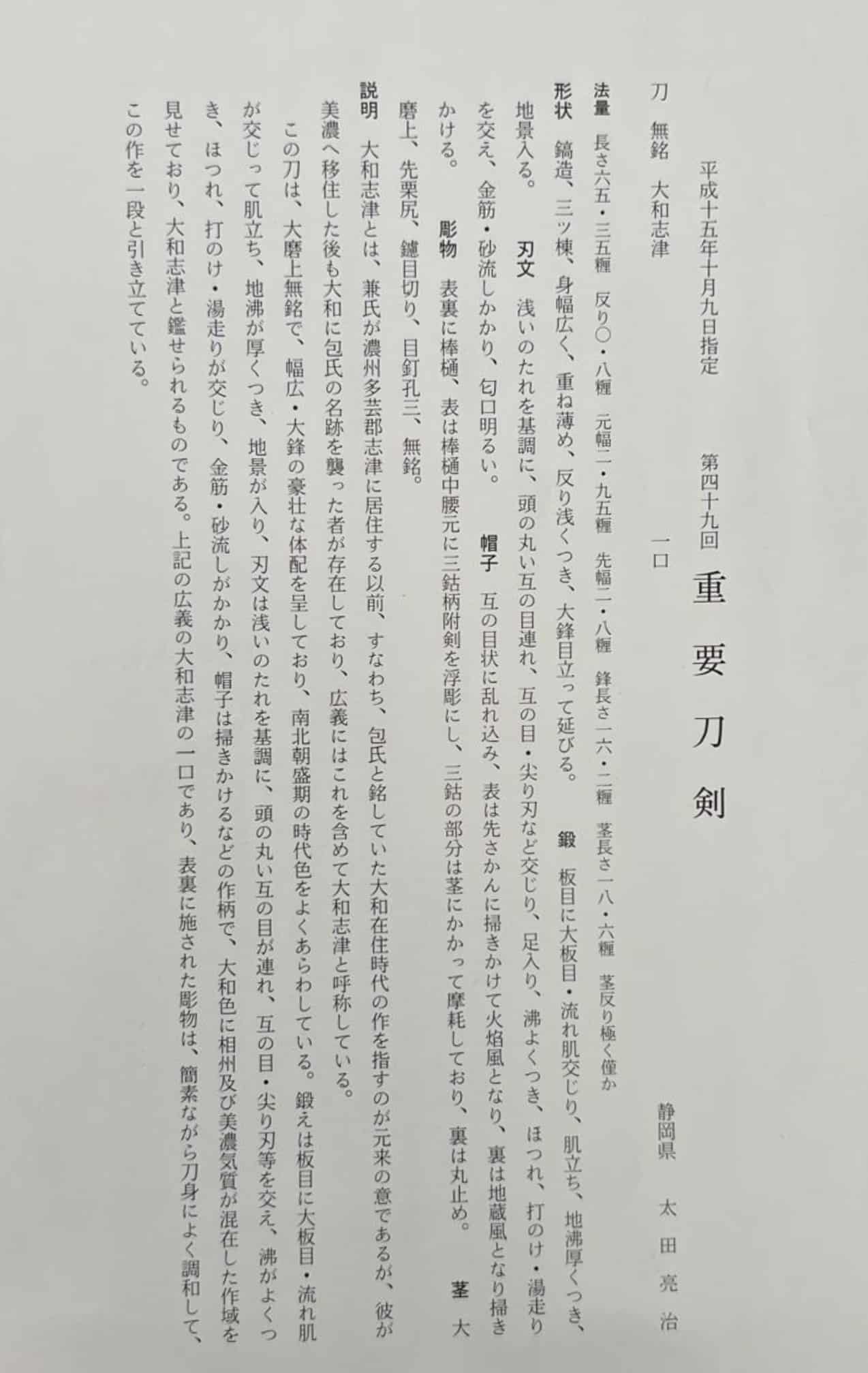
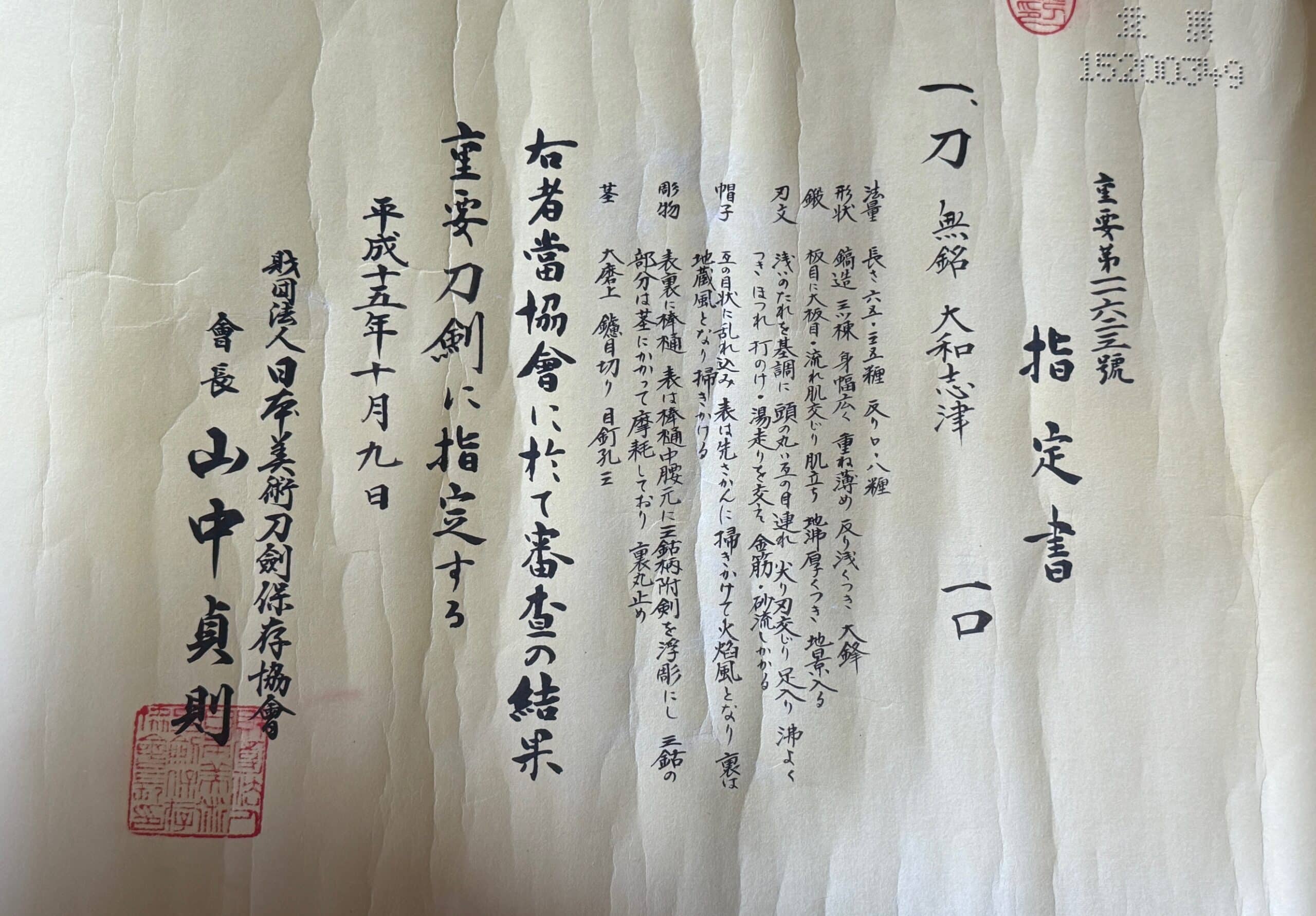
49th Jūyō Shinsa (2003)
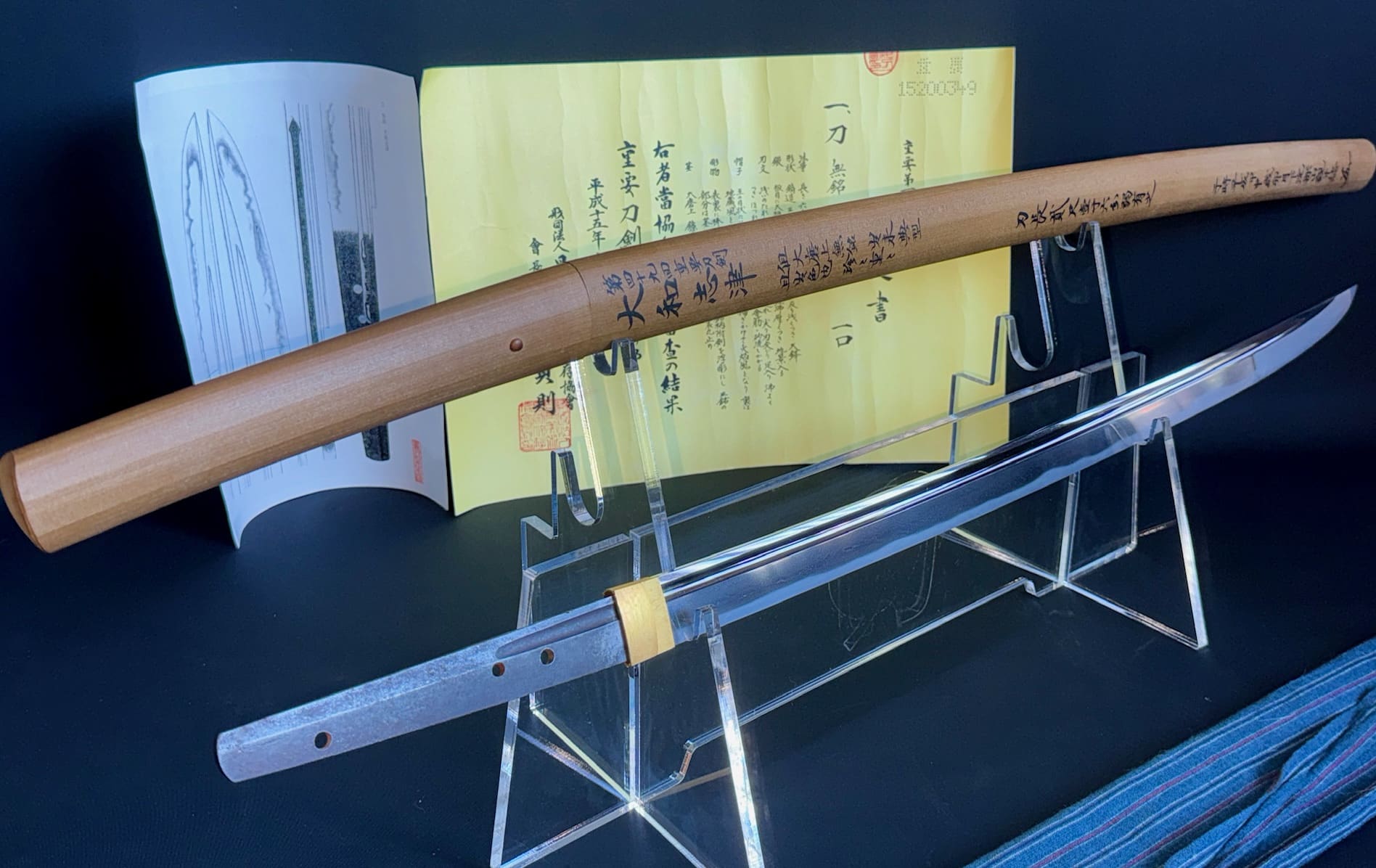
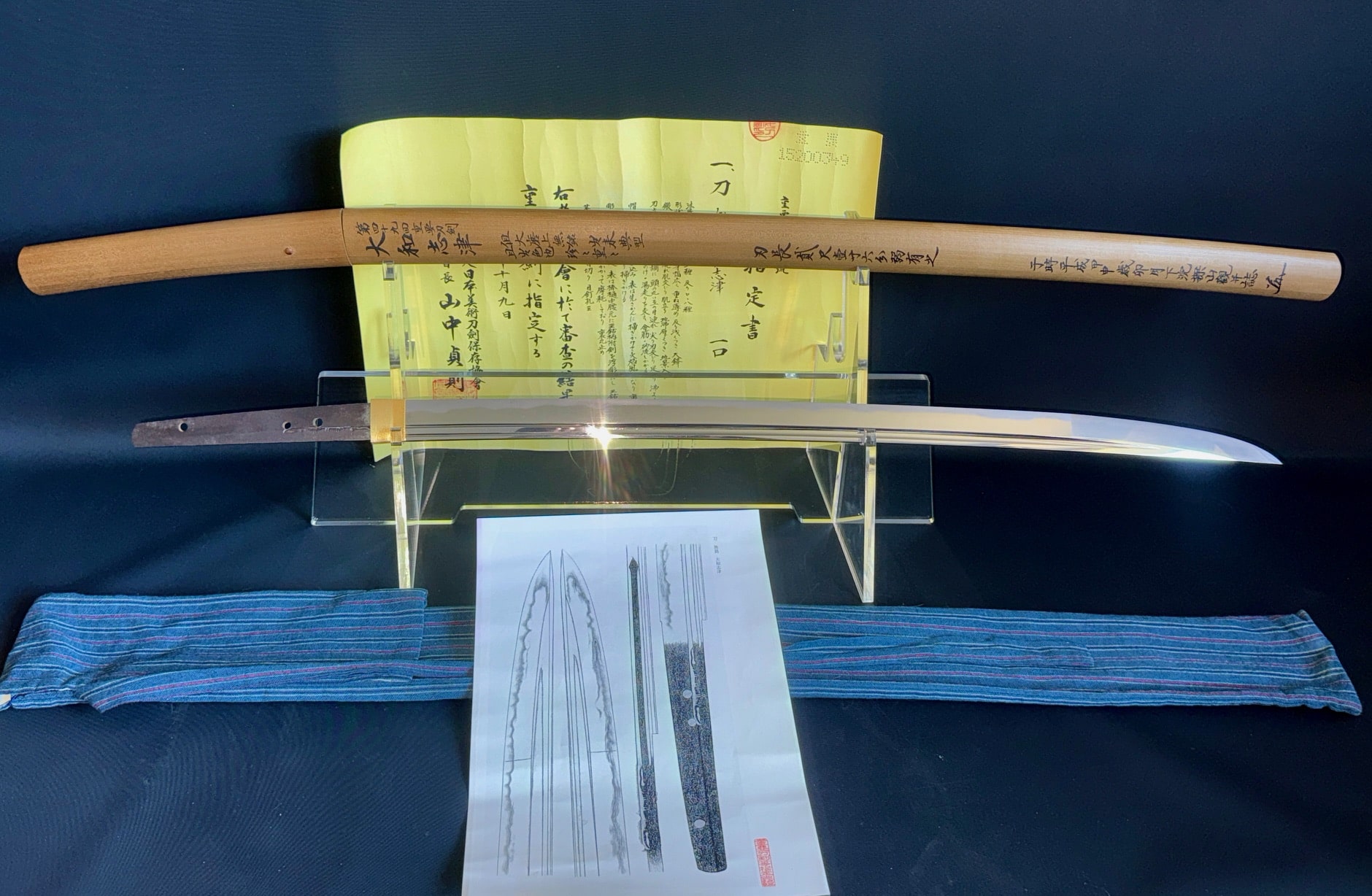
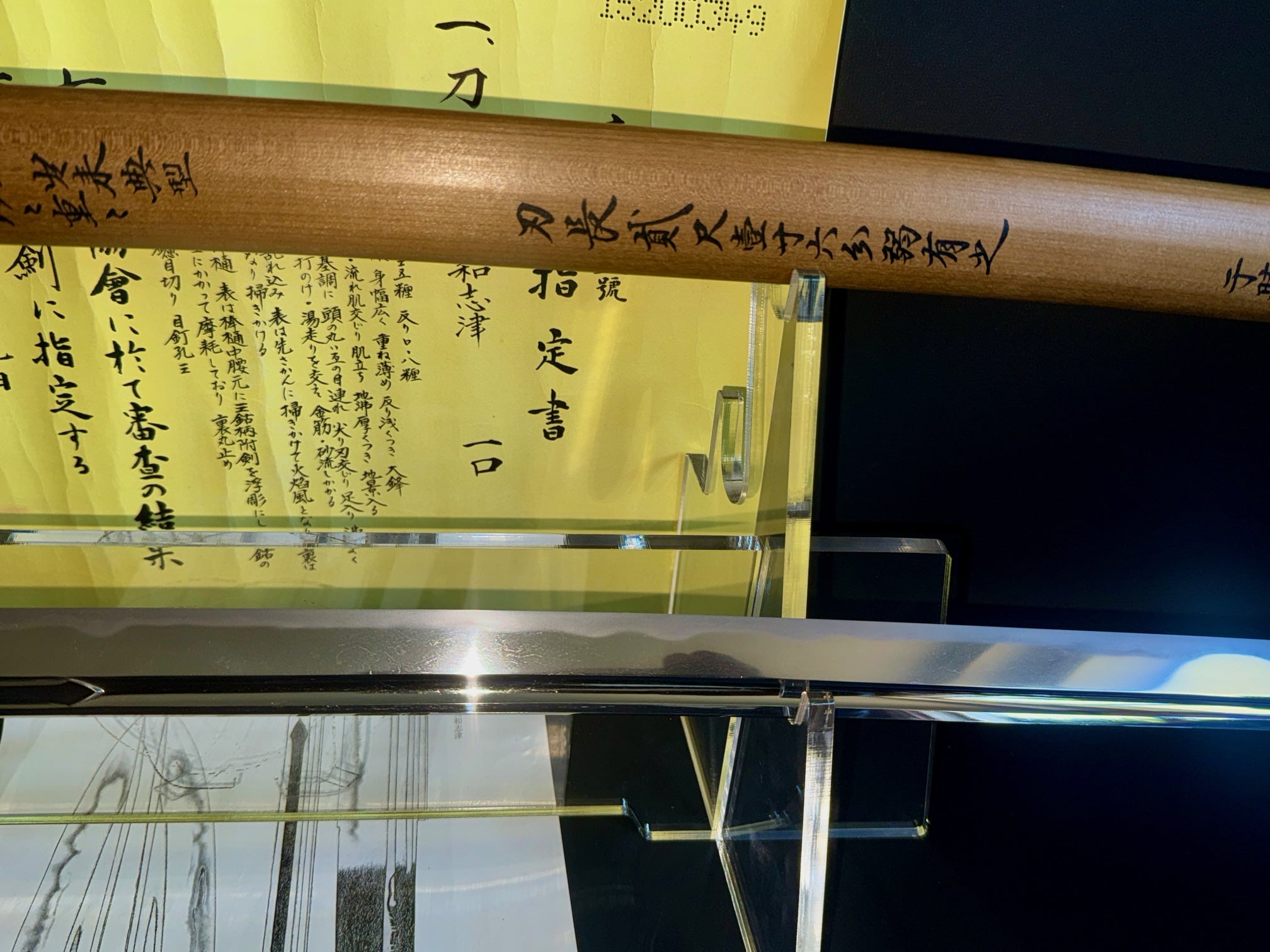
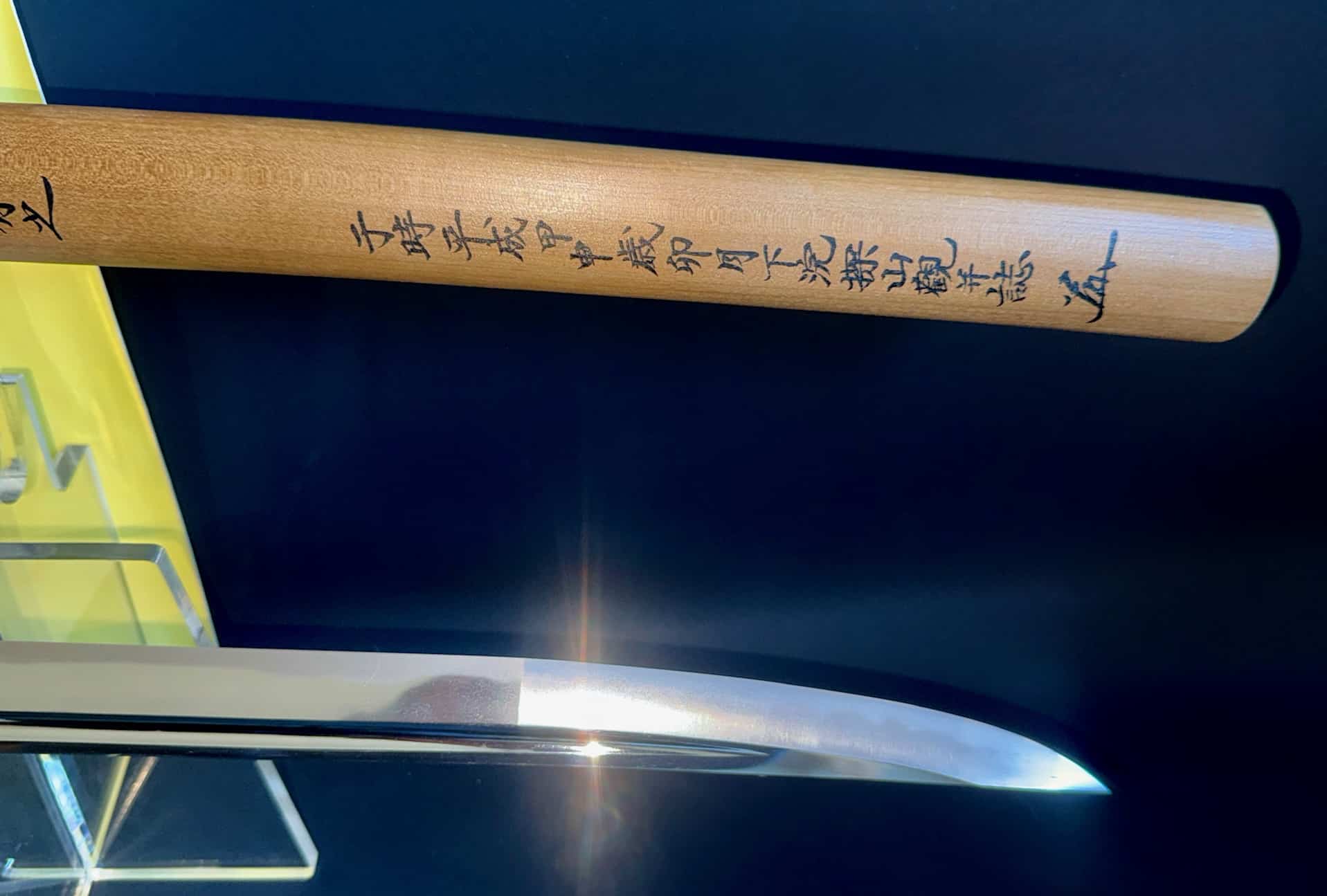
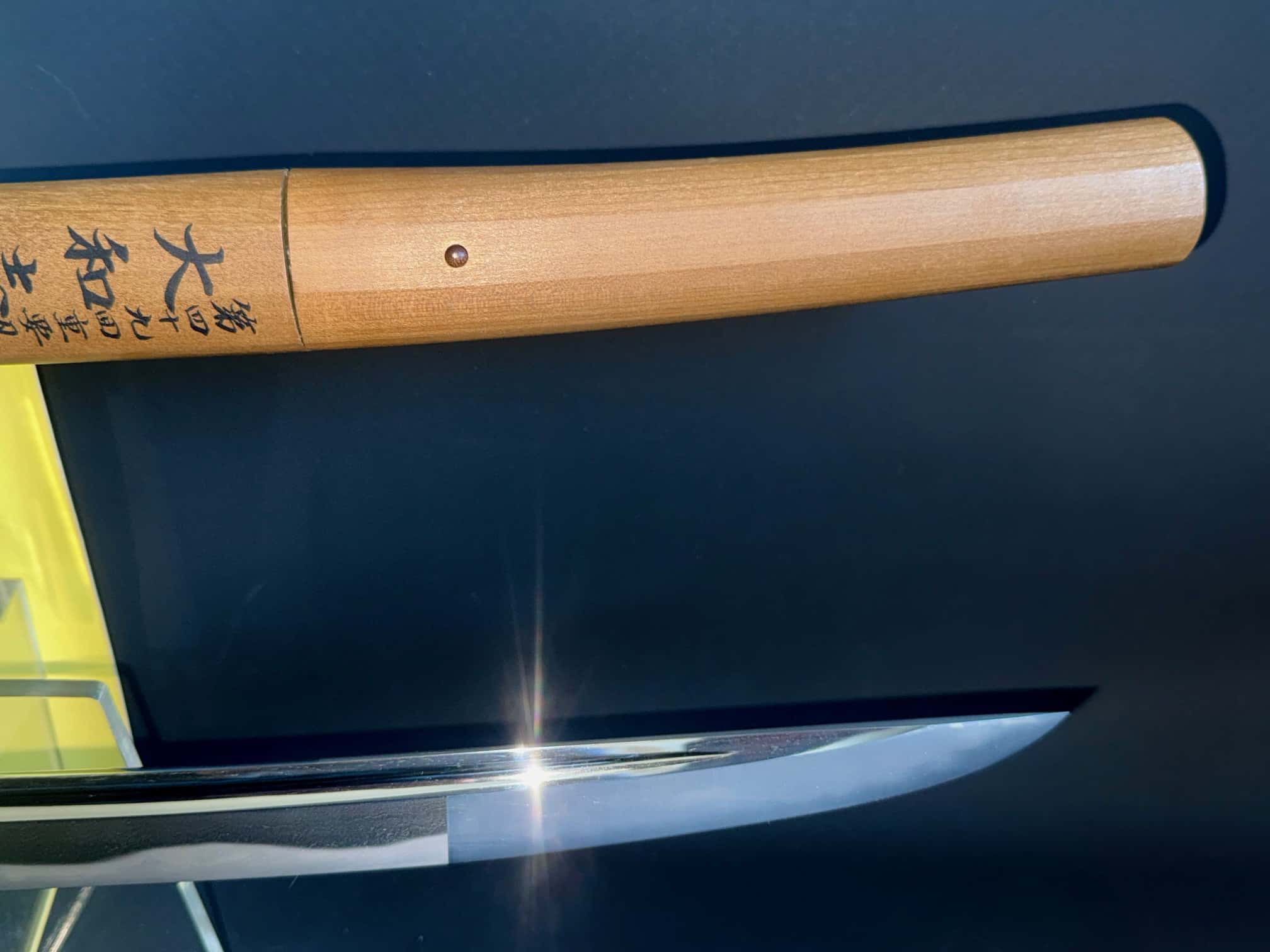
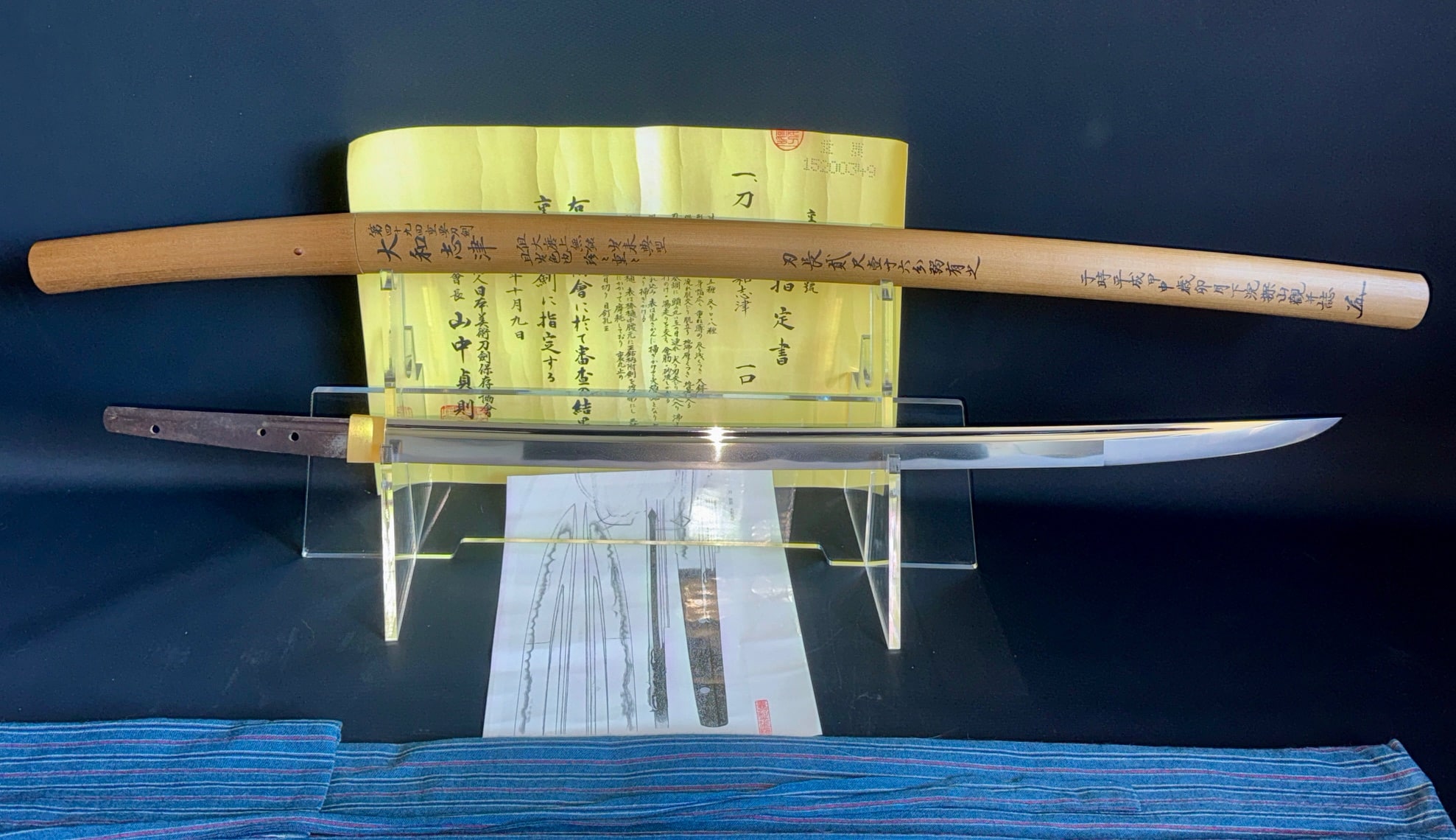
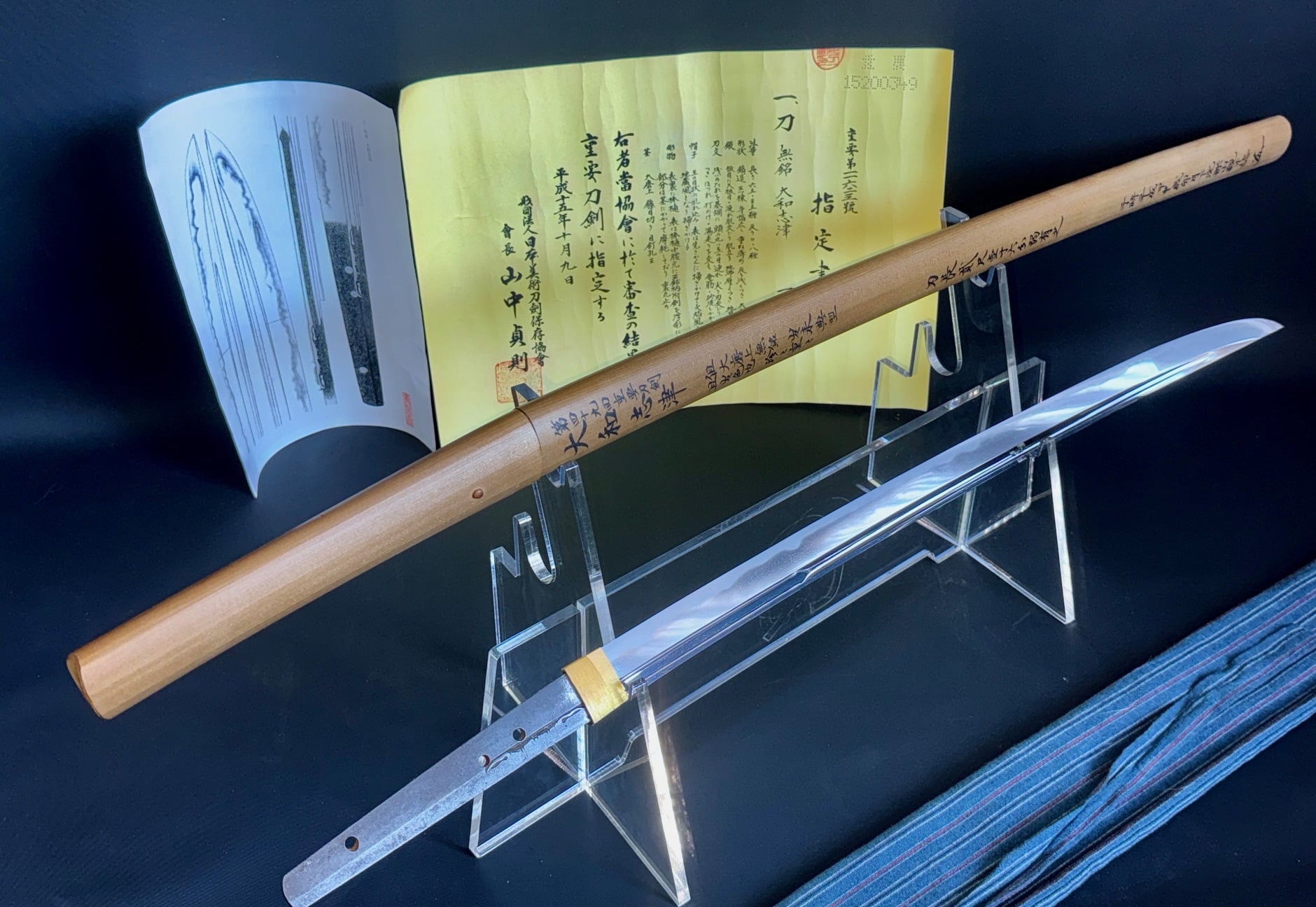
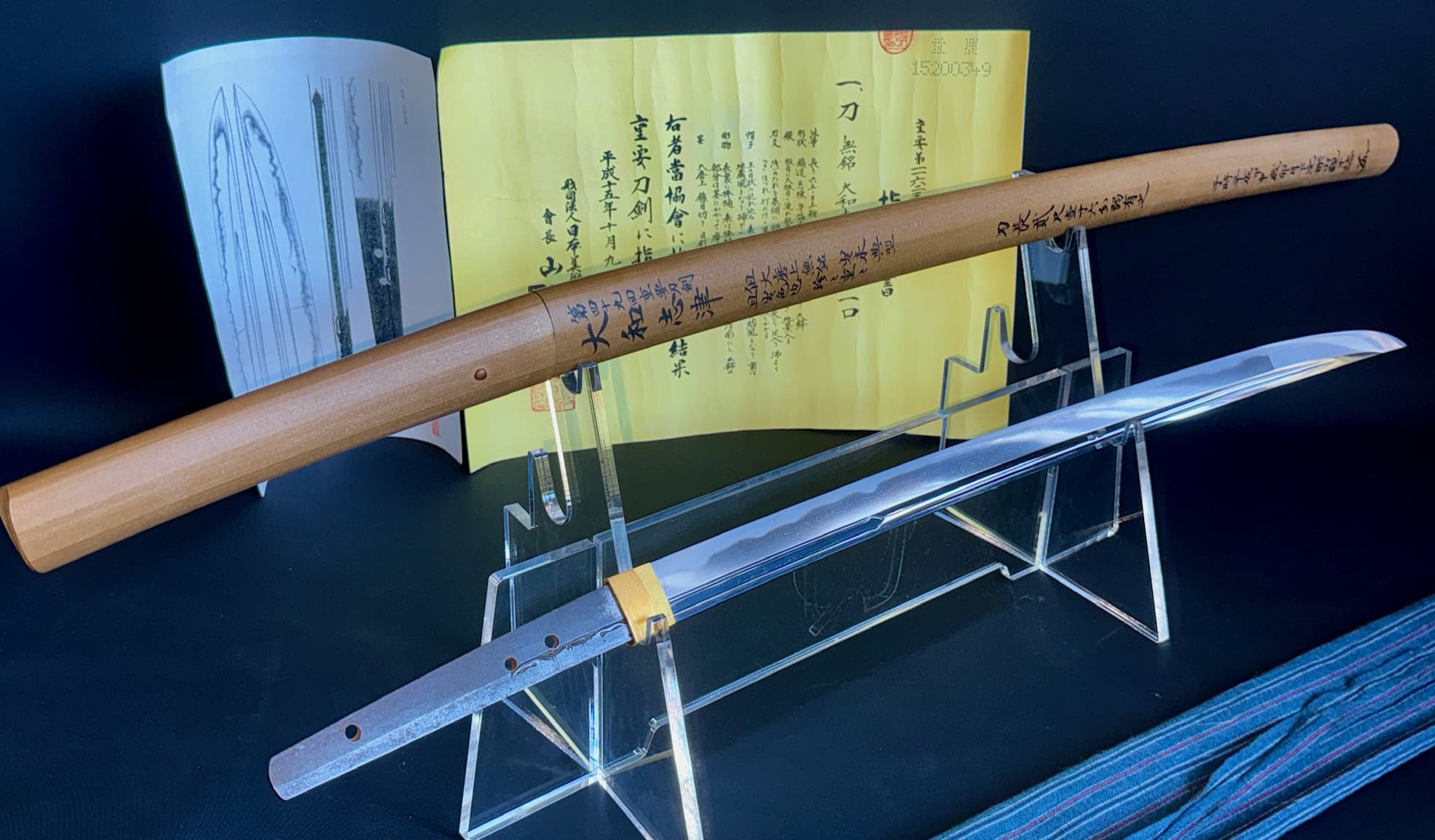
This exceptional katana, designated Jūyō Tōken at the 49th NBTHK Jūyō Shinsa (2003), represents a remarkable and highly important example of early Yamato-Shizu workmanship, a school that stands at the very heart of the transition from classical Yamato traditions to the emerging Mino style.
The term Yamato-Shizu refers to works connected to Kaneuji, originally trained in Yamato Province before relocating to Shizu in Mino Province. This blade embodies precisely that moment of transformation where the disciplined, structured traditions of Yamato begin to merge with the more expressive and dynamic characteristics that would later define Mino workmanship. In this broader sense, the attribution reflects not only Kaneuji himself but also the lineage of smiths working in this stylistic evolution.
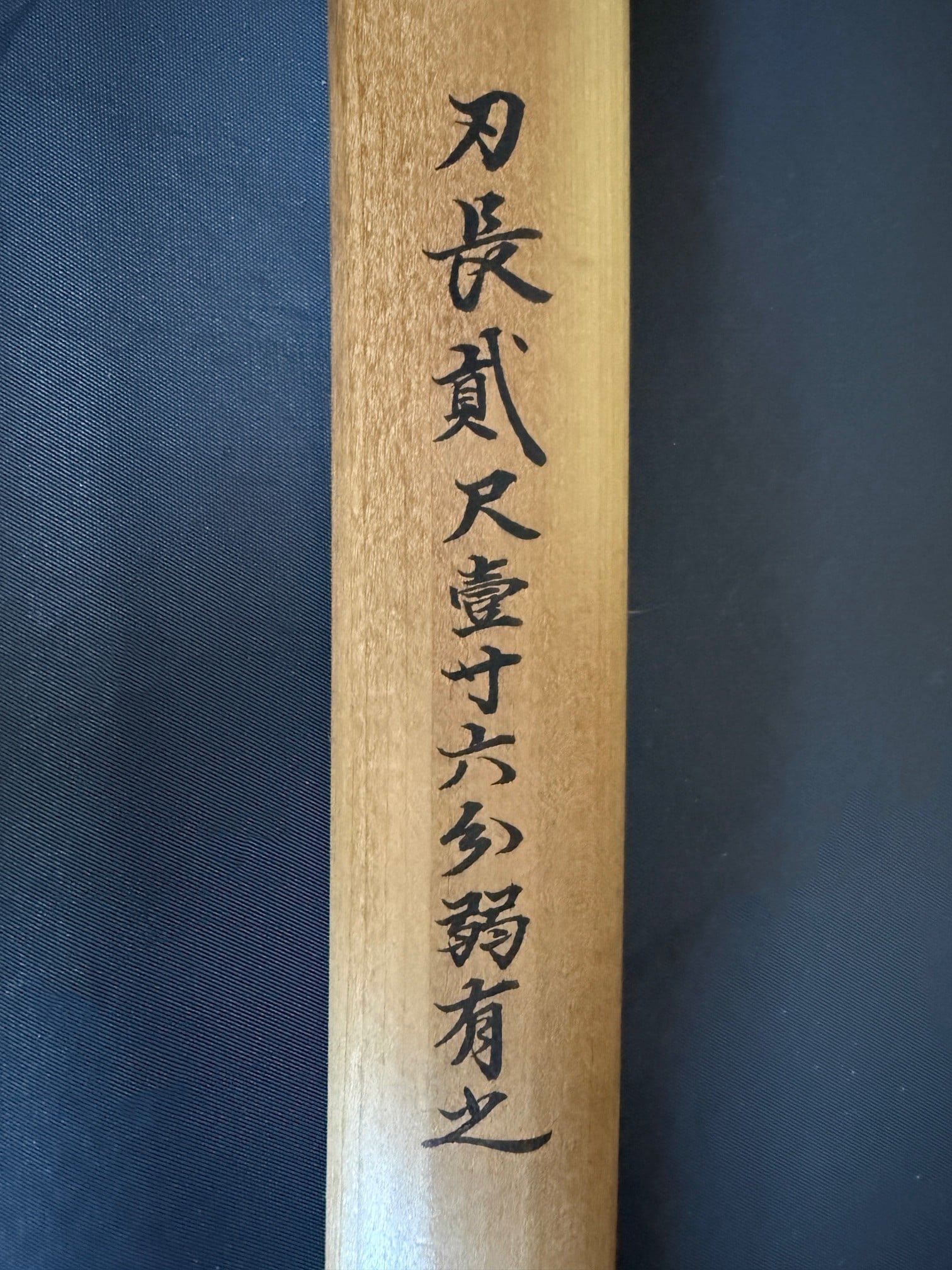
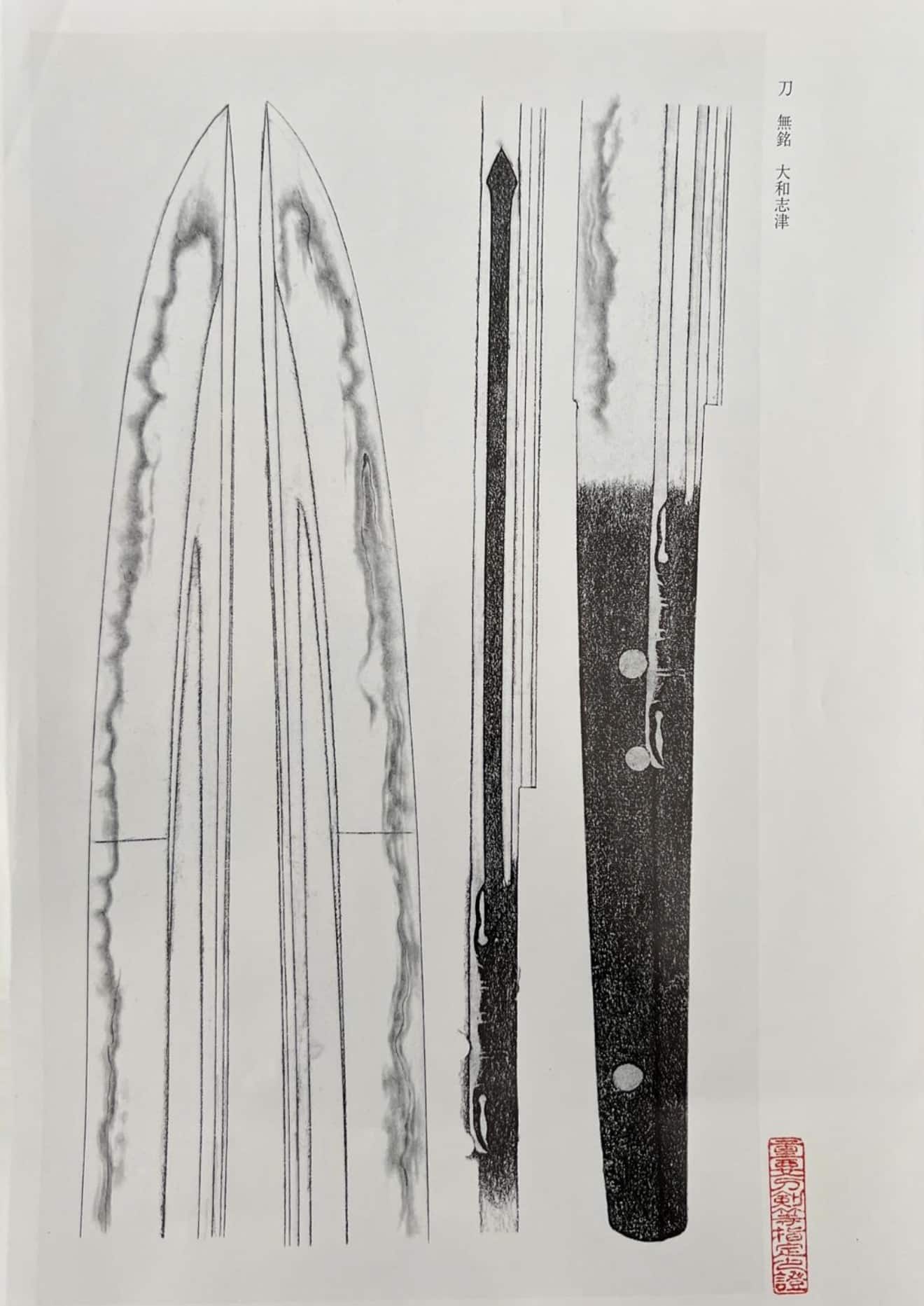
The blade presents a commanding nagasa of 65.35 cm, with a relatively shallow sori of 0.8 cm, giving it a refined yet assertive stance. The proportions are particularly striking: a wide mihaba, thin kasane, and a distinctly elongated ō-kissaki combine to create a silhouette that strongly recalls the bold and innovative forms of the Nanbokuchō period (1336–1392).
Although the blade is now ō-suriage (greatly shortened), its original grandeur remains clearly visible. The powerful width and extended kissaki suggest that it was once an even more imposing weapon, designed both for battlefield effectiveness and visual presence. This sense of latent strength, combined with refined balance, is one of the defining qualities of high-level Nanbokuchō masterpieces.
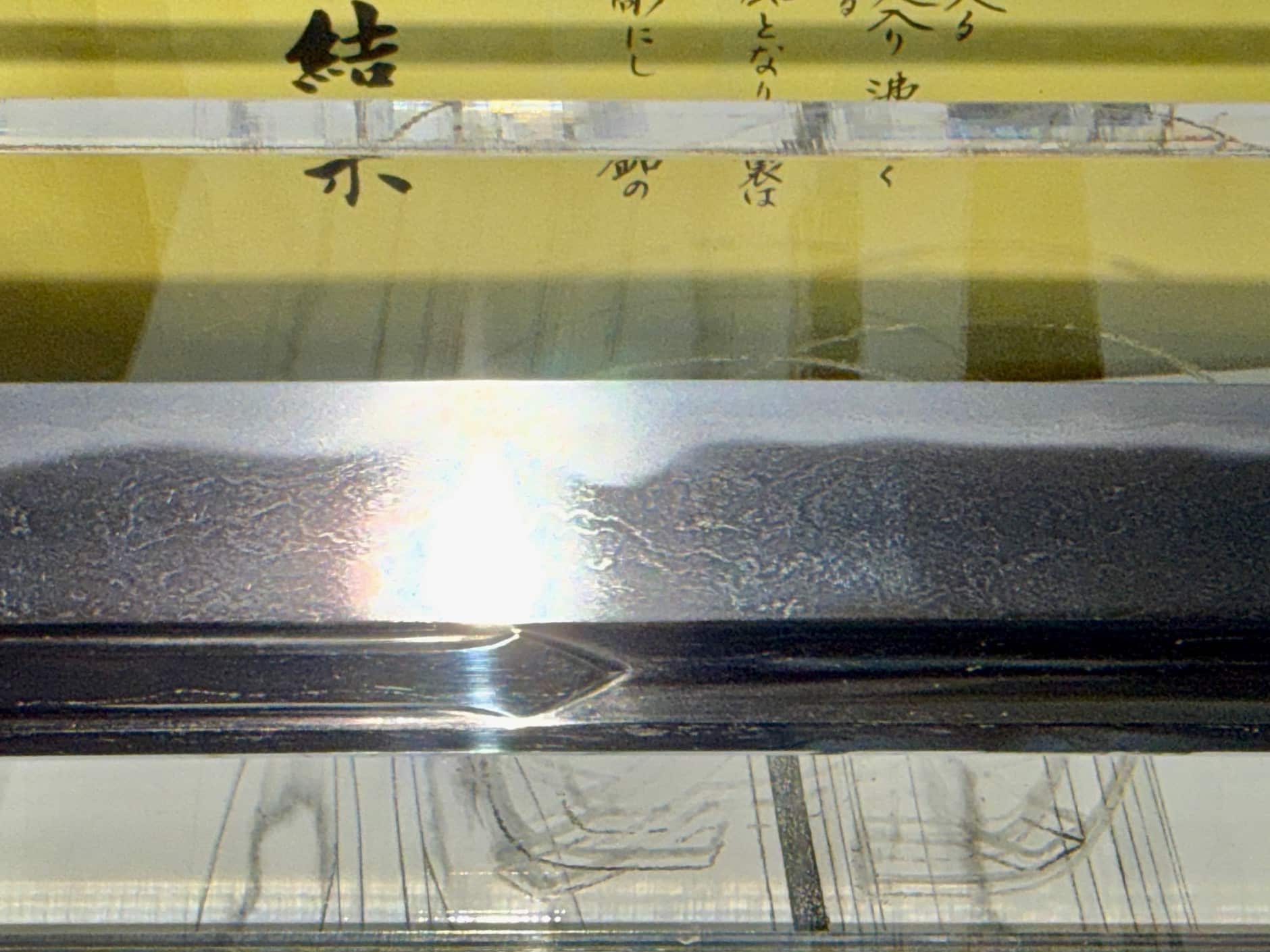
The jihada (forging pattern) is an outstanding ō-itame, visibly standing out with bold, flowing grain that is interwoven with areas of nagare. This creates a dynamic surface full of movement, enhanced by the presence of chikei (dark steel lines) and abundant ji-nie, which give the blade a luminous, almost organic quality.
The steel appears alive under light, shifting between texture and brilliance. This is not merely technical excellence it is artistry in steel, demonstrating the hand of a highly skilled smith working at the peak of early koto craftsmanship.
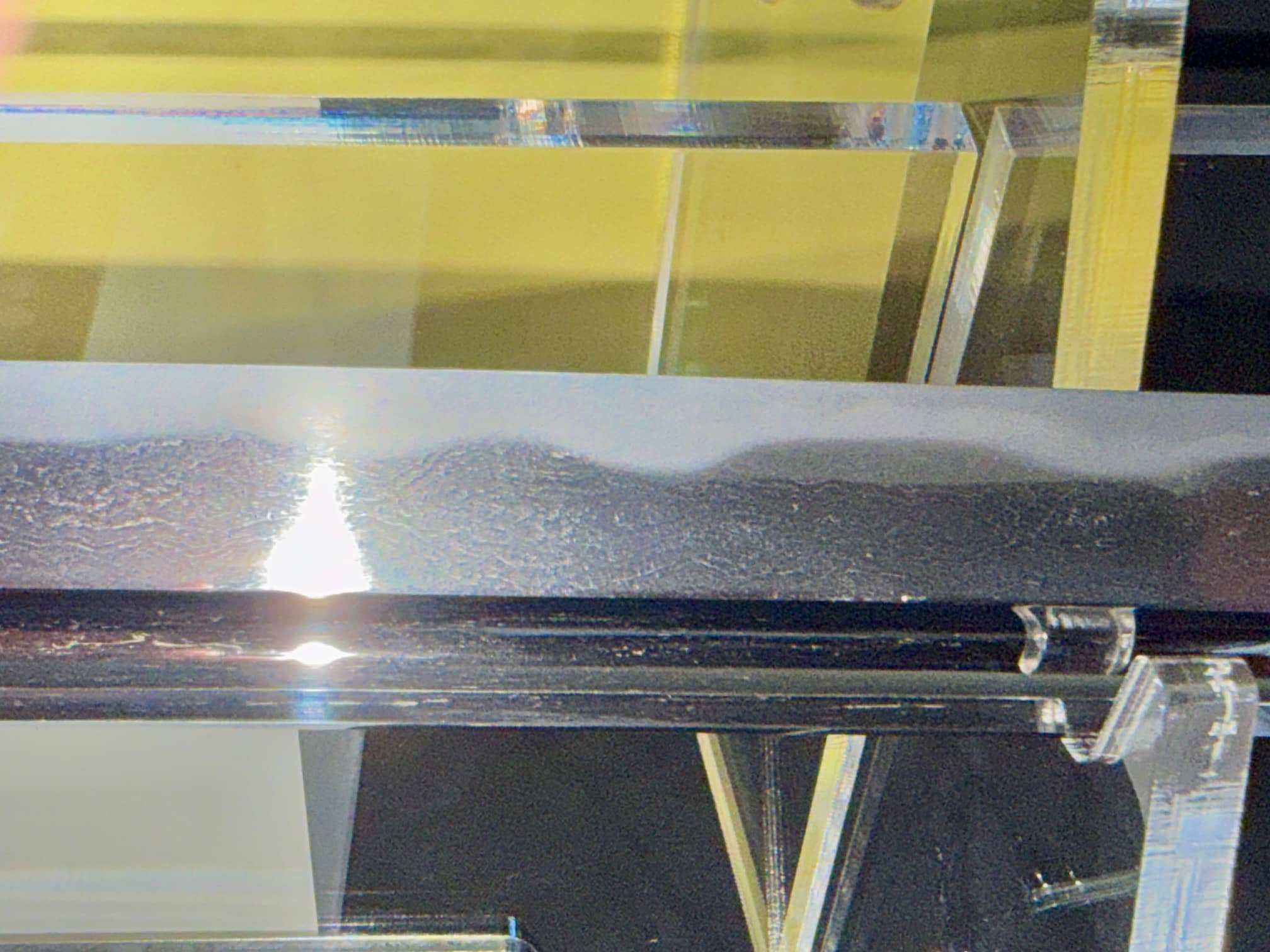
The hamon is a sophisticated nie-based notare-chō, gently undulating along the edge with a bright and consistent nioiguchi. Within this structure, a connected gunome pattern emerges, adding rhythm and complexity.
The internal activity is exceptionally rich, featuring ashi, sunagashi, kinsuji, yubashiri, and uchinoke, all working together to create a vivid and highly detailed temper line. The presence of these elements reflects both technical mastery and aesthetic intent, capturing the essence of Yamato discipline infused with early Mino expressiveness.
This interplay between control and freedom is one of the defining hallmarks of Yamato-Shizu workmanship.
The bōshi continues this complexity, forming a midare-komi structure with abundant hakikake, particularly prominent on the omote side, where it tends toward a slightly more intense expression (kaen-like tendency).
On the ura side, the bōshi takes on a jizō-style form, again with hakikake, providing a fascinating asymmetry that enhances the blade’s visual interest. This variation between the two sides is a subtle yet powerful indicator of high-level workmanship.
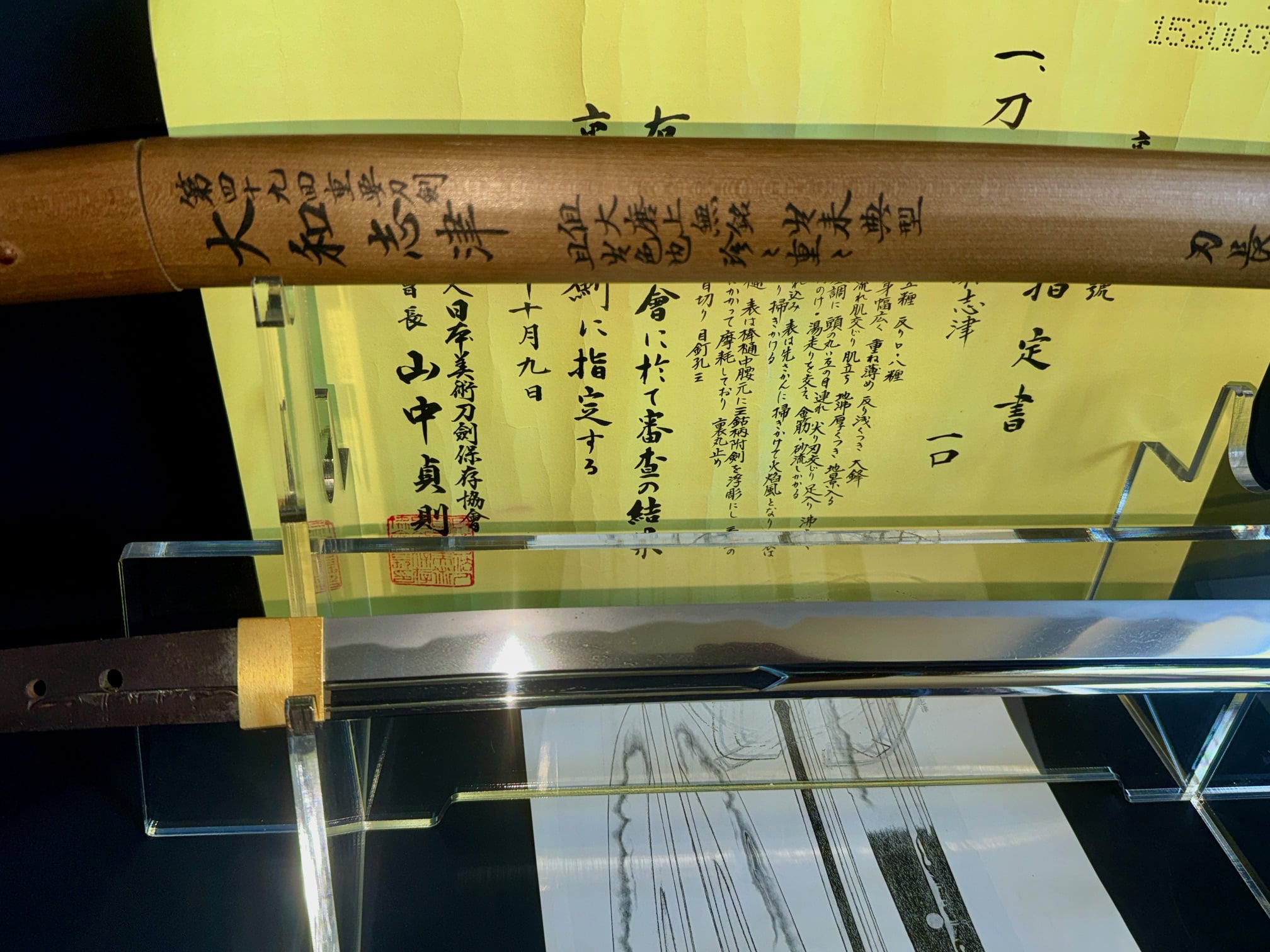
Both sides of the blade are engraved with bōhi, which not only reduce weight but also enhance the visual elegance of the blade’s lines.
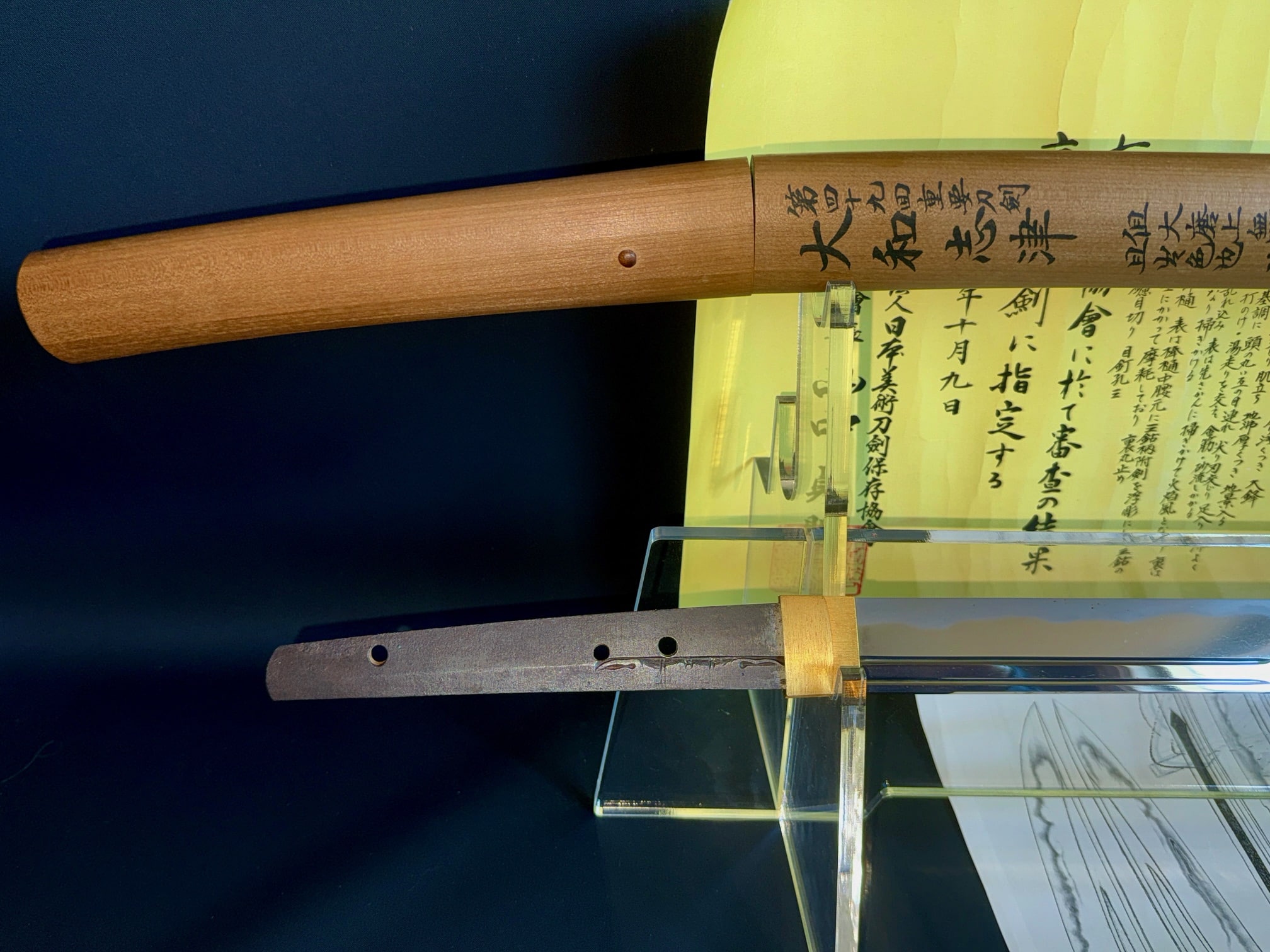
On the omote, a finely executed sankozuka-ken motif is carved near the base, extending into the nakago before gradually fading an elegant and symbolic addition often associated with Buddhist iconography and protective meaning.
On the ura, the groove terminates in a clean marudome, providing a balanced and refined conclusion. These carvings are executed with restraint and harmony, perfectly complementing the overall shape of the blade without overpowering it.
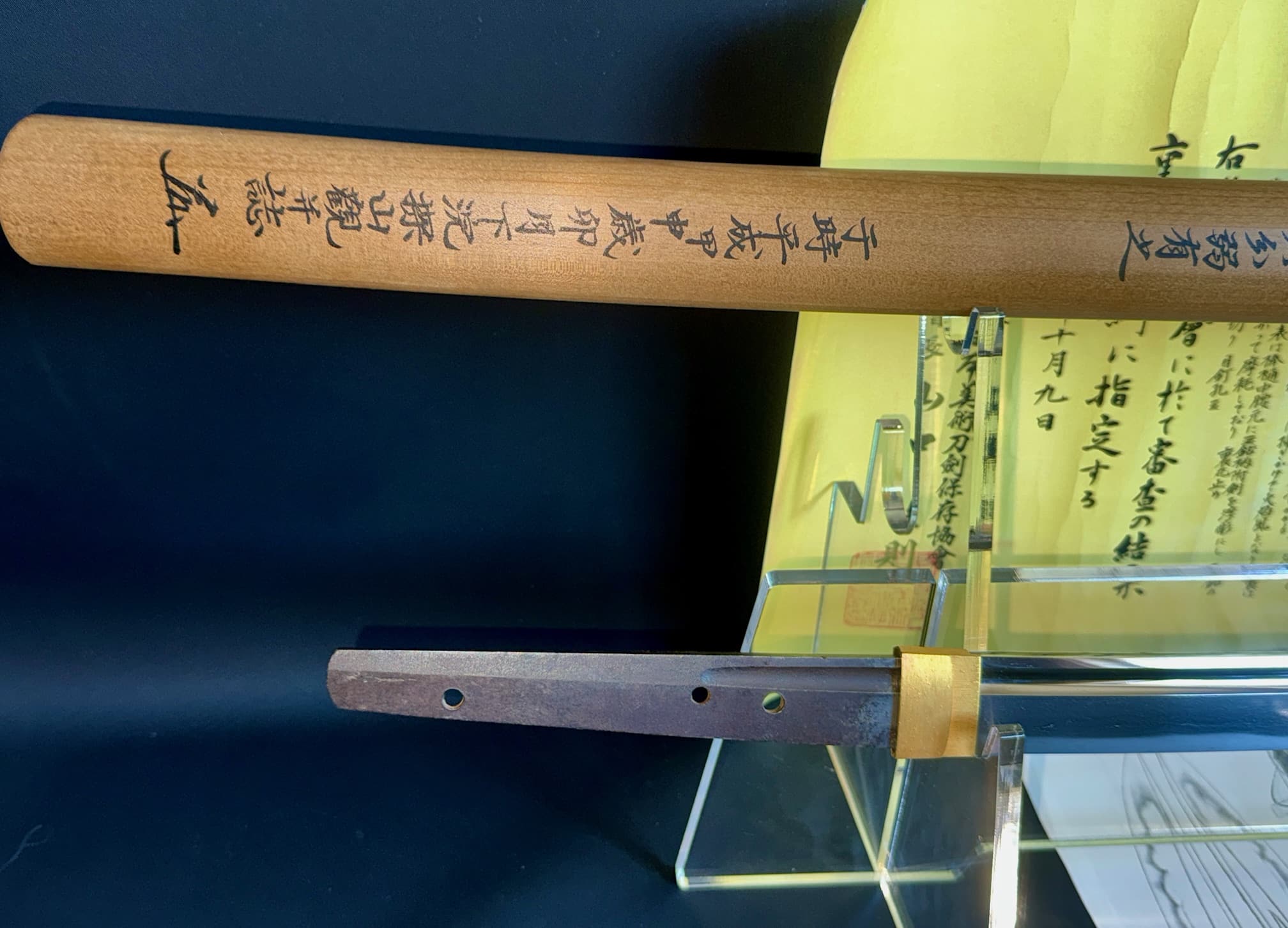
The nakago is ō-suriage, unsigned (mumei), and features three mekugi-ana, consistent with its long history of remounting and preservation.
Despite the shortening, the blade retains its essential characteristics, allowing for confident attribution. The workmanship clearly reflects the fusion of Yamato structure and Mino dynamism, supporting its classification as Yamato-Shizu in the broader historical sense.
This blade is more than a weapon it is a document of transformation within Japanese sword history.
It captures a pivotal moment when one of the most important traditions Yamato began influencing and giving rise to what would become the dominant Mino school. Such works are highly valued not only for their beauty but for their historical importance in understanding the evolution of Japanese swordsmanship and craftsmanship.
The Jūyō designation confirms its status as a blade of significant cultural and artistic importance, recognized at the highest levels of scholarship.
With its powerful Nanbokuchō sugata, vibrant and expressive jihada, richly detailed hamon, and elegant horimono, this katana stands as a superb and classical example of Yamato-Shizu workmanship.
It is a blade that perfectly balances strength and refinement, structure and movement, tradition and innovation.
For the advanced collector, this represents not only an acquisition of beauty, but an opportunity to own a museum-level piece of Japanese history a sword that embodies the very moment of transformation between two of the most influential schools in the tradition.
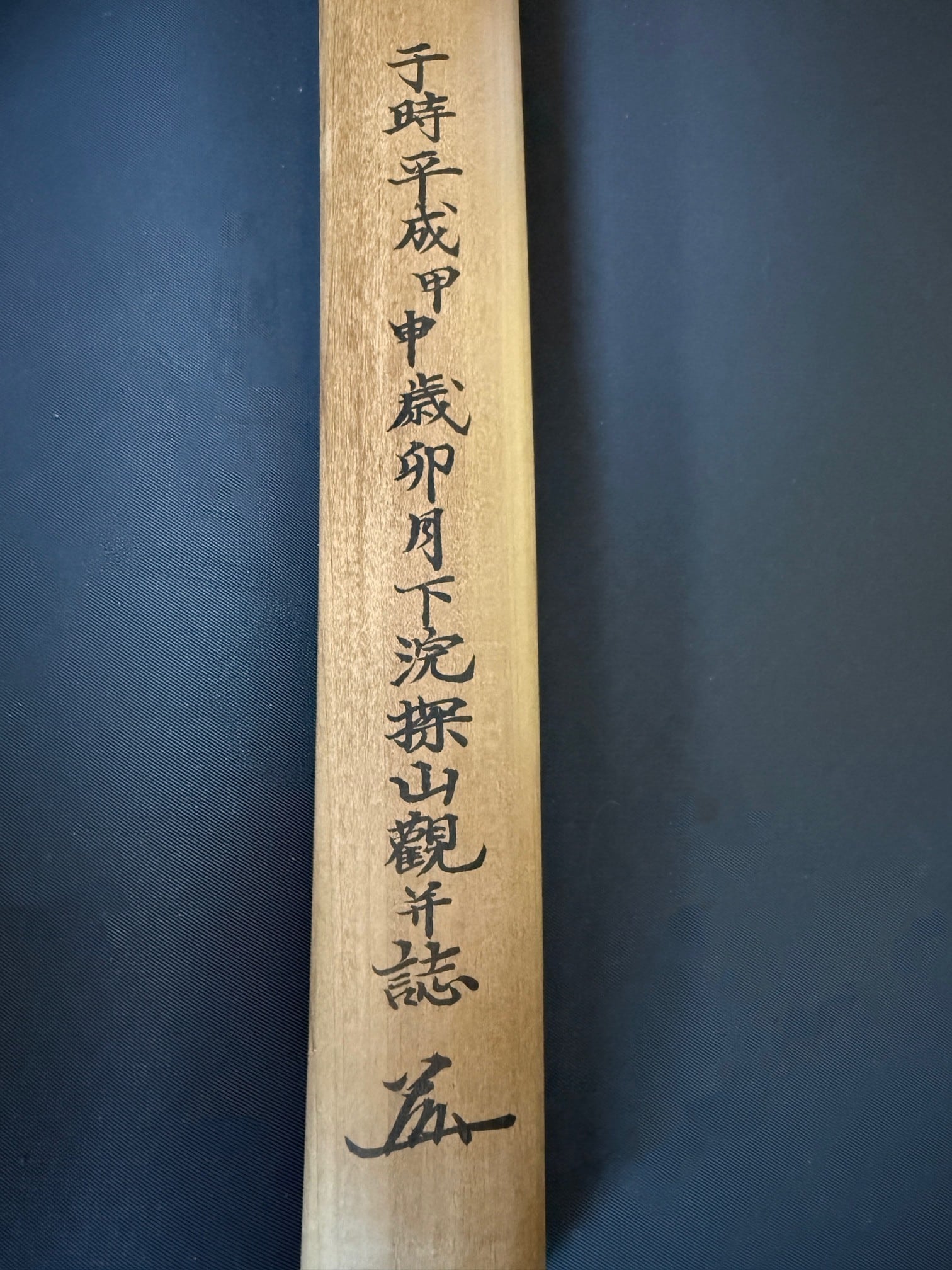
Translation from the Sayagaki by Sensei Tanobe.
Chin chin Cho cho
KvK: 51964147
C.W. Slok - Kyodai Originals
Bank: NL25 KNAB 0509 1310 18
BIC: KNABNL2H
© 2026 Kyodai Originals is made with ❤ by Nieuwblik.com


