
€ 5.250,00
1 in stock
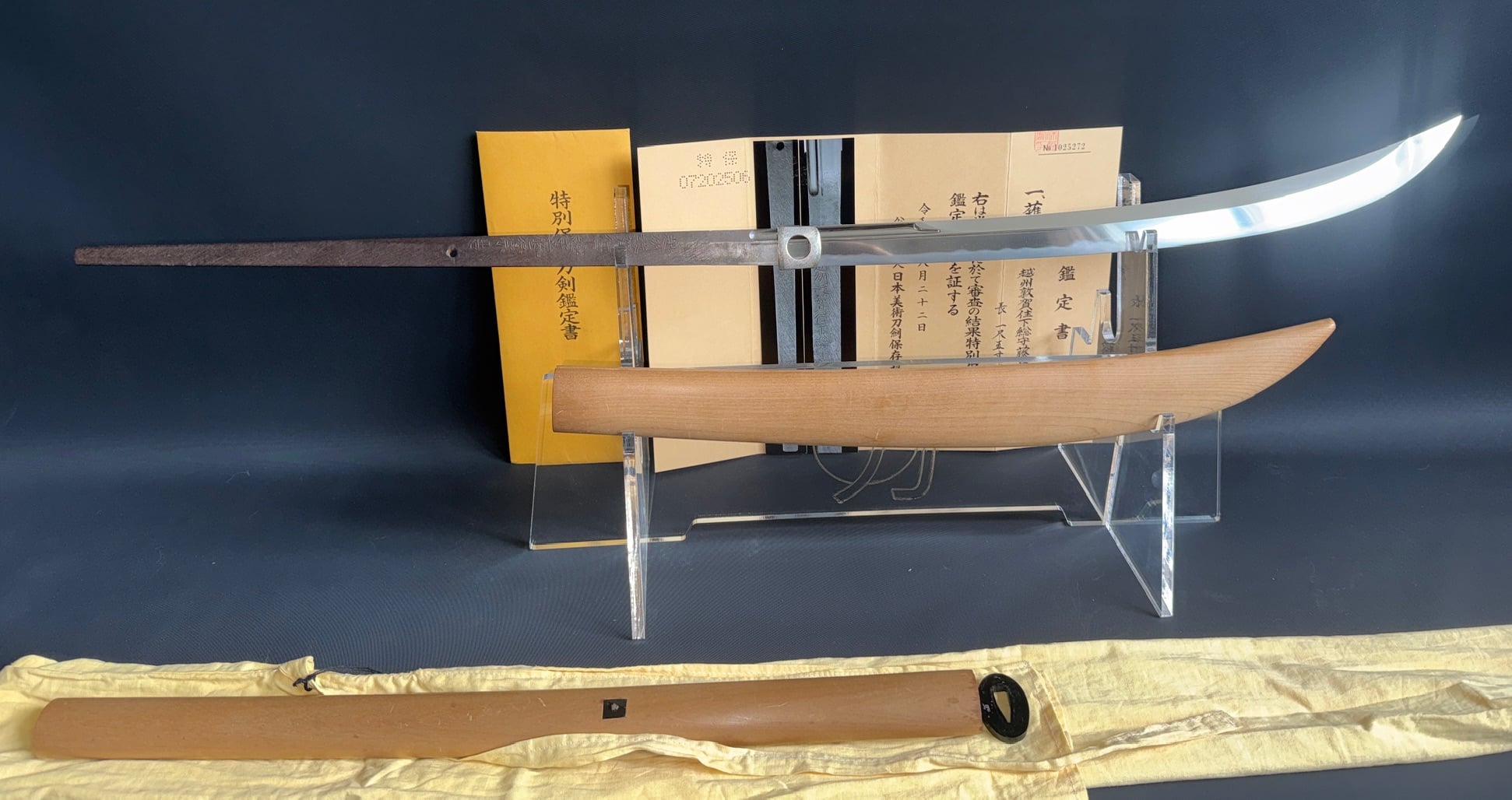
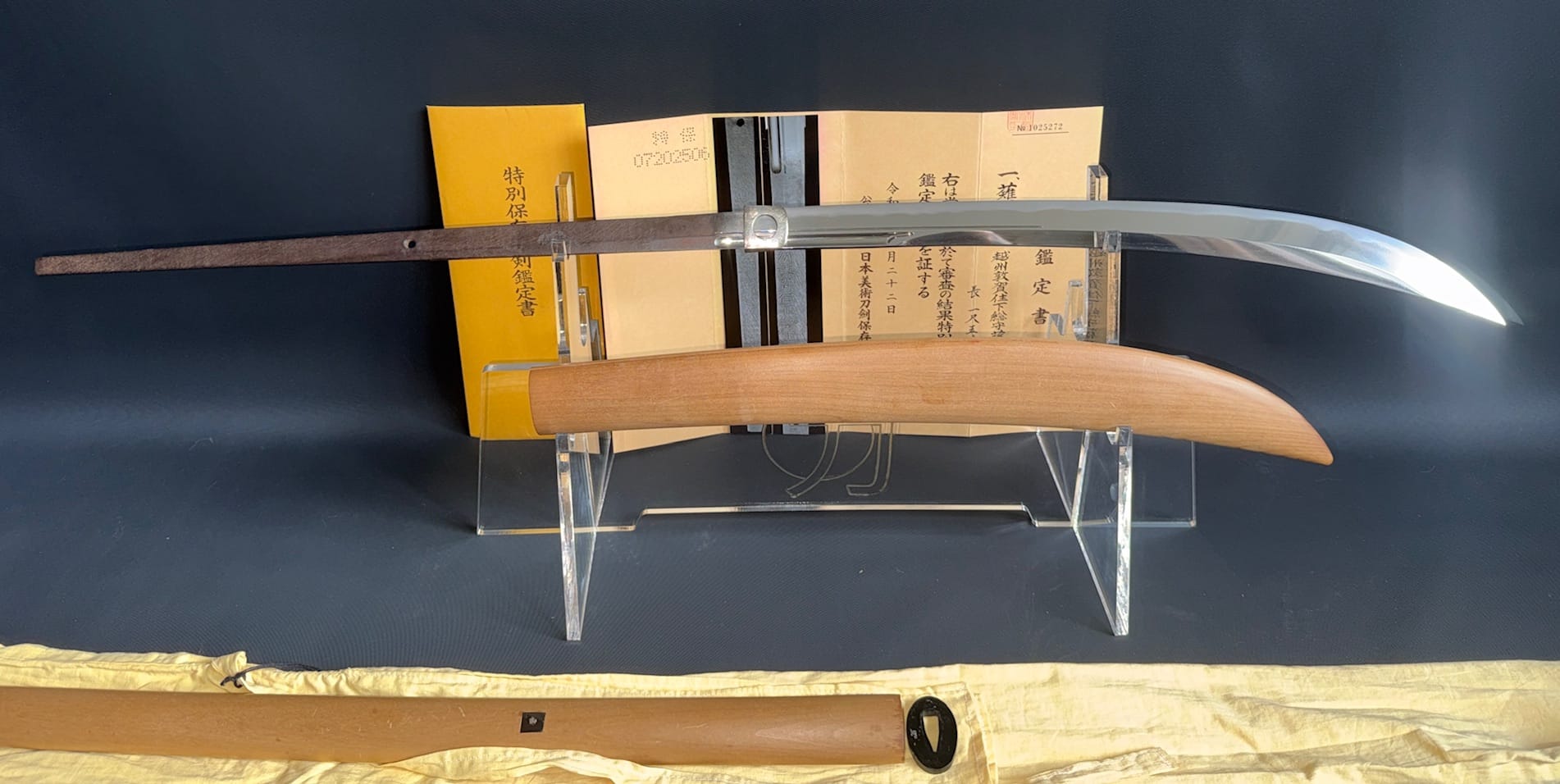
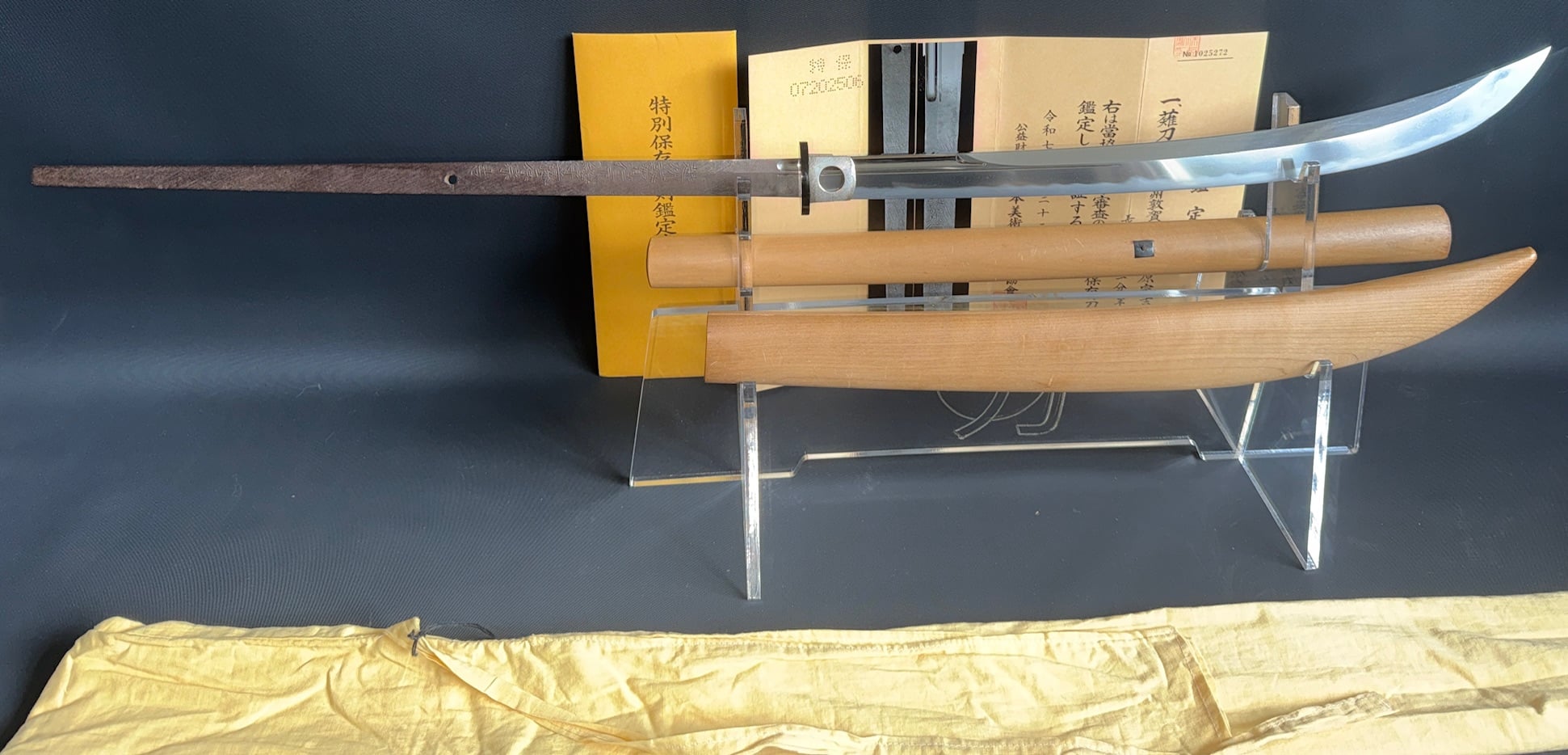
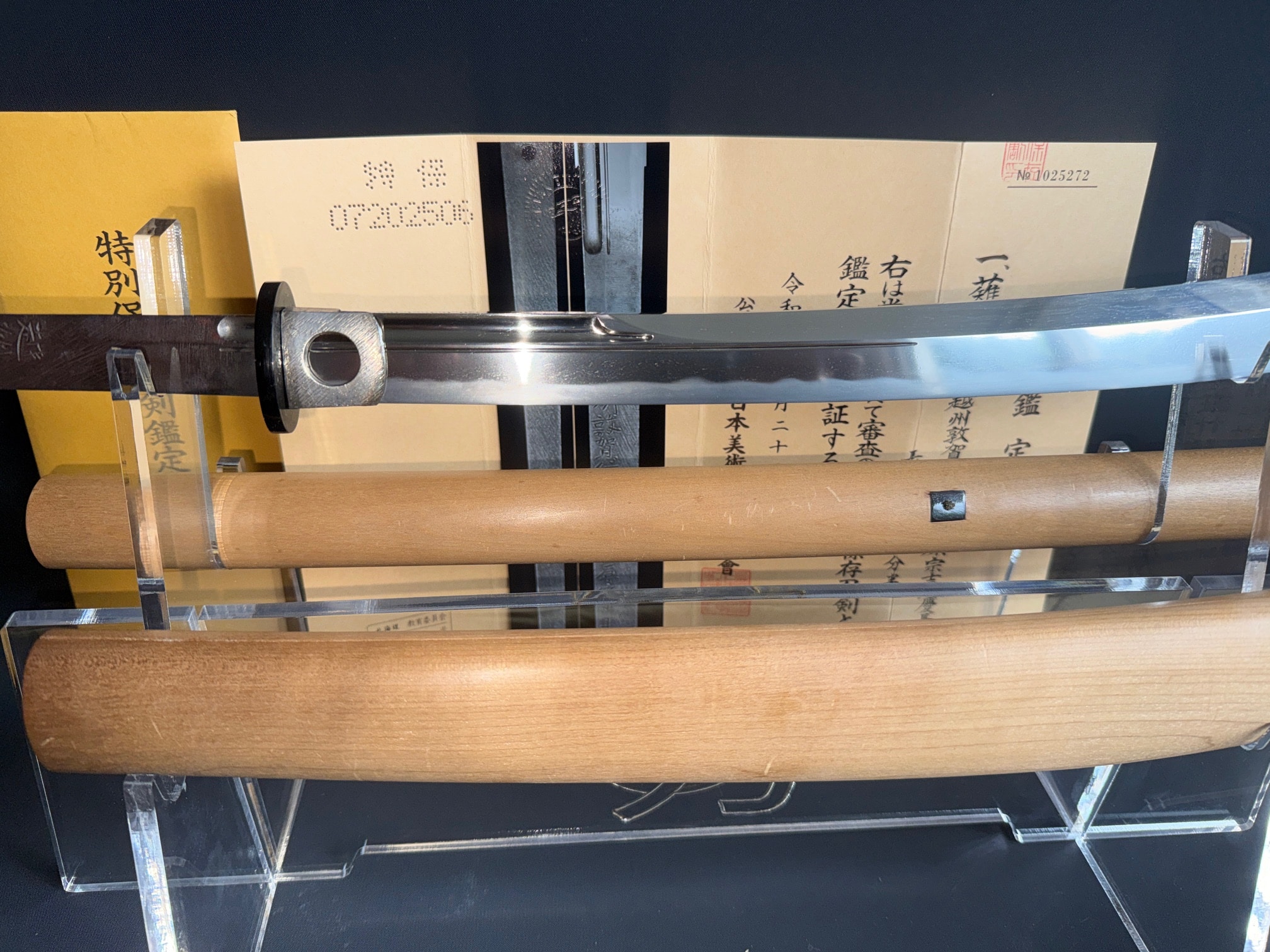
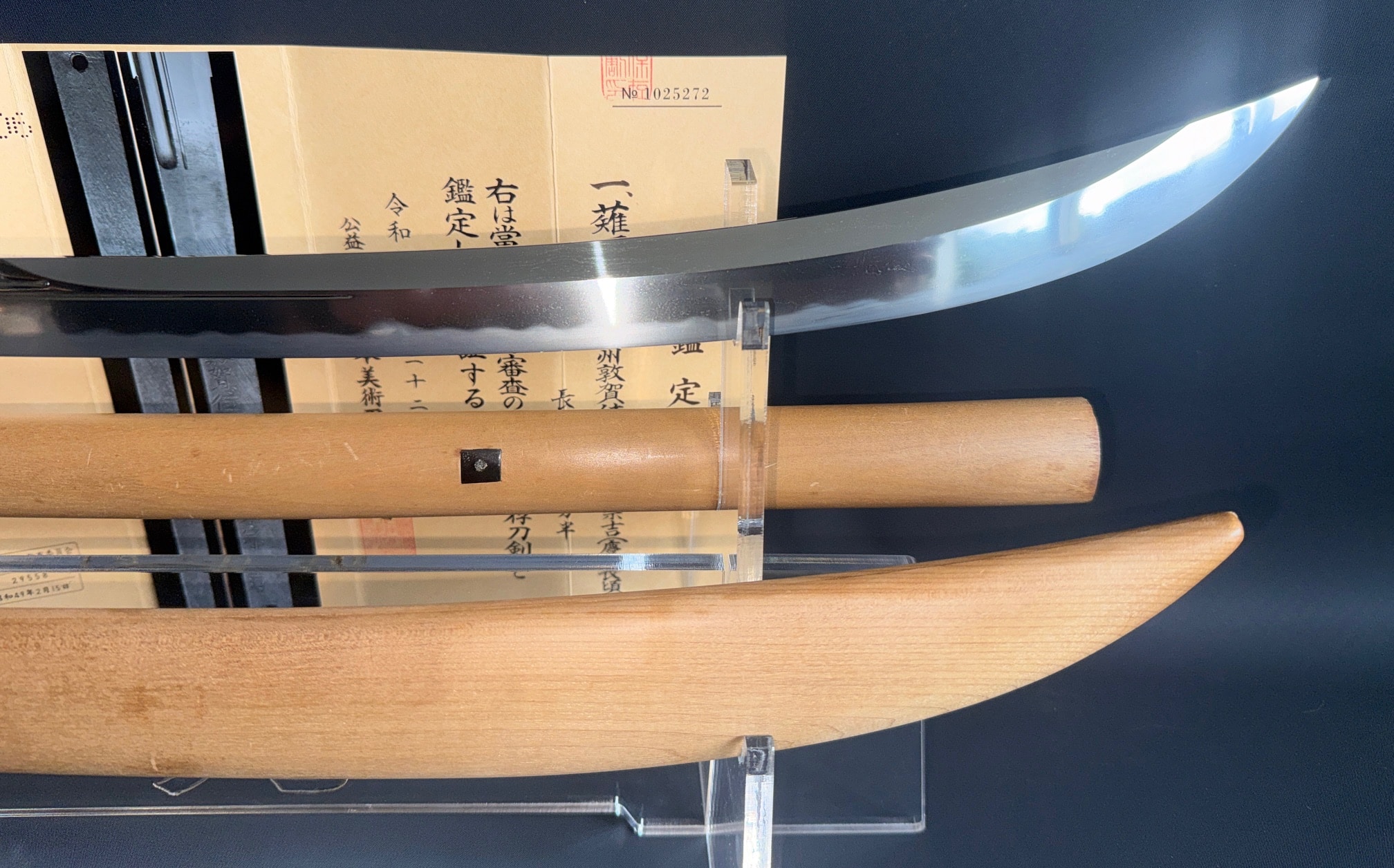
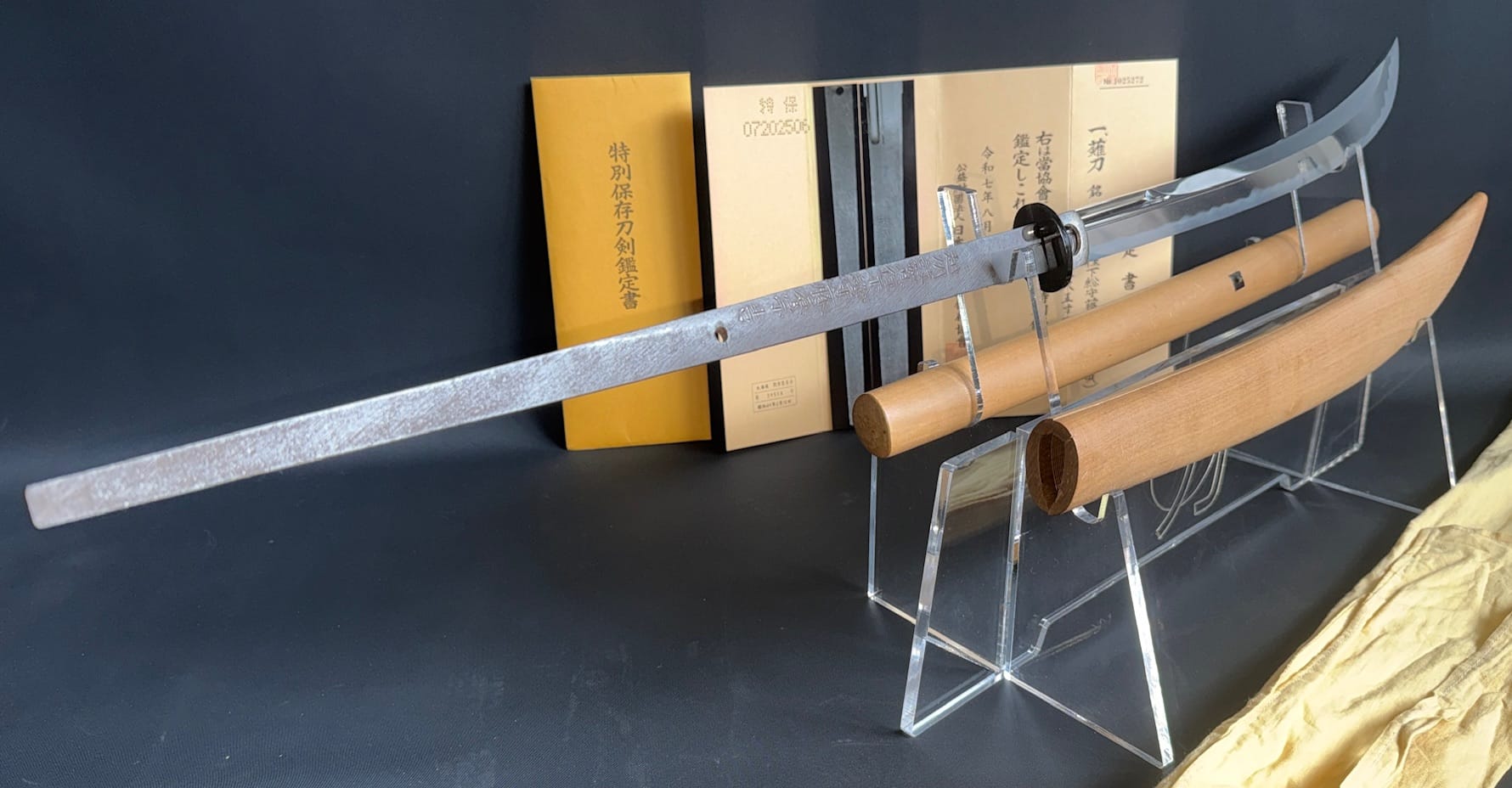
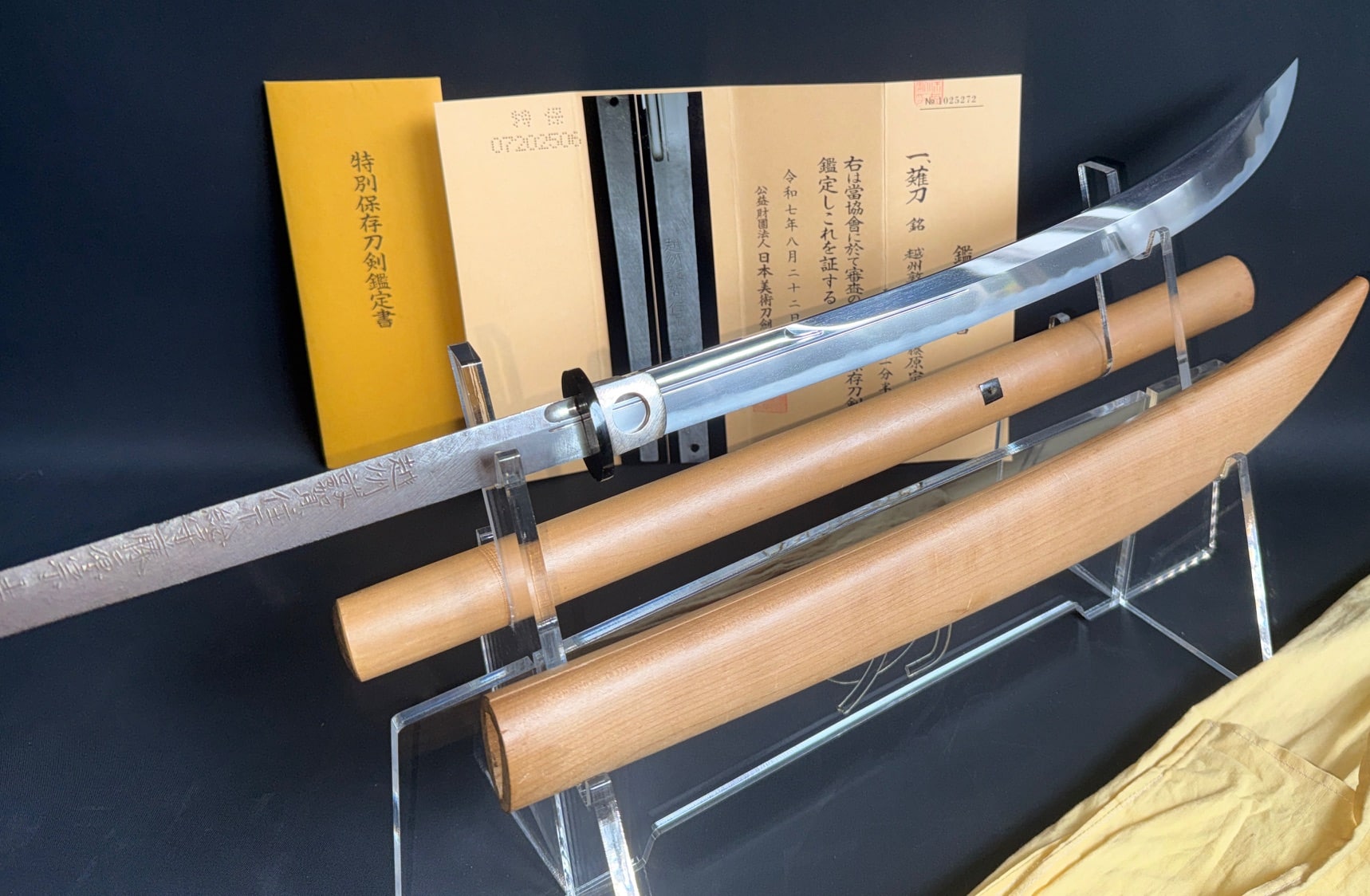
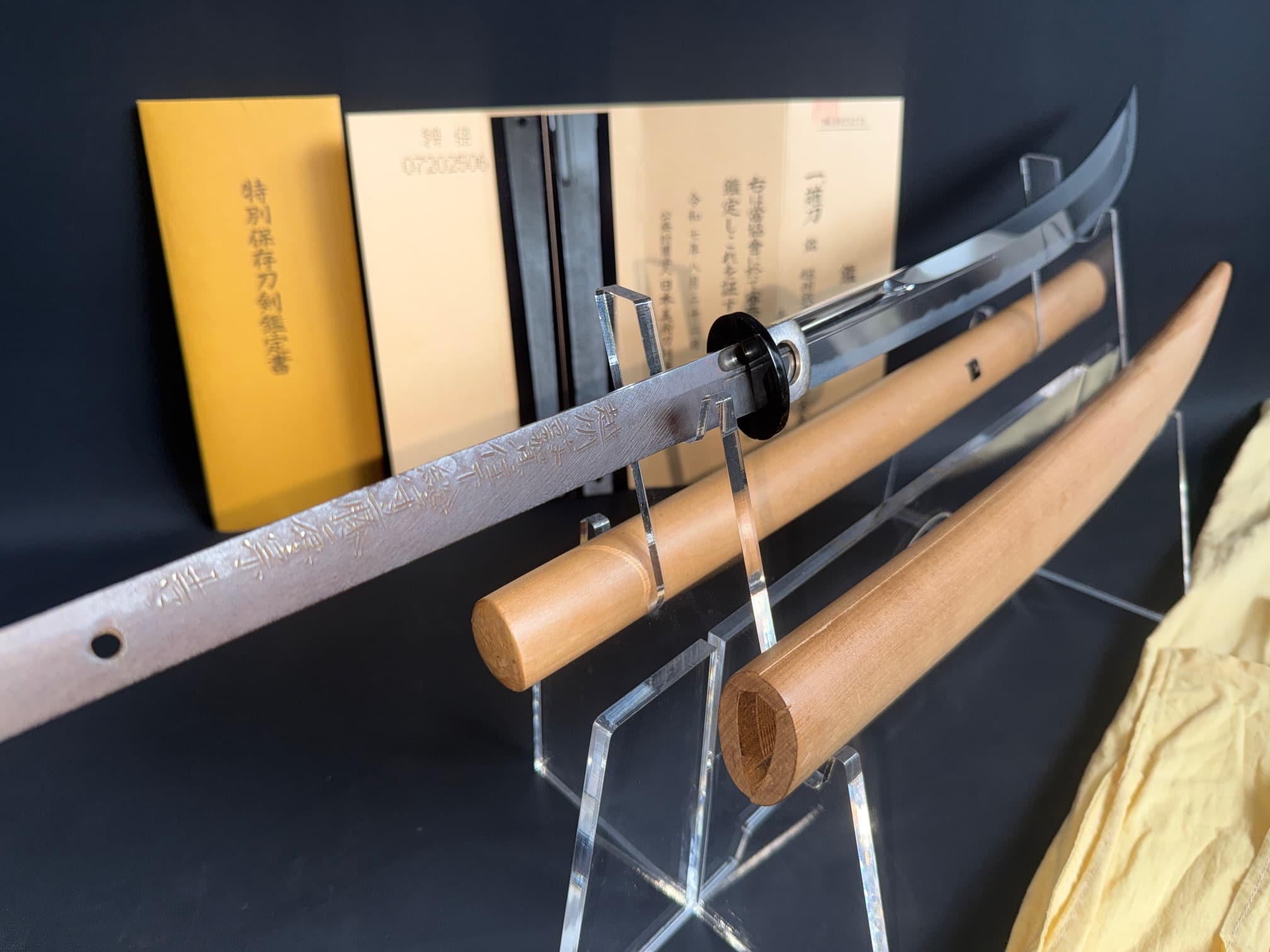
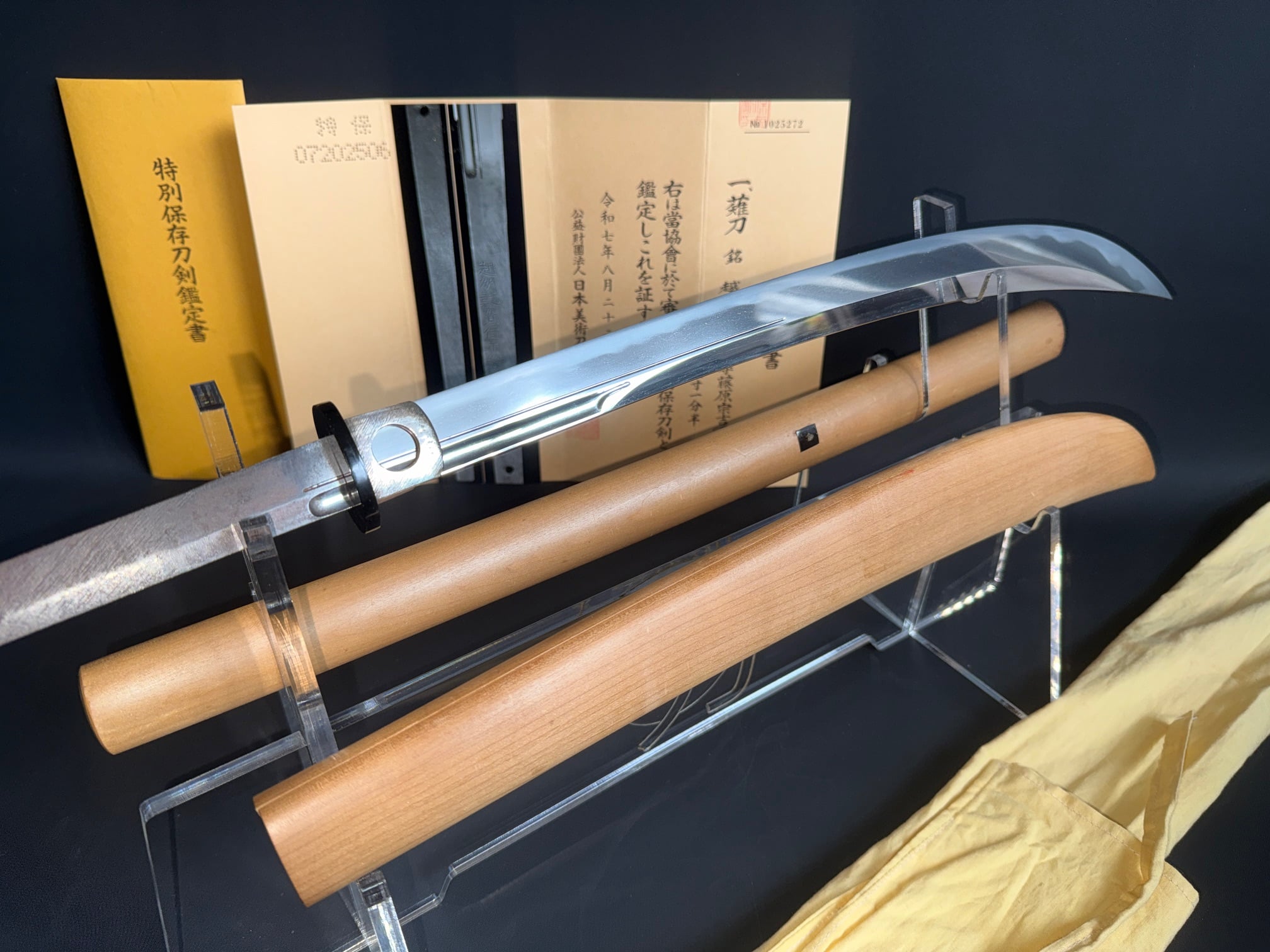
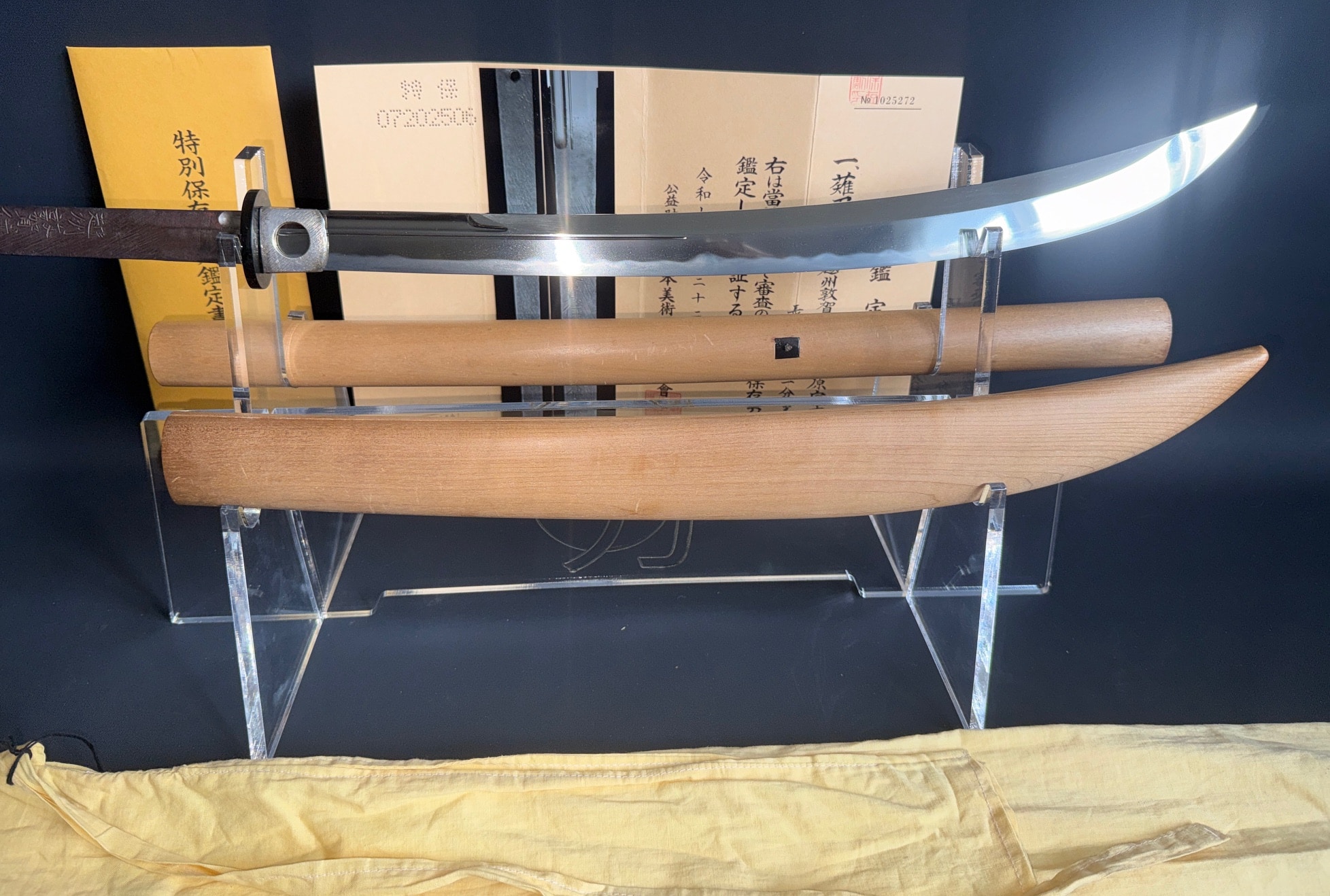
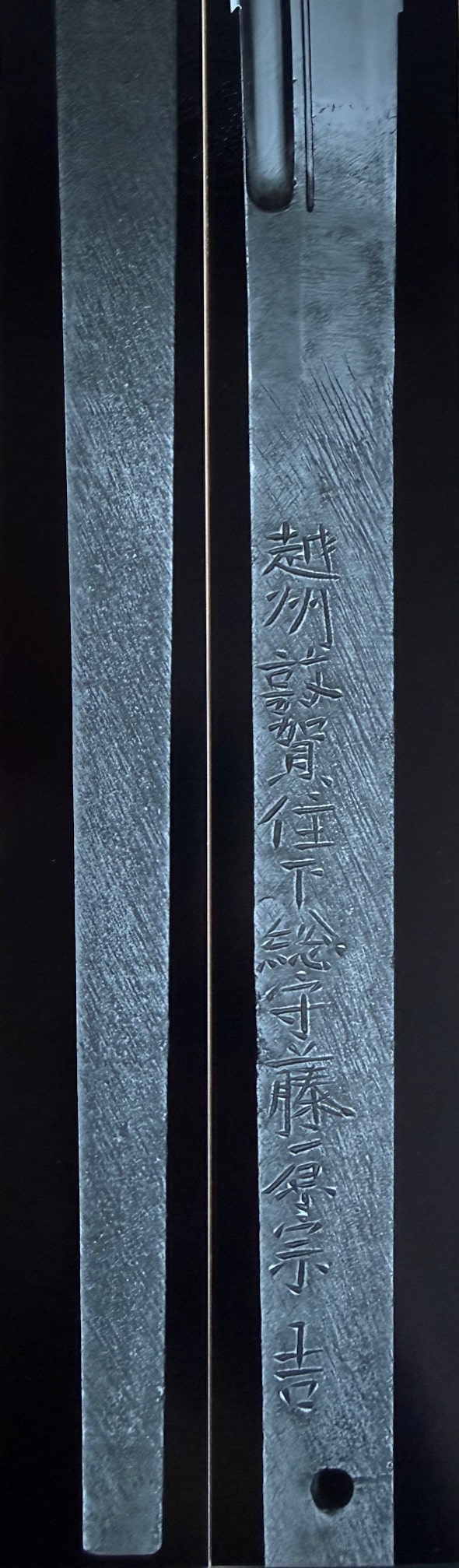
Offered here is an exceptionally important and historically evocative Japanese naginata attributed to:
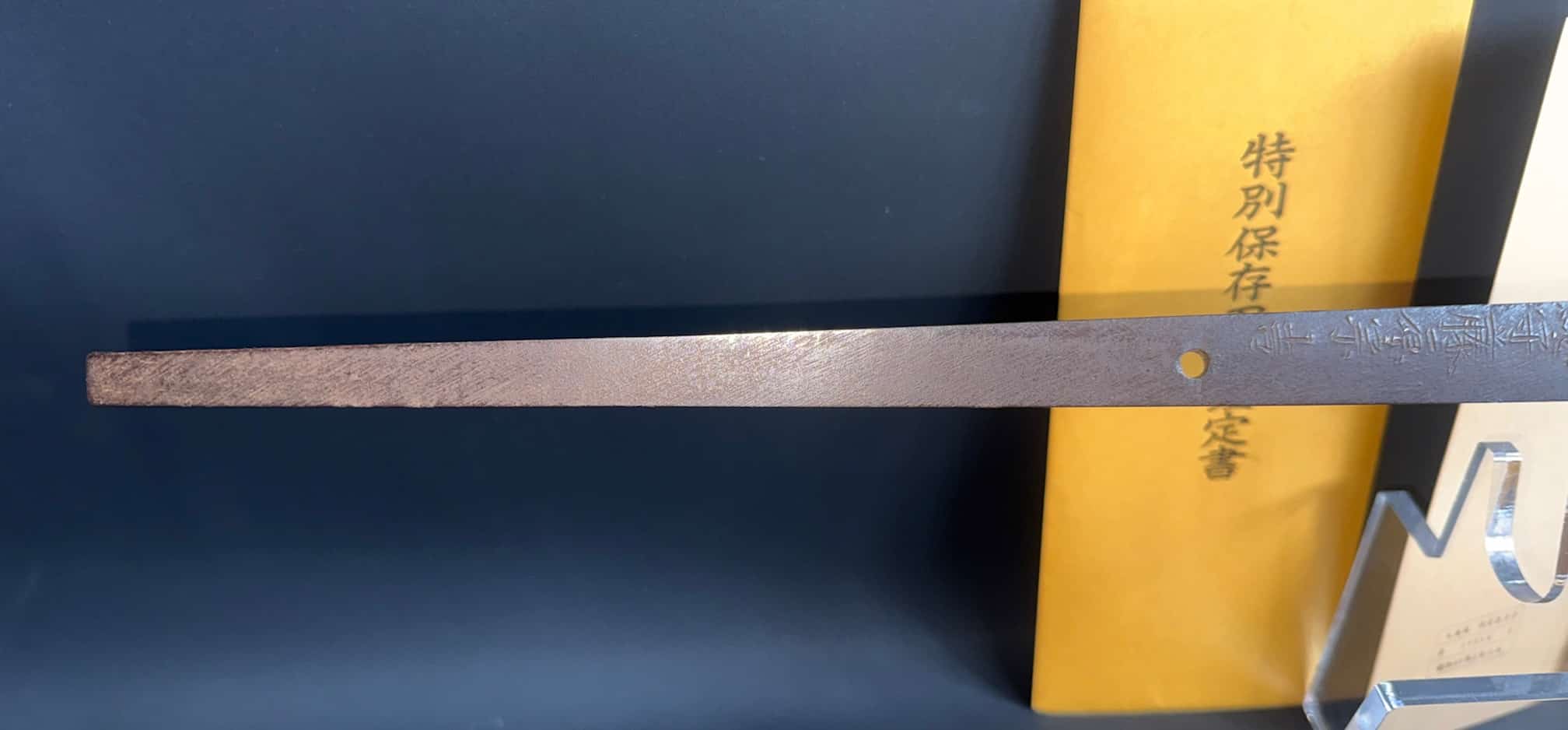
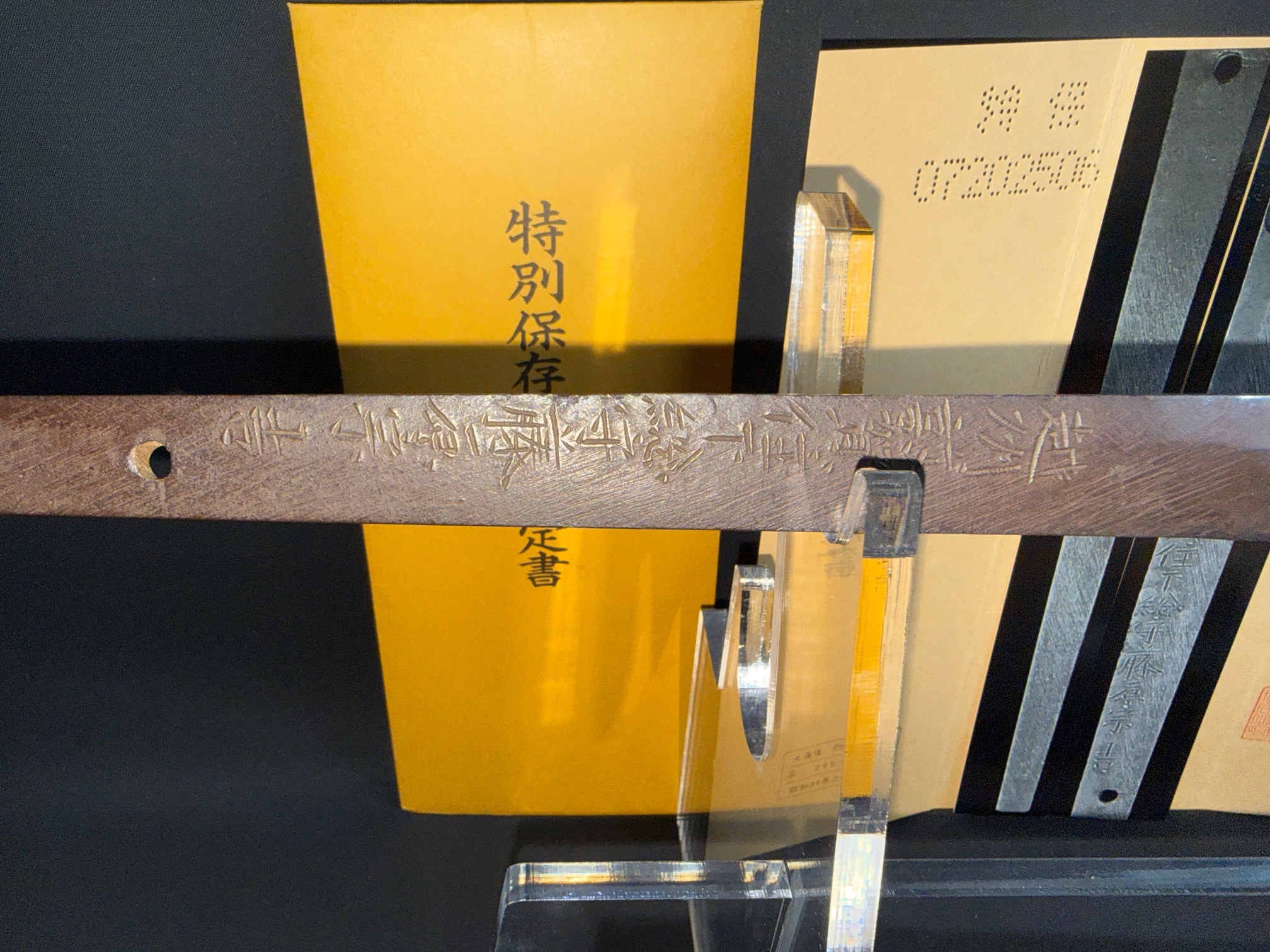
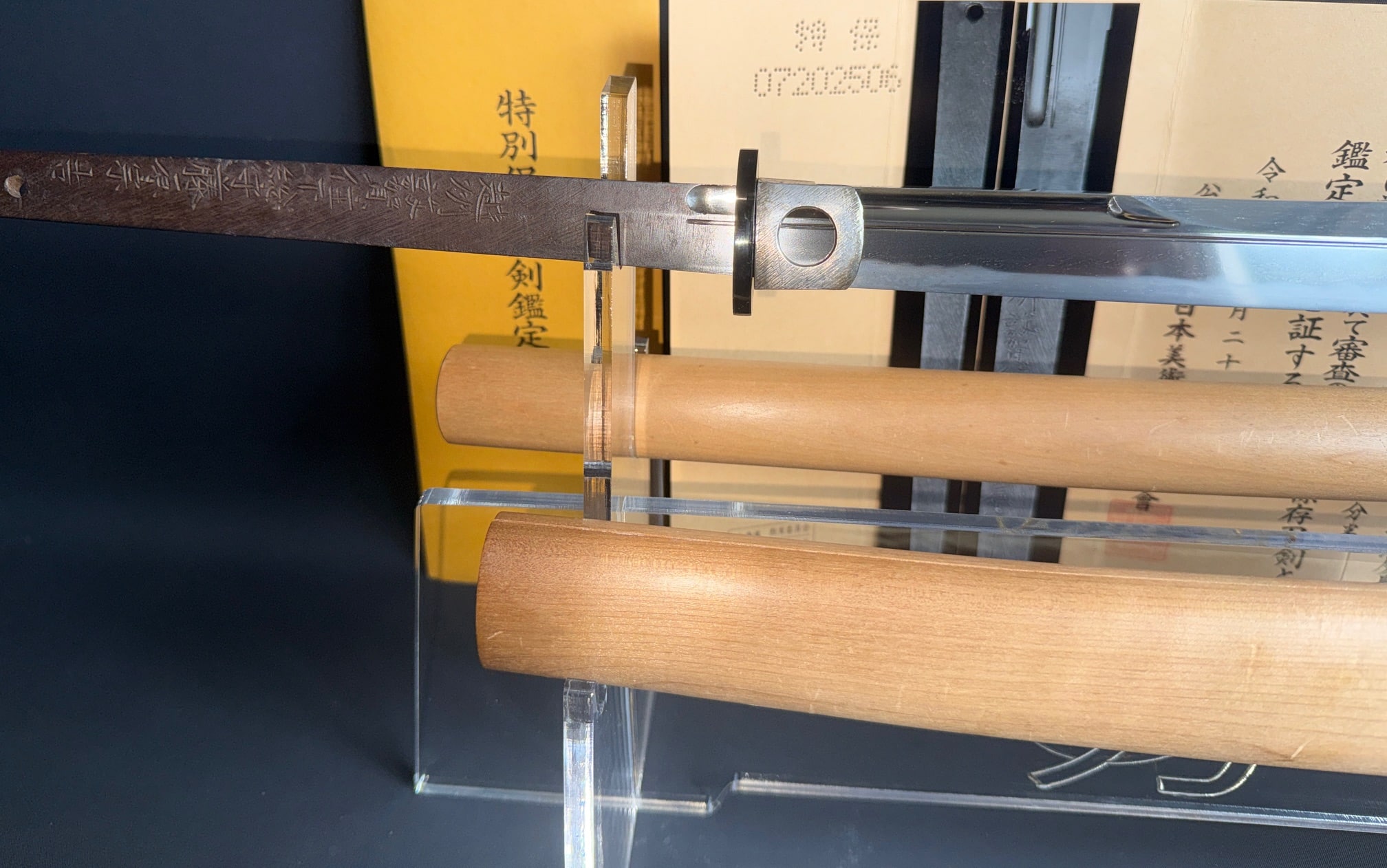
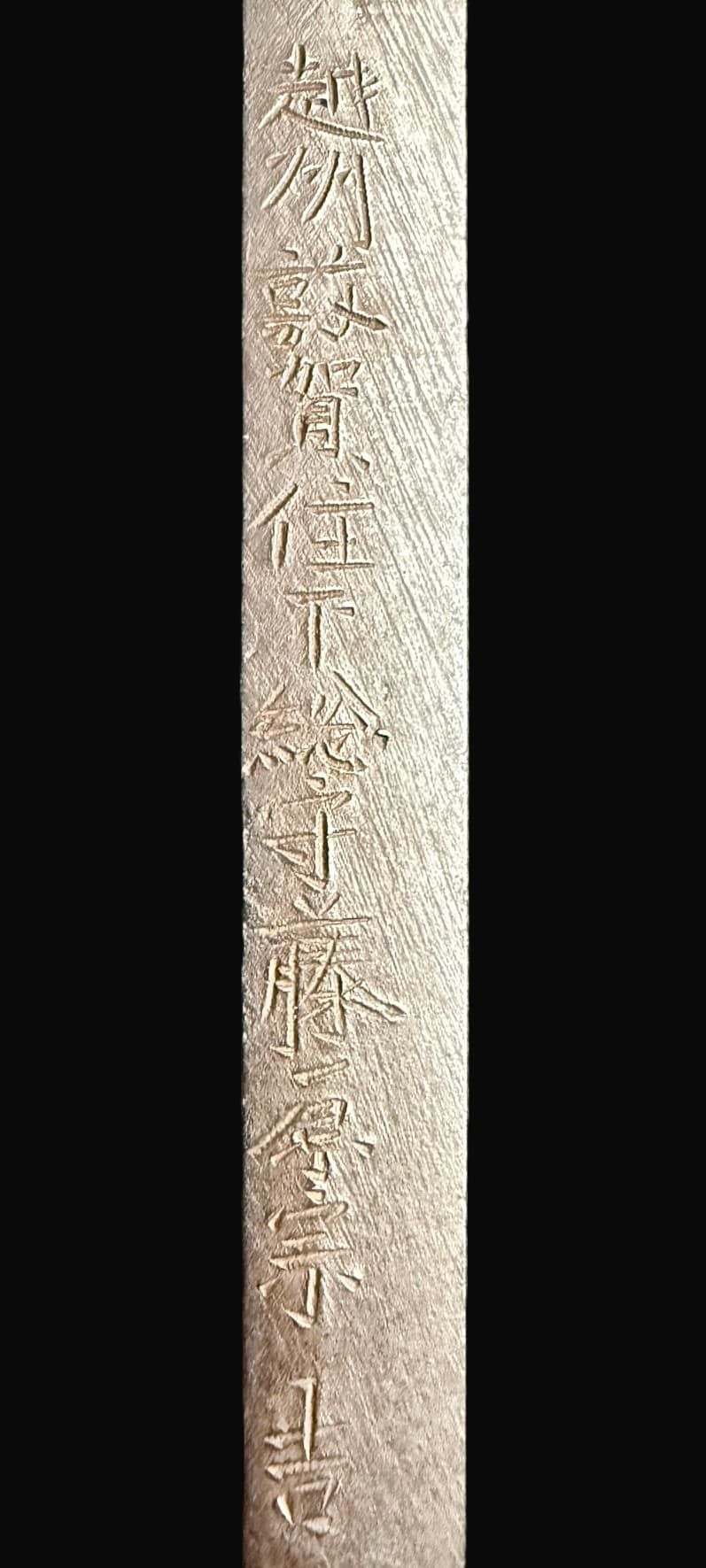
越州敦賀住下総守藤原宗吉
Esshū Tsuruga-jū Shimōsa-no-kami Fujiwara Muneyoshi
A smith active during the formative years of the Keichō era, this work represents the powerful emergence of the early Shintō tradition in Echizen Province during the transition from the violent Sengoku age into the stability of the early Tokugawa shogunate.
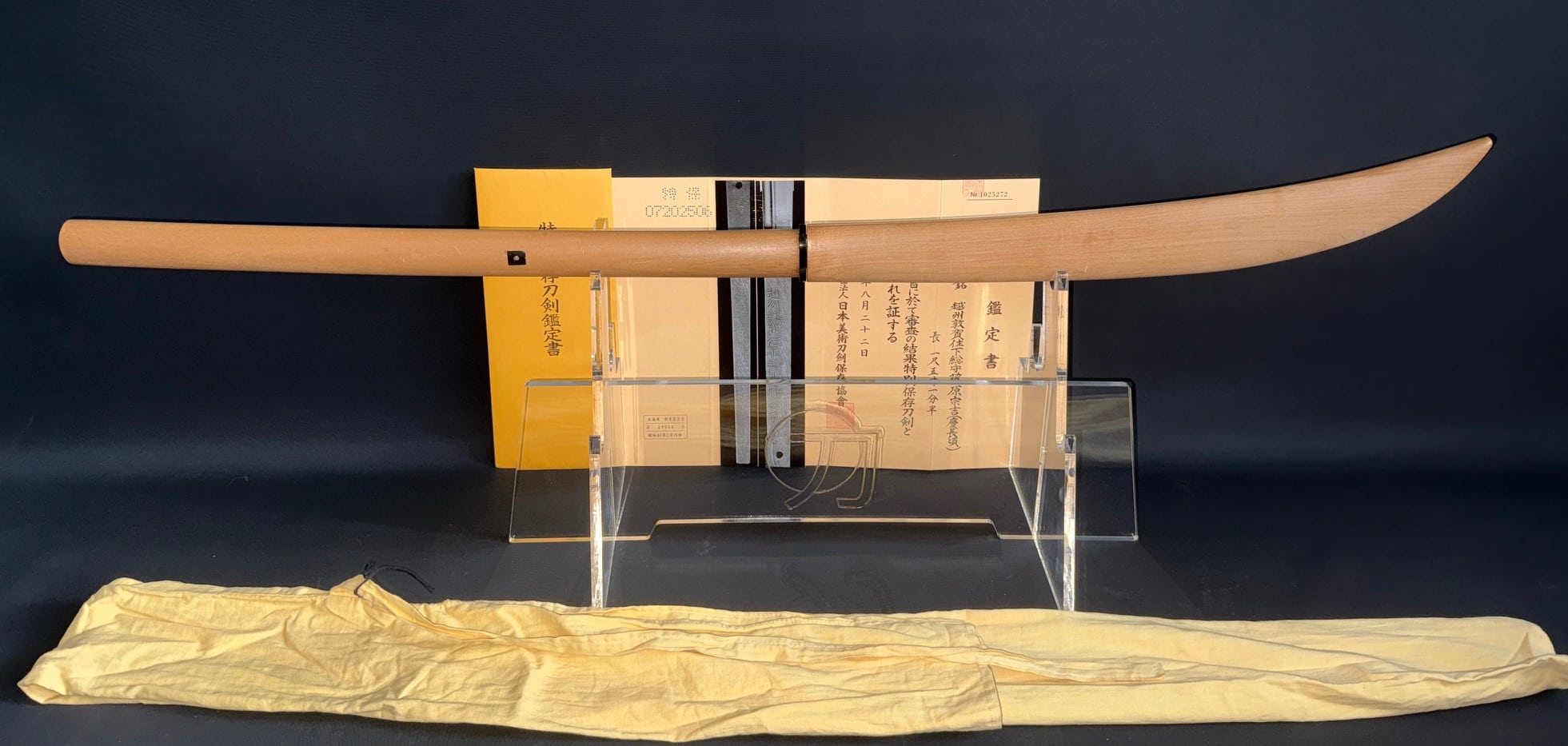
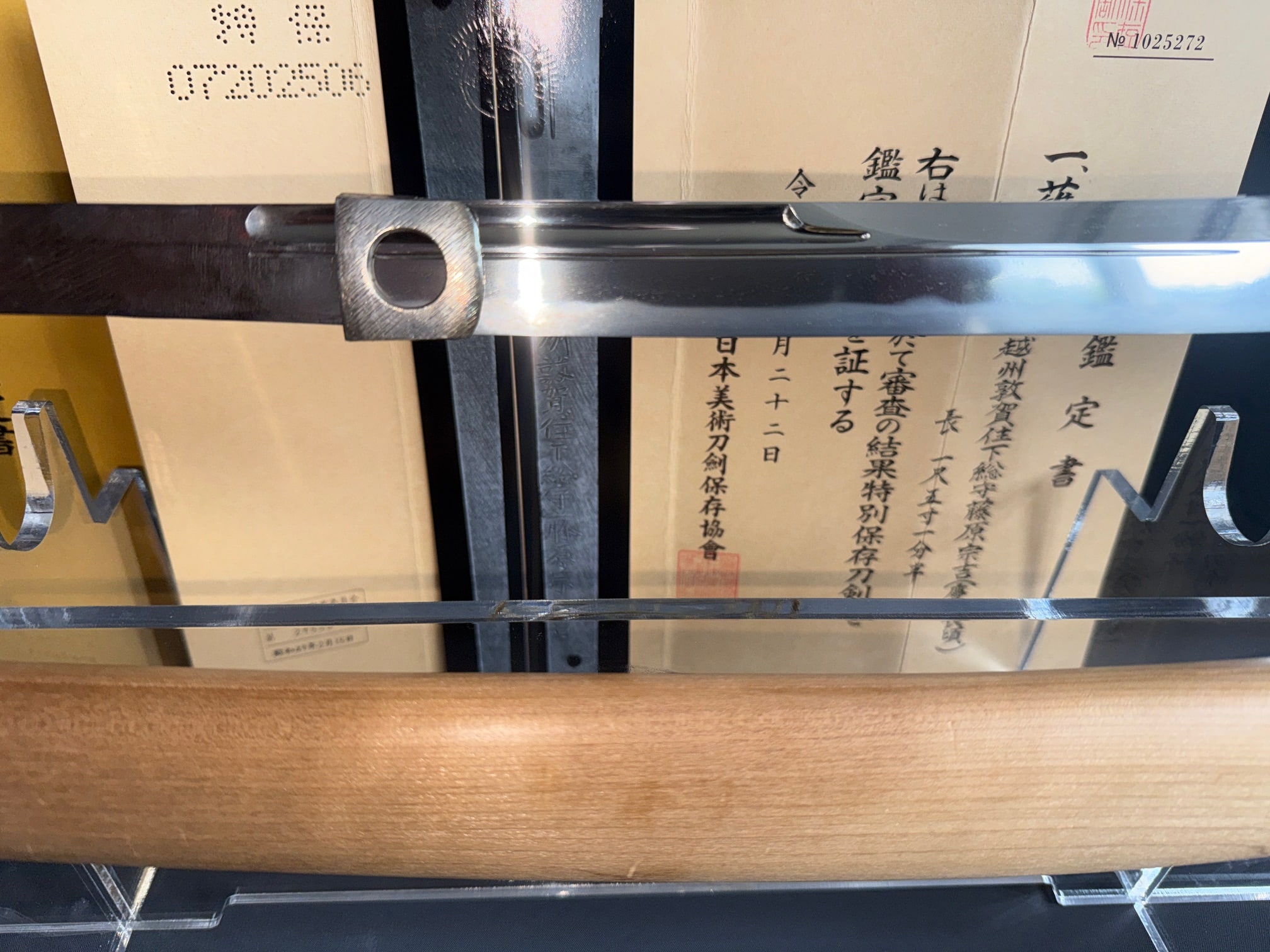
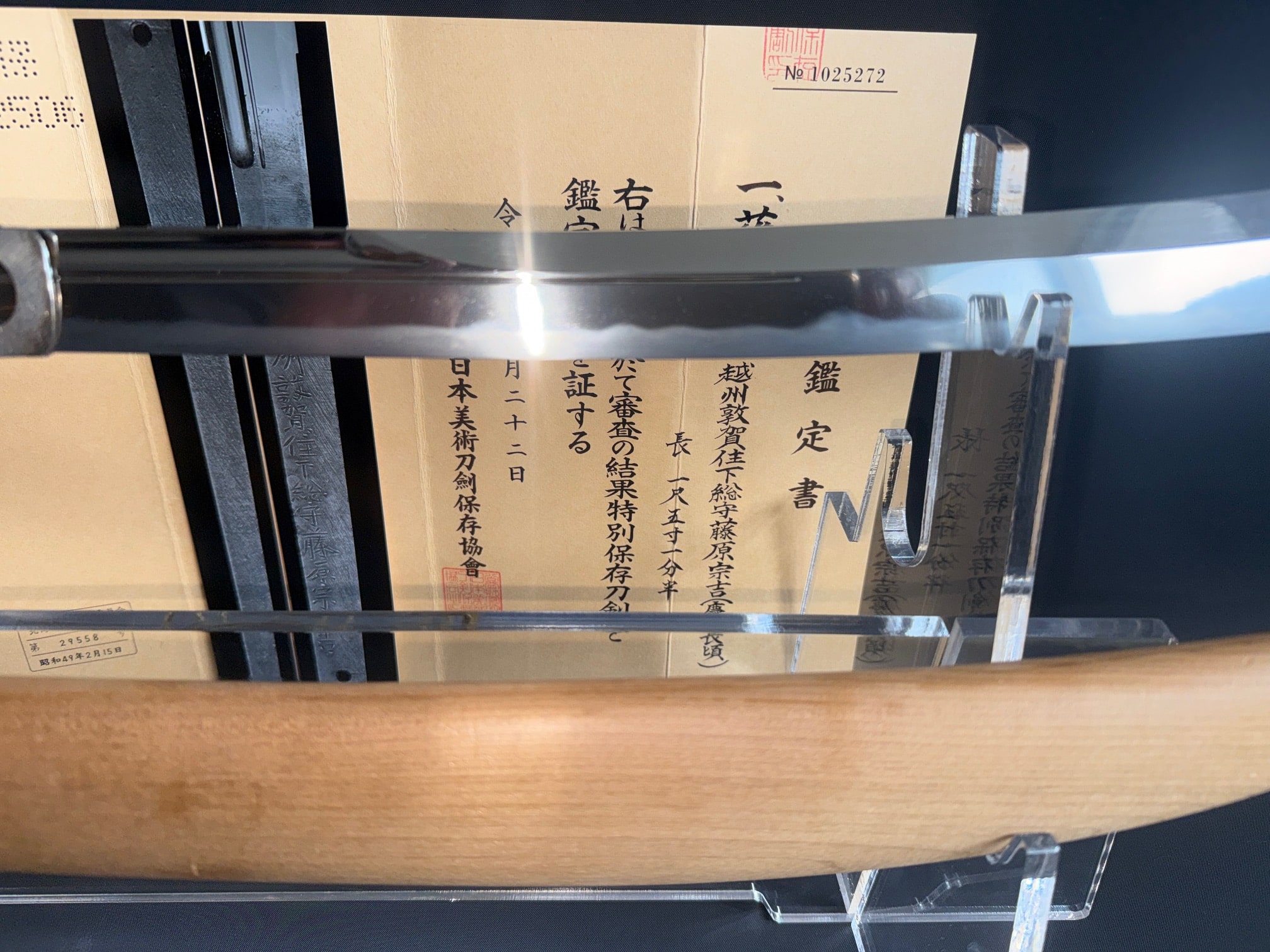
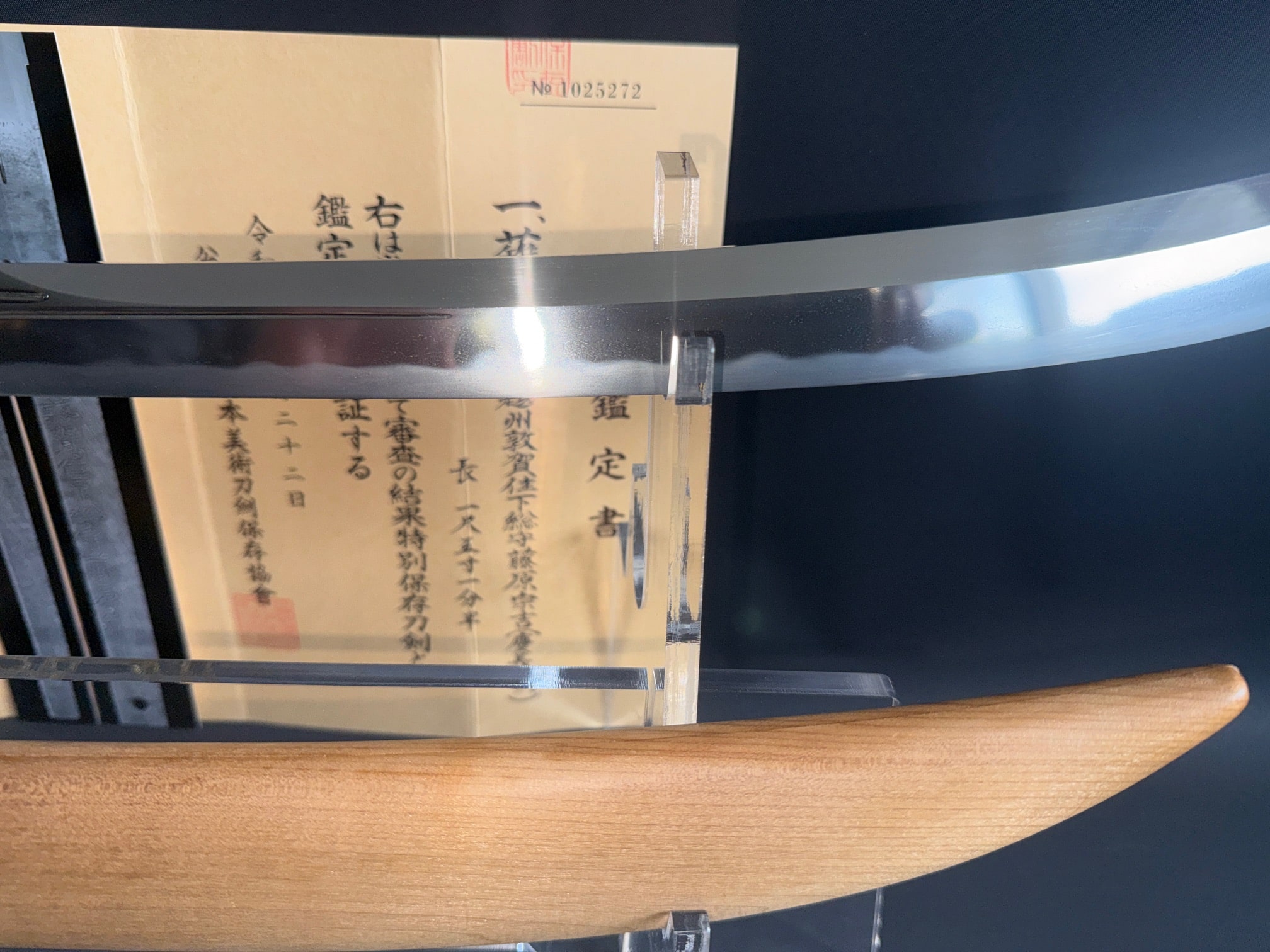
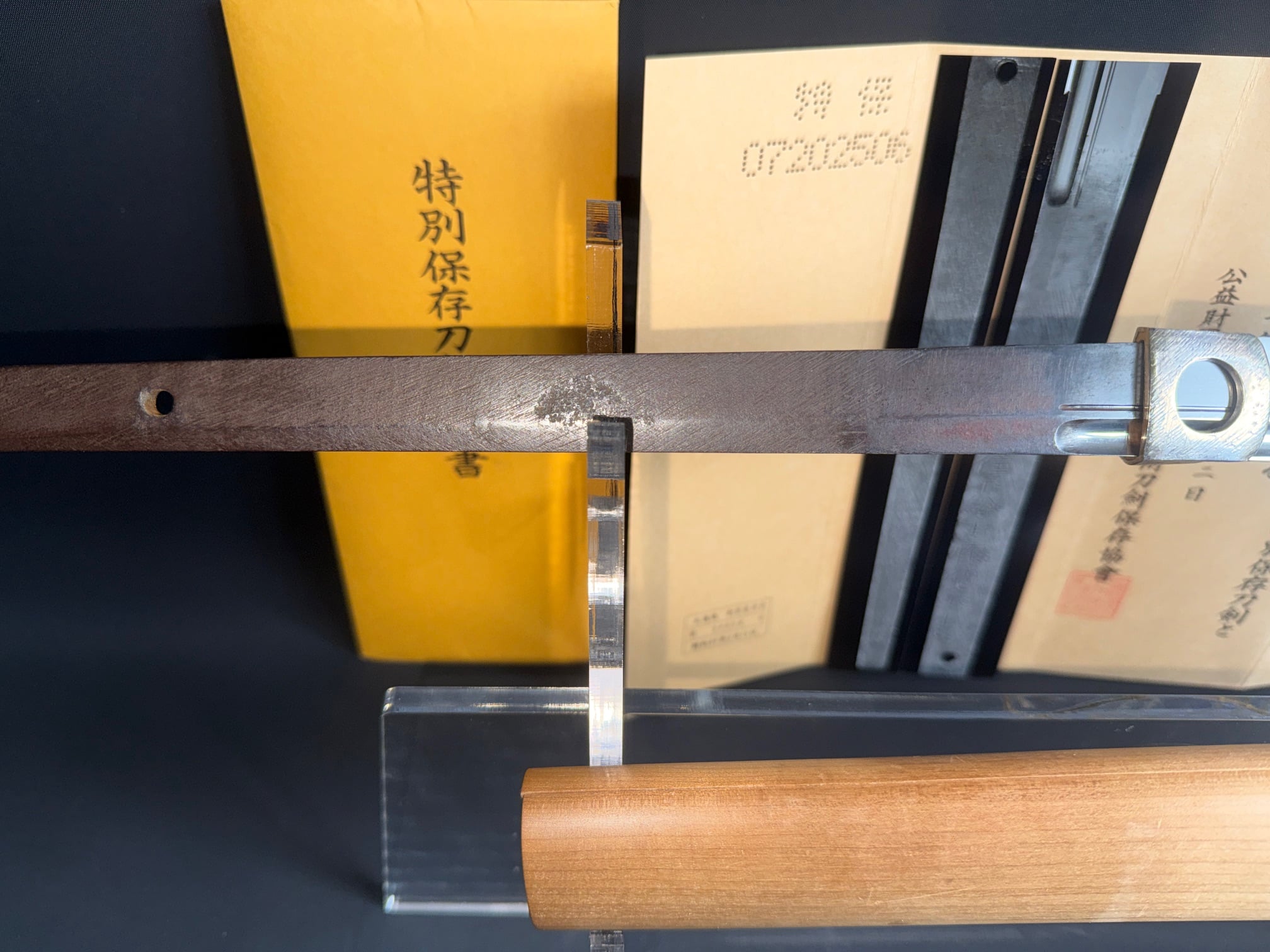
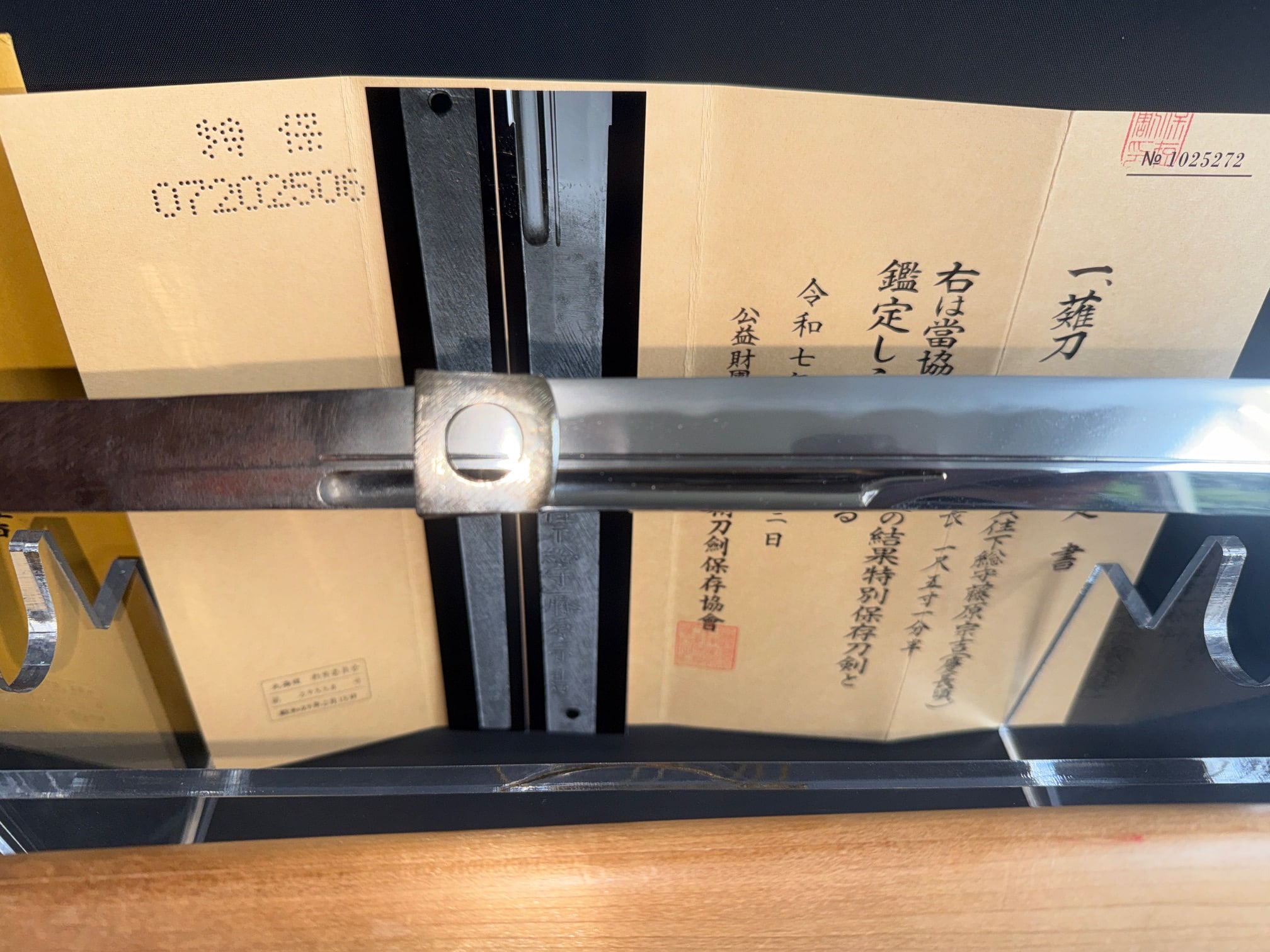
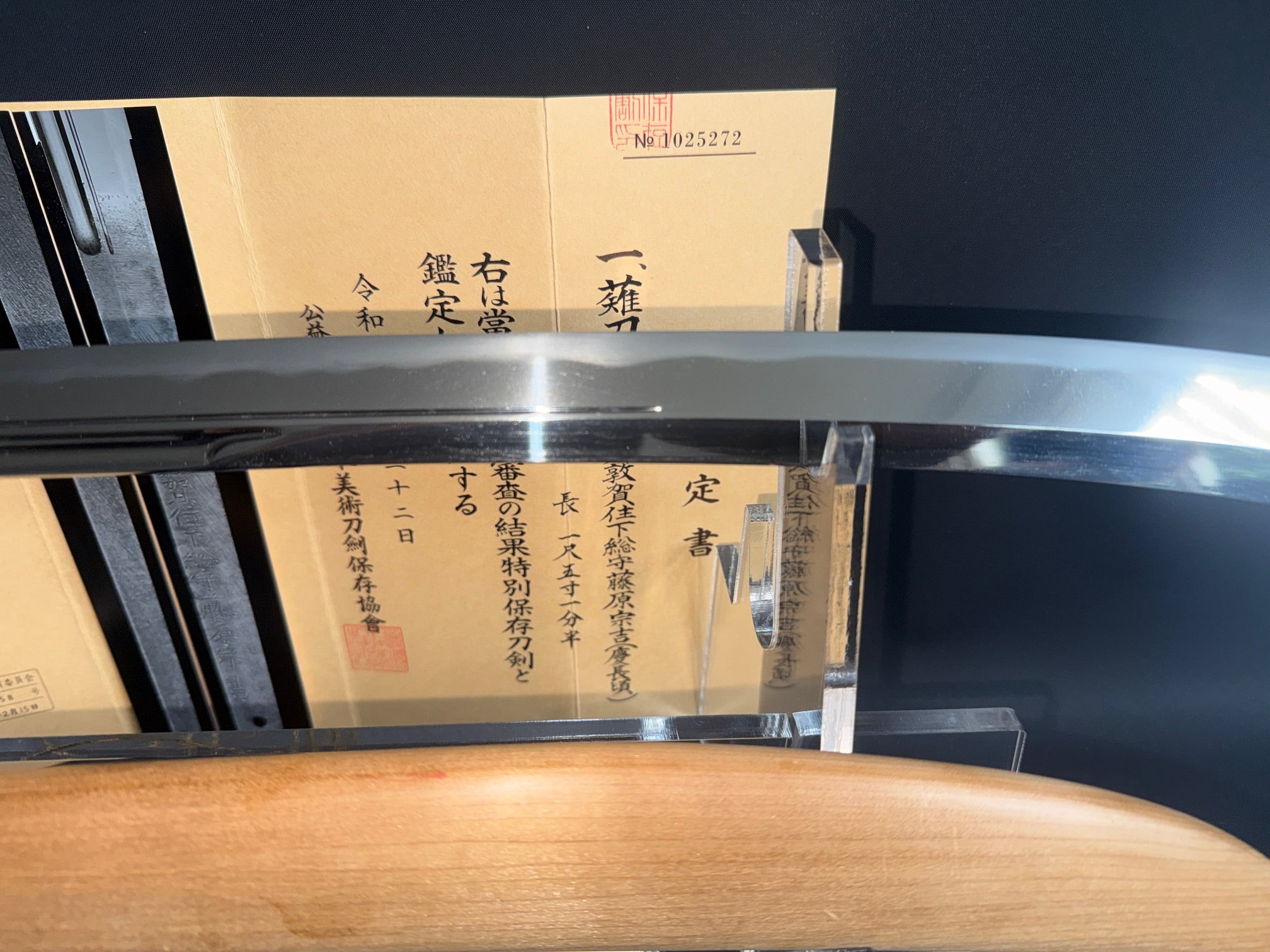
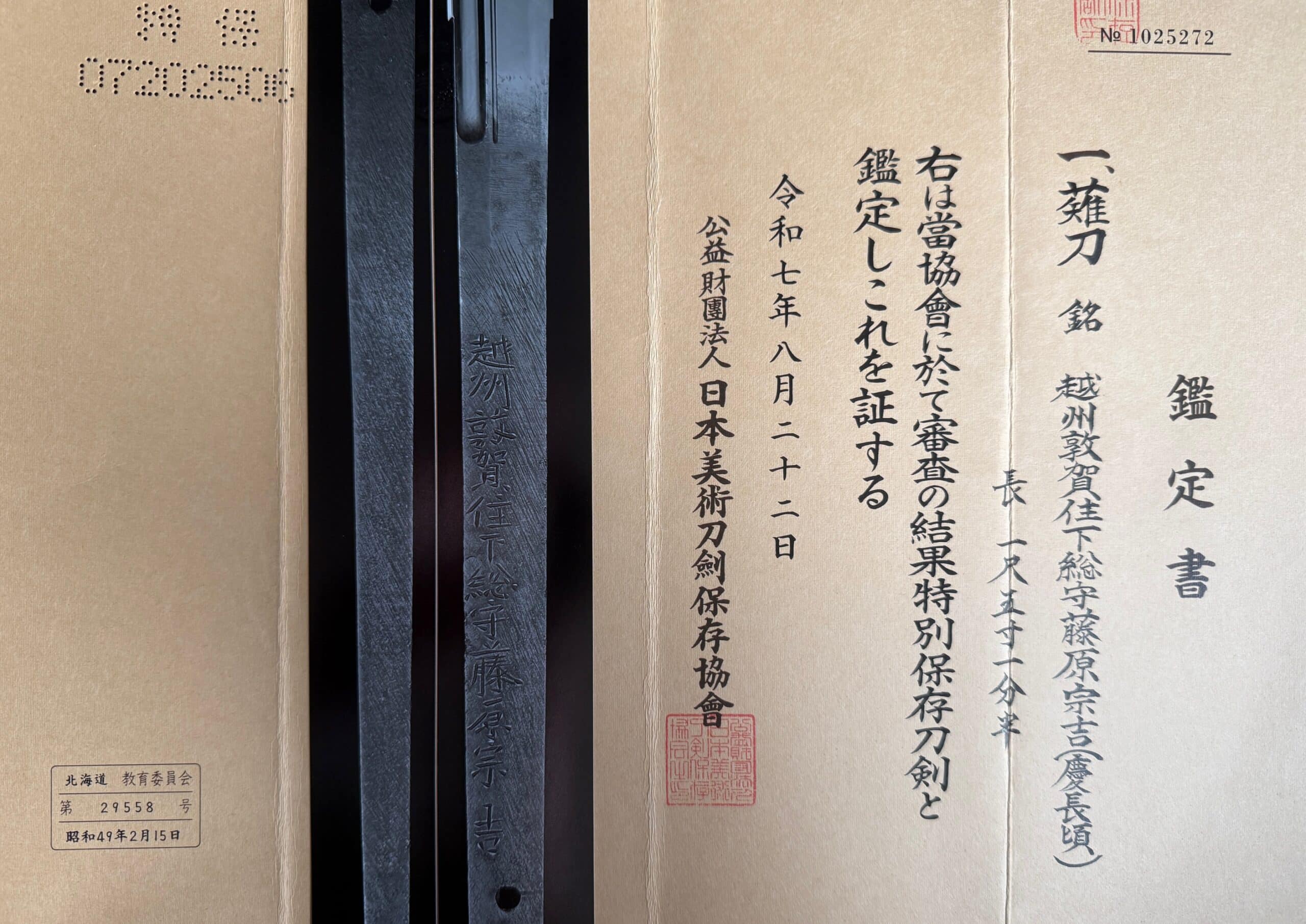
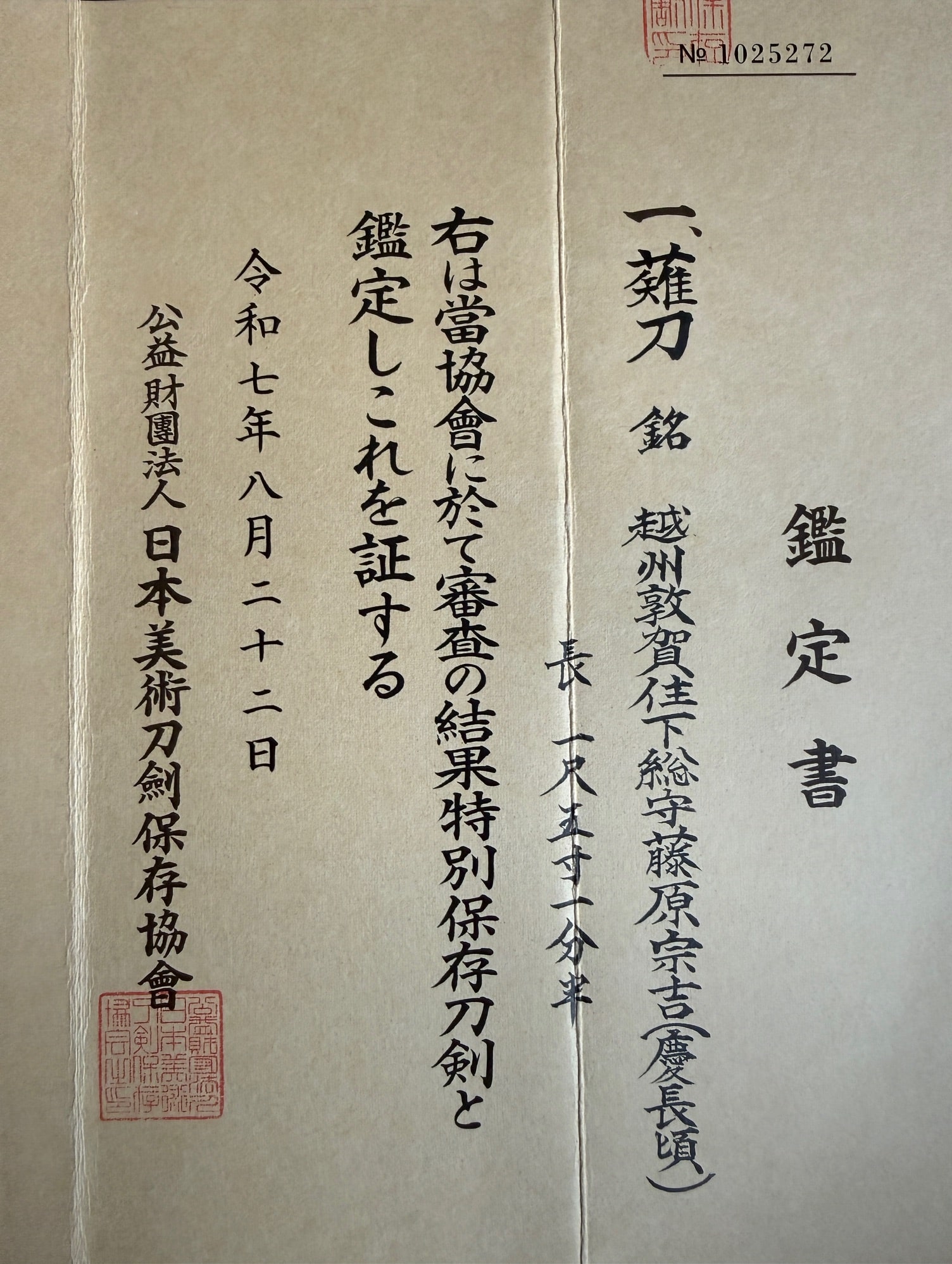
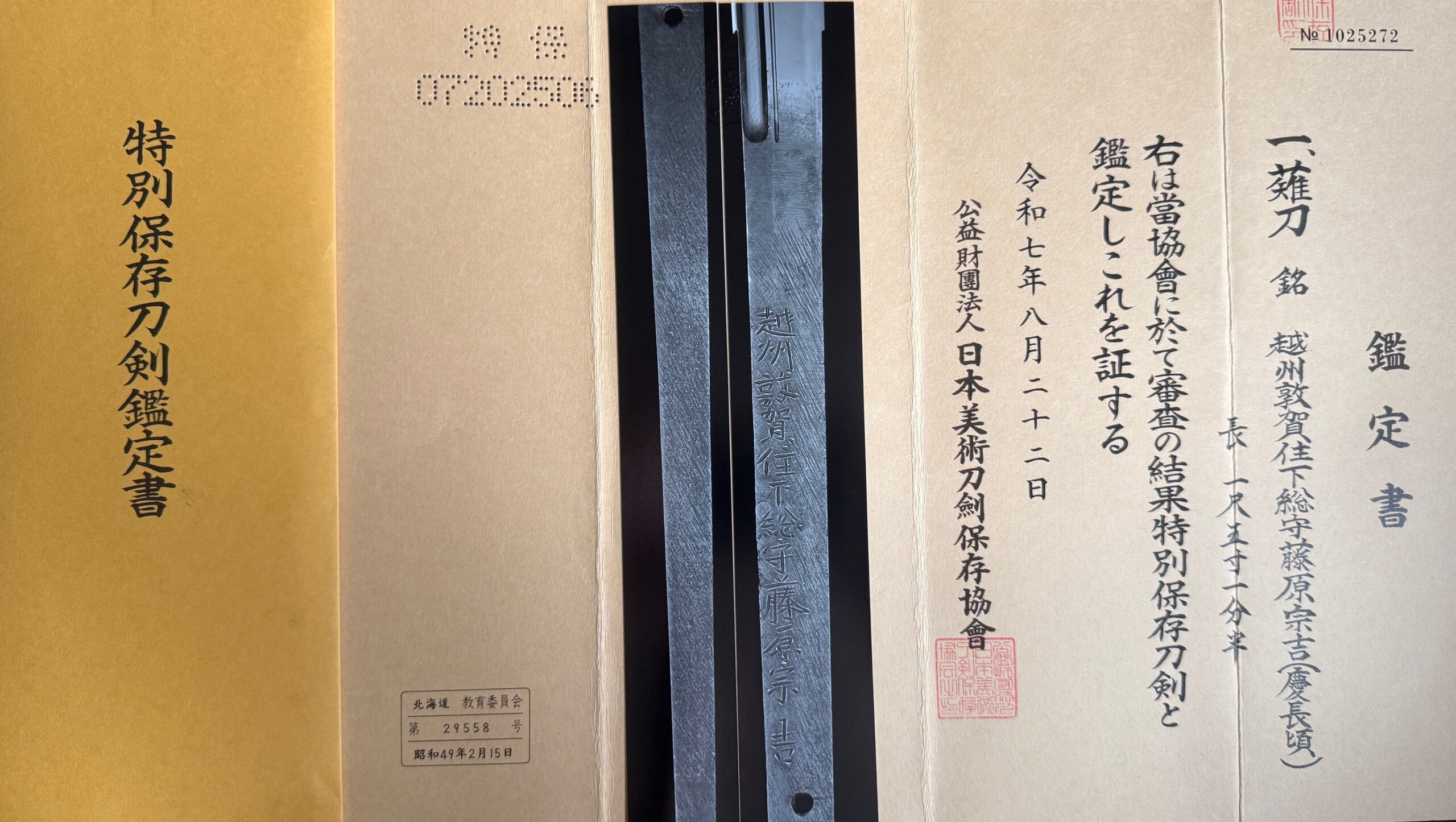
The blade has been awarded NBTHK Tokubetsu Hozon Token, confirming its status as a sword of especially important preservation and superior historical and artistic value. Such papers are reserved for blades that demonstrate notable quality, authenticity, and significance within the wider tradition of Japanese sword craftsmanship.
This naginata dates to approximately the Keichō period (1596–1615), one of the most important transitional moments in Japanese sword history. The Keichō era marked the end of centuries of civil warfare and the rise of Tokugawa Ieyasu’s new political order. Swordsmithing during this period underwent a dramatic transformation. While deeply rooted in the traditions of the Koto masters, the emerging Shintō schools began developing stronger, more robust blades suited to the changing military and social realities of the new Edo period.
Among the provinces that flourished during this time, Echizen Province became one of the most influential centers of sword production in all of Japan. Supported by the powerful Matsudaira clan, many accomplished smiths relocated to Echizen, bringing with them techniques from Mino, Yamashiro, and other major traditions. The result was the birth of a distinctly powerful style now admired as early Echizen Shintō.
Shimōsa-no-kami Fujiwara Muneyoshi belongs to this important historical movement. The honorary court title “Shimōsa-no-kami” was not lightly granted and reflects a smith of recognized standing and reputation. His works are associated with strong construction, practical elegance, and the commanding spirit characteristic of Keichō-period weapons.
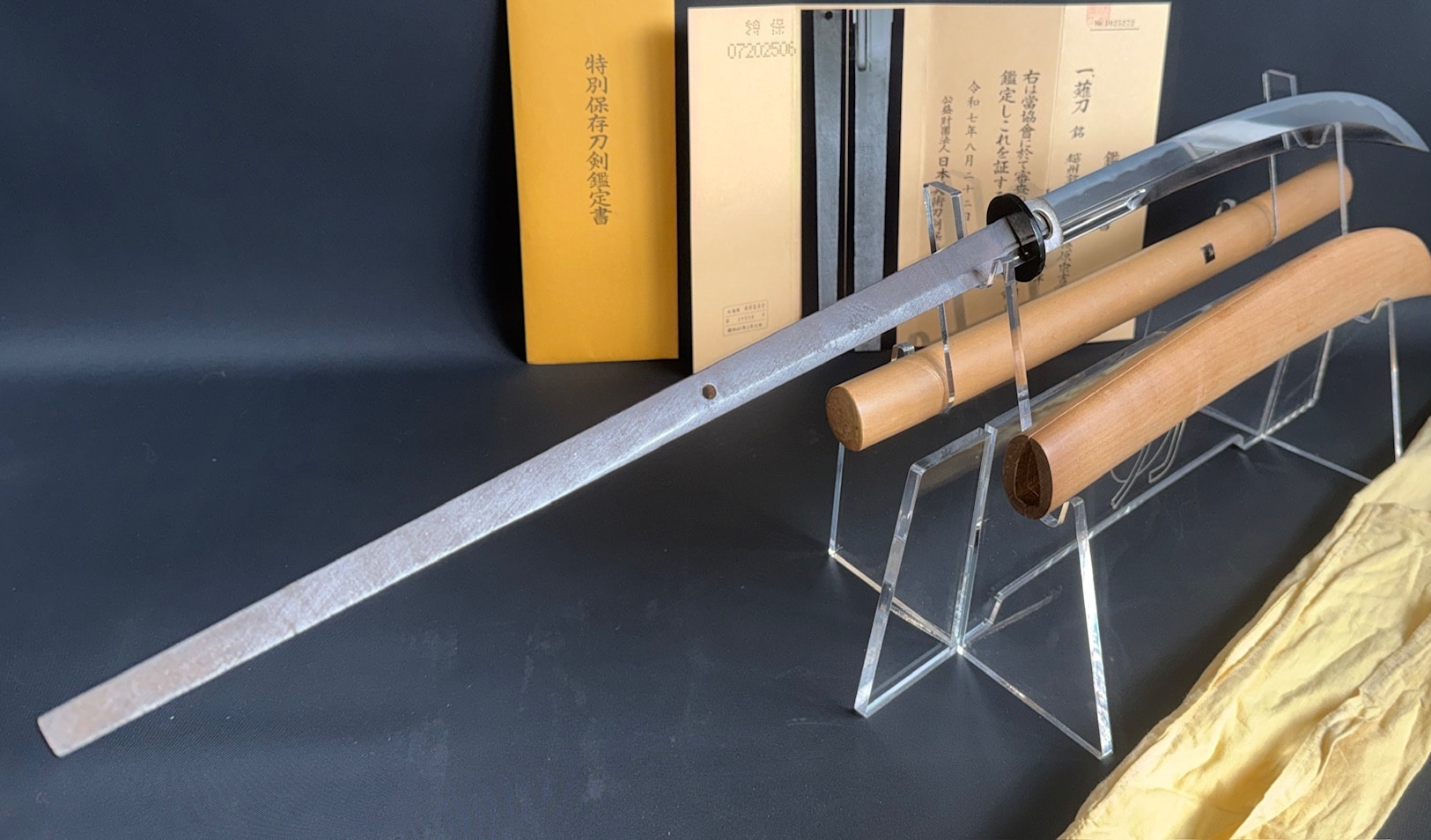
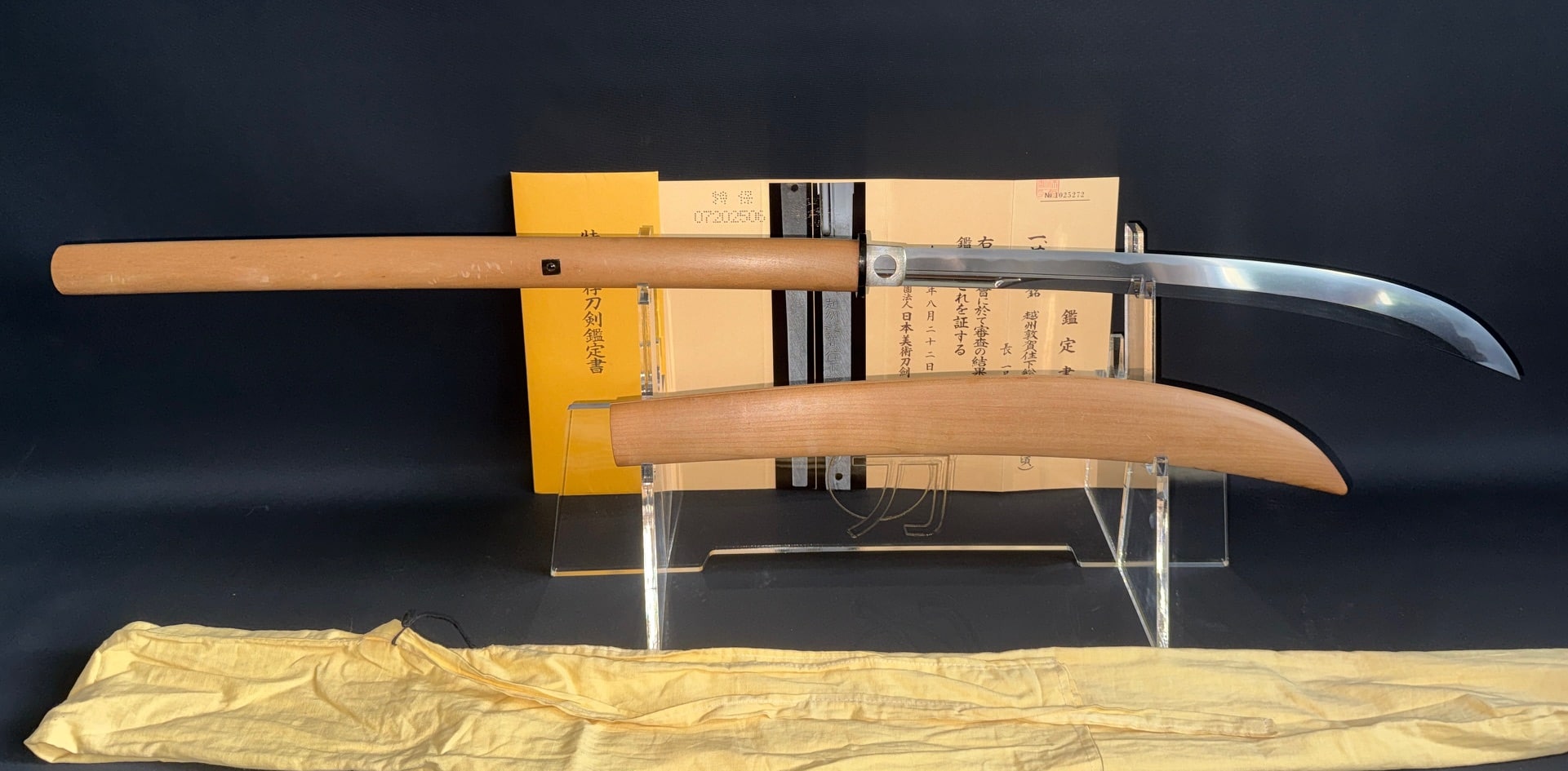
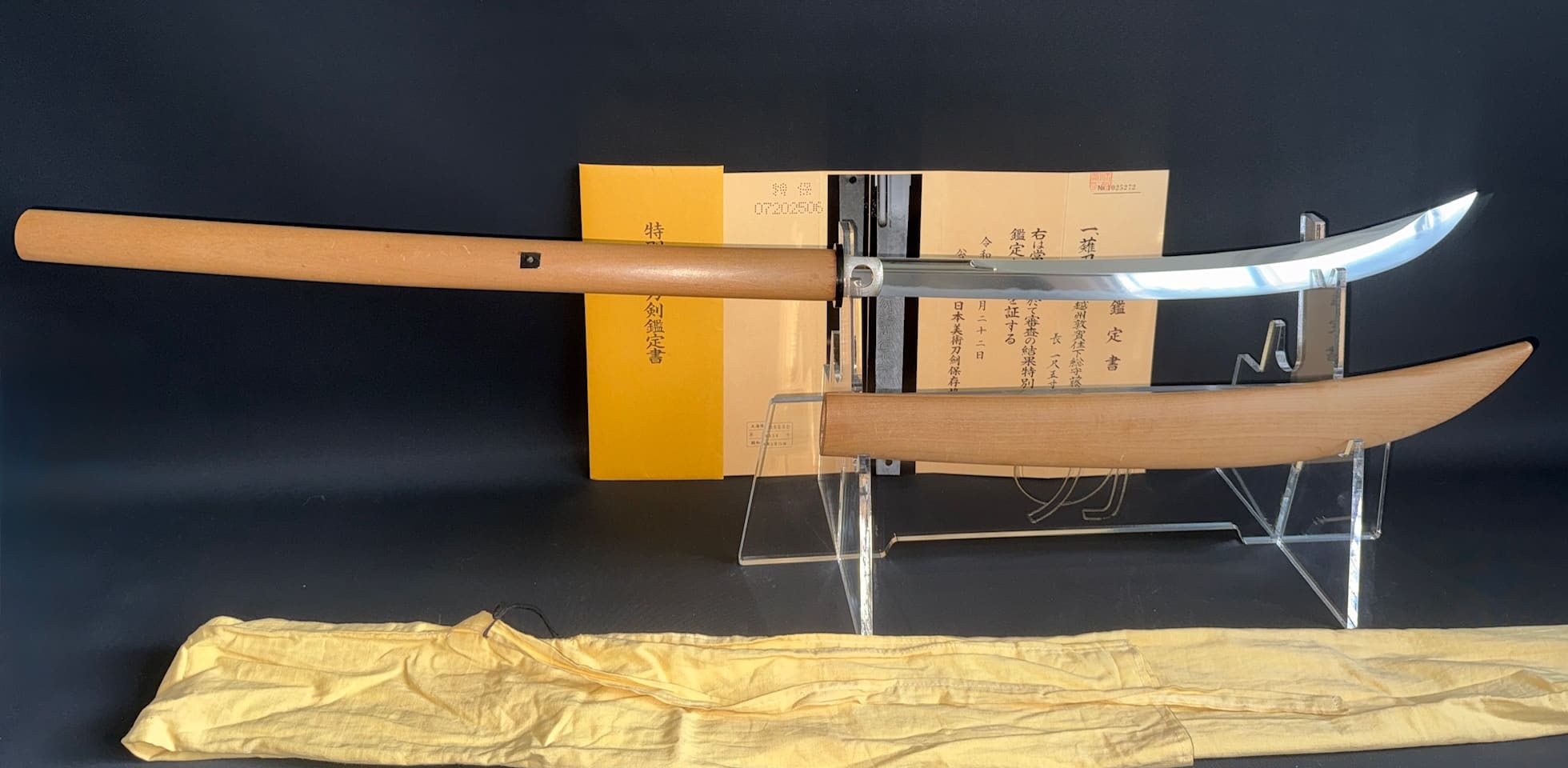
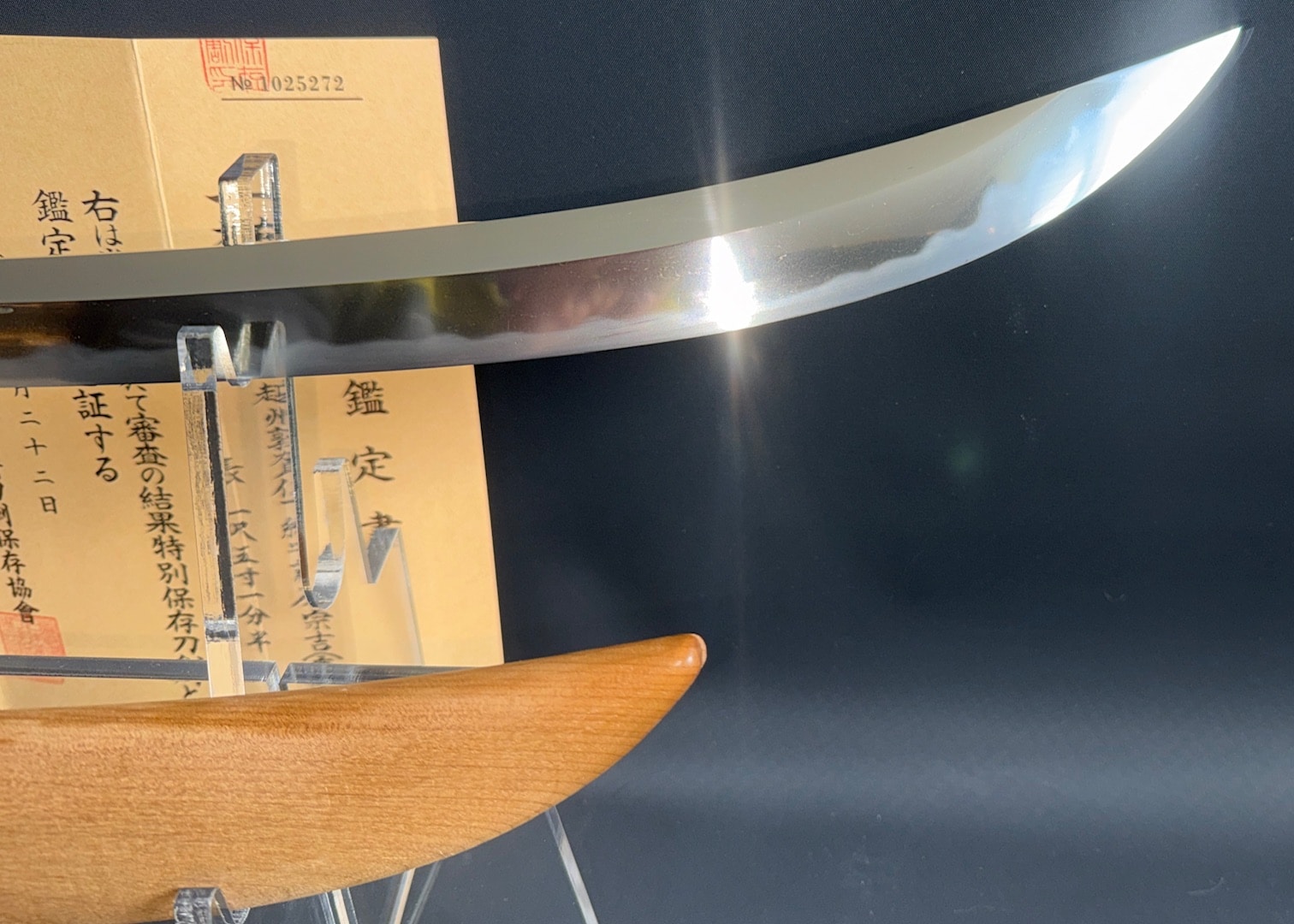
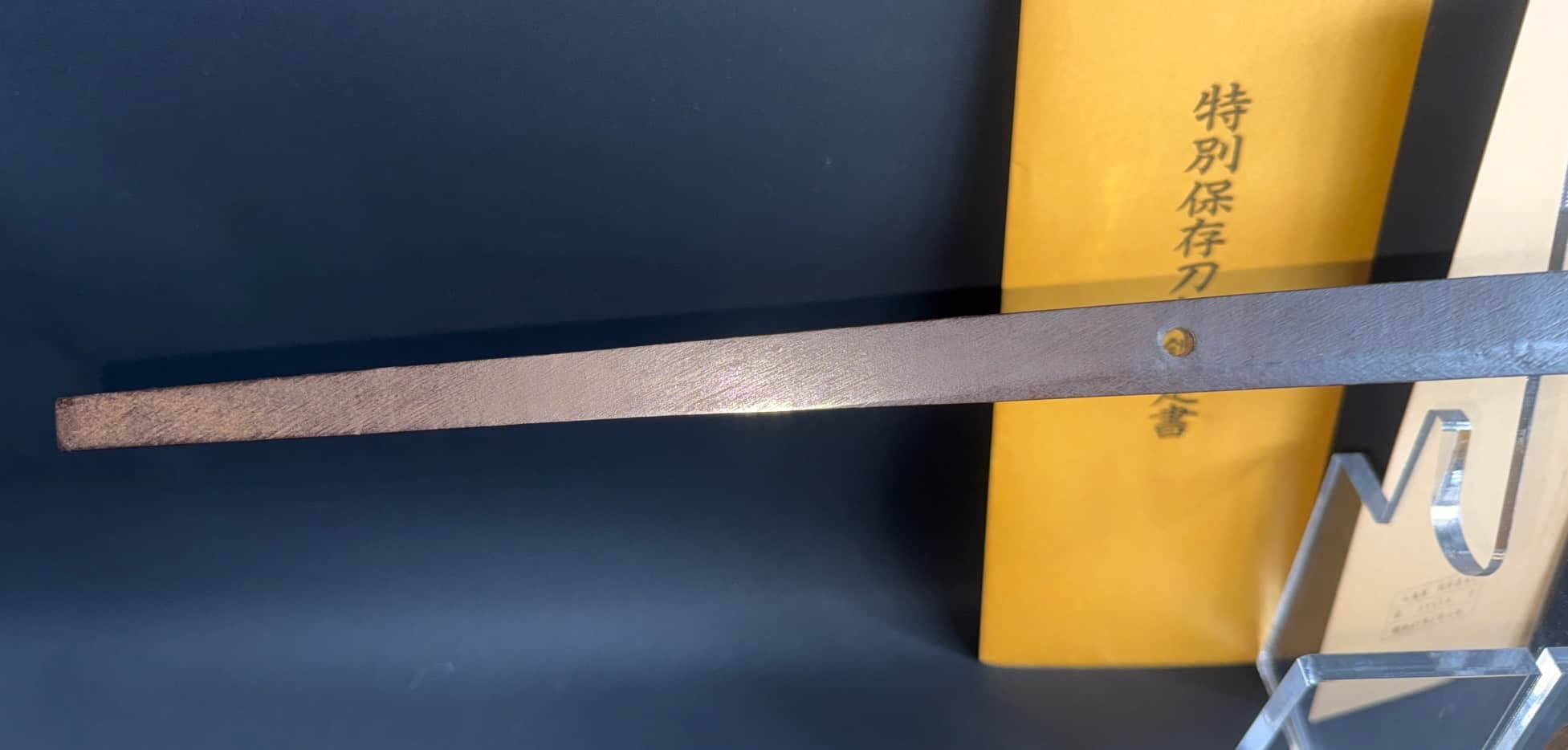
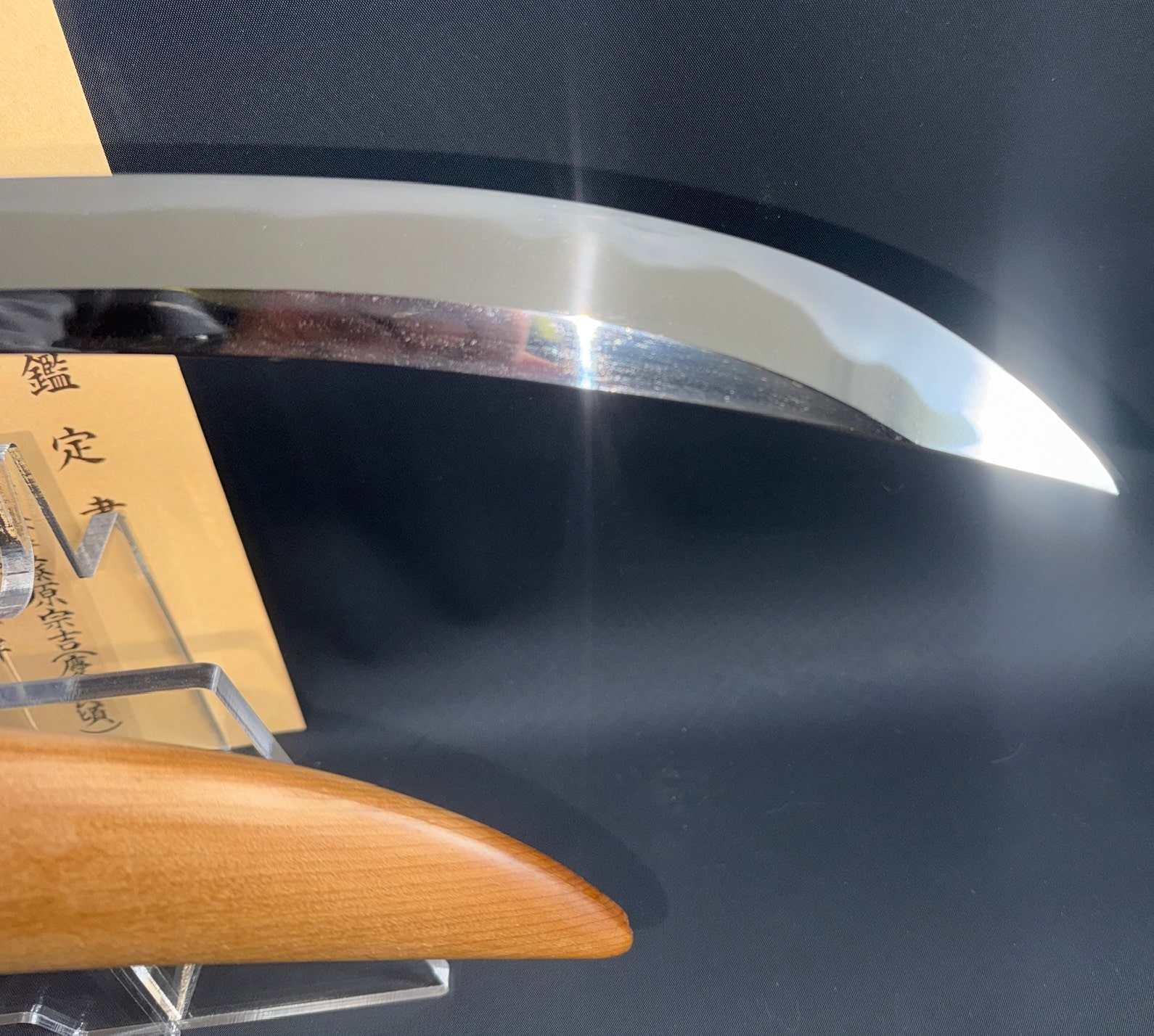
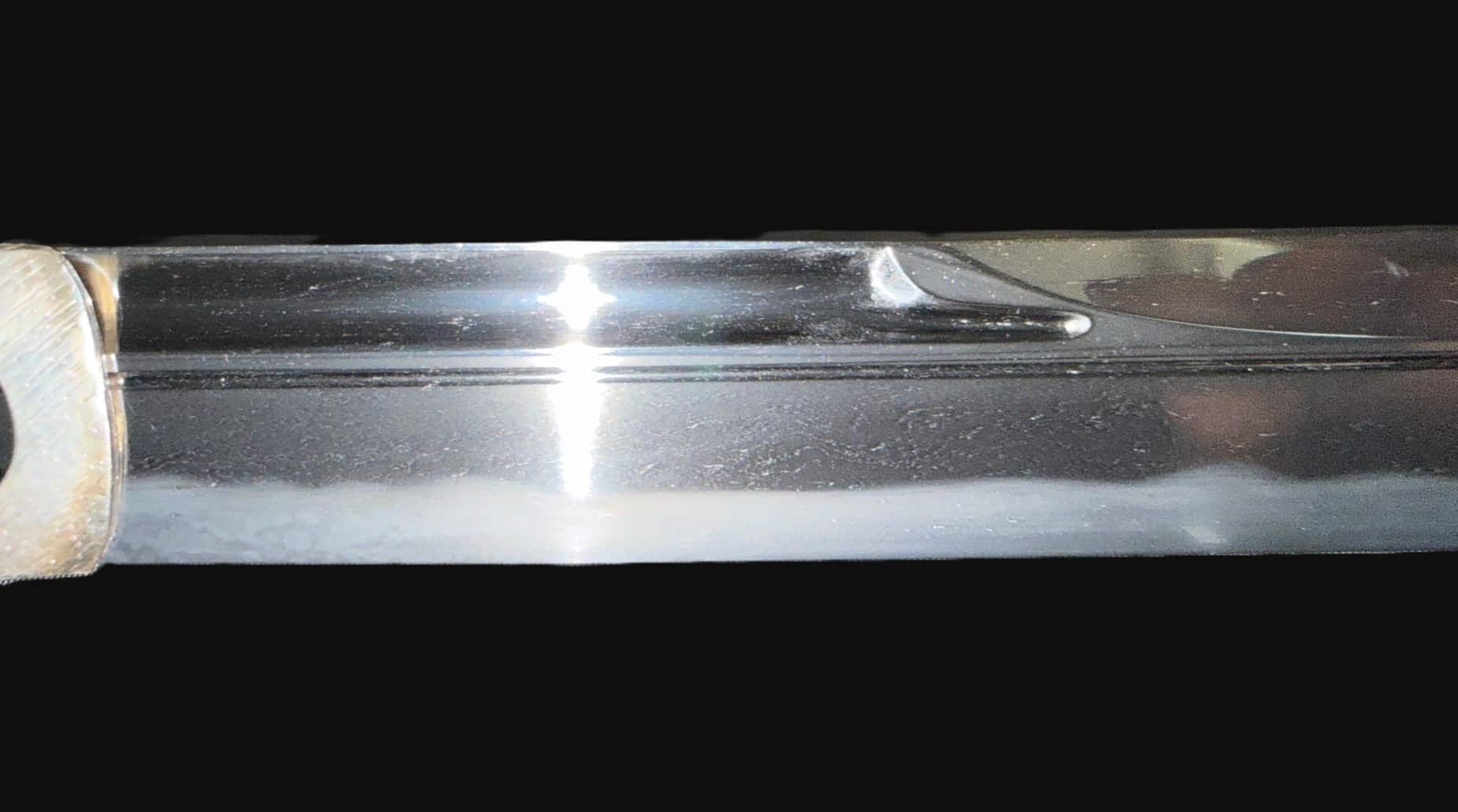
The present naginata displays precisely the qualities collectors seek in early Keichō Shintō workmanship. The sugata possesses a dignified martial presence, retaining the graceful yet imposing proportions expected from battlefield polearms of the Momoyama and early Edo periods. The blade exhibits the powerful geometry associated with functional combat weapons while maintaining the refined forging characteristics expected from high-level Japanese craftsmanship.
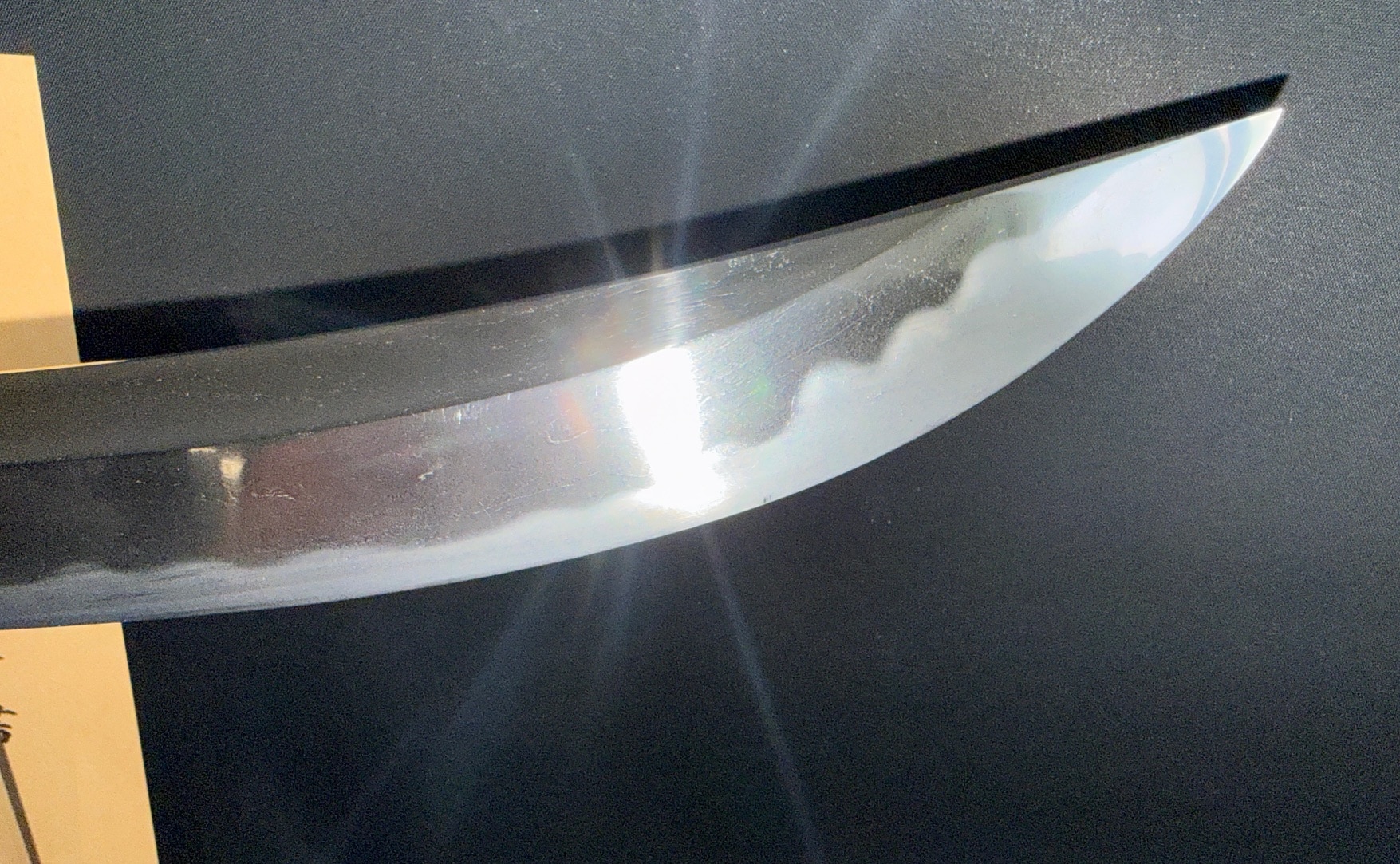
The jihada reveals a beautifully forged steel surface with visible activity and texture, reflecting the sophisticated metallurgical traditions carried into Echizen by master smiths of the late Koto period. The hamon displays the vibrant hardening structures admired in early Shintō blades, balancing strength with artistic expression. The overall impression is one of authority, discipline, and restrained elegance qualities deeply associated with the Keichō aesthetic.
What makes this piece particularly compelling is its direct connection to one of the most transformative periods in samurai history. Naginata of this quality and age rarely survive in such respected condition, especially examples retaining attribution to named Keichō-period Echizen smiths with Tokubetsu Hozon recognition.
Historically, the naginata occupied a unique position within Japanese martial culture. Originally a dominant battlefield weapon used by warrior monks and samurai alike, it later evolved into a symbol of both martial discipline and aristocratic tradition. During the late Sengoku and early Edo periods, naginata continued to serve important ceremonial and military functions, particularly among high-ranking warrior families.
The accompanying NBTHK Tokubetsu Hozon papers identify the blade as:
“Esshū Tsuruga-jū Shimōsa-no-kami Fujiwara Muneyoshi”
with an attribution dating to the Keichō era, confirming both the authenticity and historical importance of the piece.
The old registration documents from Hokkaidō further attest to the blade’s long-standing preservation history within Japan, adding another layer of authenticity and provenance to this remarkable object.
Today, early Keichō Shintō works continue to attract serious collectors worldwide because they represent the exact moment where medieval Japanese swordmaking evolved into the refined aesthetics of the Edo period while still preserving the raw martial spirit of the Sengoku age.
This is not merely an antique weapon. It is a surviving historical artifact forged at the dawn of Tokugawa Japan a rare and powerful example of early Echizen craftsmanship bearing the name of a respected Keichō-period master.
KvK: 51964147
C.W. Slok - Kyodai Originals
Bank: NL25 KNAB 0509 1310 18
BIC: KNABNL2H
© 2026 Kyodai Originals is made with ❤ by Nieuwblik.com


