
€ 8.250,00
1 in stock
Hokuhō Hideaki (later Toshihide), June 1929
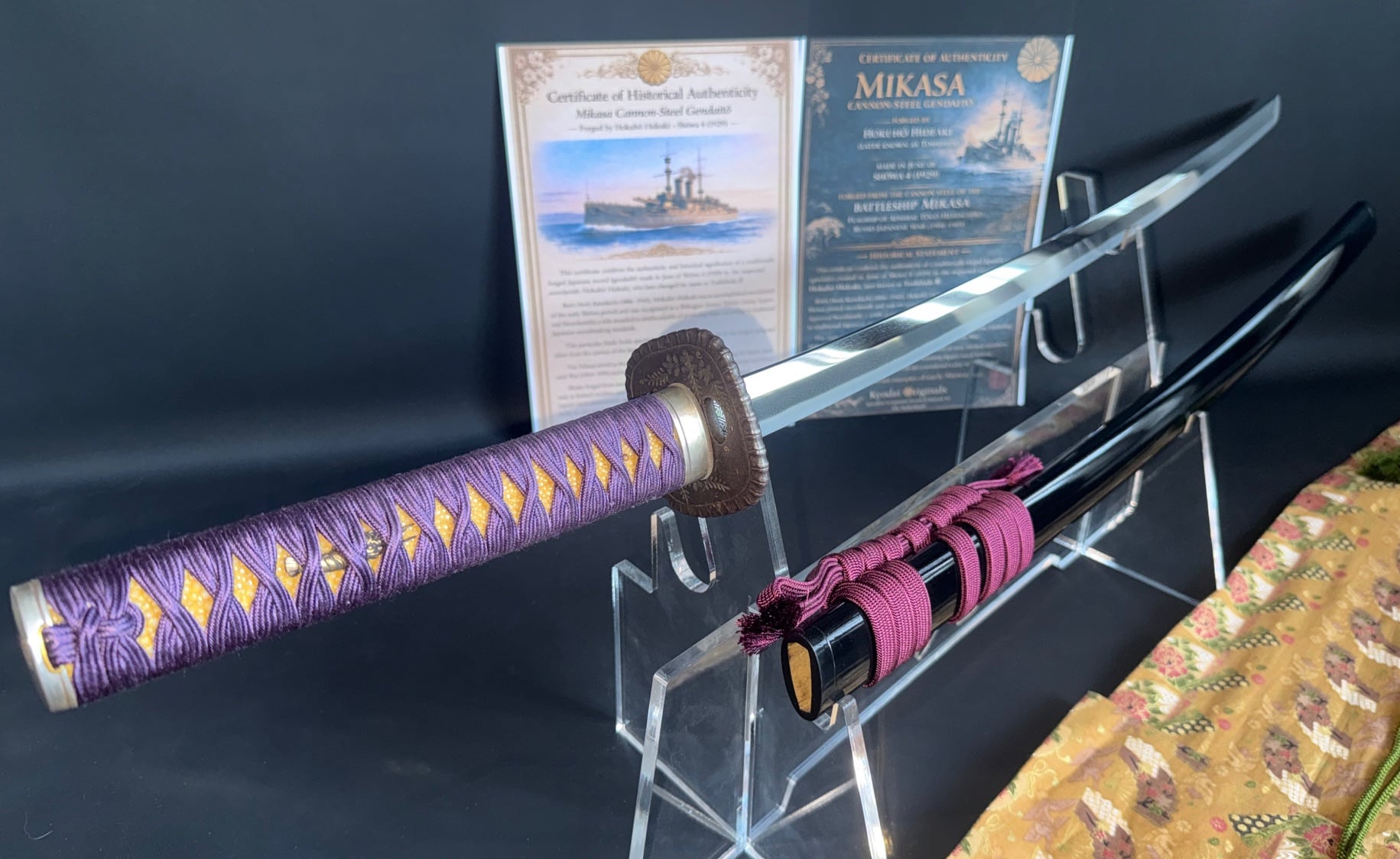
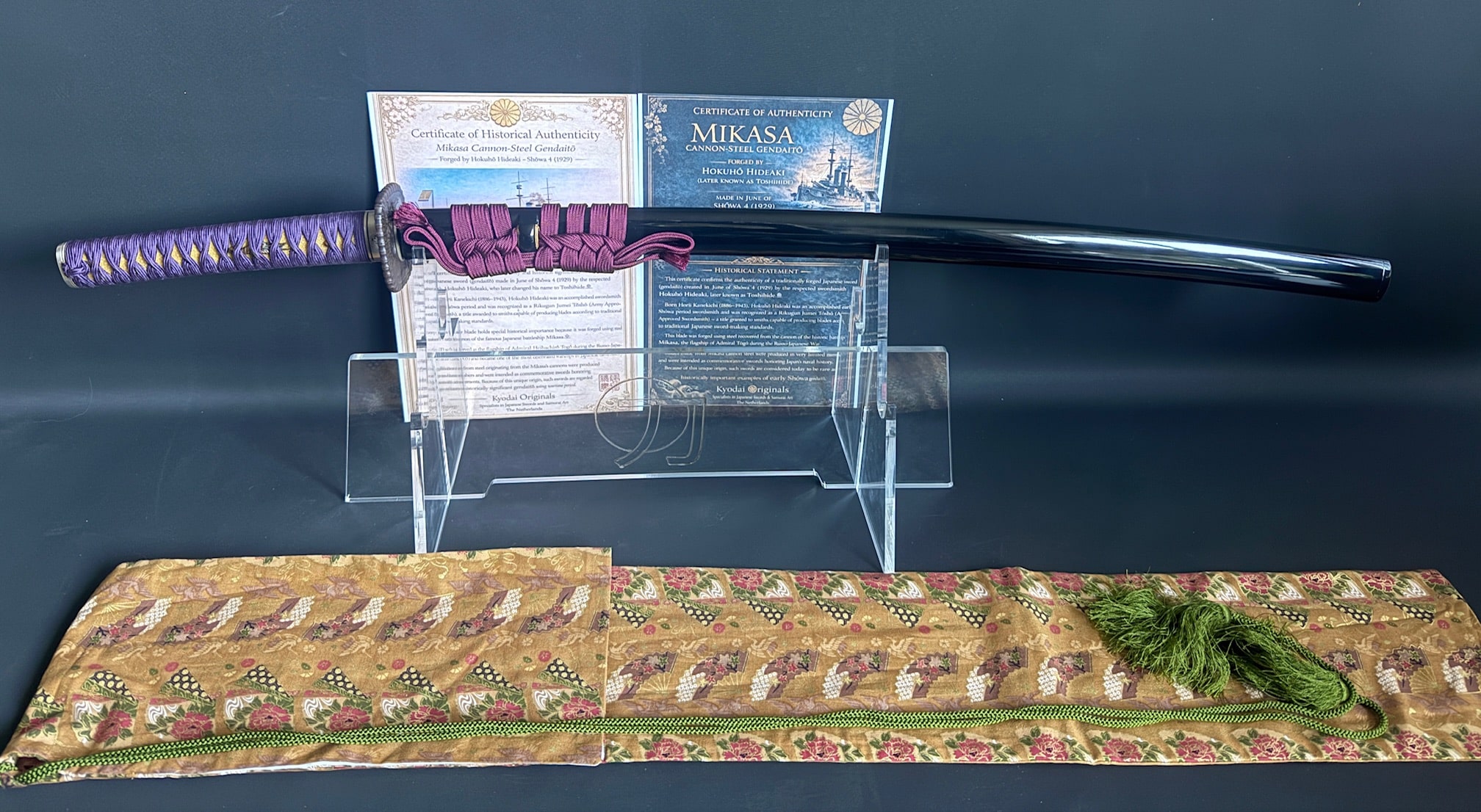
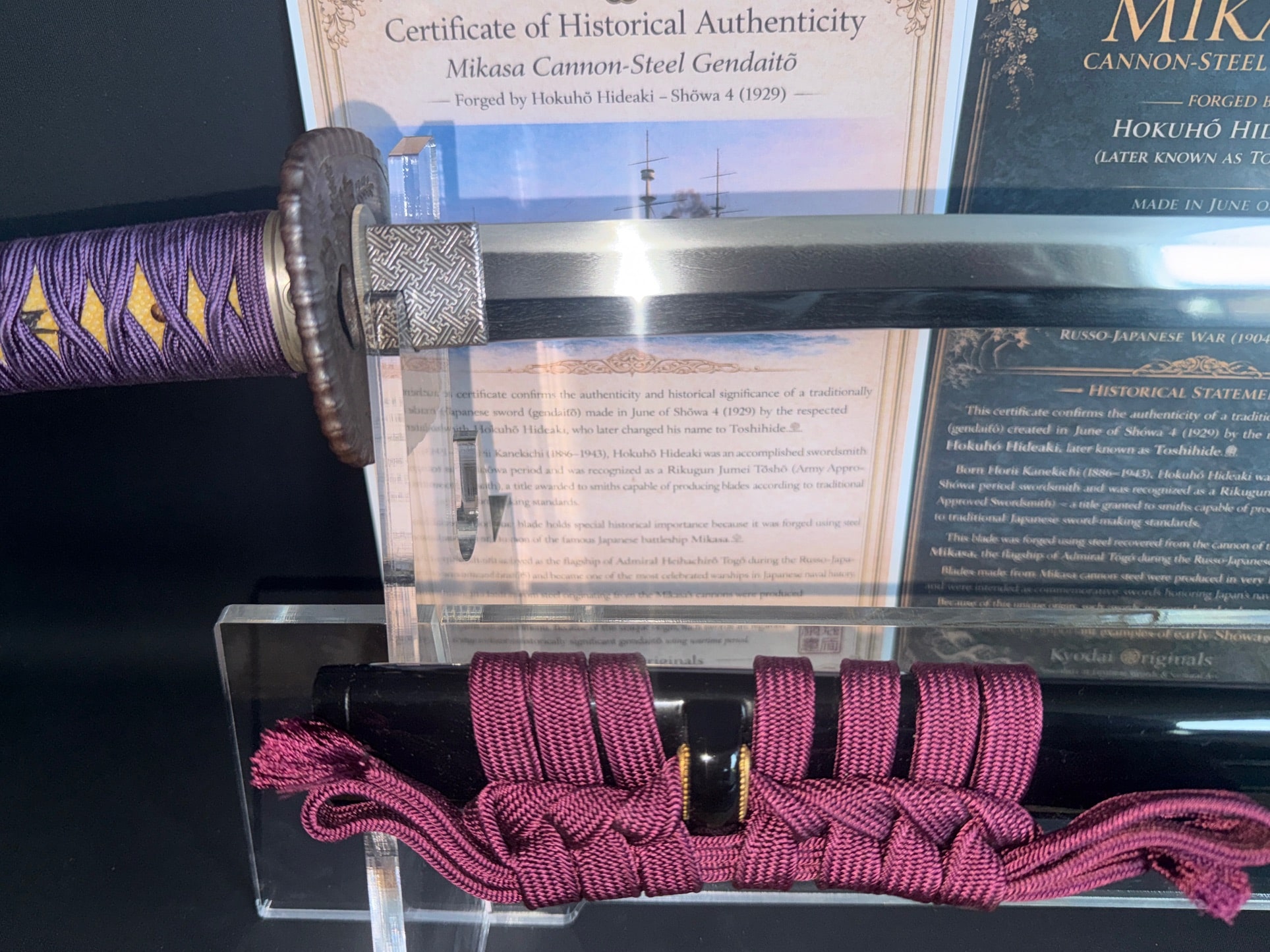
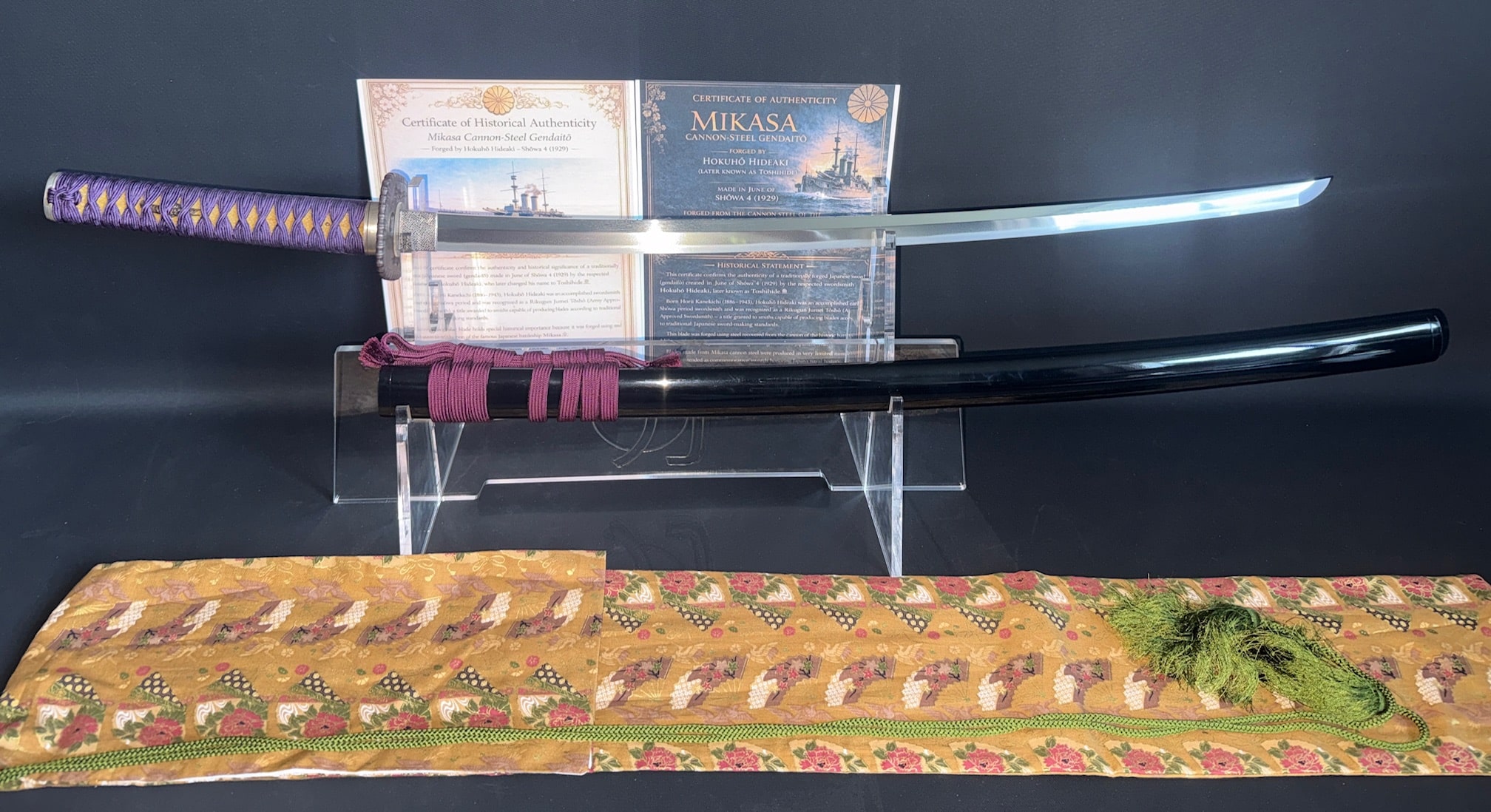
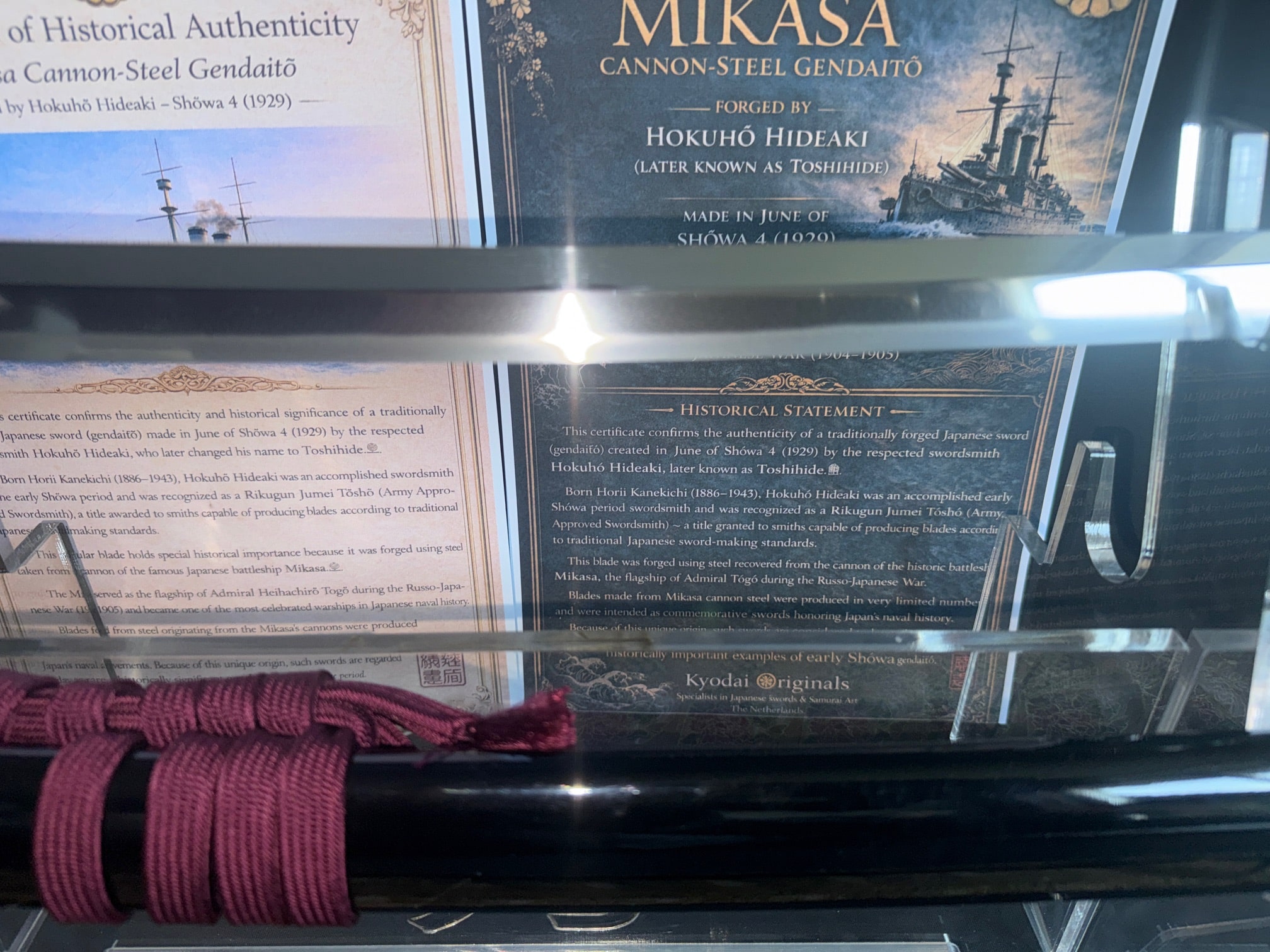
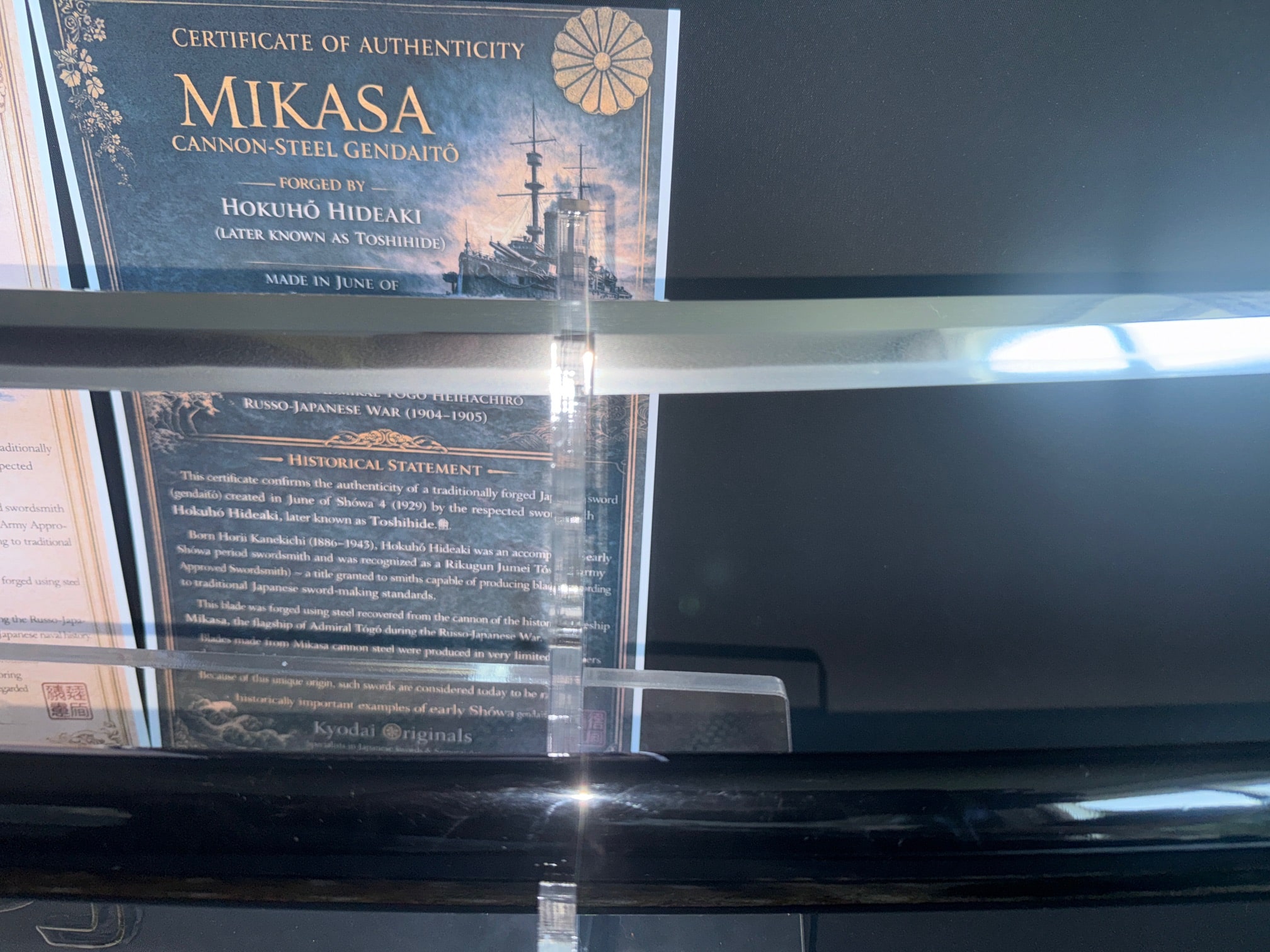
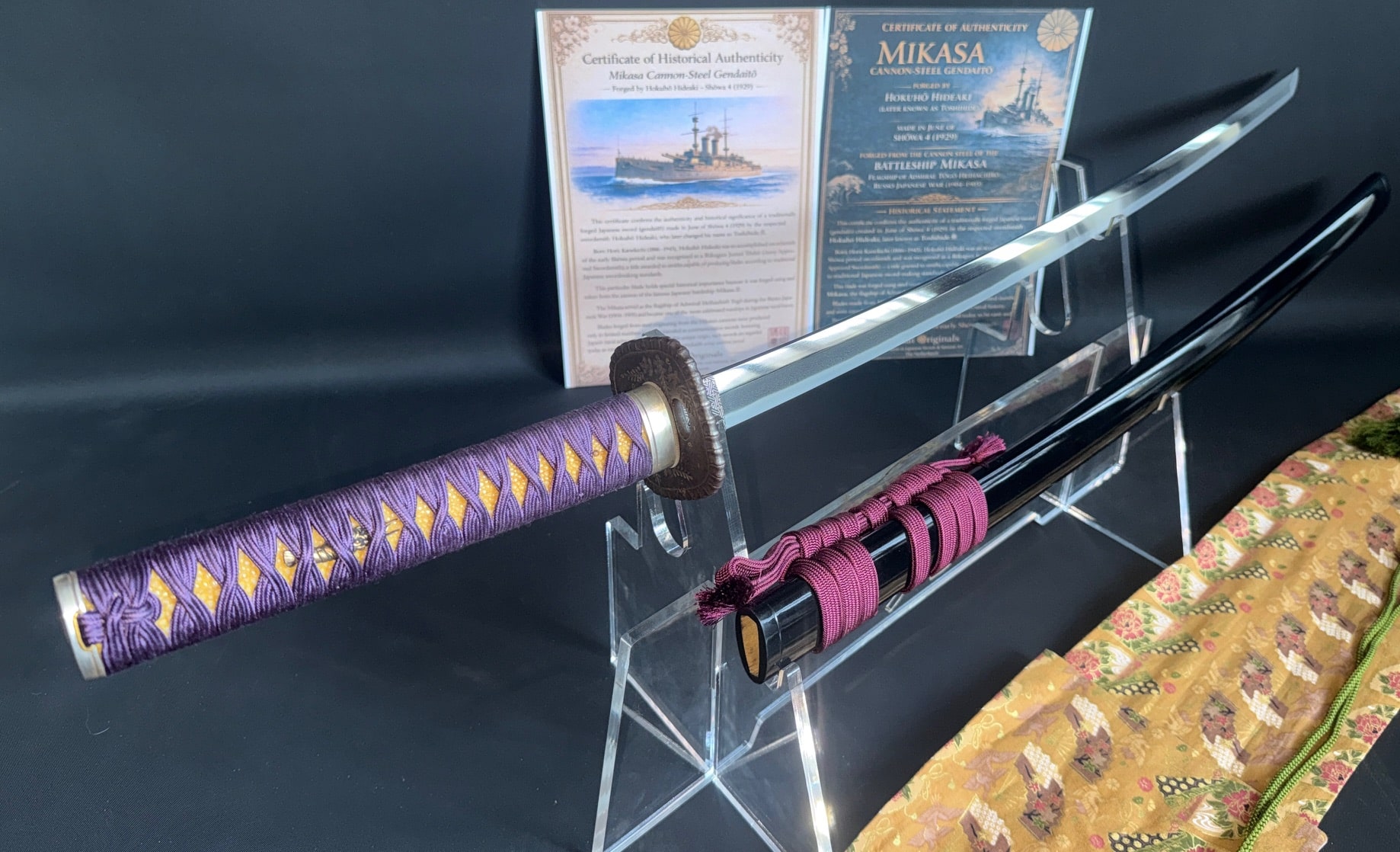
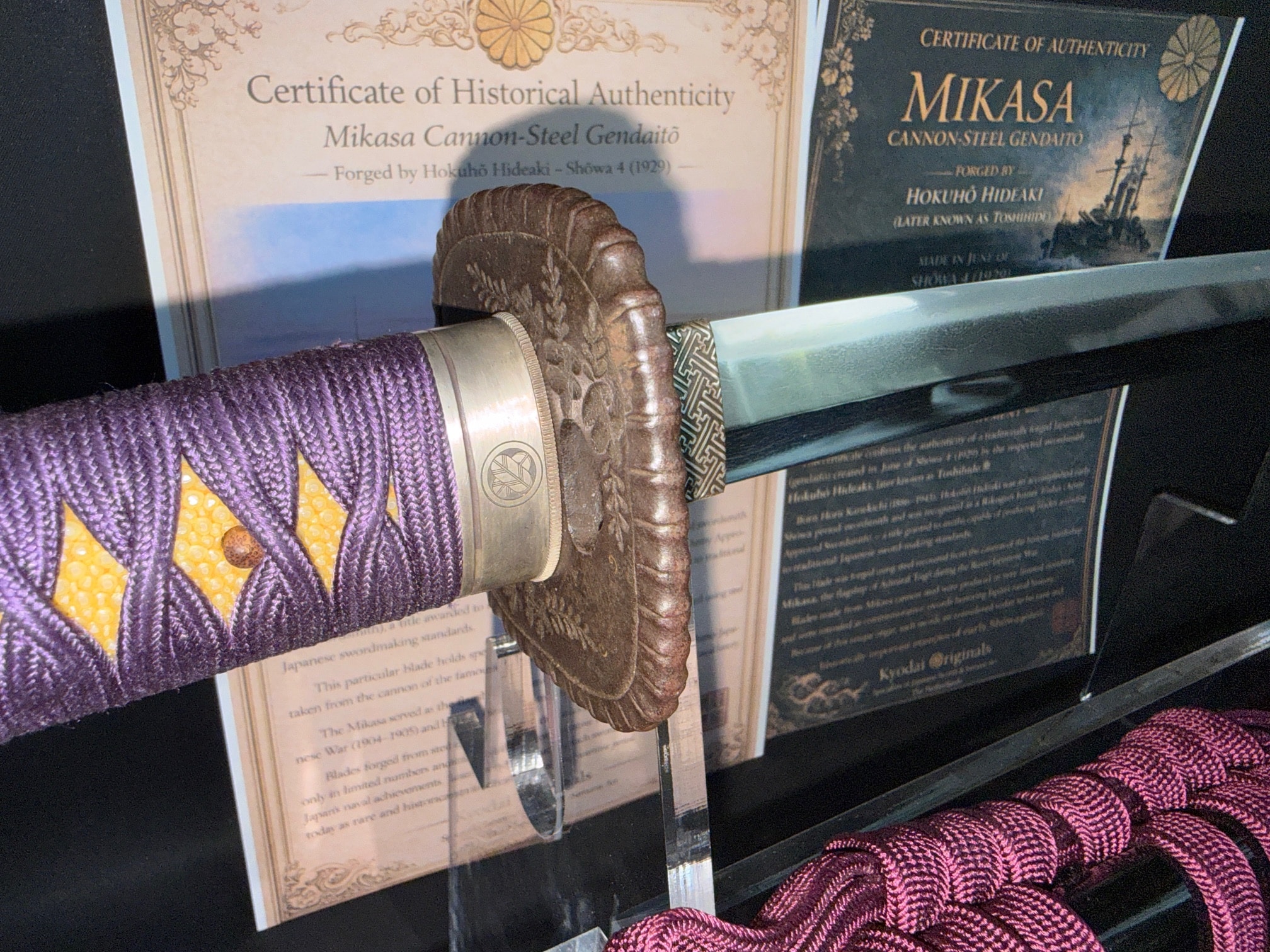
This traditionally forged gendaitō was made in June of Shōwa 4 (1929) by the respected Shōwa-period swordsmith Hokuhō Hideaki, later known as Toshihide. Born Horii Kanekichi (1886–1943) into a sword-making family, he trained within an established classical lineage and became one of the more highly regarded independent gendai smiths active during the late Taishō and early Shōwa eras. This example predates wartime production and represents his earlier, fully traditional workmanship.
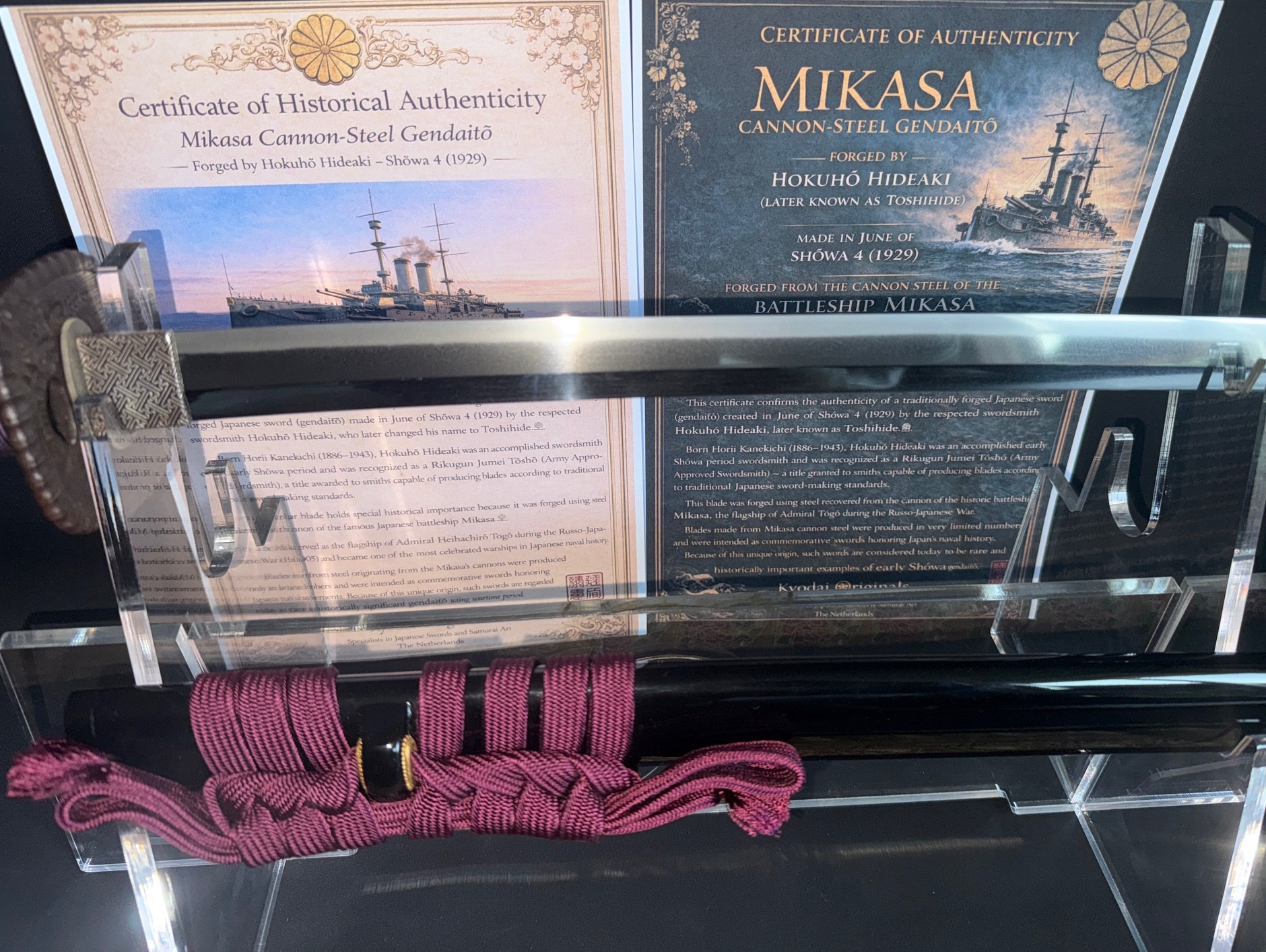
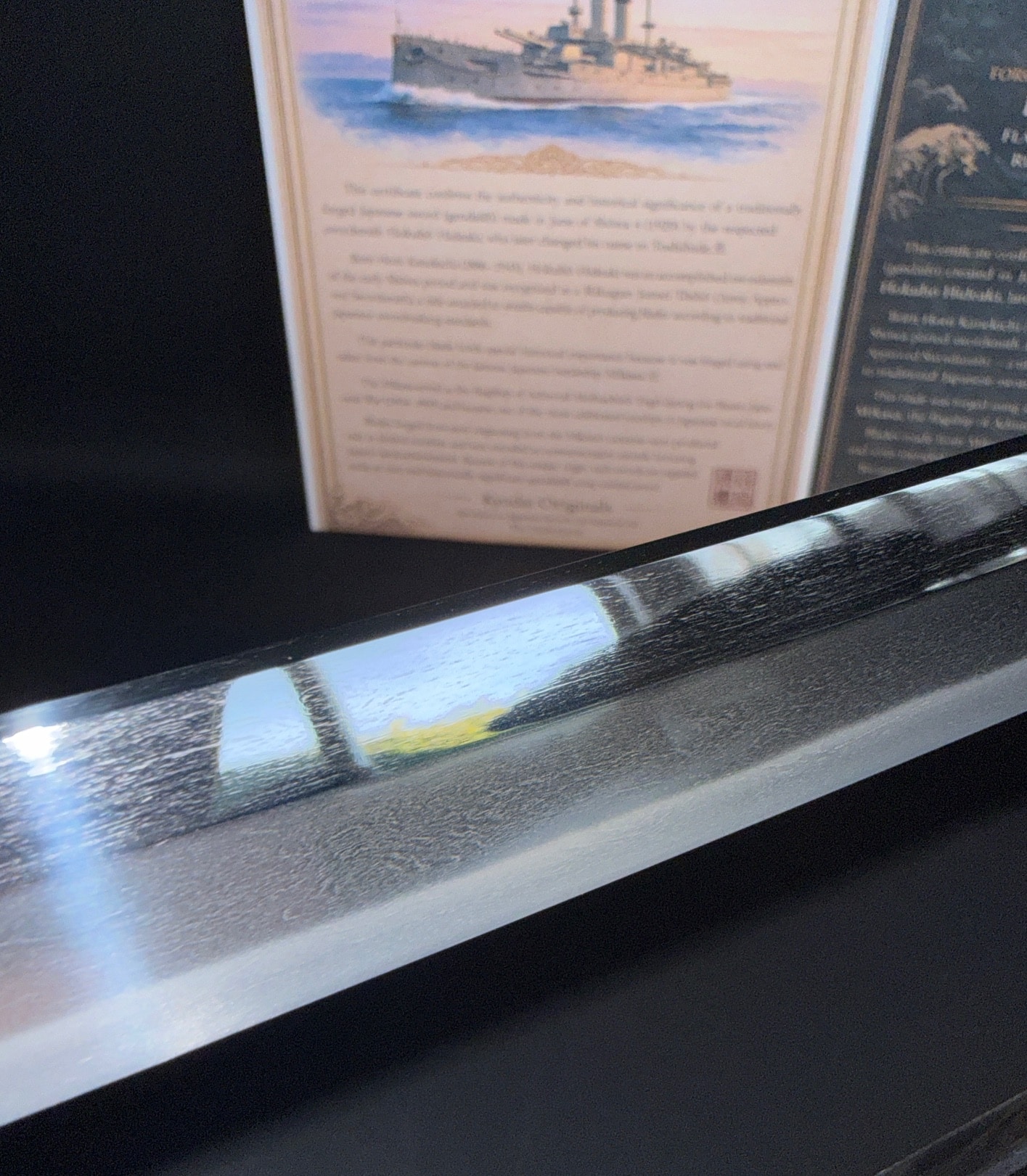
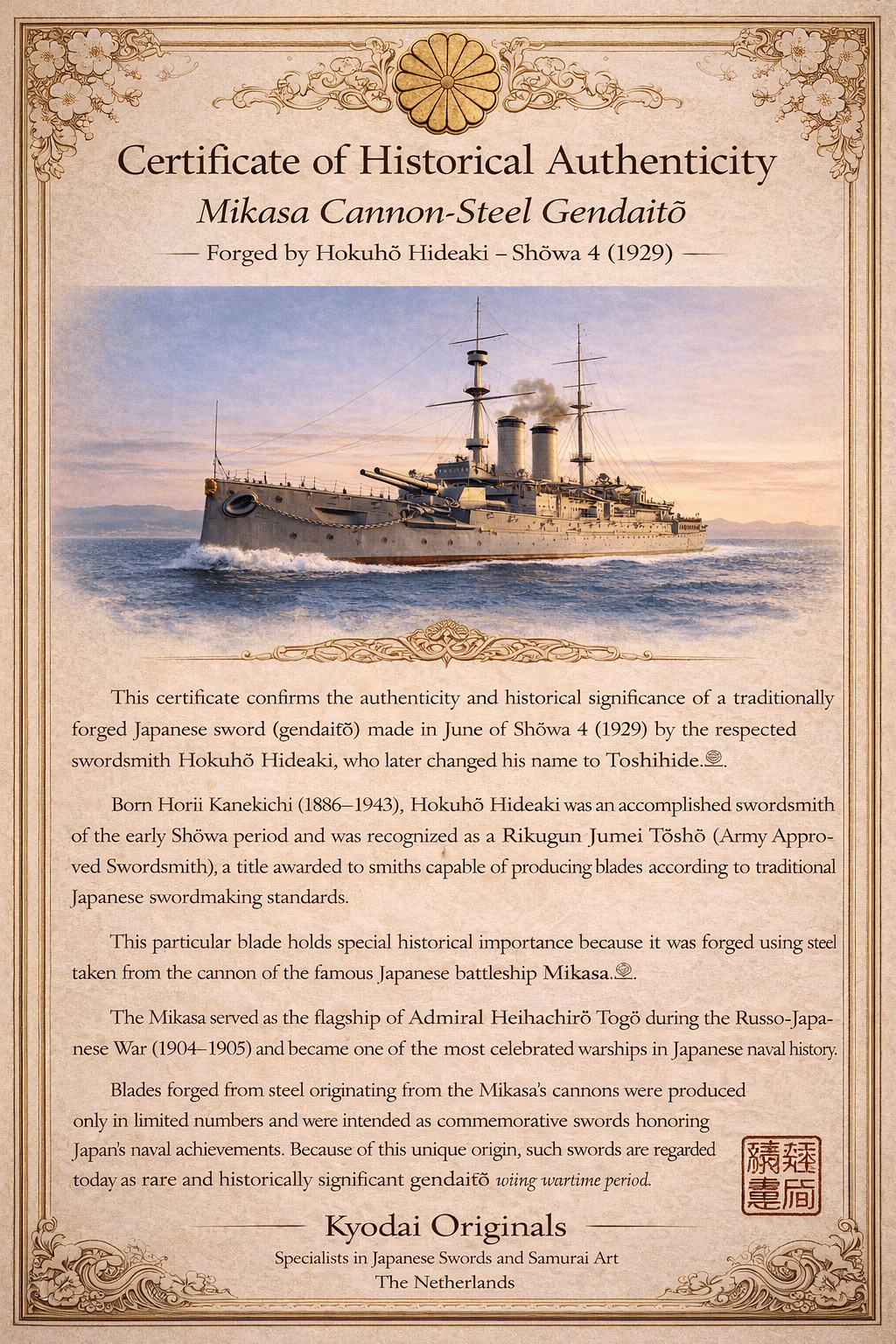
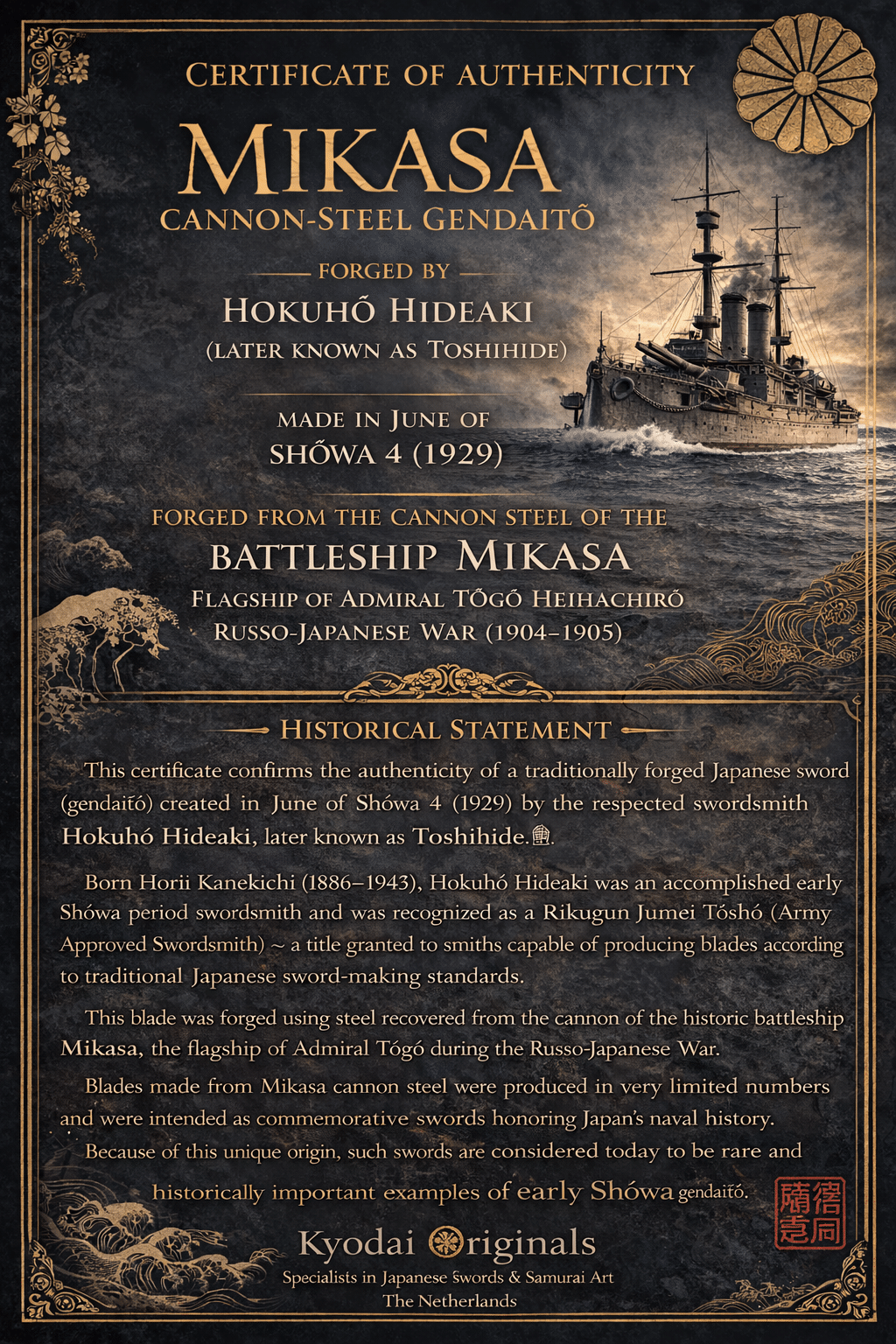
Most notably, the blade was forged from steel taken from the cannon of the historic battleship Battleship Mikasa the famed flagship of Admiral Heihachirō Tōgō during the Russo-Japanese War. The Mikasa remains one of Japan’s most important naval symbols, and swords produced from its cannon steel were made only in limited numbers. Because of this direct connection to a defining moment in modern Japanese history, such blades carry both patriotic and cultural significance and are considerably rarer than standard military gendaitō.
Hideaki was recognized as a Rikugun Jumei Tōshō (Army Approved Swordsmith), a distinction granted to smiths capable of producing blades meeting traditional standards of strength and construction. Unlike many wartime military swords often oil-quenched and semi-mass produced his work remained firmly rooted in classical technique using tamahagane and traditional water quenching.
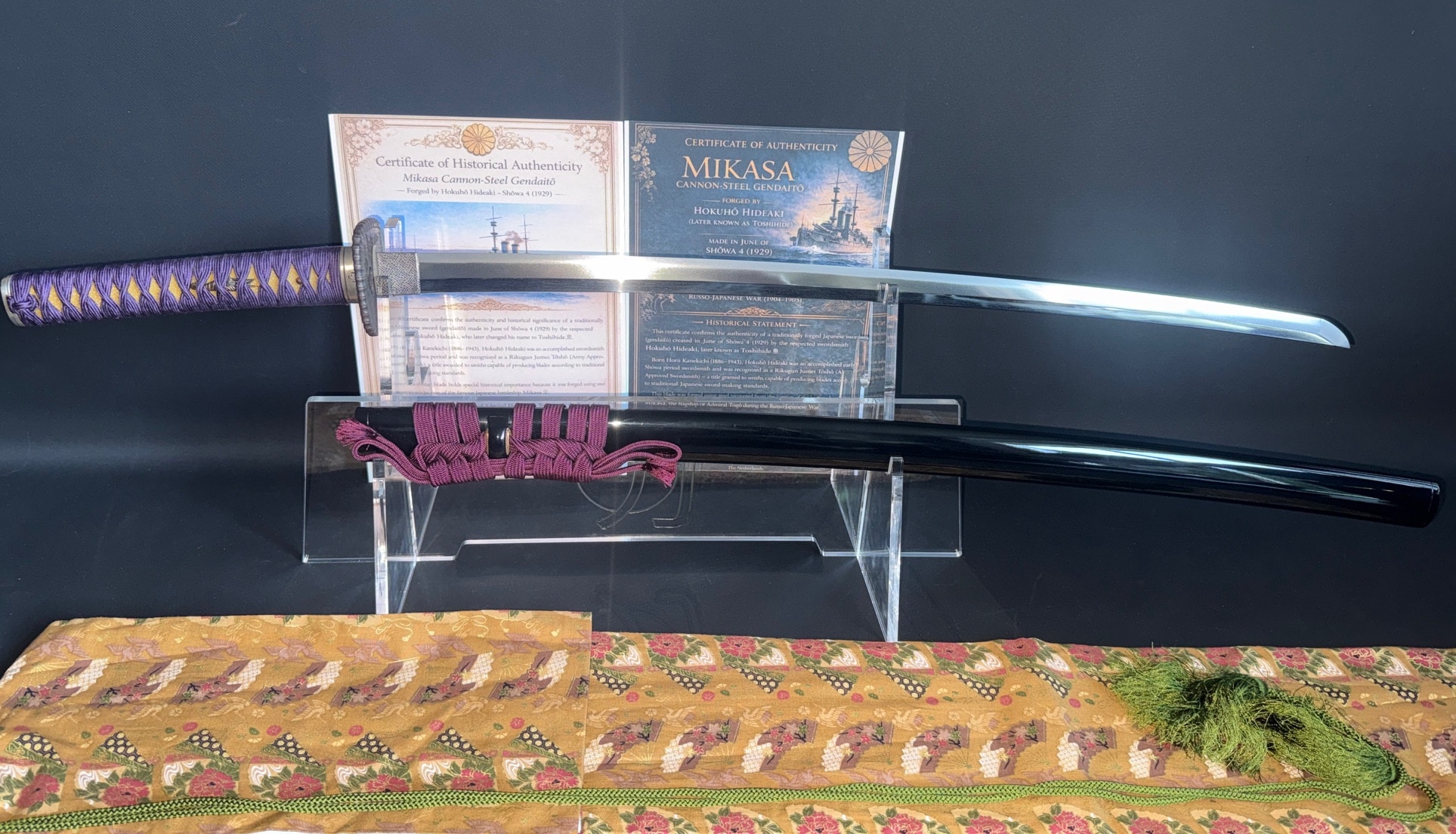
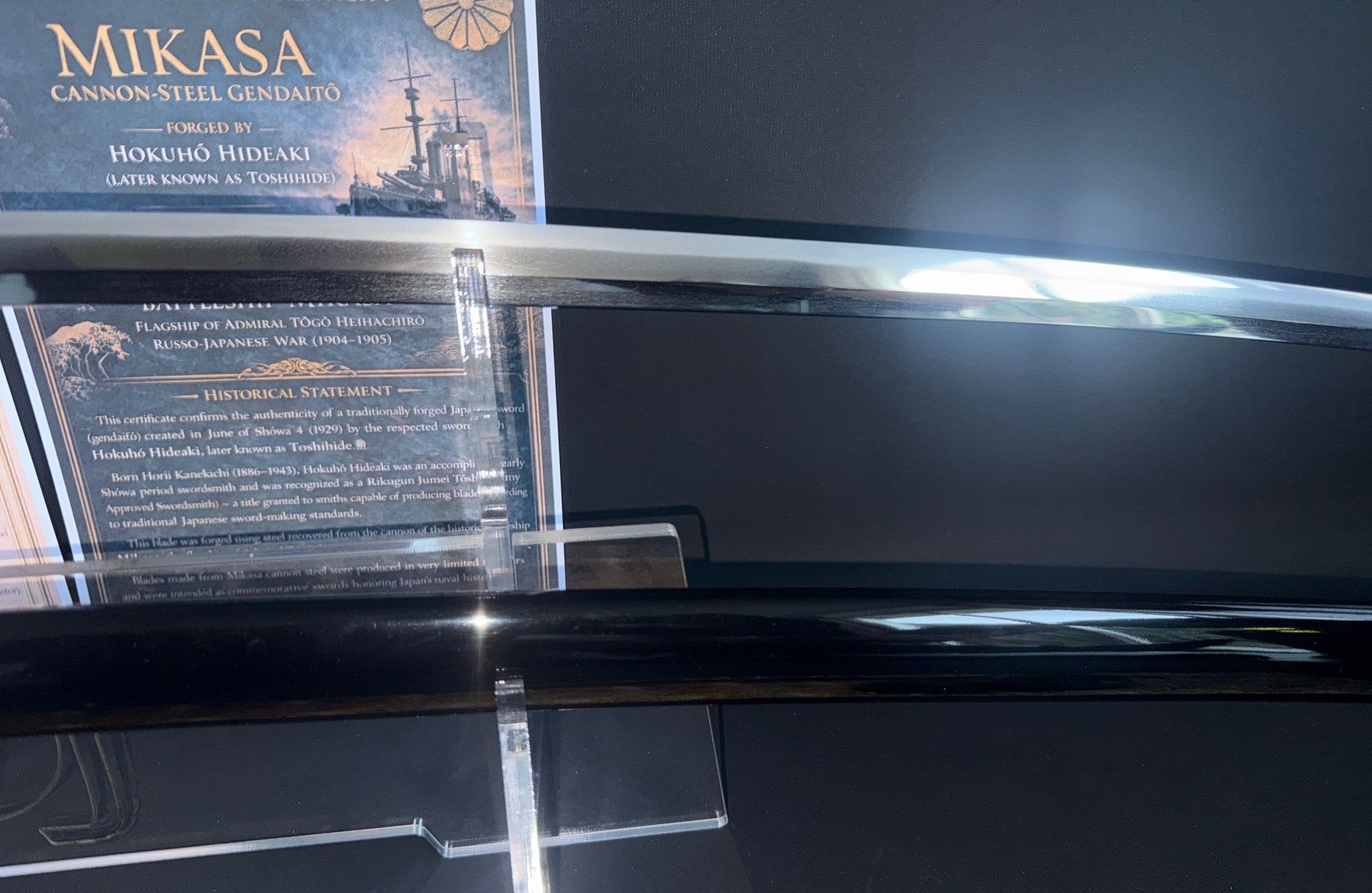
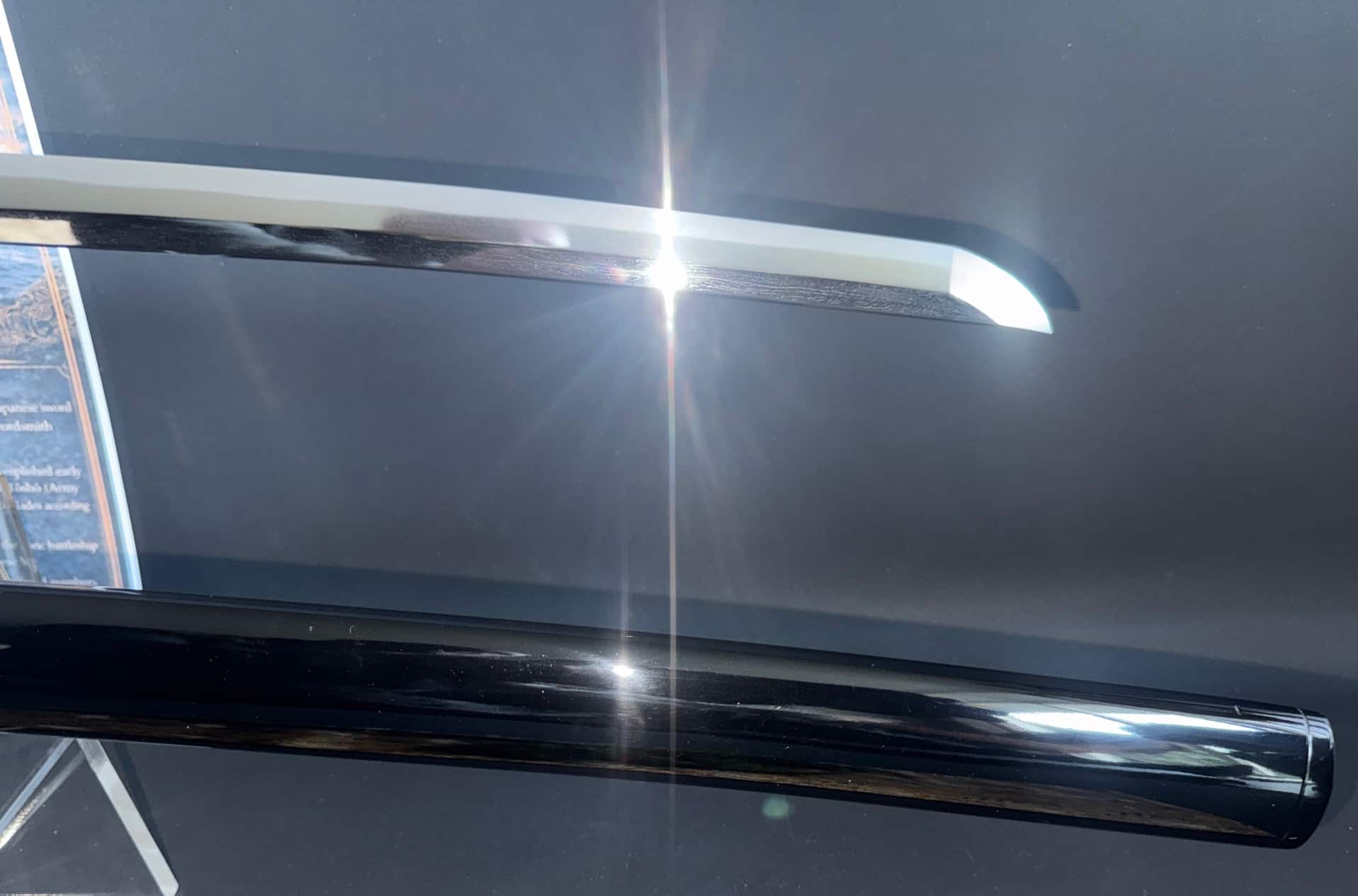
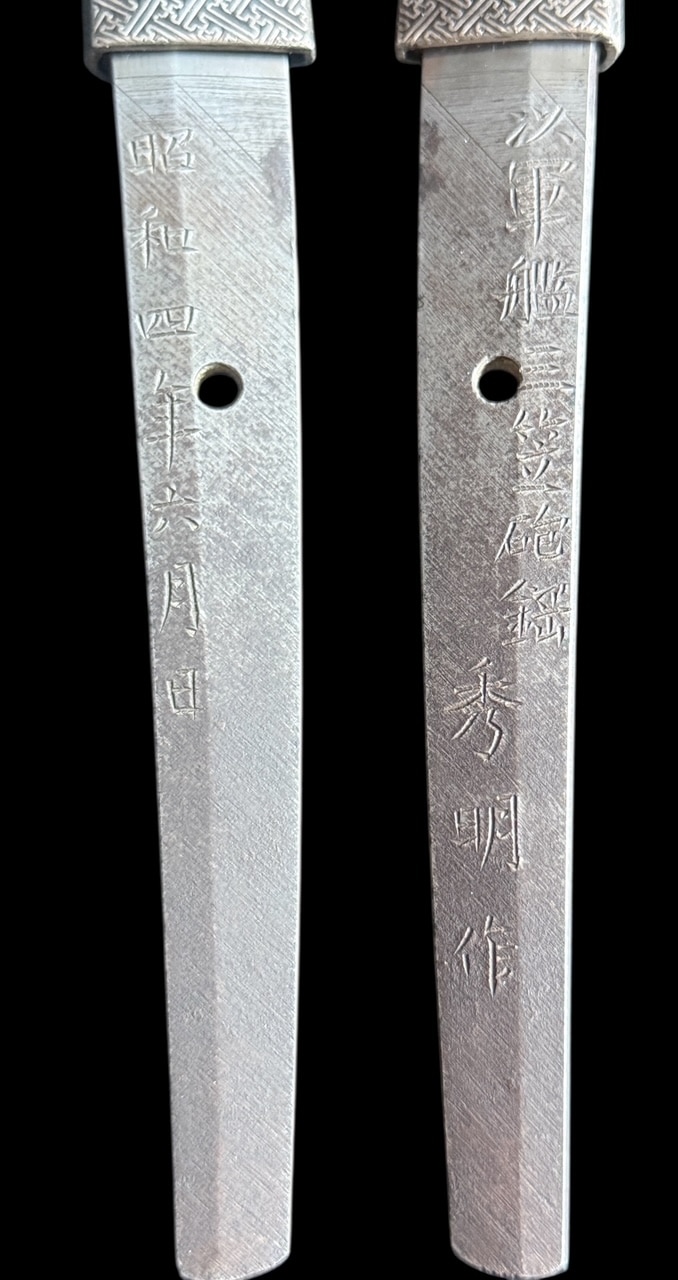
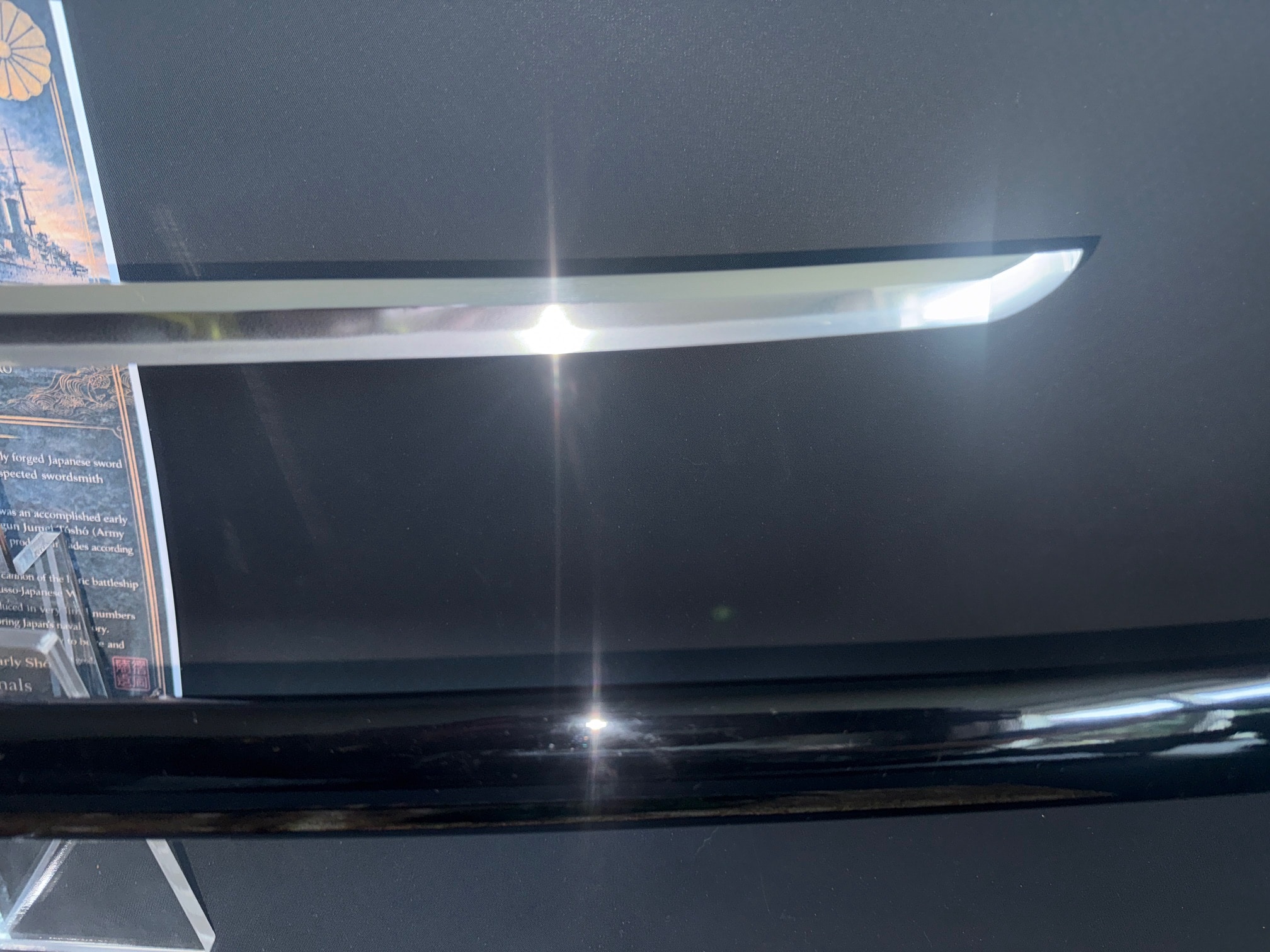
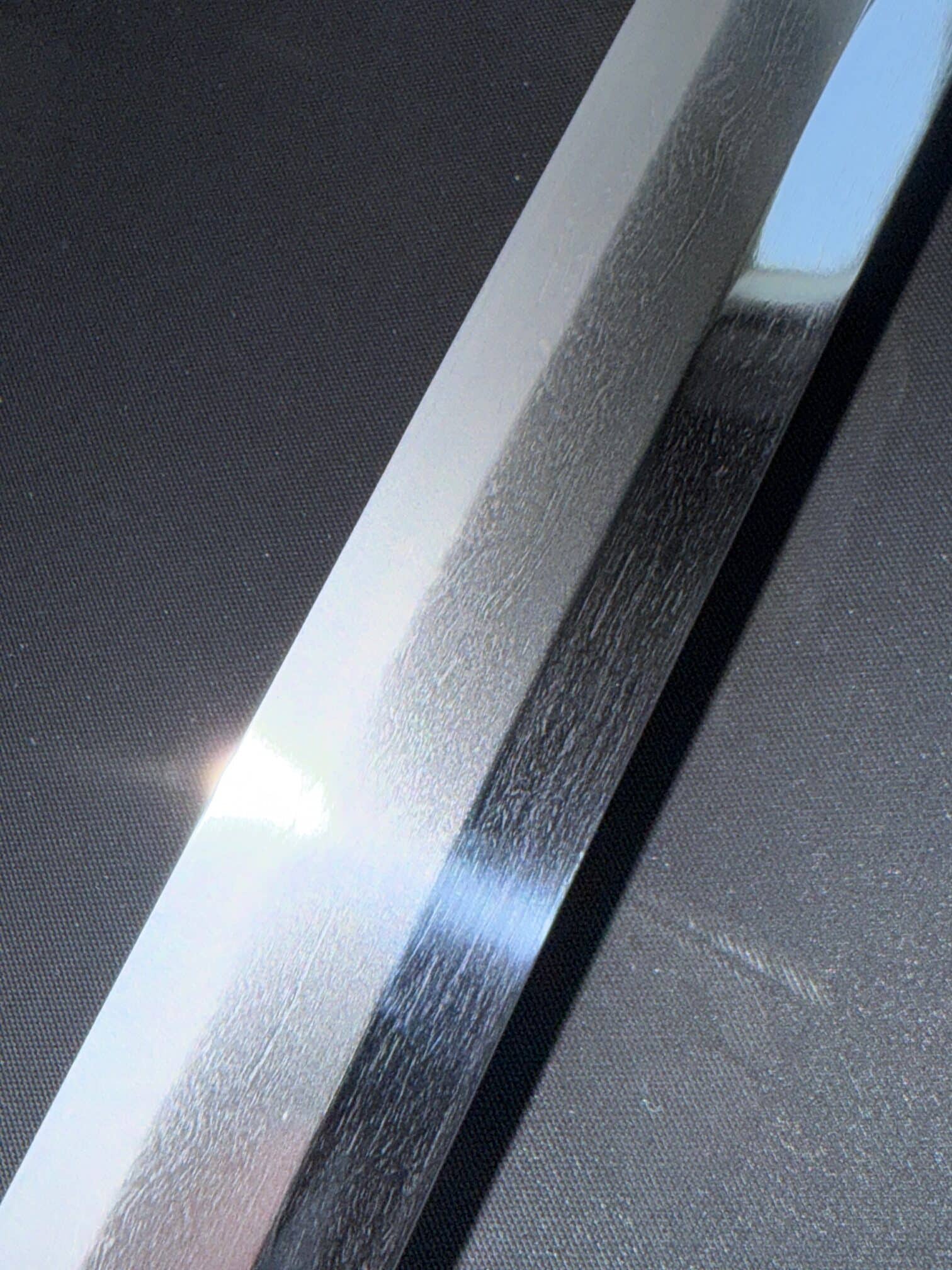
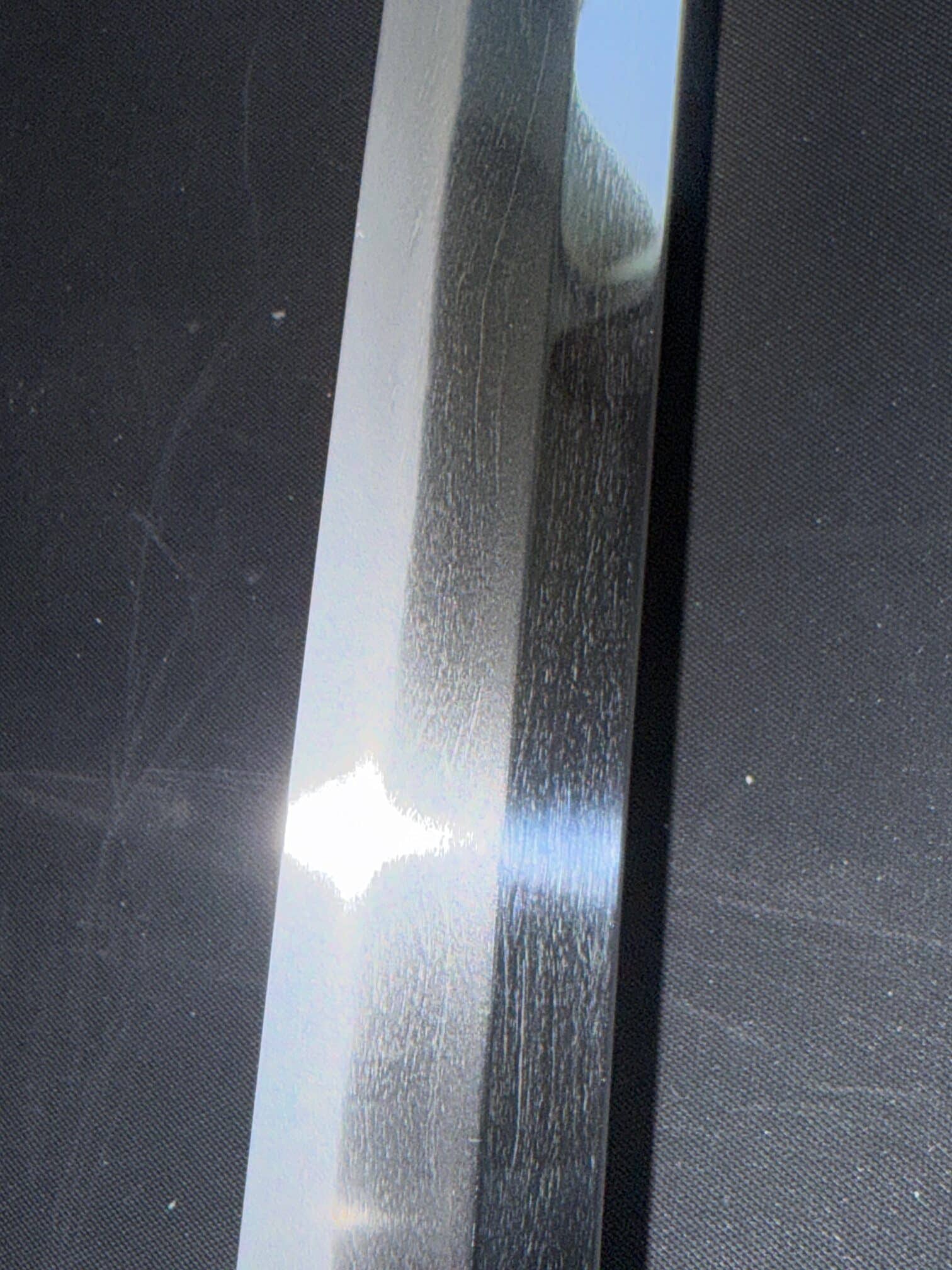
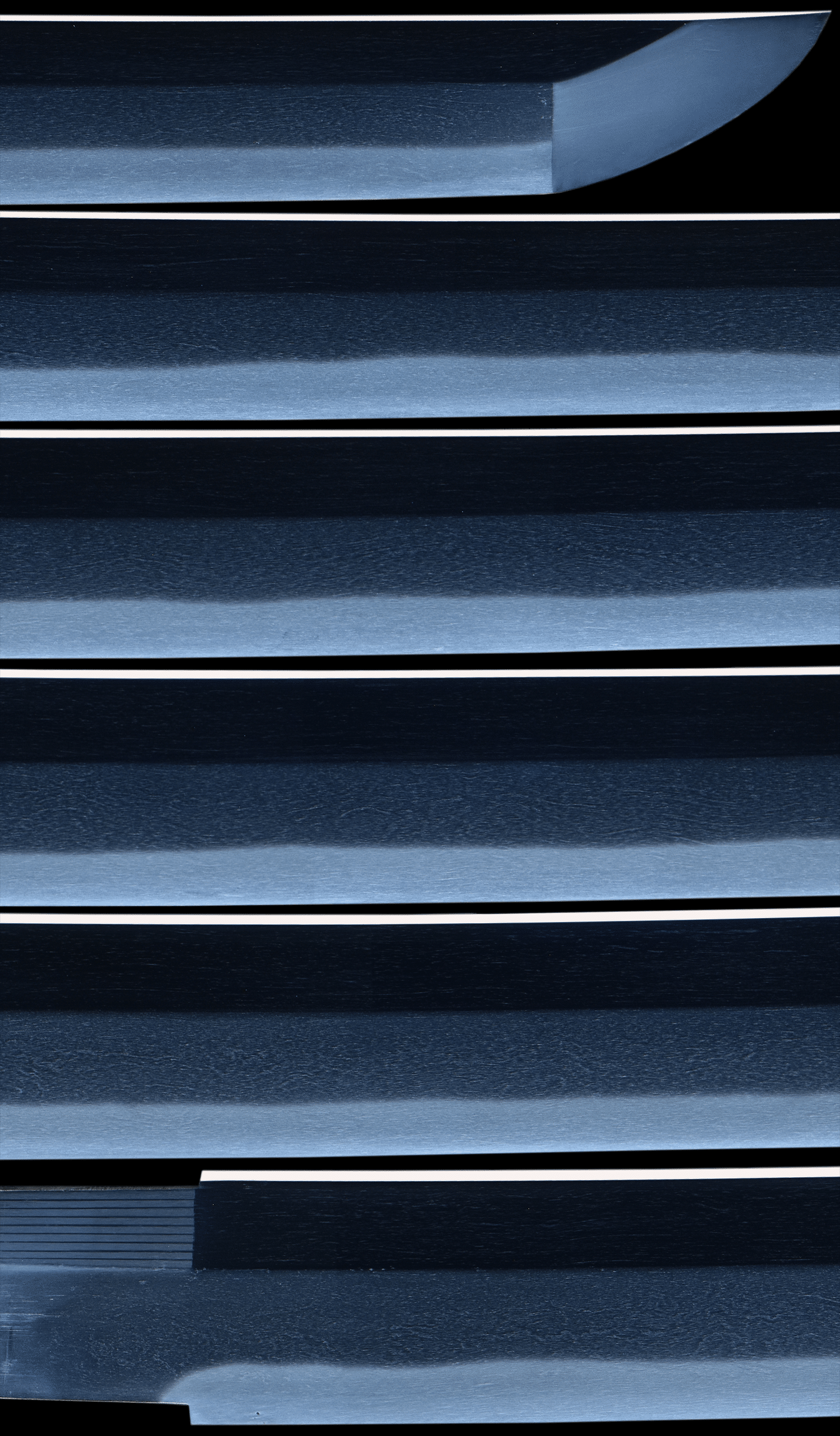
The blade is entirely hand forged and water hardened. The hamon shows proper crystalline activity, and the geometry demonstrates careful traditional shaping. The nakago is correctly dated and well preserved, further confirming its early pre-war manufacture.
In 1933, Hideaki respectfully changed his mei to “Toshihide” after the kanji used in his name overlapped with that of a newborn member of the Imperial family. Blades signed “Hideaki” therefore belong to a clearly defined and desirable early period of his career.
Today, early dated examples are increasingly appreciated by collectors because they combine true traditional workmanship with modern historical context. The addition of Mikasa cannon steel elevates this piece beyond a typical Shōwa sword into an object of both military history and swordsmithing heritage.
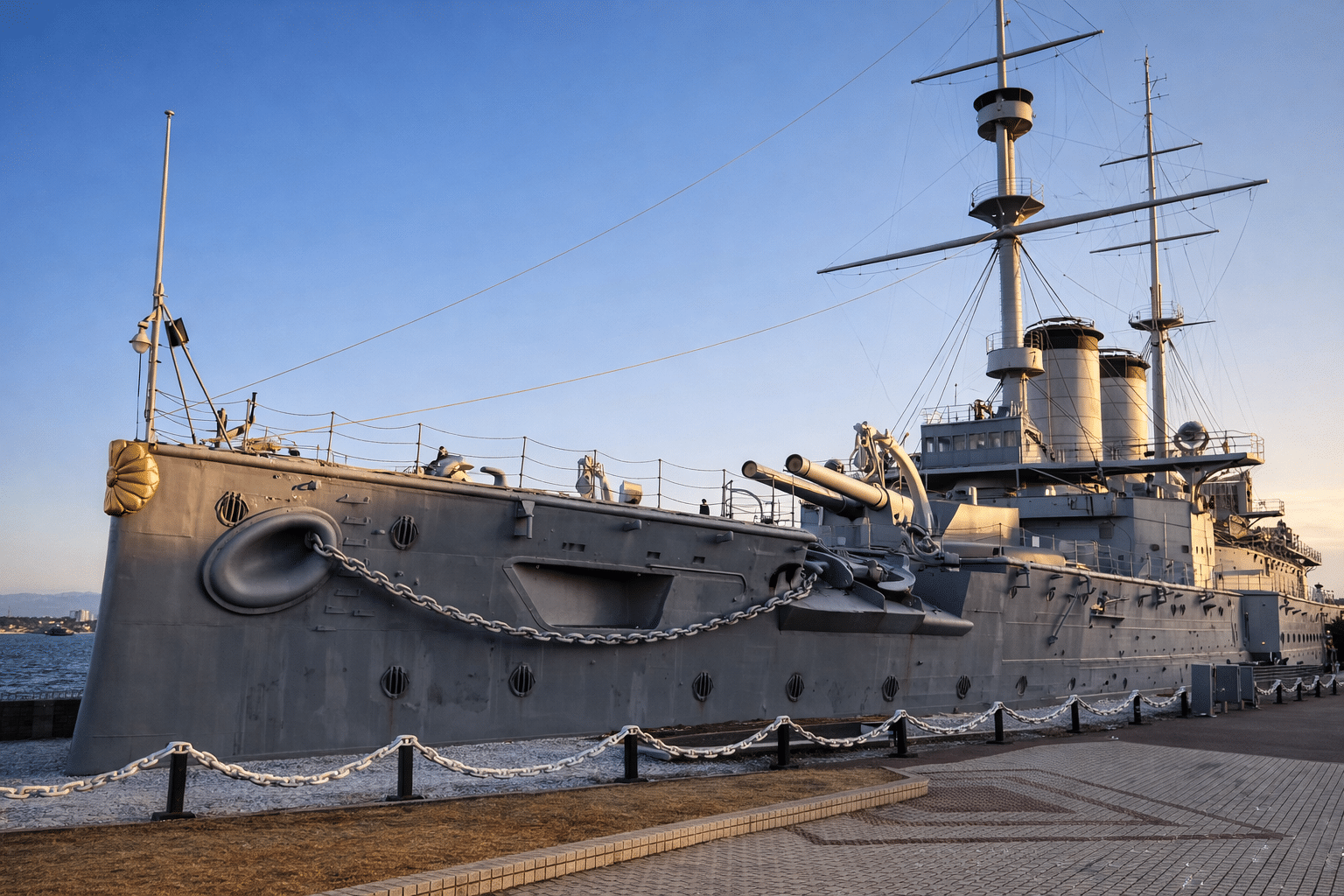
The historical importance of the battleship Mikasa cannot be overstated. Today preserved as a museum ship in Yokosuka, she remains the only surviving pre-dreadnought battleship in the world and the most important surviving warship of the Imperial Japanese Navy. As Admiral Tōgō’s flagship, she became a powerful national symbol of naval strength and technological progress.
Most blades produced from Mikasa cannon steel were tantō, while full-length swords are known only in very small numbers, making examples such as this exceptionally rare and historically important.
元軍担三笠北峰秀明
Moto Guntan Mikasa Hokuhō Hideaki
昭和四年六月日
A day in June, Shōwa 4 (1929)
• In full professional polish
• Traditional water-quenched hamon
• Properly dated nakago
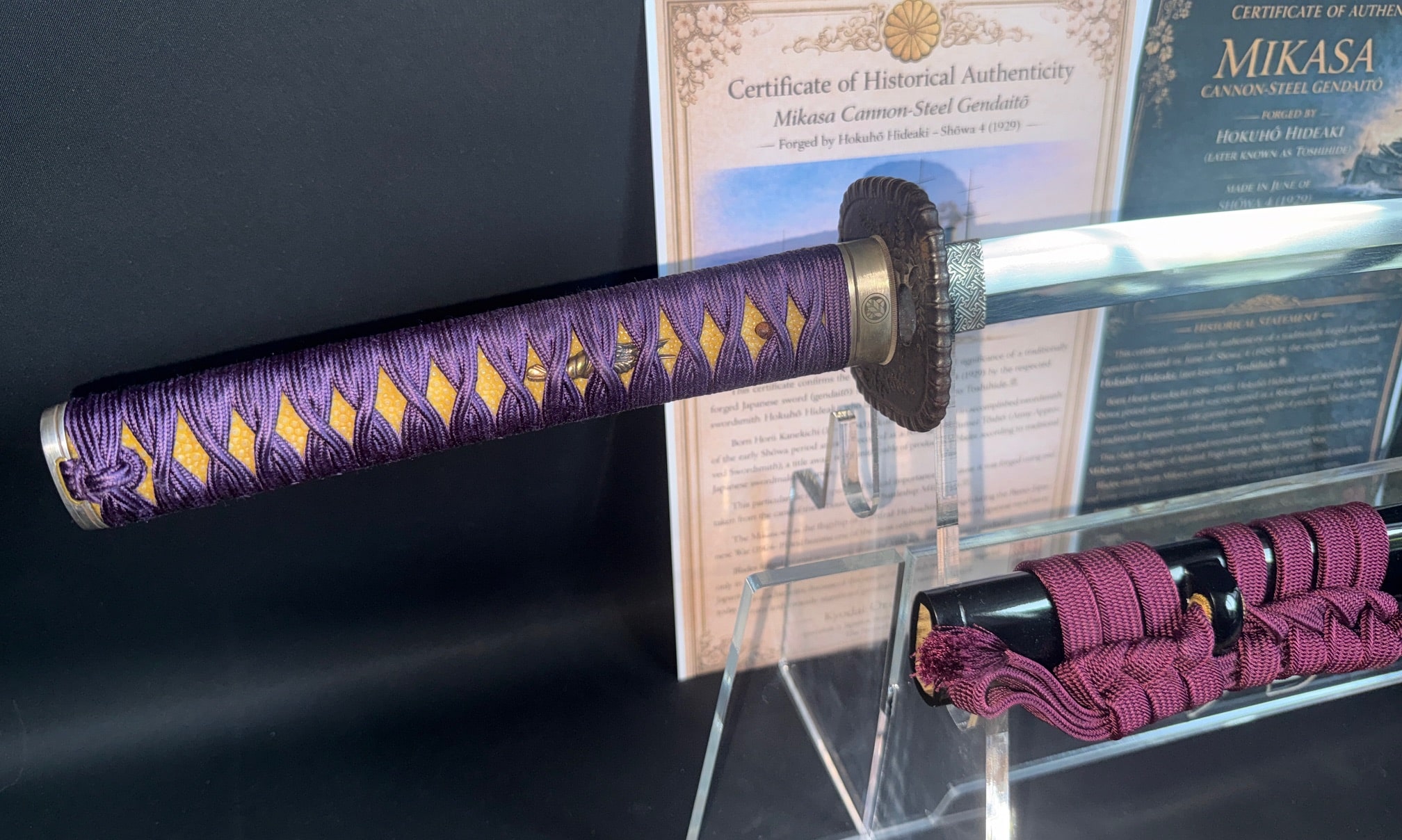
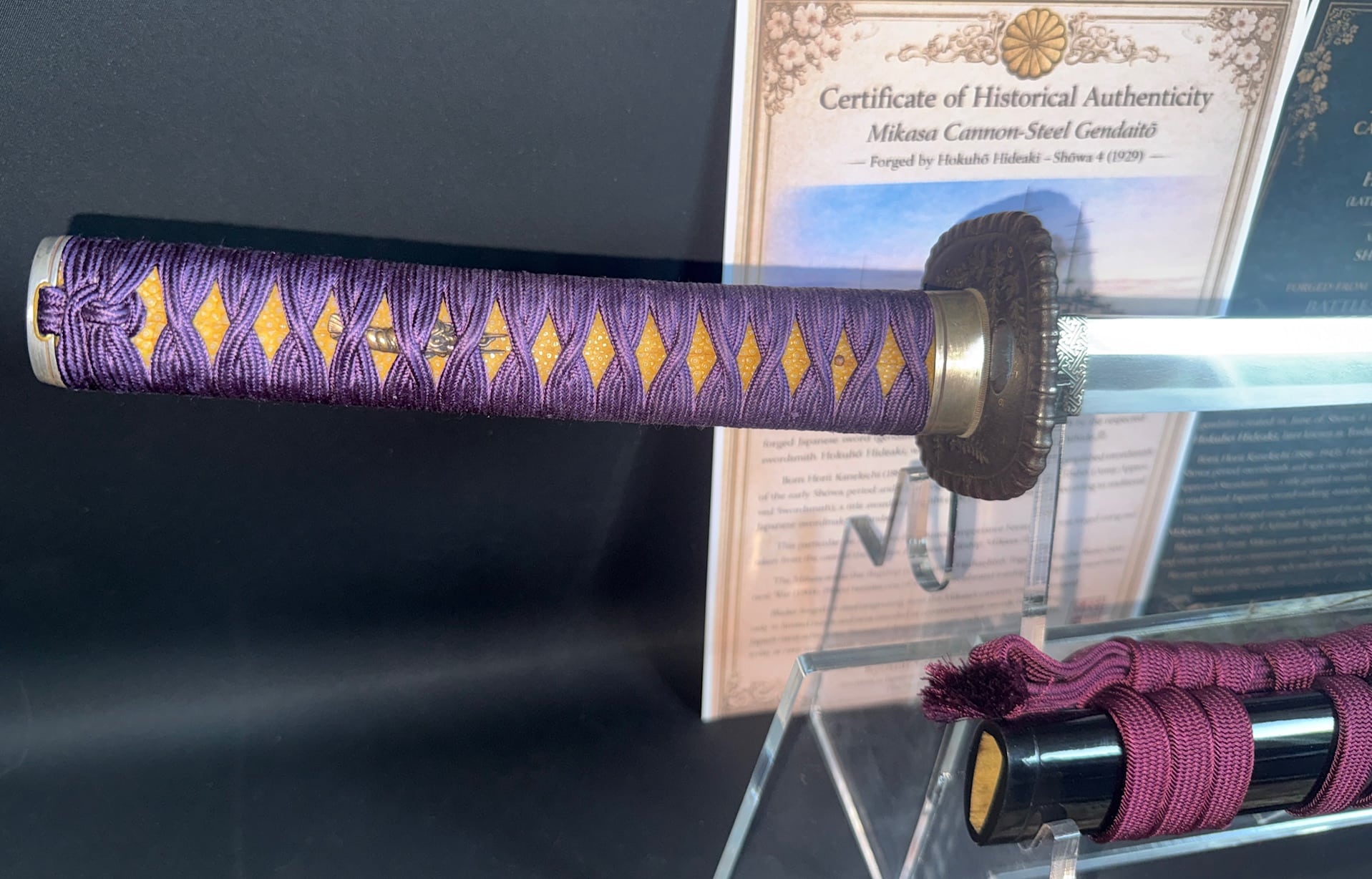
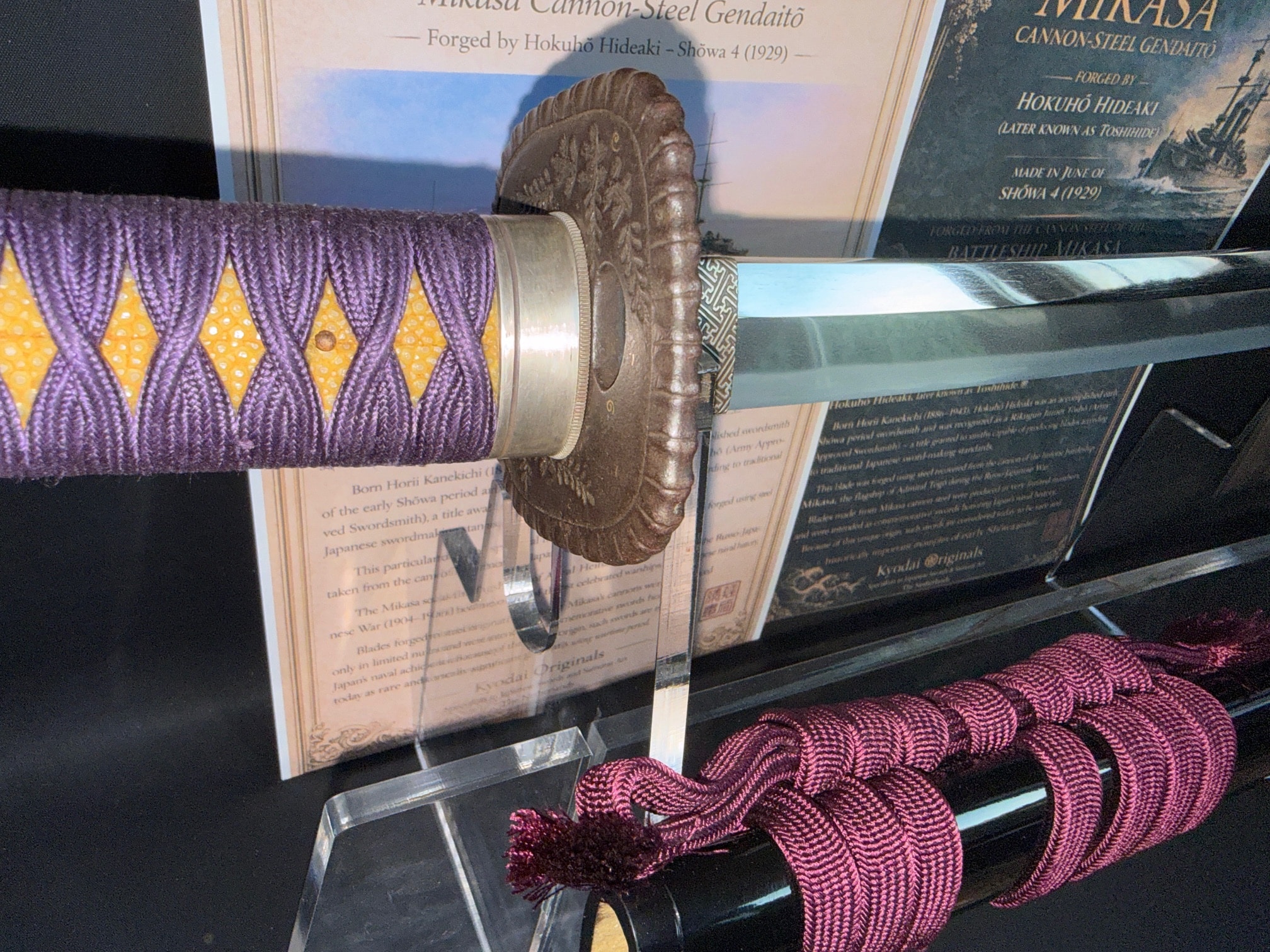
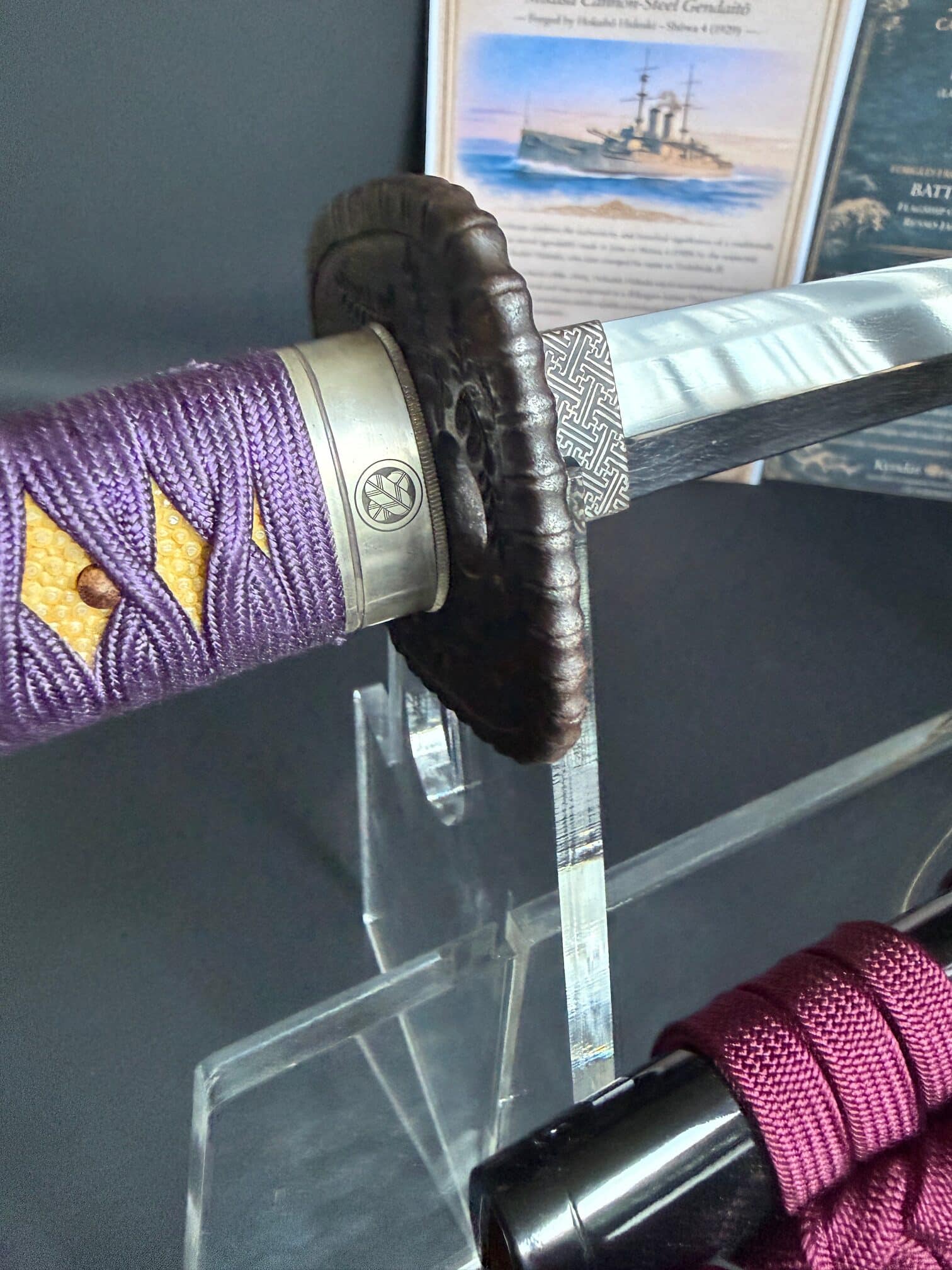
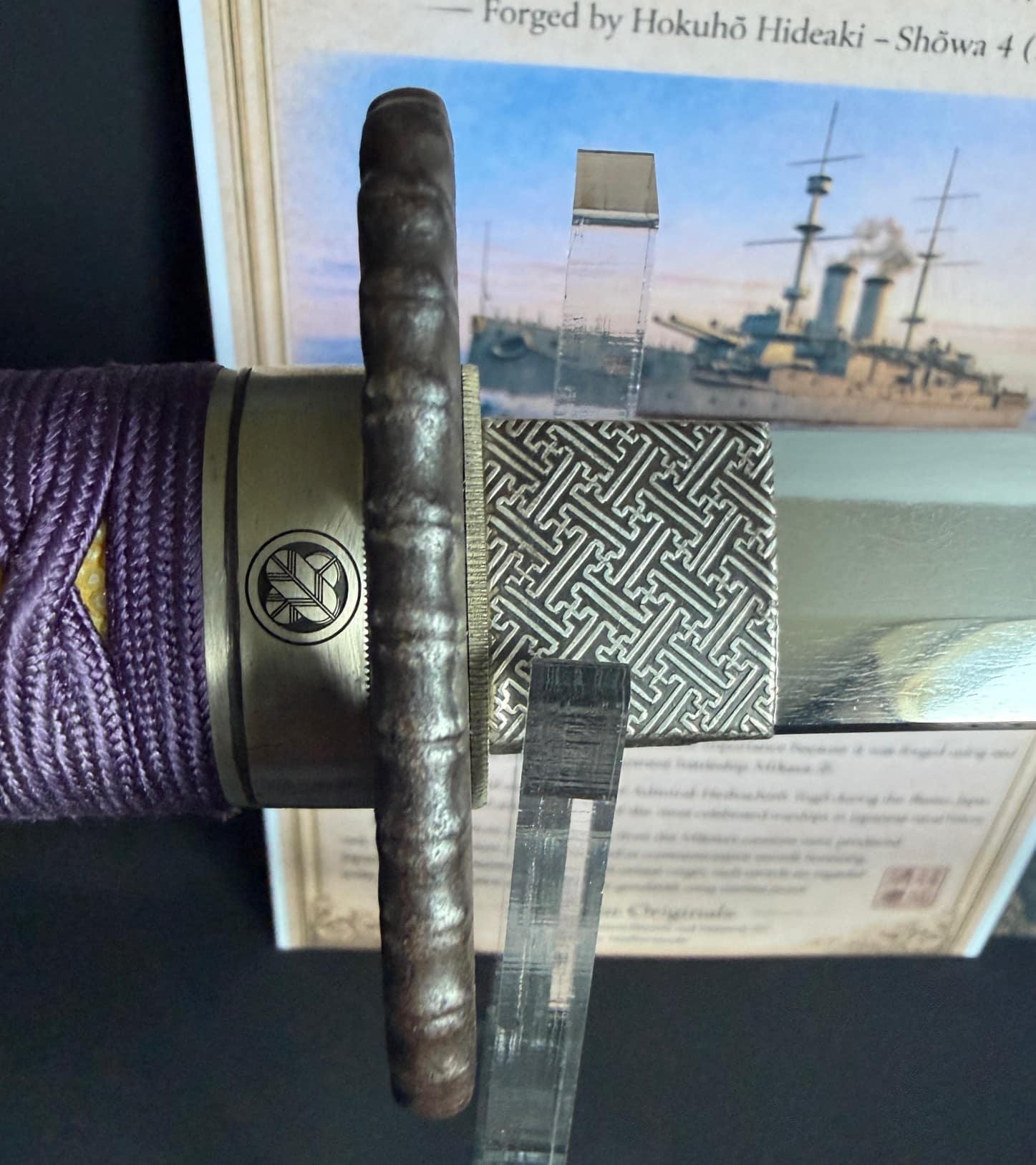
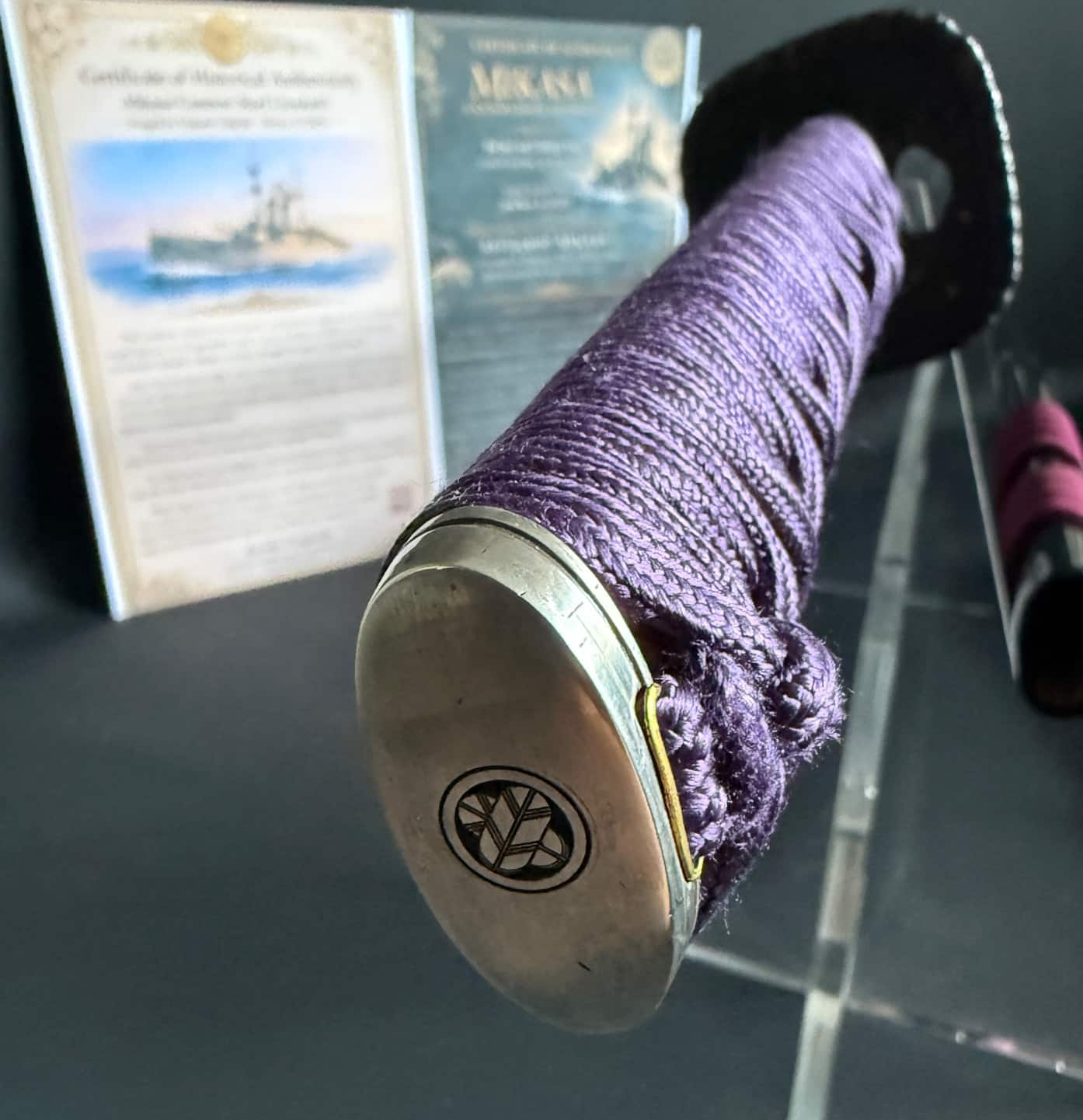
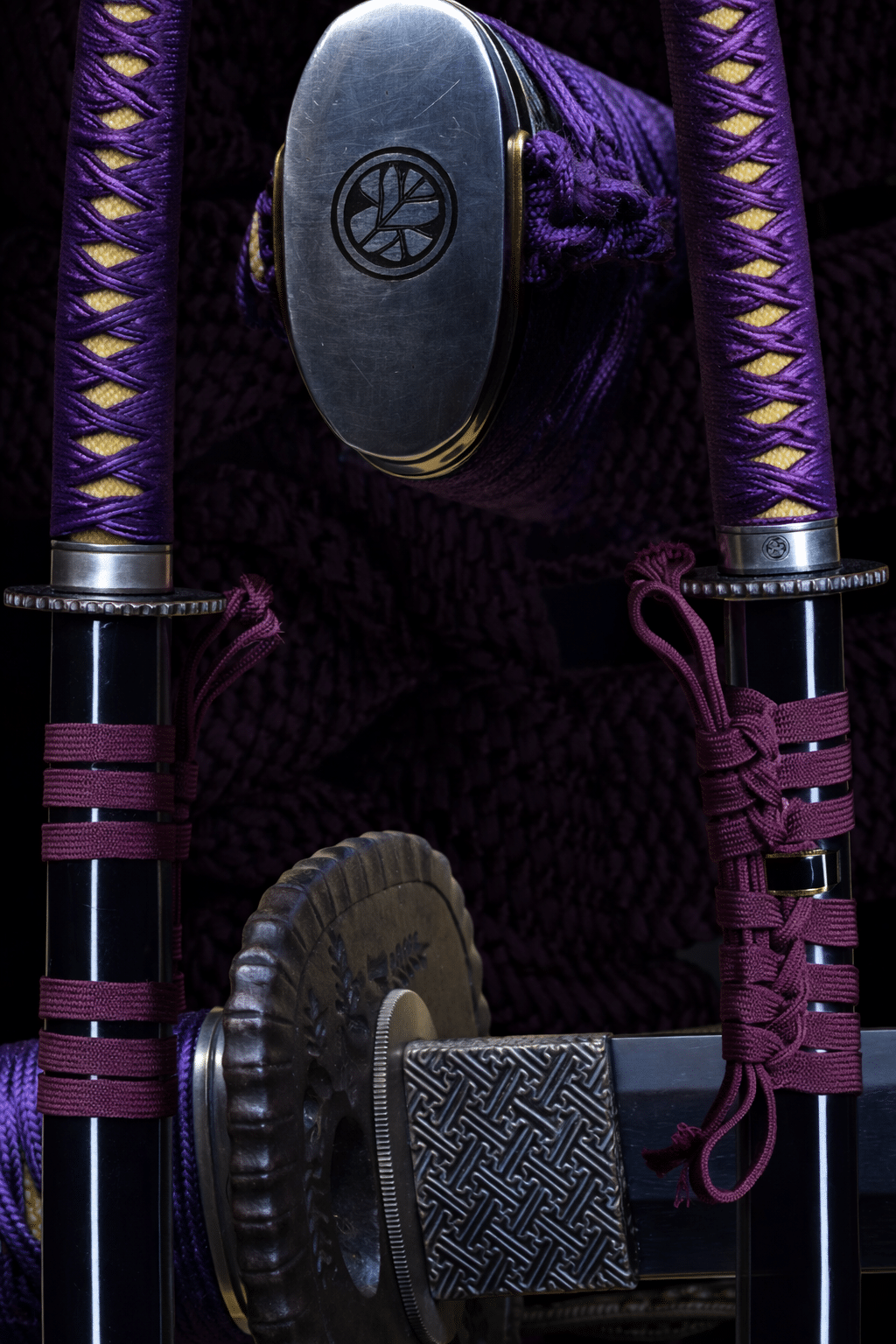
• Mounted in carefully restored koshirae
The mounts have been sympathetically restored, preserving period character while ensuring proper presentation and structural integrity.
An early, traditionally forged gendaitō by a recognized Shōwa-period smith, made from the cannon steel of the battleship Mikasa a historically significant and highly collectible example suitable for advanced study and collection.
KvK: 51964147
C.W. Slok - Kyodai Originals
Bank: NL25 KNAB 0509 1310 18
BIC: KNABNL2H
© 2026 Kyodai Originals is made with ❤ by Nieuwblik.com


