
€ 31.500,00
1 in stock
Coming Soon to Kyodai Originals.
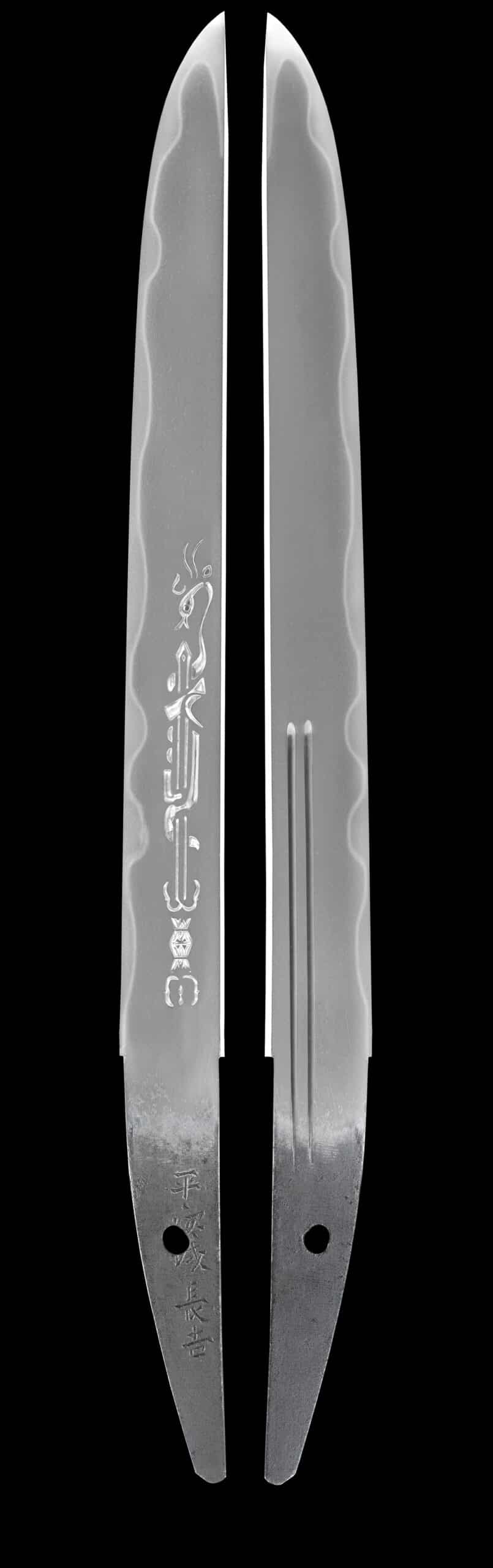
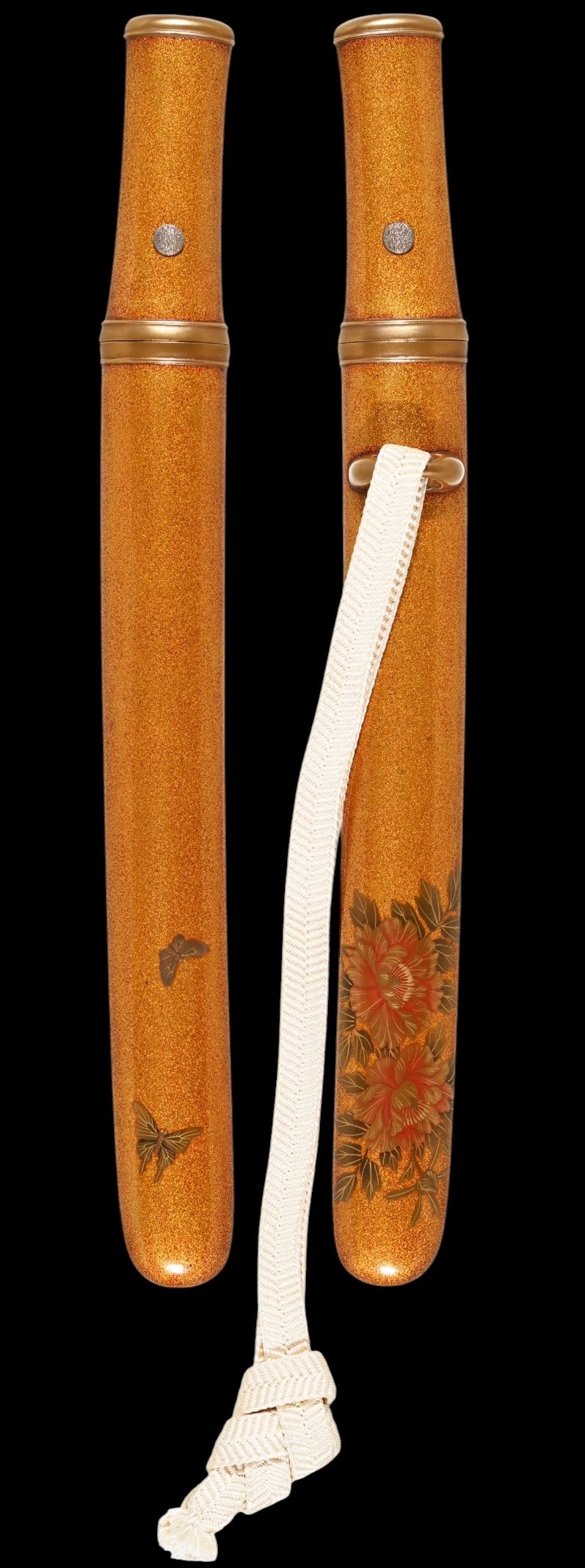
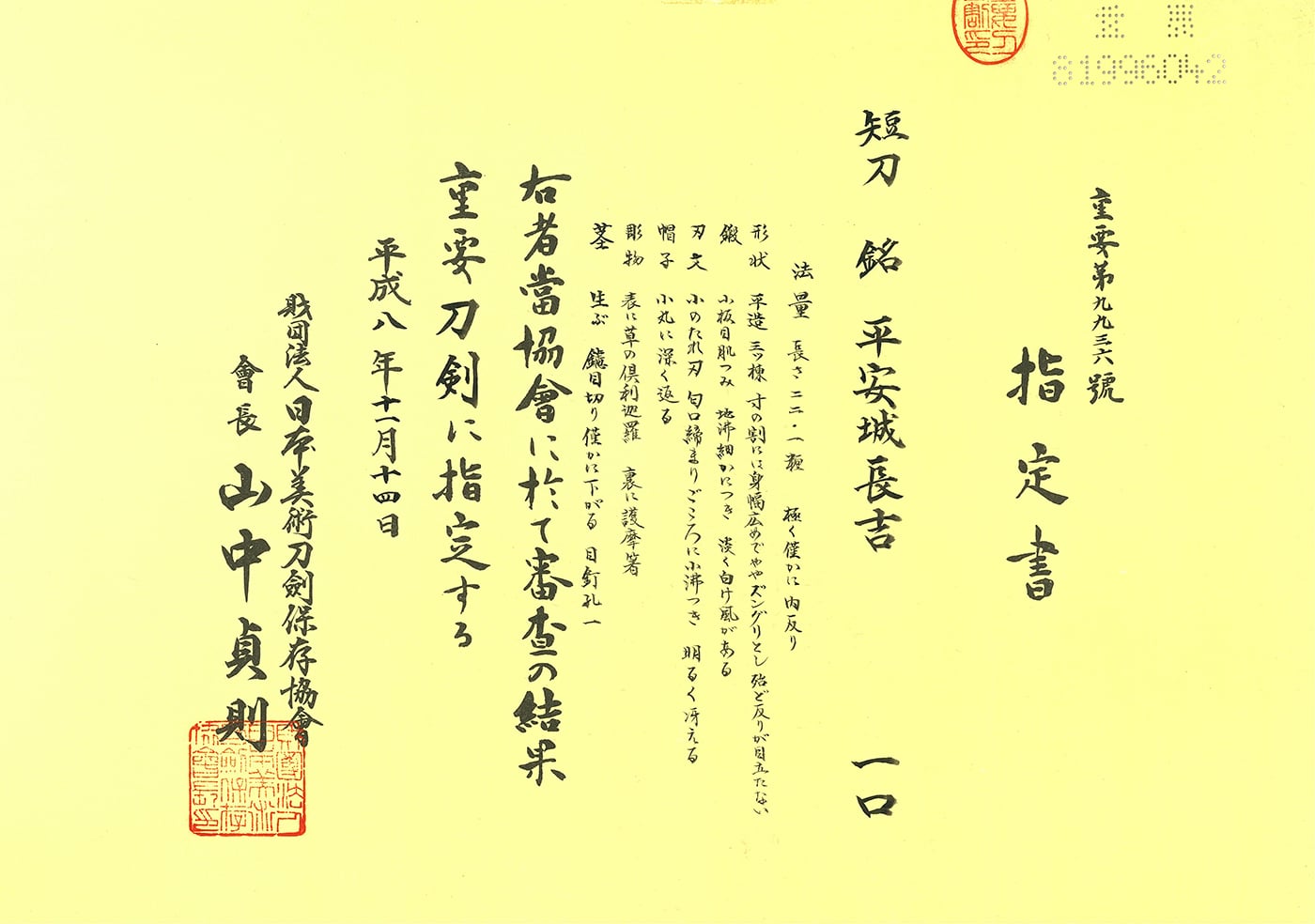
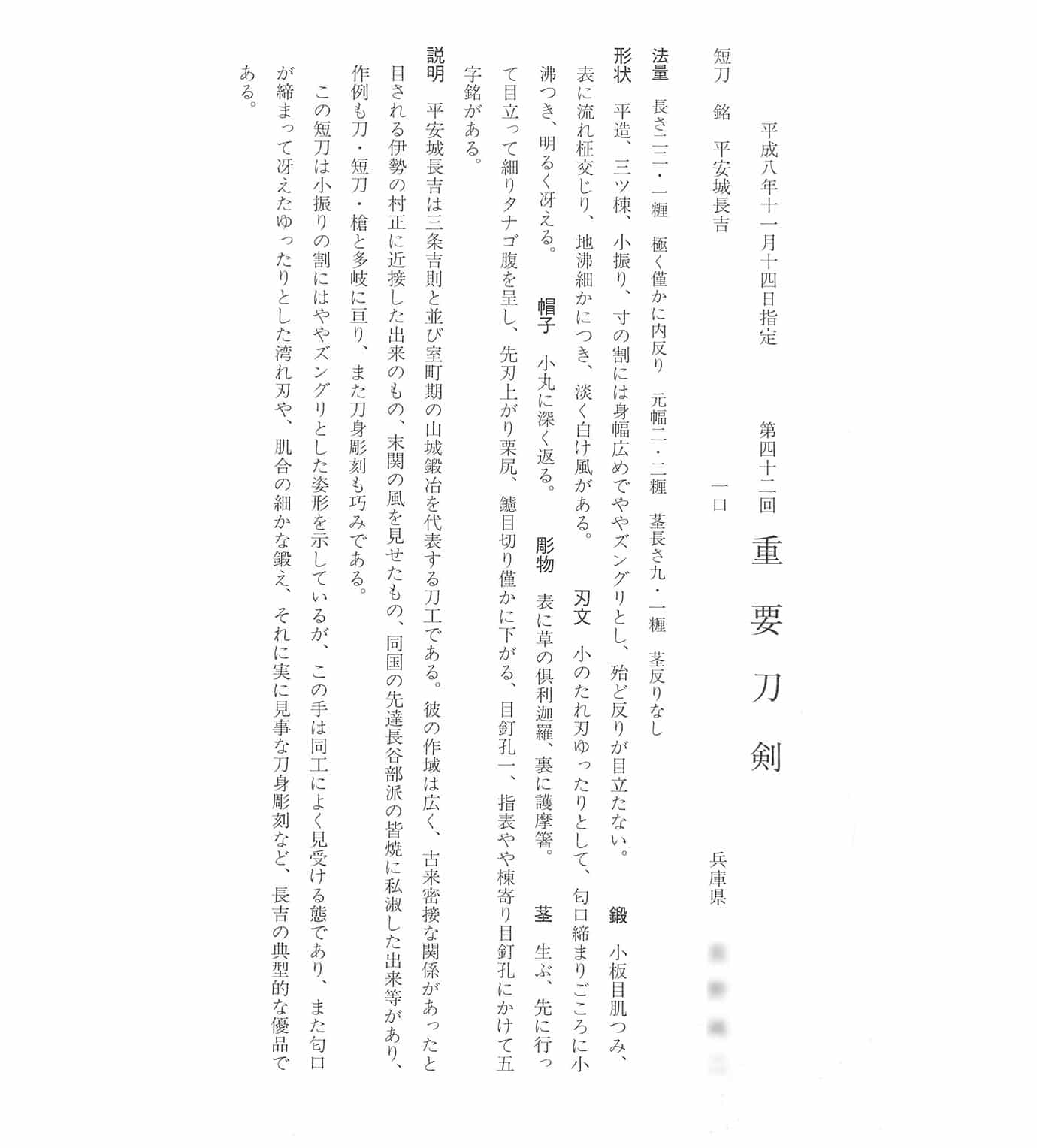
We are proud to present an exceptionally important and beautifully preserved NBTHK Jūyō Tōken tantō by Heianjō Nagayoshi, designated during the prestigious 42nd Jūyō Important Sword session on December 14th, Heisei 8 (1996).
This remarkable blade represents one of the finest surviving examples of late Muromachi-period Kyoto sword craftsmanship and holds extraordinary importance within the history of Japanese swords due to its direct connection with the origins of the legendary Muramasa tradition.
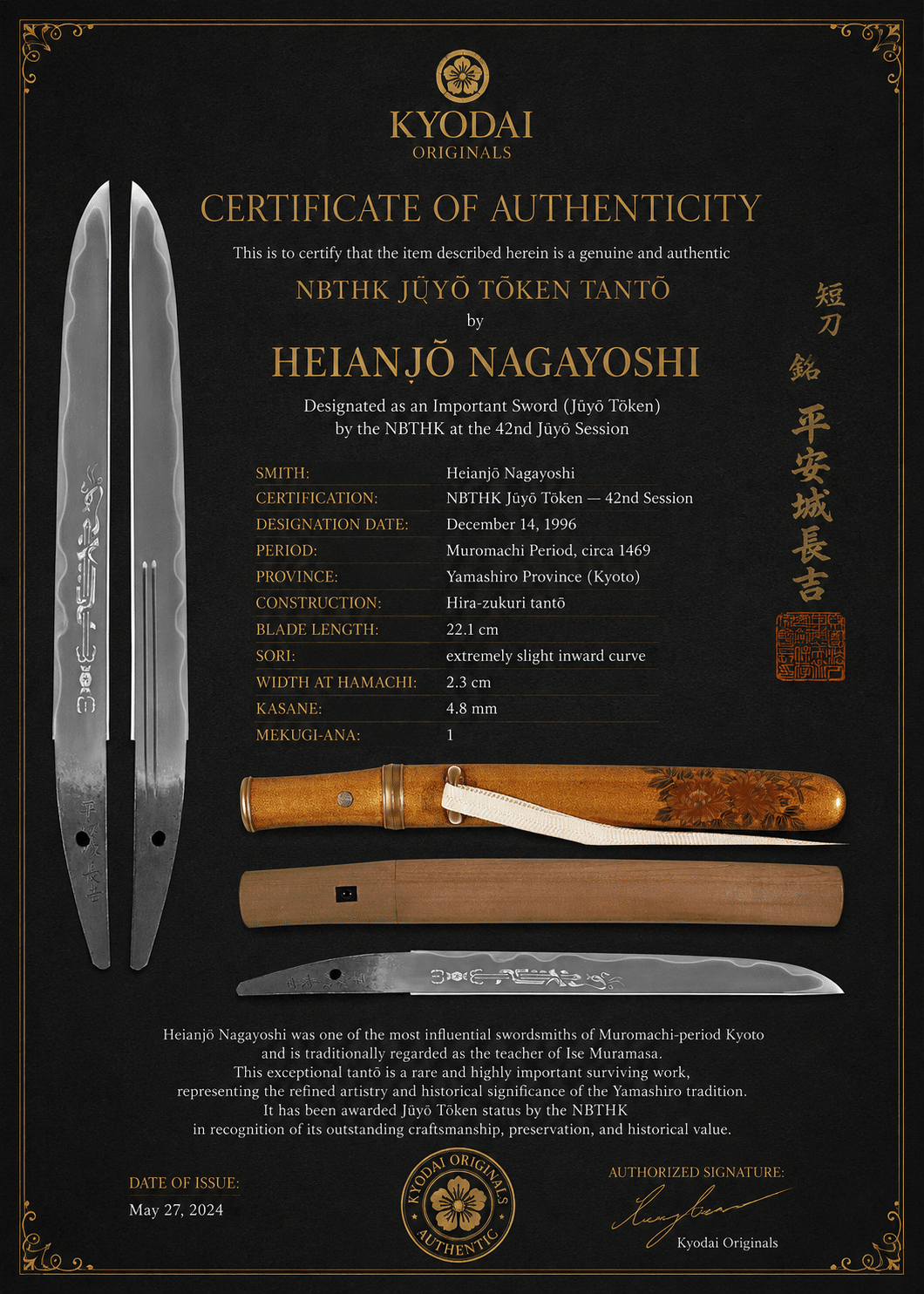
The official NBTHK Jūyō paper identifies the blade as:
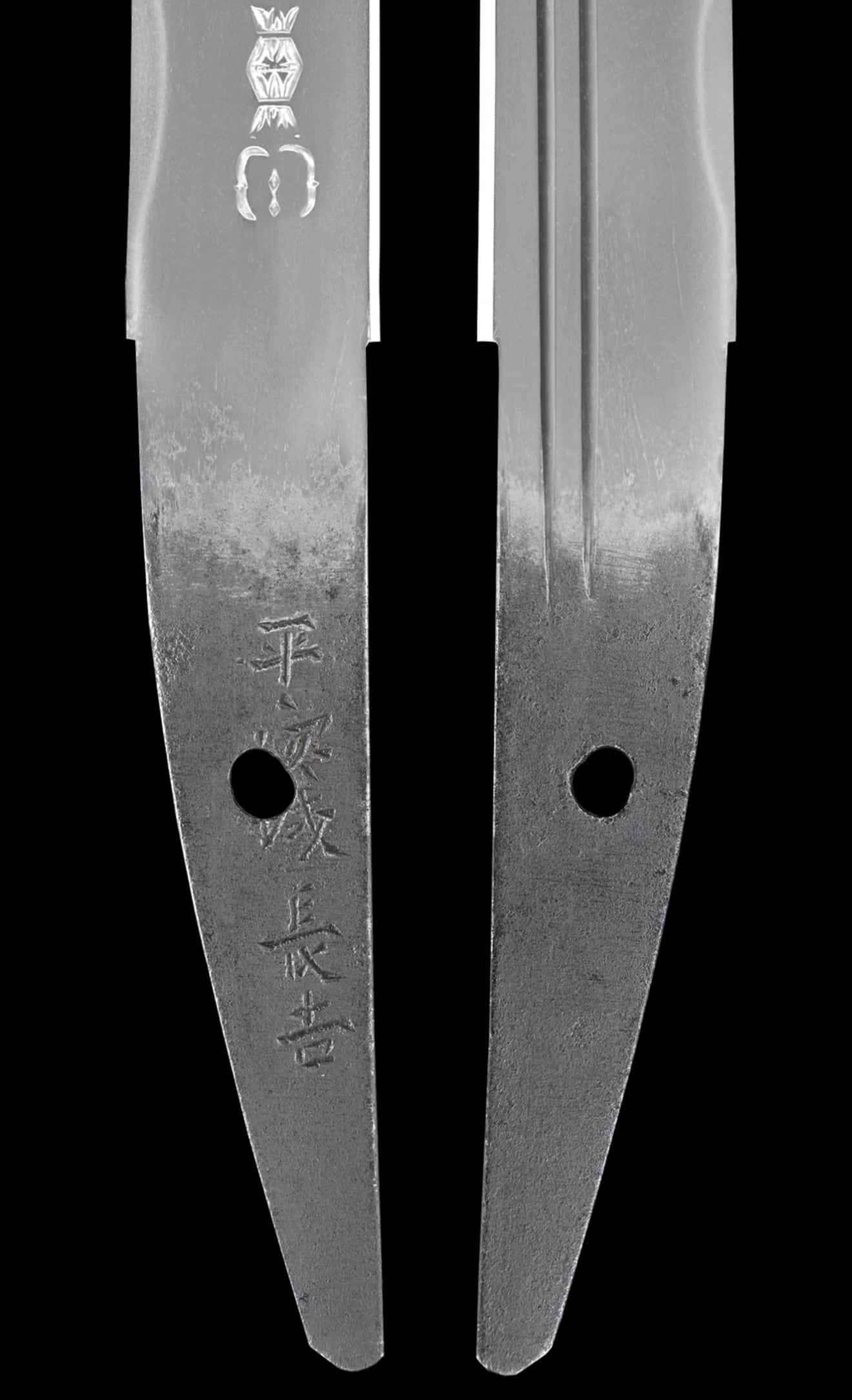
Tantō Signed: Heianjō Nagayoshi
Length: 22.1 cm
Curvature: very slight inward curve
Construction: Hira-zukuri
Mekugi-ana: 1
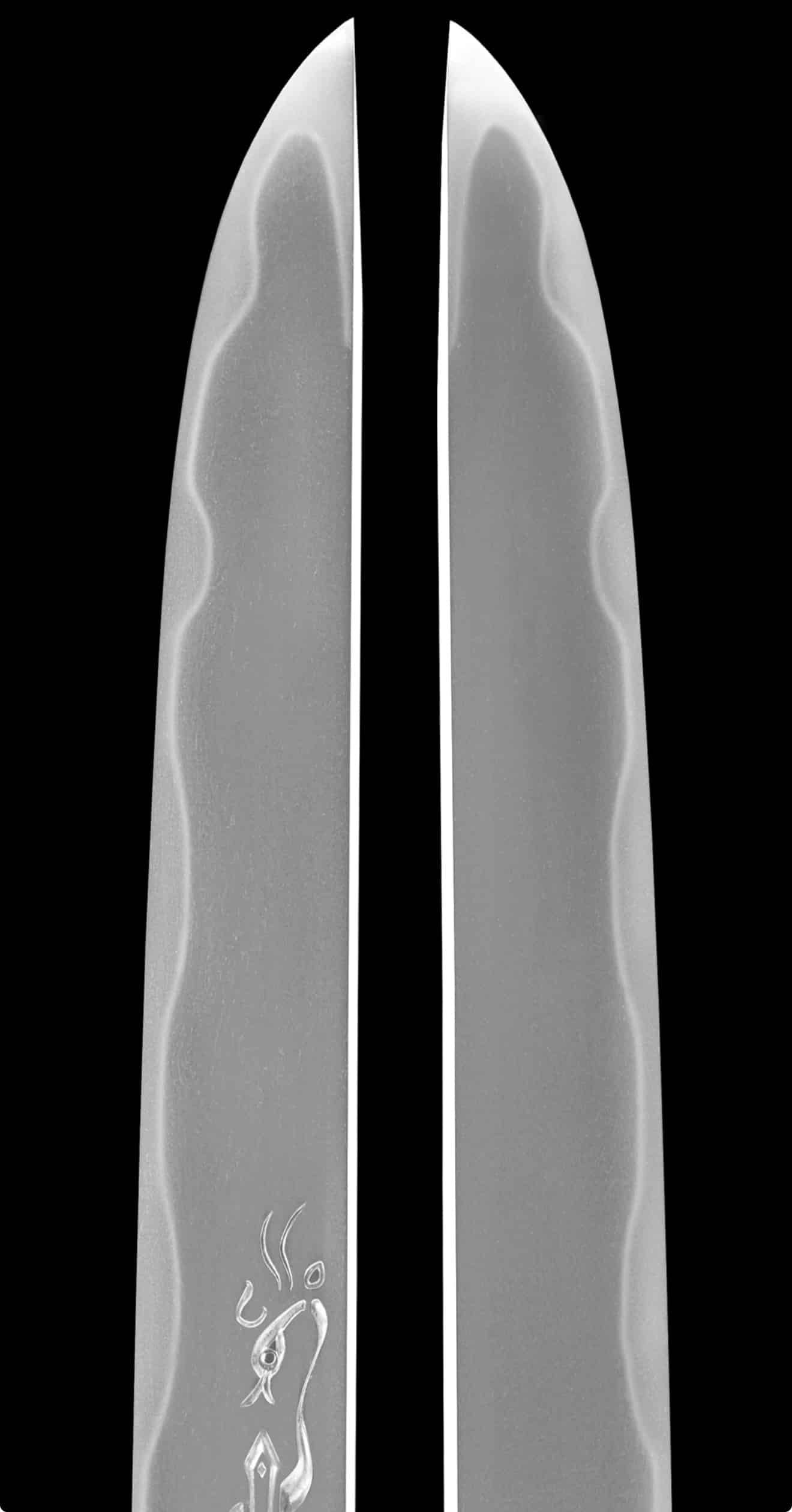
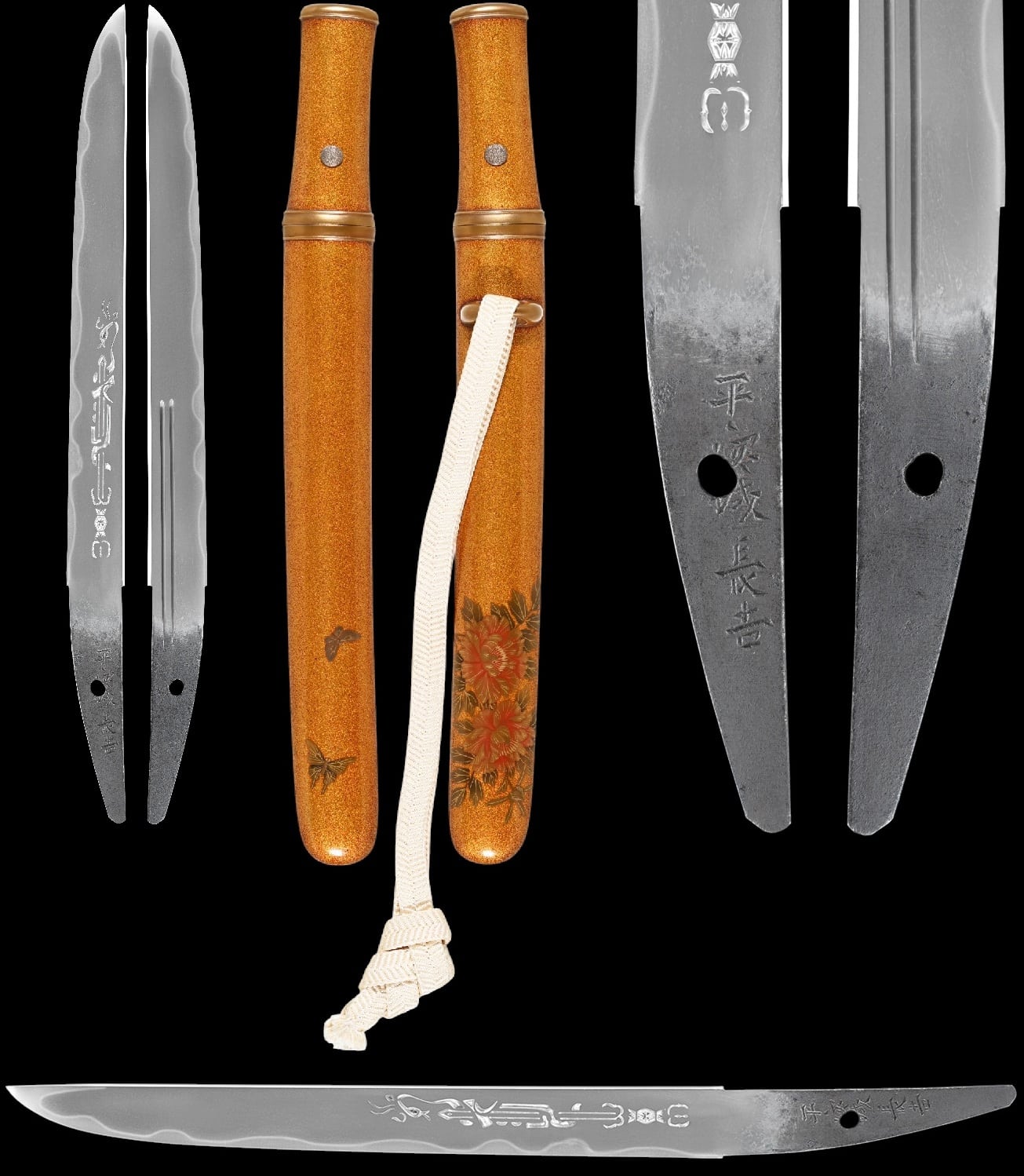
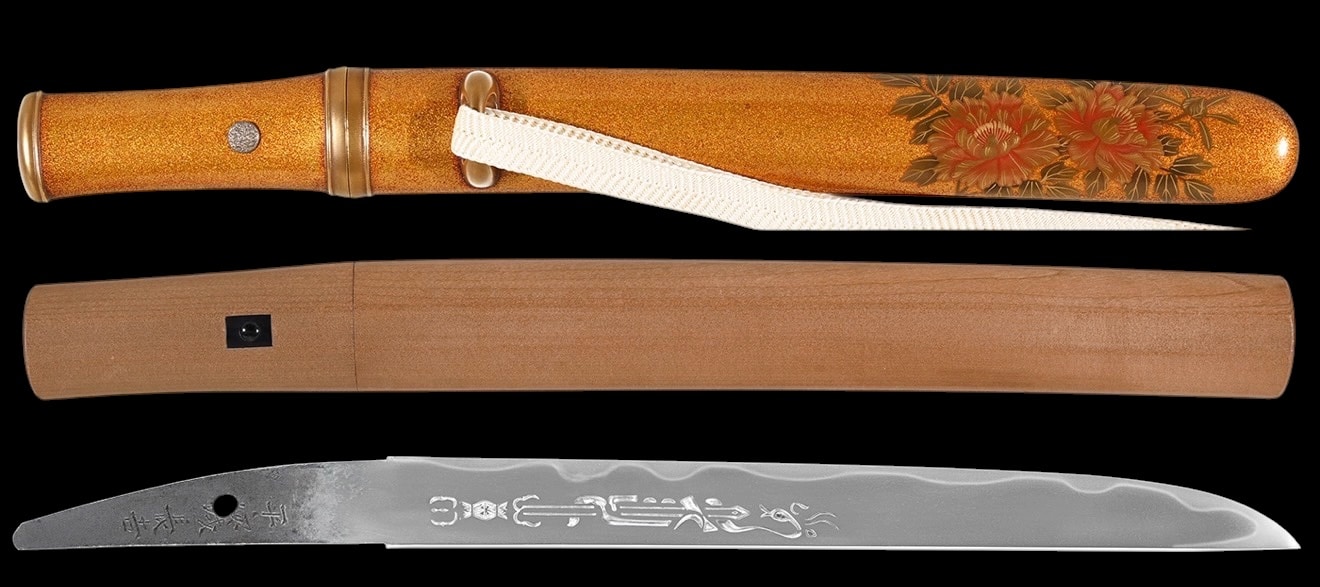
The blade is described as having an elegant and compact shape with a wide mihaba for its size and almost no curvature, creating a powerful yet refined appearance. The forging pattern consists of a beautifully worked ko-itame hada, mixed with flowing masame elements, covered in fine ji-nie. The steel displays a bright and vivid surface with excellent texture and activity throughout.
The hamon is described as a refined ko-notare mixed with gunome, containing delicate internal activities such as ko-ashi and fine nie-based hataraki. The nioiguchi is bright and deeply consistent, demonstrating the high level of skill associated with Kyoto workmanship of this period. The boshi turns back gently in ko-maru style.
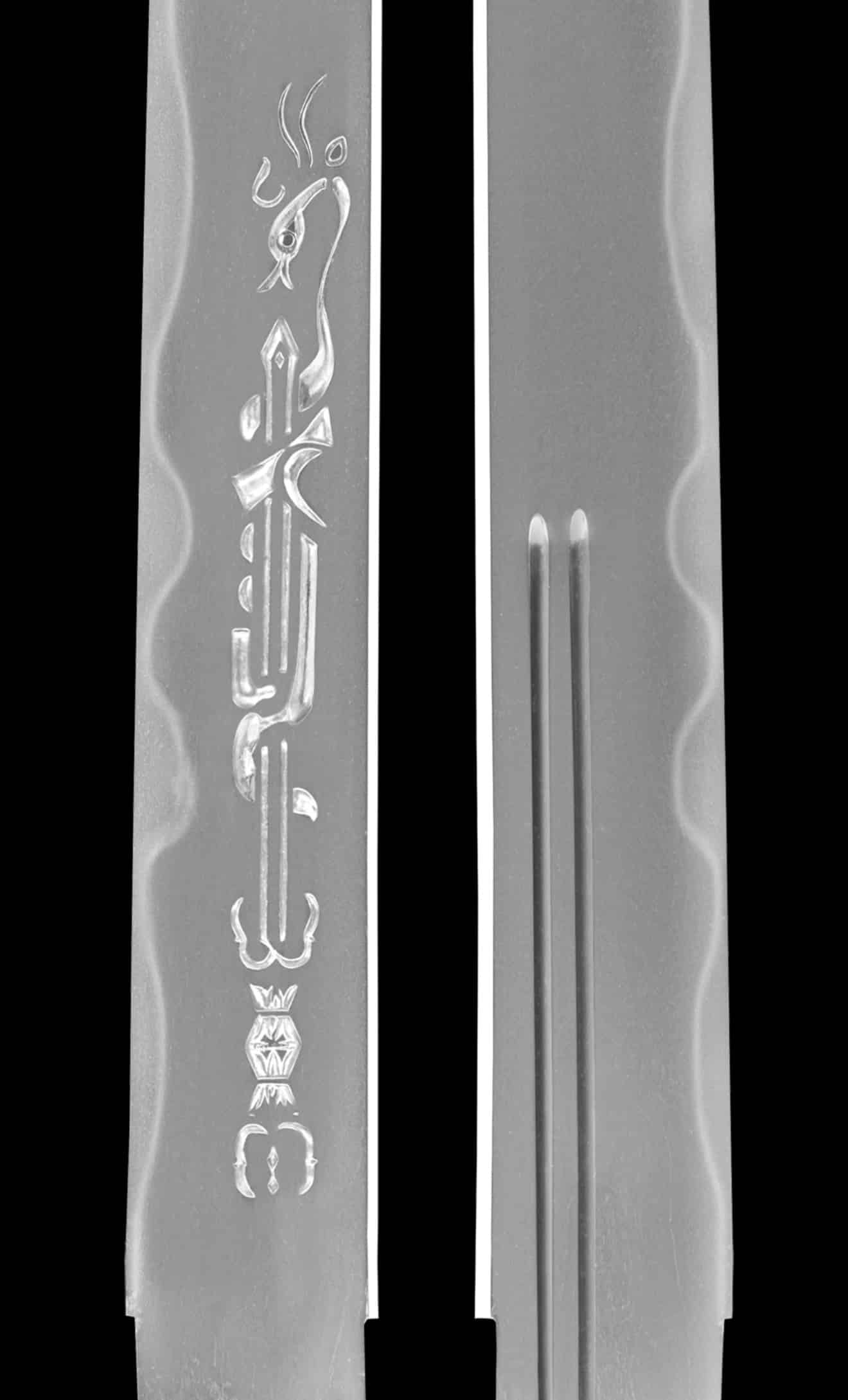
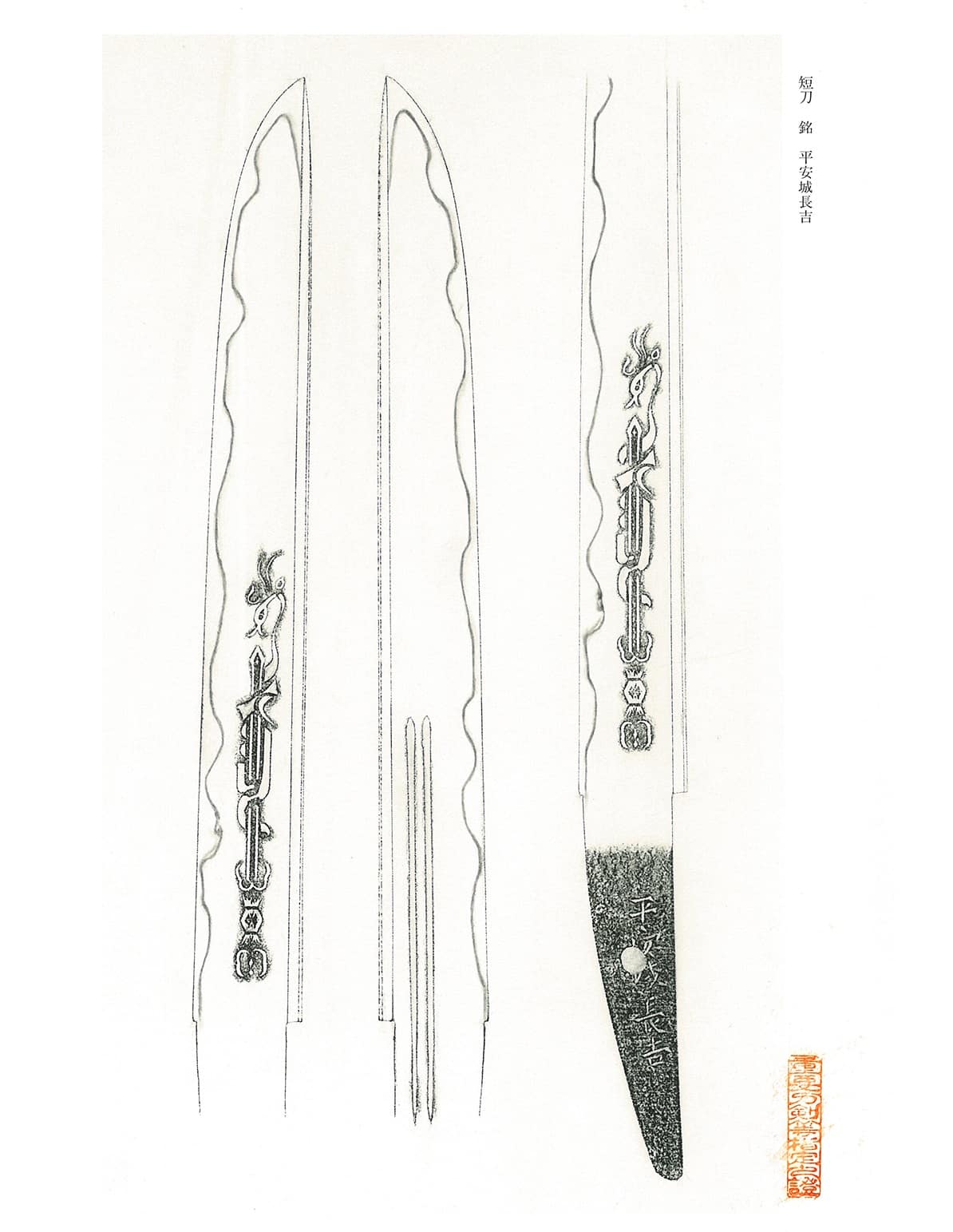
The blade also features an elegant horimono engraving on the omote side. According to the NBTHK description, the carving is executed with sophistication and harmony, perfectly balancing the blade’s compact form and contributing to its refined appearance.
The official Jūyō explanation further states that Heianjō Nagayoshi was one of the representative swordsmiths of Kyoto during the Muromachi period, alongside Sanjō Yoshinori. His workmanship varied widely and included styles resembling both Yamashiro and Mino traditions, as well as fully hardened blades. Historical tradition also records him as the teacher of Ise Muramasa, one of the most famous and legendary swordsmiths in Japanese history.
This historical connection is of enormous importance. Muramasa blades would later become legendary for their extraordinary cutting ability and fierce reputation, eventually becoming surrounded by centuries of myth and superstition. Surviving works by Heianjō Nagayoshi therefore represent a rare and direct link to the very origins of the Muramasa school.
The NBTHK specifically praises this tantō for its excellent proportions, refined forging, and beautifully executed horimono, noting that the blade strongly expresses the classic characteristics associated with Nagayoshi’s finest works. The paper concludes that this is a highly representative example worthy of Important Sword designation.
Forged around the Bunmei era, circa 1469, this tantō was created during one of the most fascinating transitional periods in Japanese history. Kyoto remained the artistic and cultural heart of Japan, and swordsmiths working there inherited centuries of refined Yamashiro tradition descending from the great Rai and Awataguchi schools of the Kamakura period. Within this environment, Heianjō Nagayoshi developed a style balancing elegance with the stronger practical requirements demanded by the age of war.
This blade perfectly embodies that balance.
Measuring only 22.1 cm, the tantō possesses remarkable authority and presence despite its compact dimensions. The broad shape, flowing hamon, bright jihada, and controlled horimono create a composition that is sophisticated without becoming excessive. It is a blade intended for connoisseurs collectors who understand that the highest level of Japanese sword art often reveals itself through subtle refinement rather than flamboyant activity.
Its designation as NBTHK Jūyō Tōken confirms its importance on the highest level. The Jūyō classification is awarded only to swords considered especially significant in terms of craftsmanship, condition, rarity, and historical value. Every blade undergoes rigorous examination by Japan’s leading sword scholars and specialists before receiving this recognition.
Very few signed and papered works by Heianjō Nagayoshi survive today, and even fewer have achieved Jūyō status. A blade directly connected to the origins of the Muramasa tradition and preserved in this level of condition is exceptionally rare.
At Kyodai Originals, we believe swords such as this transcend ordinary collecting.
This tantō is not merely an antique weapon it is a museum-worthy cultural artifact from one of the most important eras in Japanese sword history, preserved for more than 550 years and carrying within it the origins of one of Japan’s most legendary swordmaking traditions.
Specifications
Smith: Heianjō Nagayoshi
Certification: NBTHK Jūyō Tōken 42nd Session
Designation Date: December 14, 1996
Period: Muromachi Period, circa 1469
Province: Yamashiro Province (Kyoto)
Construction: Hira-zukuri tantō
Blade length: 22.1 cm
Sori: extremely slight inward curve
Width at hamachi: 2.3 cm
Kasane: 4.8 mm
Mekugi-ana: 1
KvK: 51964147
C.W. Slok - Kyodai Originals
Bank: NL25 KNAB 0509 1310 18
BIC: KNABNL2H
© 2026 Kyodai Originals is made with ❤ by Nieuwblik.com


