
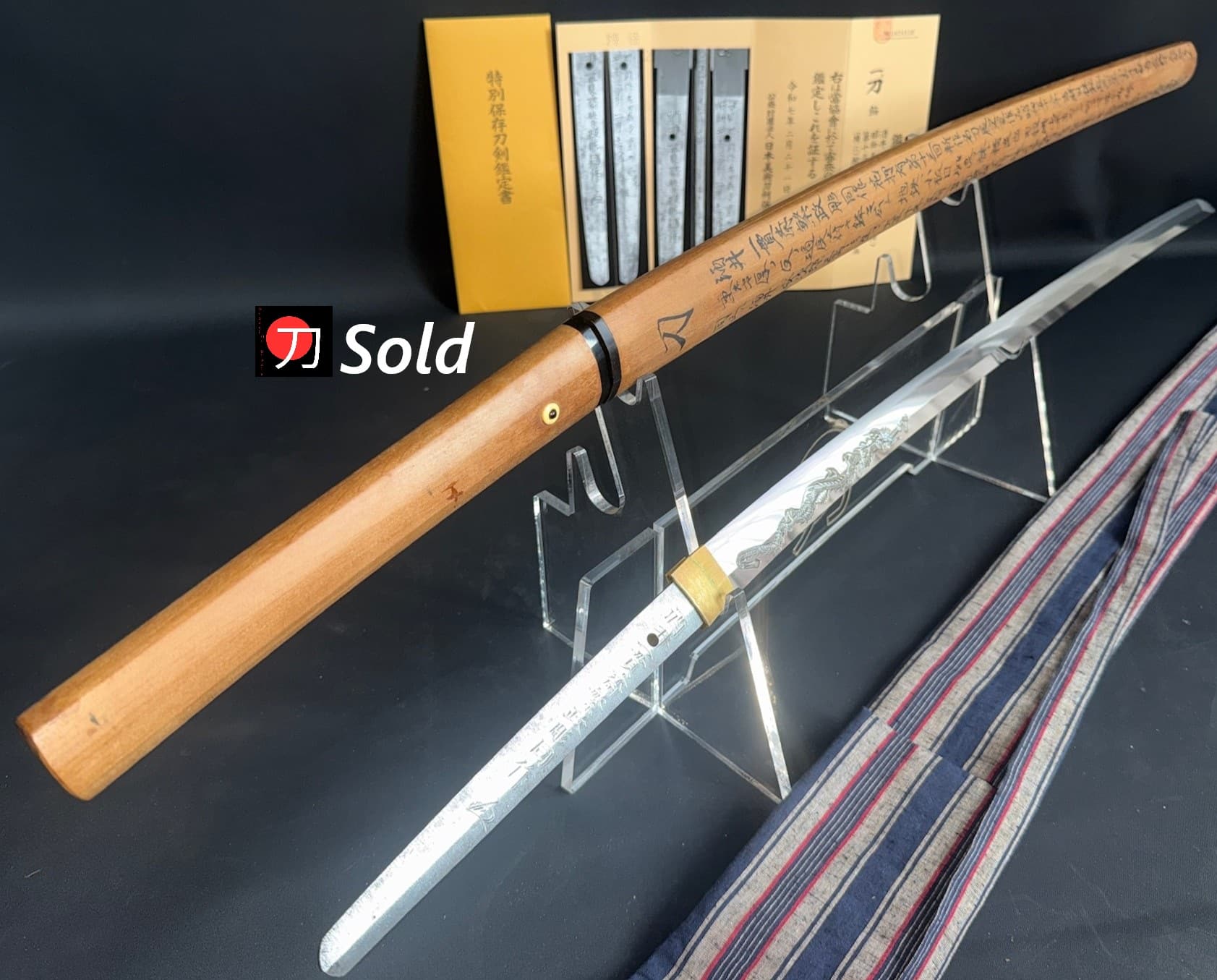
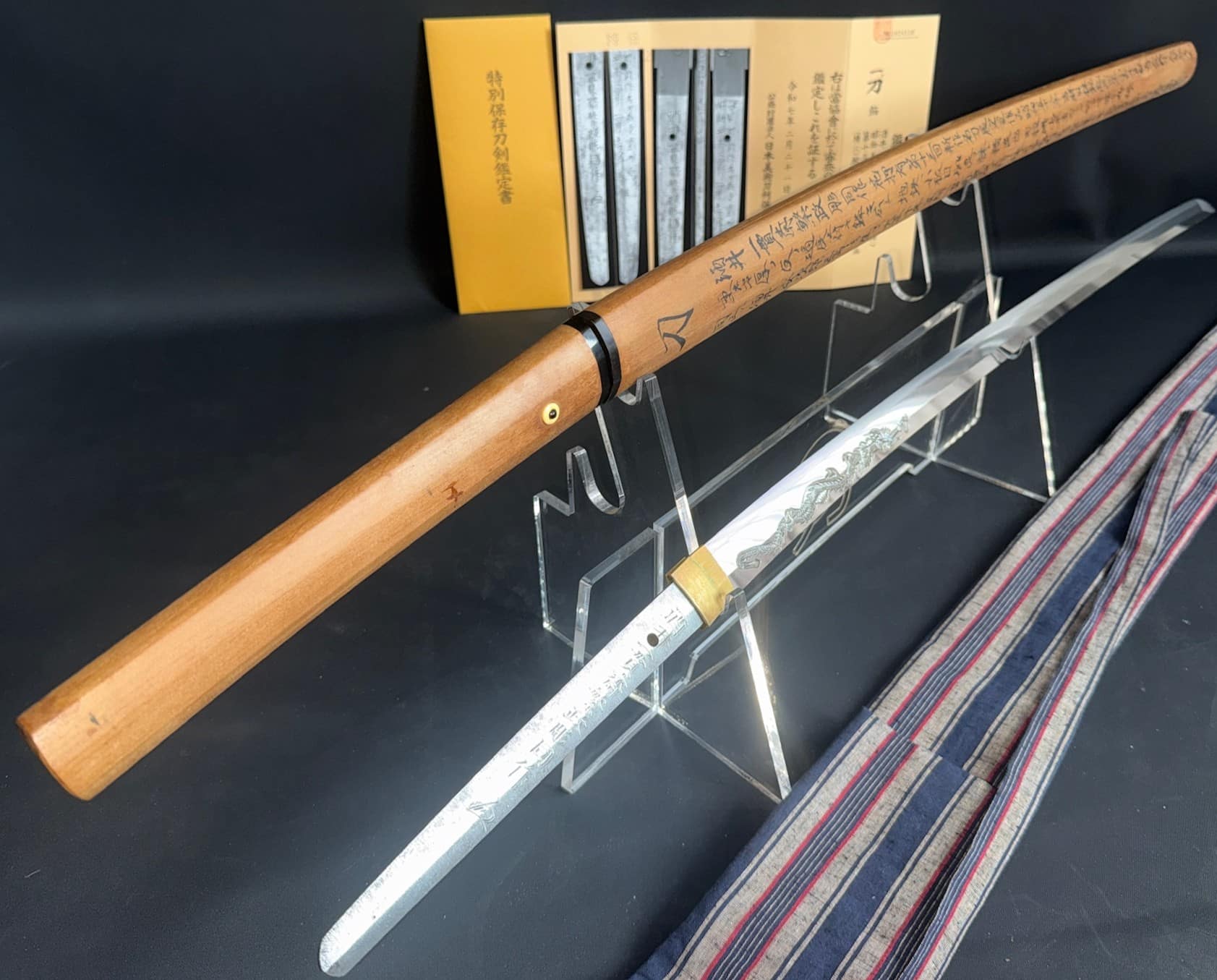
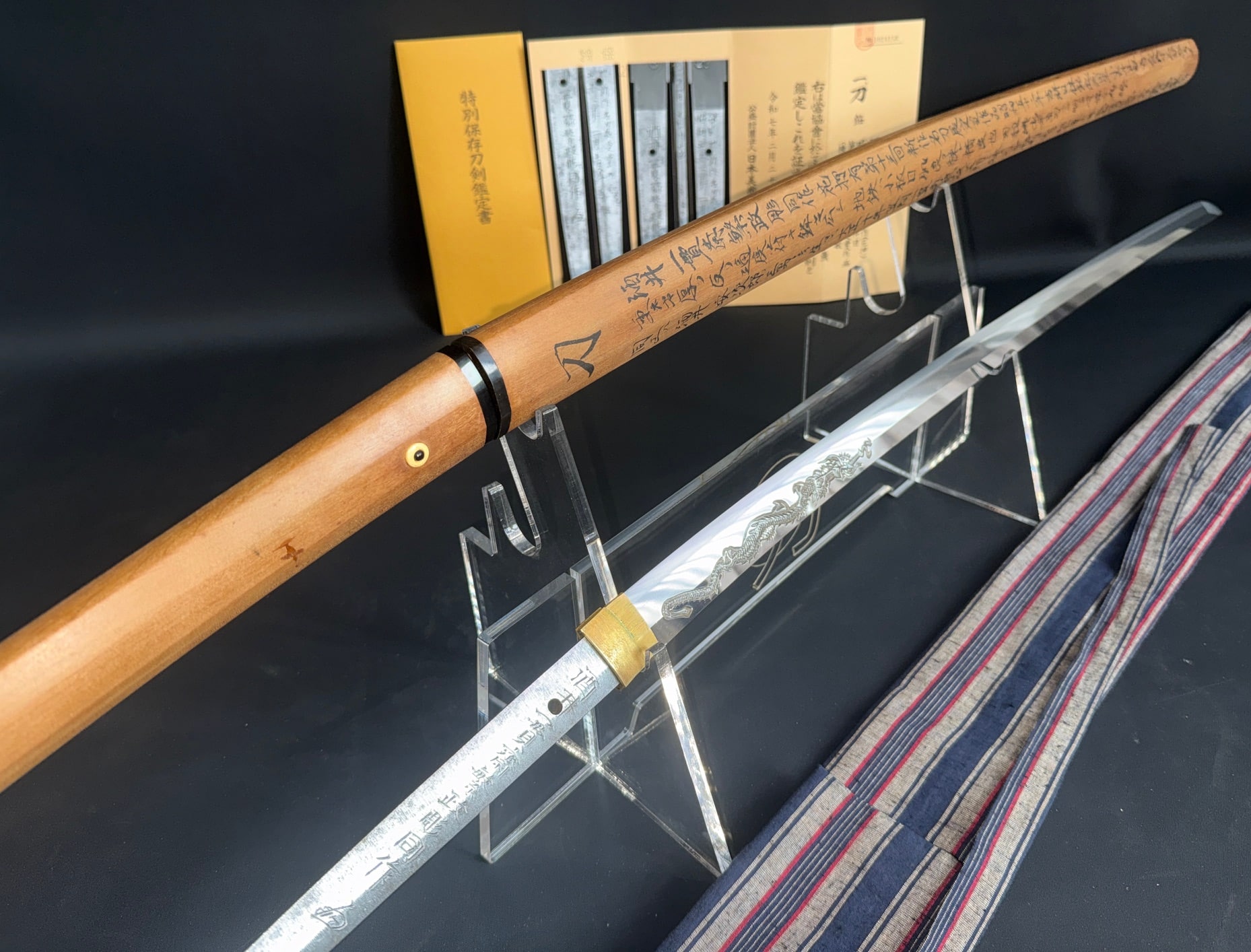
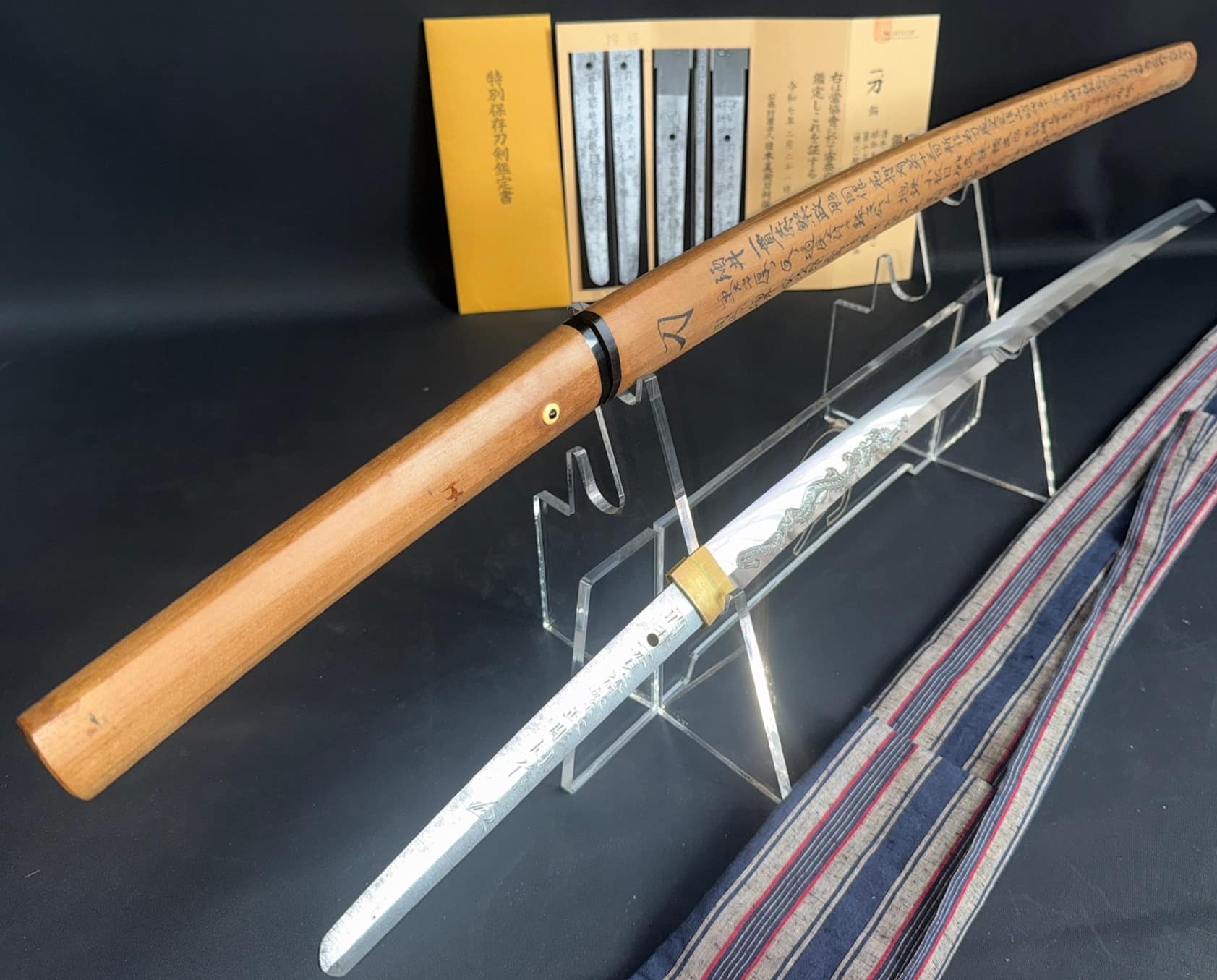
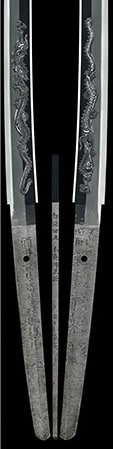
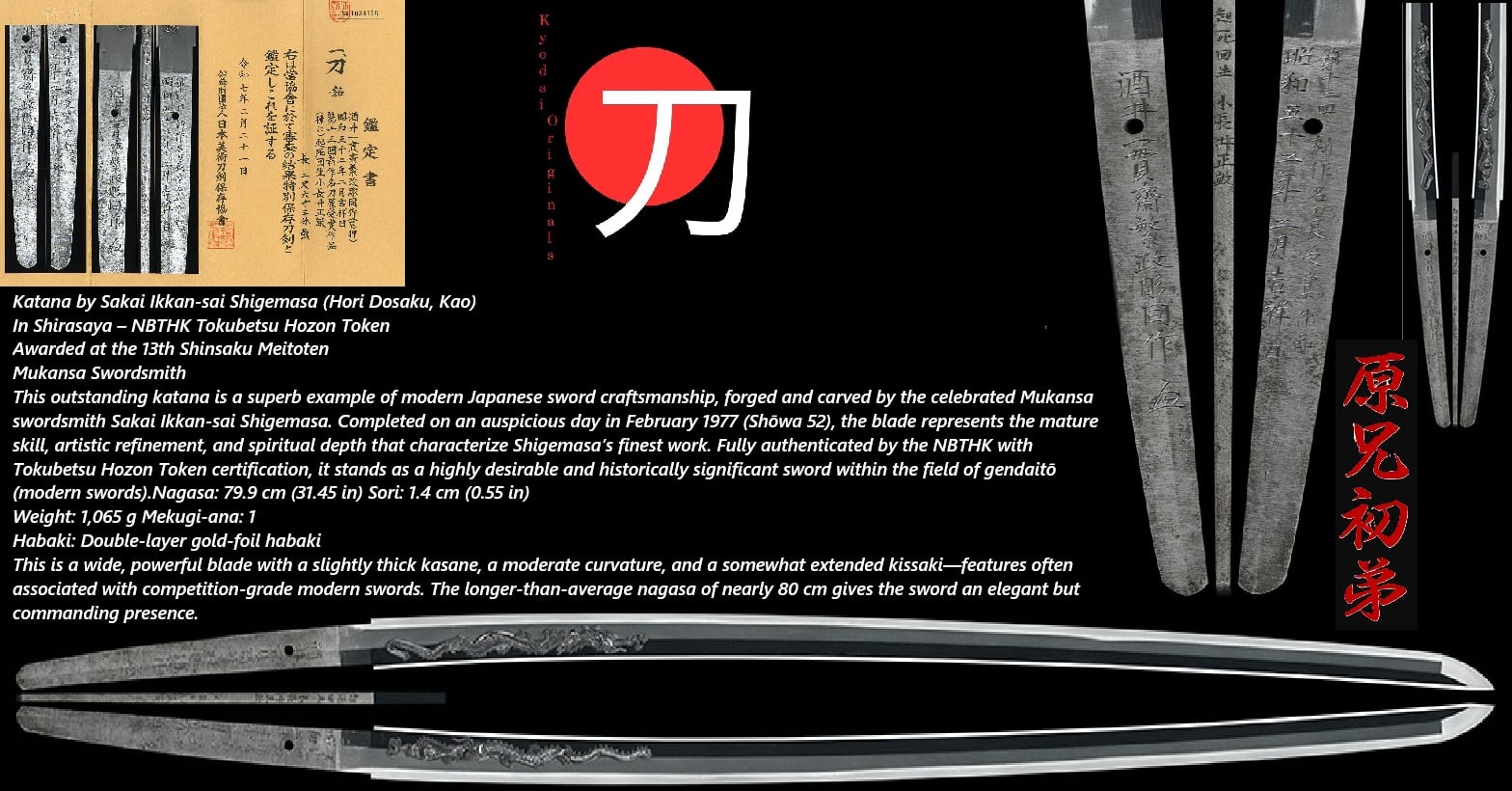
Awarded at the 13th Shinsaku Meitō Exhibition — Mukansa Swordsmith
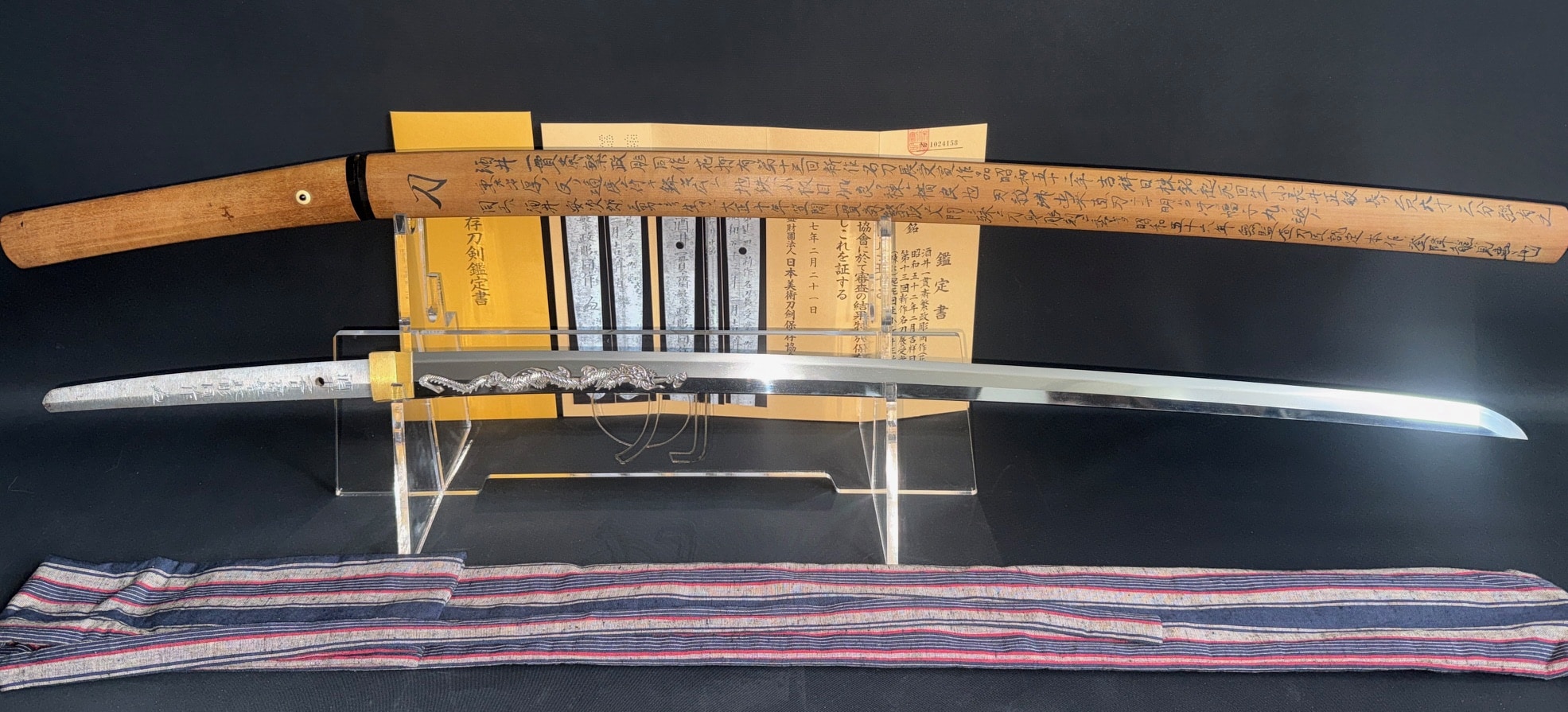
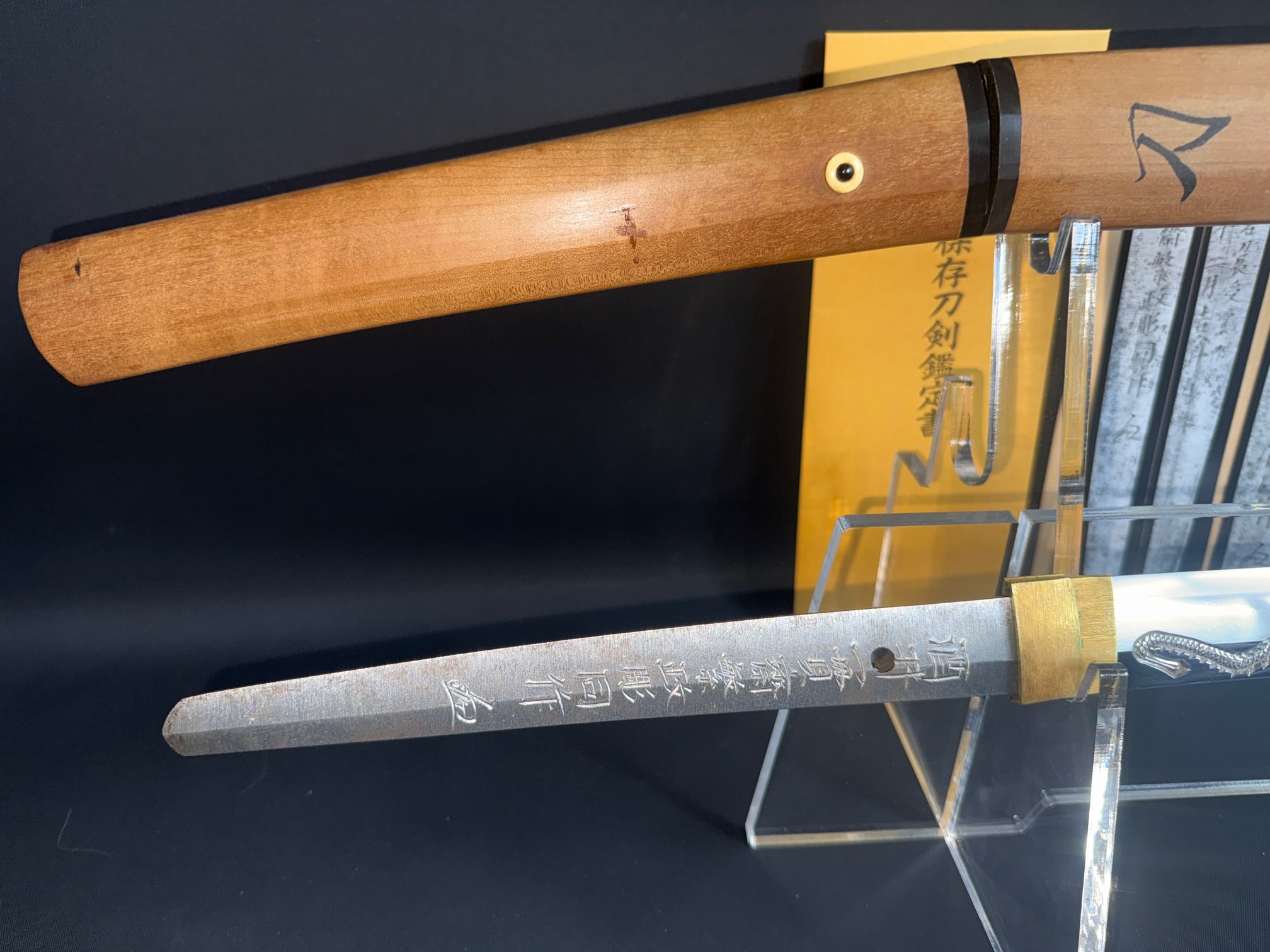
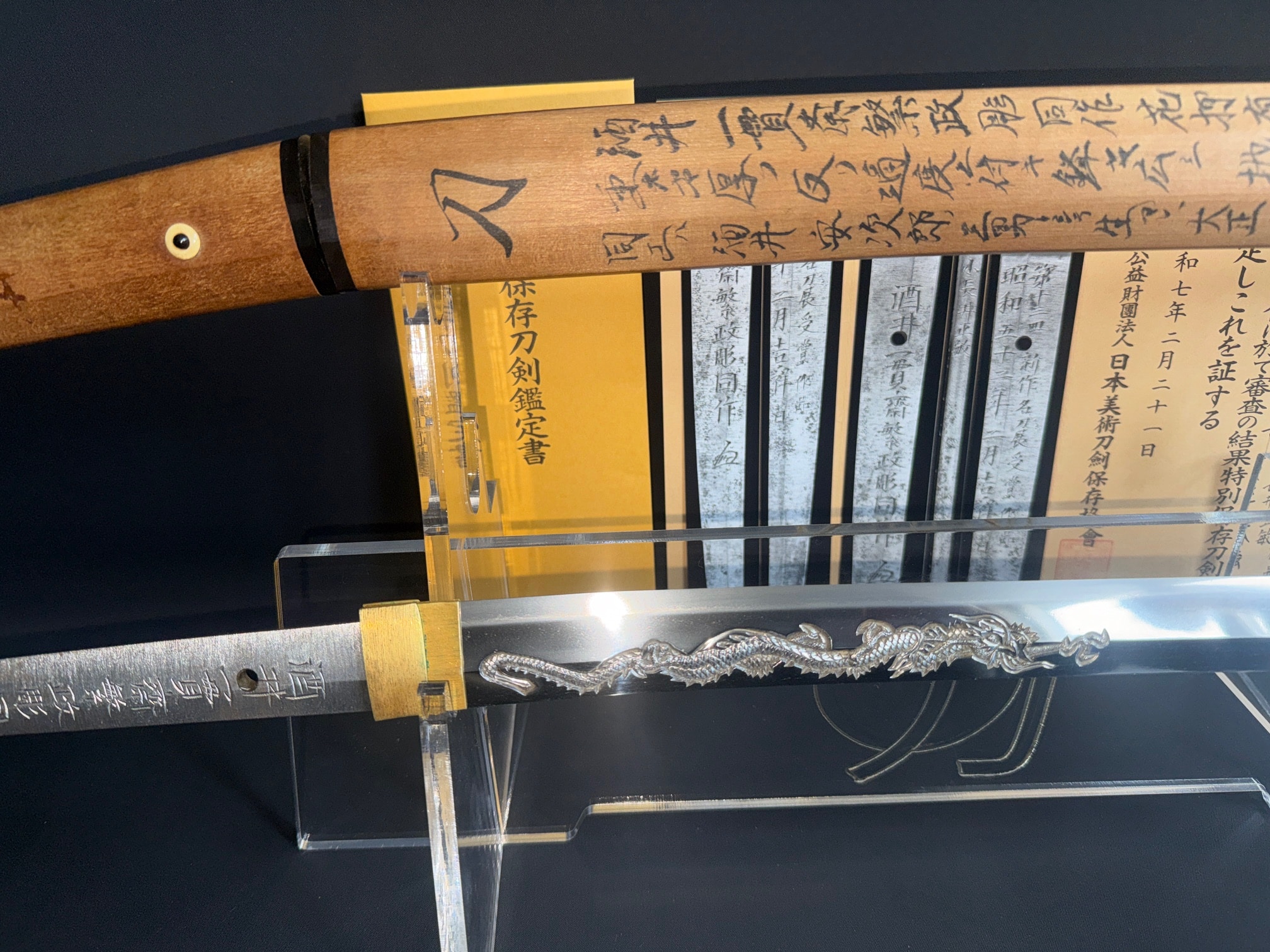
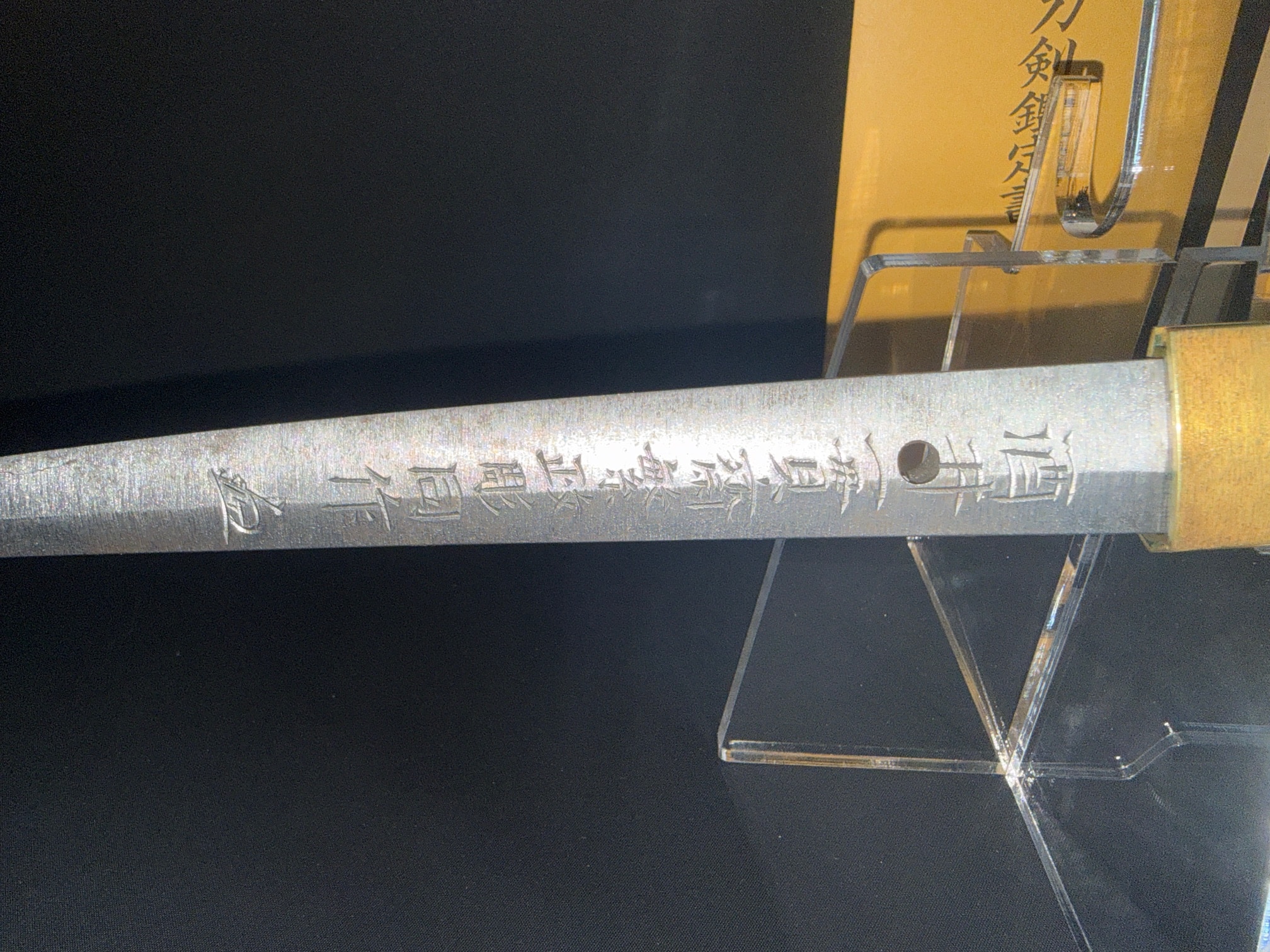
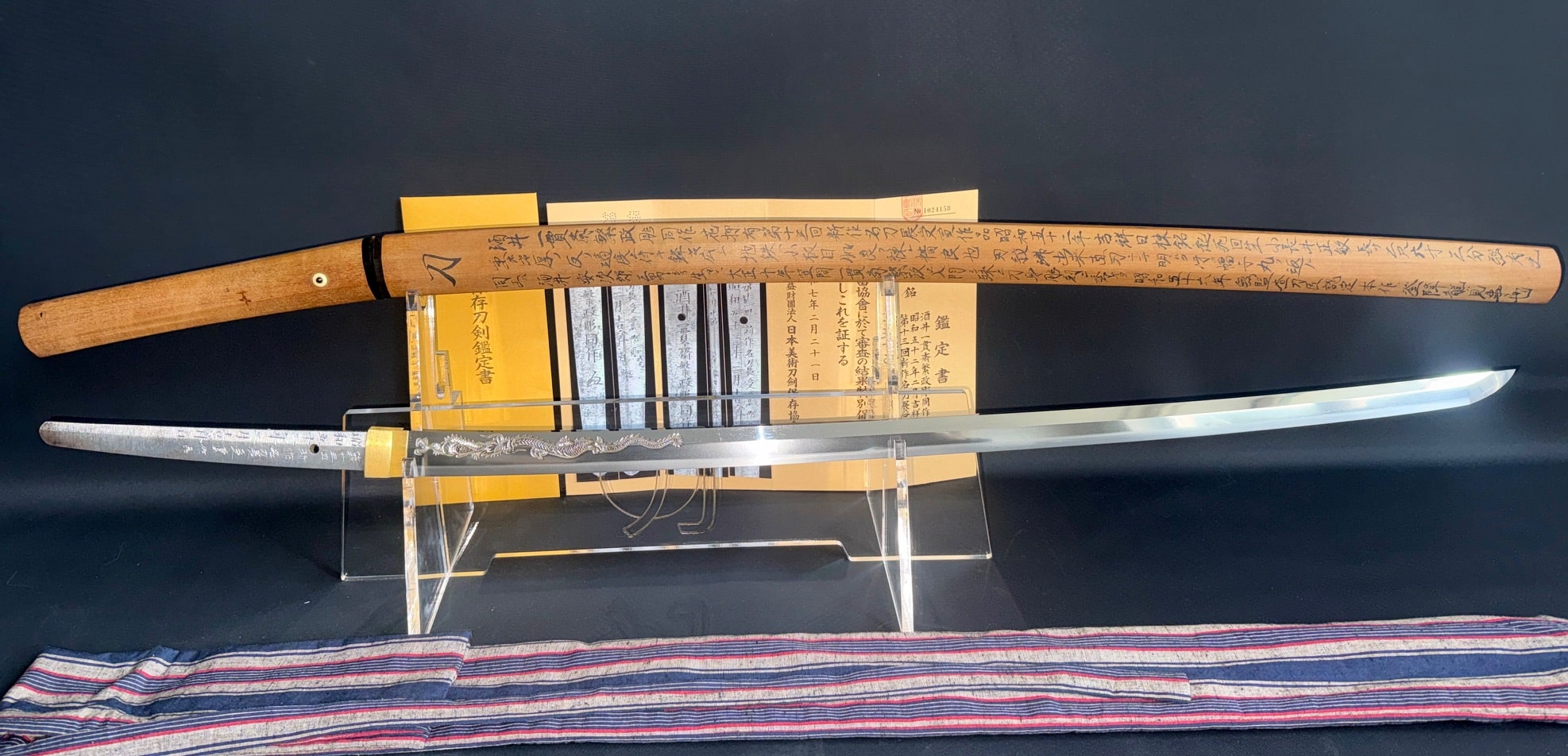
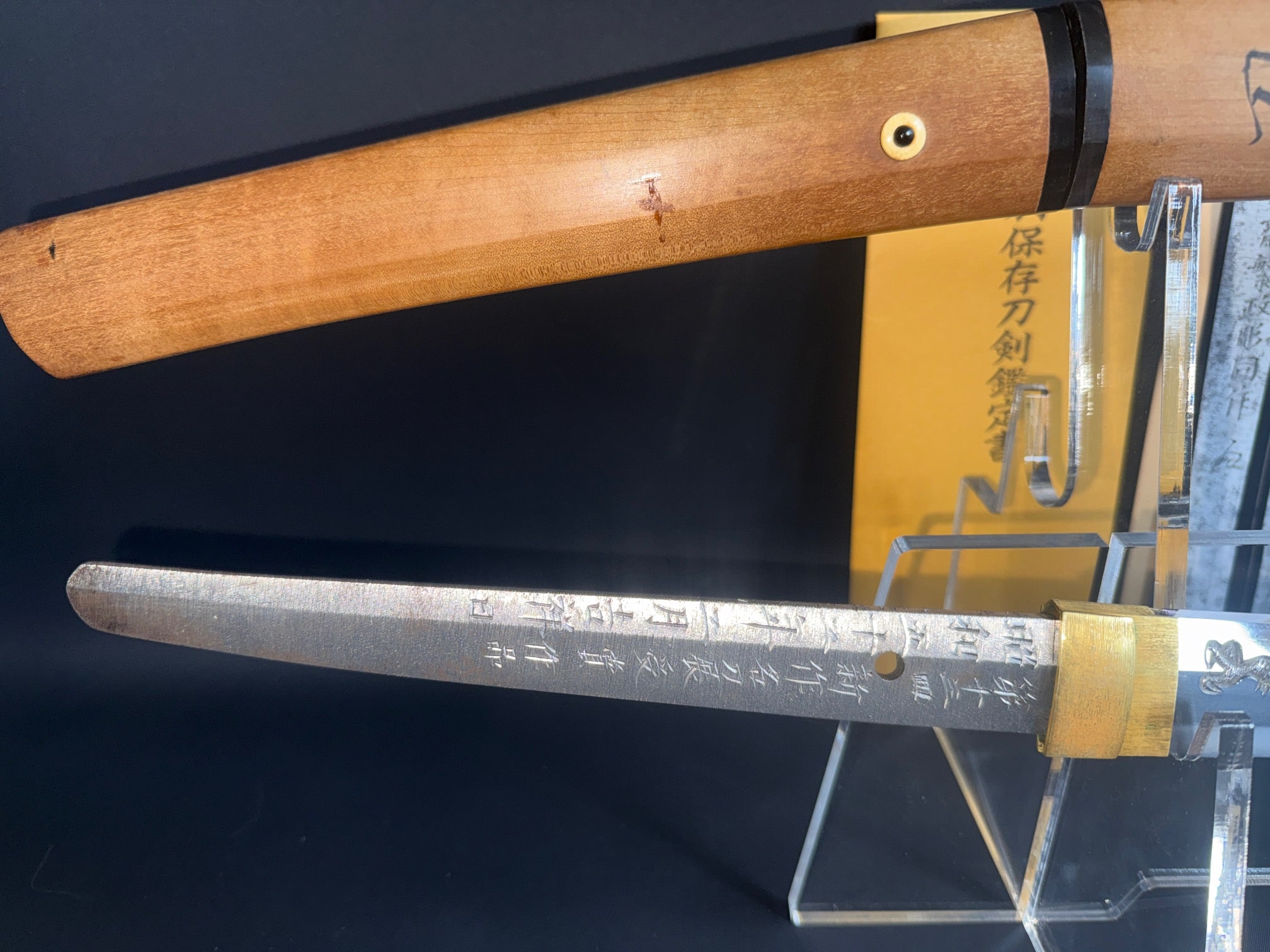
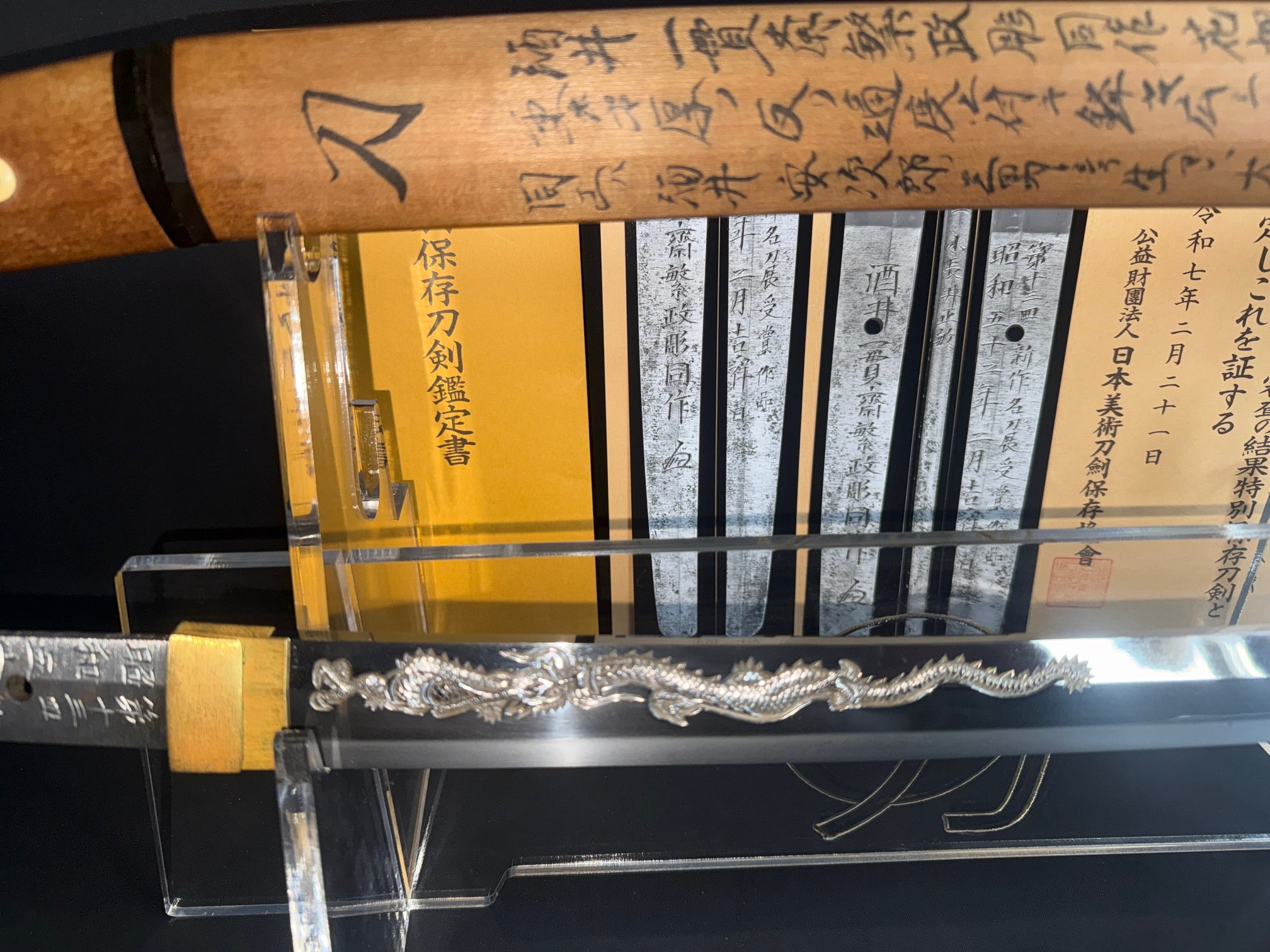
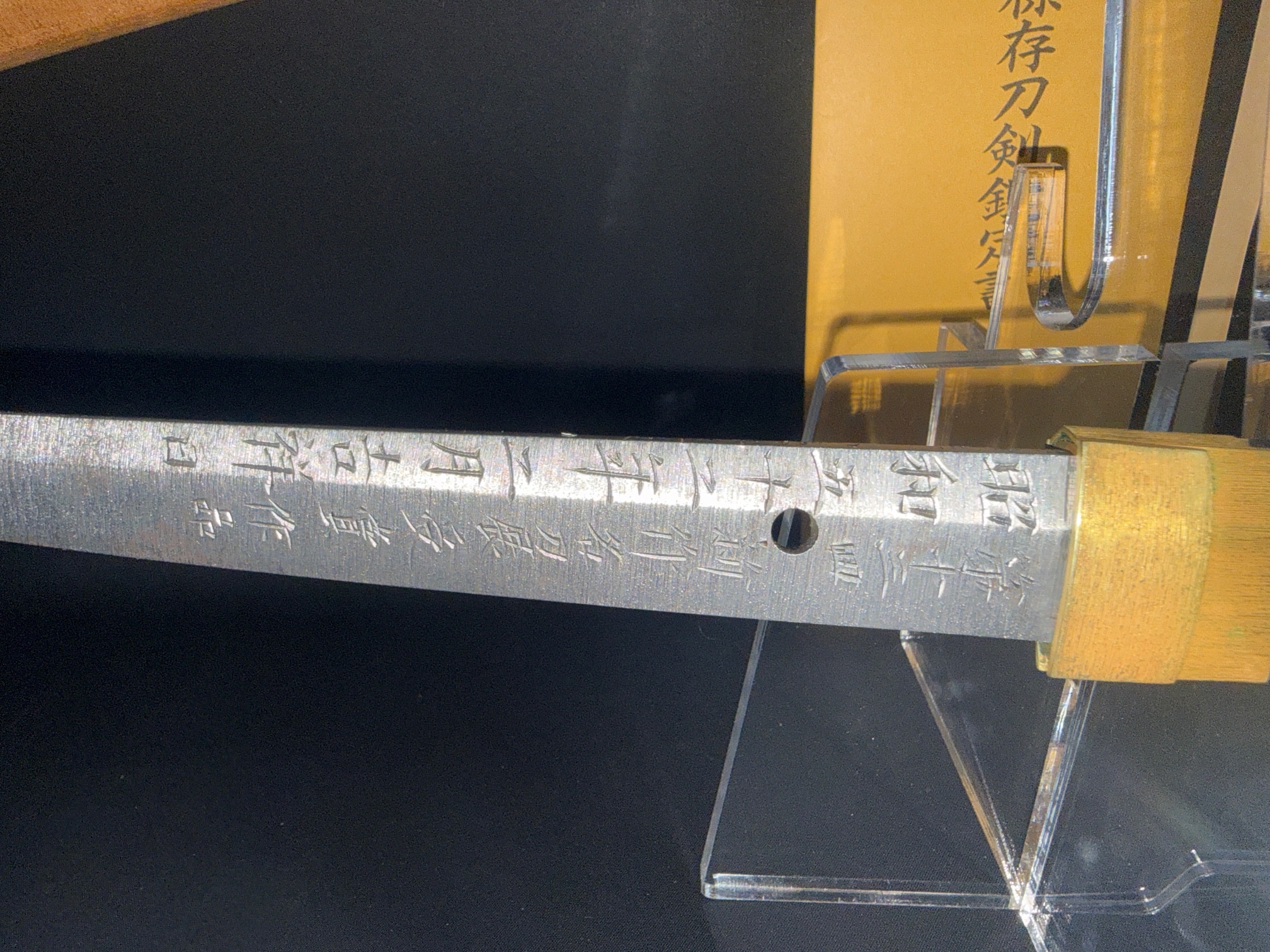
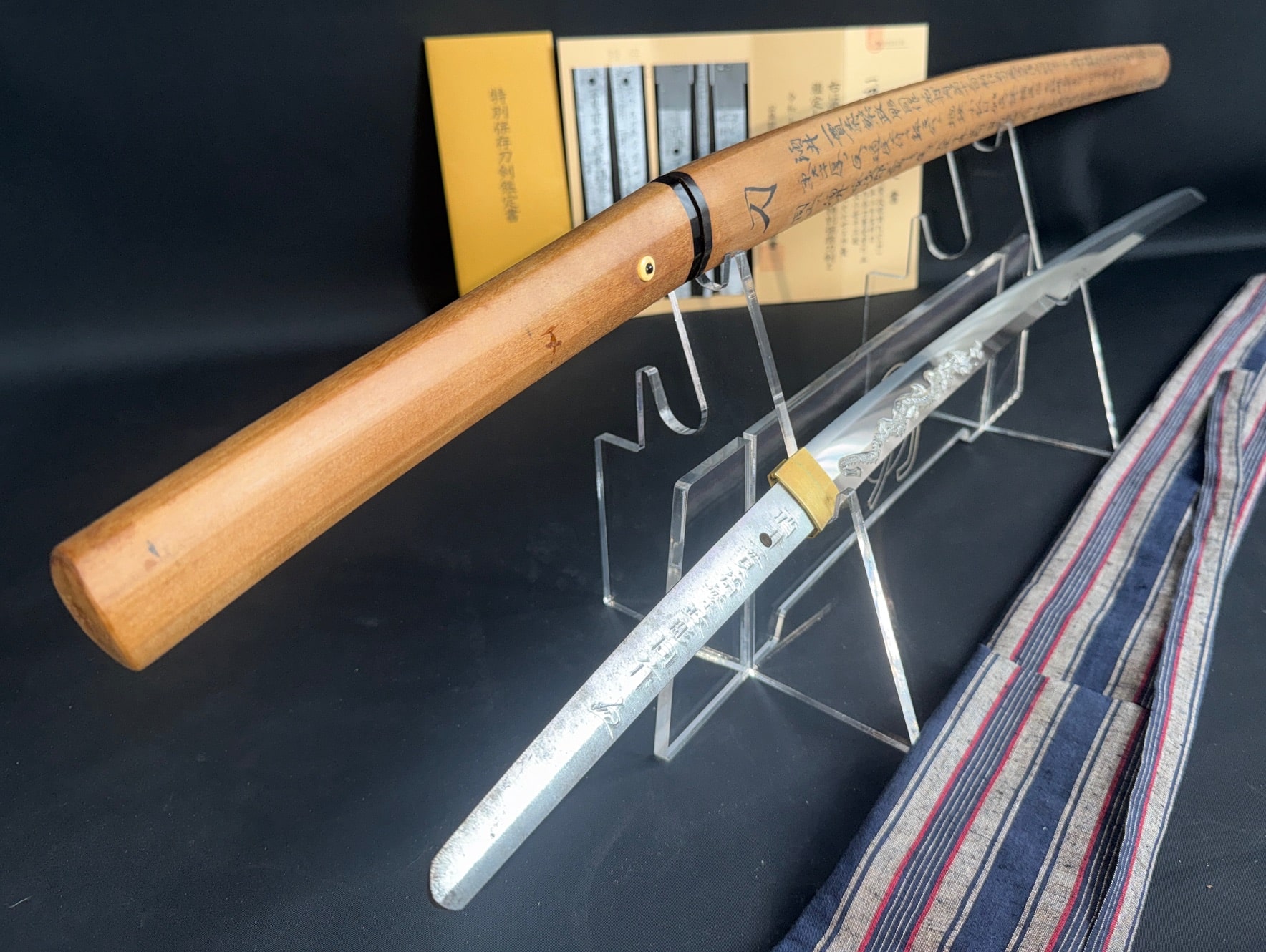
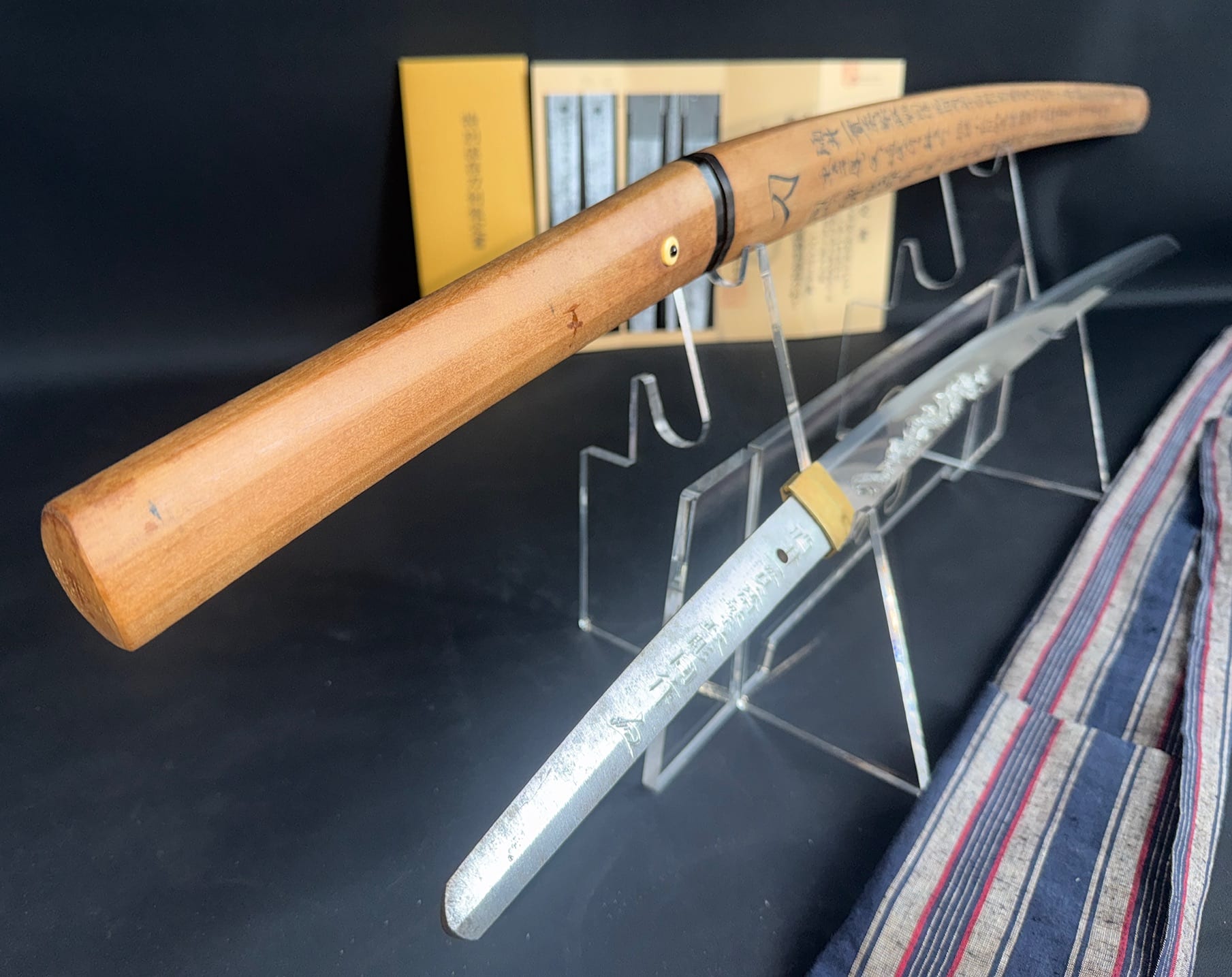
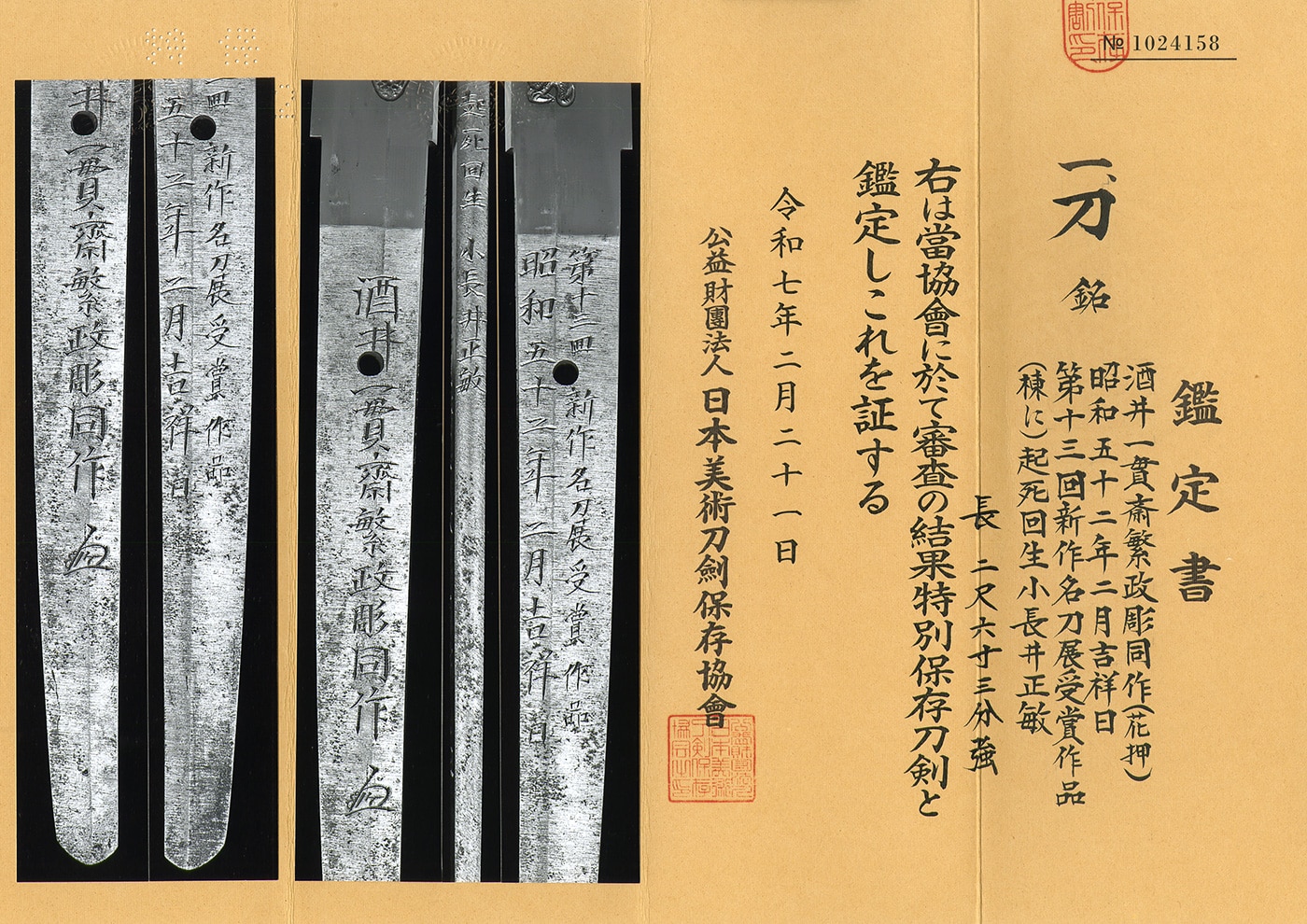
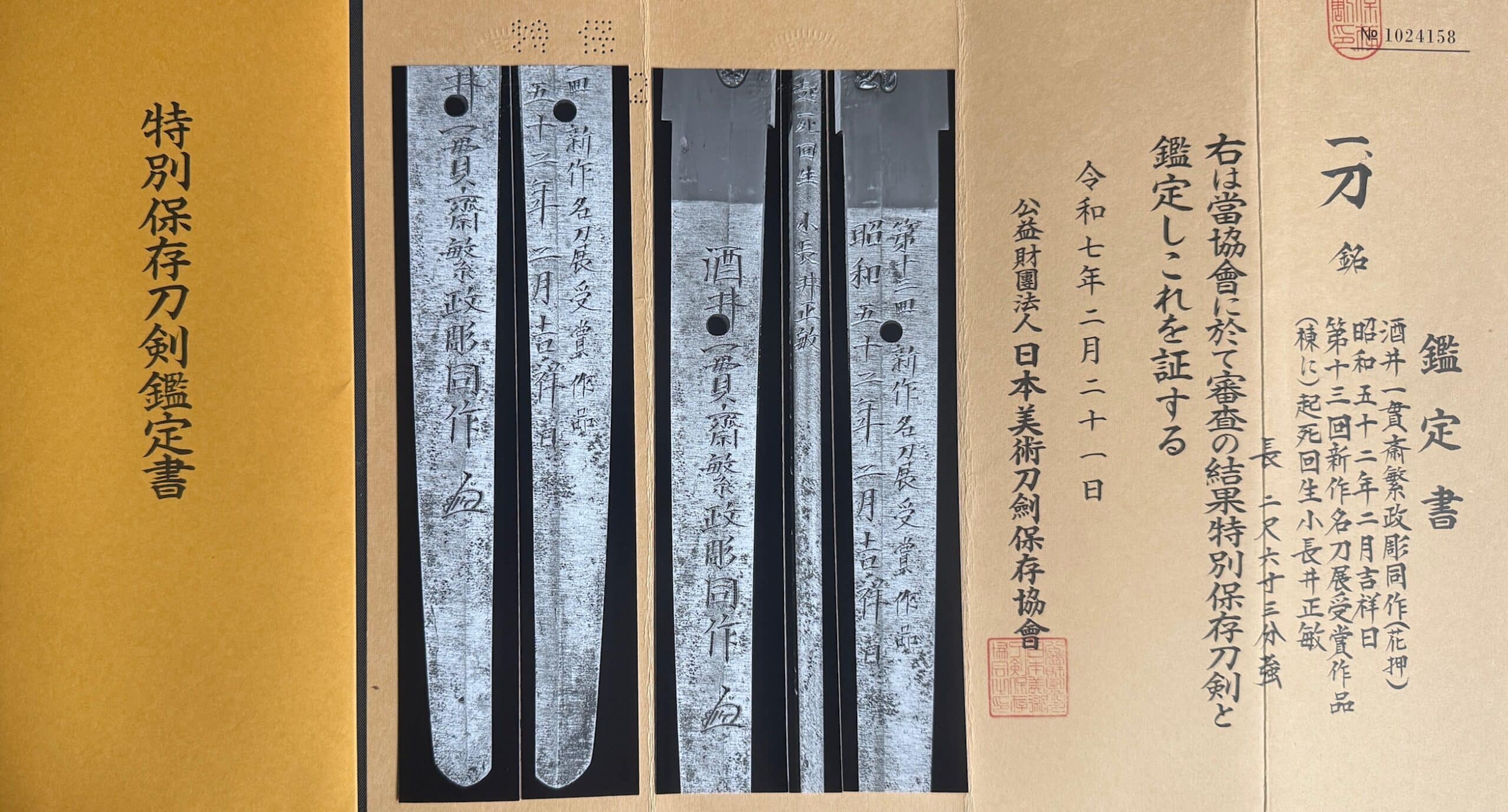
This remarkable modern katana was forged and carved by Sakai Ikkan-sai Shigemasa, one of the most accomplished gendaitō masters of the twentieth century. Bearing his full signature and personal kaō, the blade embodies the rare union of technical perfection in forging and exceptional mastery in horimono carving — disciplines seldom achieved at equally high levels by a single swordsmith.
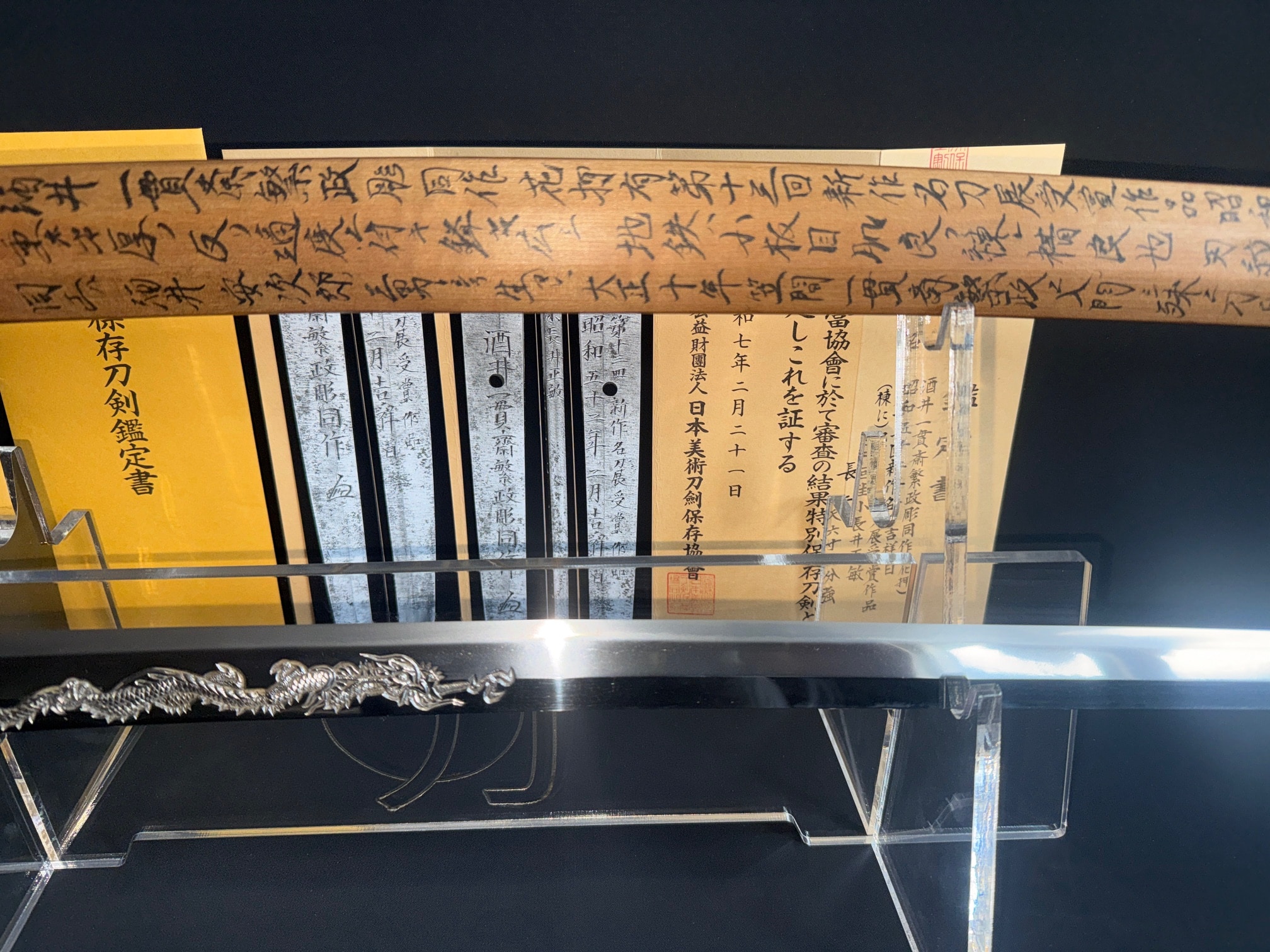
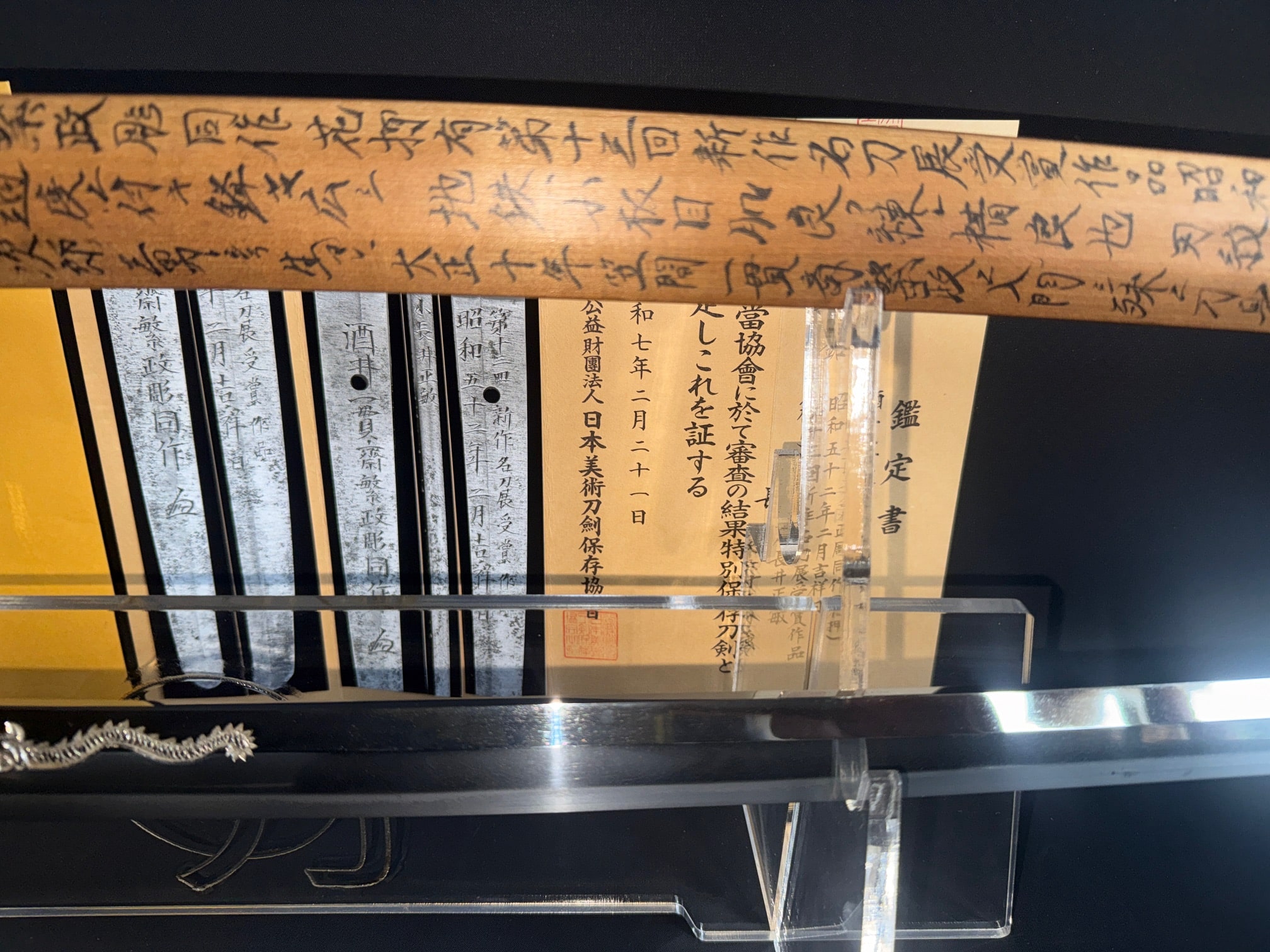
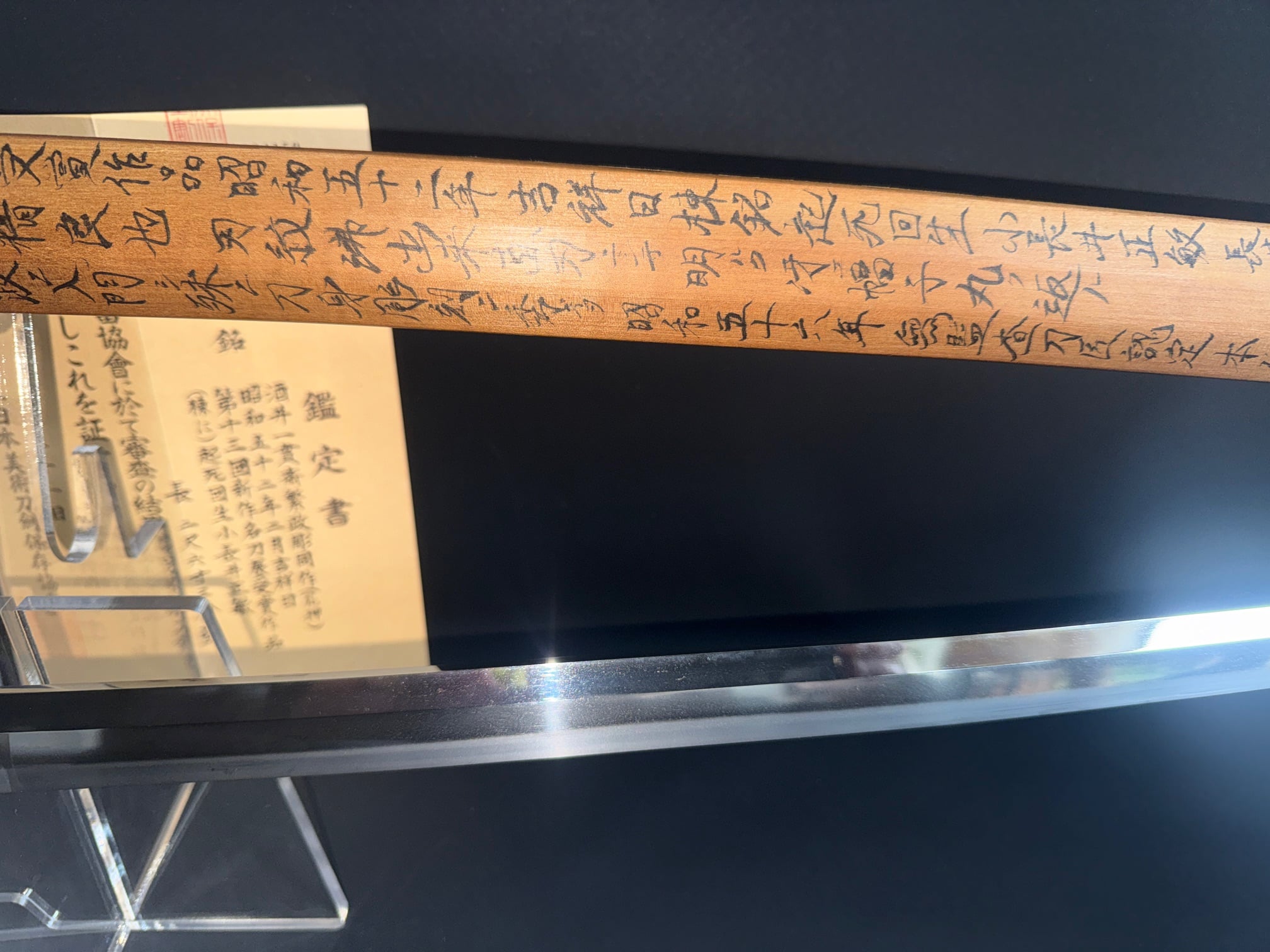
Completed on an auspicious day in February of Shōwa 52 (1977), the sword was officially awarded at the 13th Shinsaku Meitō Exhibition, one of Japan’s most prestigious exhibitions for contemporary swordmaking. Such recognition places the work among the finest modern blades produced in its era.
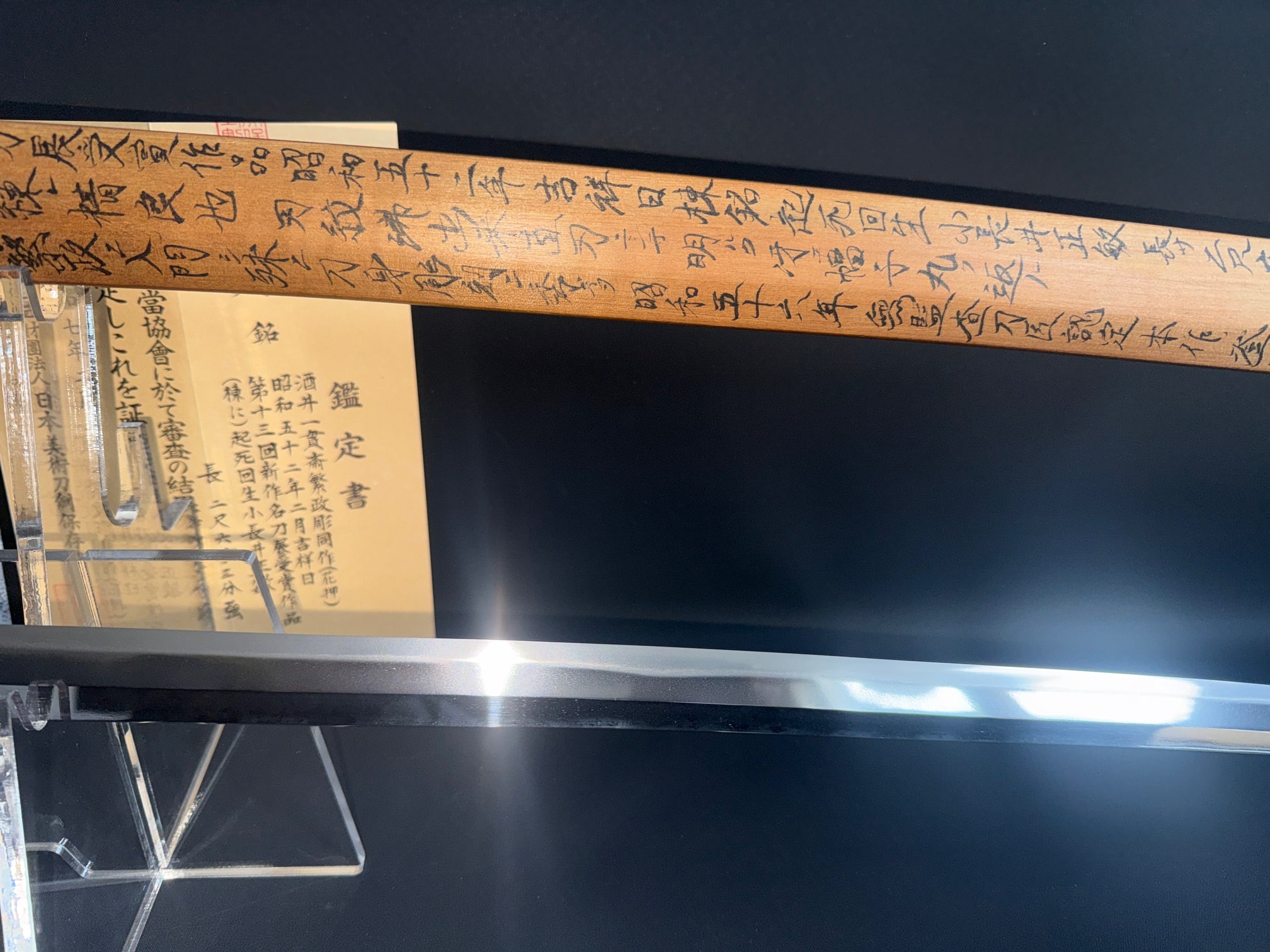
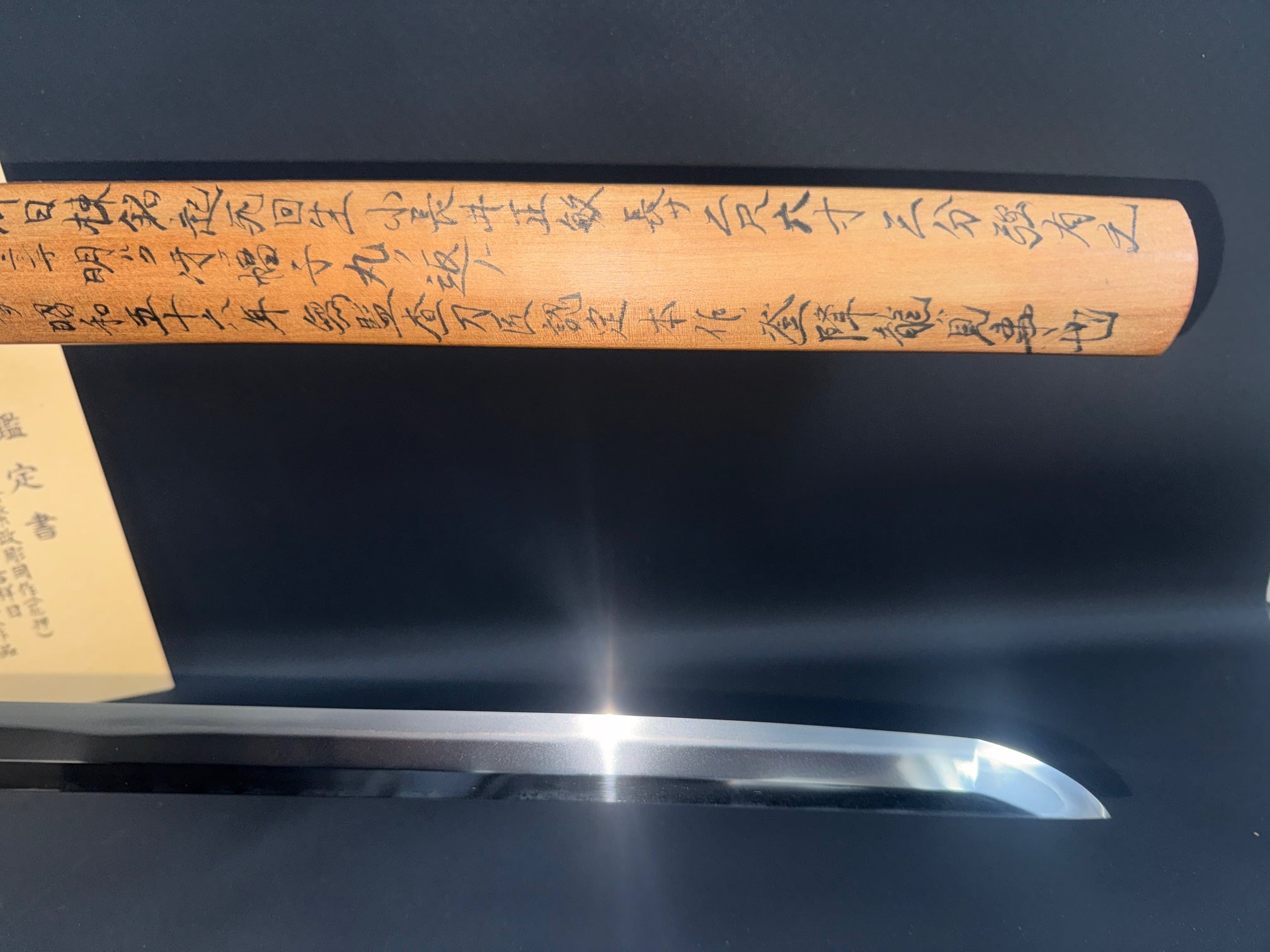
Carved along the mune appears the phrase:
“Kishi Kaisei” — “To revive, to rise again, to return to life.”
Dedicated to Konagai Masatoshi.
The inscription conveys renewal and restored vitality, harmonizing profoundly with the powerful symbolism of the blade’s dragons and the living spirit traditionally believed to inhabit a Japanese sword.
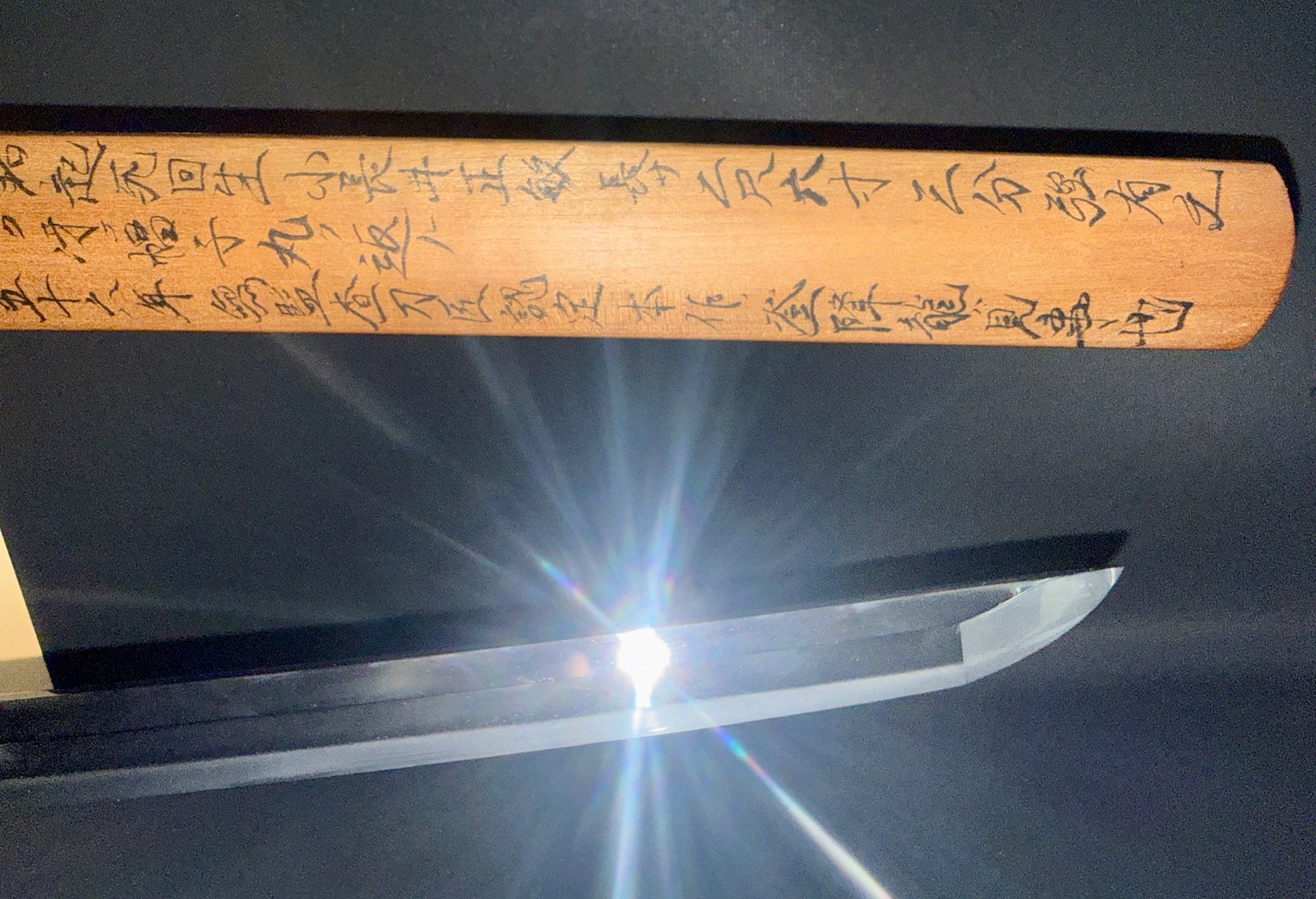
Length: approx. 2 shaku 6 sun 3 bu (slightly over 79 cm)
The sword presents a commanding yet elegant sugata:
a broad mihaba, slightly thick kasane, balanced curvature, and a moderately extended kissaki.
The silhouette reflects refined modern craftsmanship — powerful, dignified, and perfectly proportioned.
Jigane
A finely forged ko-itame hada, tightly compacted and of superior steel quality. The surface displays clarity and purity, revealing the smith’s precise control during forging.
Hamon
A luminous nioi-based suguha. The temperline is crisp, even, and brilliantly clear, demonstrating exacting heat-treatment.
Boshi
Rounded and smoothly returning, executed with refined control.
The harmony between jigane and hamon reflects advanced technical mastery and calm confidence — hallmarks of top-level modern swordsmithing.
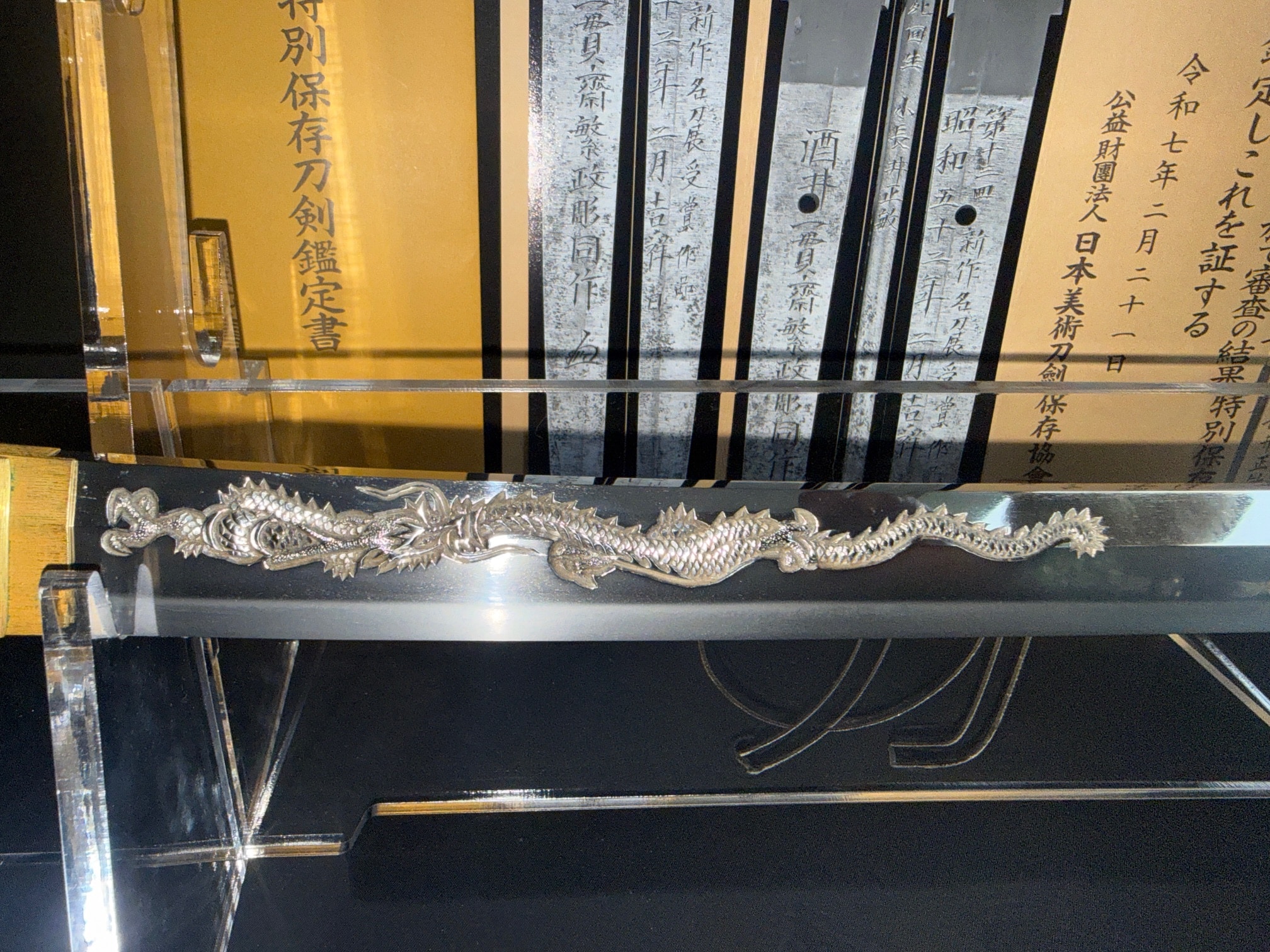
Among the blade’s most extraordinary features is the magnificent horimono:
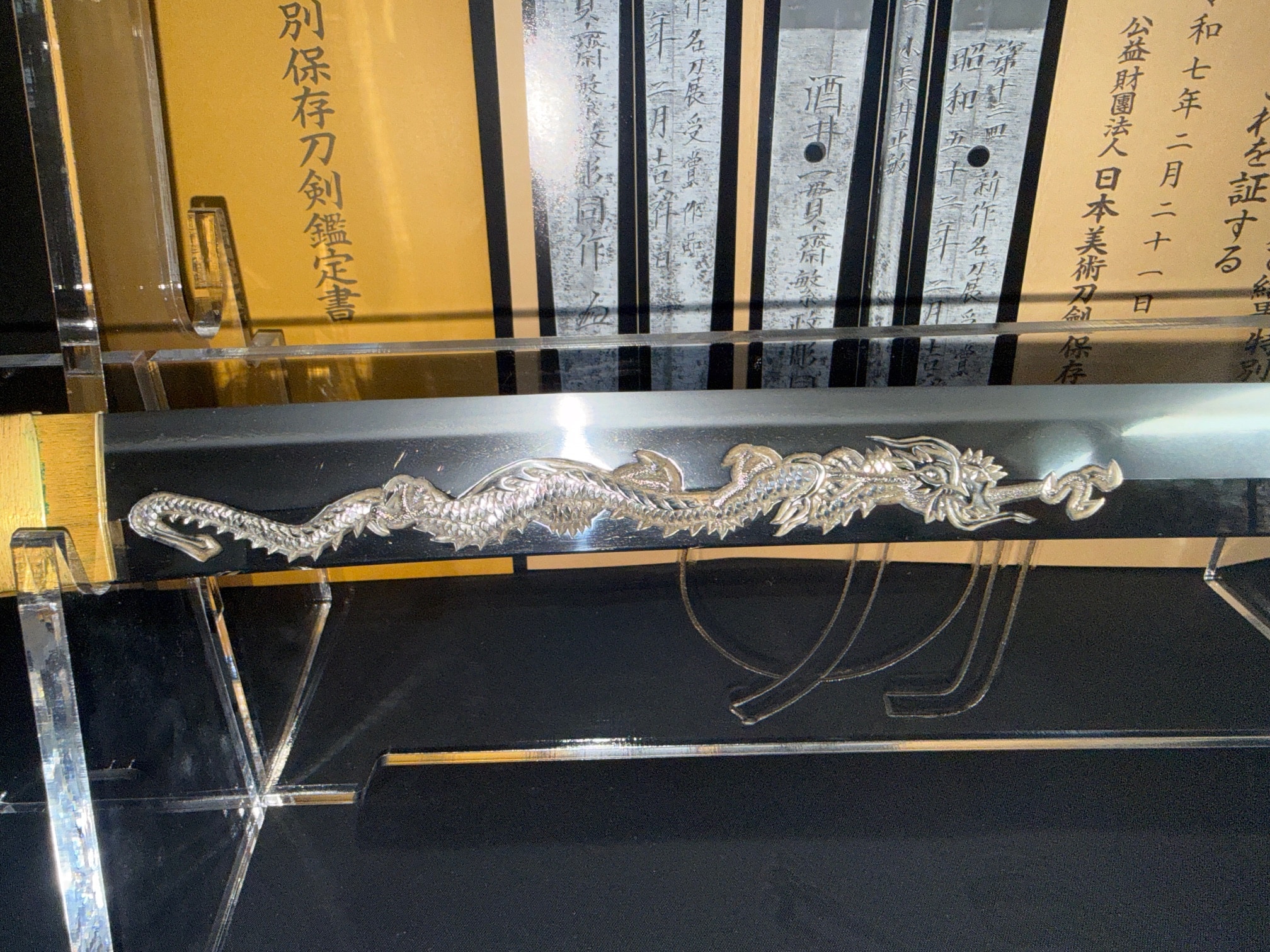
a pair of dragons — one ascending, one descending — carved directly into the steel.
Shigemasa himself executed the carving, signing as Hori Dōsaku, confirming the horimono as entirely his own work. The dragons exhibit remarkable depth, vitality, and precision. Their flowing movement, anatomical understanding, and confident lines place this carving among the finest achievements in twentieth-century sword engraving.
Few swordsmiths possessed equal command over both forging and carving; Shigemasa stood among that very small elite.
Sakai Ikkan-sai Shigemasa was born in Shizuoka Prefecture in 1905. He studied extensively under the renowned Kasama Ikkan-sai Shigetsugu, receiving the character “Shige” from his teacher and inheriting the Bizen tradition.
He later worked as an officially authorized swordsmith at Yasukuni Shrine, forging swords for both the army and navy. After the war he changed the character of his name from 正 to 政 and continued producing outstanding works.
In Shōwa 56 (1981) he was granted Mukansa status, exempt from competition judging due to overwhelming mastery. He remained active for decades, passing away in 1996.
Shigemasa became particularly celebrated for his horimono — especially dragon carvings — regarded today among the finest of modern Japanese sword art.
This katana combines three rare qualities:
An award-winning exhibition blade
A Mukansa-class master swordsmith
Fully self-carved horimono of exceptional artistic quality
The powerful sugata, refined jigane, flawless suguha hamon, and breathtaking dragons together form a unified artistic statement. The blade represents not only technical perfection but spiritual expression — a balance of strength, life, and renewal.
A masterpiece of modern Japanese sword craftsmanship, and one of the finest expressions of Sakai Ikkan-sai Shigemasa’s legacy.

KvK: 51964147
C.W. Slok - Kyodai Originals
Bank: NL25 KNAB 0509 1310 18
BIC: KNABNL2H
© 2026 Kyodai Originals is made with ❤ by Nieuwblik.com


