
€ 13.500,00
1 in stock
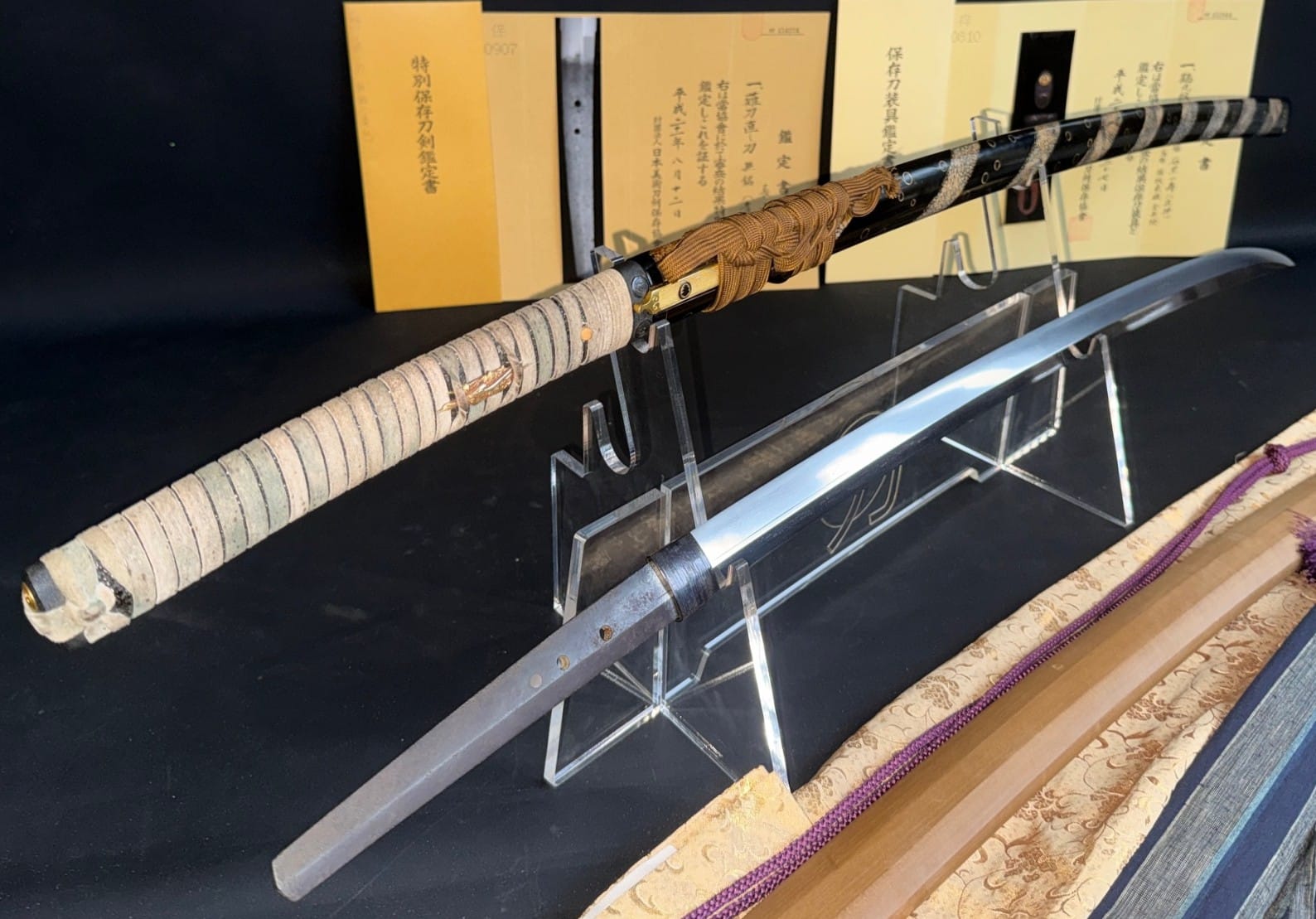
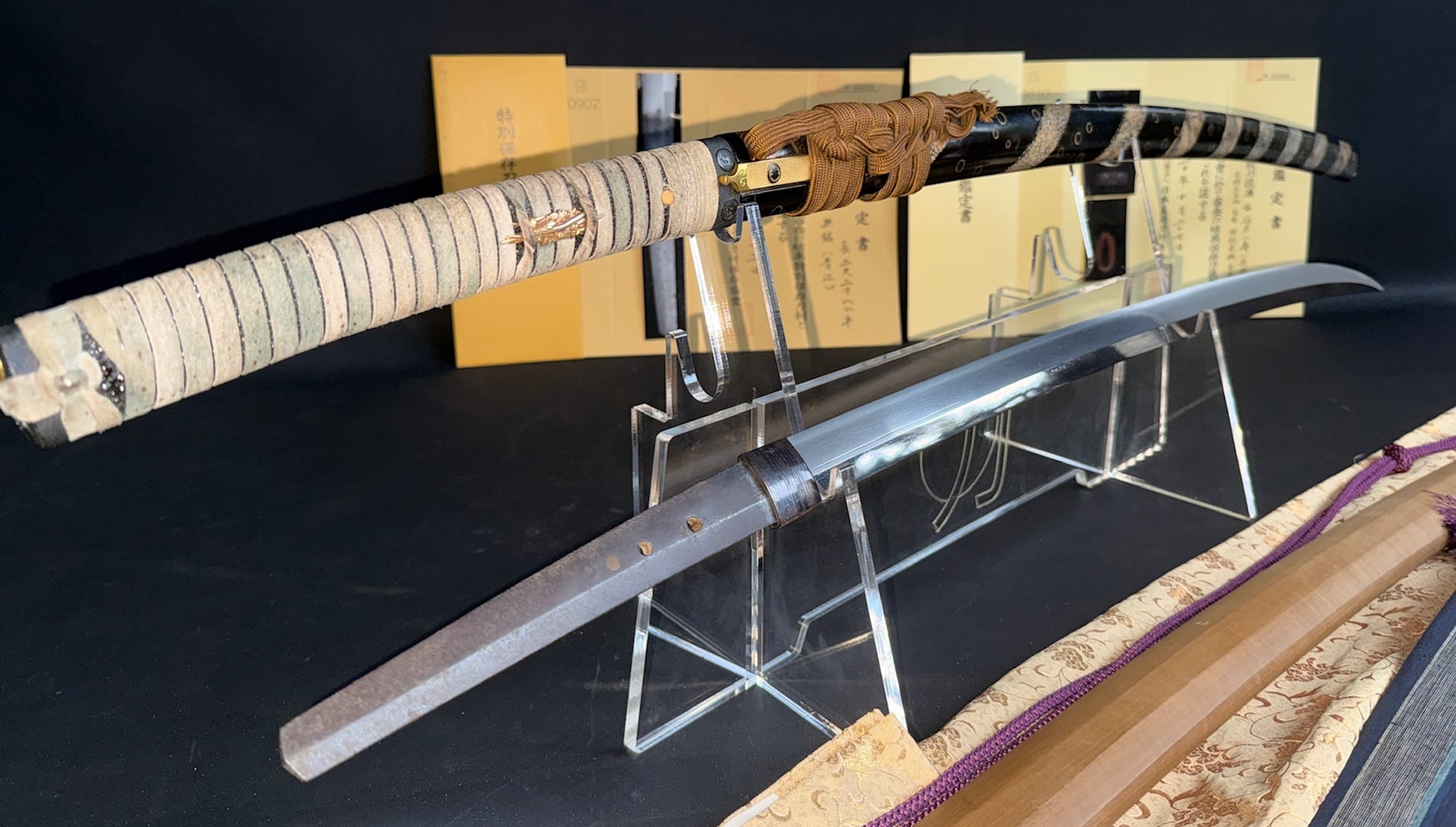
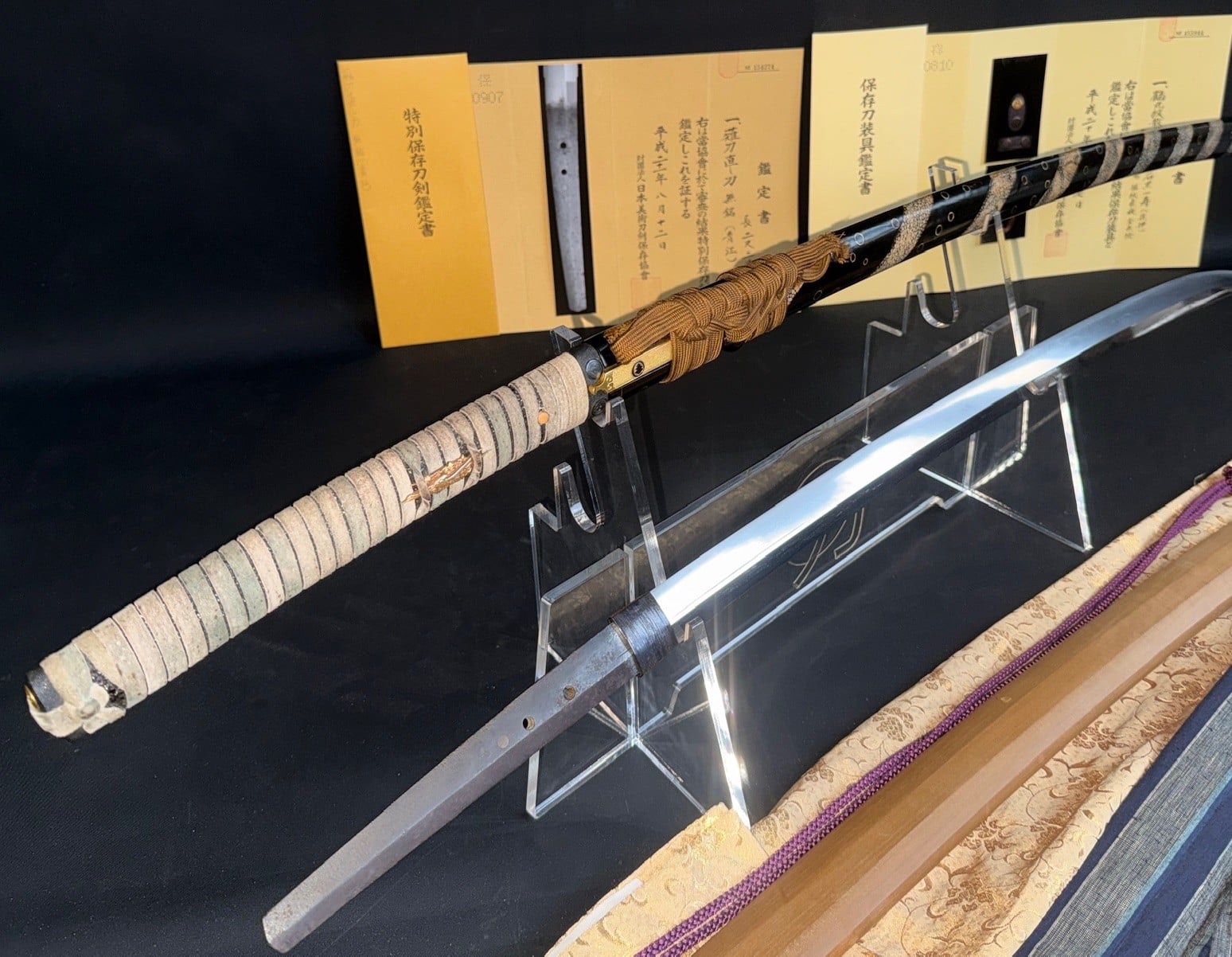
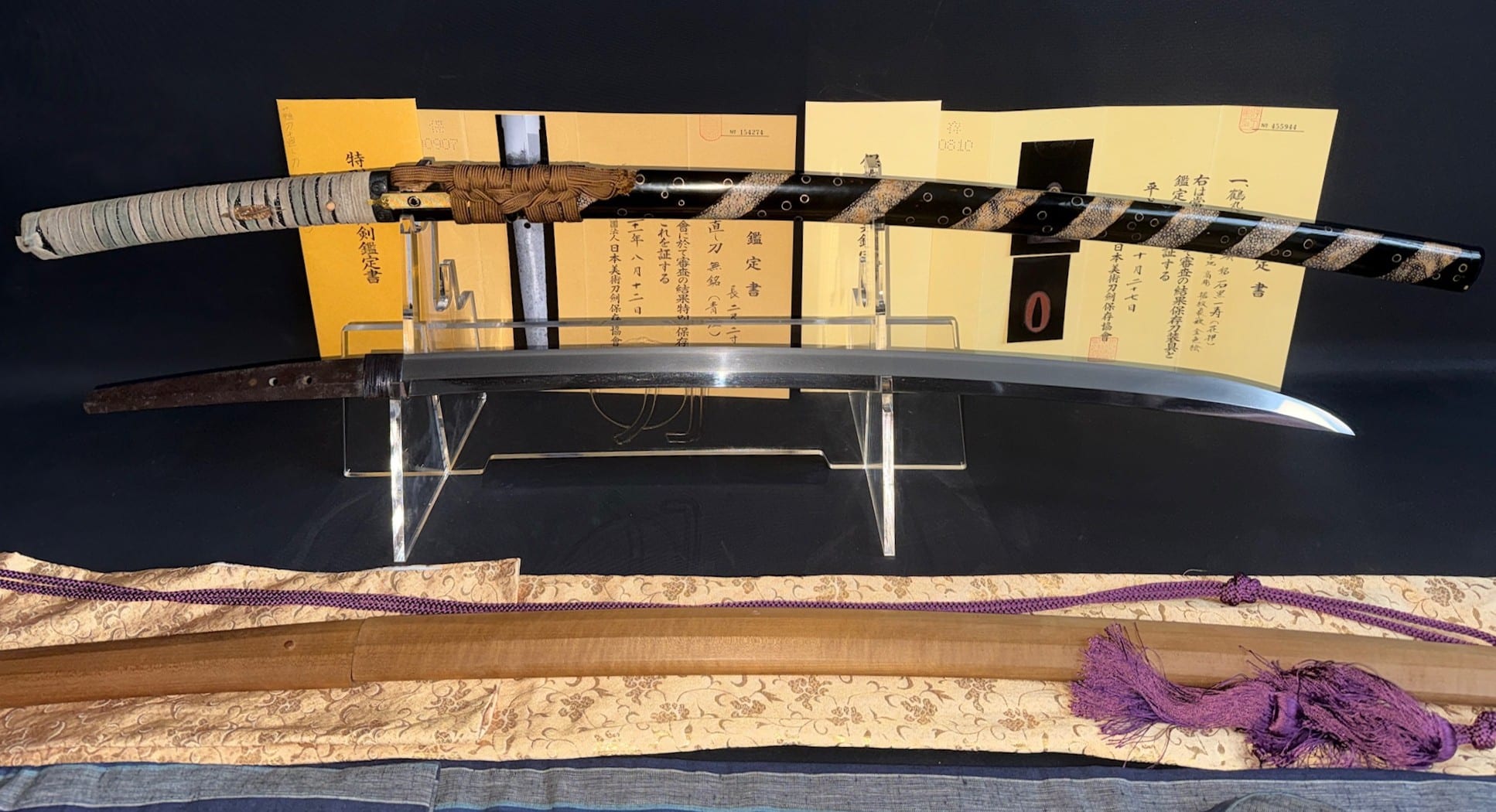
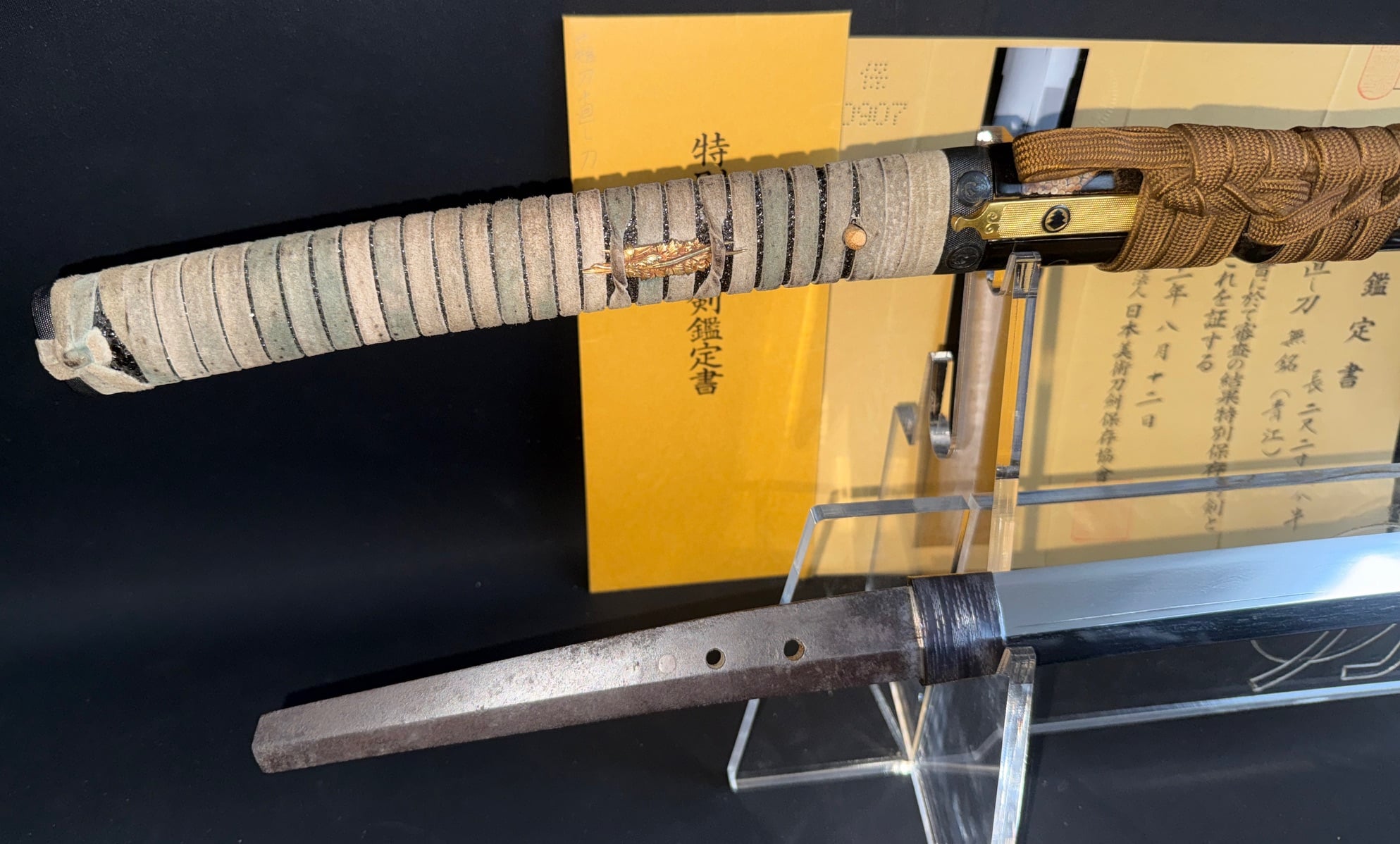
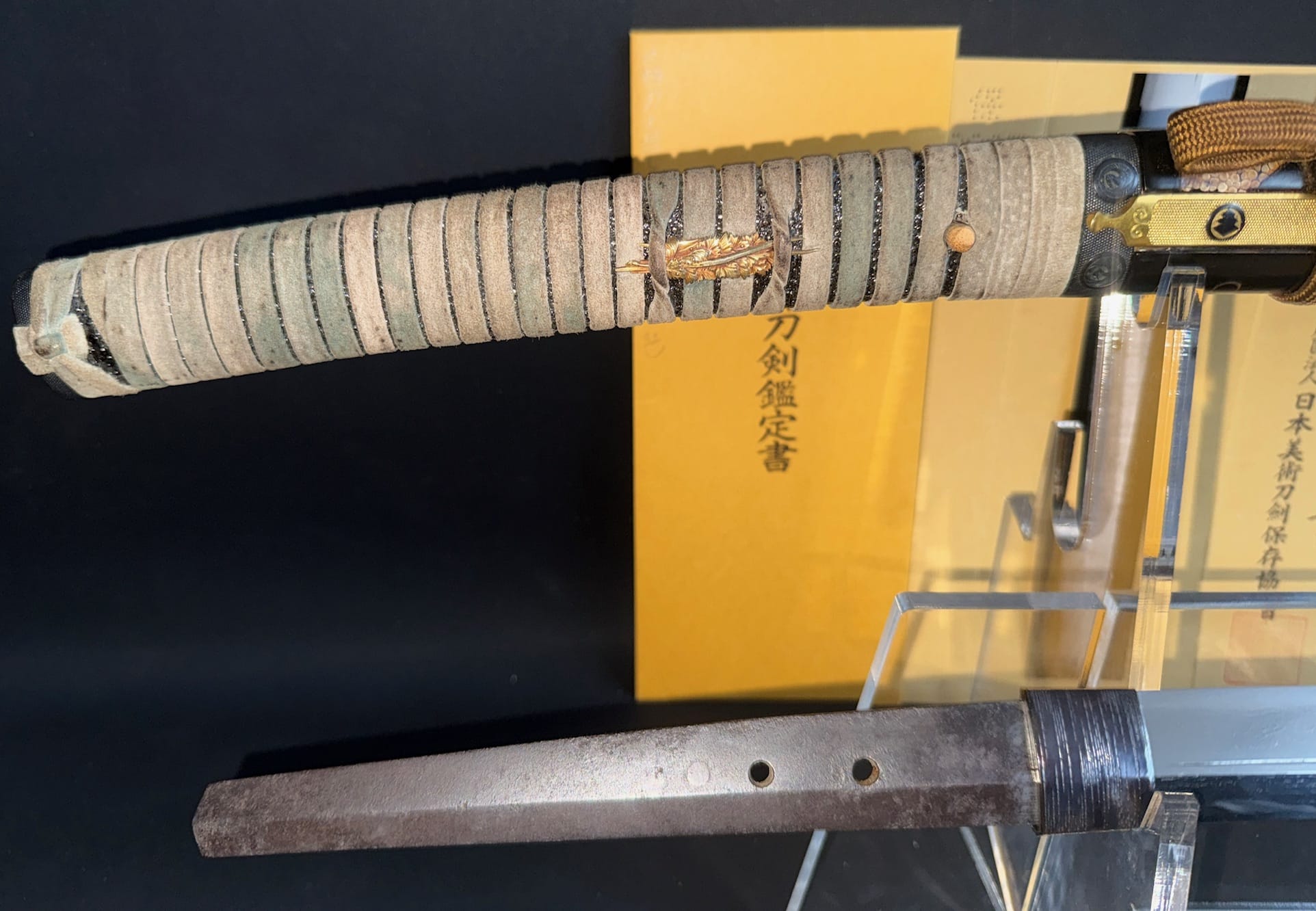
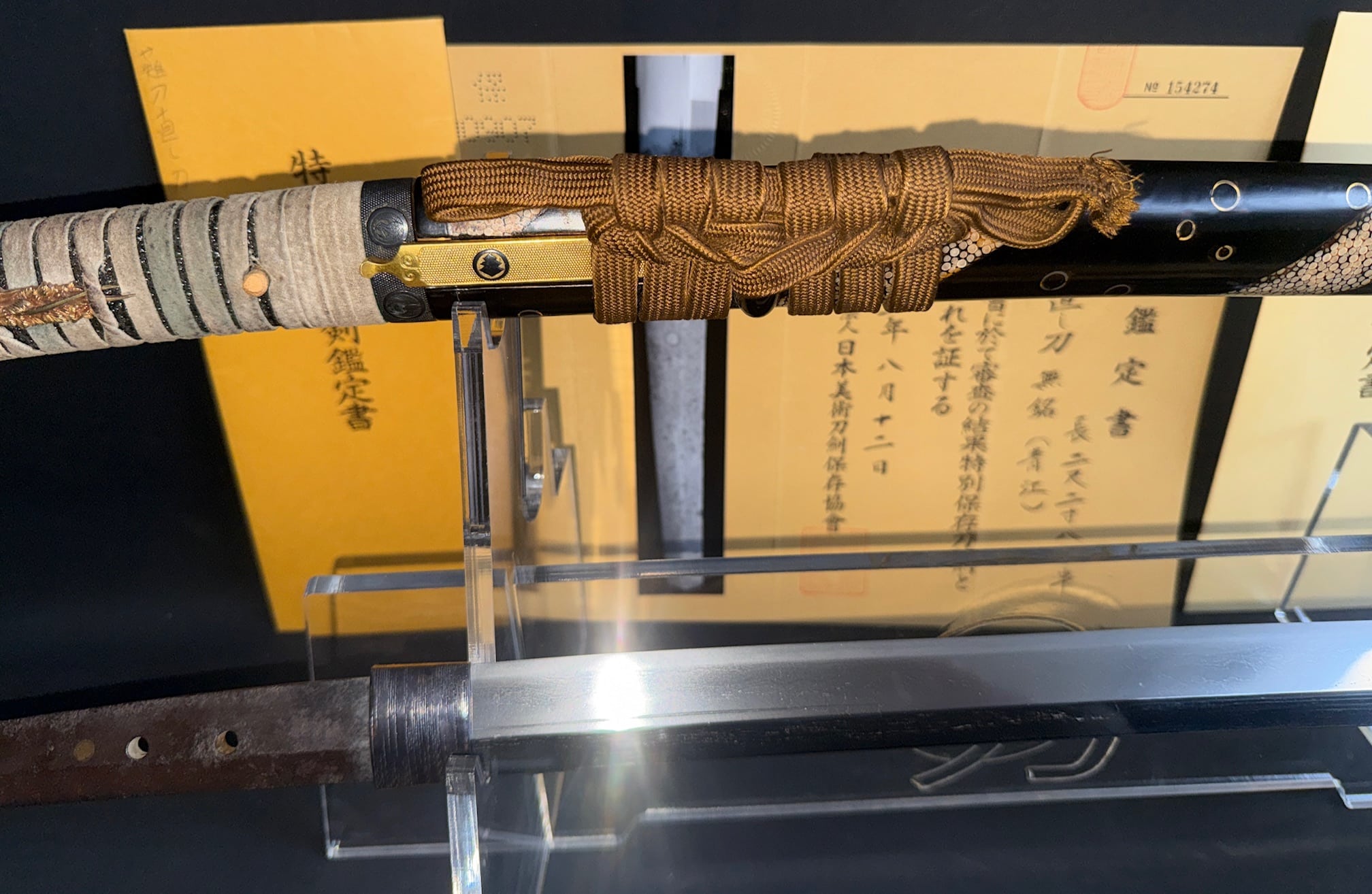
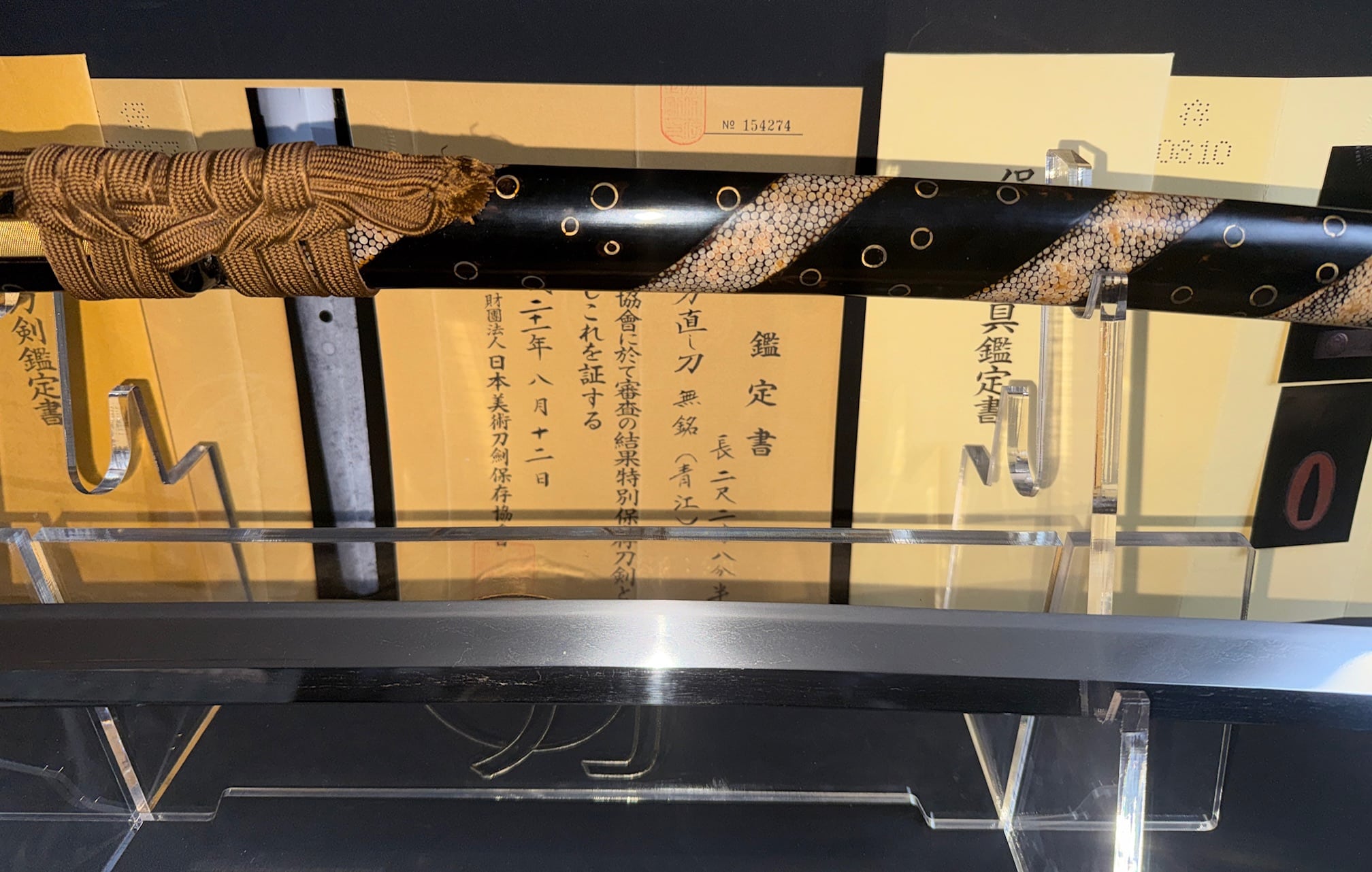
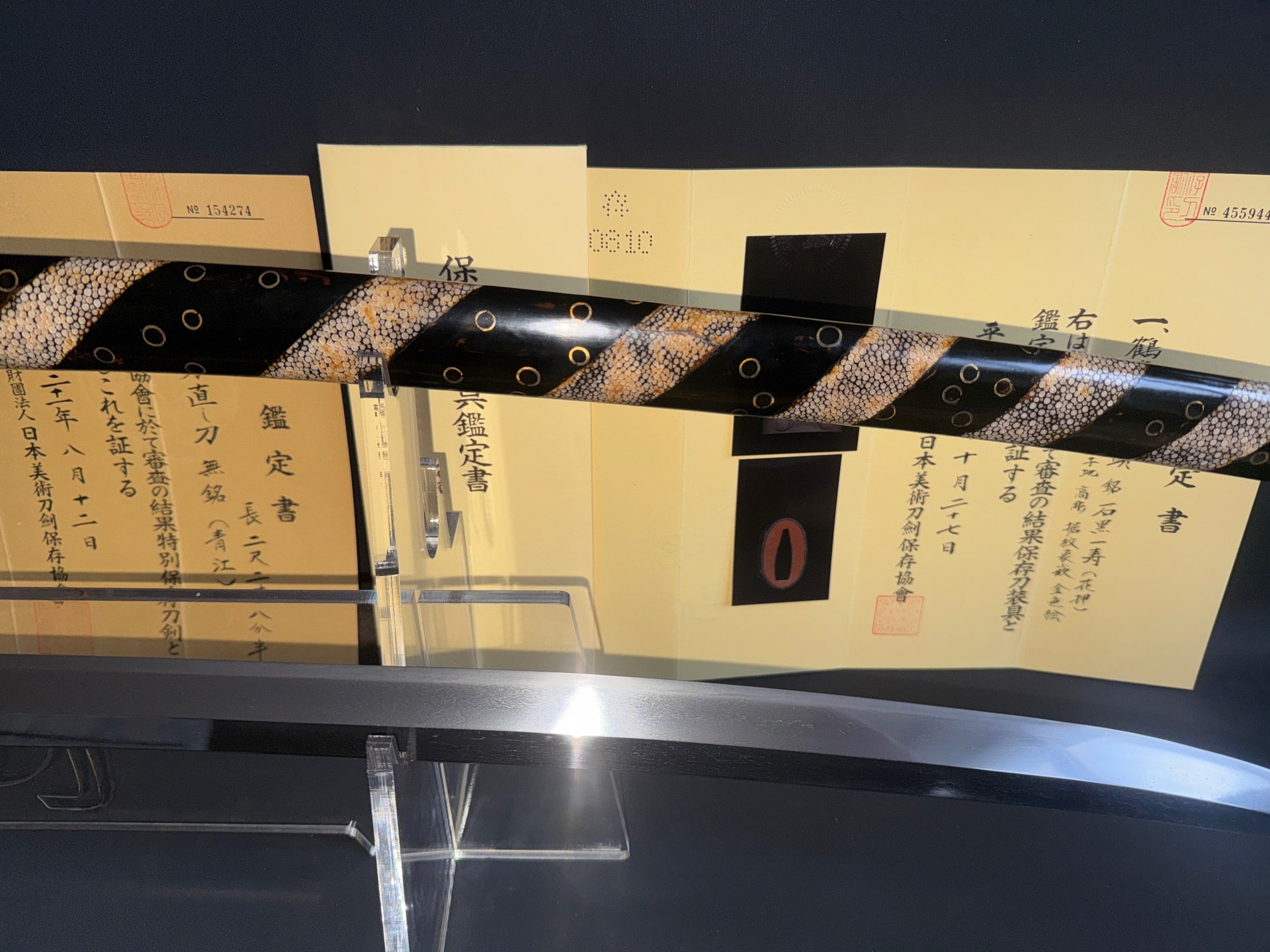
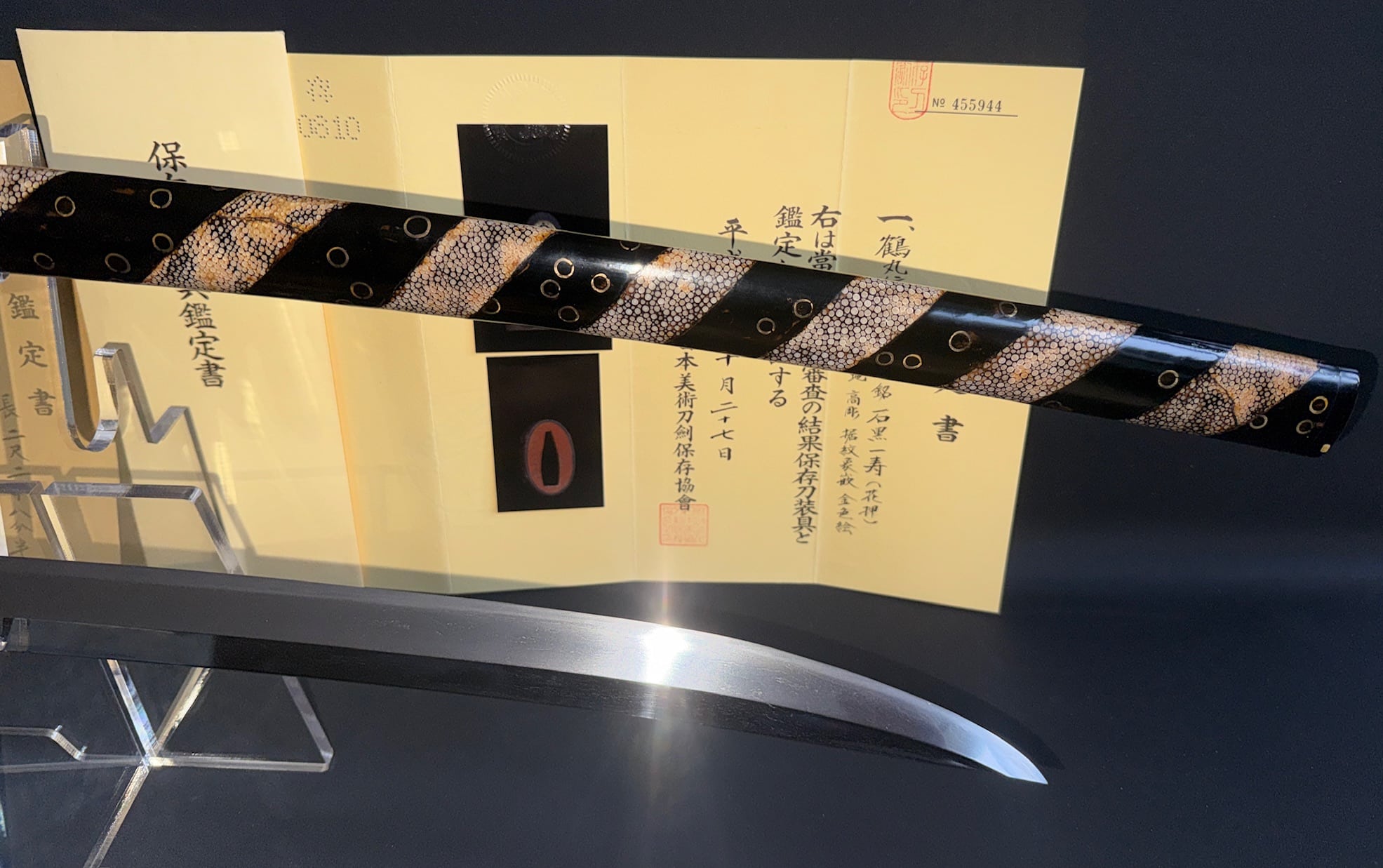
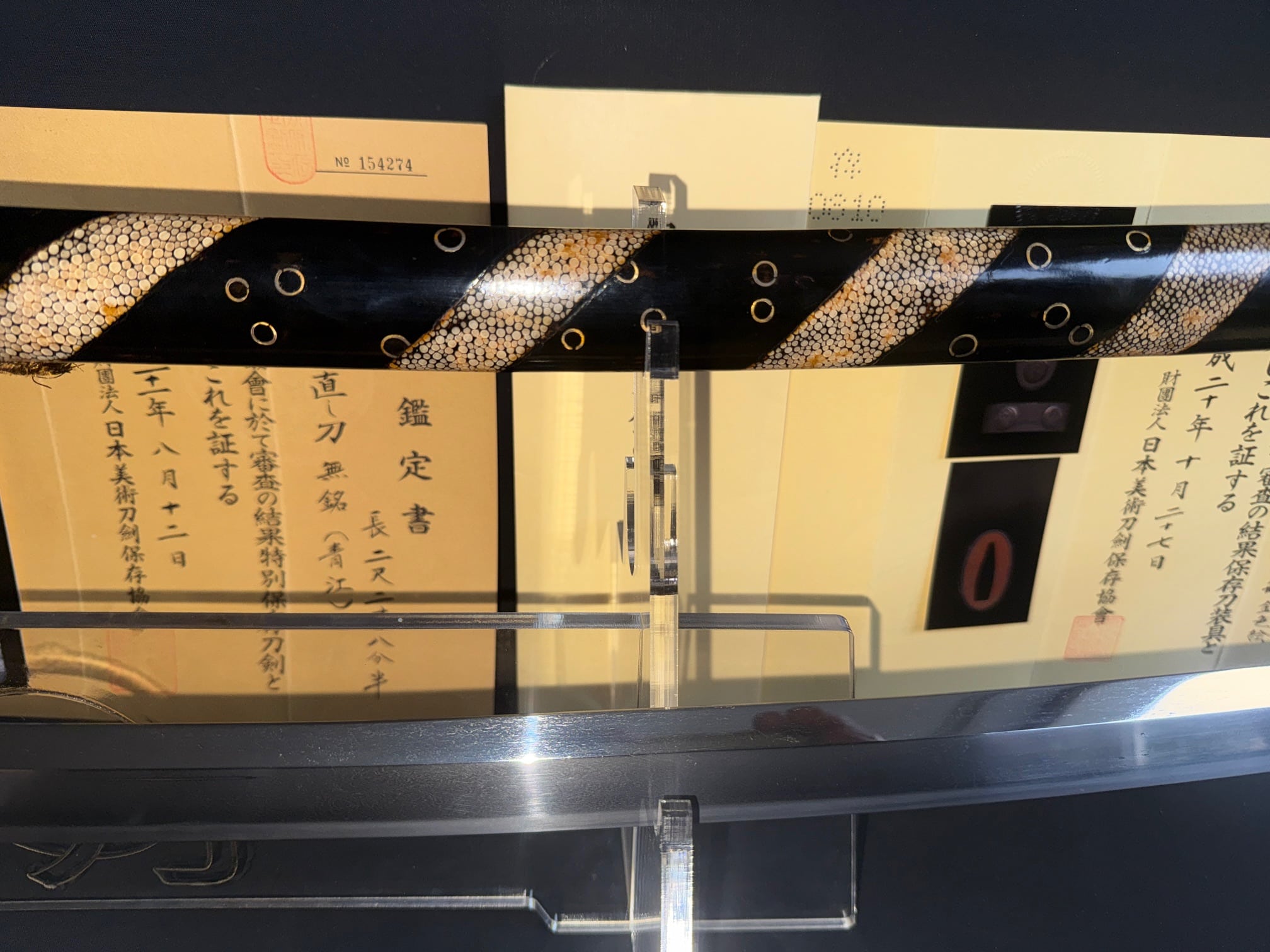
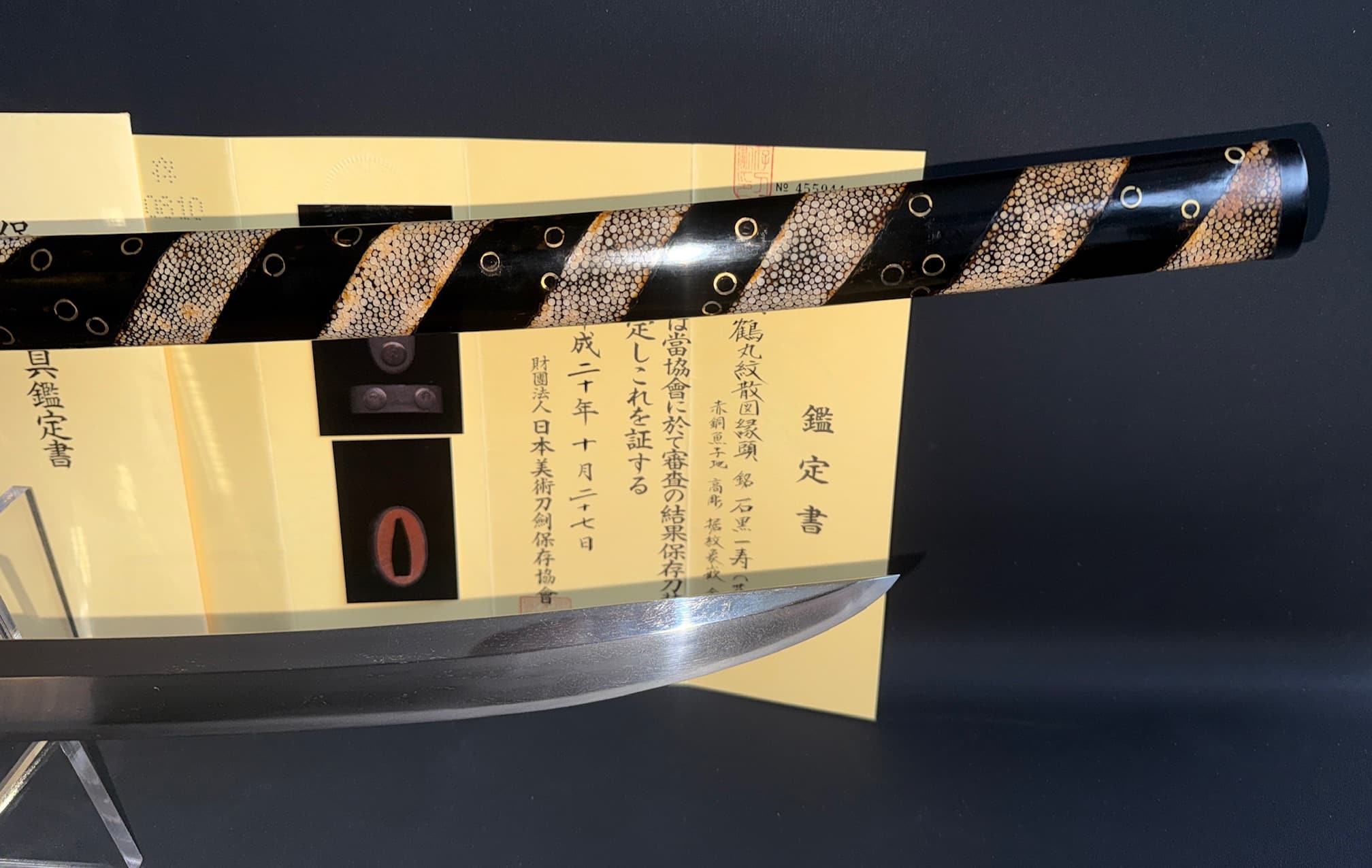
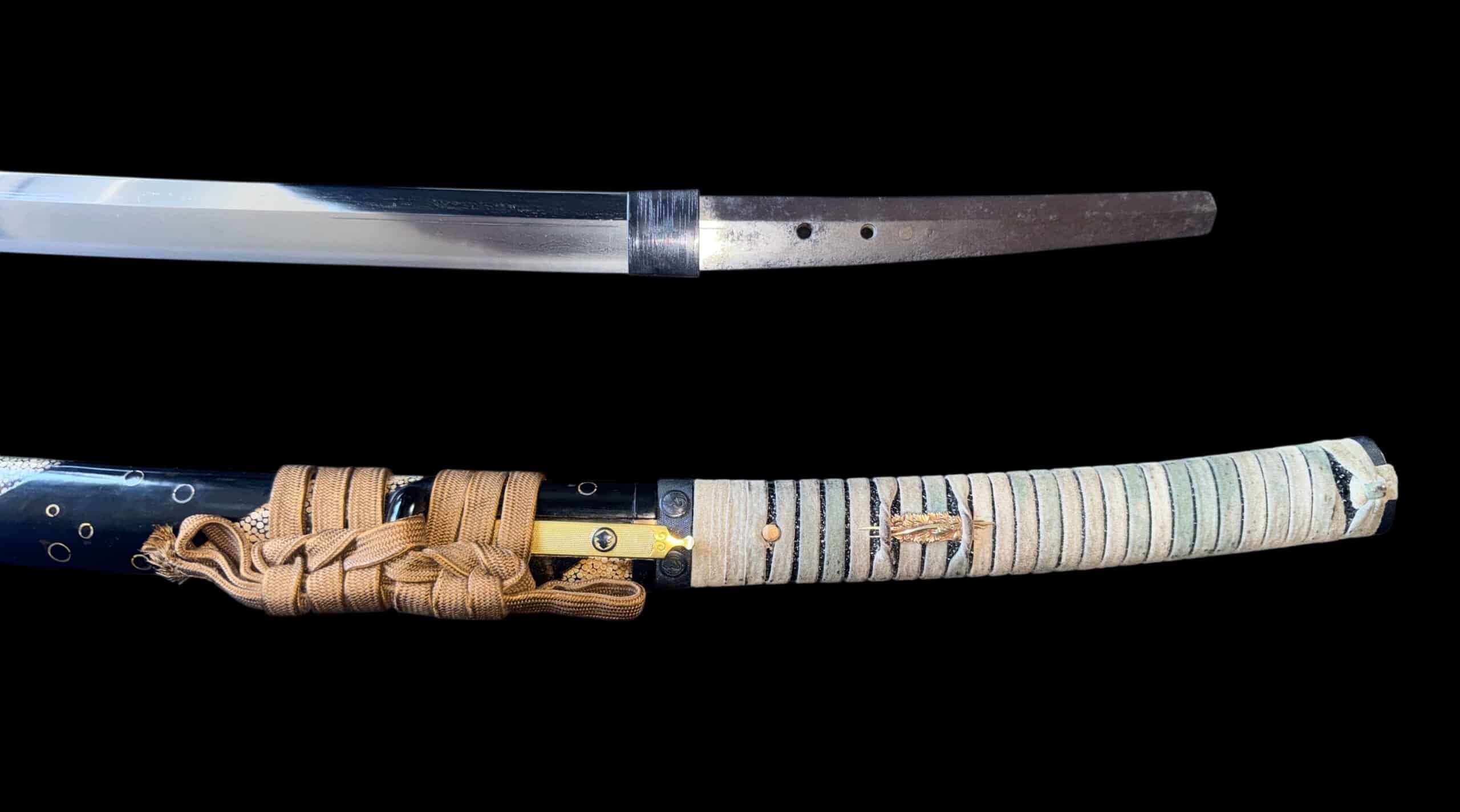
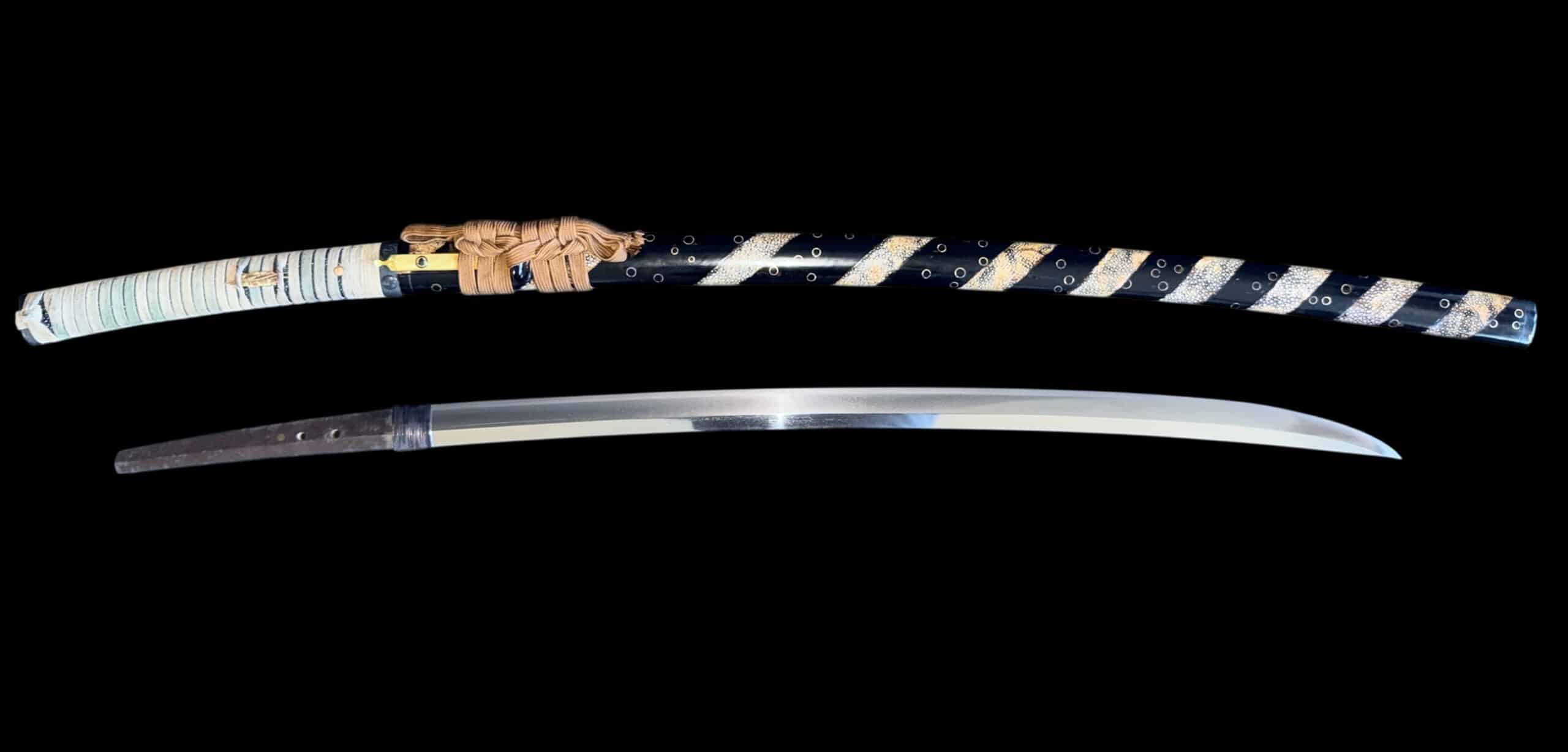
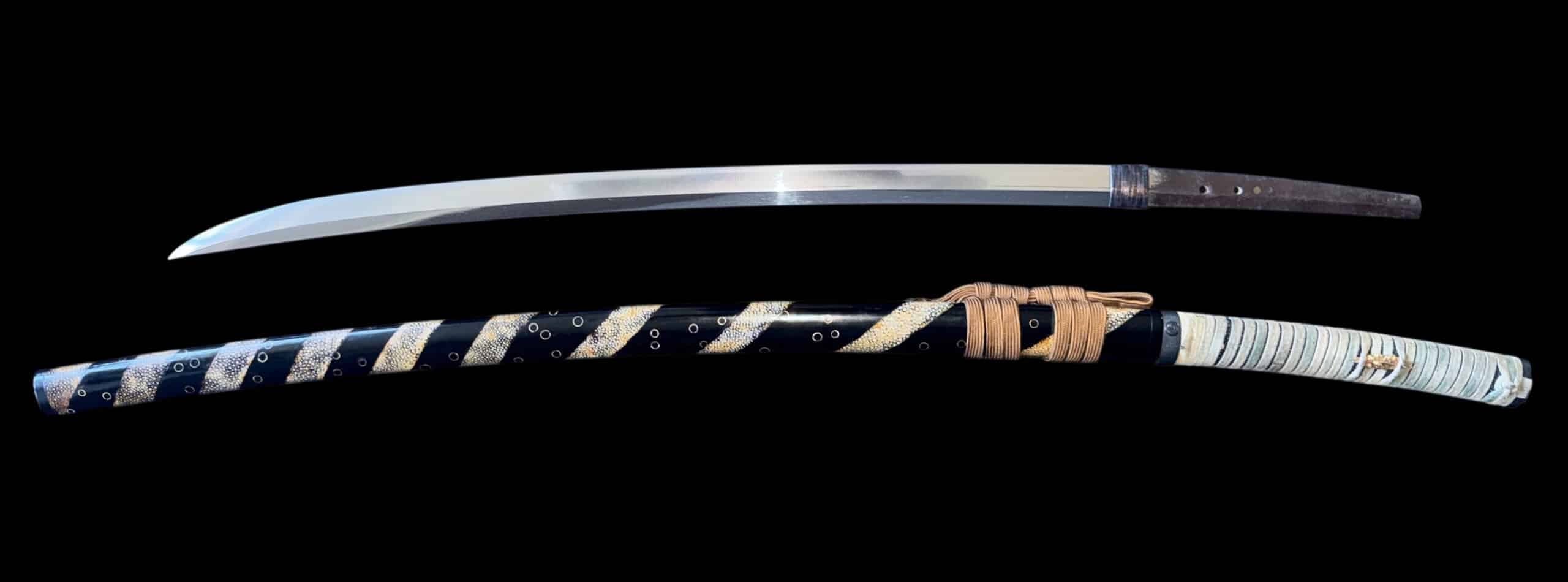
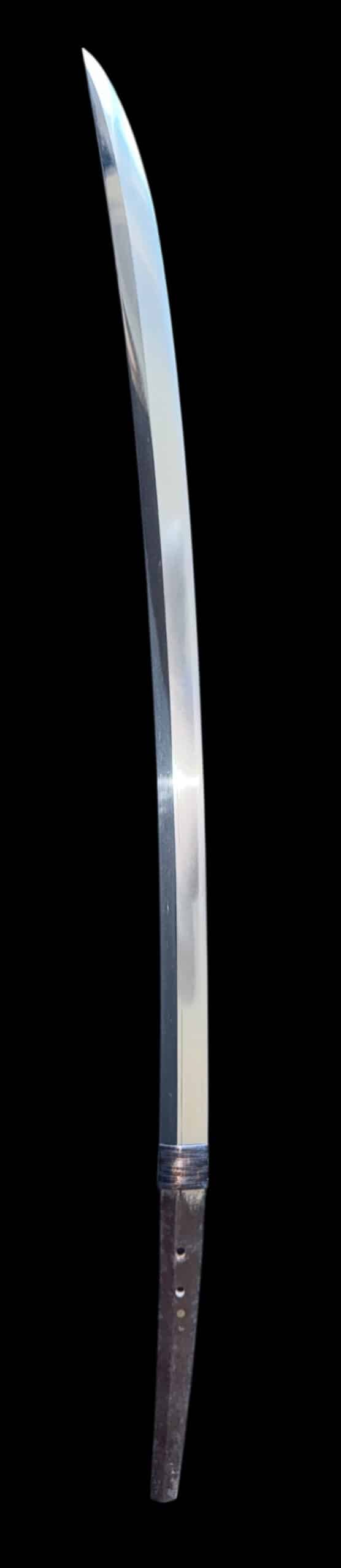
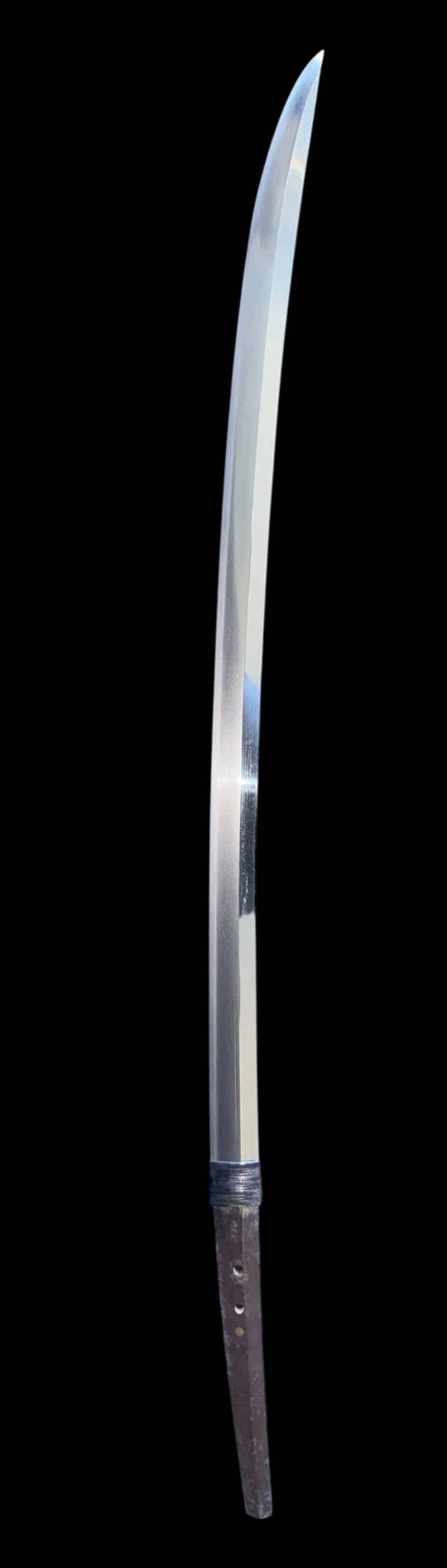
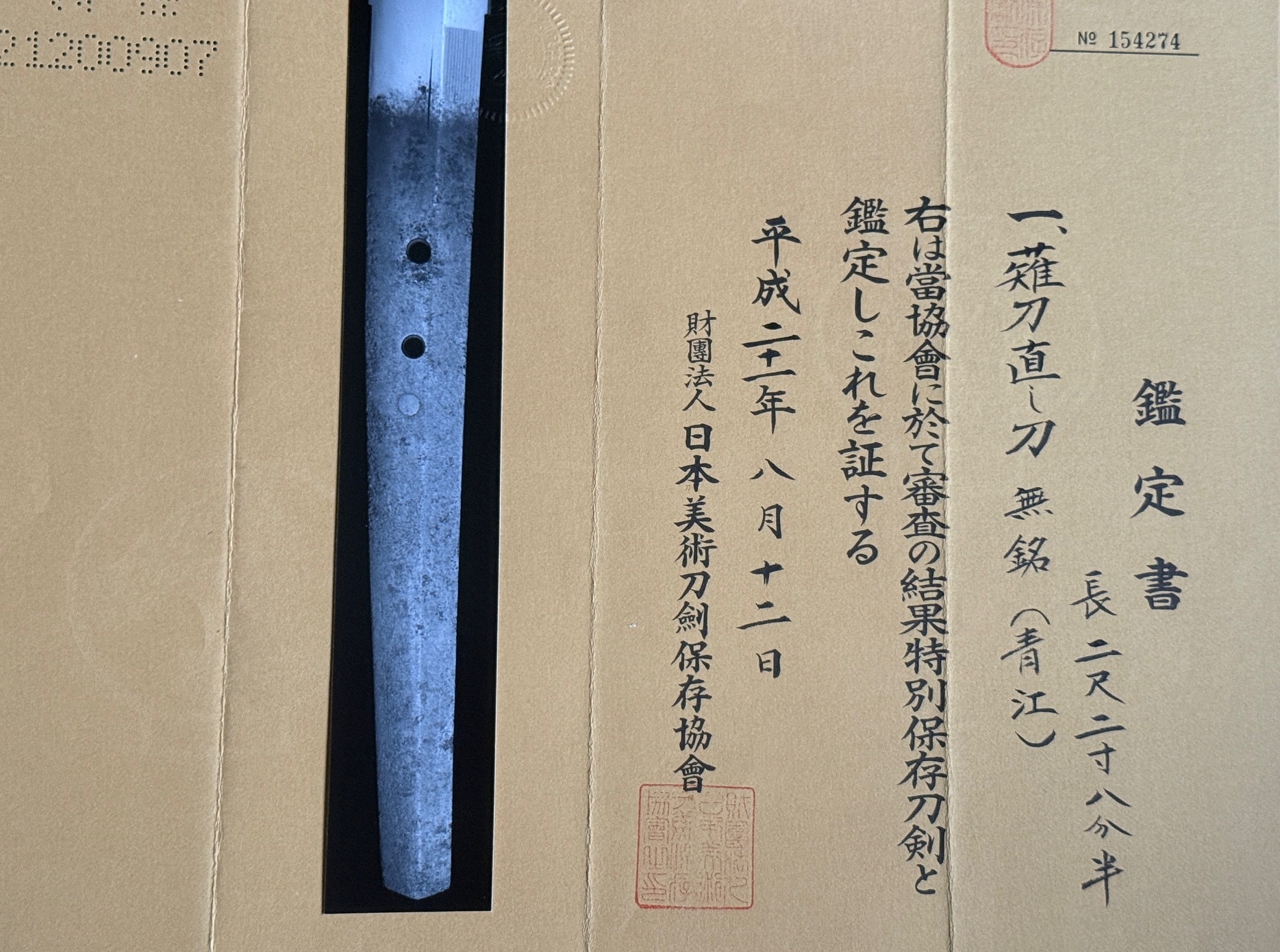
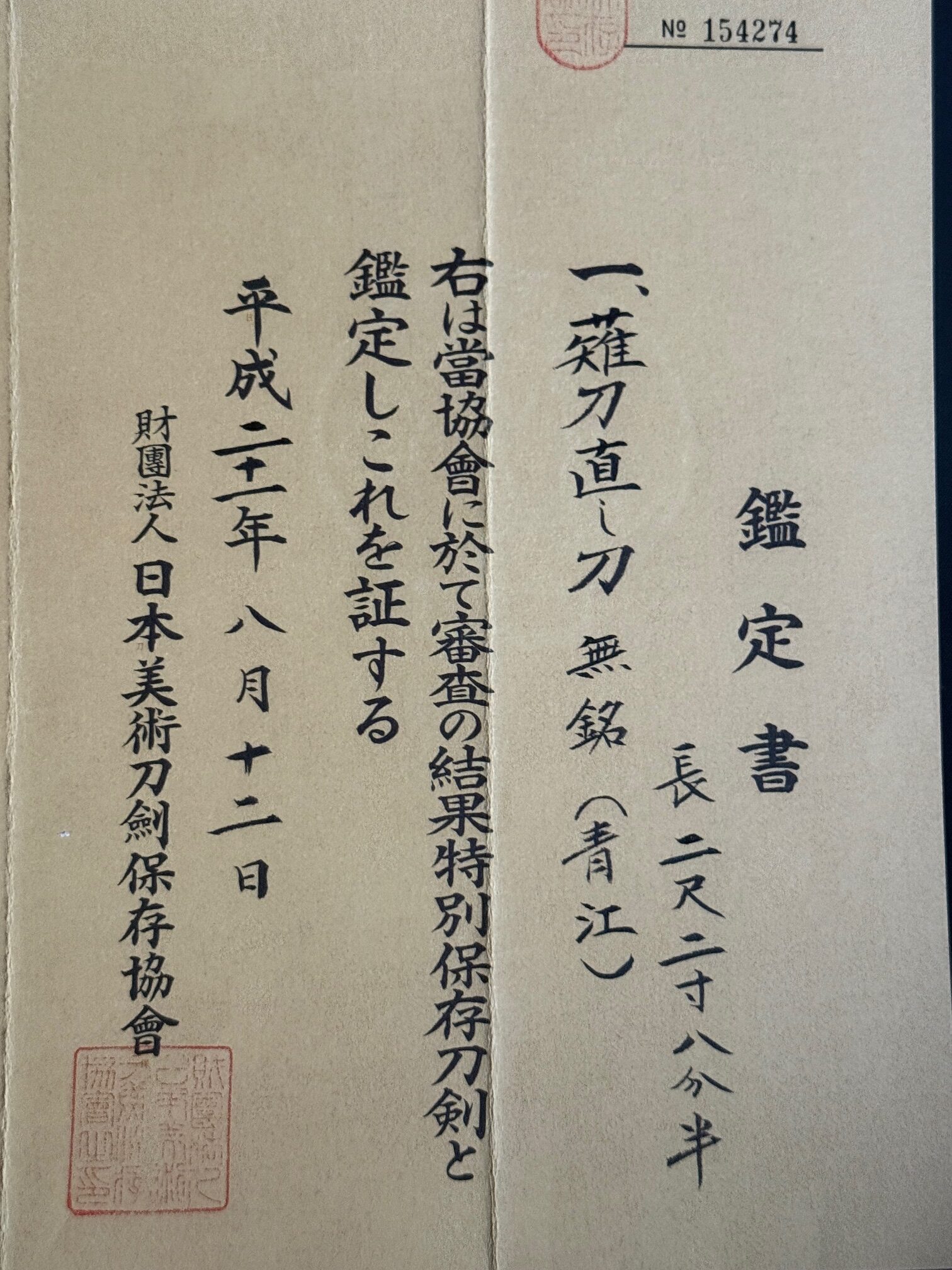
An exceptionally important Nagamaki-Naoshi attributed to the Aoe School, forged in Kareki 2 (1327) during the height of the Kamakura period. This blade, now measuring 68.8 cm nagasa and weighing 768 grams, represents the refined elegance and technical mastery that define the finest works of the Bitchū tradition.
The Aoe School flourished in Bitchū Province from the late Heian into the Nanbokuchō period. By the early 14th century, Aoe smiths had developed a highly distinctive style, combining Yamashiro refinement with the practical strength required for battlefield use. Works from the Kareki era (1326–1329) are particularly prized, as they reflect a mature synthesis of elegance and martial functionality.
Blades from this period are rare, especially those retaining clear period attribution and accompanied by NBTHK Tokubetsu Hozon certification—confirming both authenticity and high artistic value.
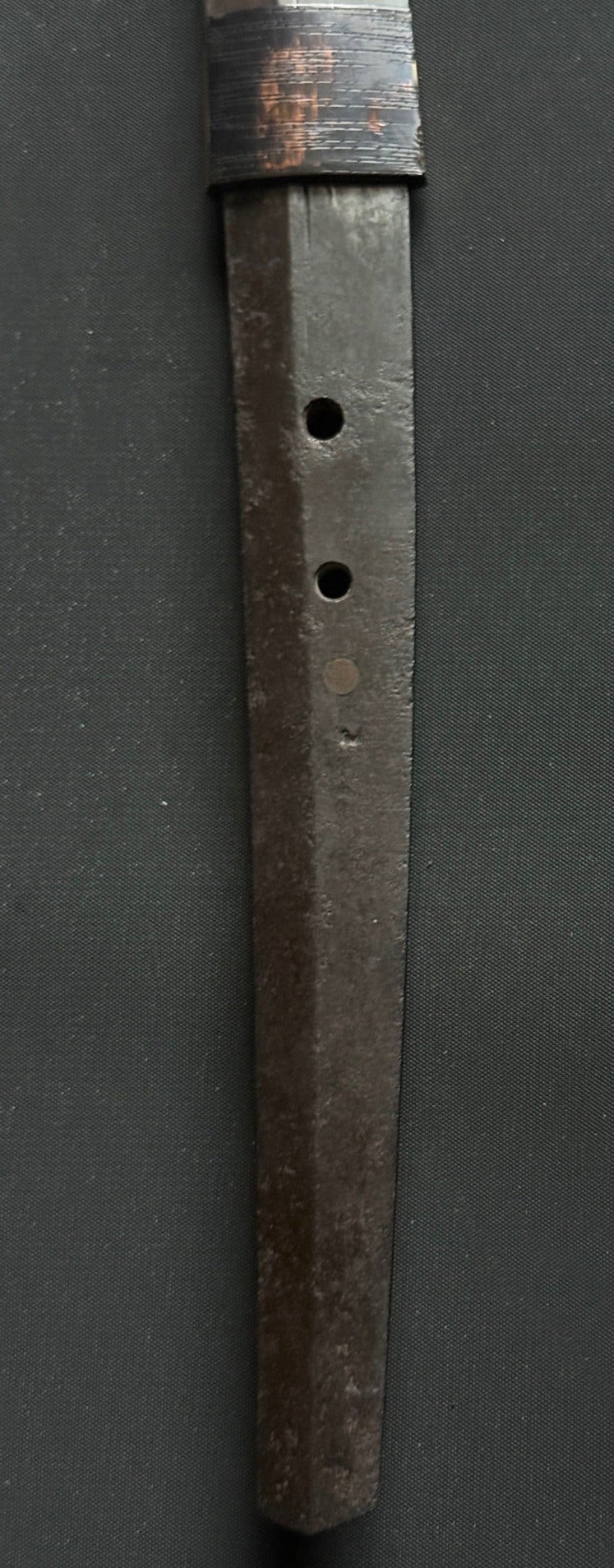
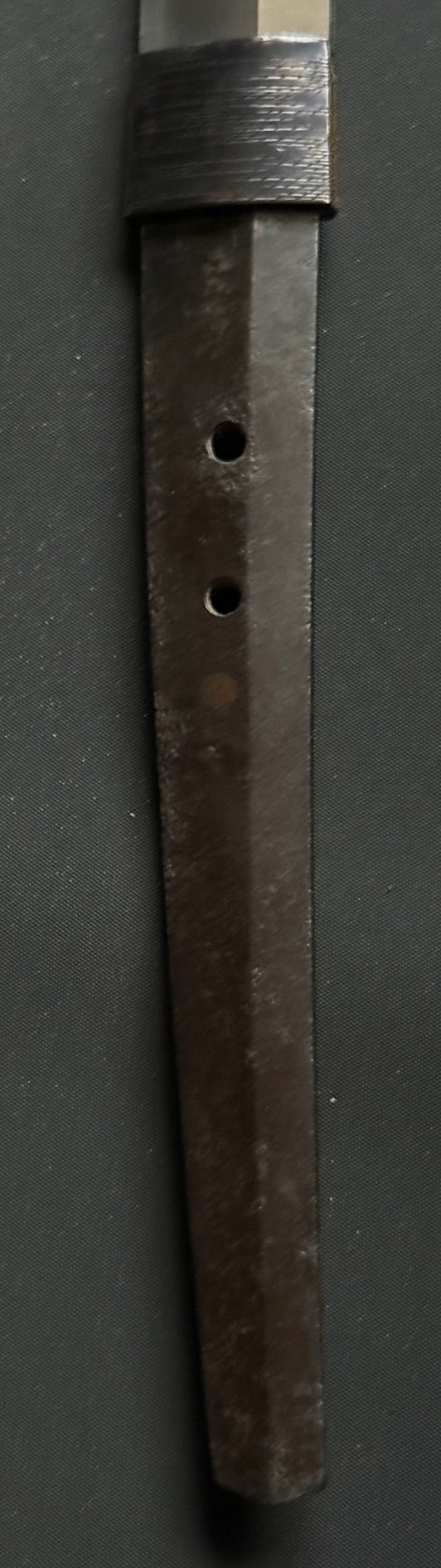
Originally forged as a nagamaki, this blade was later shortened (naoshi) into katana form. The nagamaki was a pole-mounted weapon favored in the late Kamakura and Nanbokuchō periods for its extended reach and powerful cutting ability.
The present configuration preserves:
A dignified curvature typical of early 14th-century work
Strong motohaba with controlled taper
Balanced proportions despite the shortening
The weight of 768 grams for a 68.8 cm blade reflects excellent forging density and healthy preservation, suggesting substantial original thickness and integrity.
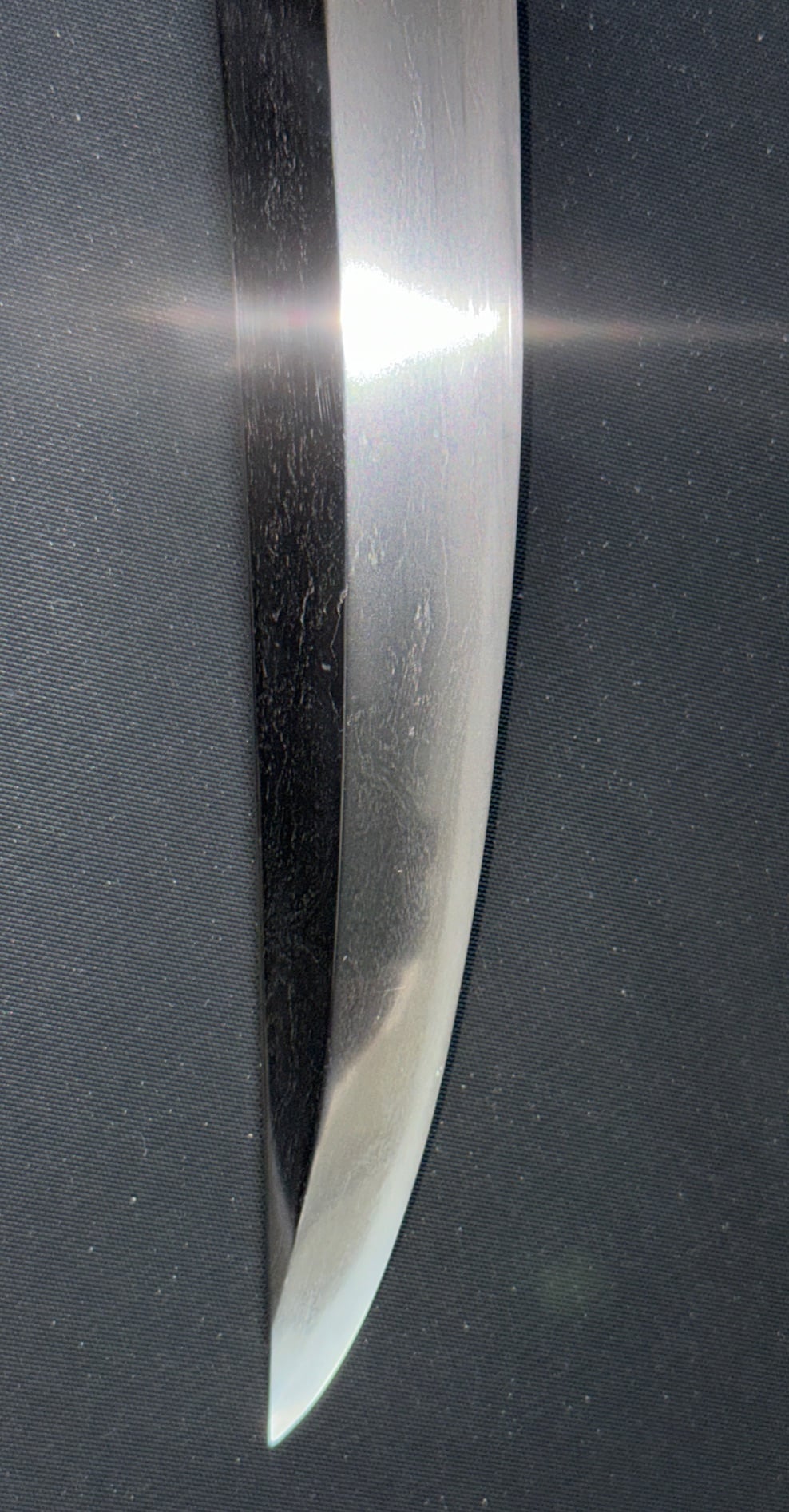
Aoe workmanship is celebrated for its refined ko-itame hada, often interspersed with flowing masame tendencies. The steel typically displays:
Fine, tightly forged grain
Clear ji-nie
Occasional utsuri (midare or bo-utsuri)
Kamakura Aoe blades frequently exhibit a soft, luminous surface quality—less flamboyant than Ichimonji, yet deeply sophisticated and controlled.
The hamon in Aoe work of this era is commonly suguha-based, sometimes gently undulating with ko-midare elements. It is typically:
Bright and consistent
Rich in ko-nie
Refined rather than ostentatious
This controlled elegance distinguishes Aoe from the more exuberant Bizen schools of the same period.
A dated blade from Kareki 2 places this sword firmly in the late Kamakura period—an era widely regarded as the golden age of Japanese swordsmithing. This was a time when the warrior class had fully matured, and sword design reflected both battlefield necessity and aristocratic aesthetic ideals.
Blades from this year survive in limited numbers. Aoe works of this age, especially in healthy condition and with Tokubetsu Hozon papers, are highly collectible and historically important.
Certification by the NBTHK at the Tokubetsu Hozon level confirms:
Authentic attribution to the Aoe School
Significant artistic merit
Preservation quality above standard Hozon
For Kamakura period blades, this designation represents strong validation within the international collecting community.
This Aoe School Nagamaki-Naoshi (Kareki 2, 1327) stands as a refined and powerful survivor of Japan’s classical sword age. It embodies:
The martial authority of a former polearm blade
The graceful restraint of Bitchū Aoe craftsmanship
The historical prestige of a firmly dated Kamakura work
Confirmed authenticity through NBTHK Tokubetsu Hozon
At 68.8 cm and 768 grams, the blade presents both visual elegance and substantial presence—an exceptional piece for the advanced collector seeking a genuine Kamakura-period treasure.

KvK: 51964147
C.W. Slok - Kyodai Originals
Bank: NL25 KNAB 0509 1310 18
BIC: KNABNL2H
© 2026 Kyodai Originals is made with ❤ by Nieuwblik.com


