
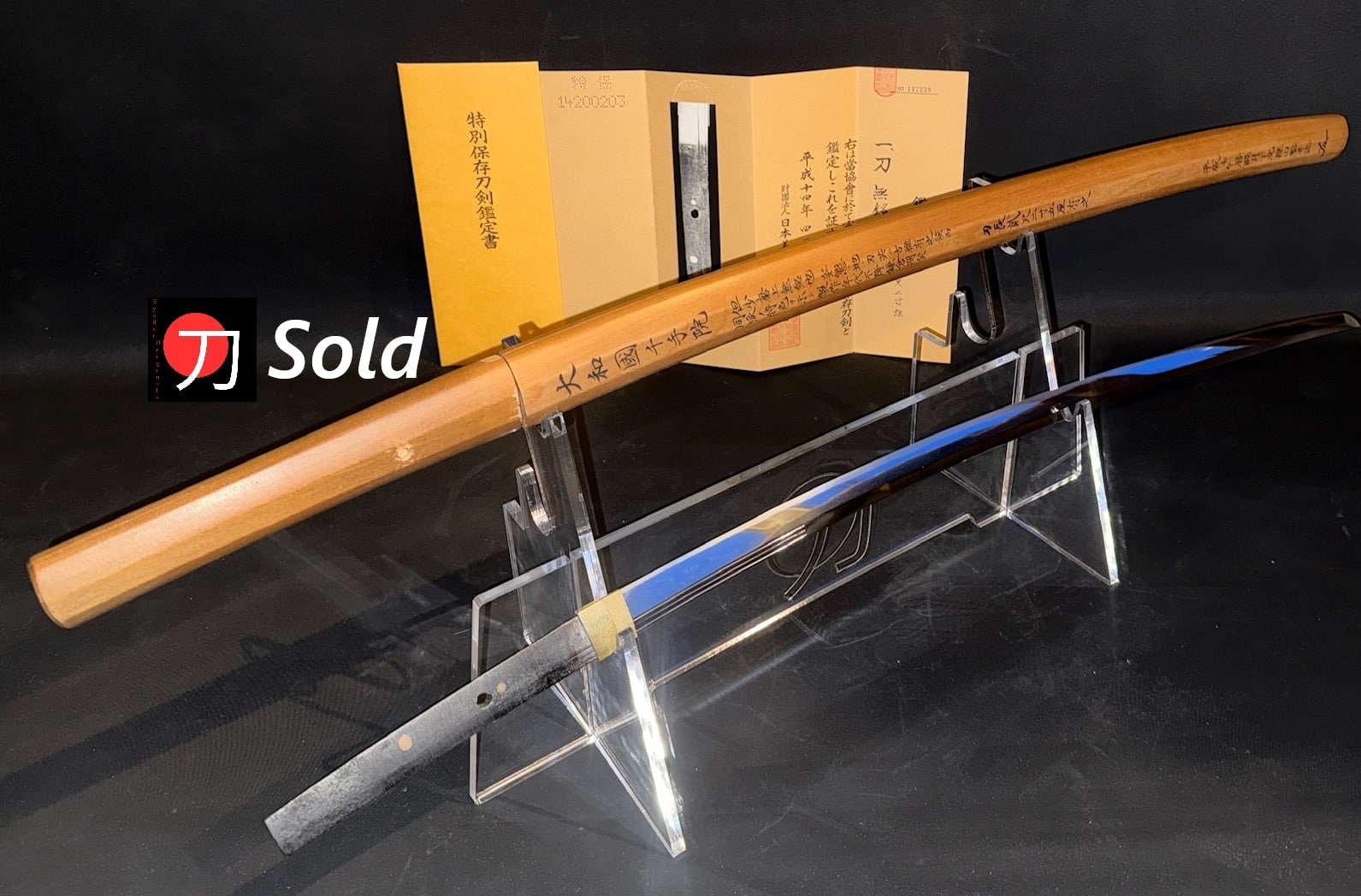
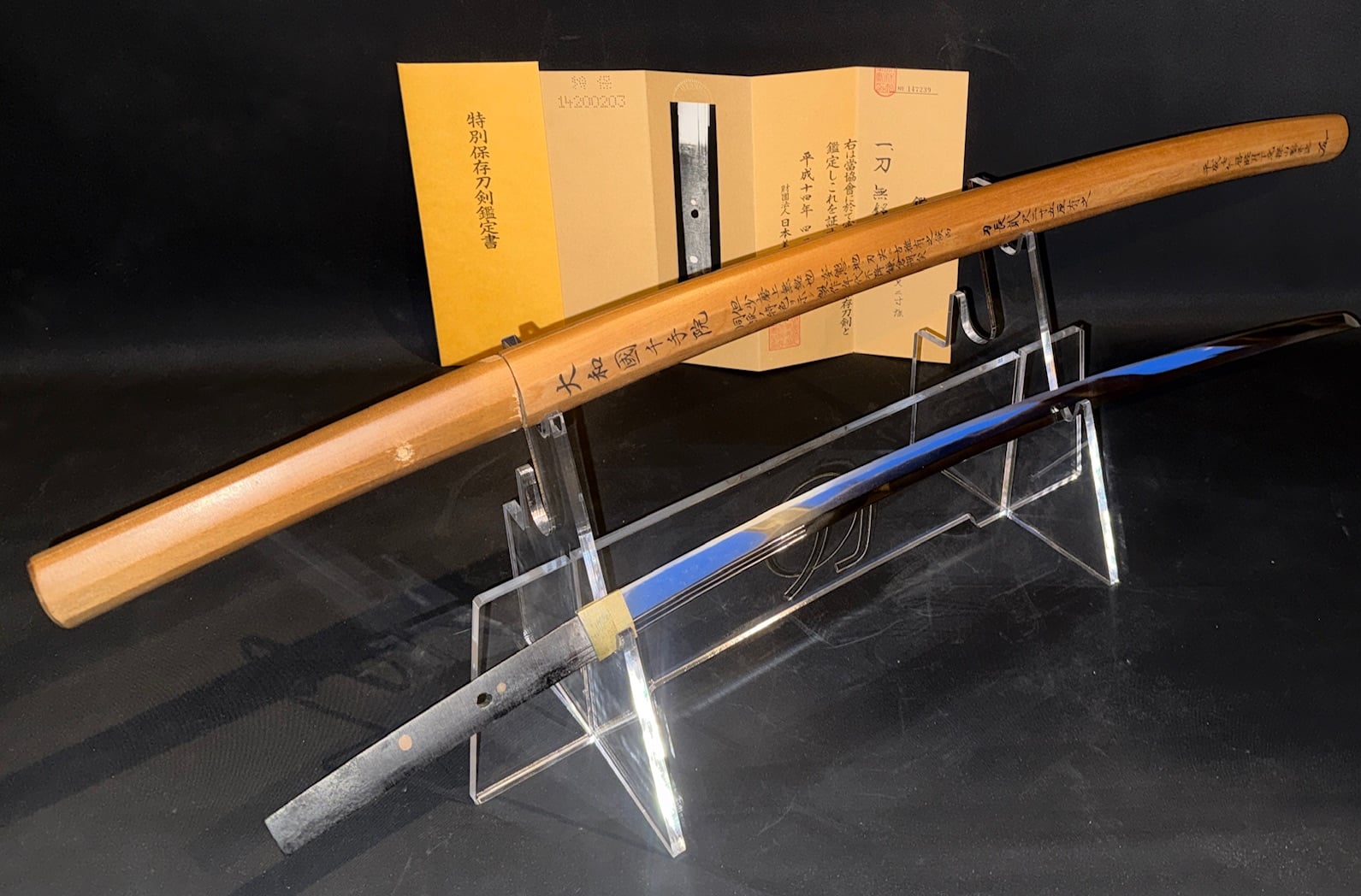
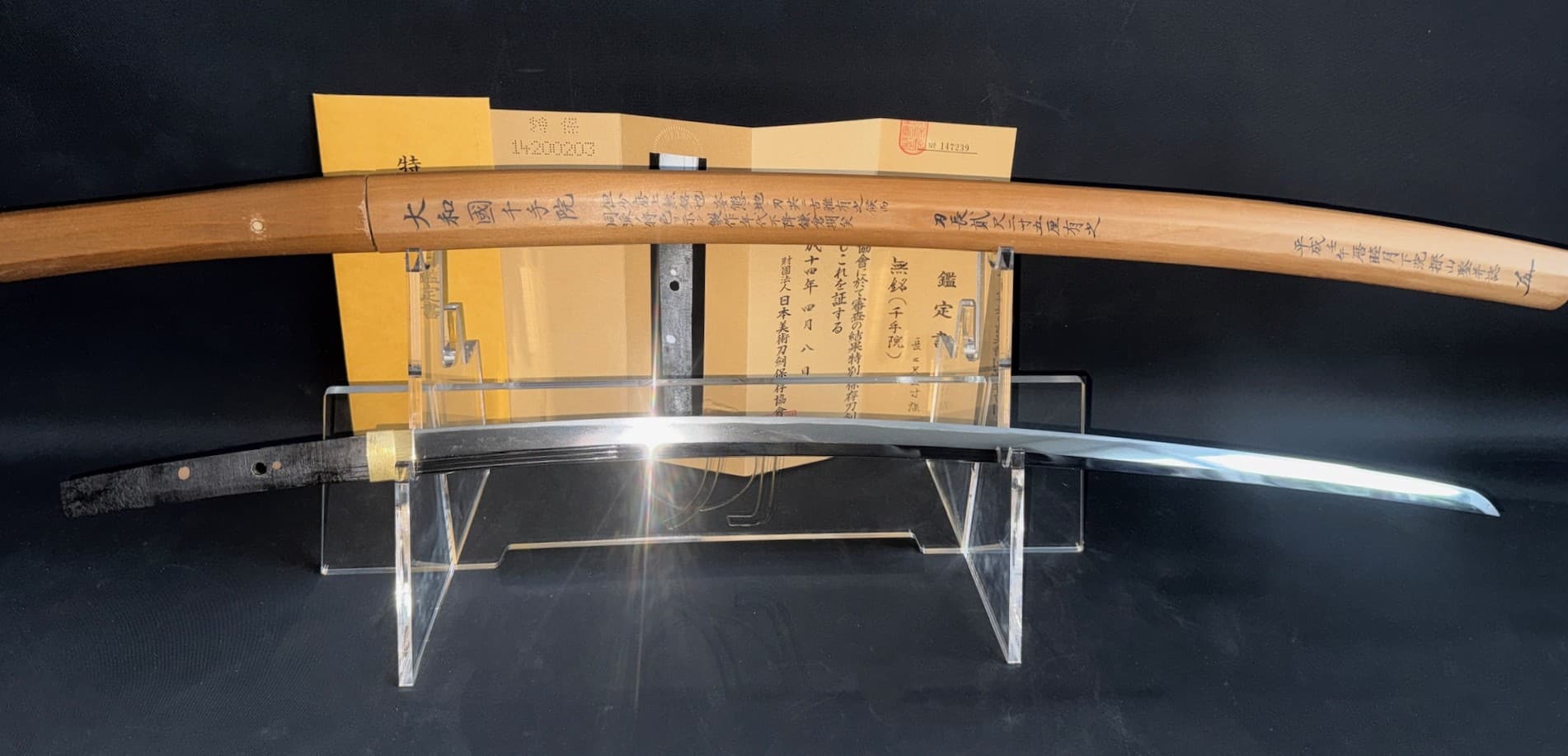
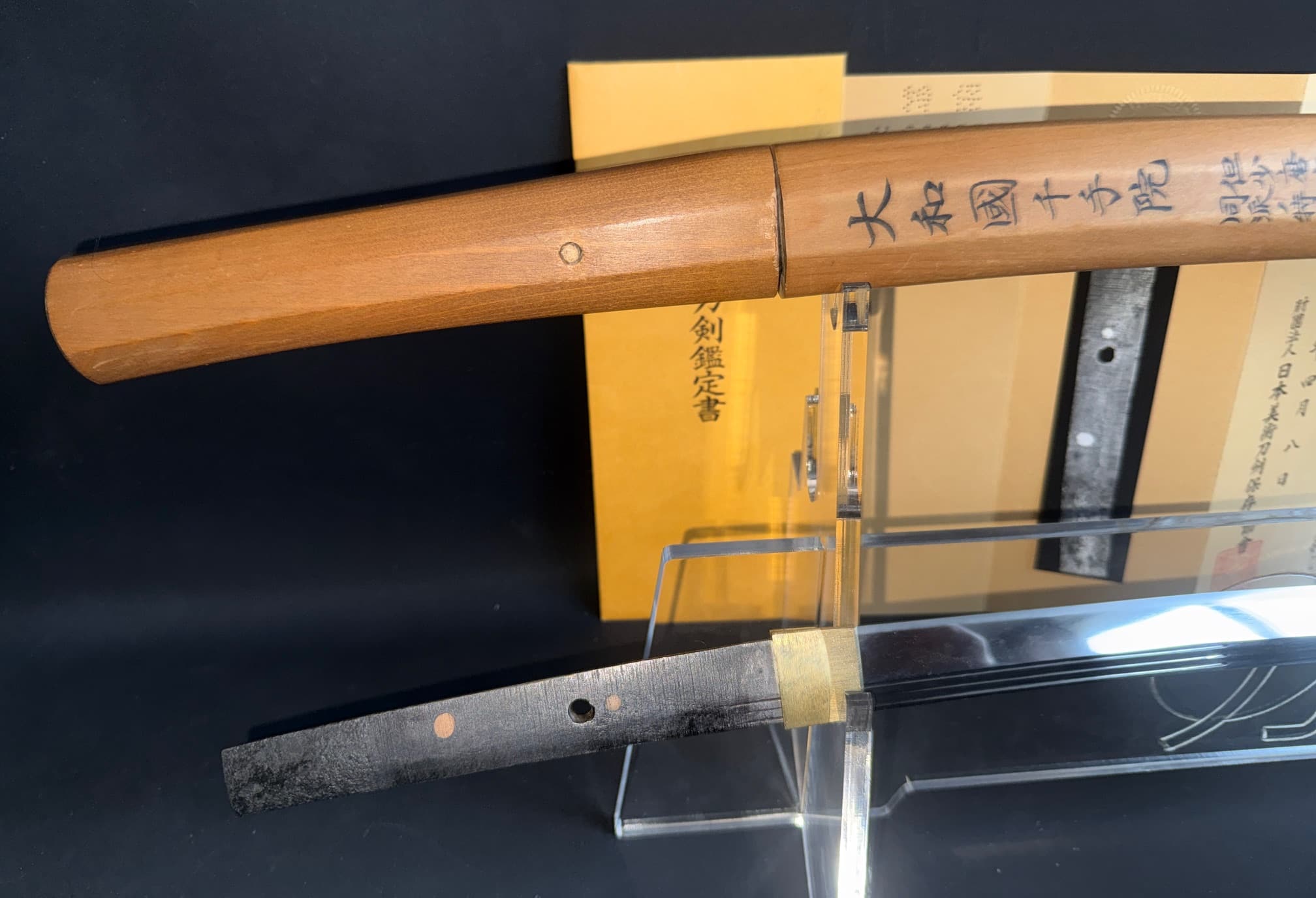
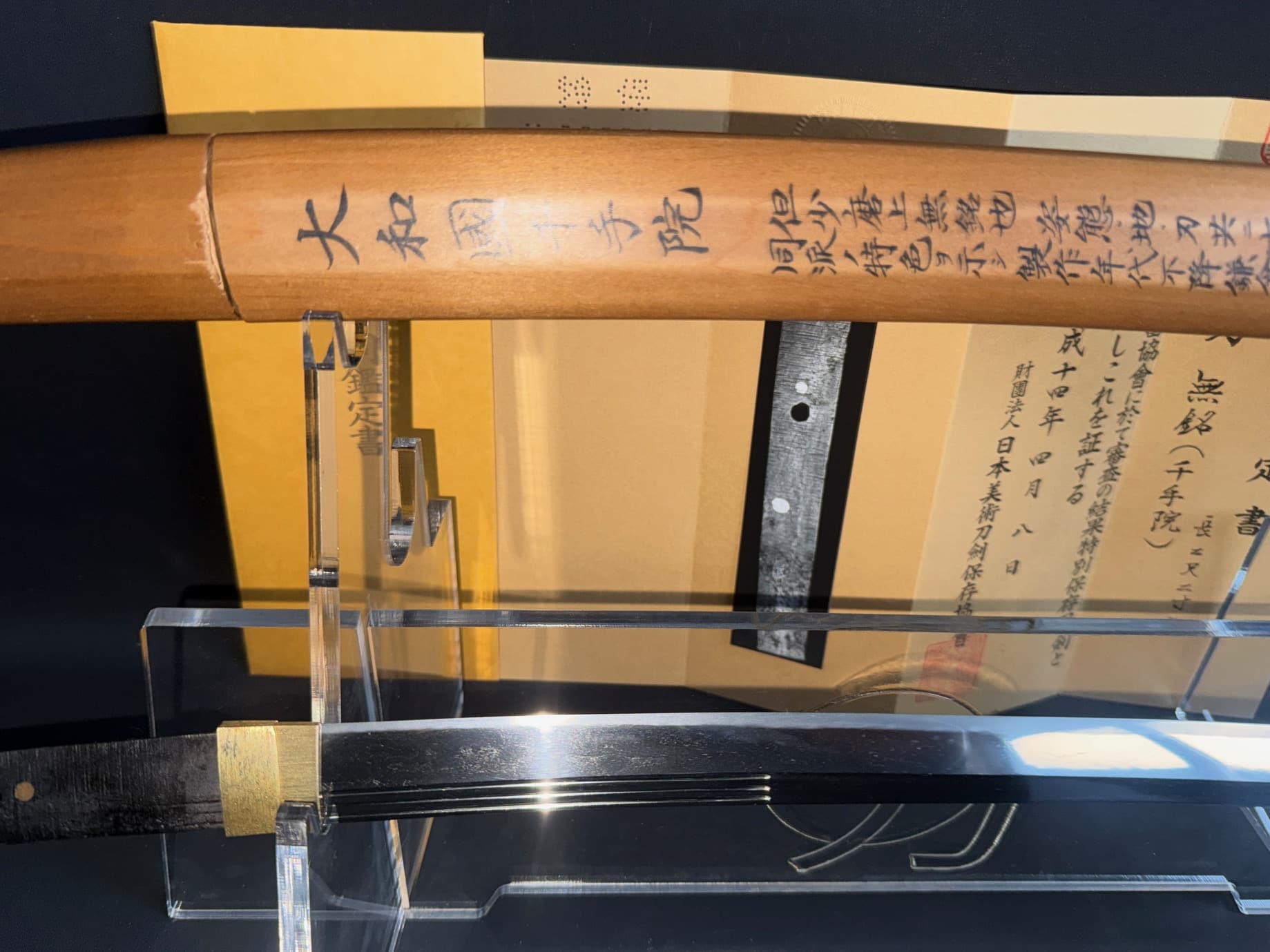
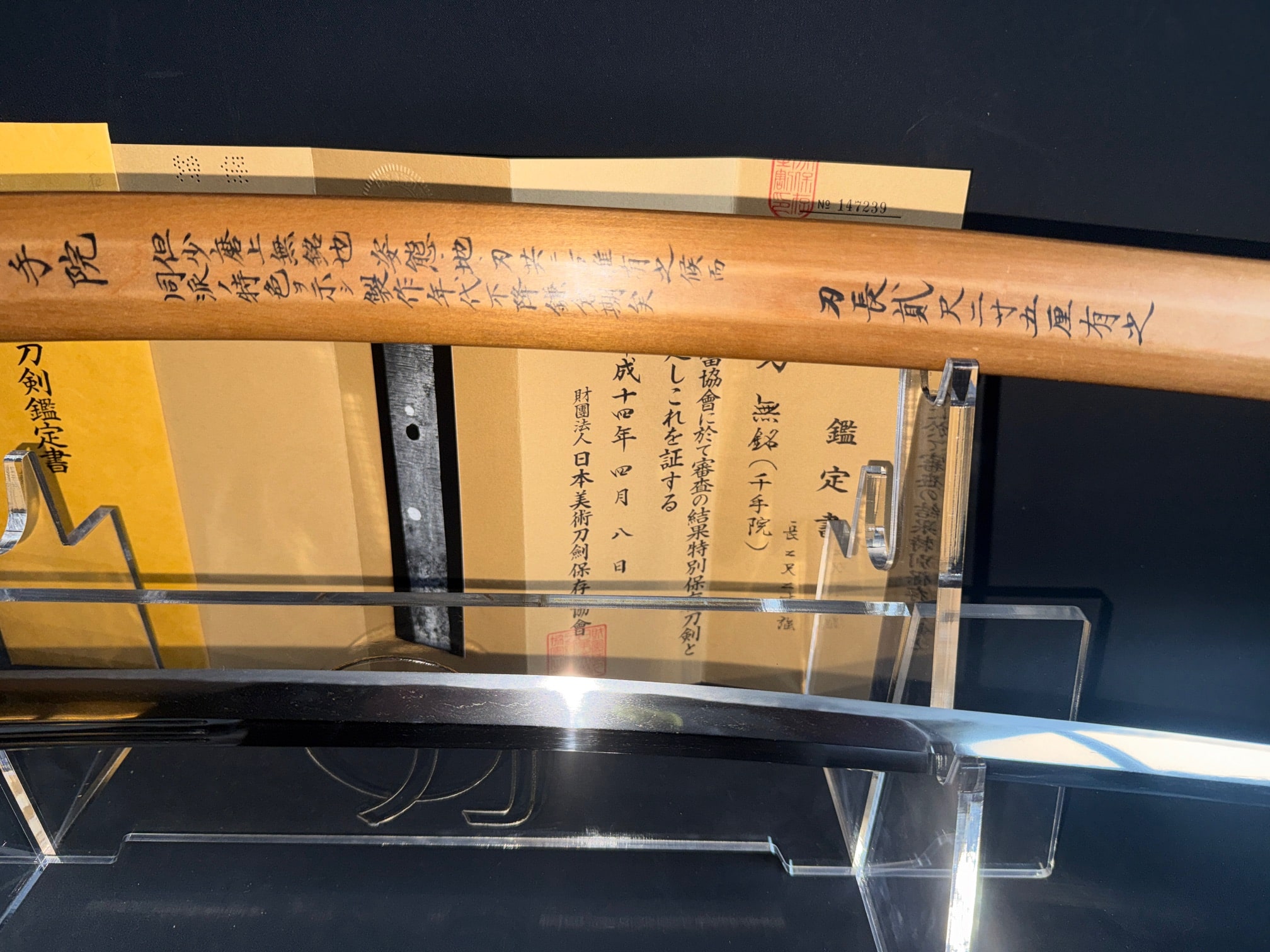
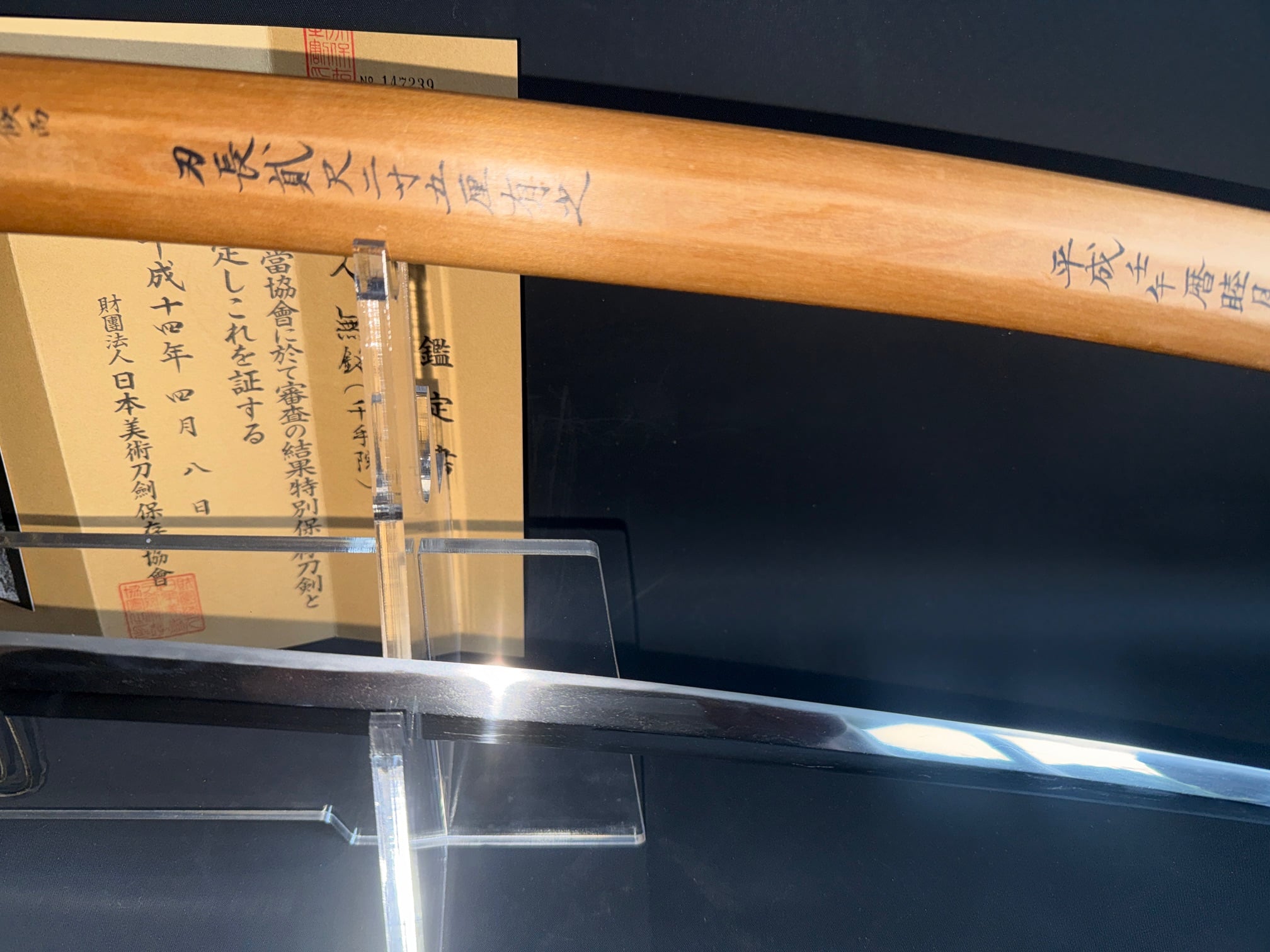
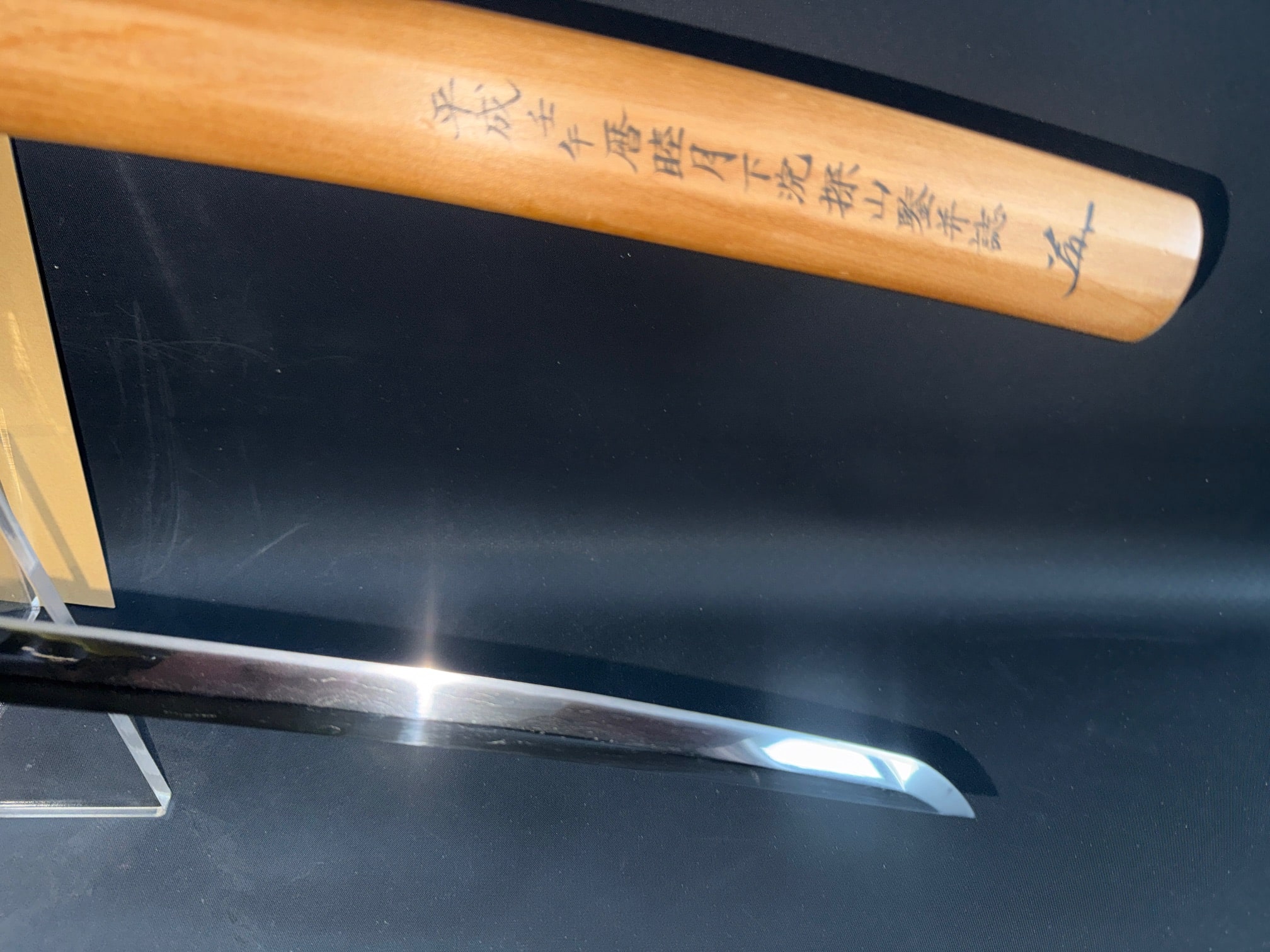
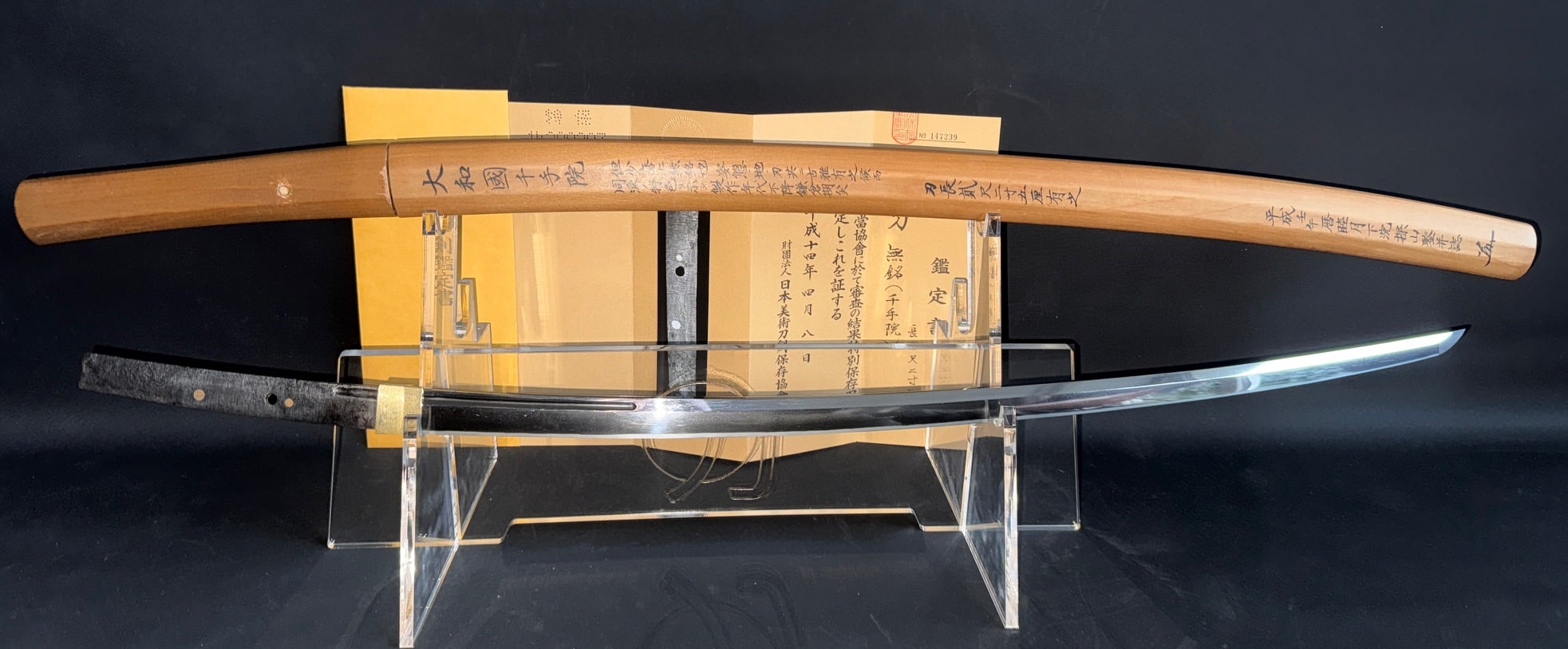
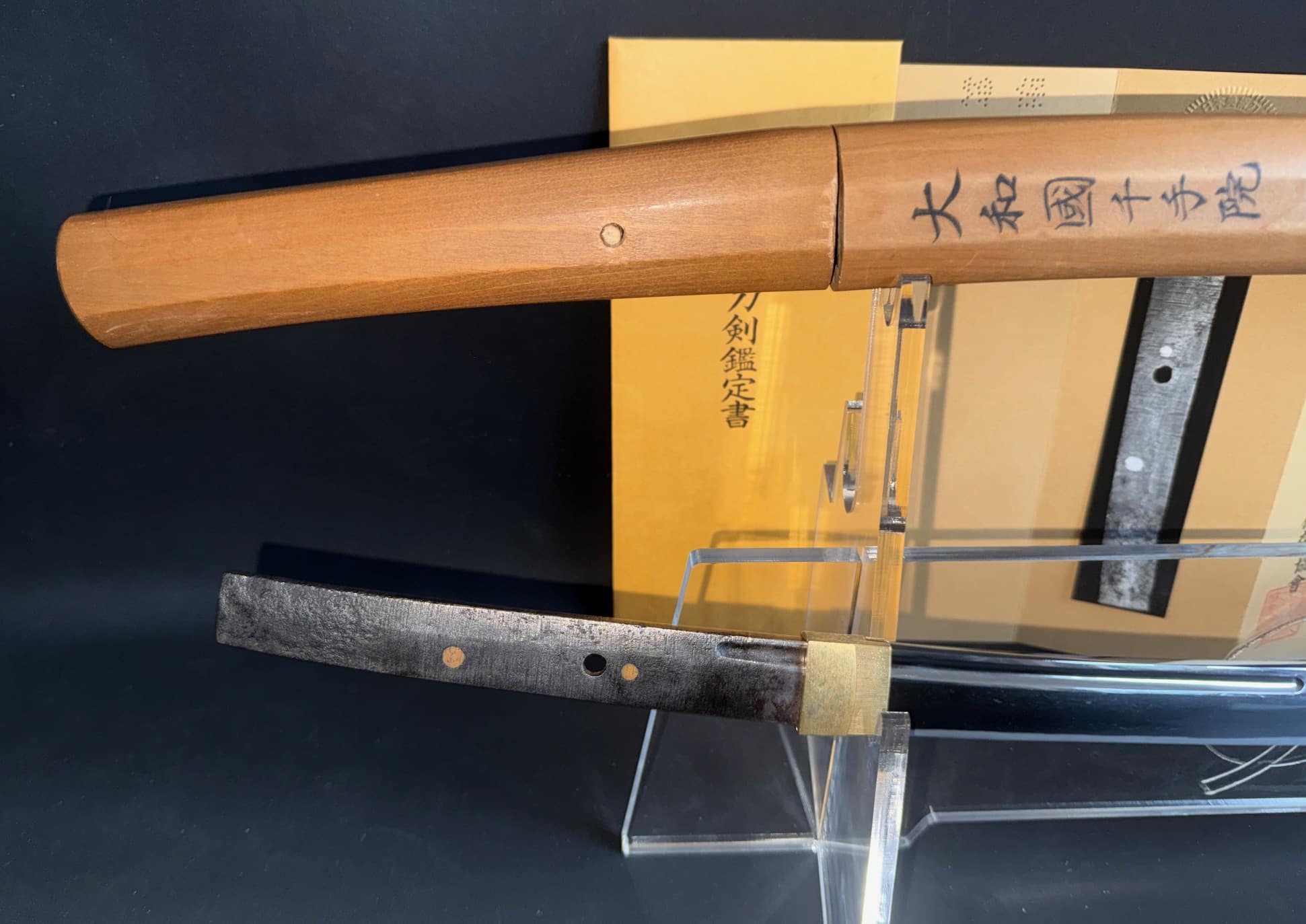
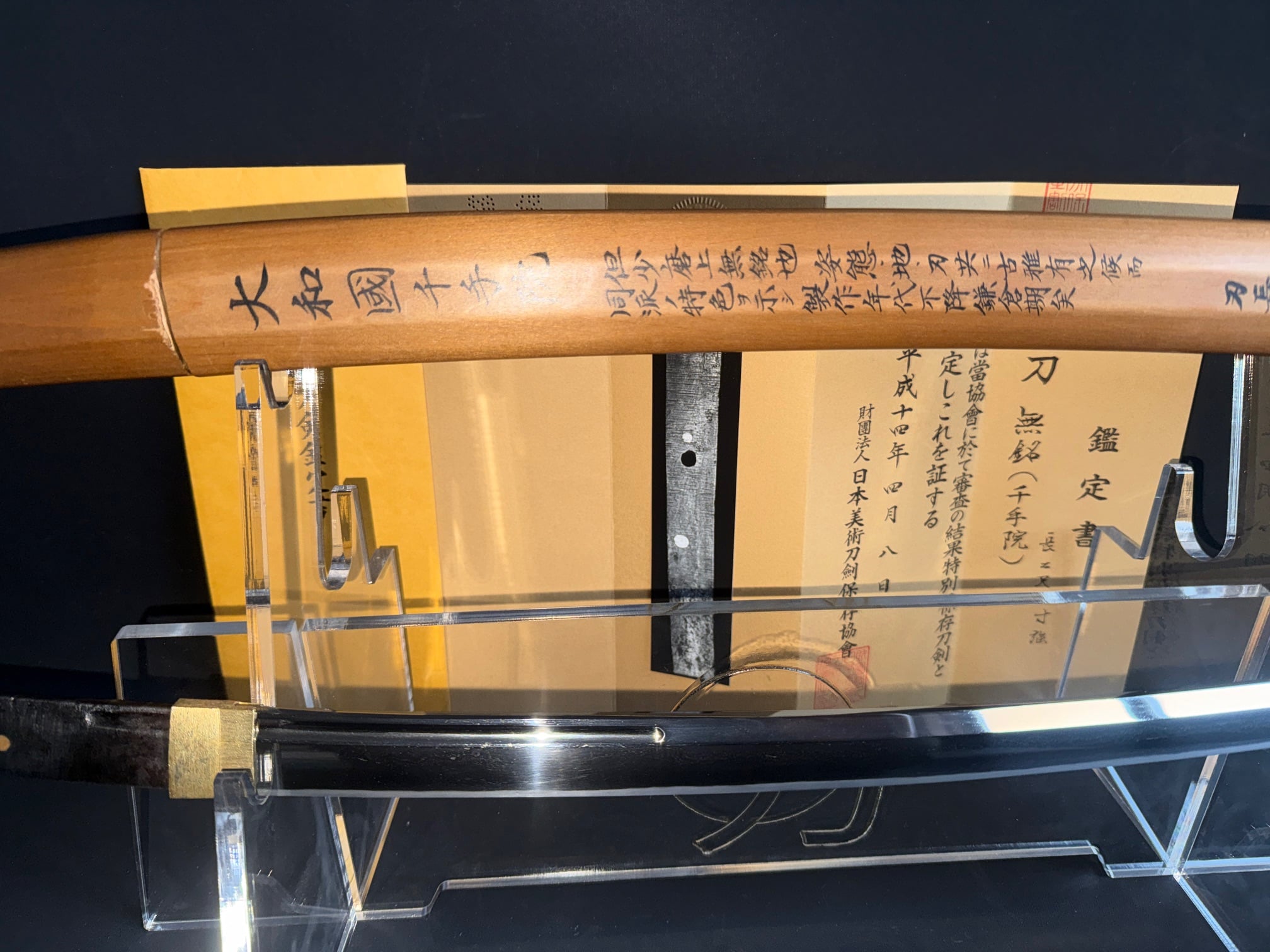
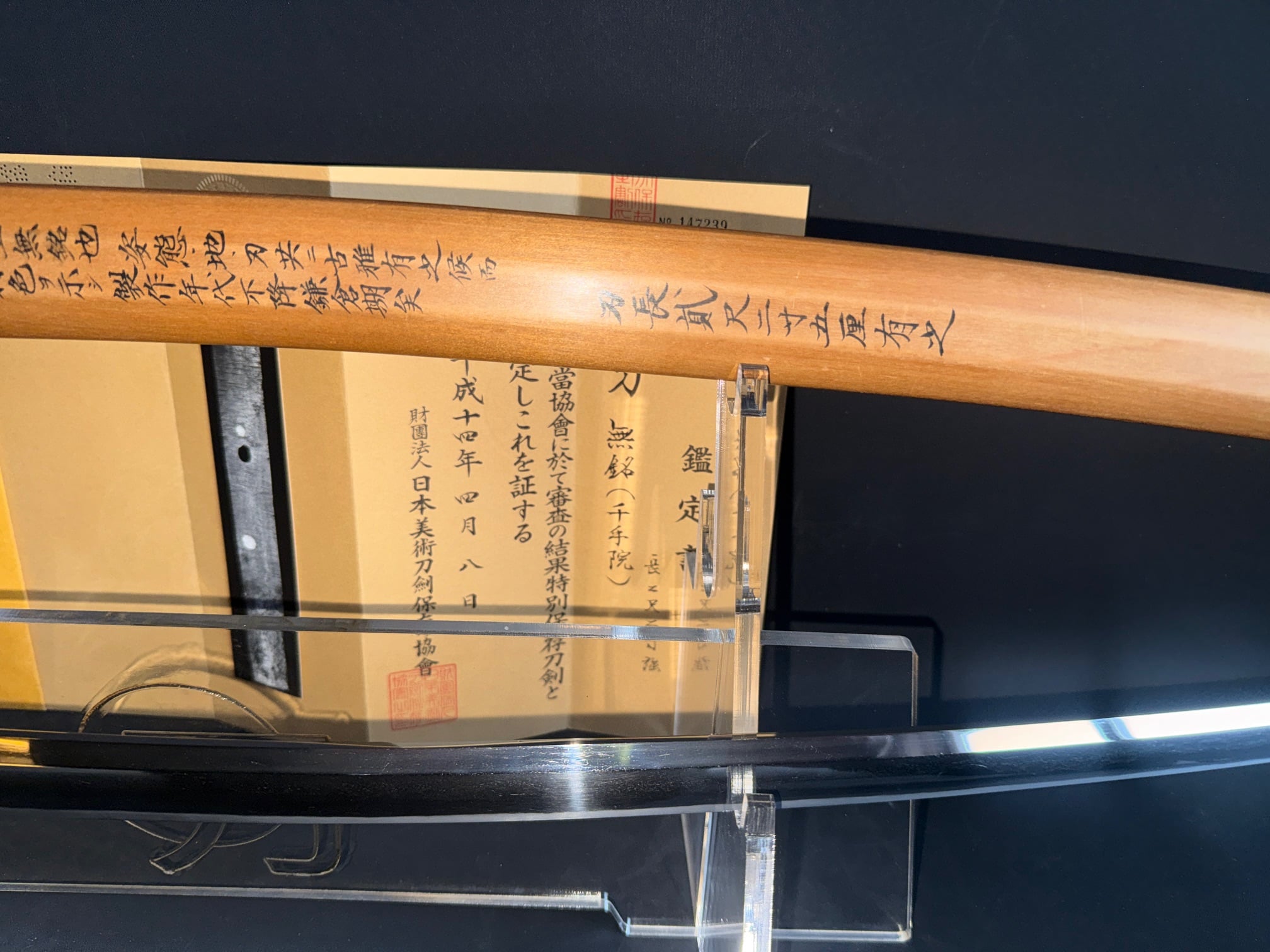
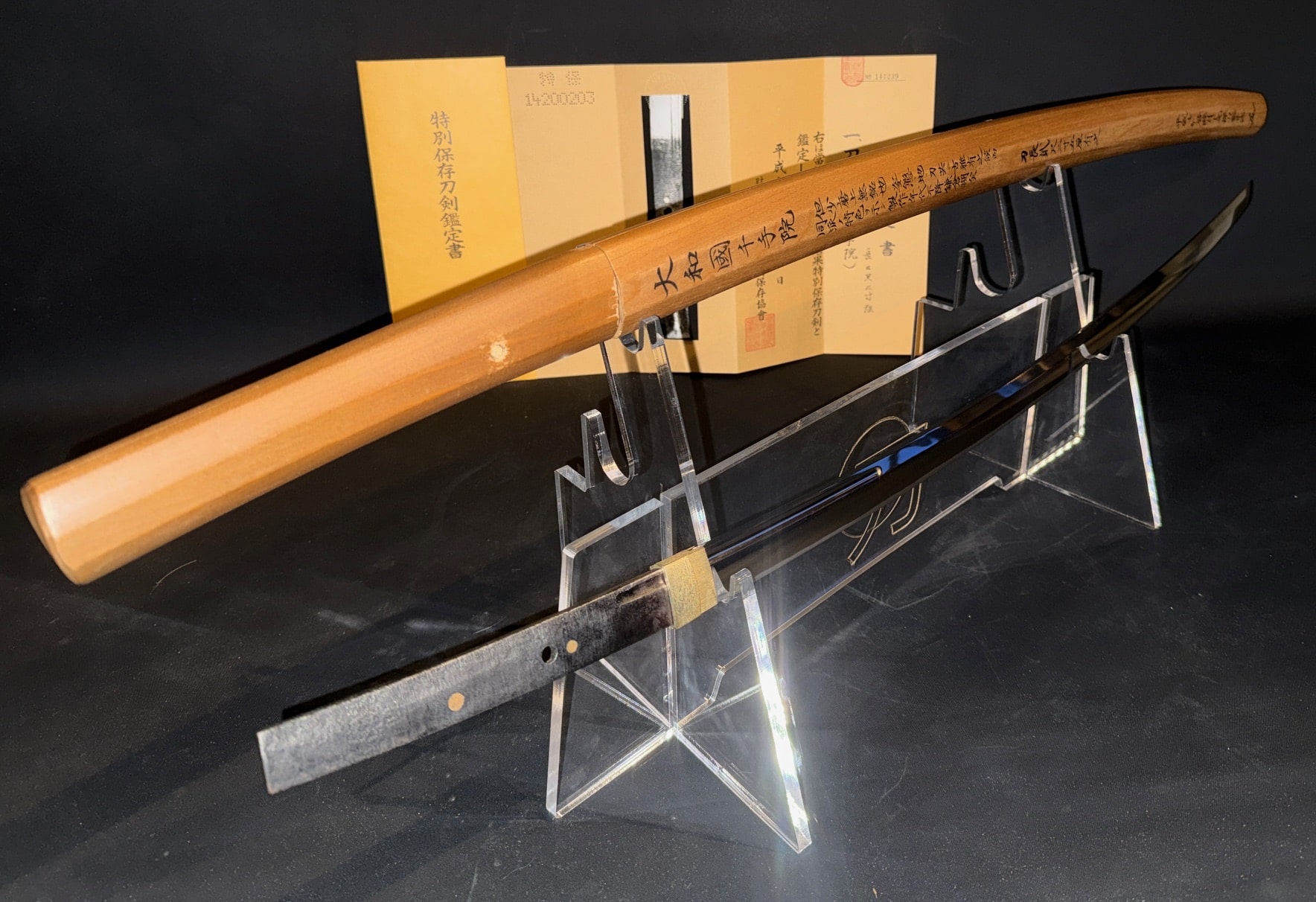
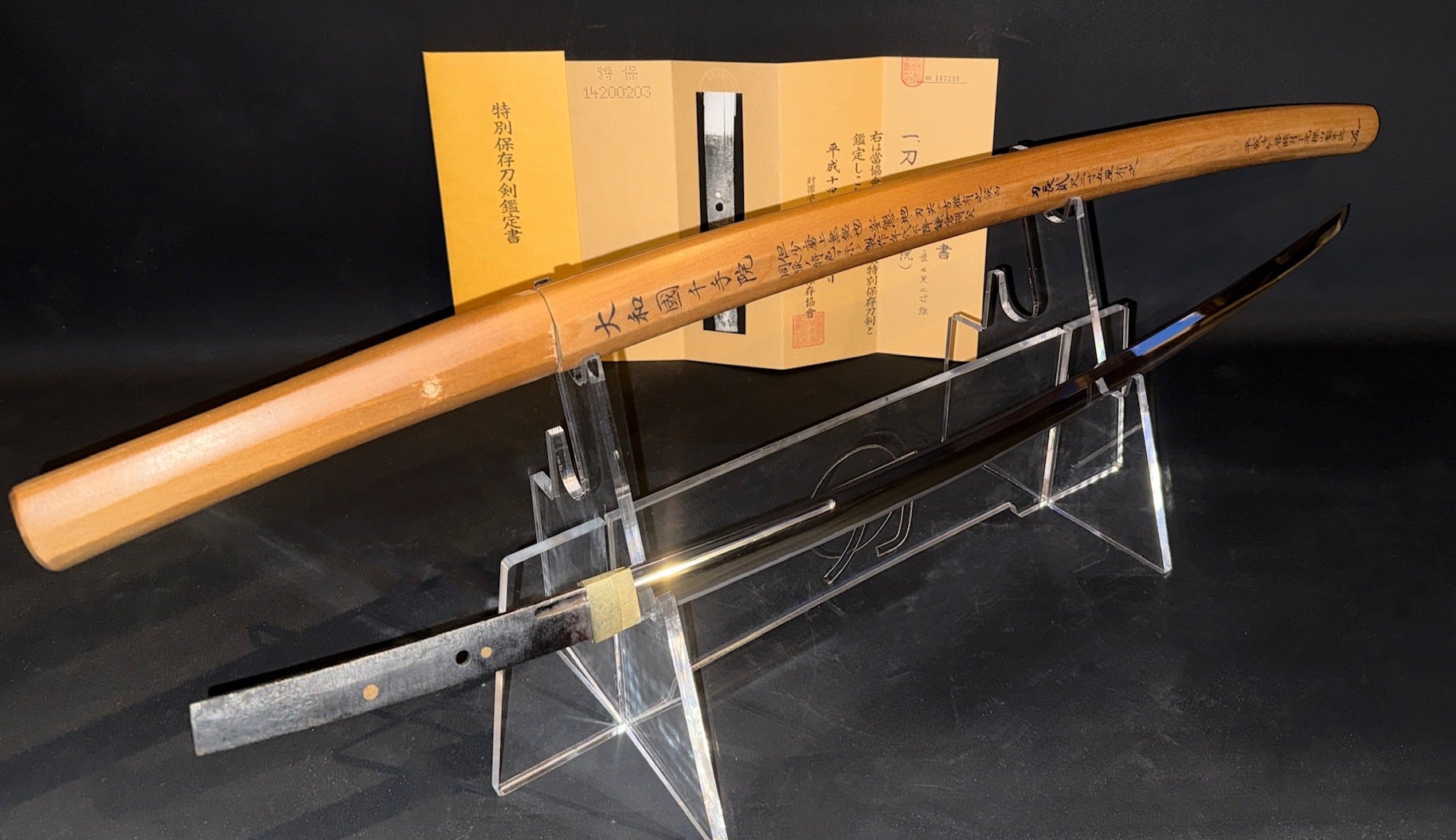
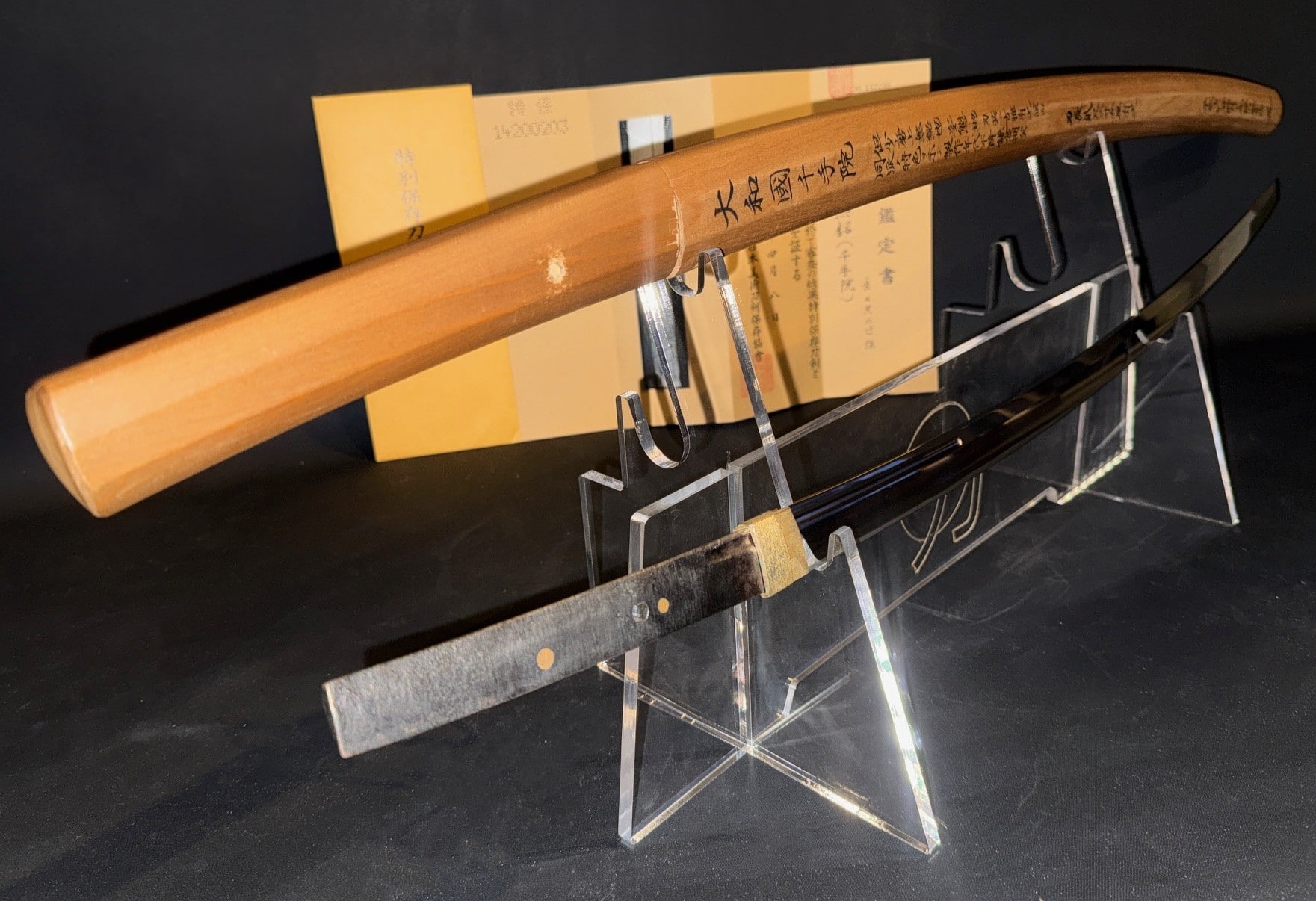
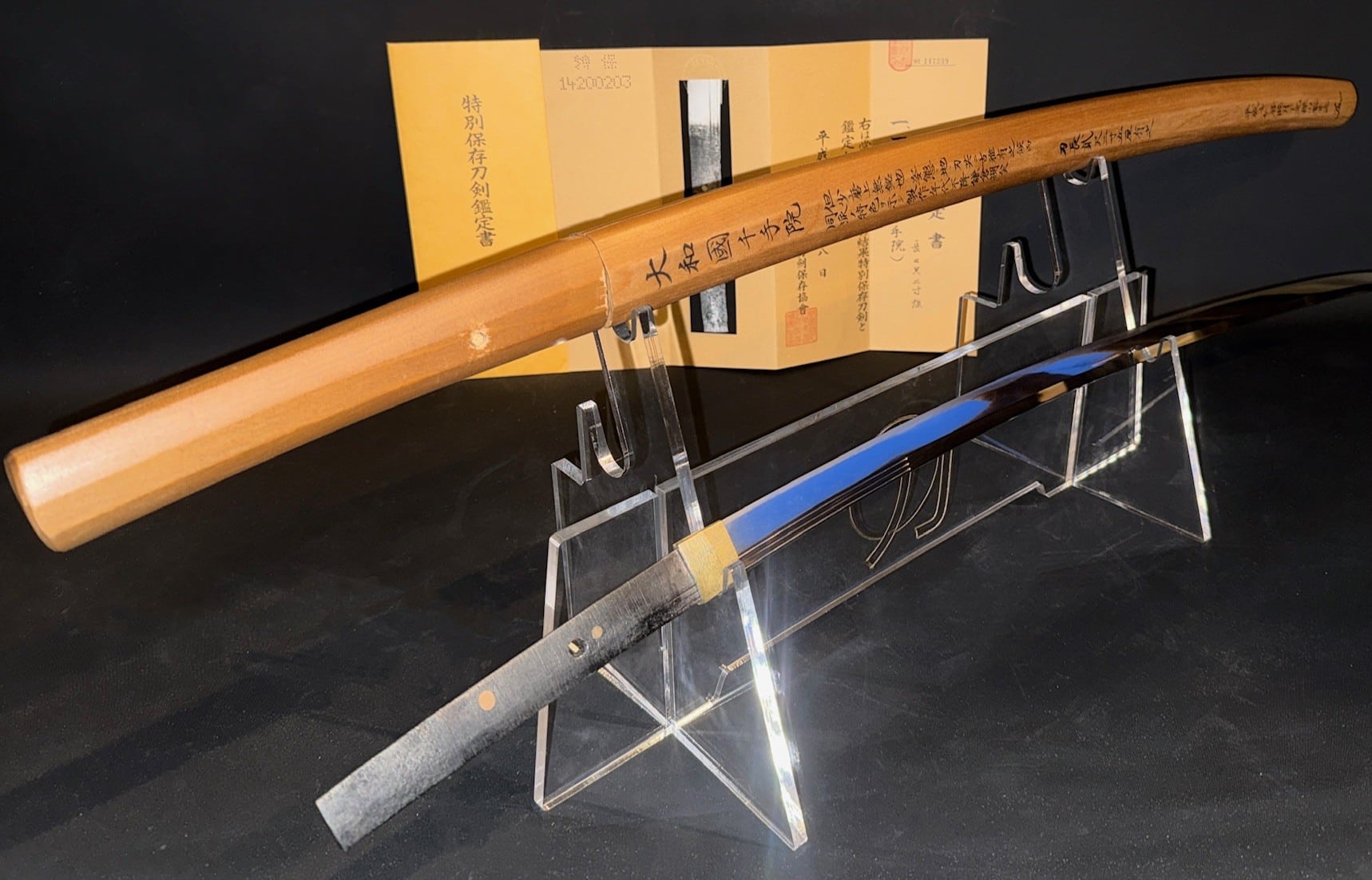
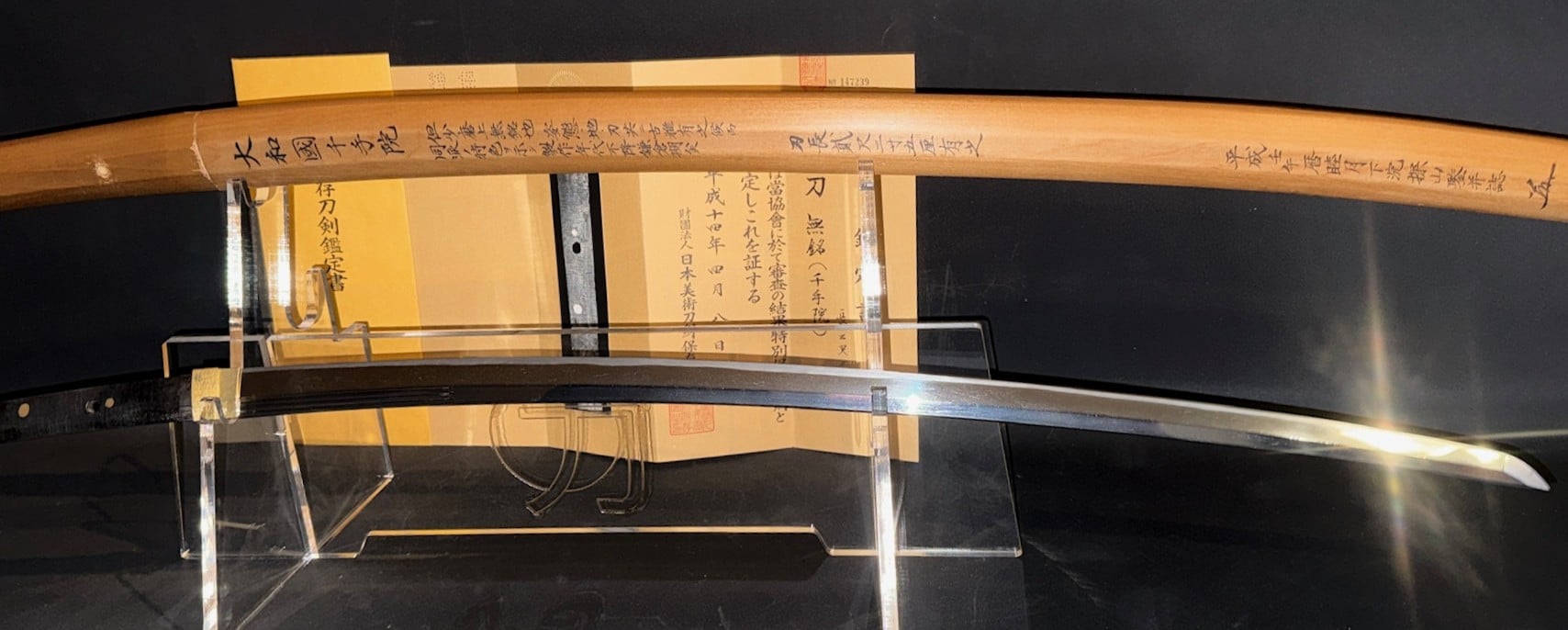
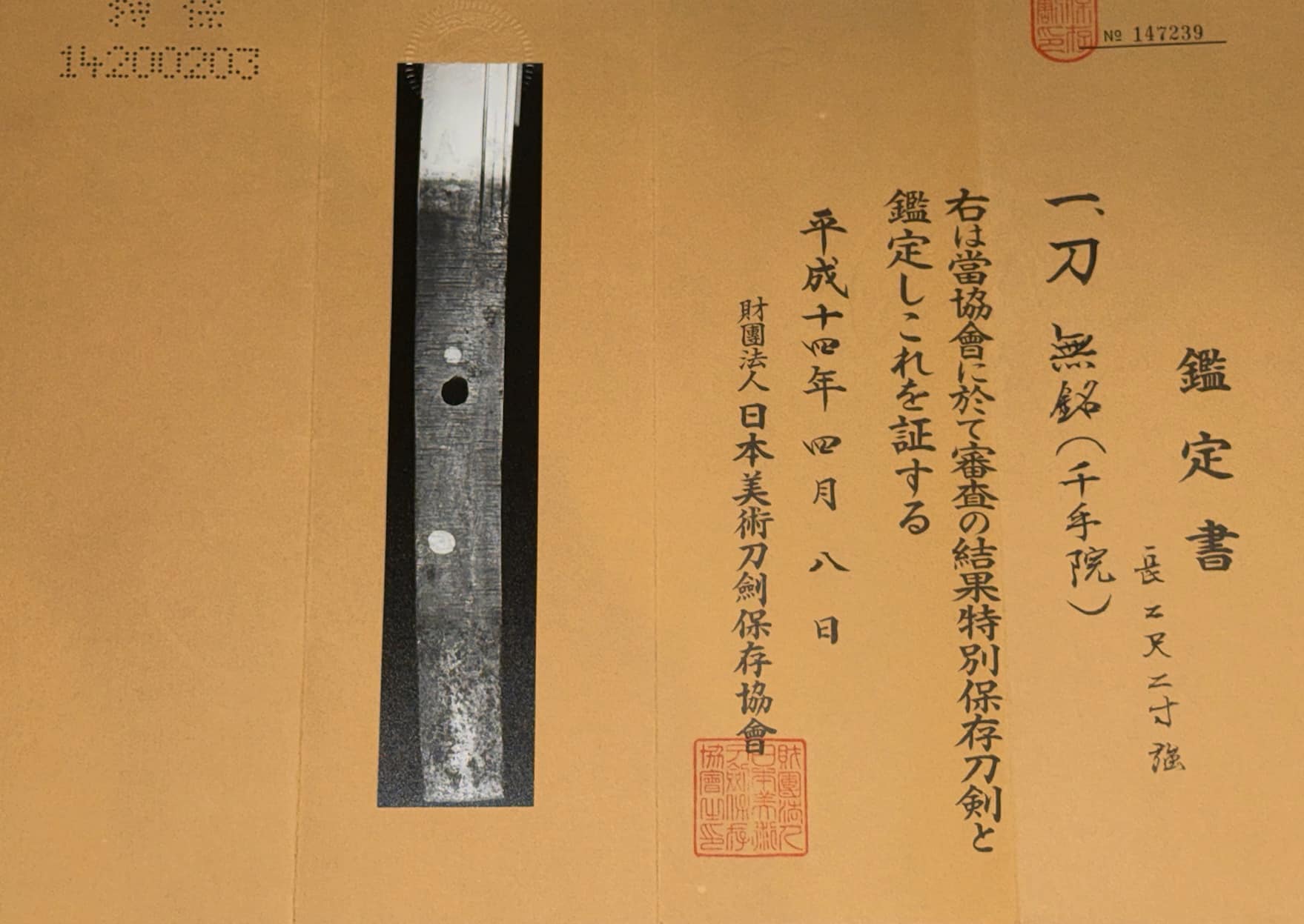
This exceptionally elegant tachi, attributed to the distinguished Senjuin School, dates to approximately 1230, in the early Kamakura period — widely regarded as the golden age of Japanese sword craftsmanship. Preserved in shirasaya and accompanied by a respected sayagaki by Tanobe Michihiro, the blade represents a rare and refined example of early Yamato tradition.
With a nagasa of 66.3 cm and a remarkably light weight of 617 grams, this tachi expresses balance, discipline, and aristocratic elegance. It is a blade that embodies restraint rather than flamboyance — a hallmark of early Kamakura workmanship.
The Senjuin School is among the oldest of the Yamato traditions, active from the late Heian period into the Kamakura era. Yamato swords were forged in close association with powerful temples and warrior-monks, and their aesthetic reflects spiritual austerity and functional clarity.
Around 1230, swordsmithing had reached a level of technical and artistic maturity rarely equaled in later centuries. The Kamakura period saw the refinement of tachi proportions and forging techniques that balanced battlefield effectiveness with refined courtly taste. Blades from this early date are scarce, and surviving examples in healthy condition are highly prized among advanced collectors.
The sugata of this tachi likely reflects the classical characteristics of early Kamakura form:
A gentle koshi-zori curvature
Harmonious taper from base to tip
Slender proportions without excessive width
A refined, dignified silhouette
The weight of only 617 grams for a blade of 66.3 cm suggests exceptional forging control and preservation of elegant proportions. Unlike later Nanbokuchō blades, which emphasize mass and width, this tachi radiates composure and aristocratic poise.
Its elegance lies in its balance. There is no exaggeration, only proportion and refinement.
Senjuin workmanship is known for its tightly forged jihada, often displaying fine ko-itame mixed with flowing masame tendencies. The steel typically reveals:
Clear and bright ji-nie
A disciplined, tight grain
A slightly austere, dignified surface quality
Yamato blades are often described as possessing a spiritual clarity. Rather than the flamboyant utsuri and bold patterns seen in Bizen, Senjuin work emphasizes structural integrity and subtle beauty. The steel reflects strength without ostentation.
The hamon of early Senjuin blades is generally suguha-based and forged in ko-nie. One may expect:
A bright and consistent nioiguchi
Fine crystalline activity
Subtle internal hataraki
The calm temper line complements the refined sugata, reinforcing the blade’s classical Kamakura character. It is an aesthetic of harmony and control a temper line that does not dominate the blade, but completes it.

KvK: 51964147
C.W. Slok - Kyodai Originals
Bank: NL25 KNAB 0509 1310 18
BIC: KNABNL2H
© 2026 Kyodai Originals is made with ❤ by Nieuwblik.com


