
€ 9.500,00
1 in stock
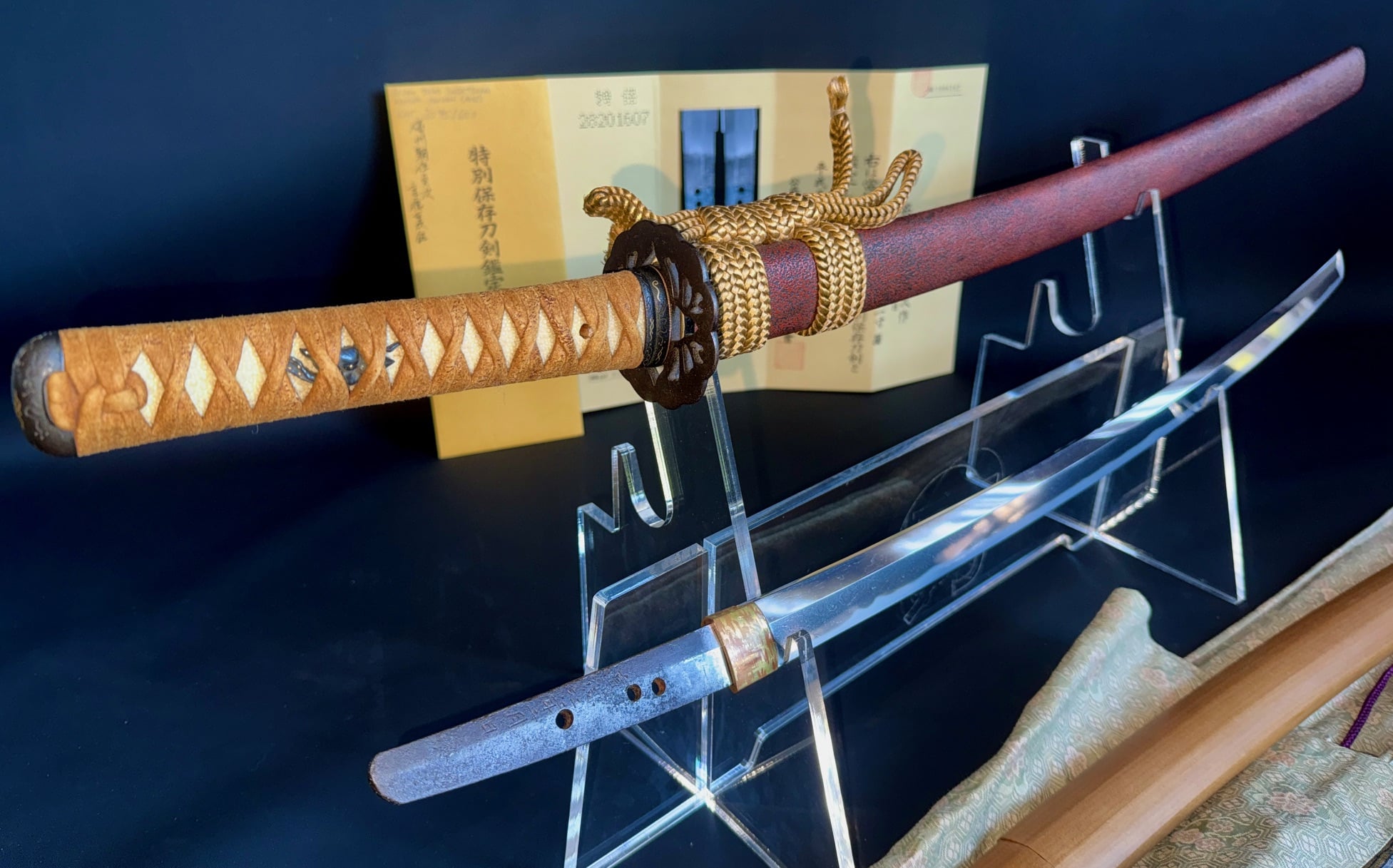
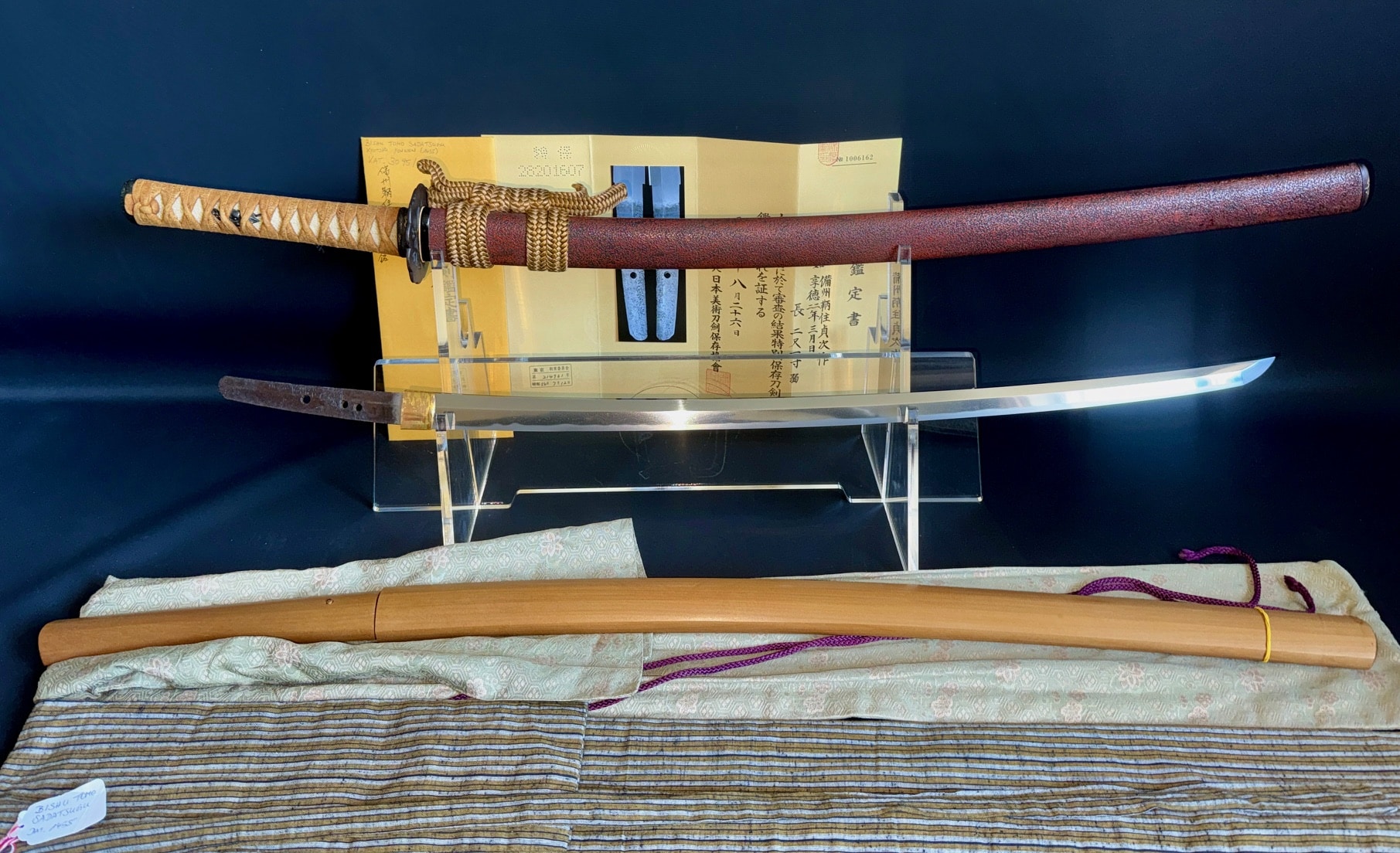
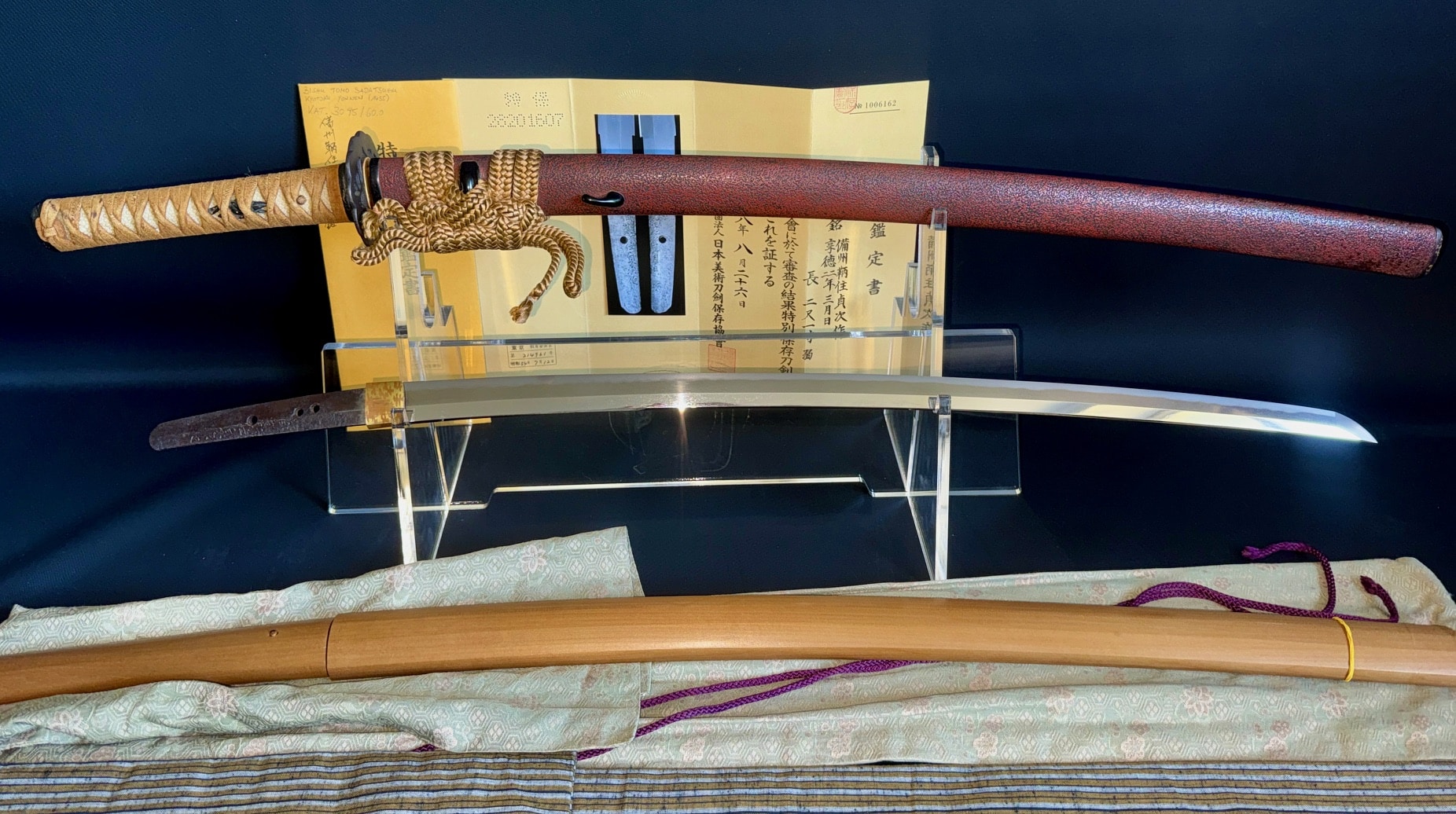
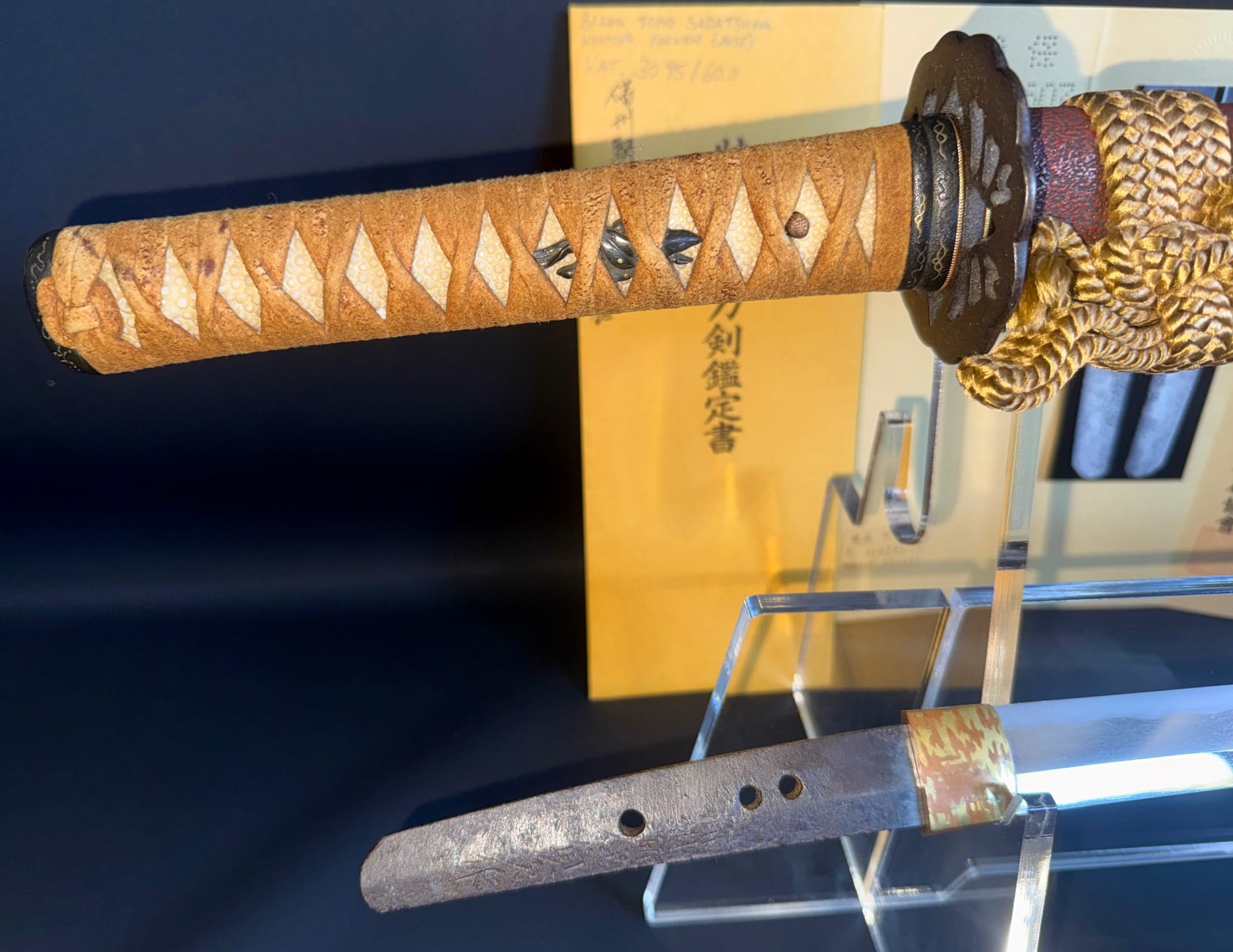
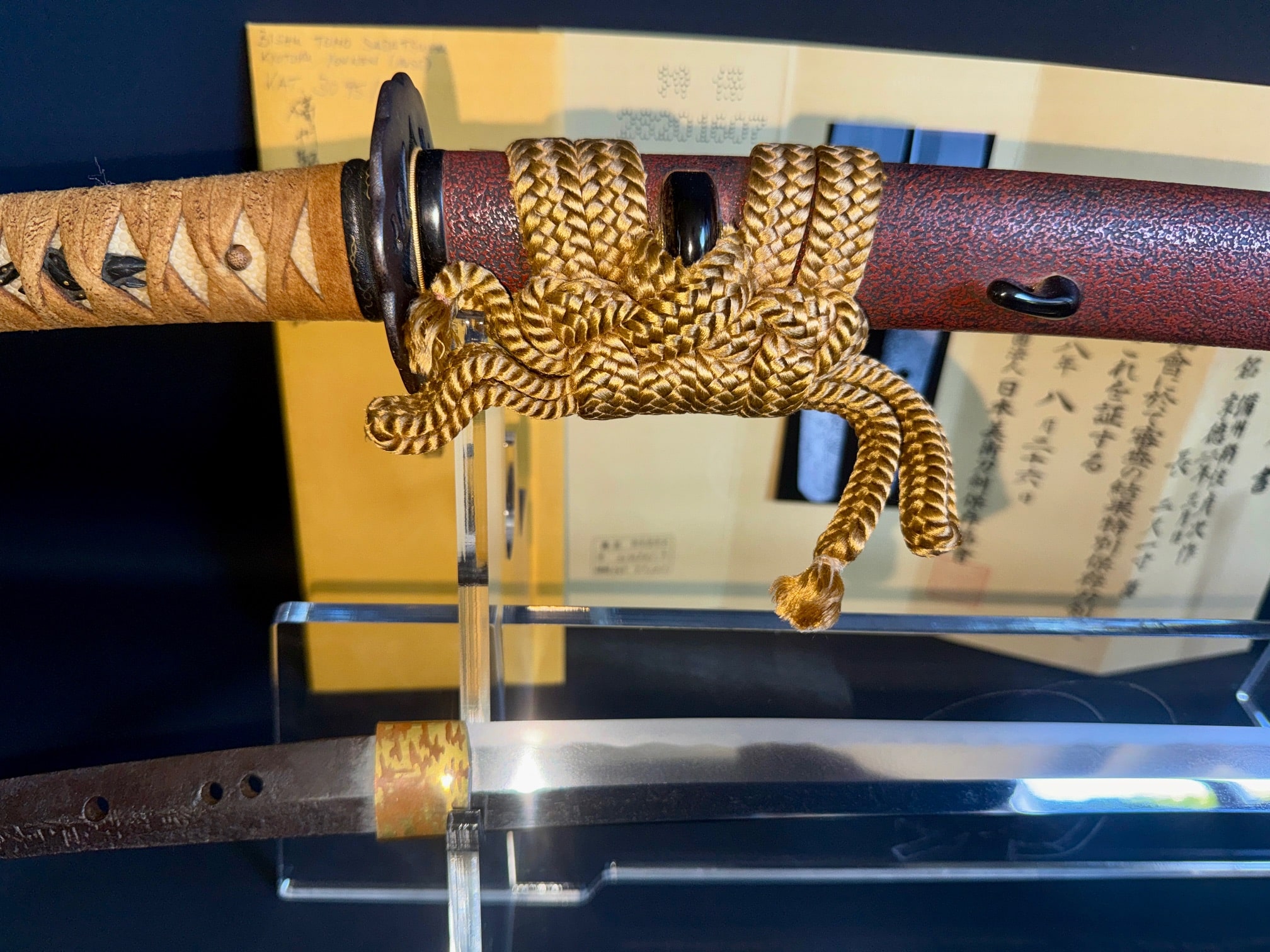
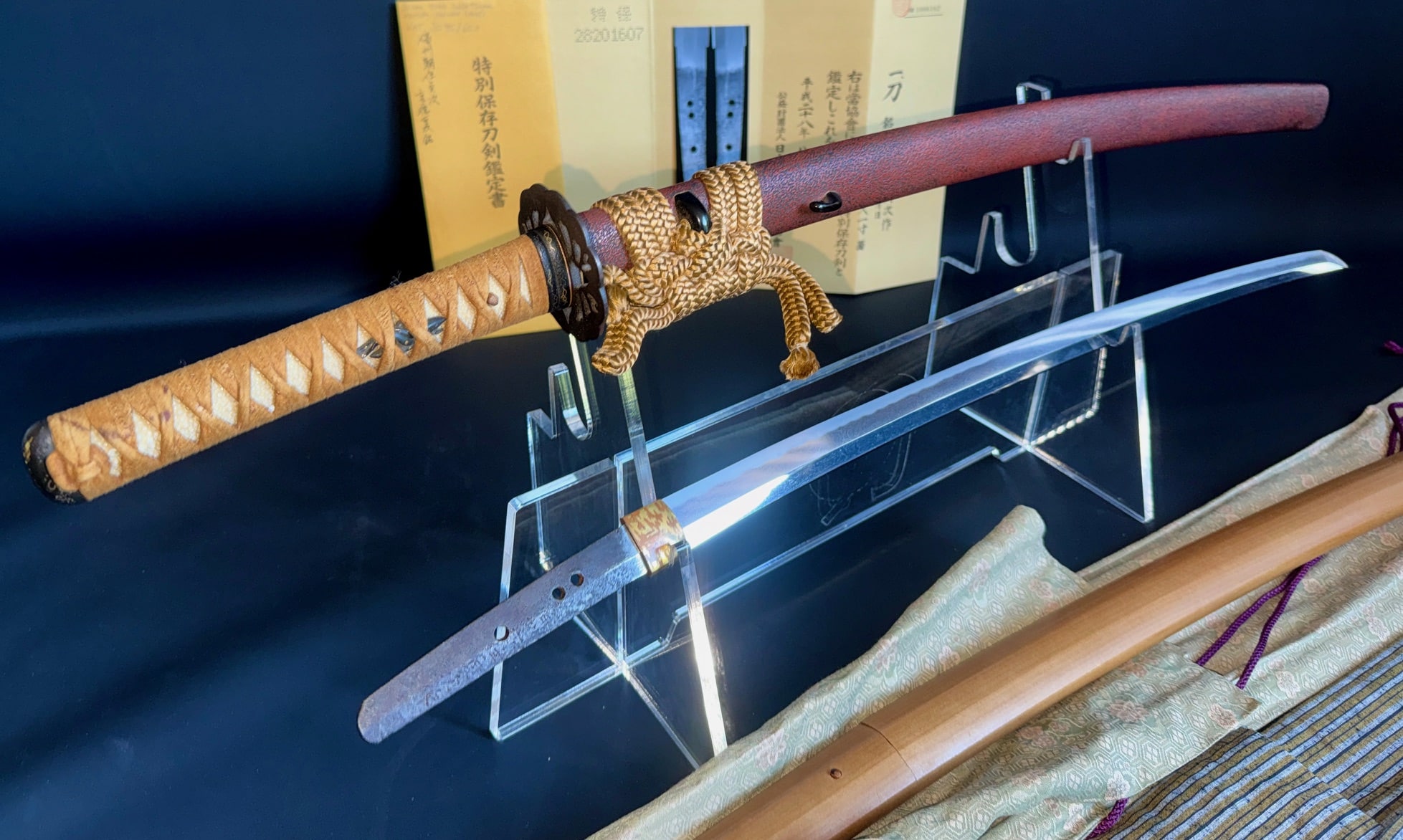
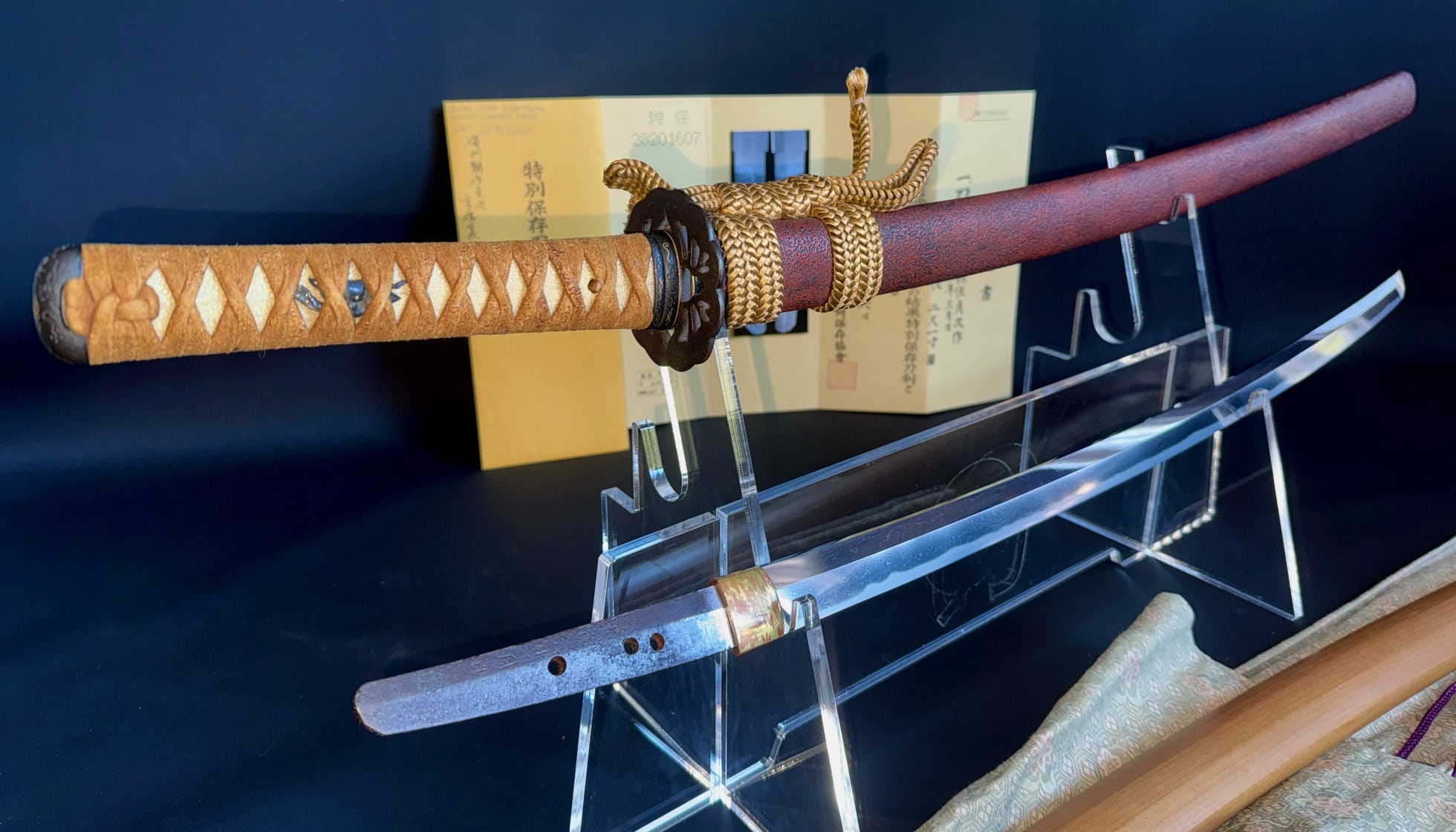
Among the surviving works of the Muromachi period, few pieces capture the refined balance between functionality and understated elegance as convincingly as this remarkable katana by Bishū Tomo-jū Sadatsugu. Signed, precisely dated to Kyōtoku 4 (1455), and preserved with exceptional integrity, this sword stands as a rare and highly desirable example of the Tomo school of Bingo Province, itself an important branch of the wider Mihara tradition.
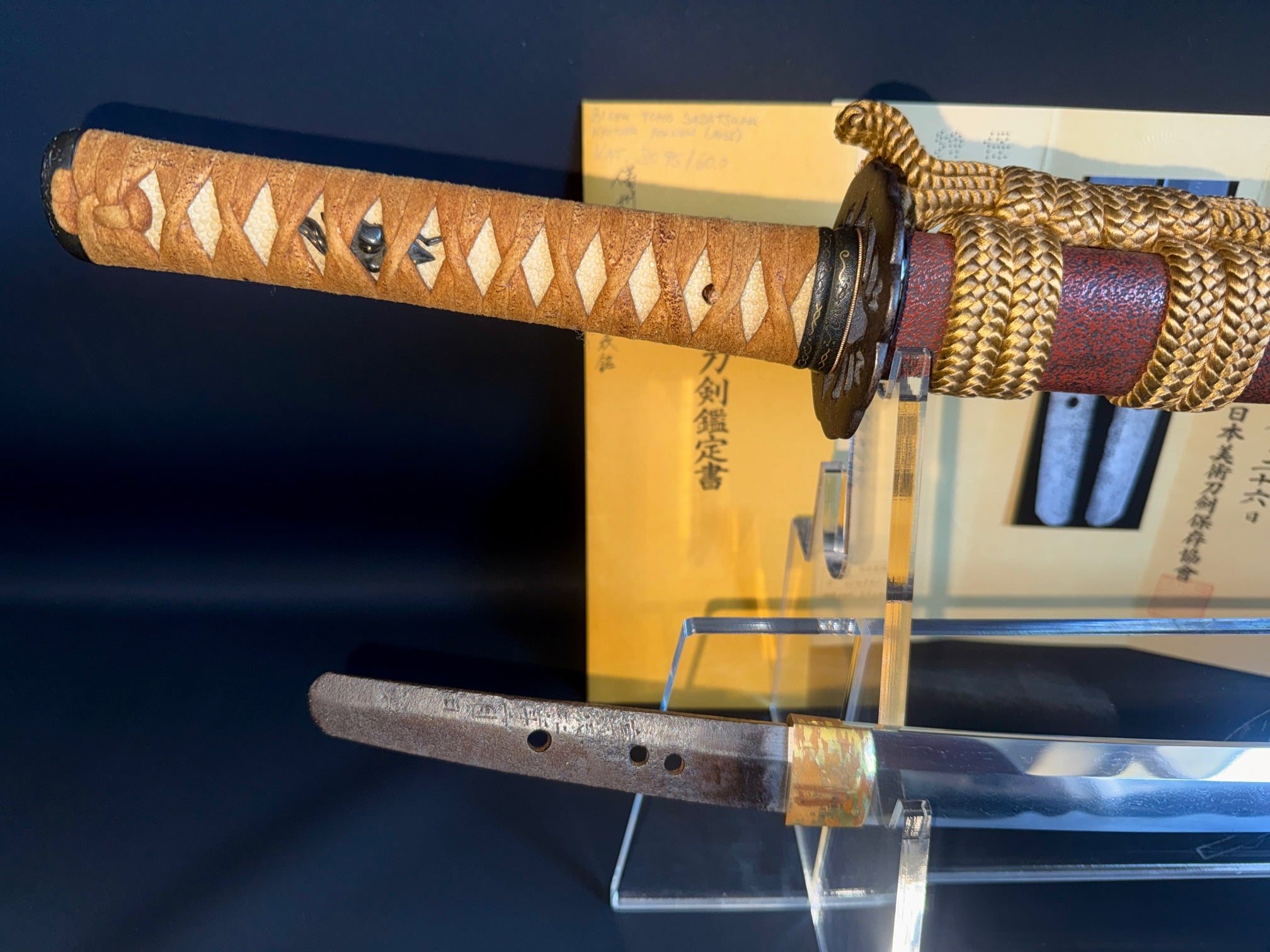
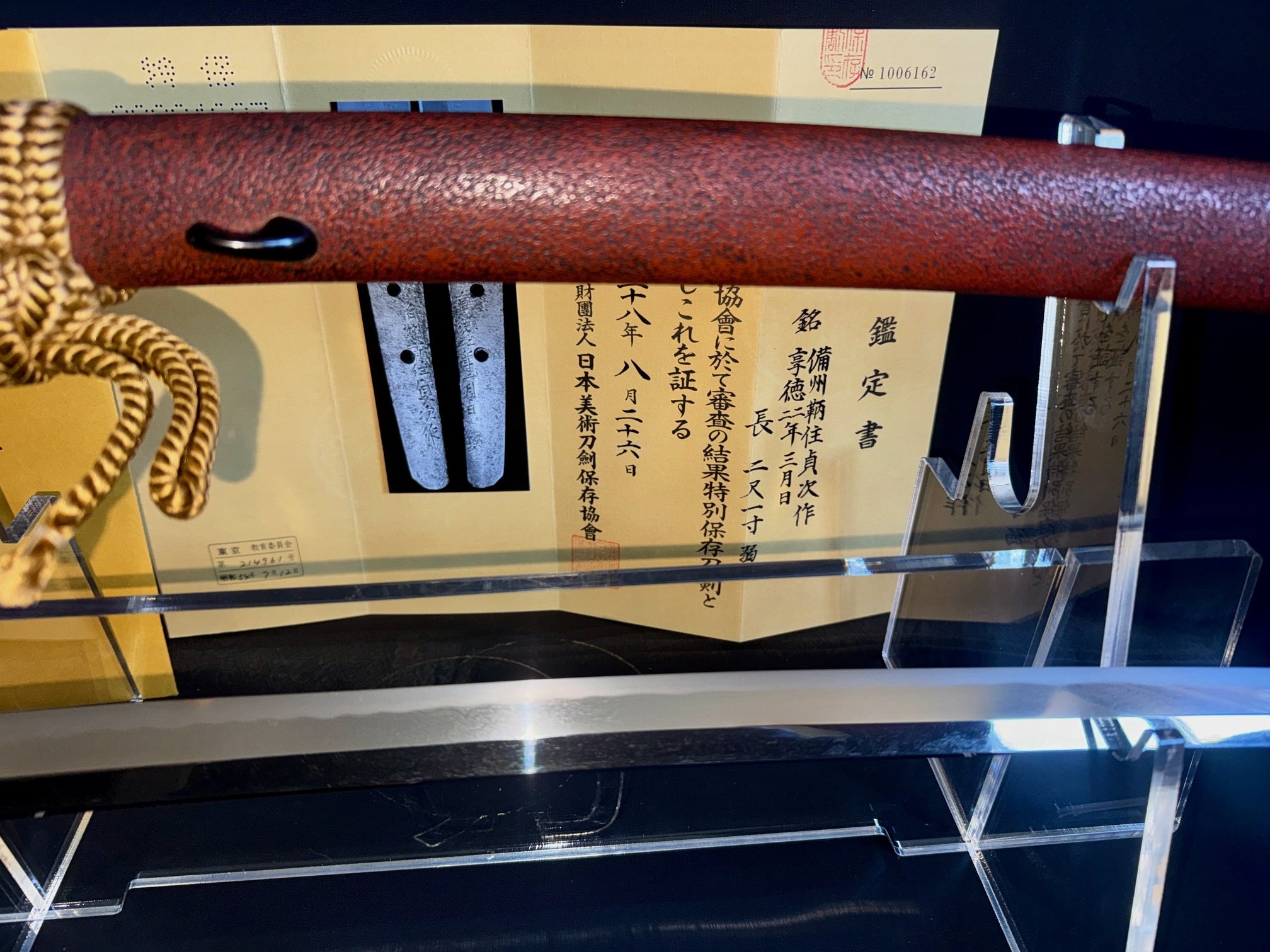
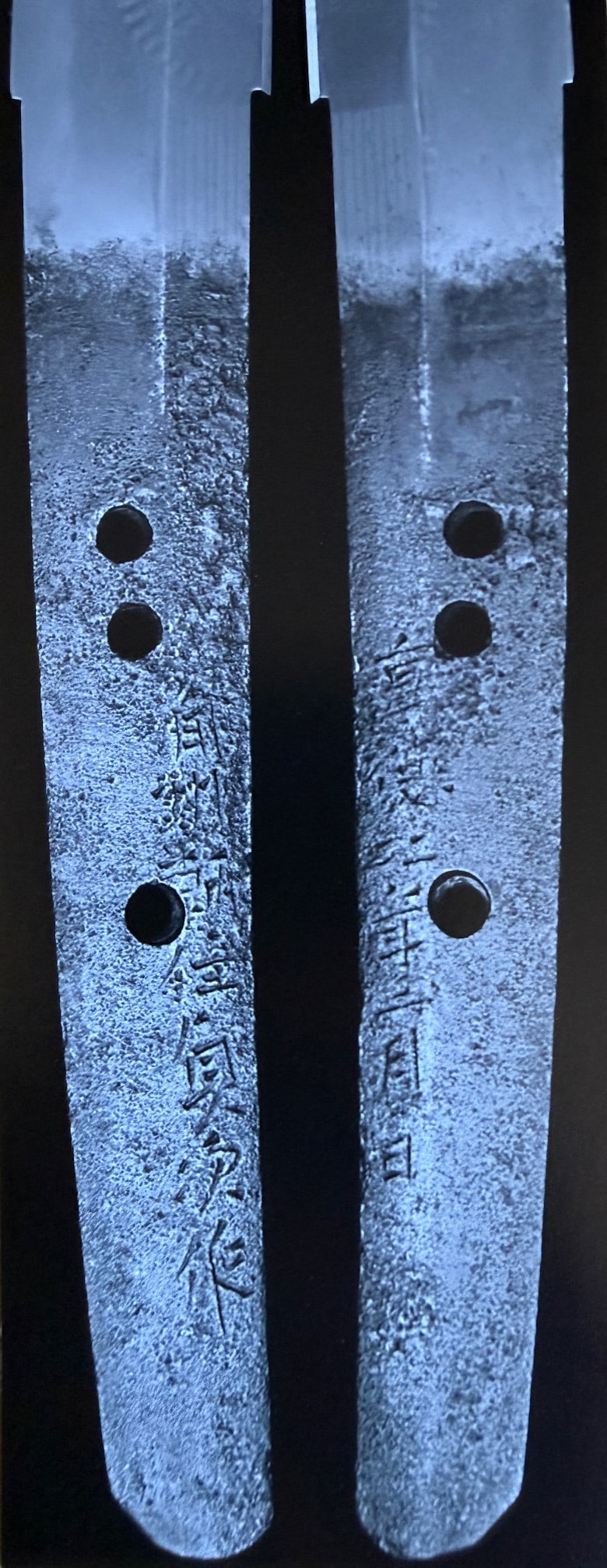
The tang bears the clear and confident inscription:
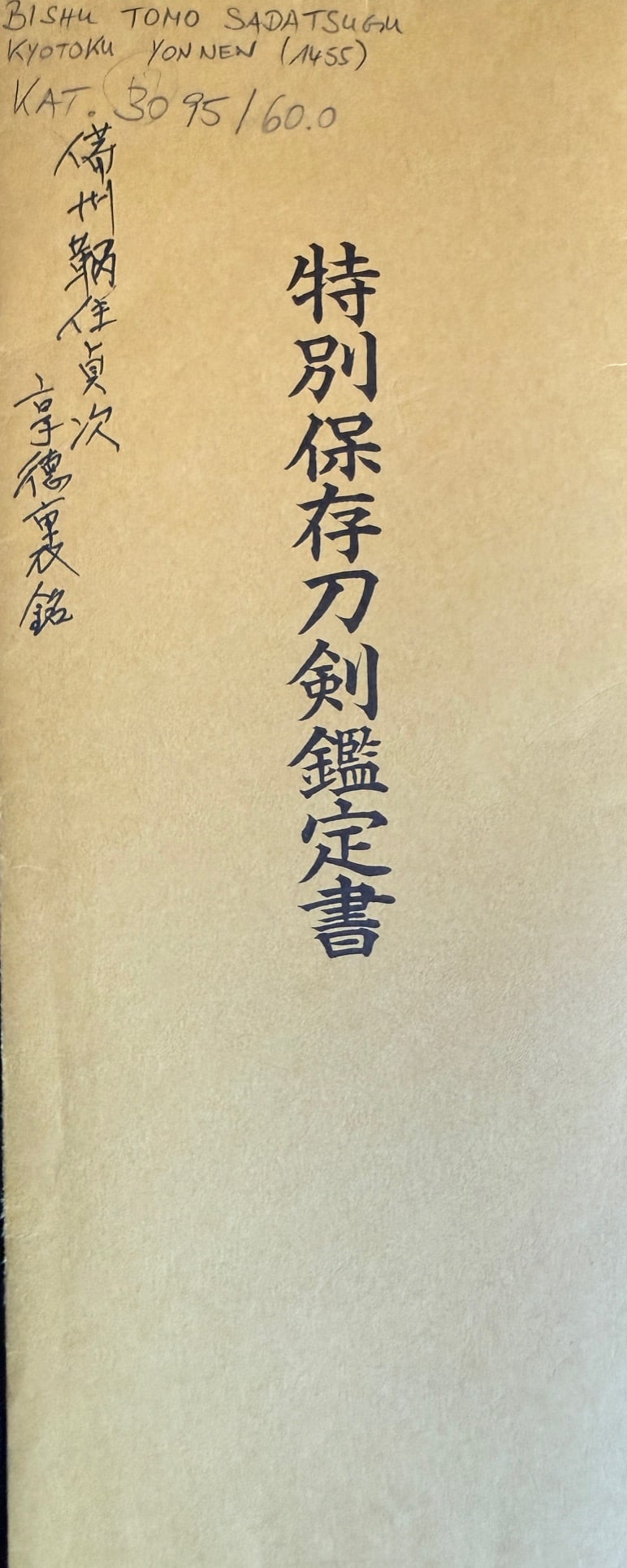
備州鞆住貞次作
(Bishū Tomo-jū Sadatsugu saku)
“Made by Sadatsugu, resident of Tomo in Bingo Province”
Accompanied by the date:
享徳四年二月日
“An auspicious day in February, Kyōtoku 4 (1455)”
Such precise dating is of considerable importance, firmly anchoring the blade within the mid-15th century a formative period in Japanese sword history marked by increasing demand for practical weapons during the era of regional conflict. That this example retains both its signature and date elevates it significantly within the corpus of surviving Muromachi works.
Sadatsugu is traditionally associated with Tomonoura, a prominent port town in Bingo Province (present-day Hiroshima Prefecture), whose strategic maritime position fostered both cultural exchange and technical refinement. The Tomo school (Tomo-ha) developed as part of the Mihara tradition, yet distinguishes itself through a subtle synthesis of regional influences—most notably elements derived from Yamato workmanship.
Historical sources suggest that Sadatsugu was either a direct descendant or closely associated with Sadaie, regarded as the founding figure of the Tomo lineage. His work reflects a mature phase of the school, characterized by a disciplined aesthetic: neither ostentatious nor austere, but rather quietly expressive.
In traditional sword appraisal literature, Sadatsugu is classified within the Chū-saku to Chū-jō-saku ranking, denoting a smith of solid and respected quality. His relative rarity—particularly in signed and dated examples renders extant works especially desirable among serious collectors.
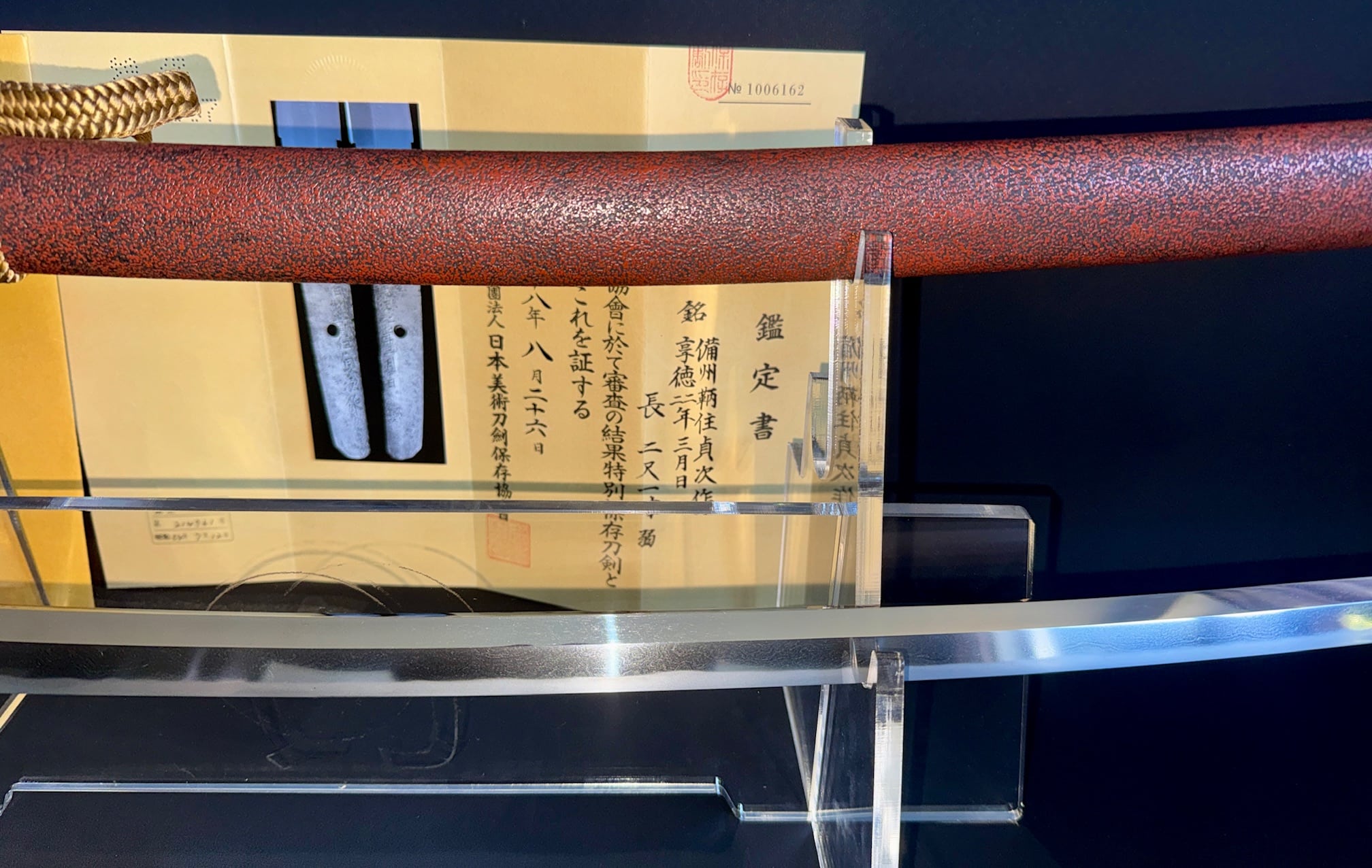
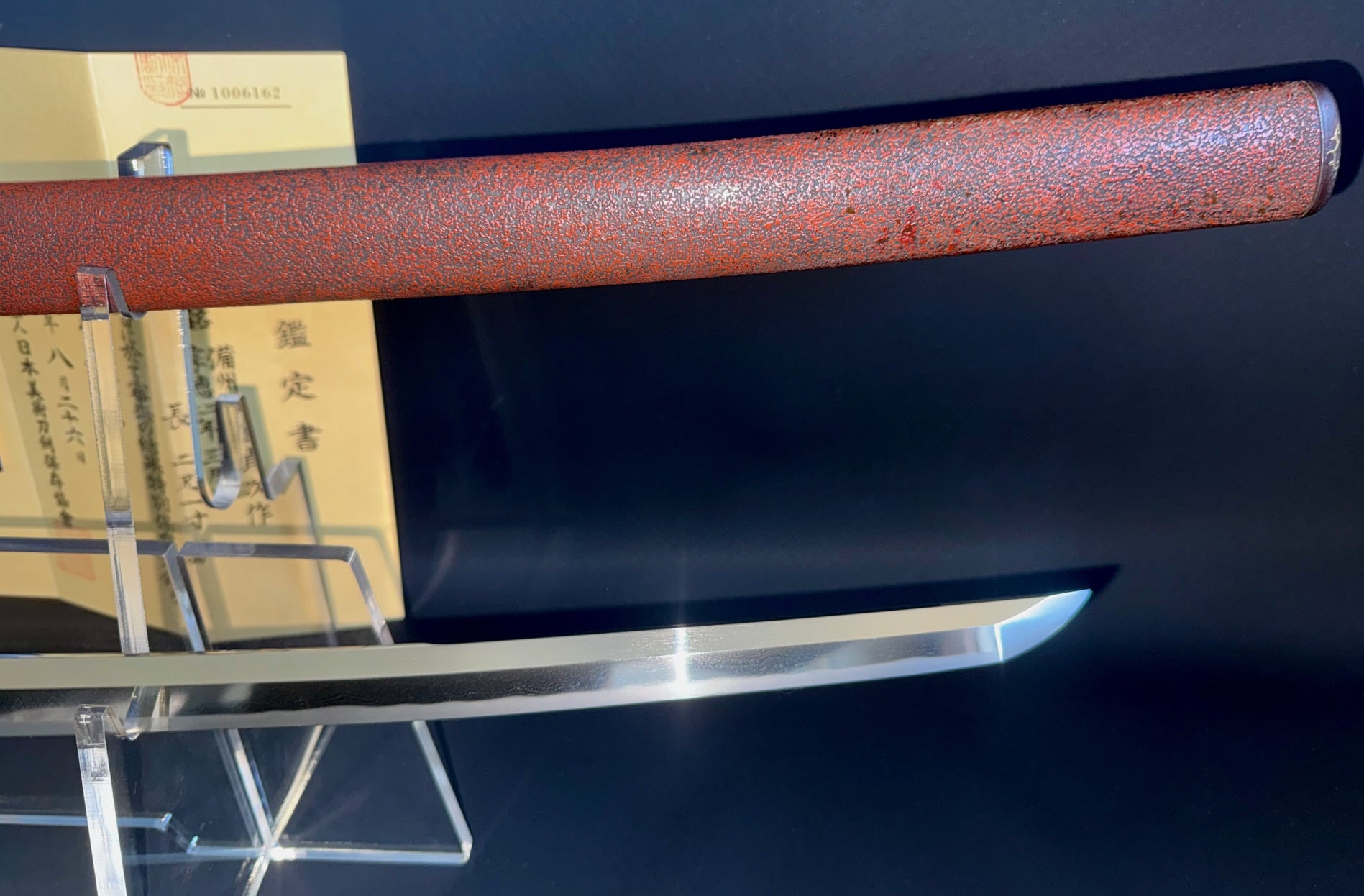
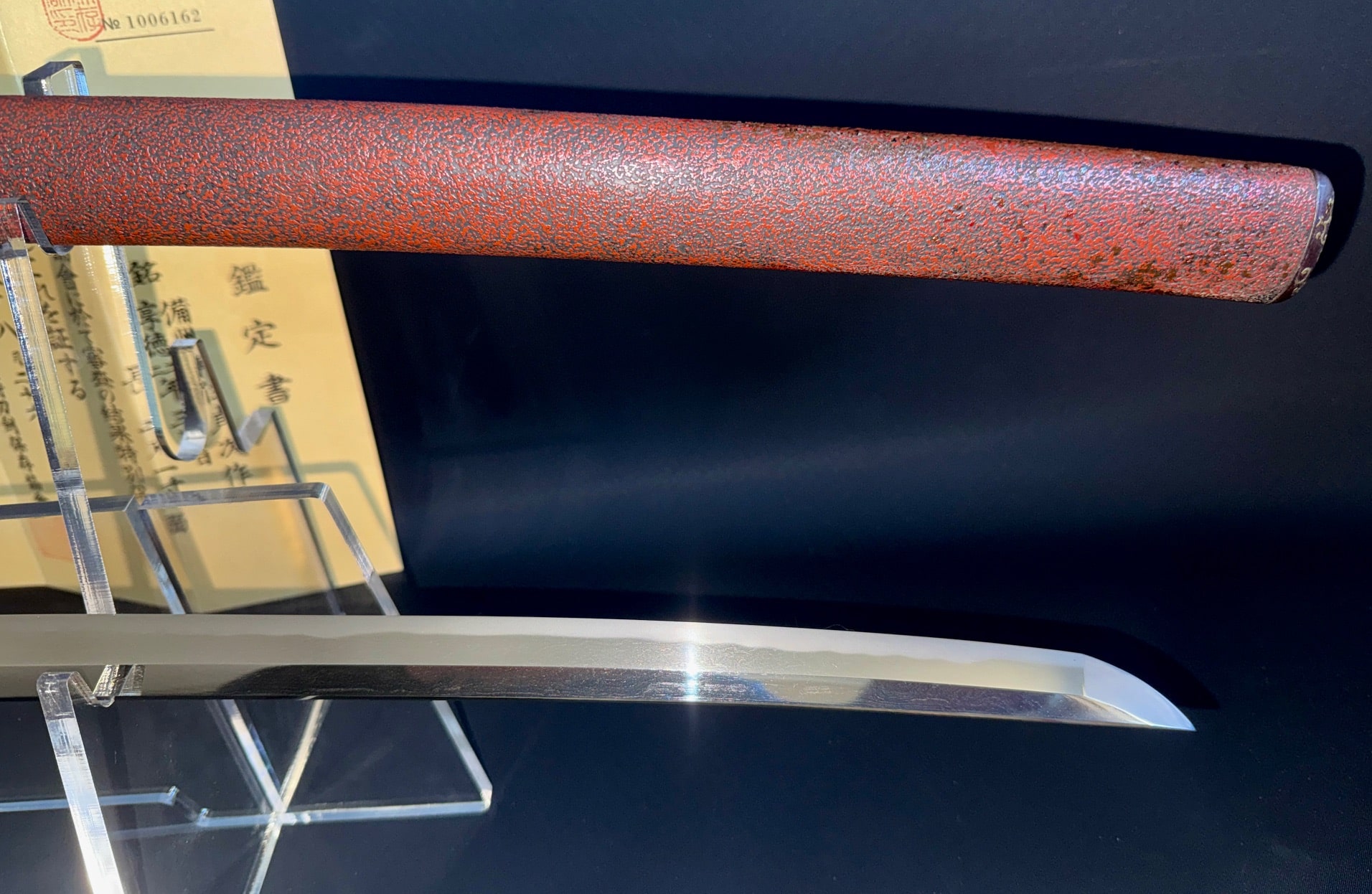
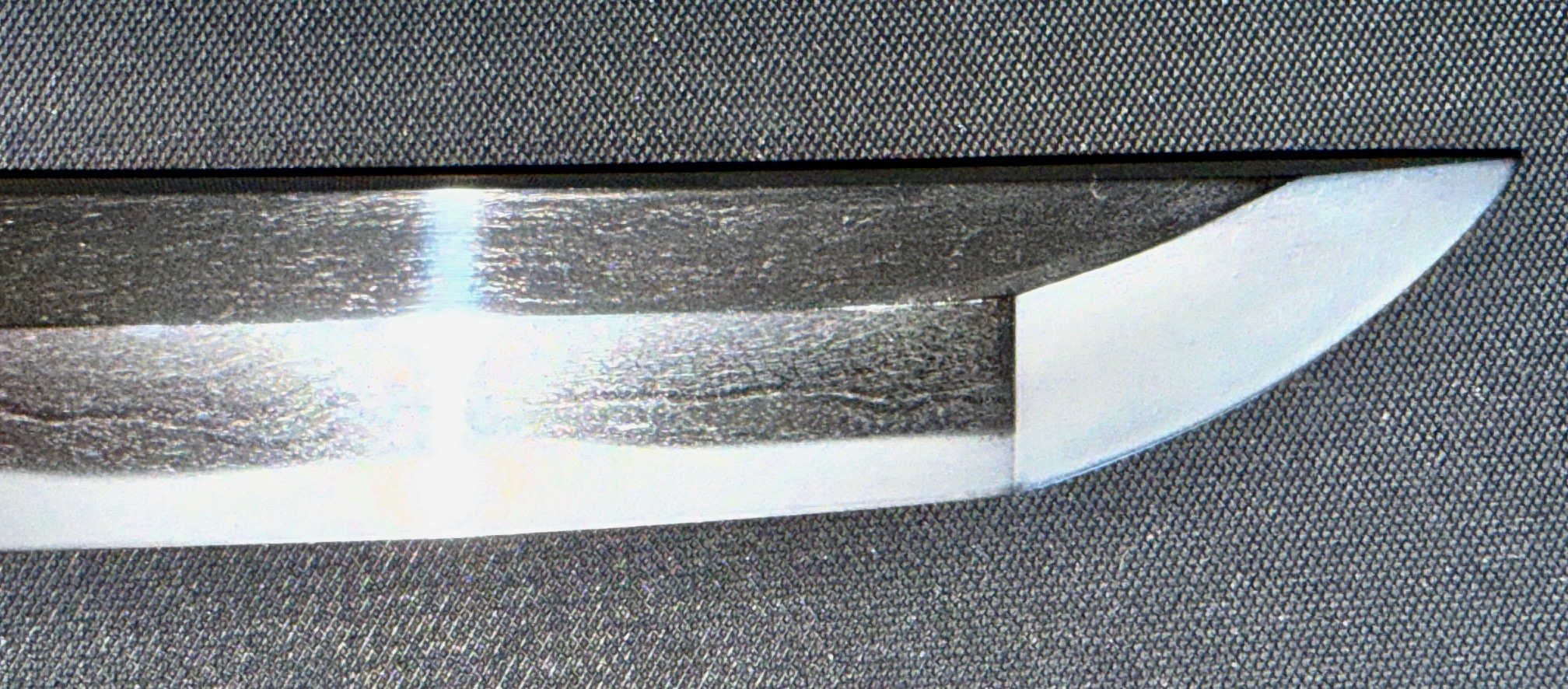
The sugata of this katana is immediately striking for its refined proportions and sense of controlled movement. With a nagasa of approximately 2 shaku 1 sun (64.5 cm), the blade presents a classical Muromachi silhouette:
Unlike the broader and more imposing forms of earlier Kamakura blades, this katana reflects the evolving needs of the Muromachi warrior—favoring speed, adaptability, and precision.
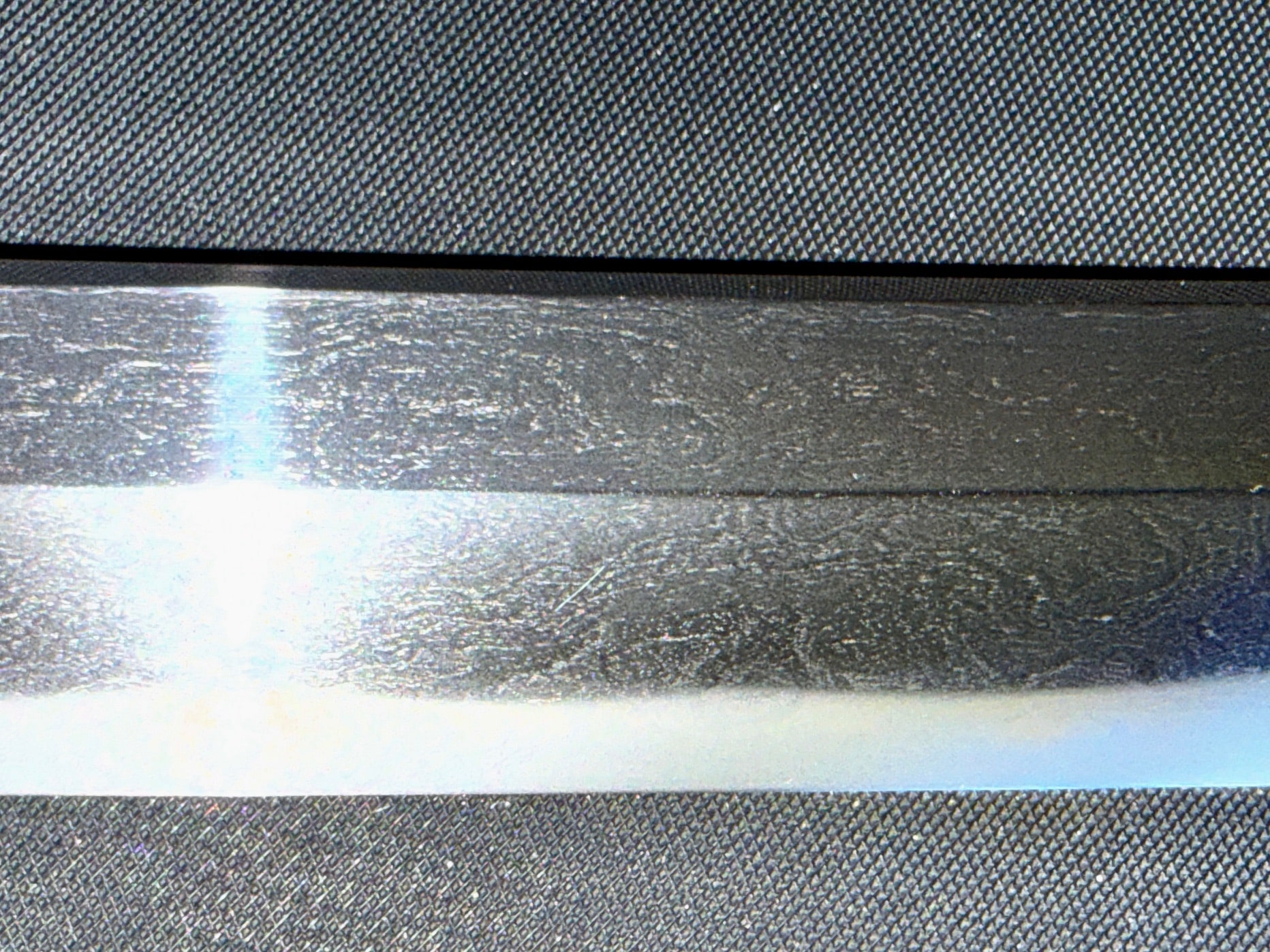
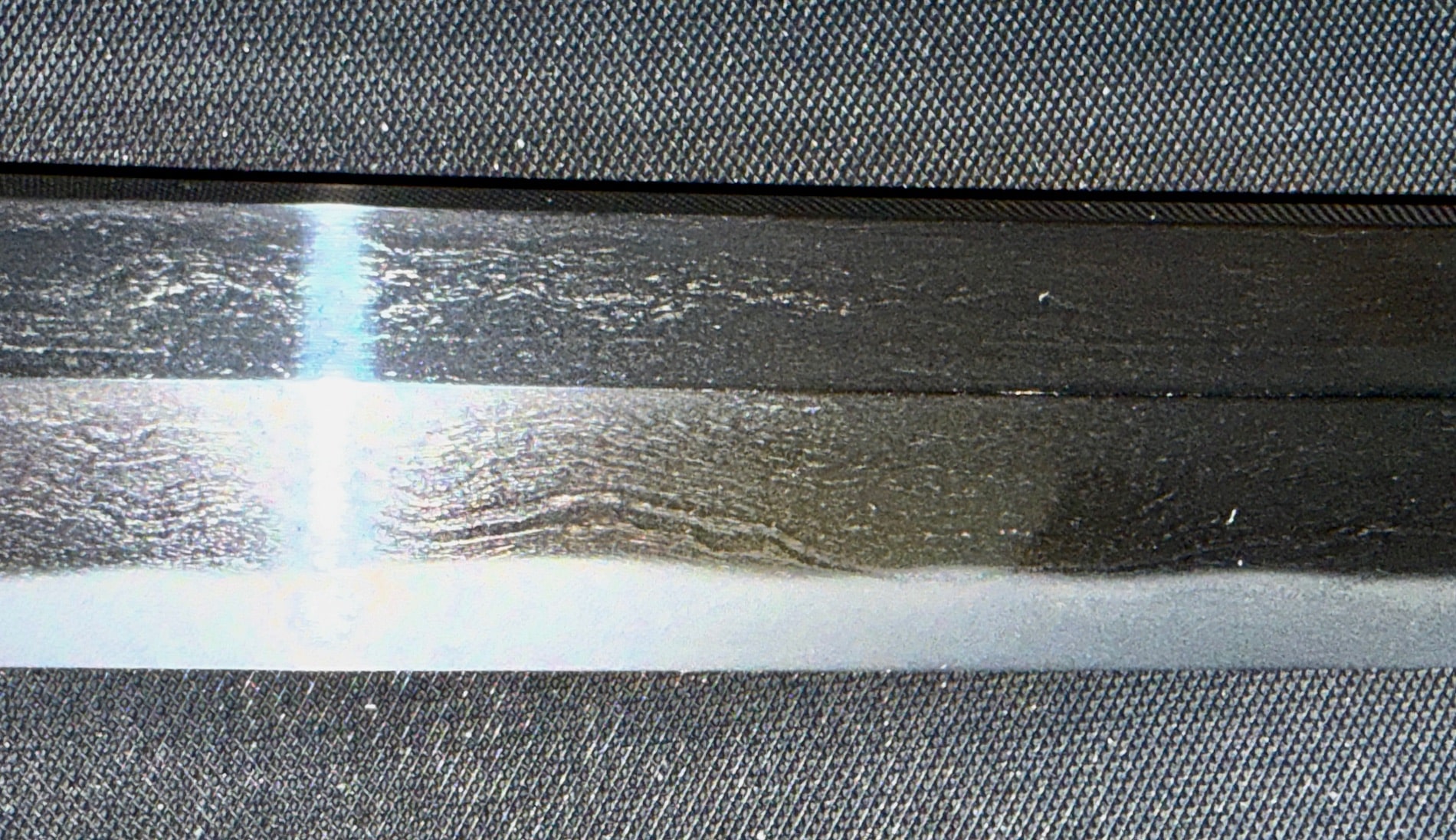
The surface of the blade reveals a finely forged itame-hada, interspersed with subtle mokume patterns, forming a richly textured steel surface. The presence of ji-nie minute crystalline martensite particles adds vitality and depth, producing a shimmering effect under proper light.
This interplay of forging patterns is characteristic of the Mihara tradition, where clarity of steel is paramount, yet enlivened by carefully controlled activity. The result is a jigane that appears both calm and dynamic, offering layers of visual complexity upon close inspection.
The hamon is executed in a restrained yet sophisticated style, reflecting the refined sensibilities of the Tomo school:
Rather than dramatic flamboyance, the hamon displays discipline and subtle variation, inviting contemplation rather than immediate spectacle. This quiet complexity is often regarded as the hallmark of mature workmanship, appealing especially to seasoned collectors who value nuance over overt display.
The nakago remains in a state of excellent preservation, bearing:
Such integrity is critical in assessing authenticity, and in this case, the nakago strongly reinforces the blade’s historical legitimacy and unaltered condition.
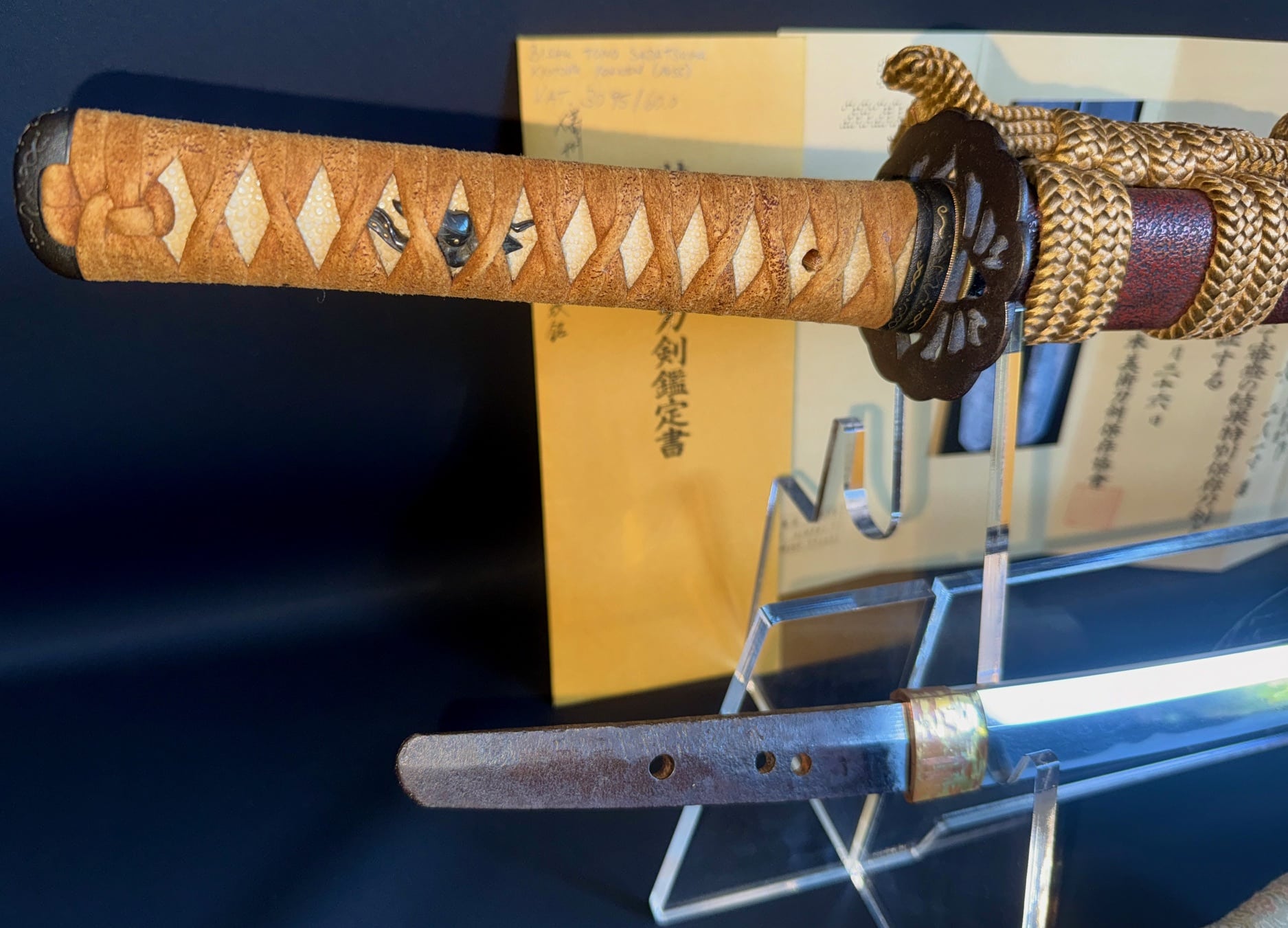
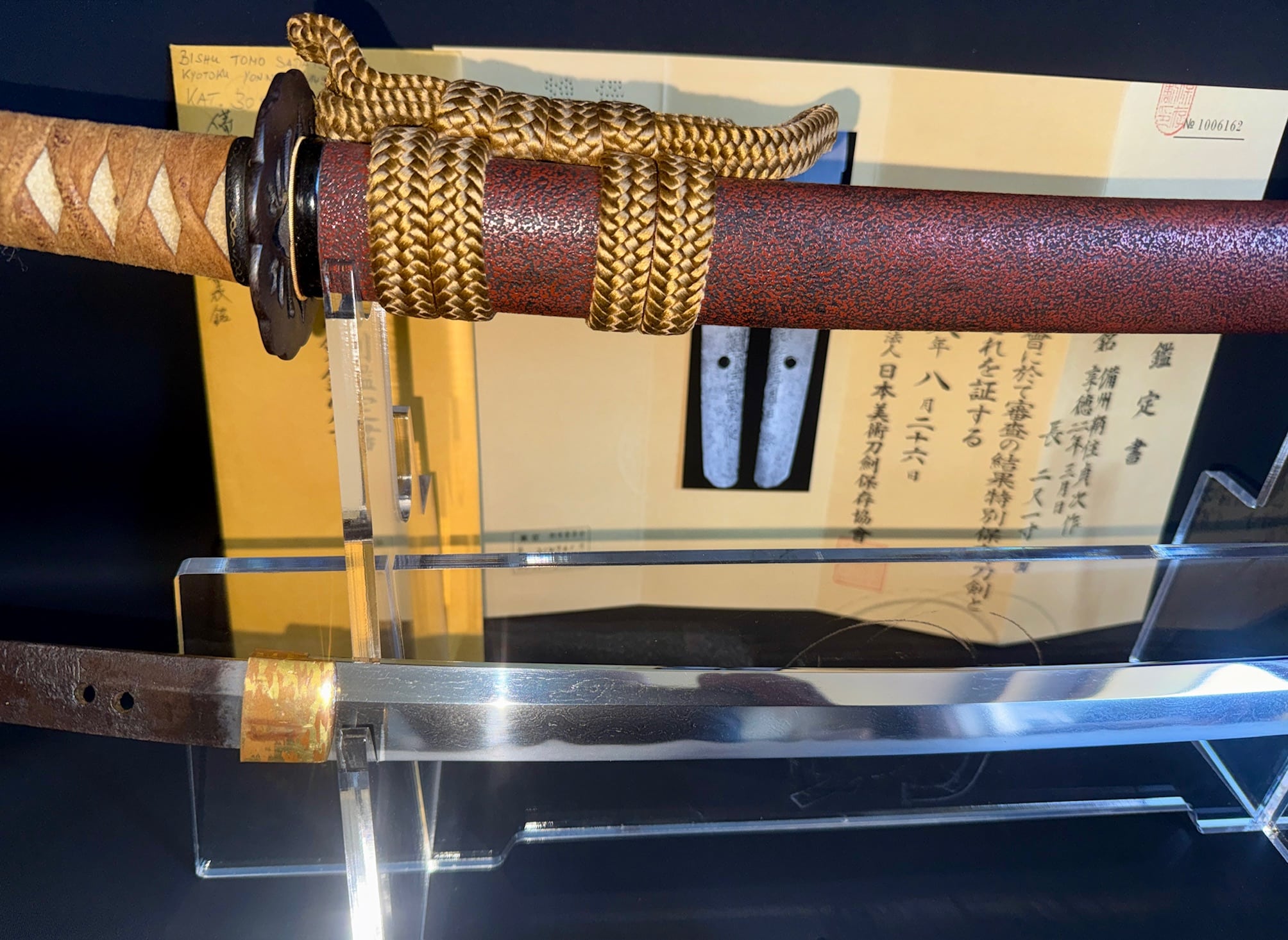
The sword is accompanied by a fine Higo koshirae, a mounting style celebrated for its robust yet understated elegance. Originating from the Higo domain, these fittings are traditionally associated with refined samurai taste, emphasizing:
Well-preserved Higo koshirae are highly collectible in their own right, and their presence here significantly enhances the overall appeal of the piece.
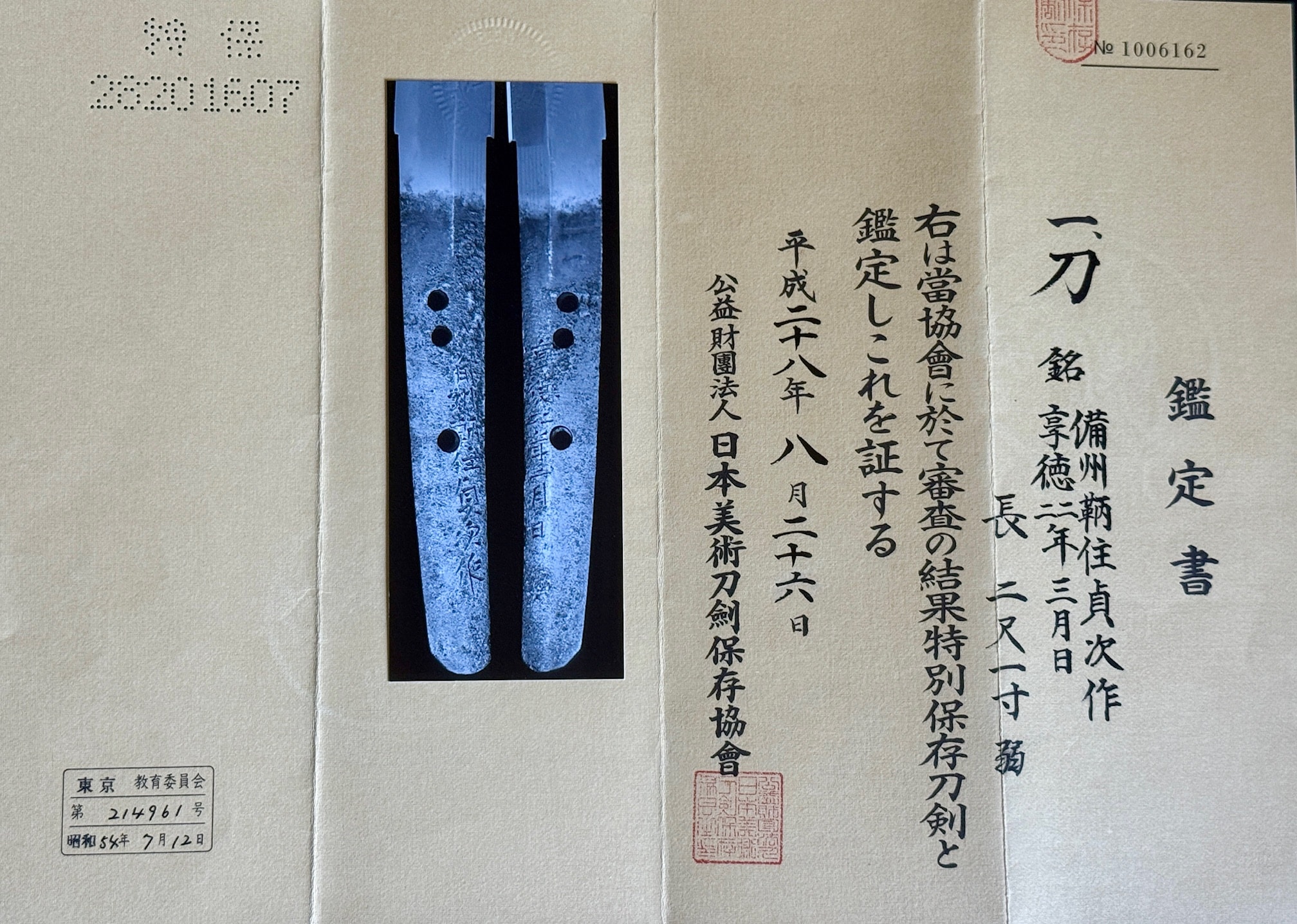
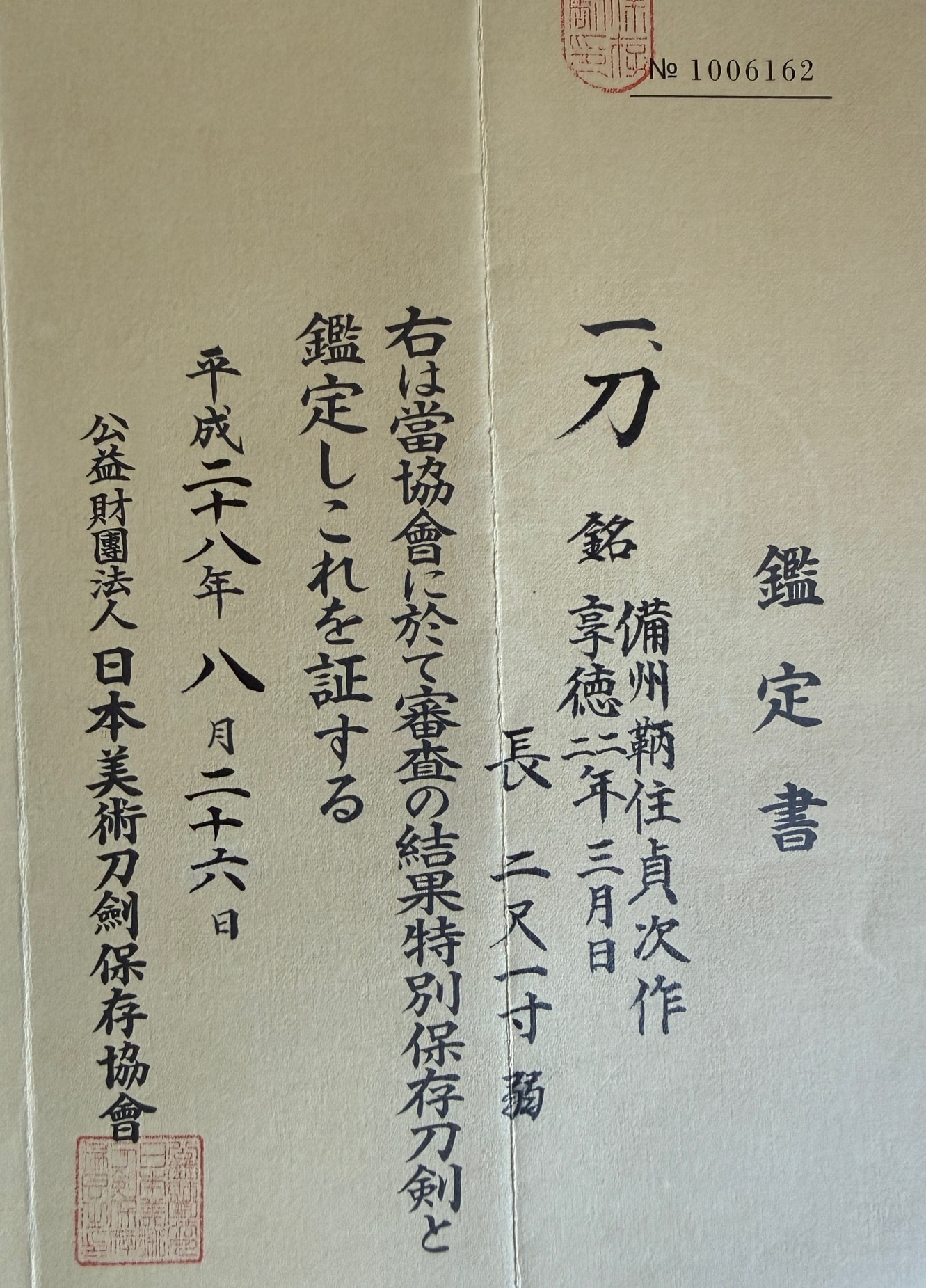
This katana has been awarded the prestigious designation of:
by the NBTHK (Nihon Bijutsu Tōken Hozon Kyōkai)
This certification confirms:
Tokubetsu Hozon status places the blade within a distinguished category of preserved swords, recognized as worthy of special protection and scholarly appreciation.
This katana by Bishū Tomo-jū Sadatsugu represents a compelling convergence of historical importance, refined craftsmanship, and excellent preservation. As a signed and dated work from 1455, it offers a rare opportunity to acquire a sword that is both firmly anchored in history and aesthetically rewarding.
The Tomo school, while less widely known than some major traditions, is increasingly recognized for its subtle sophistication and technical integrity. In this context, Sadatsugu’s work stands out as a refined embodiment of the school’s ideals.
With its NBTHK Tokubetsu Hozon certification, elegant Muromachi sugata, finely worked jihada, and classic Higo koshirae, this sword is not merely a collectible it is a piece of living history.
For the discerning collector, it offers something increasingly rare:
a blade that speaks not through excess, but through quiet mastery.
KvK: 51964147
C.W. Slok - Kyodai Originals
Bank: NL25 KNAB 0509 1310 18
BIC: KNABNL2H
© 2026 Kyodai Originals is made with ❤ by Nieuwblik.com


