
€ 7.800,00
1 in stock
Koto Period NBTHK Hozon Tōken
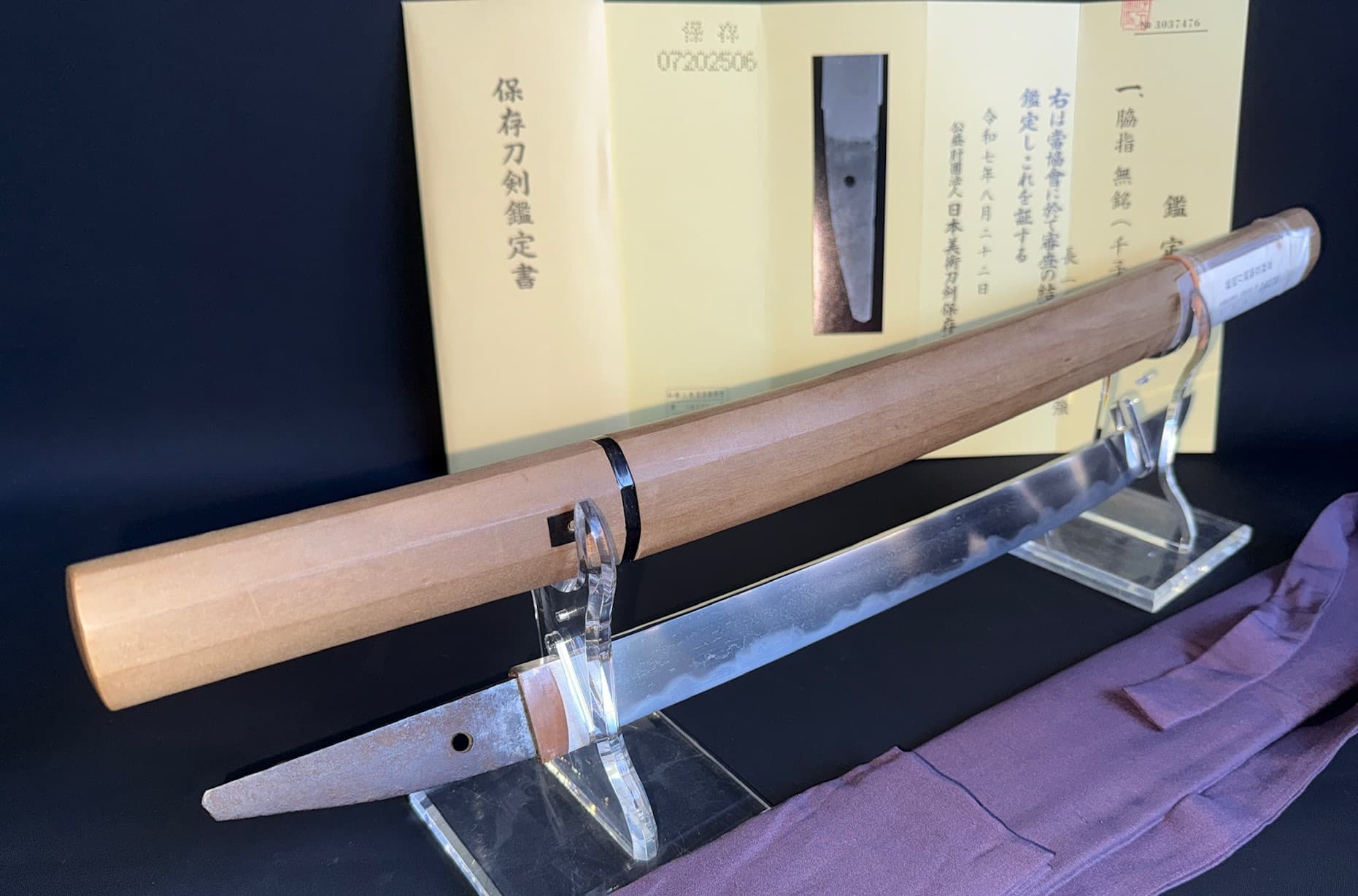
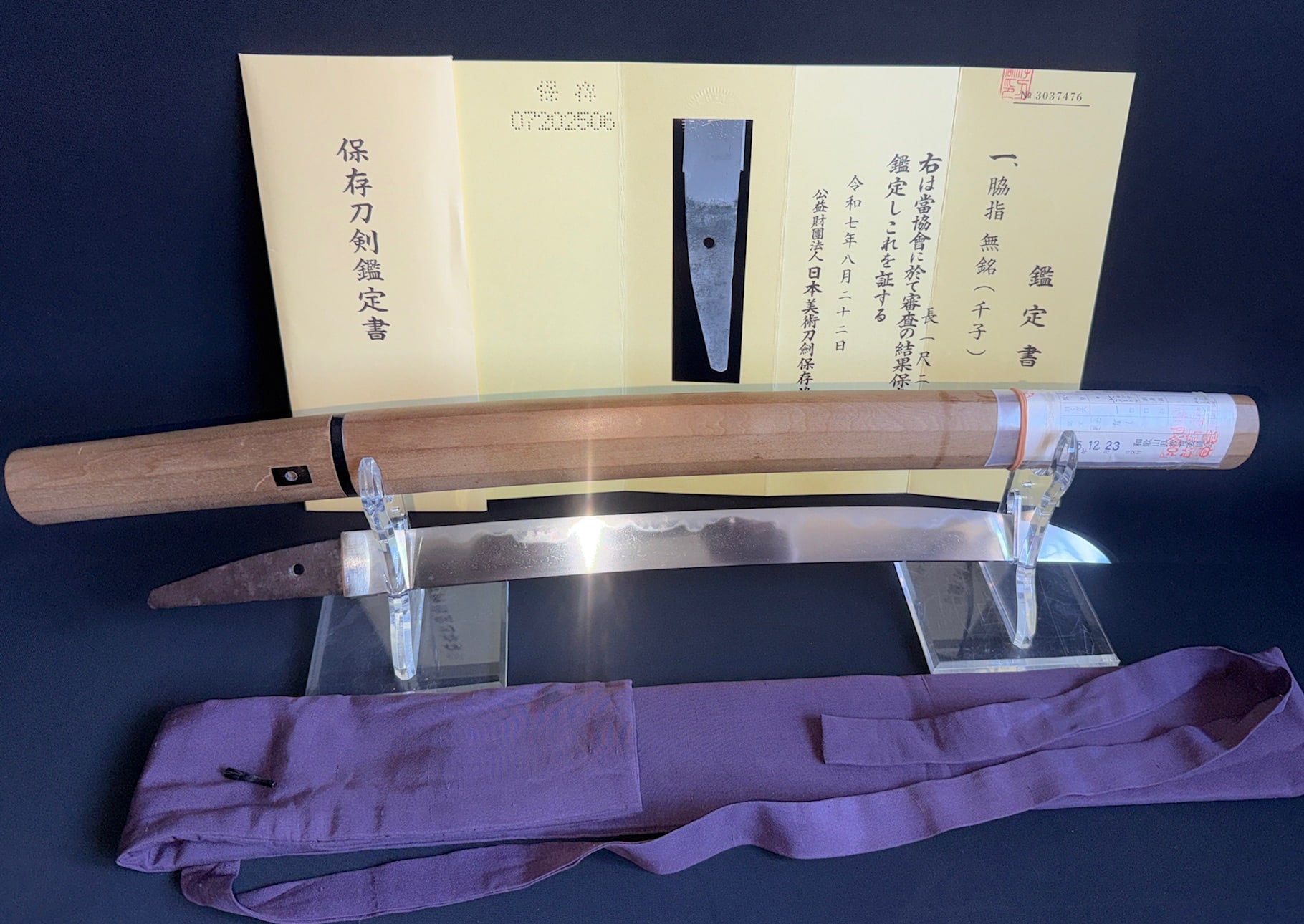
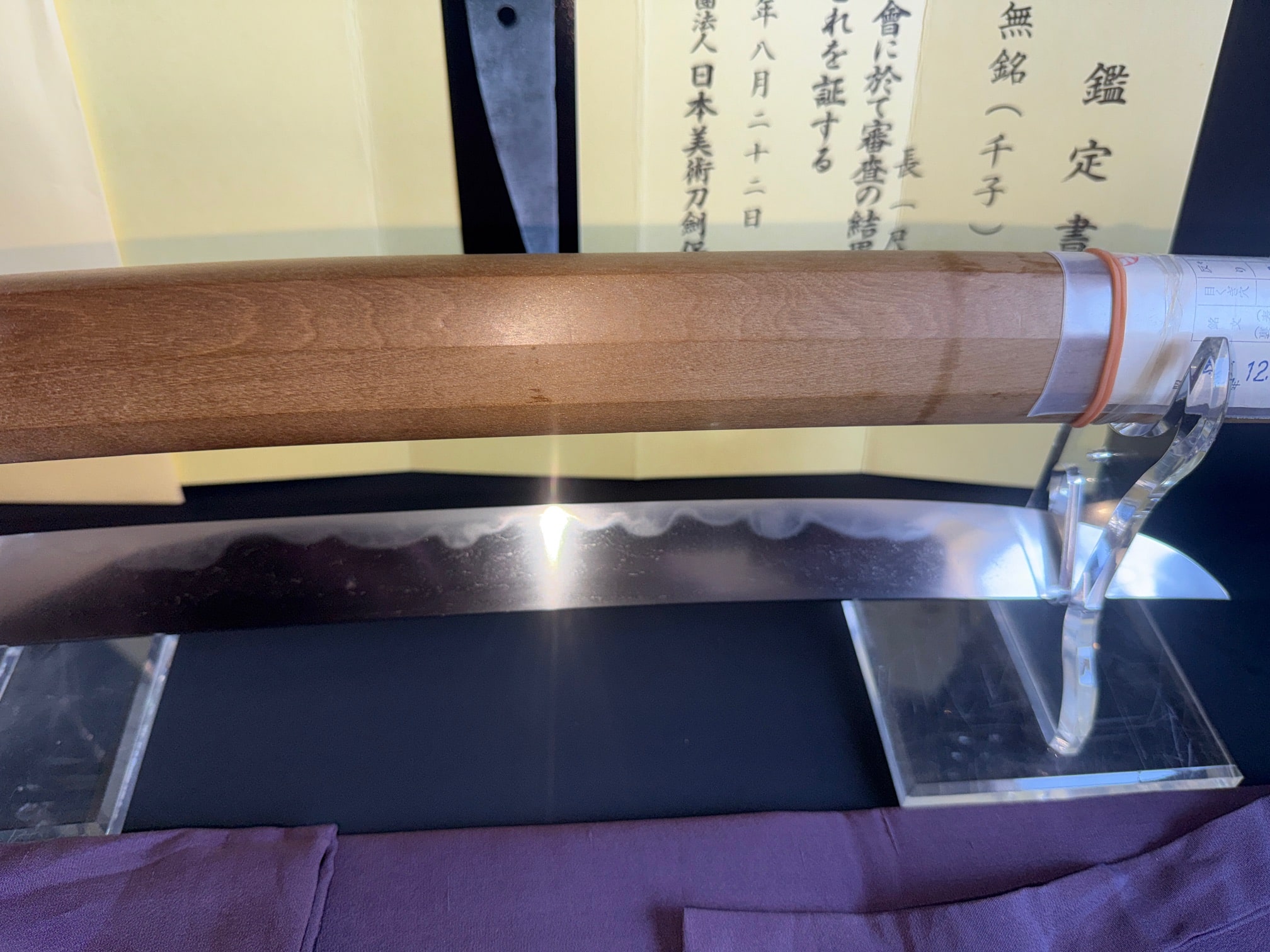
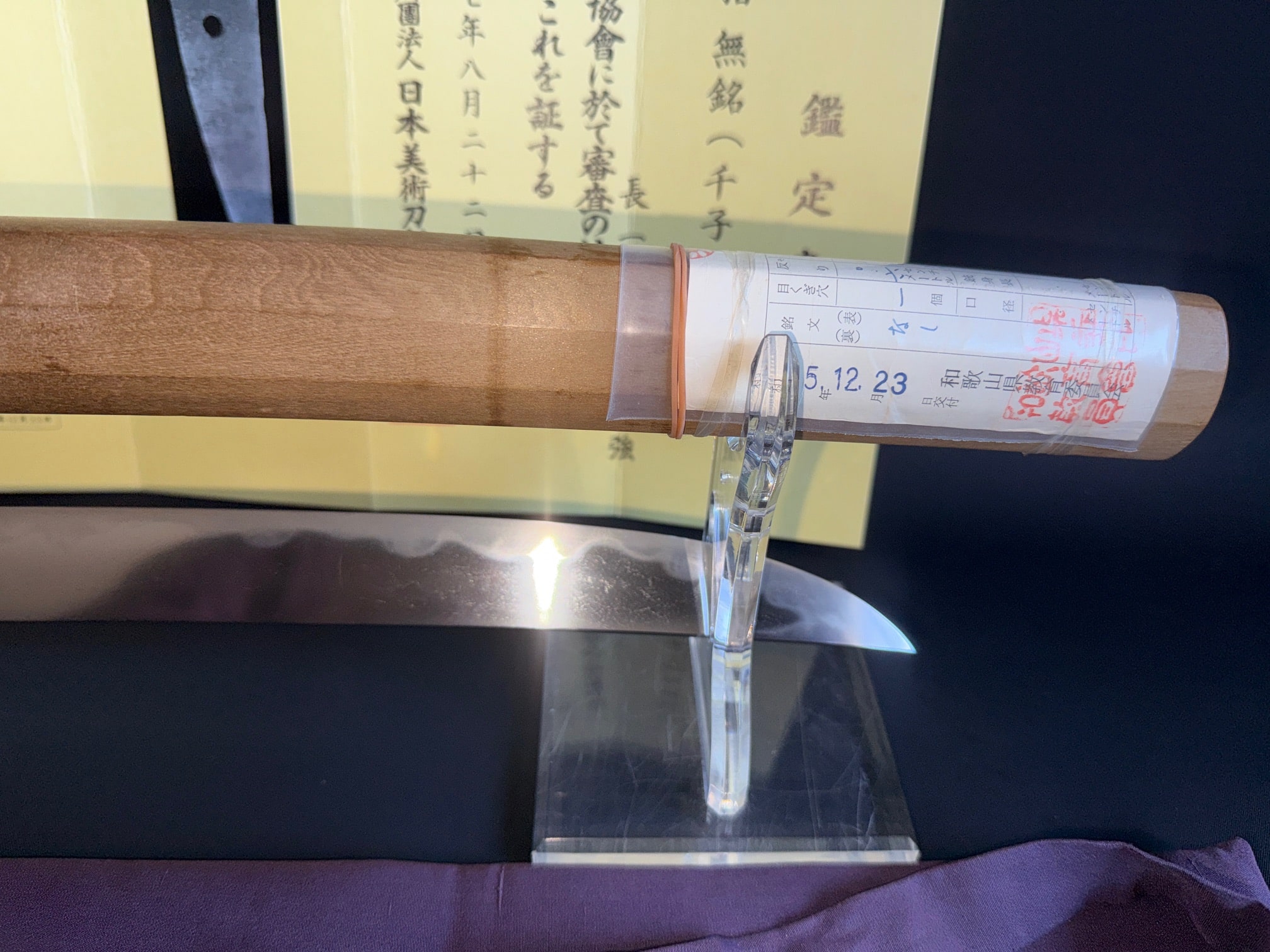
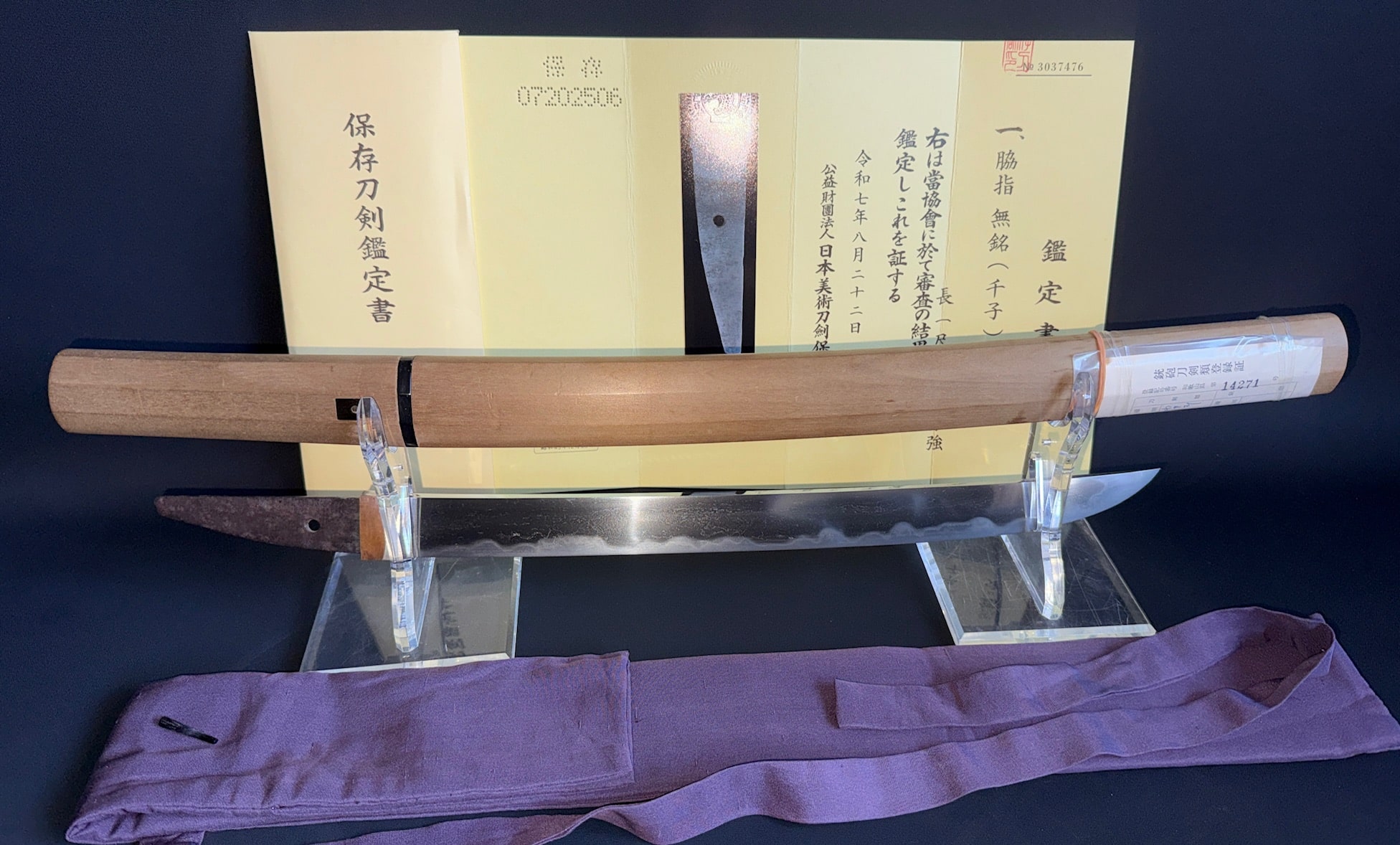
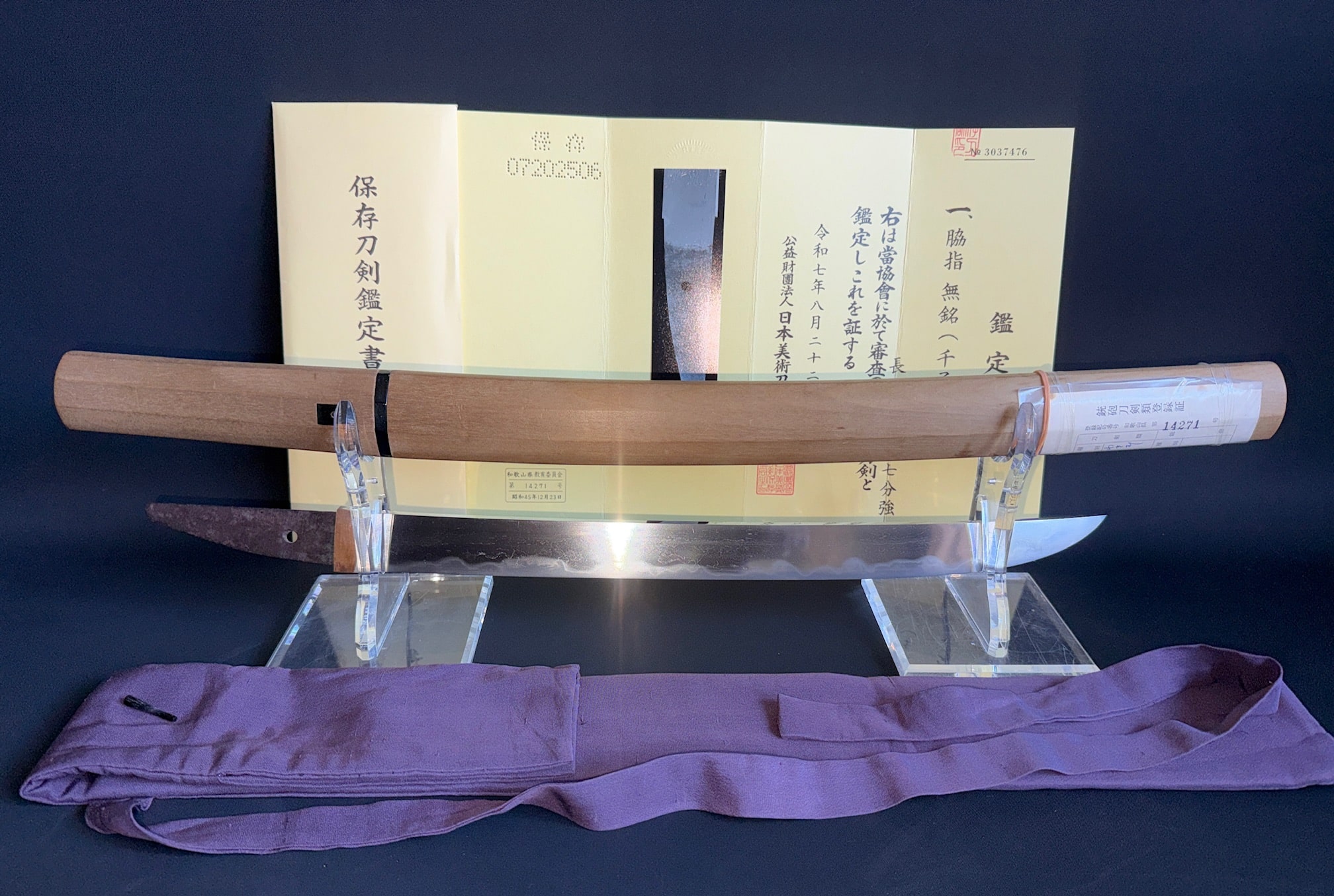
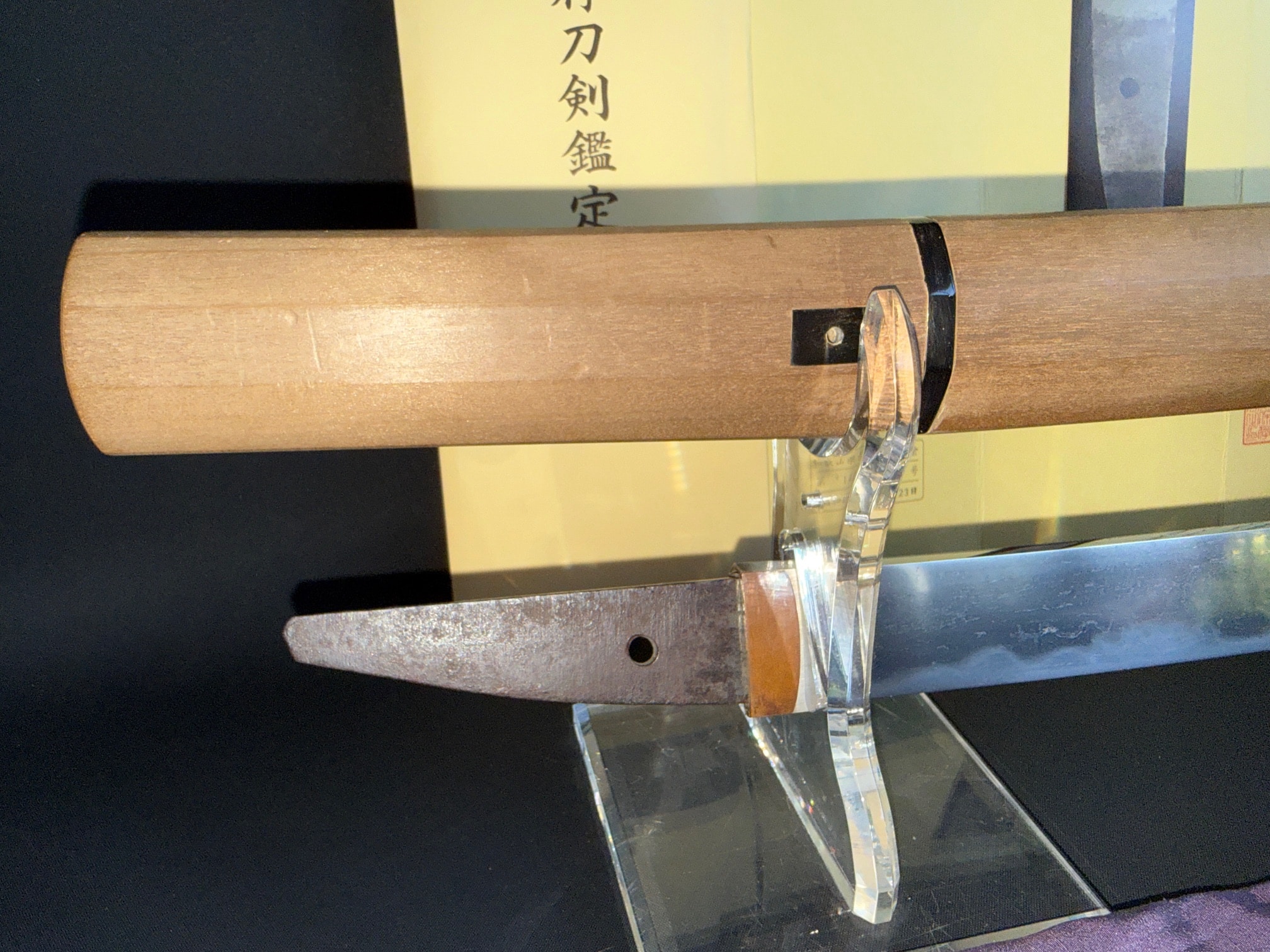
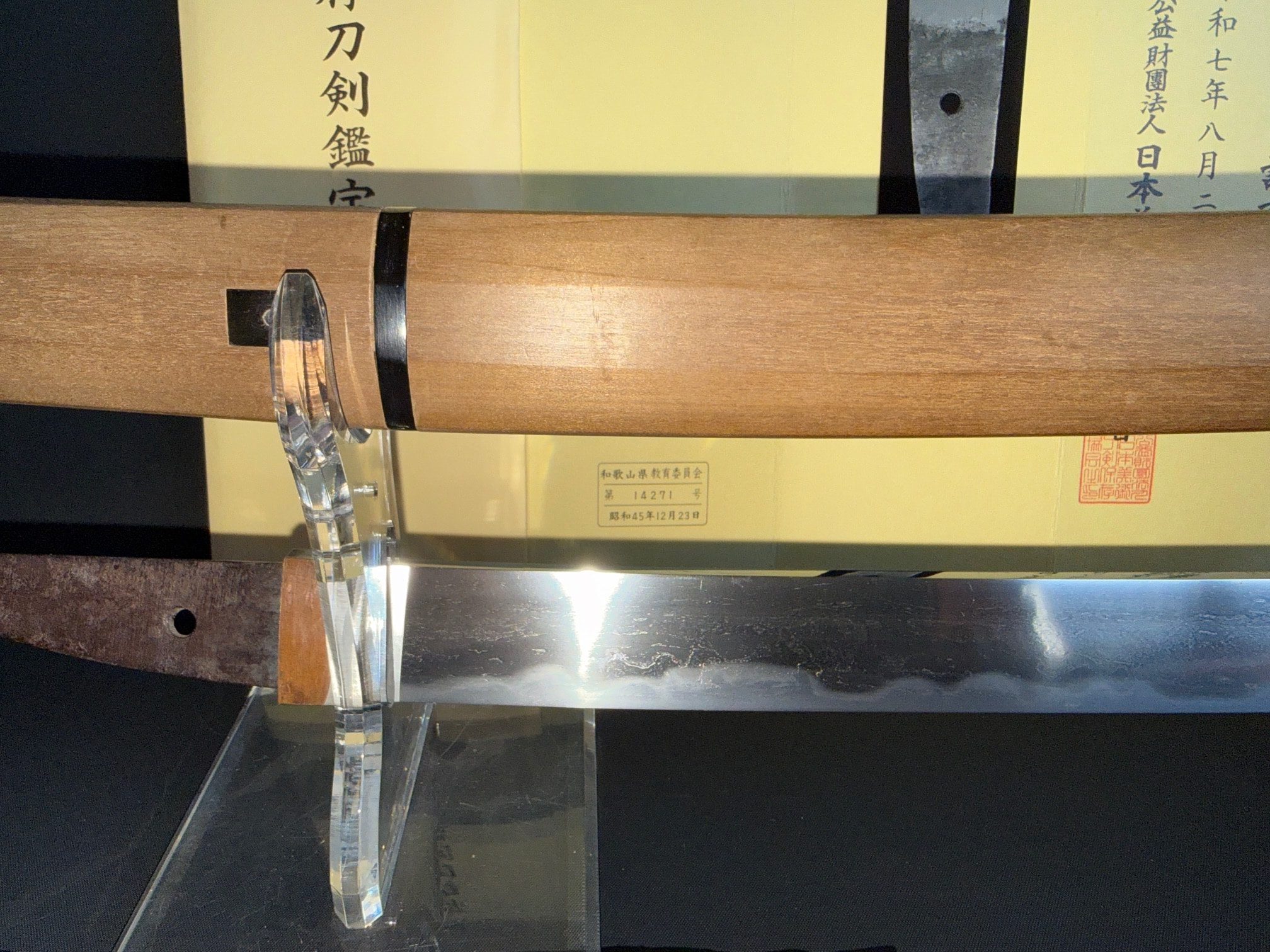
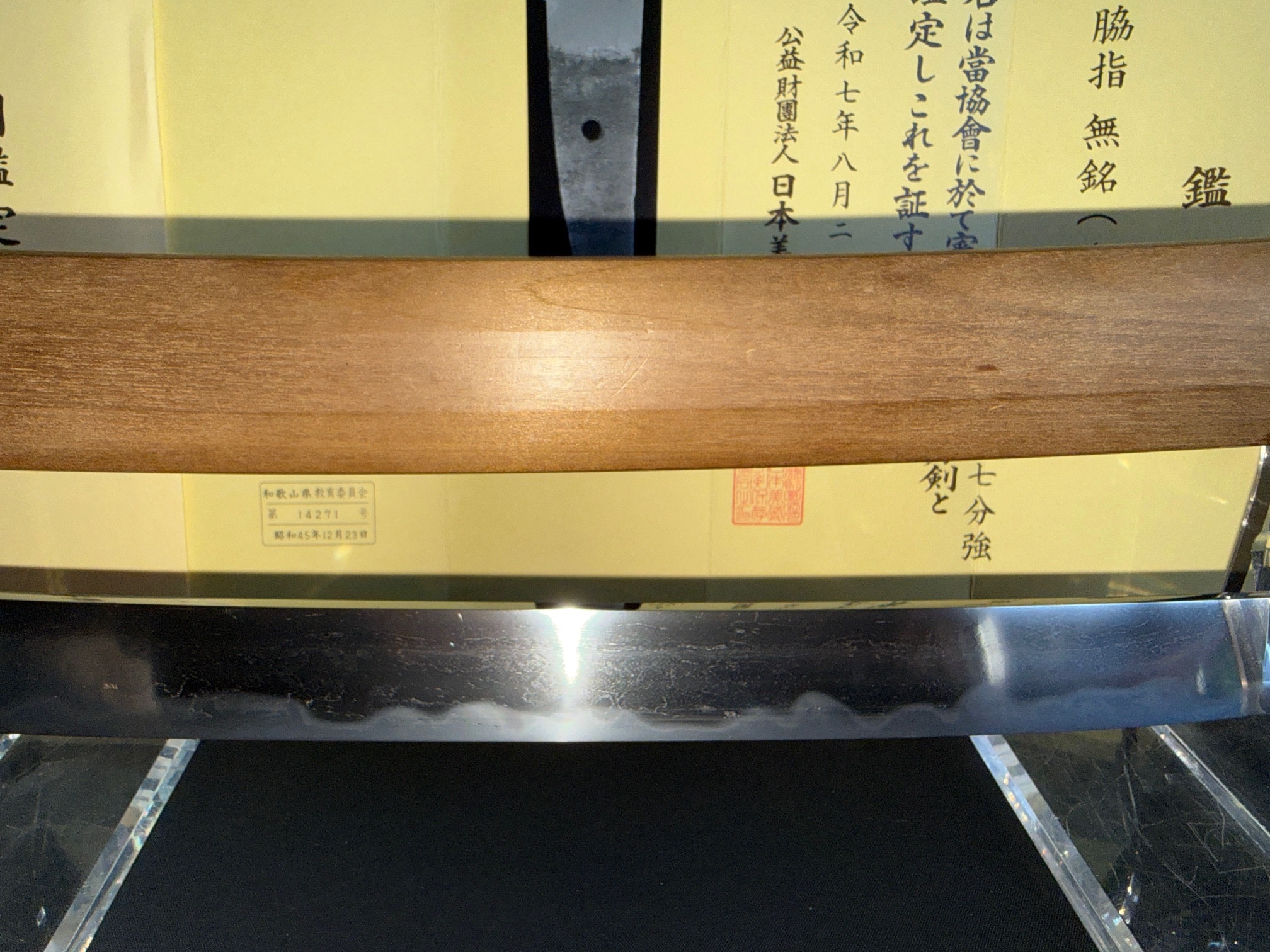
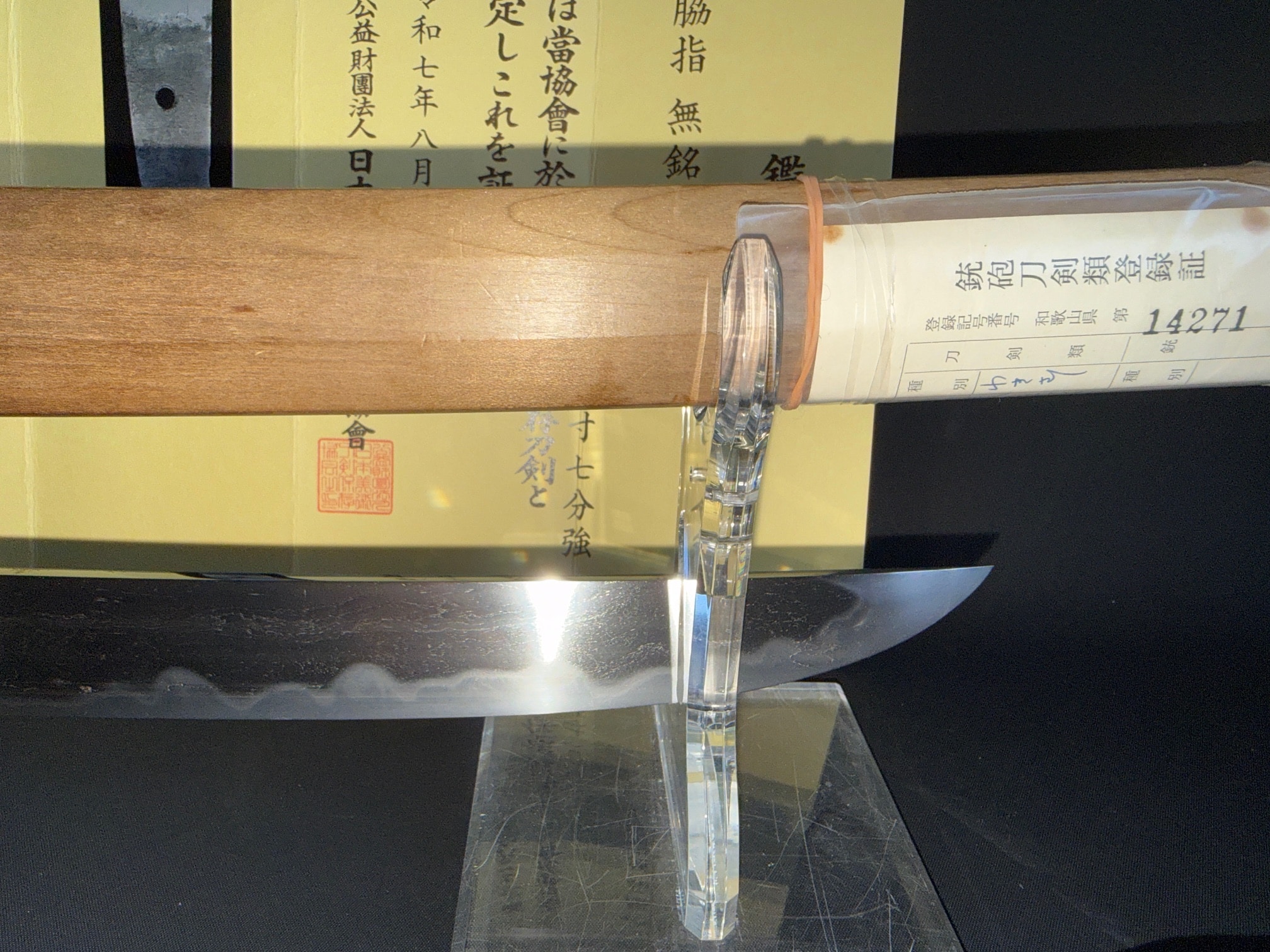
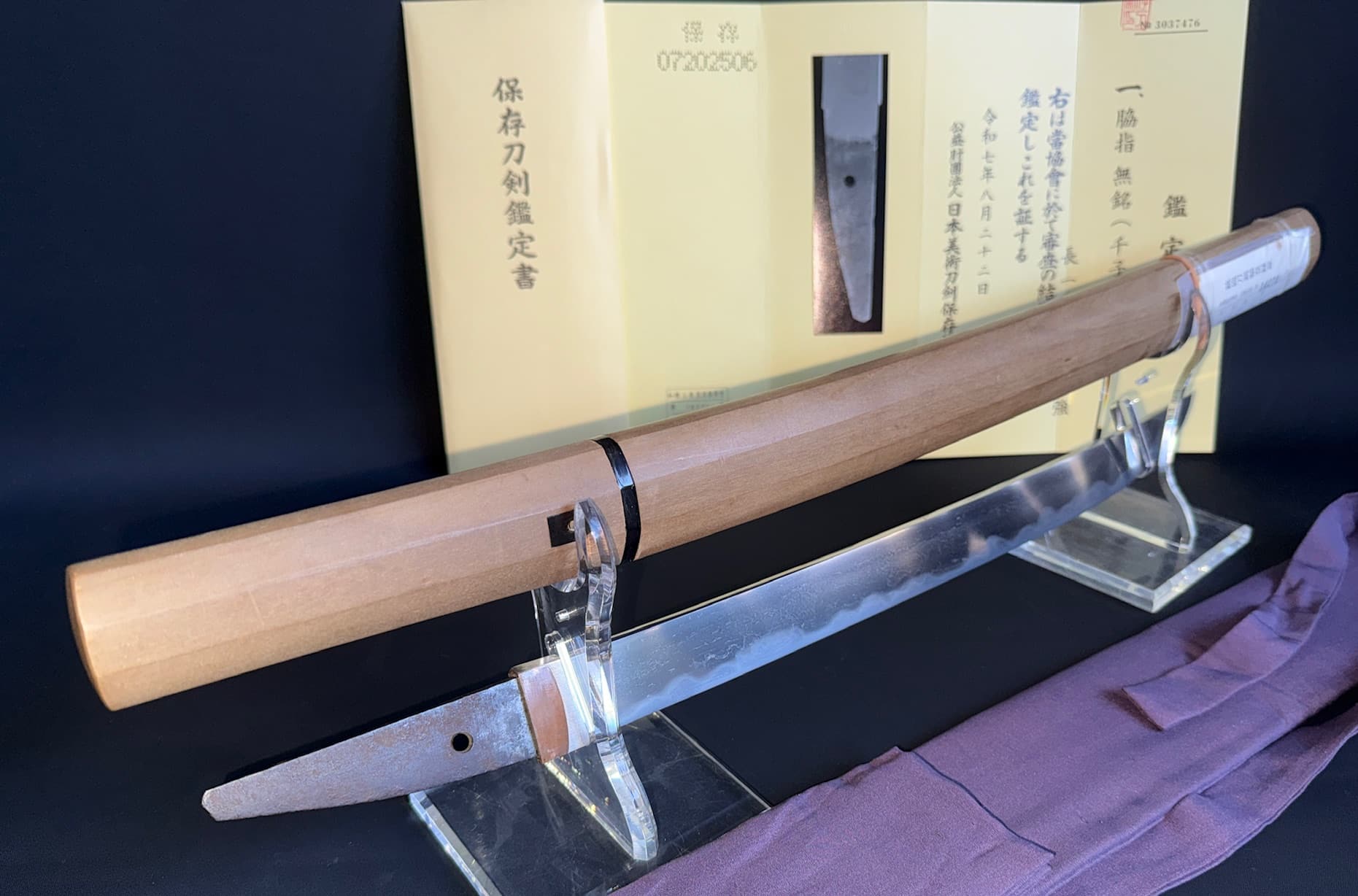
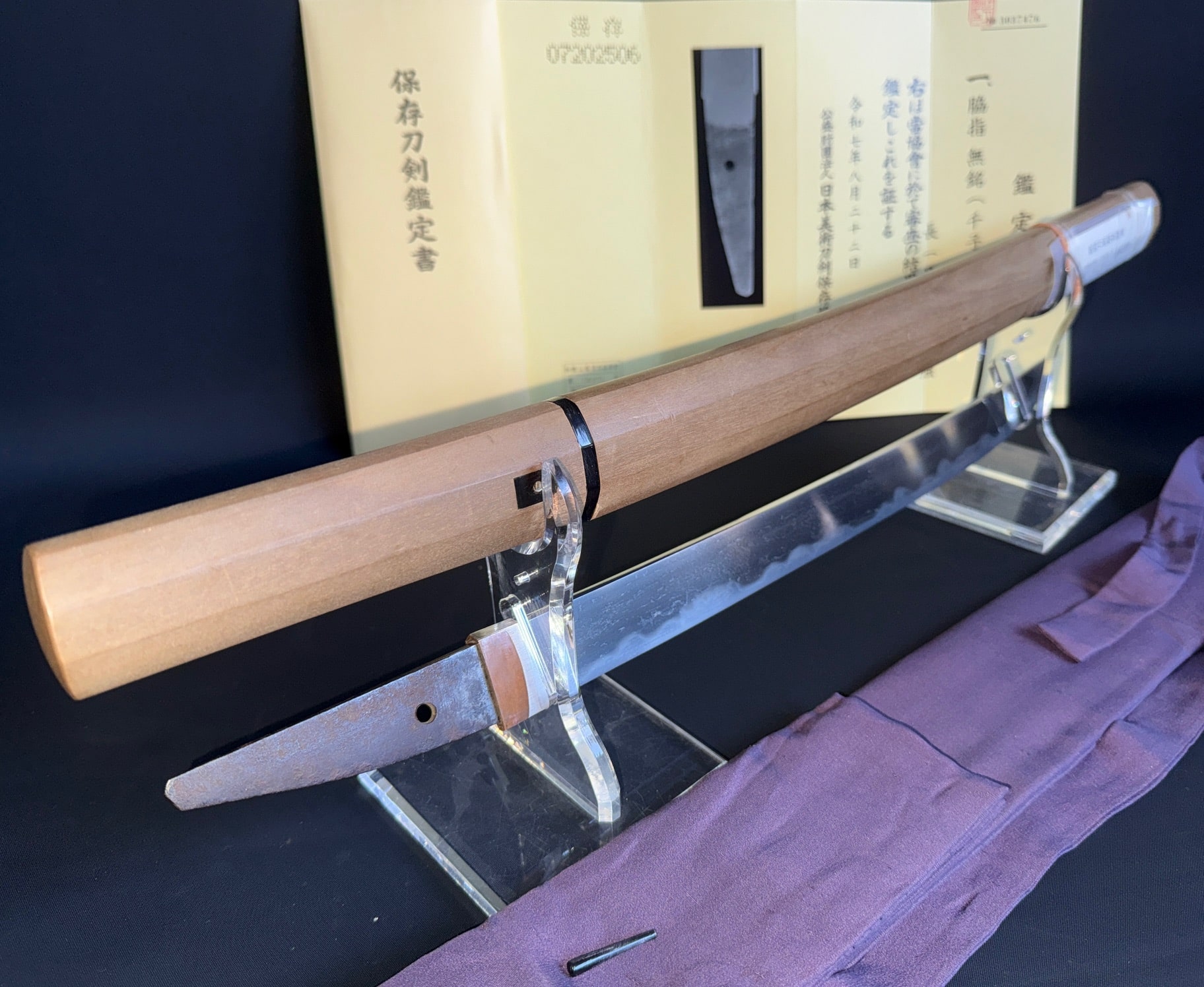
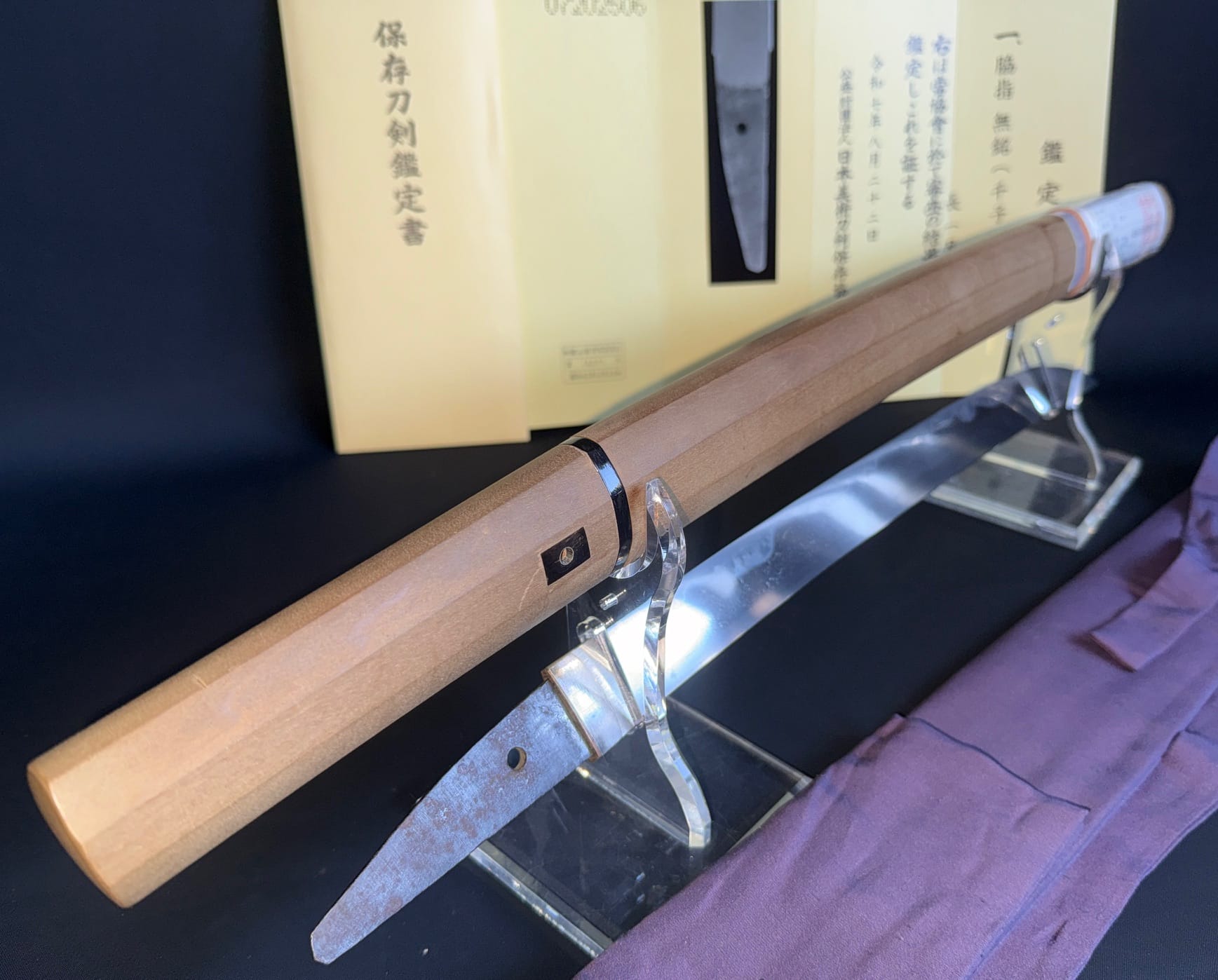
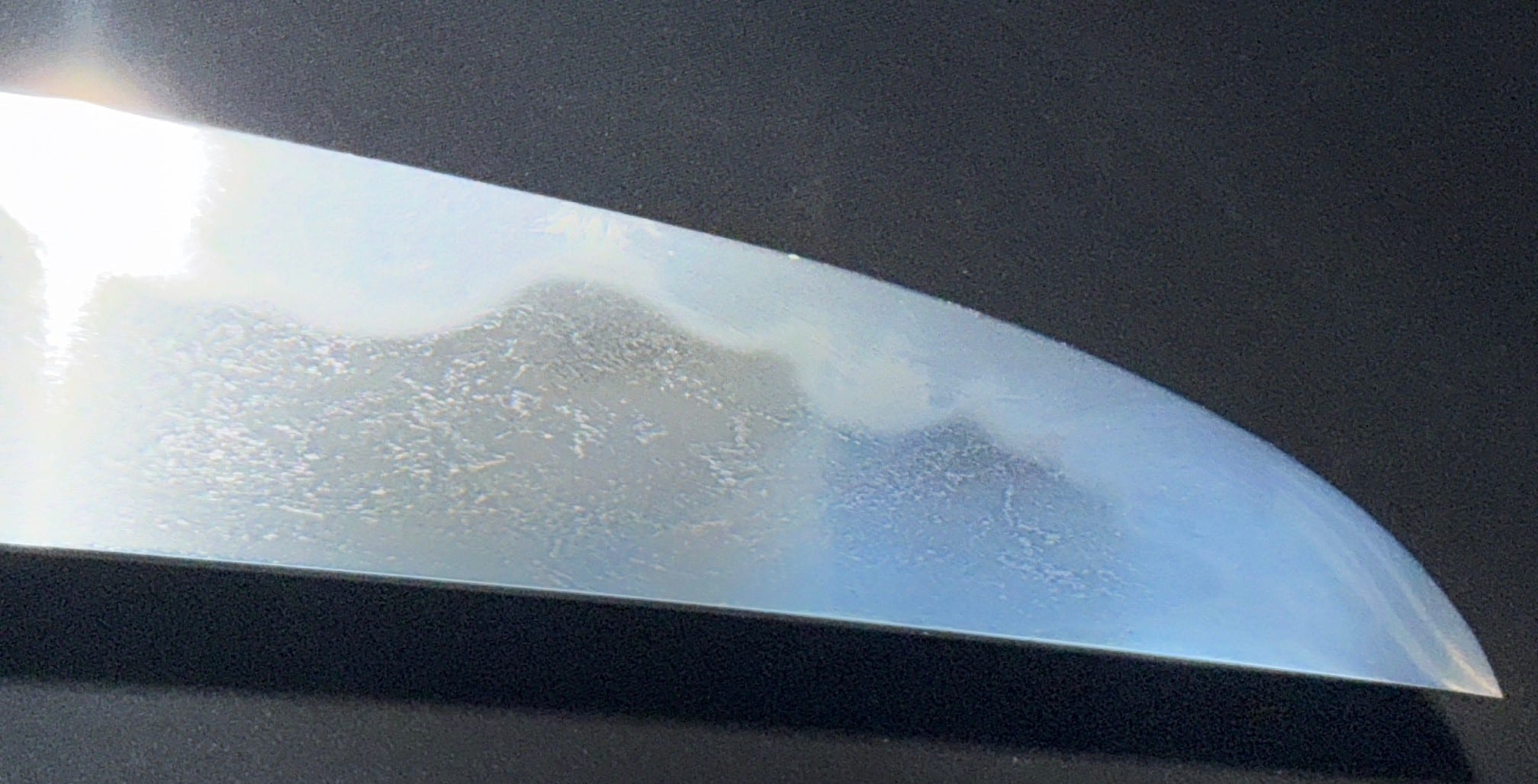
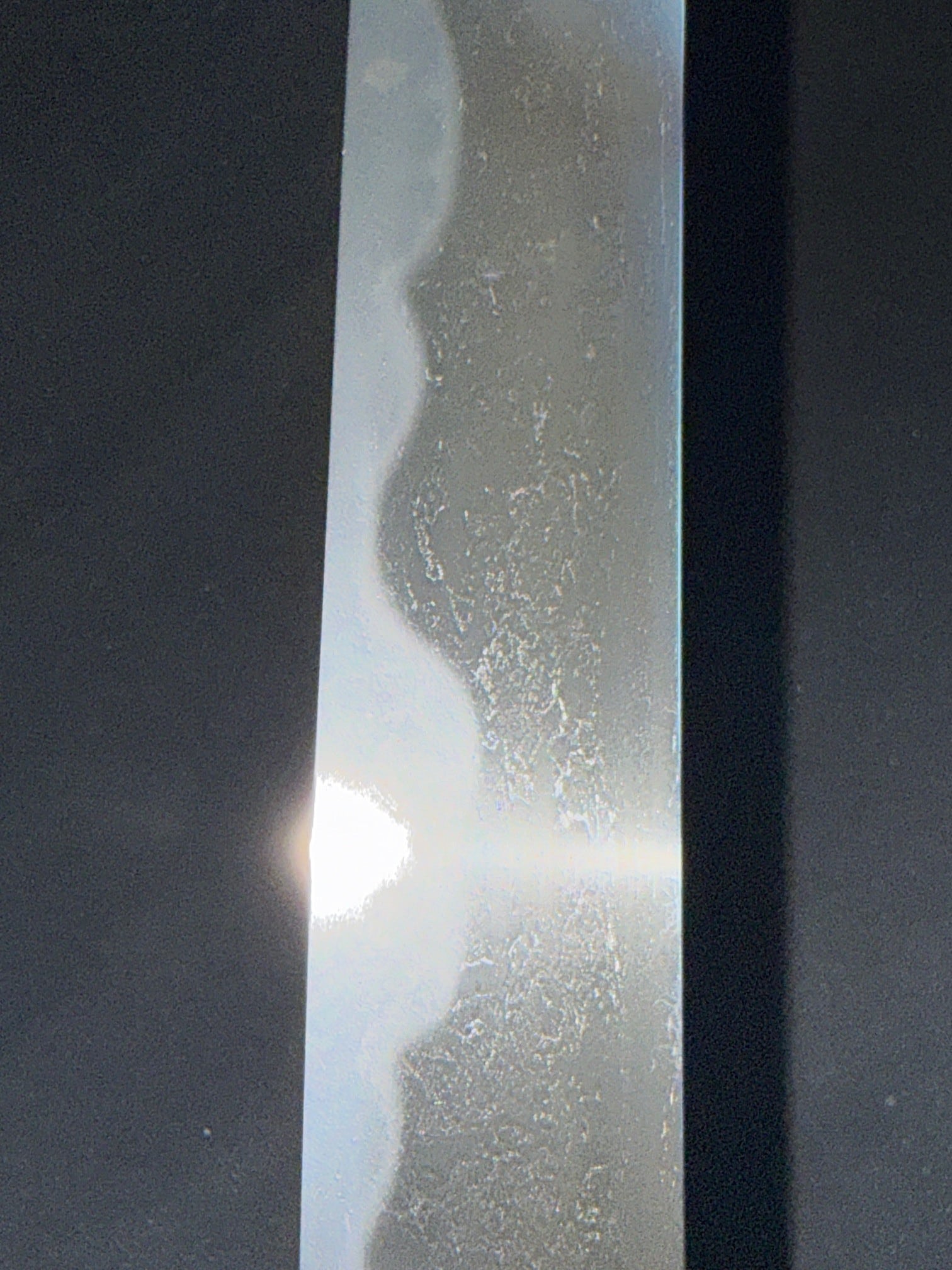
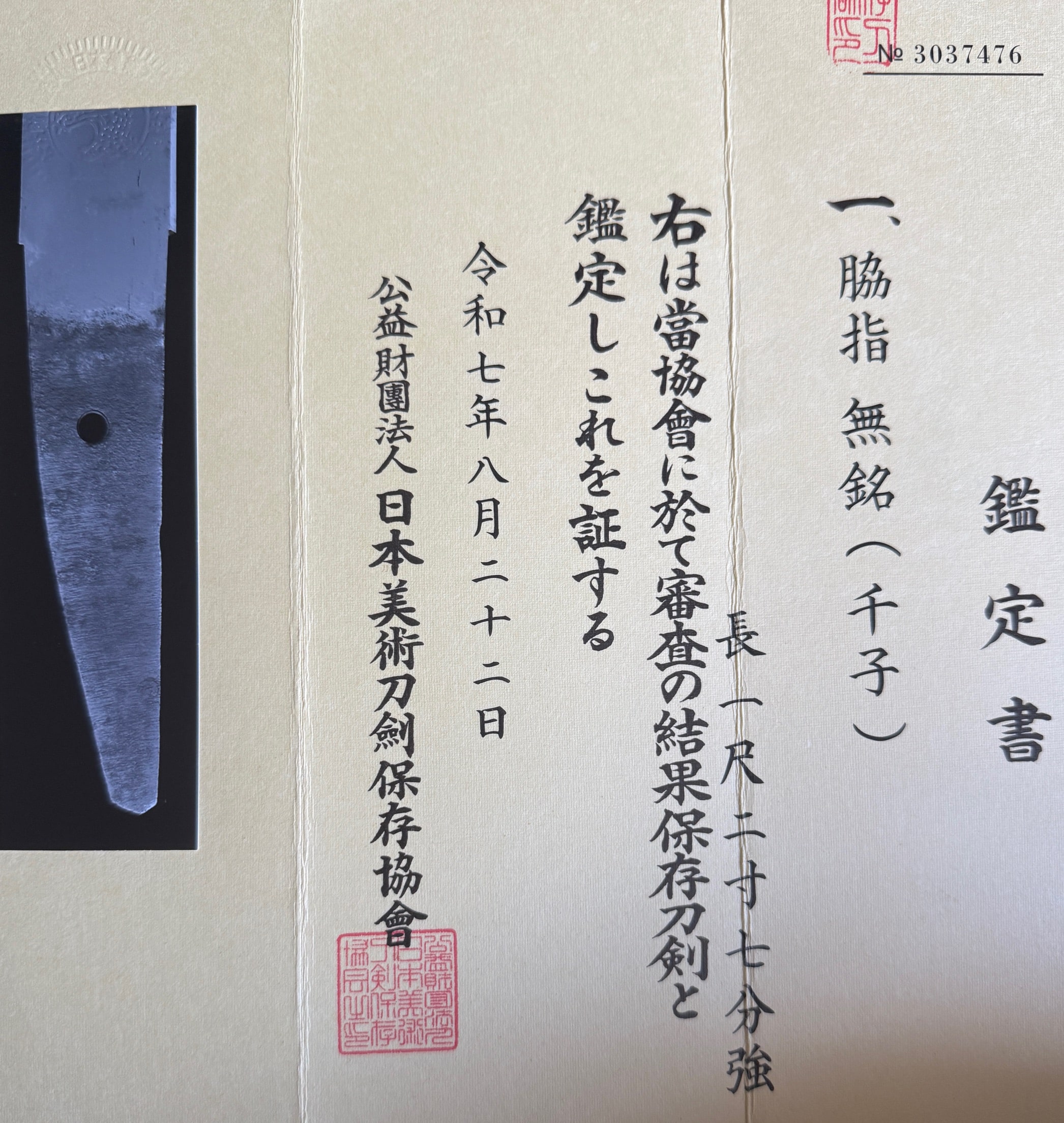
This impressive wakizashi is attributed to the Sengo Muramasa school (千子), one of the most celebrated and historically significant sword traditions of Ise Province during the late Koto period. Muramasa and his lineage have long been admired for their distinctive workmanship, powerful construction, and exceptional cutting performance, making them highly sought after among collectors and connoisseurs of Japanese swords.
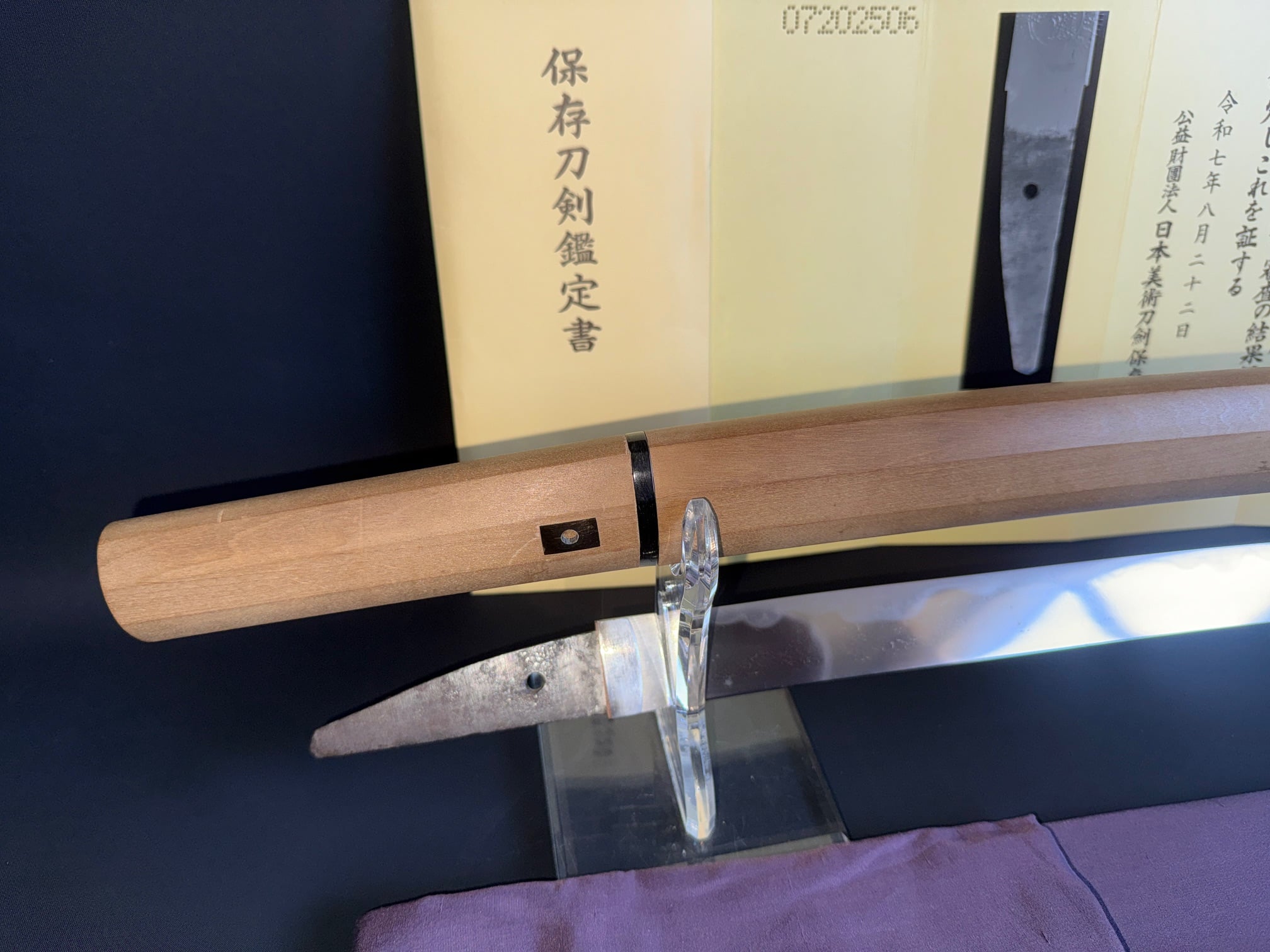
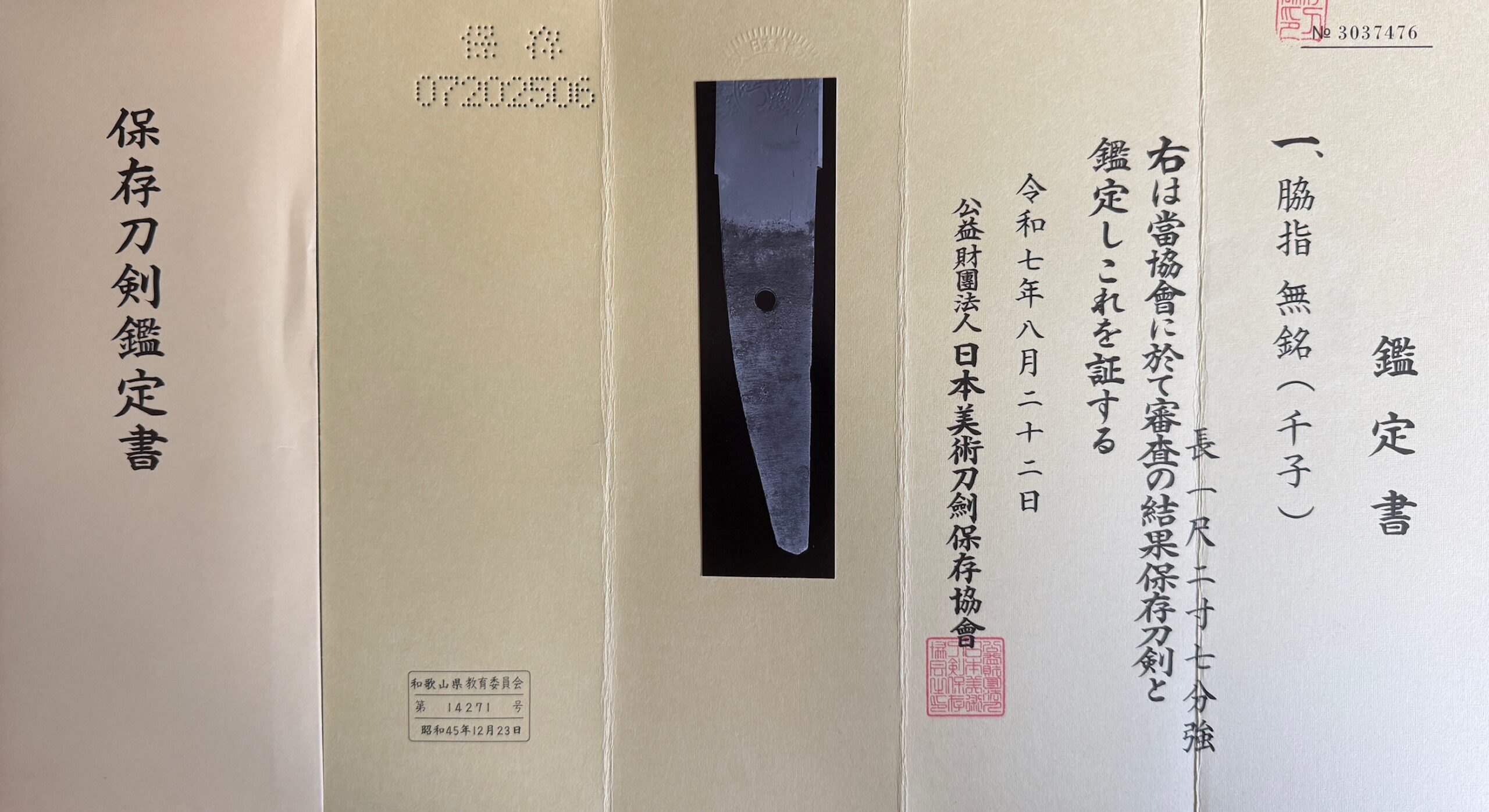
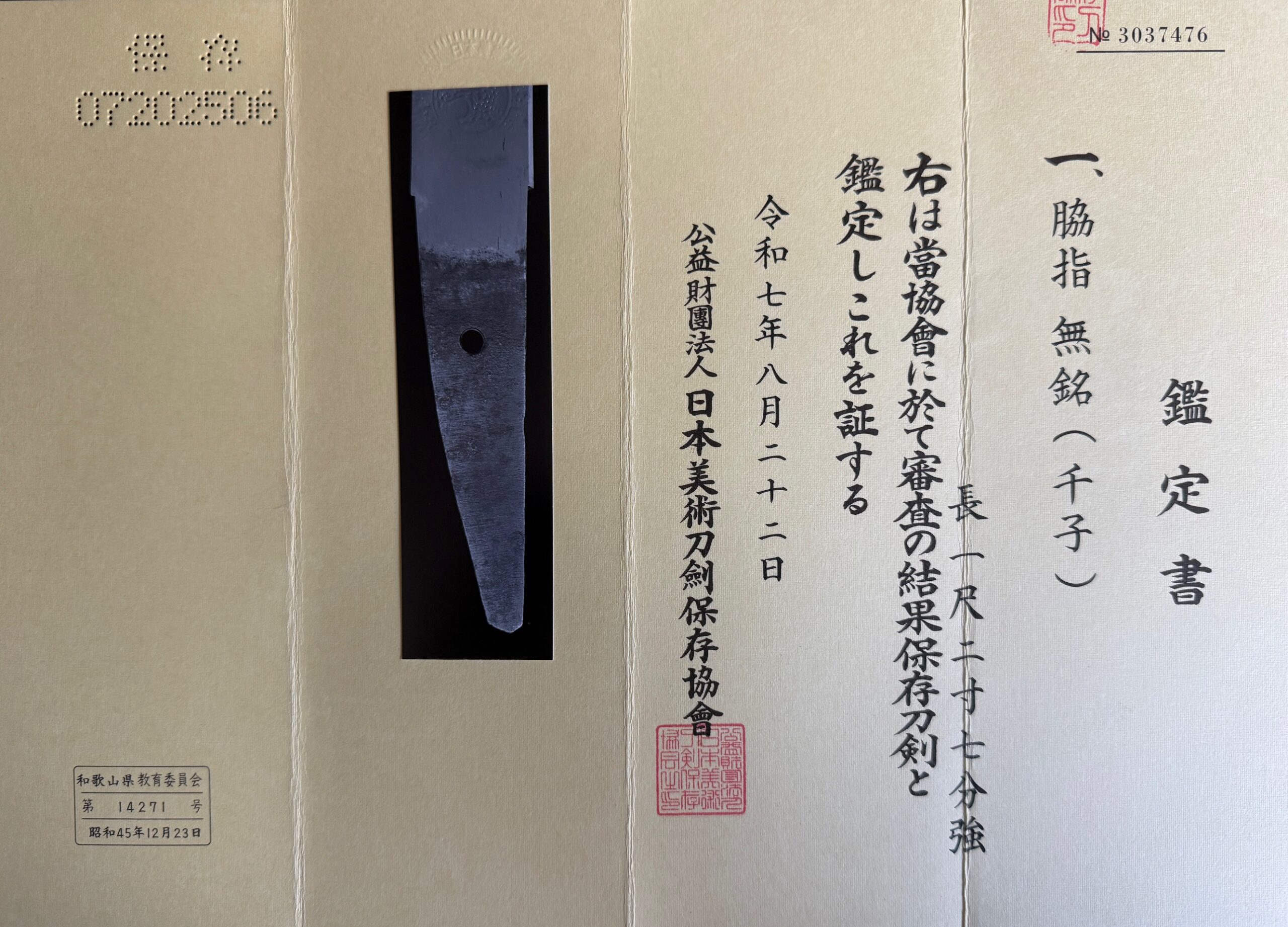
Although the blade is unsigned (mumei), it has been carefully examined and officially certified by the NBTHK (Nihon Bijutsu Tōken Hozon Kyōkai), receiving the respected Hozon Tōken designation. This confirms that the blade is worthy of preservation and that its workmanship is consistent with the Sengo tradition. Attributions to Muramasa are never given lightly, and this recognition places the piece firmly within one of the most desirable schools of the Koto period.
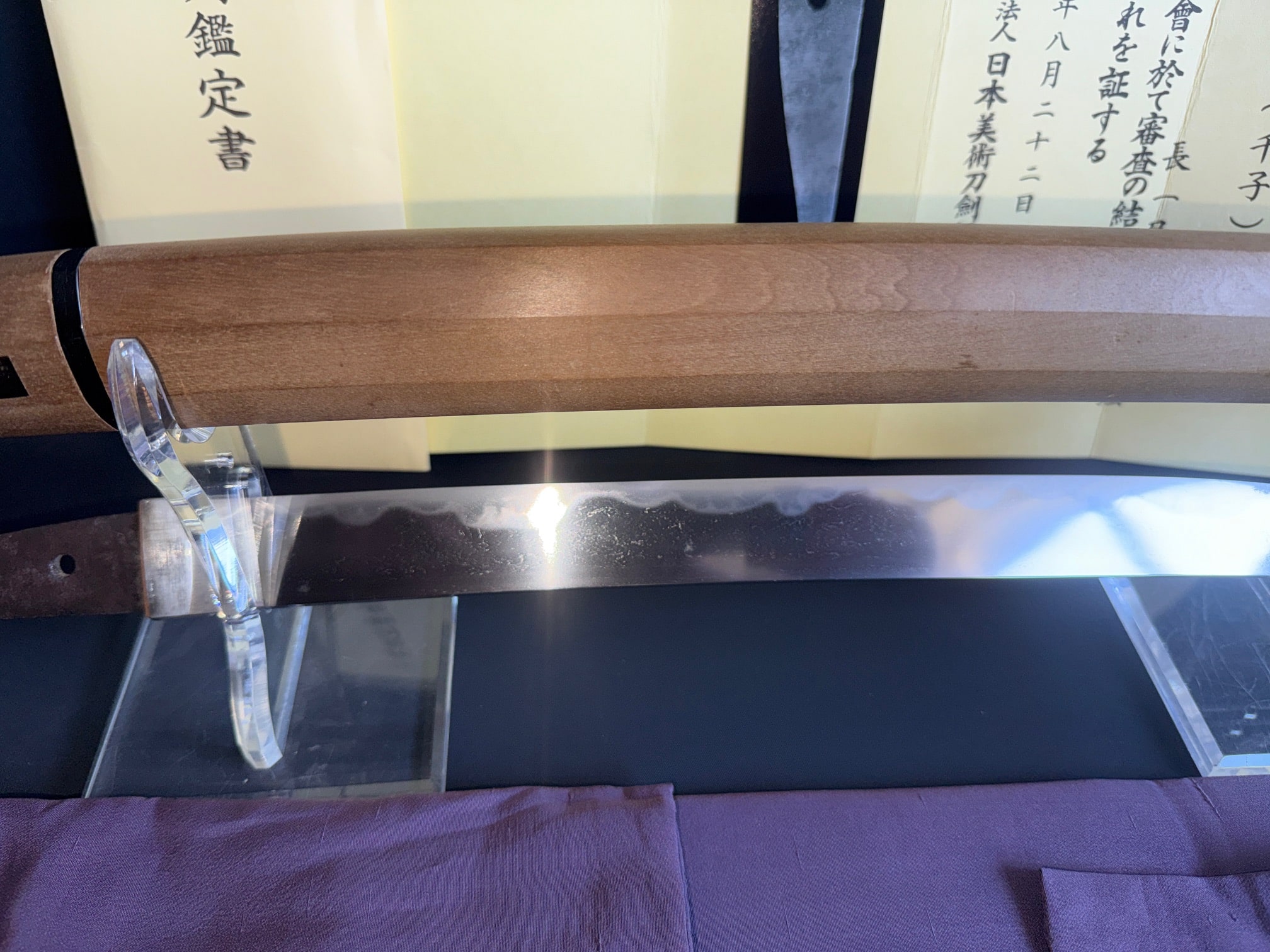
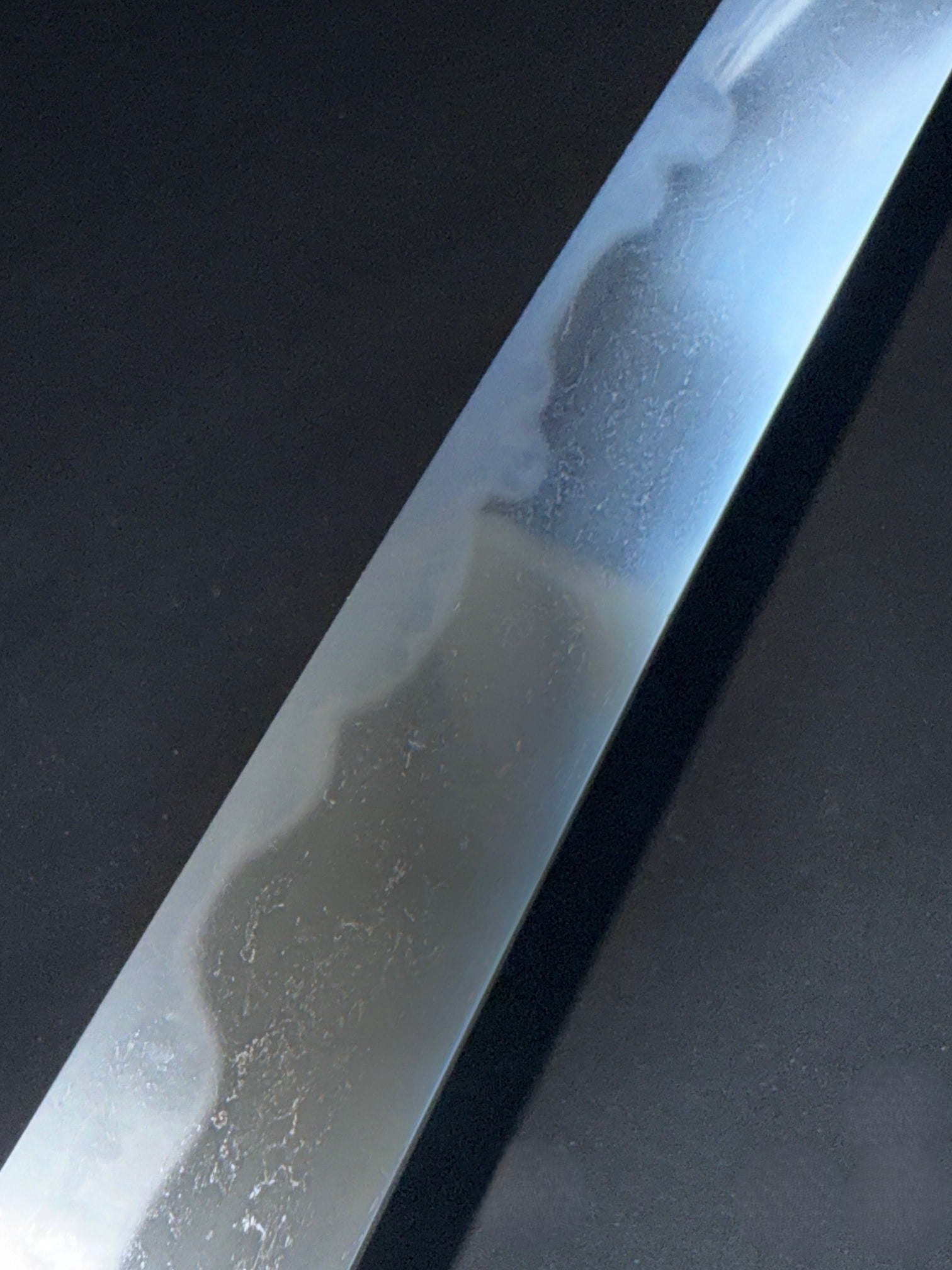
With a nagasa of 38.5 cm, this blade sits at the upper end of wakizashi length, approaching the proportions of a ko-wakizashi. The wide motohaba of 3.07 cm and solid kasane of 0.6 cm give the blade a strong and authoritative presence, reflecting the practical battlefield orientation for which Muramasa-related works are known. The gentle sori of 0.6 cm adds elegance and balance, resulting in a well-proportioned and visually appealing sugata.
The Muramasa school occupies a unique place in Japanese sword history. During the Sengoku period, these blades were prized for their reliability and cutting efficiency, often carried by samurai in times of war. In later periods, Muramasa swords became surrounded by legend, sometimes described as “cursed” due to their association with dramatic historical events. However, modern scholarship recognizes these blades for what they truly are: outstanding examples of Koto-period craftsmanship, combining strength, functionality, and refined forging techniques.
This wakizashi embodies the essential characteristics of the Muramasa tradition. The blade’s proportions, construction, and overall presence strongly reflect the school’s signature style, offering collectors a rare opportunity to acquire a certified example linked to this iconic lineage.
Pieces attributed to Muramasa and his school continue to command strong interest on the international market, particularly when supported by NBTHK certification. As such, this blade represents not only a historically important artifact but also a highly desirable collector’s piece with enduring appeal.
KvK: 51964147
C.W. Slok - Kyodai Originals
Bank: NL25 KNAB 0509 1310 18
BIC: KNABNL2H
© 2026 Kyodai Originals is made with ❤ by Nieuwblik.com


