






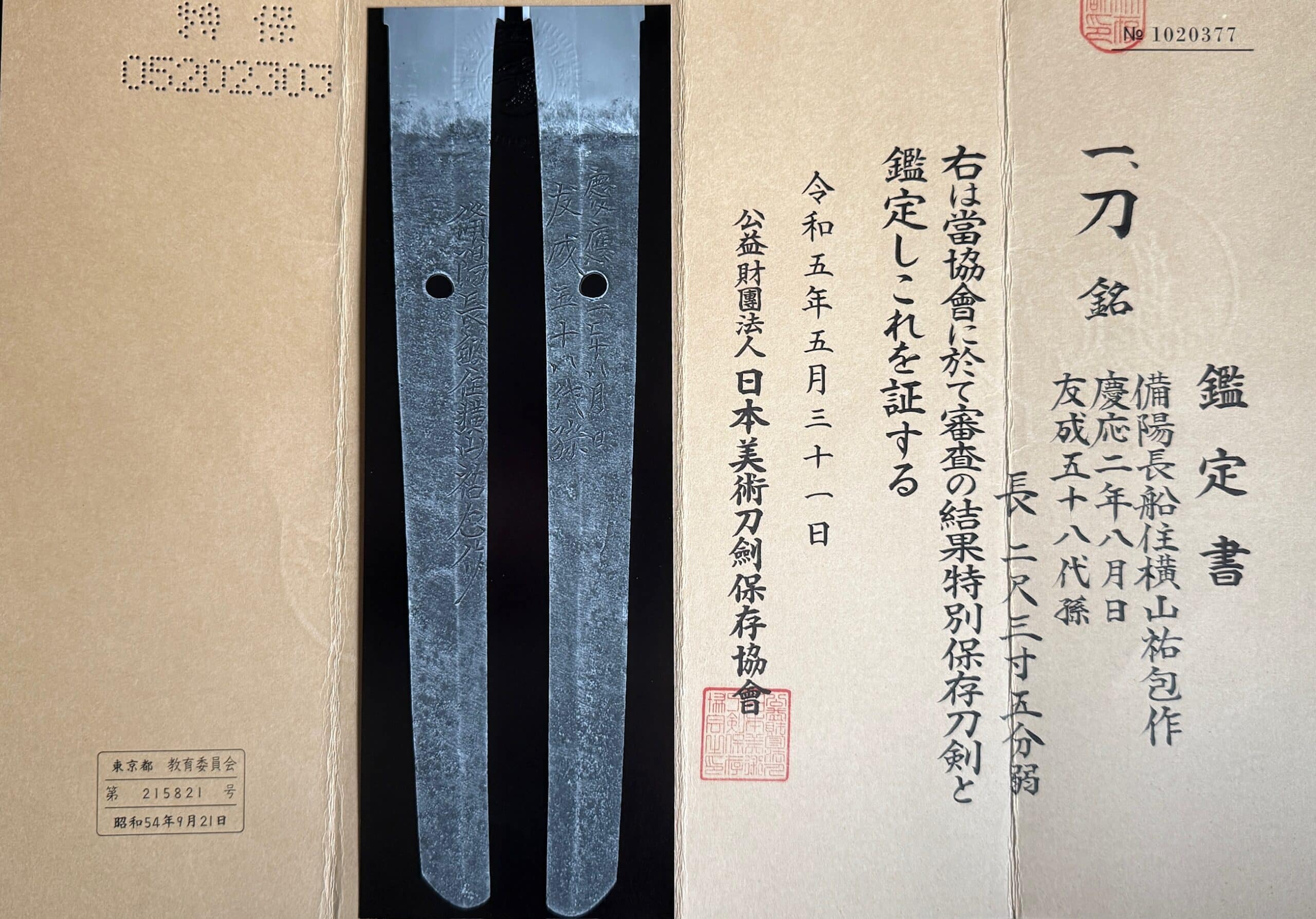
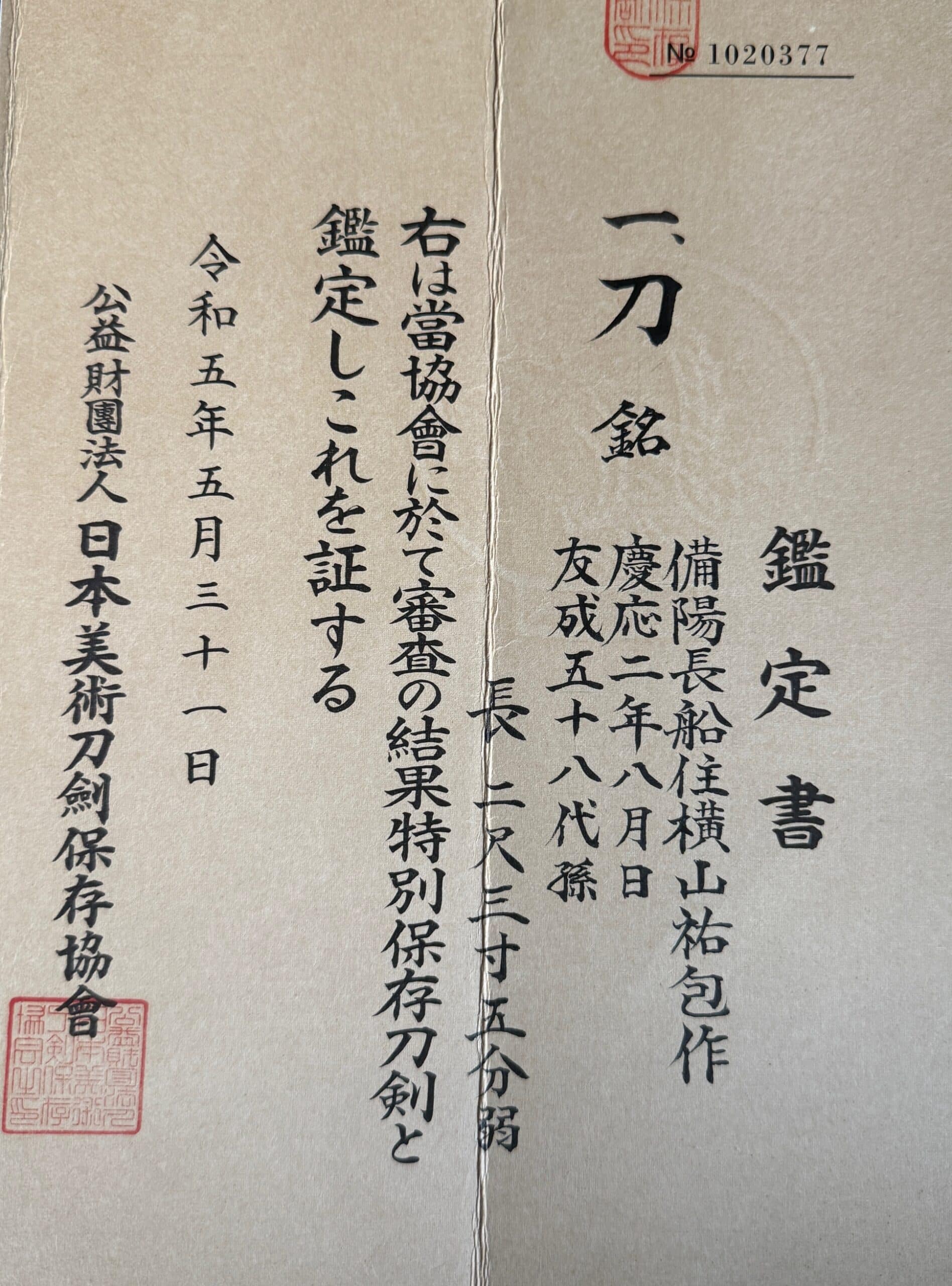
Tokubetsu Hozon Tachi Katana
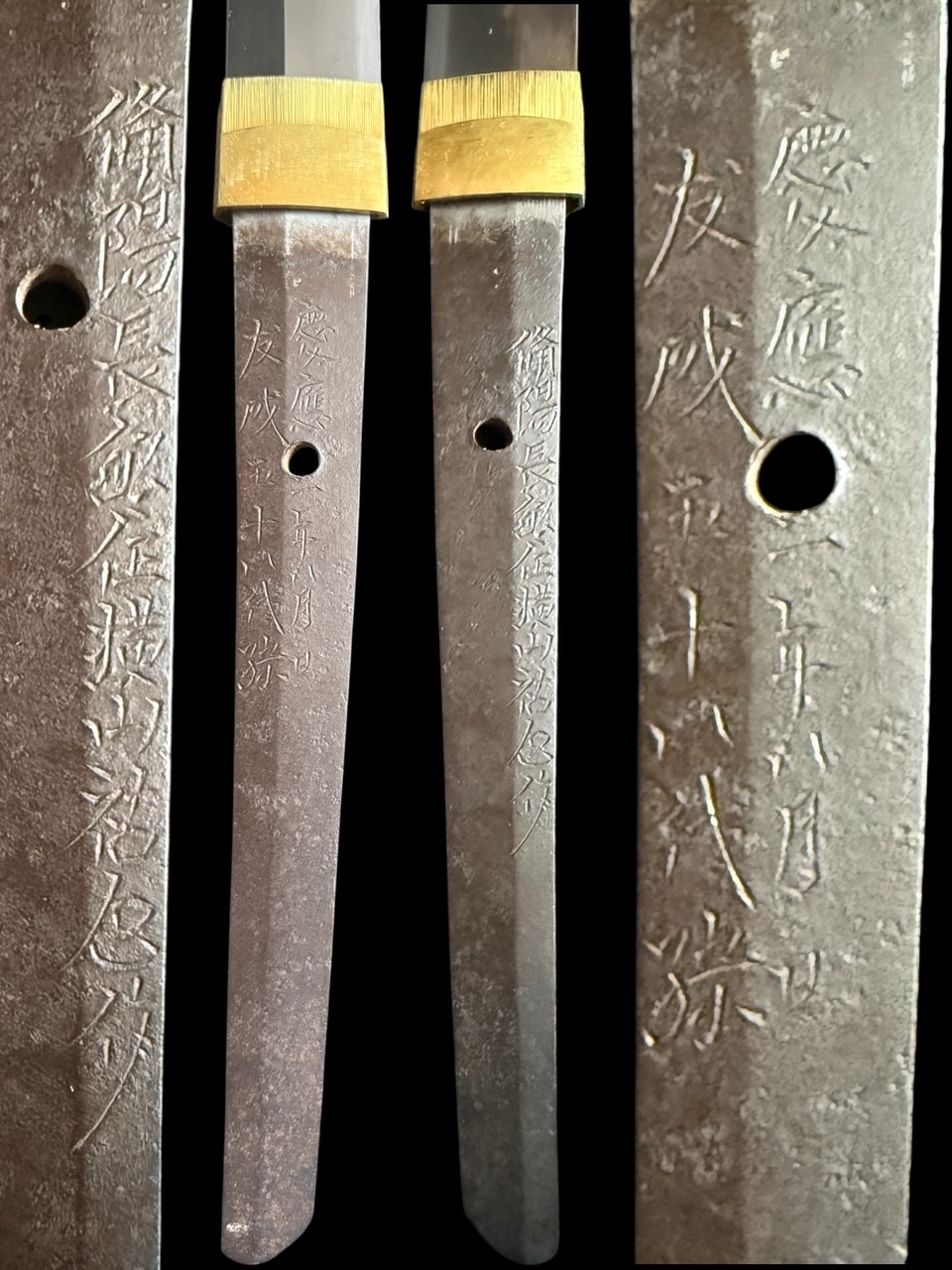
Bizen Osafune-jū Yokoyama Sukekane saku
Keiō 2 (1866)
Nagasa: 2 shaku 3 sun 5 bu (71.2 cm)
Ubu nakago, one mekugi-ana
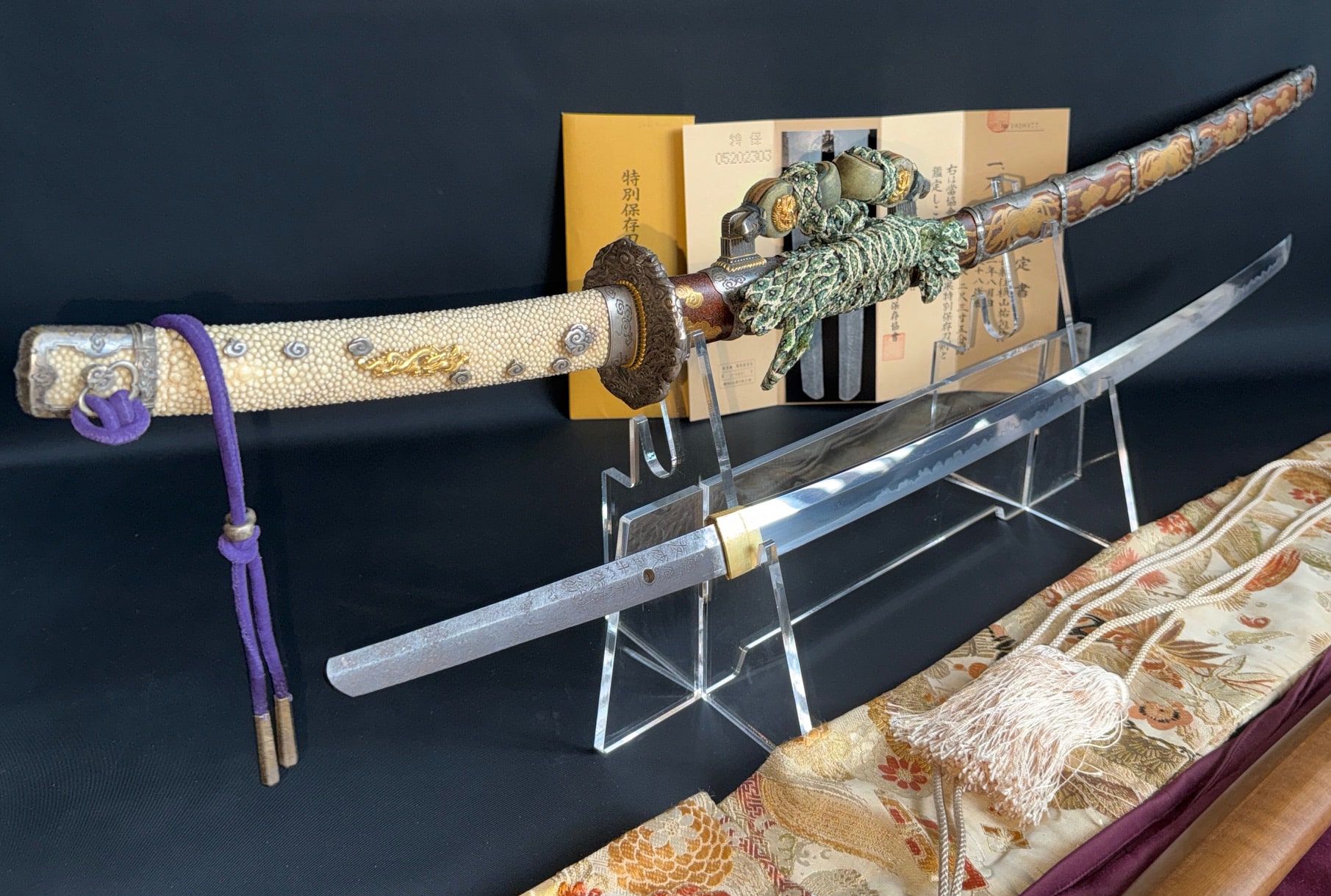
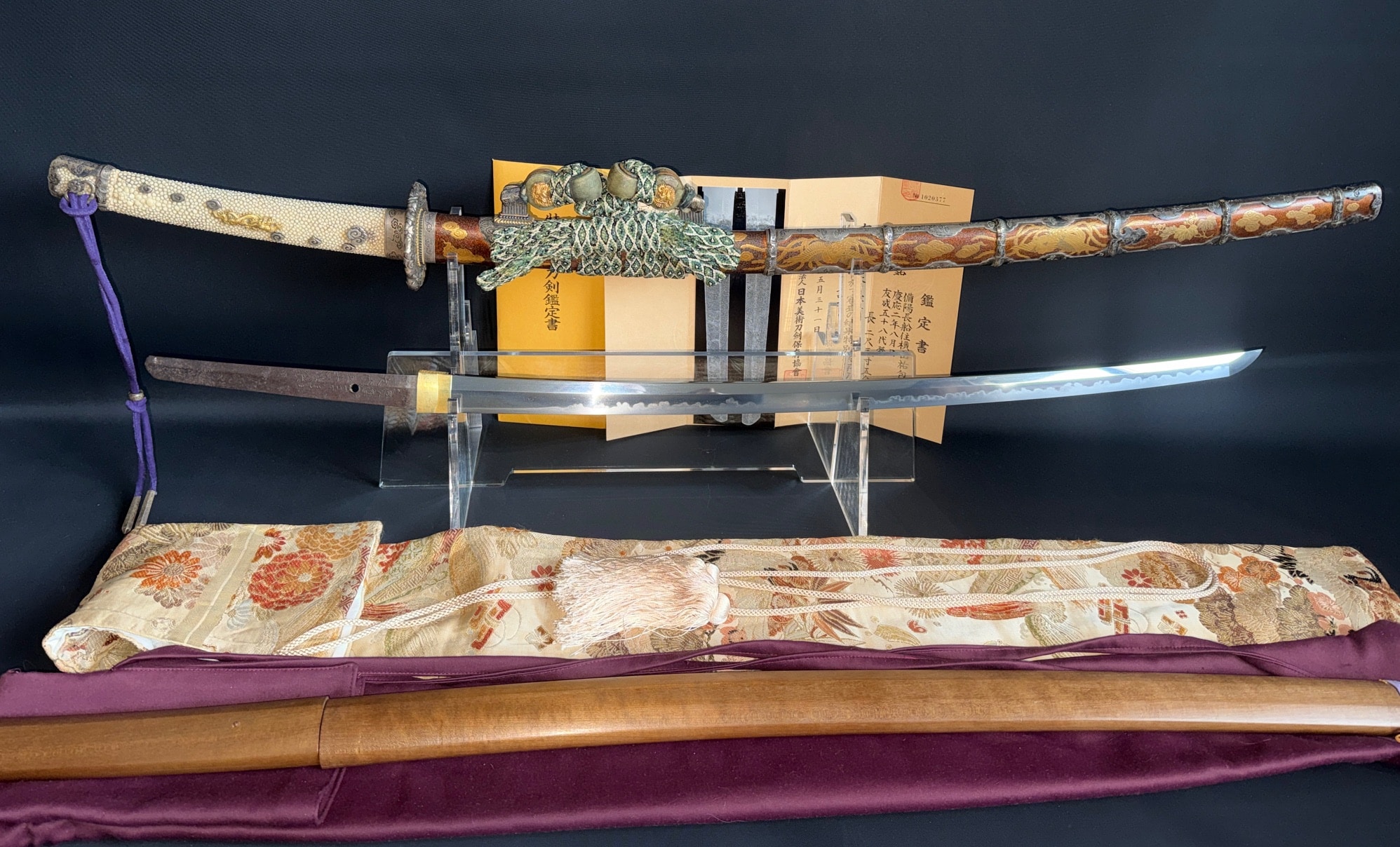
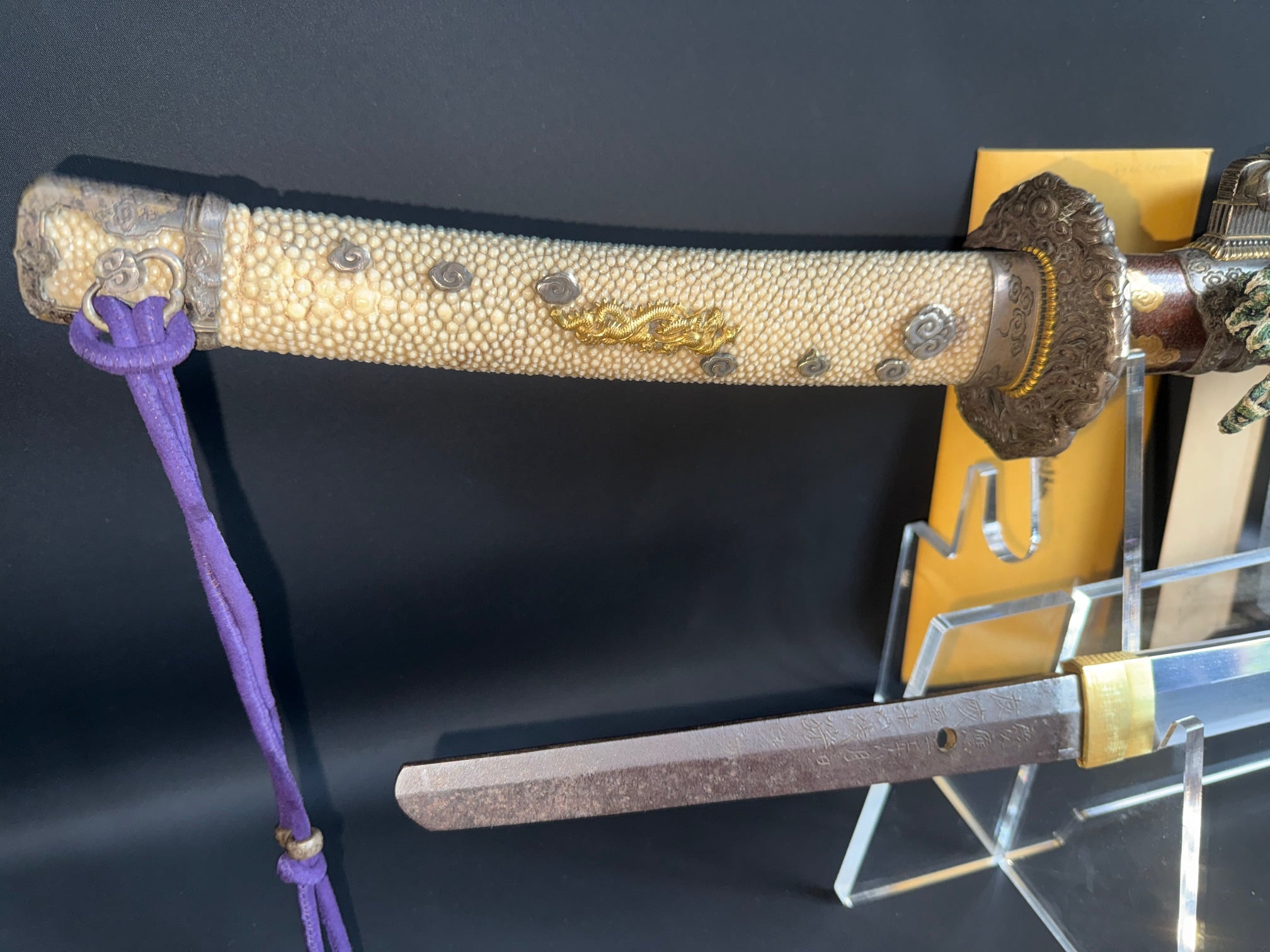
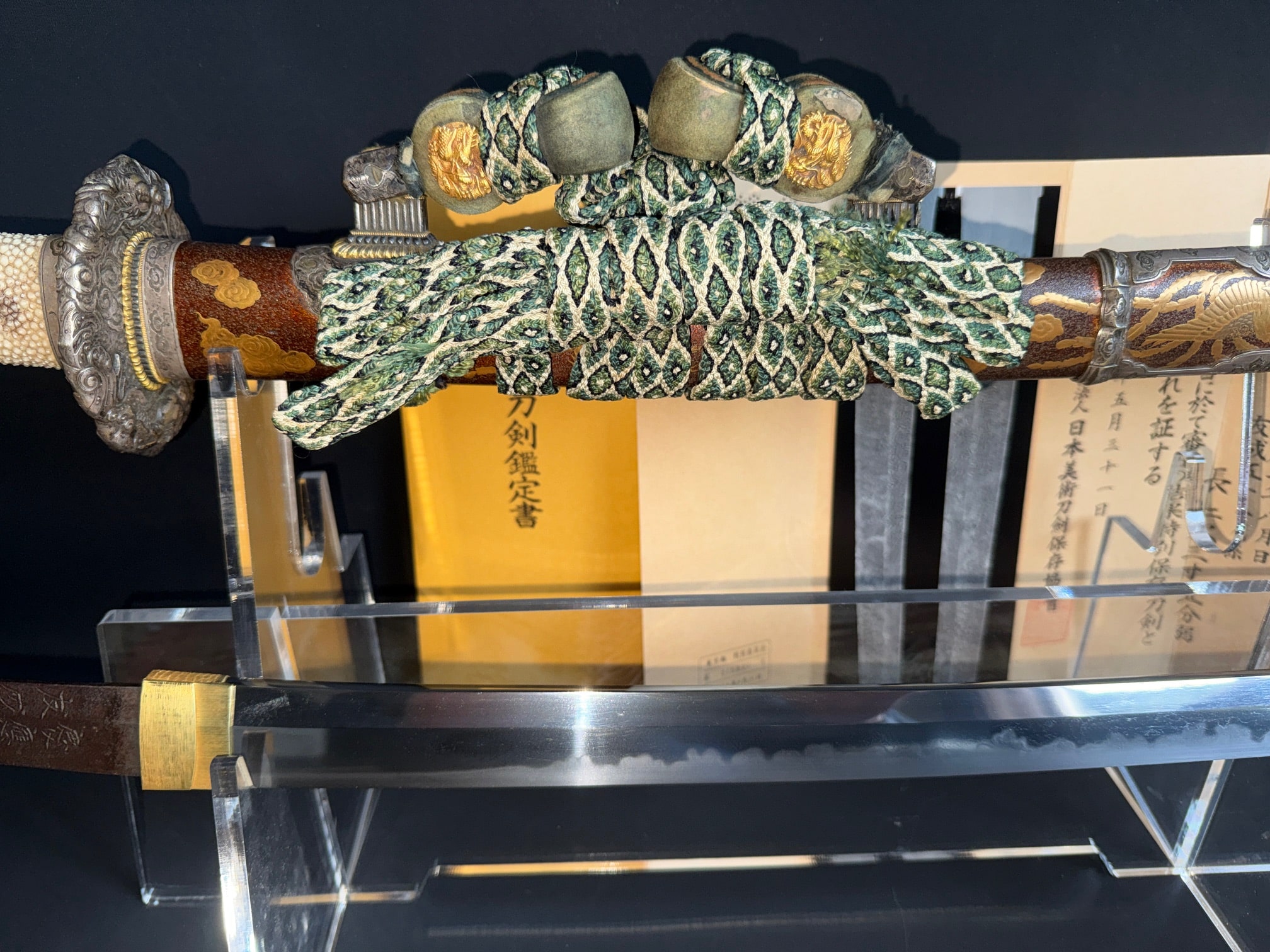
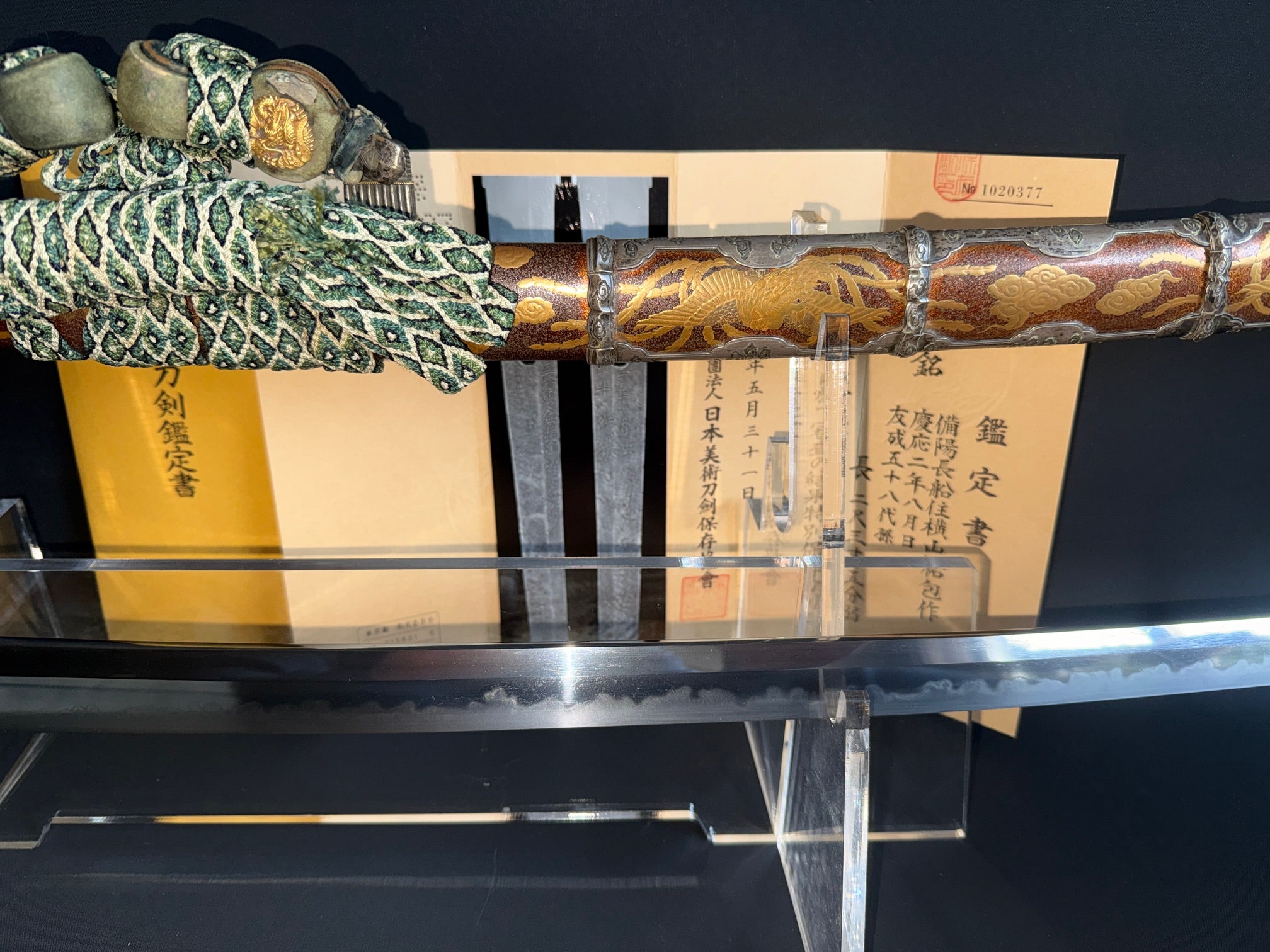
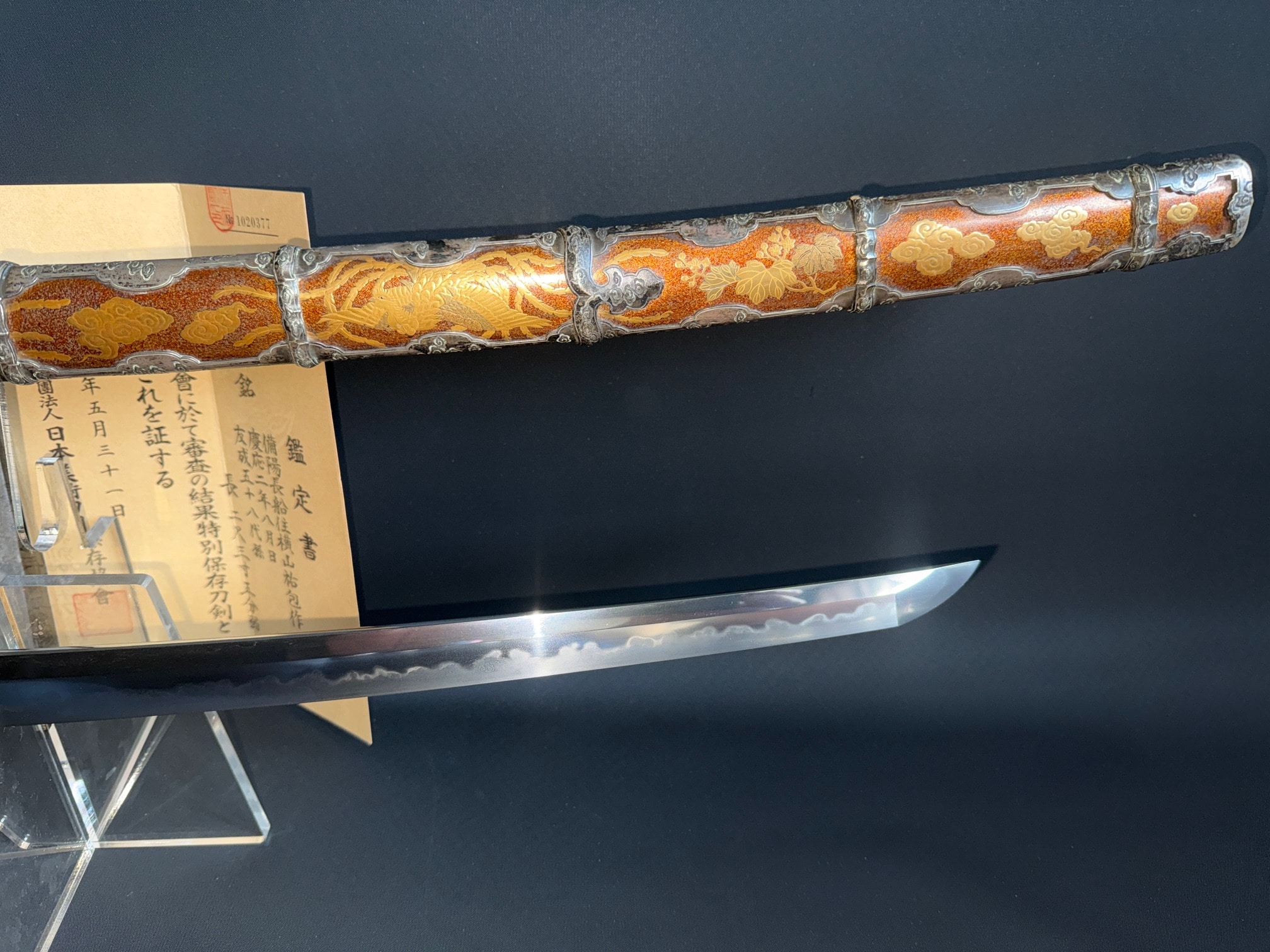
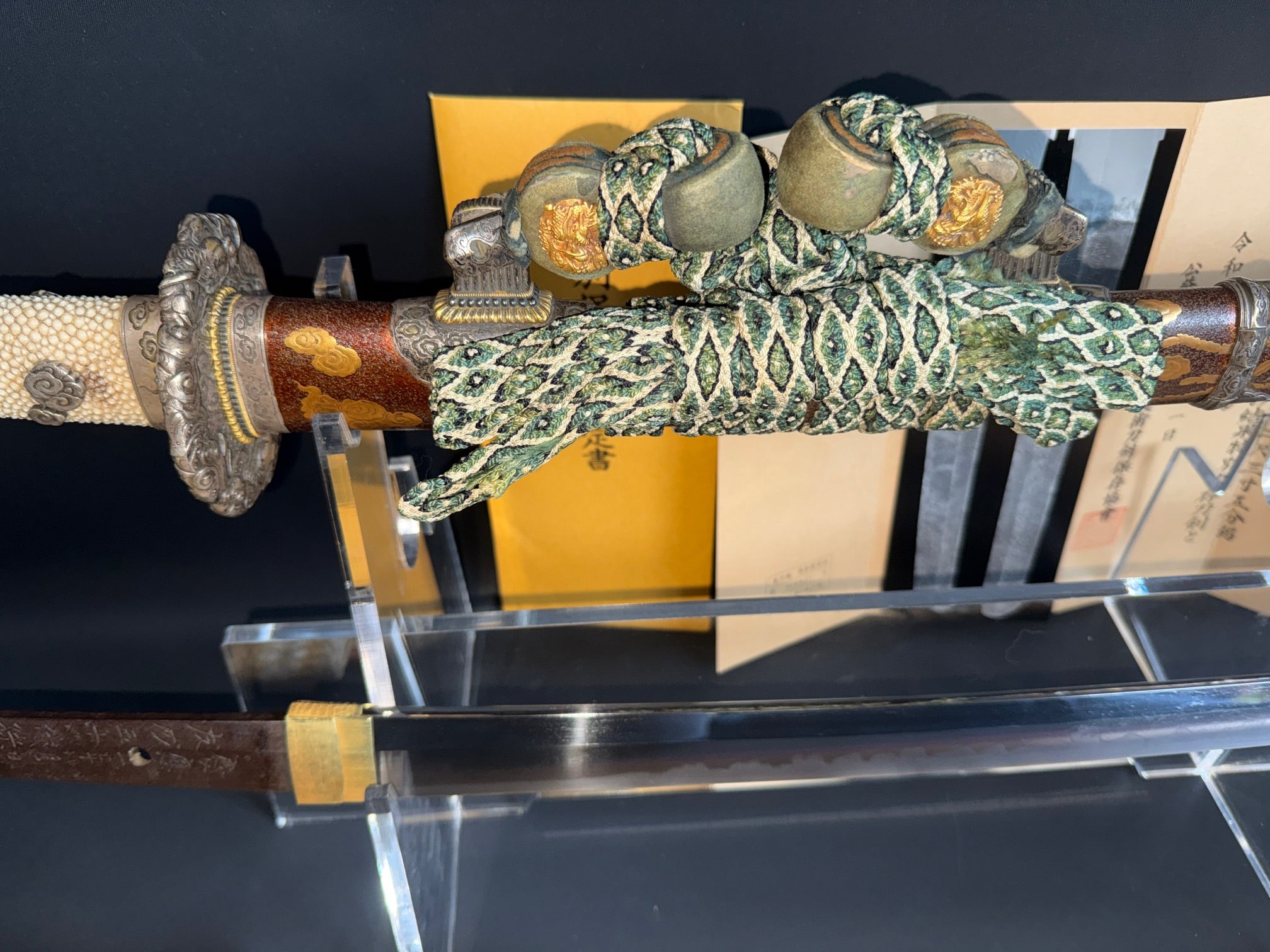
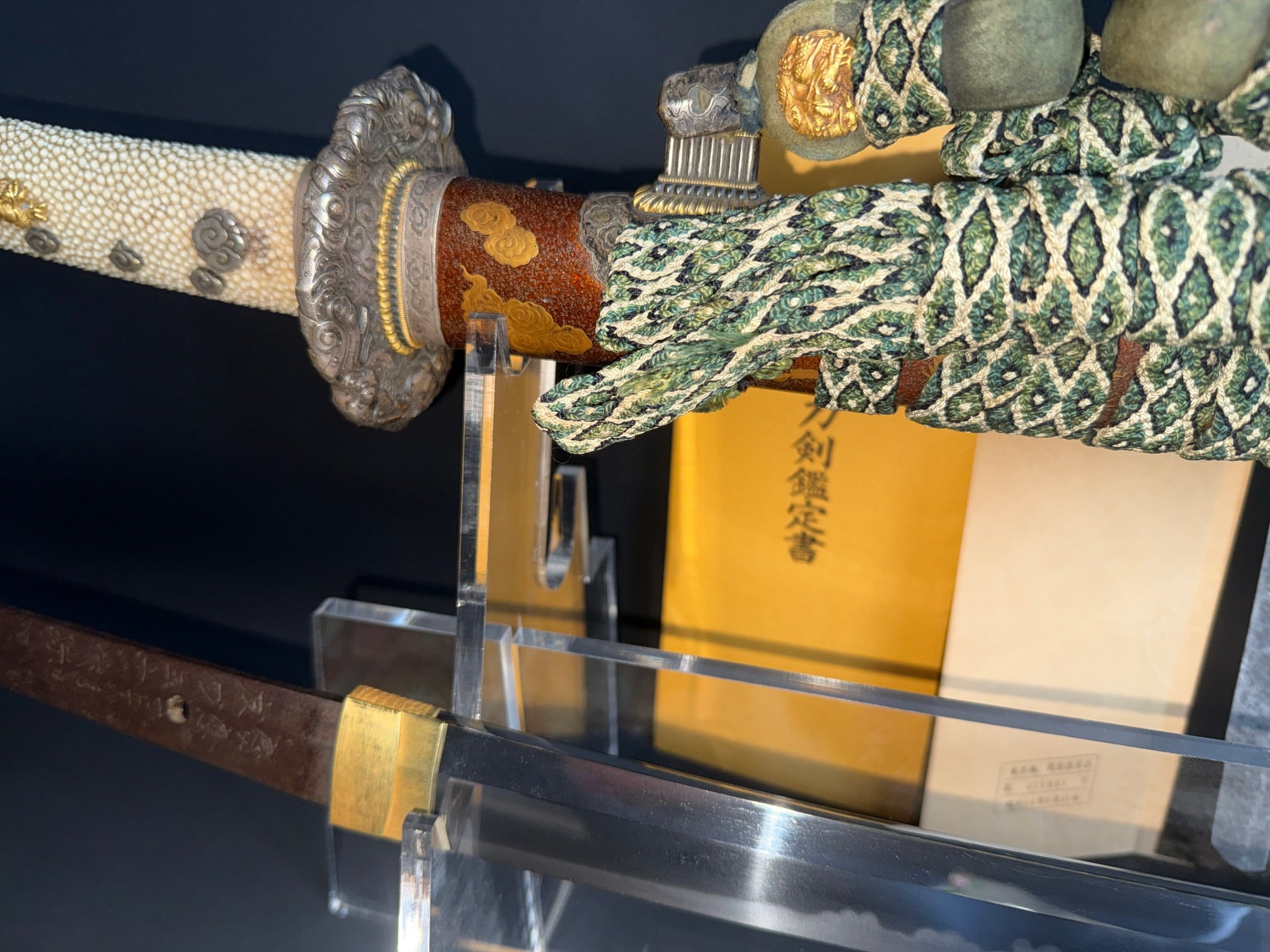
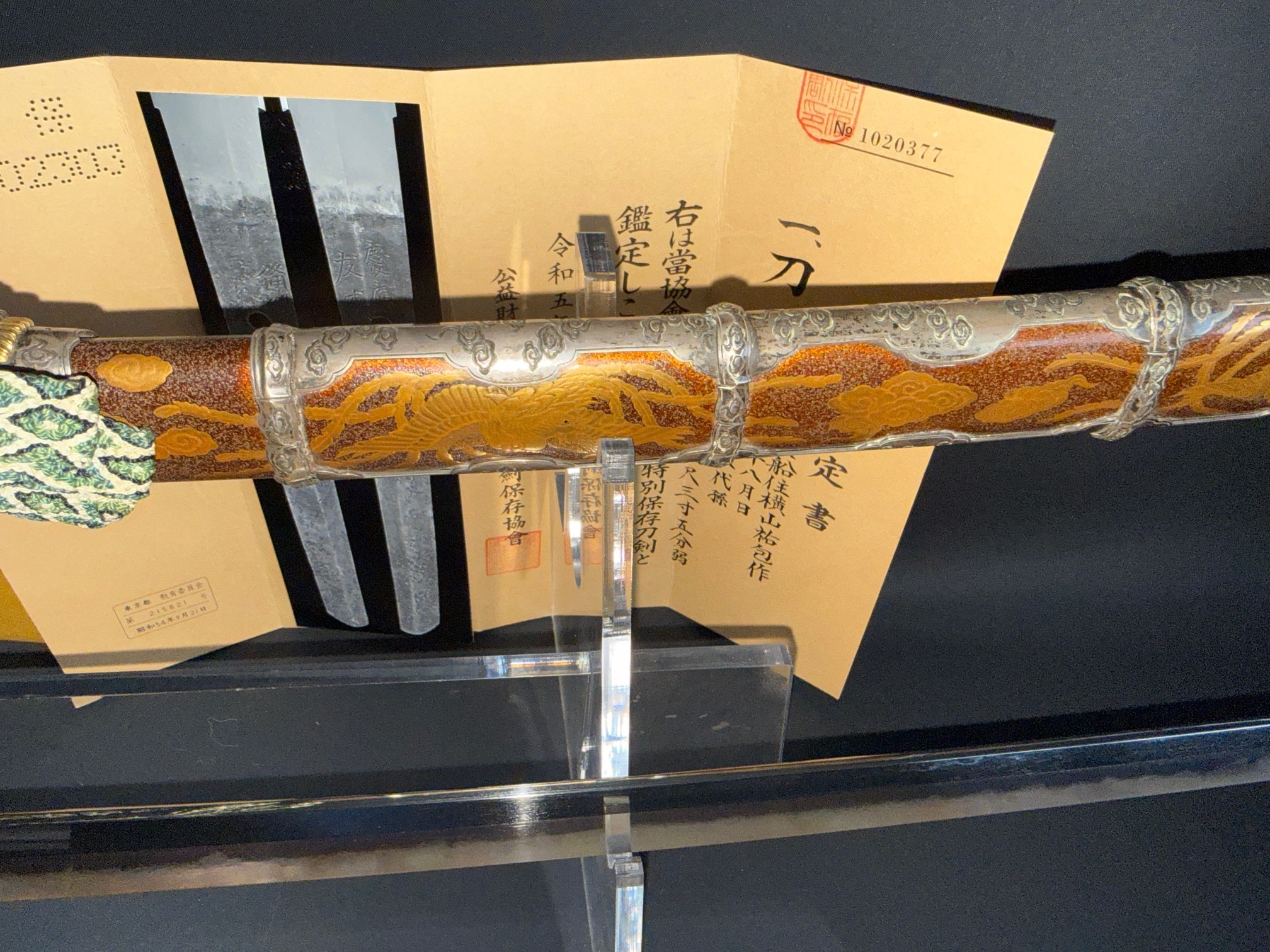
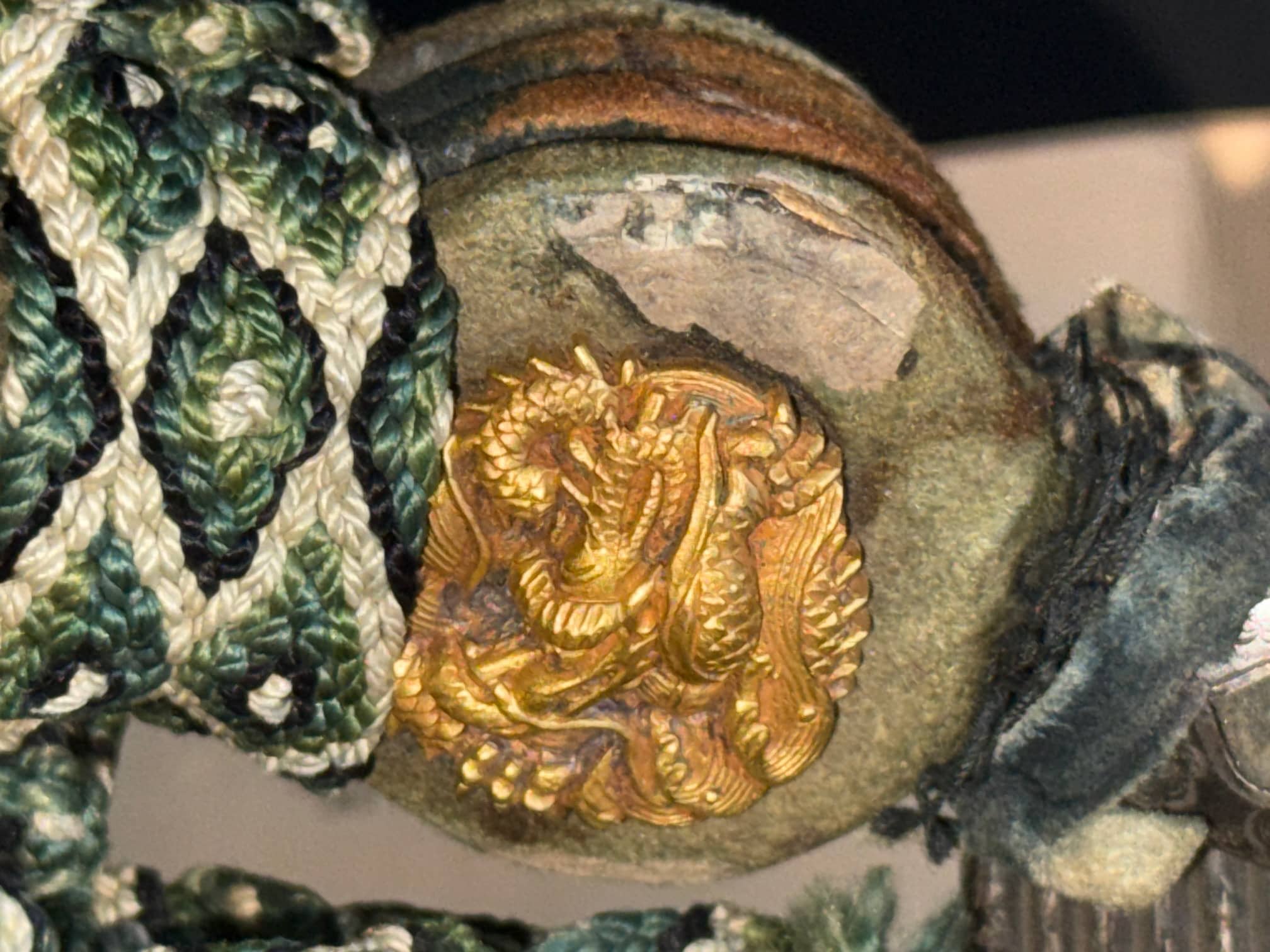
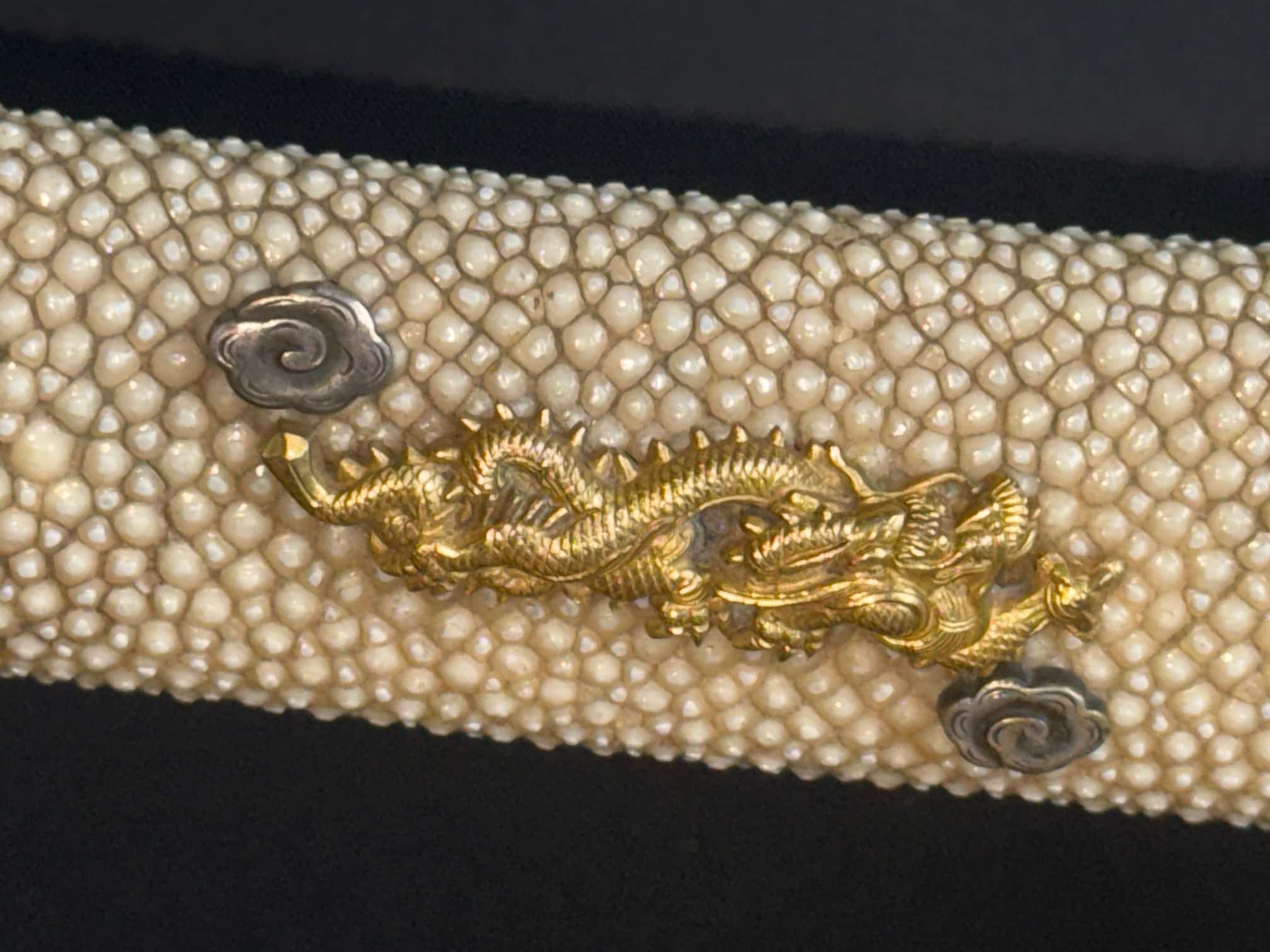
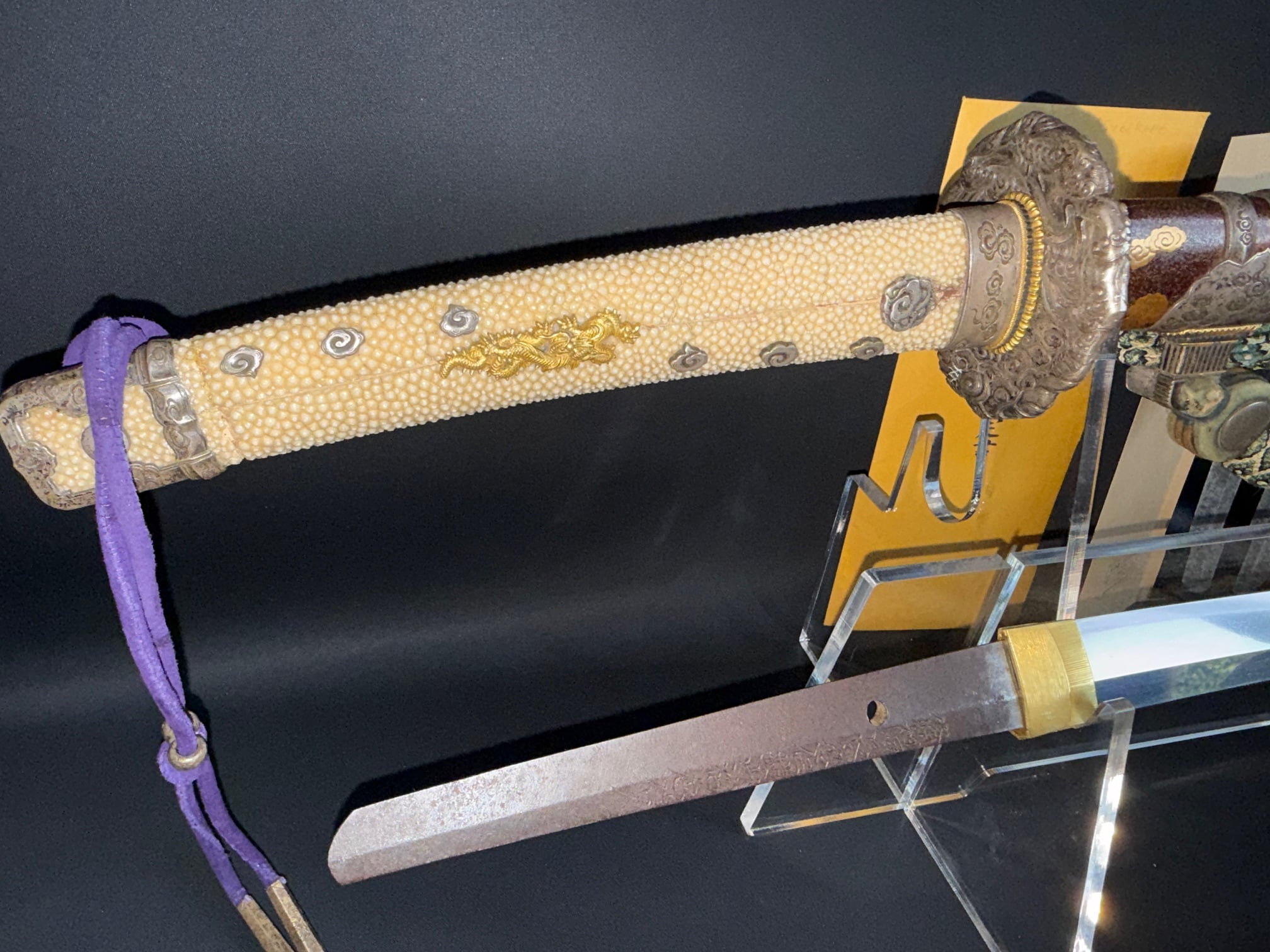
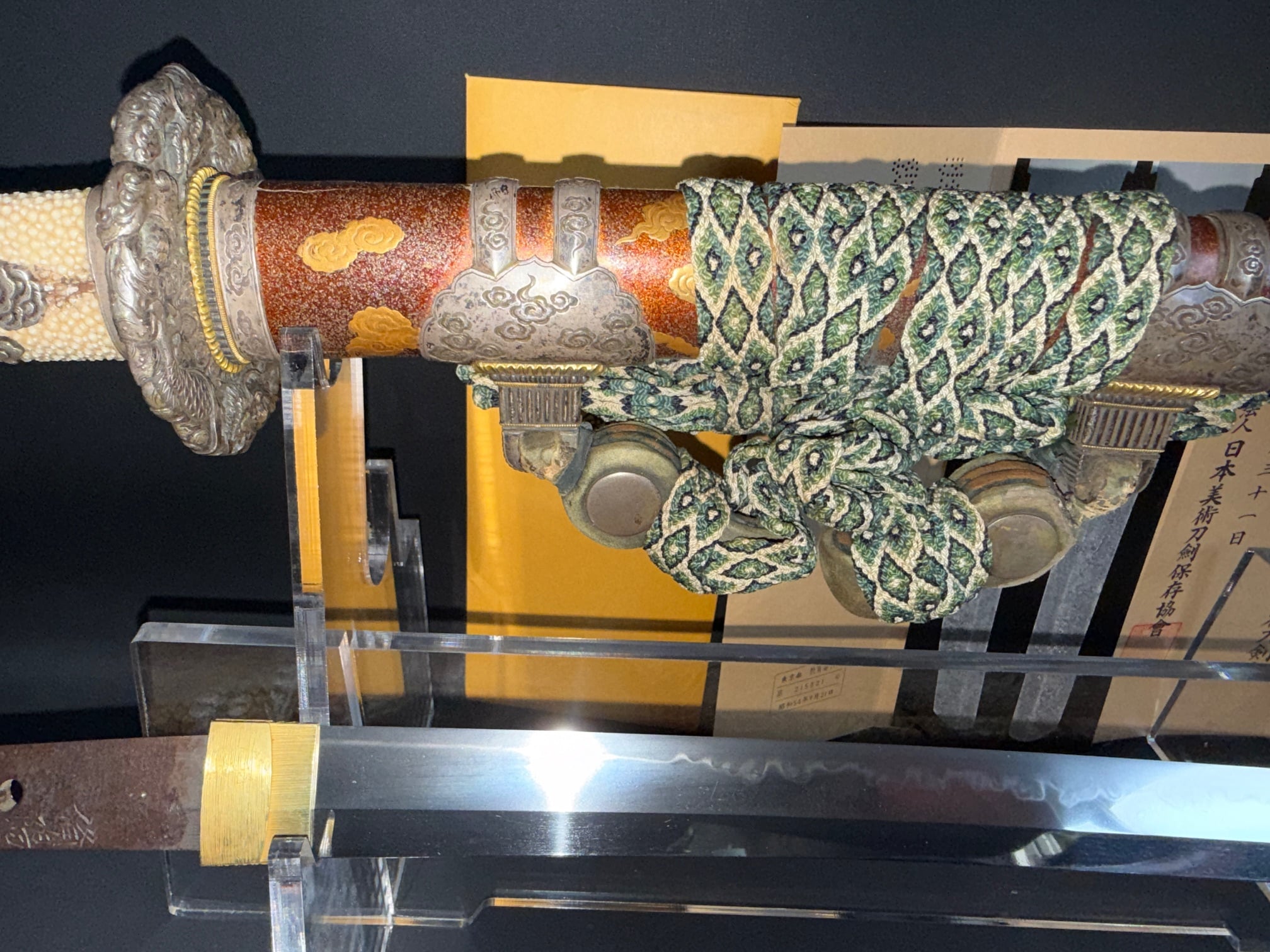
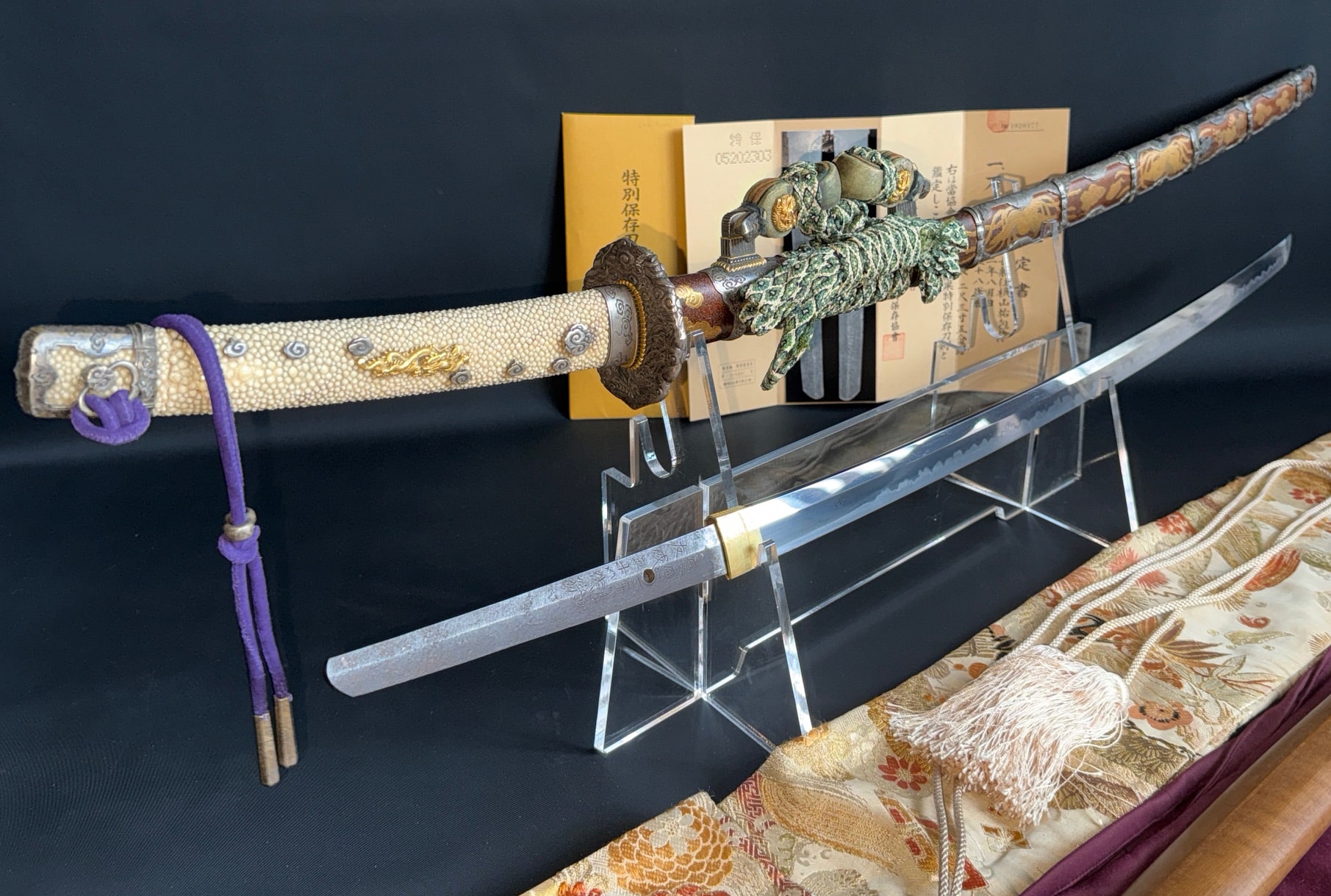
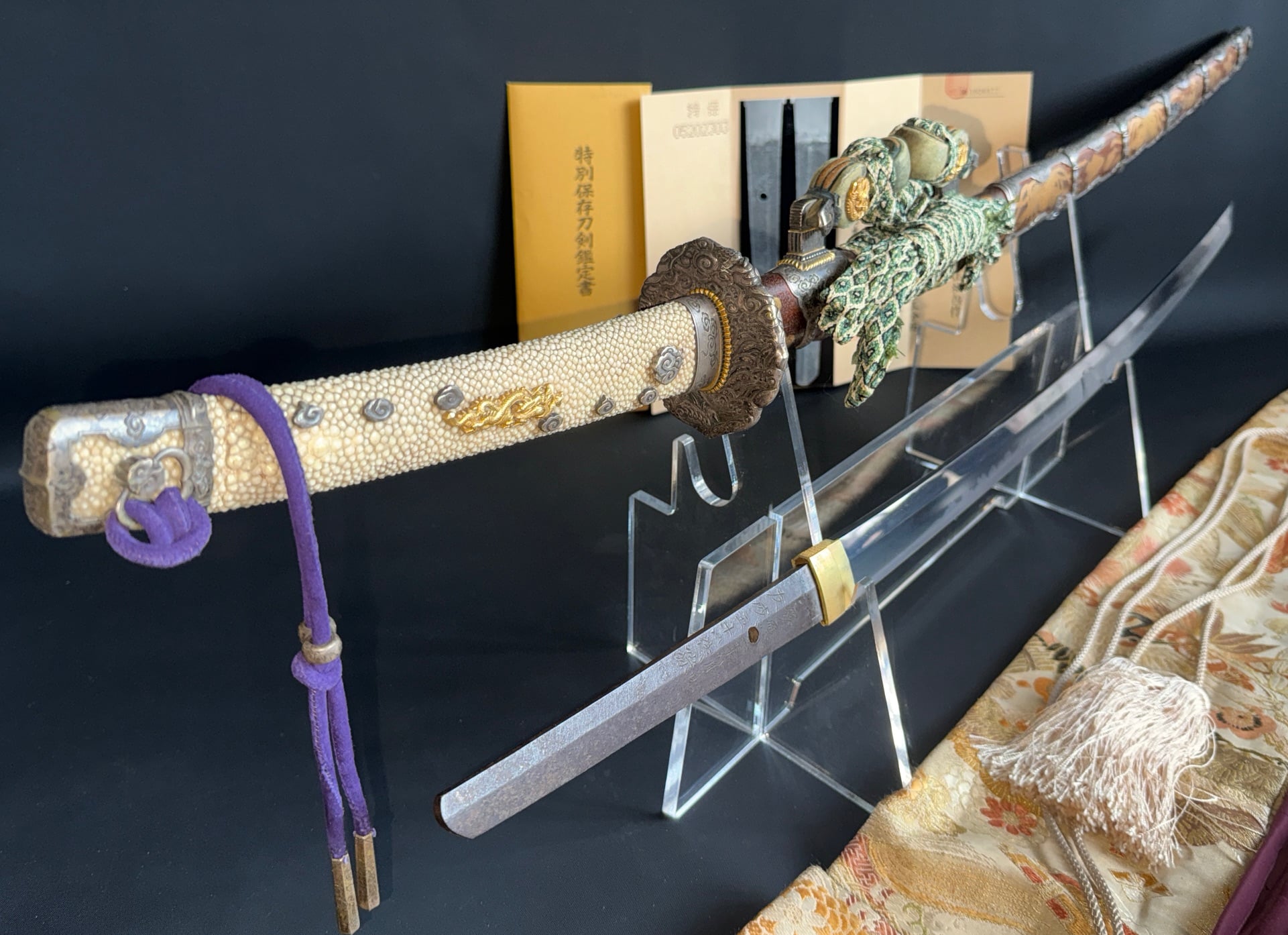
Tachi koshirae with extensive silver, lacquer, and gold accents
This exceptional katana by Bizen Osafune-jū Yokoyama Sukekane, dated to Keiō 2 (1866), stands as a refined and powerful example of late Edo-period craftsmanship from the illustrious Bizen tradition. Awarded NBTHK Tokubetsu Hozon, the blade represents not only high artistic and technical quality, but also an important continuation of one of Japan’s most celebrated swordmaking lineages — the Yokoyama school of Osafune.
The Yokoyama line emerged in the late Edo period as inheritors of the classical Bizen tradition, consciously reviving and preserving the grand style of Kamakura and Nanbokuchō masterpieces. Sukekane is recorded as the 59th generation descendant of the legendary Tomonari, one of the earliest and most revered masters of the Ko-Bizen school. This claim, while traditional in nature, reflects the deep cultural emphasis on lineage and continuity that defines the Osafune identity. By the Bakumatsu era, when this blade was forged, the Yokoyama smiths were among the foremost representatives of Bizen revivalism.
Dated to Keiō 2 (1866), this sword was created during a turbulent and decisive moment in Japanese history. The Bakumatsu period marked the final years of the Tokugawa shogunate, a time of political instability, samurai unrest, and the approaching Meiji Restoration. In this climate, swords once again became symbols not only of status but of real martial necessity. Blades from this era often embody a heightened sense of strength and presence, reflecting the uncertain spirit of the age.
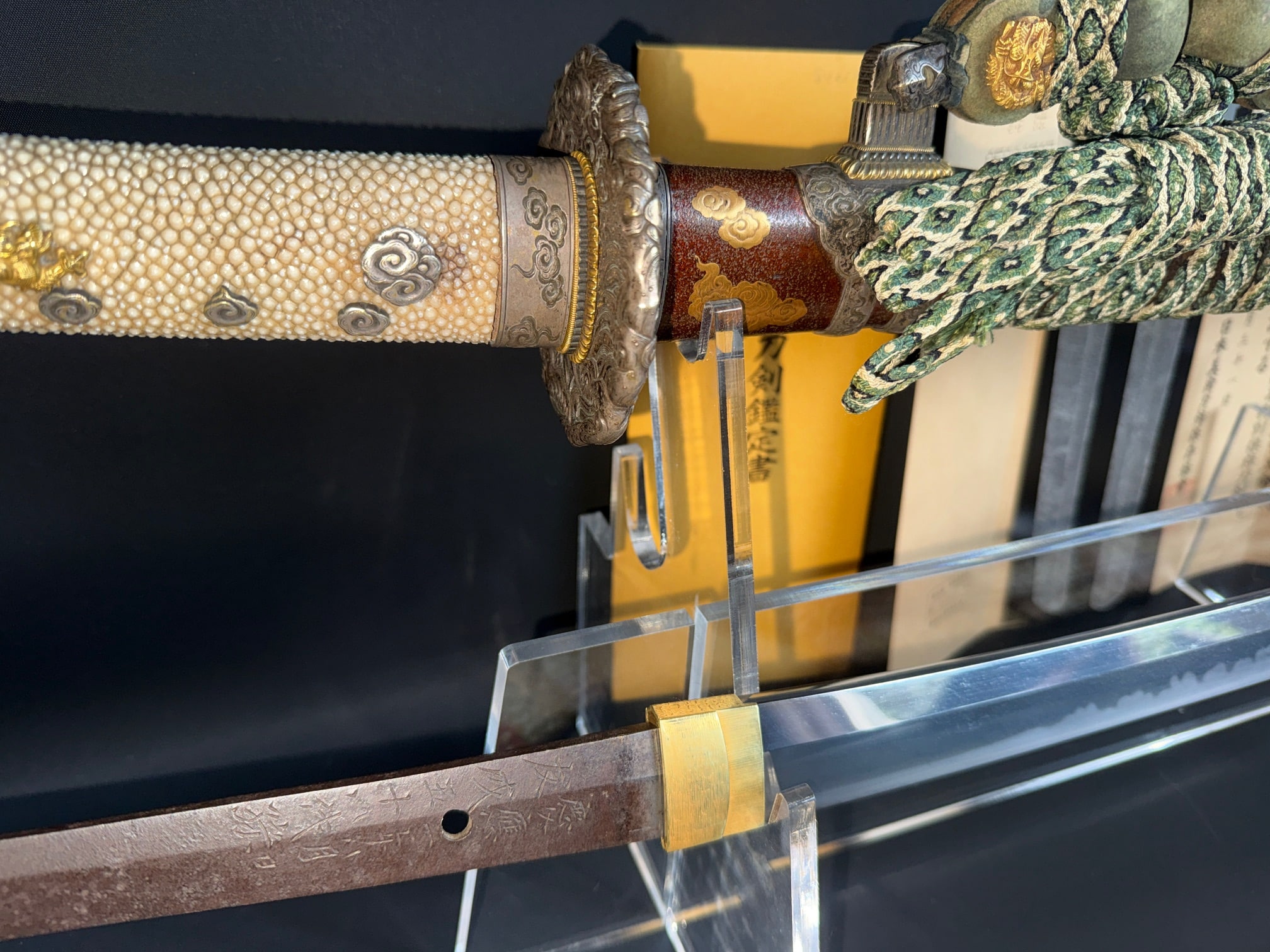
The blade measures an impressive 71.2 cm (2 shaku 3 sun 5 bu), a commanding length consistent with a powerful tachi-style katana. The sugata is dignified and elegant, with balanced curvature and refined proportions. The nakago remains ubu, retaining its original shape and a single mekugi-ana, a highly desirable feature that preserves the sword’s historical integrity. The patina of the tang speaks to its authenticity and age, complementing the clear and confidently cut signature.
The jigane displays a beautifully forged Bizen hada, rich in texture and vitality. Fine ko-itame is interwoven with flowing masame tendencies, creating a surface alive with ji-nie. Most notably, the blade exhibits clear utsuri — a hallmark of superior Bizen workmanship. This midare-utsuri enhances the visual depth of the steel, appearing as a luminous shadowy pattern above the hamon. Utsuri is a demanding and refined feature, rarely achieved convincingly in later periods, and its presence here confirms the high level of skill possessed by Sukekane.
The hamon is vibrant and animated, filled with internal activities. Nie sparkles along the hardened edge, forming ashi, yo, and subtle sunagashi that create movement and complexity. The nioiguchi is bright and well-defined, demonstrating careful heat control and expert quenching technique. The boshi is properly formed and balanced, completing the composition with harmony and strength.
The blade has undergone top-level polishing, revealing every detail of the jihada and hamon with clarity and brilliance. The polish enhances the utsuri and internal hataraki, allowing the sword’s craftsmanship to be fully appreciated. This level of finish elevates the blade from a historical artifact to a true work of art.
Equally impressive is the accompanying tachi koshirae. Lavishly appointed, the mounting features extensive use of silver fittings, refined lacquer work, and gold accents. The koshirae reflects both status and aesthetic sophistication. The interplay of polished metal, textured lacquer, and subtle gilded details creates a dignified yet opulent presentation. Such mountings were often commissioned by high-ranking samurai or individuals of significant standing, underscoring the blade’s importance.
The harmony between blade and mounting is particularly noteworthy. The elegant sugata of the sword pairs naturally with the formal tachi-style koshirae, suggesting ceremonial presence while retaining unmistakable martial authority. The silver fittings provide cool brilliance, while the gold highlights introduce warmth and contrast, framing the sword as both weapon and artwork.
Receiving NBTHK Tokubetsu Hozon status confirms the sword’s cultural and artistic significance. Tokubetsu Hozon is awarded only to blades of especially high quality and importance within the broader category of preservation-worthy swords. This designation recognizes the blade’s excellence in workmanship, condition, and historical value.
In summary, this Yokoyama Sukekane katana from Keiō 2 (1866) is a superb late Edo example of the enduring Bizen tradition. With its elegant yet powerful form, vivid utsuri, active hamon, ubu condition, and magnificent silver and gold tachi koshirae, the sword embodies both technical mastery and refined aesthetic sensibility. It stands as a testament to the resilience of classical craftsmanship during one of Japan’s most transformative historical periods — a museum-worthy piece that seamlessly unites lineage, artistry, and history.


