
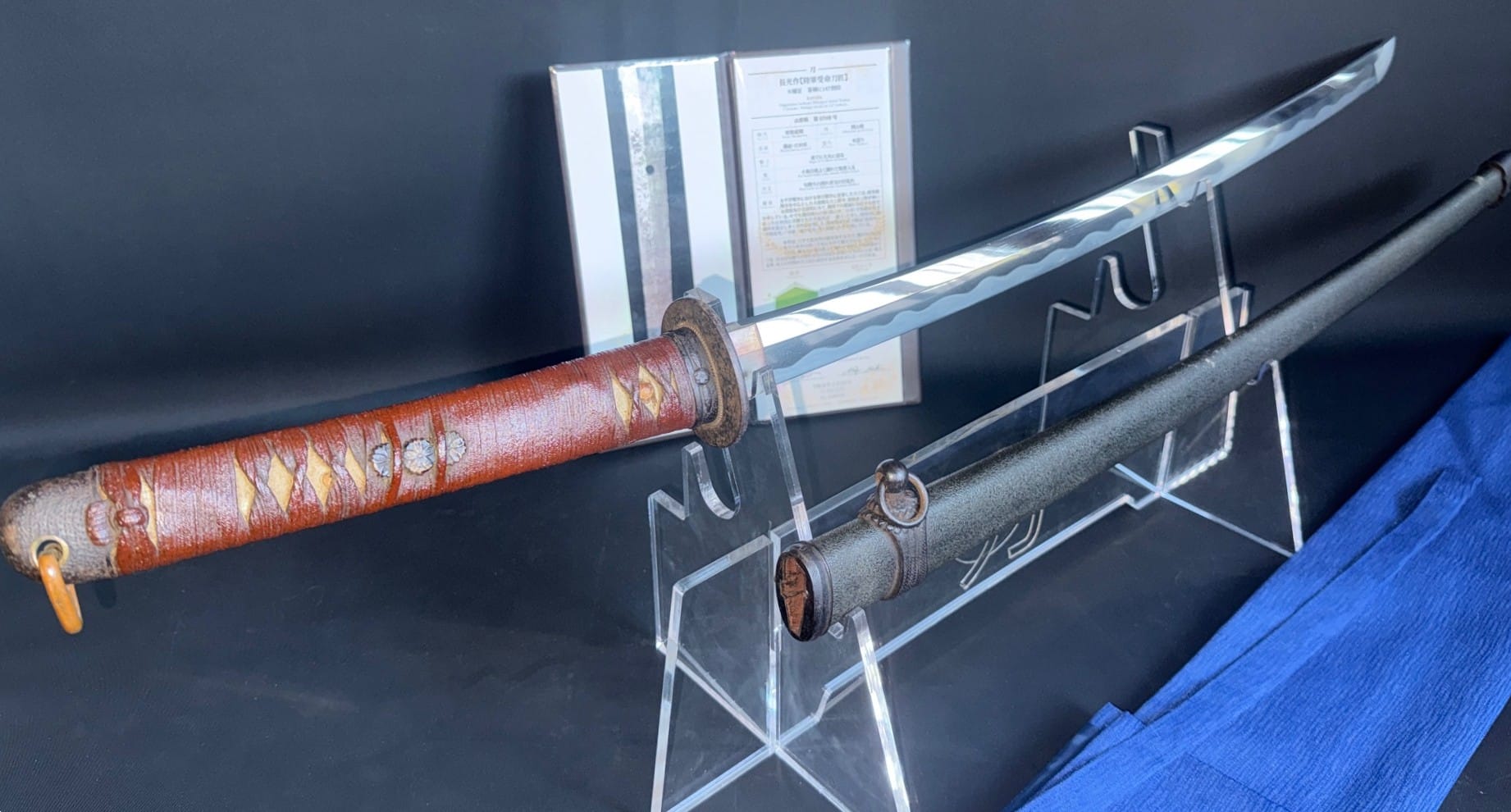
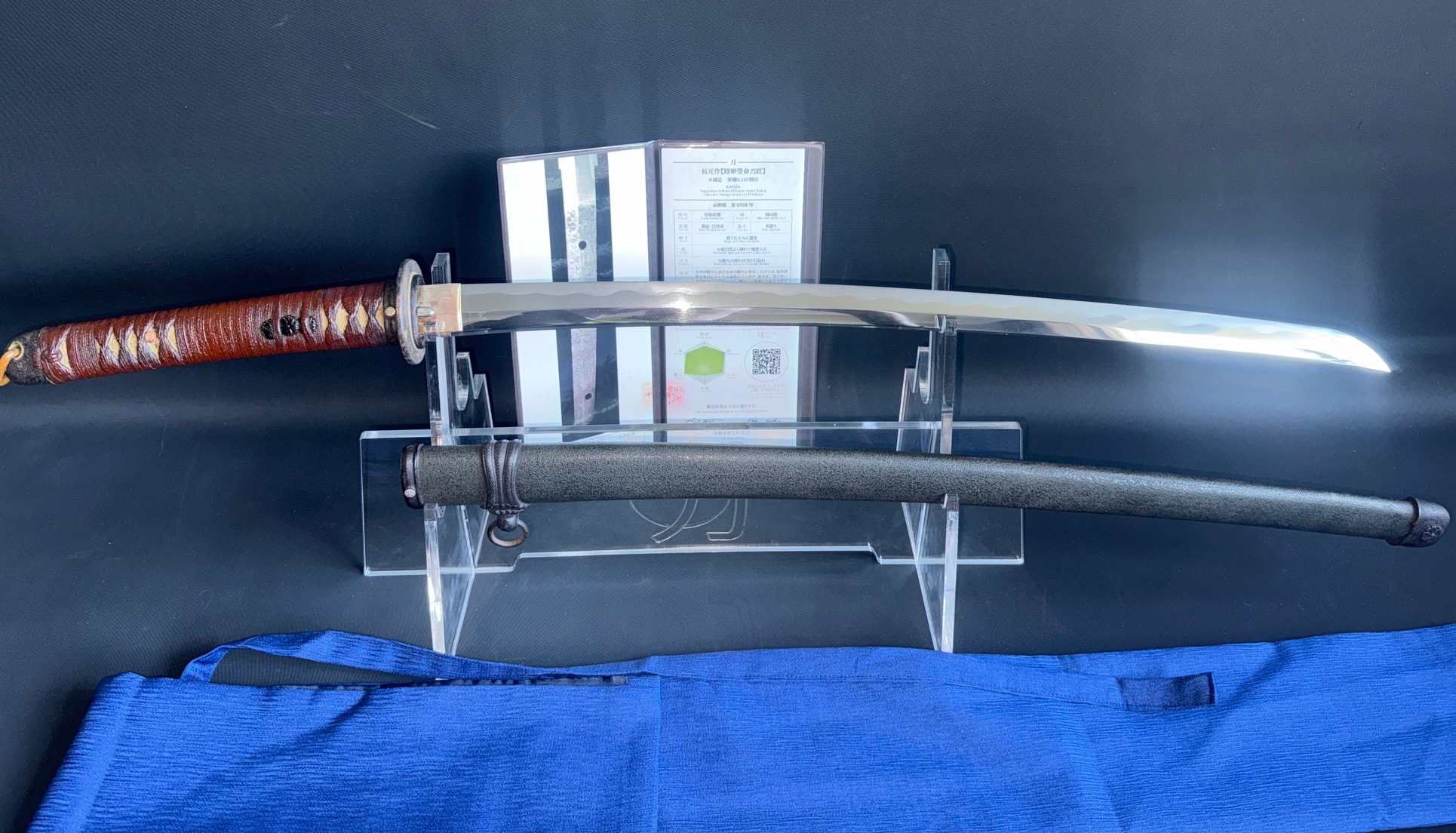
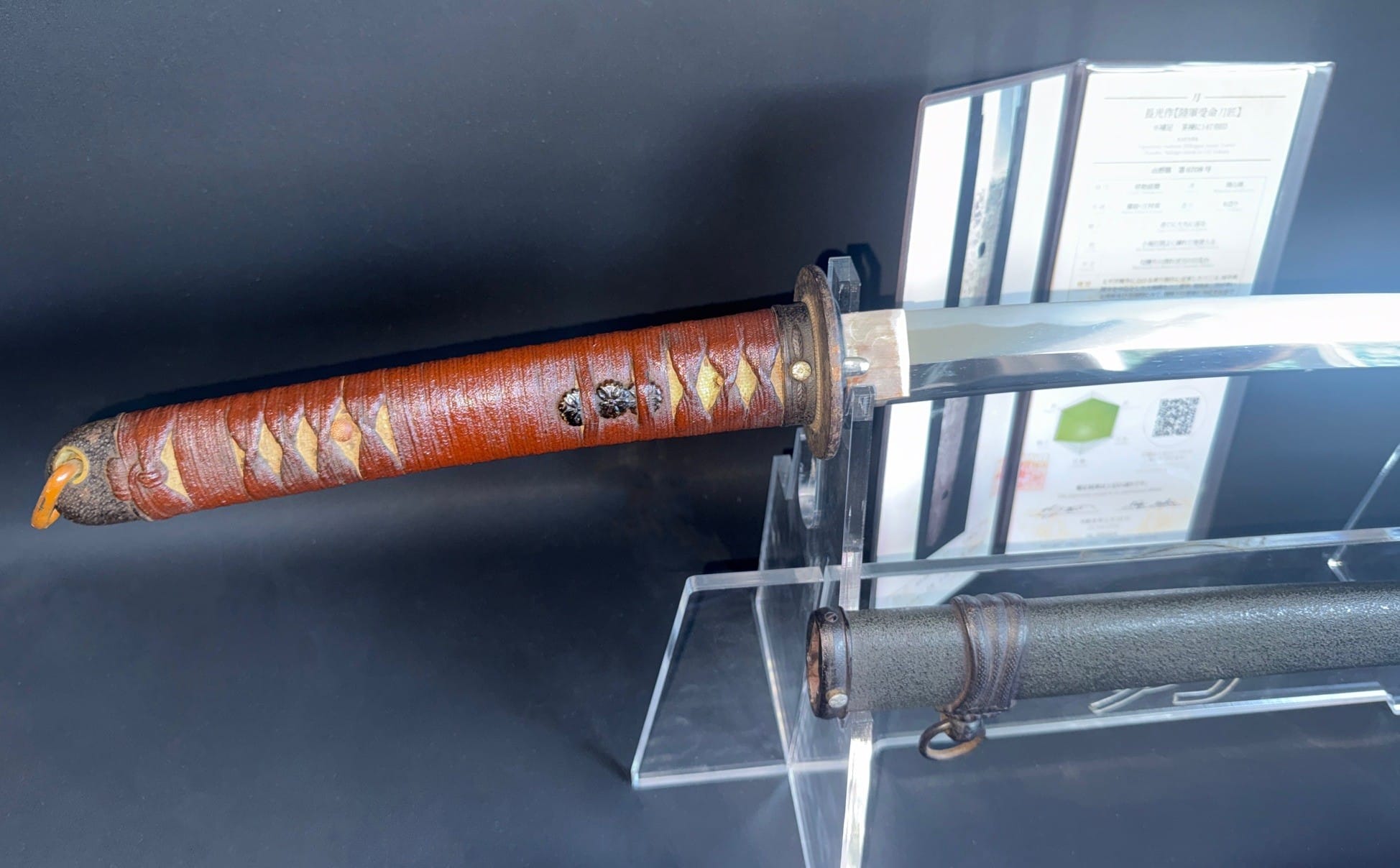
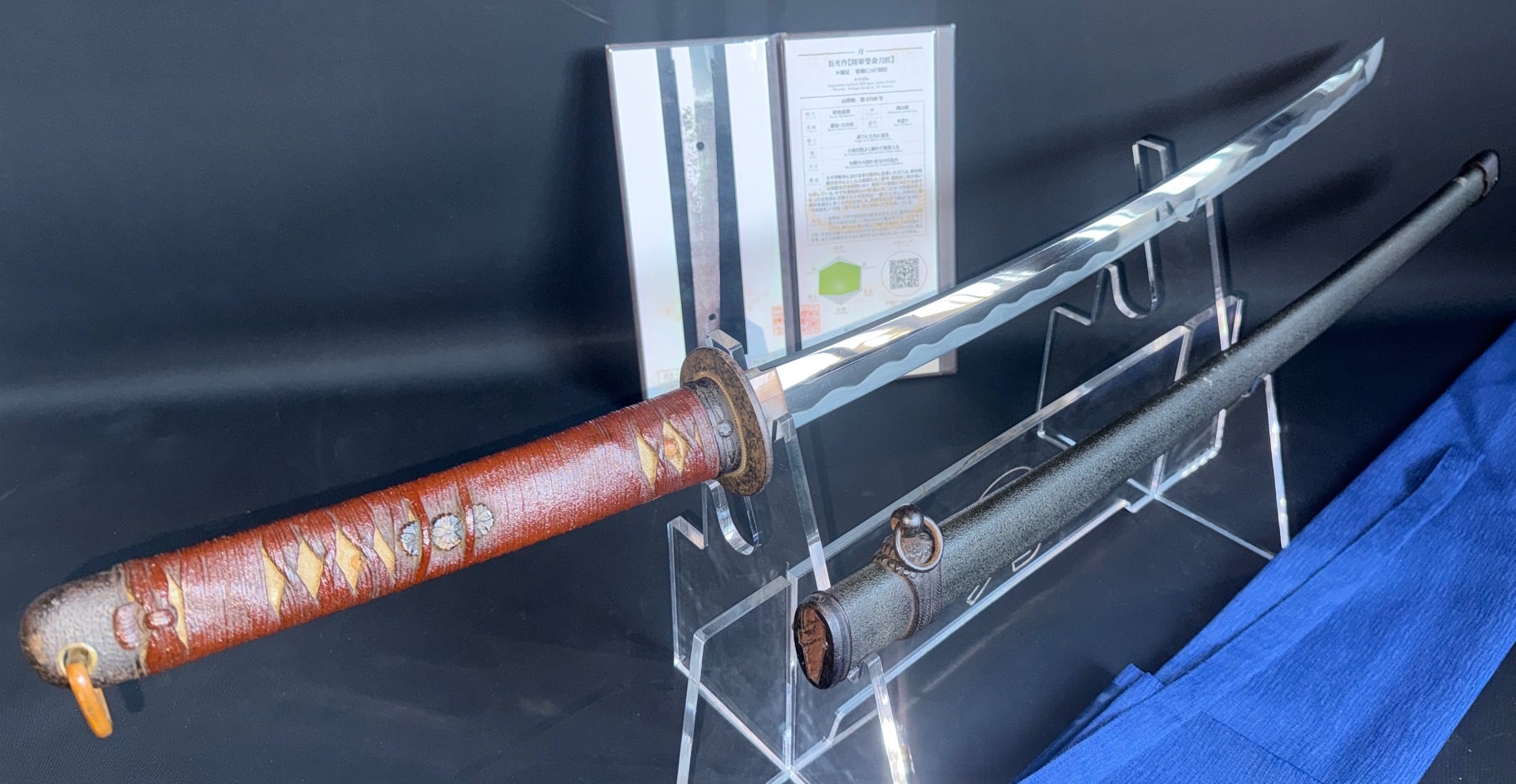
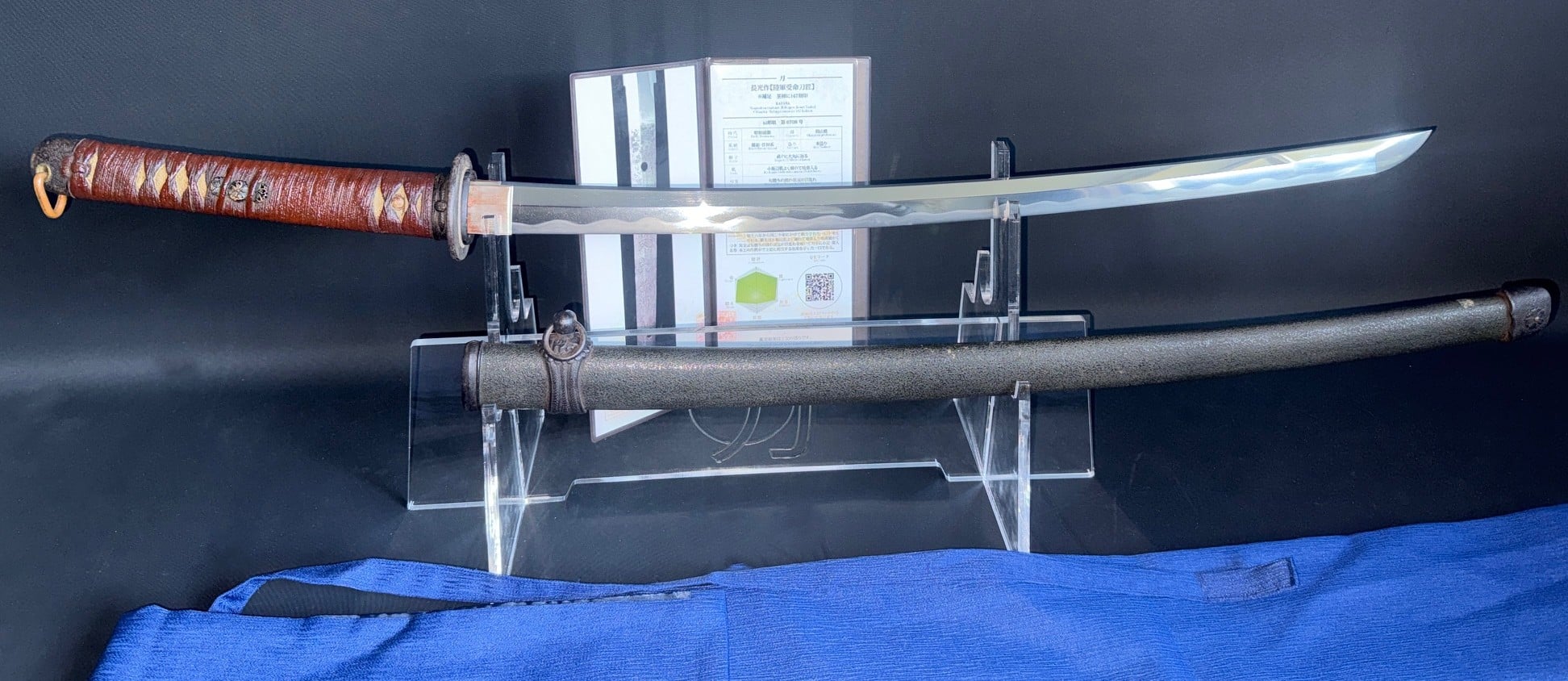
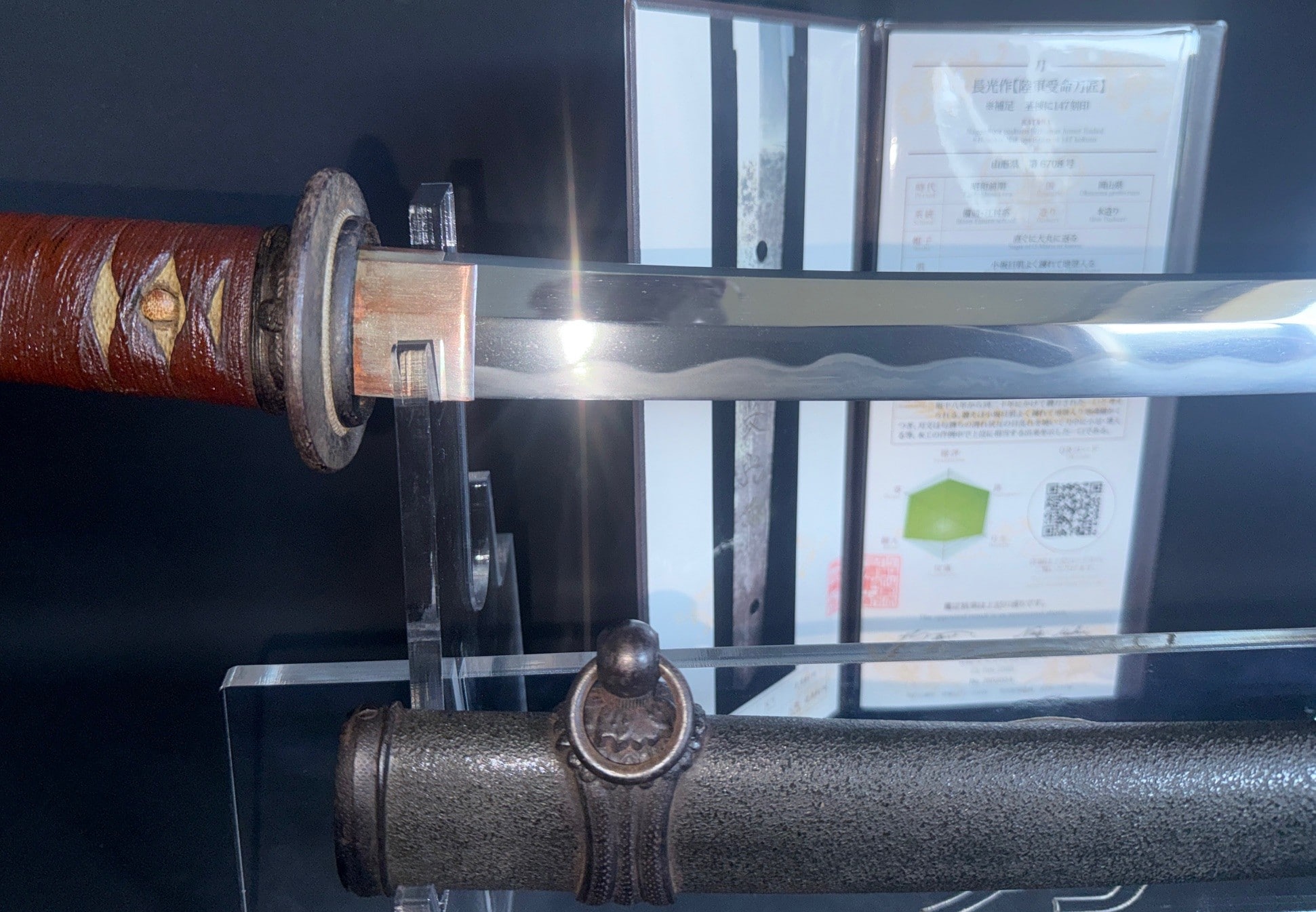
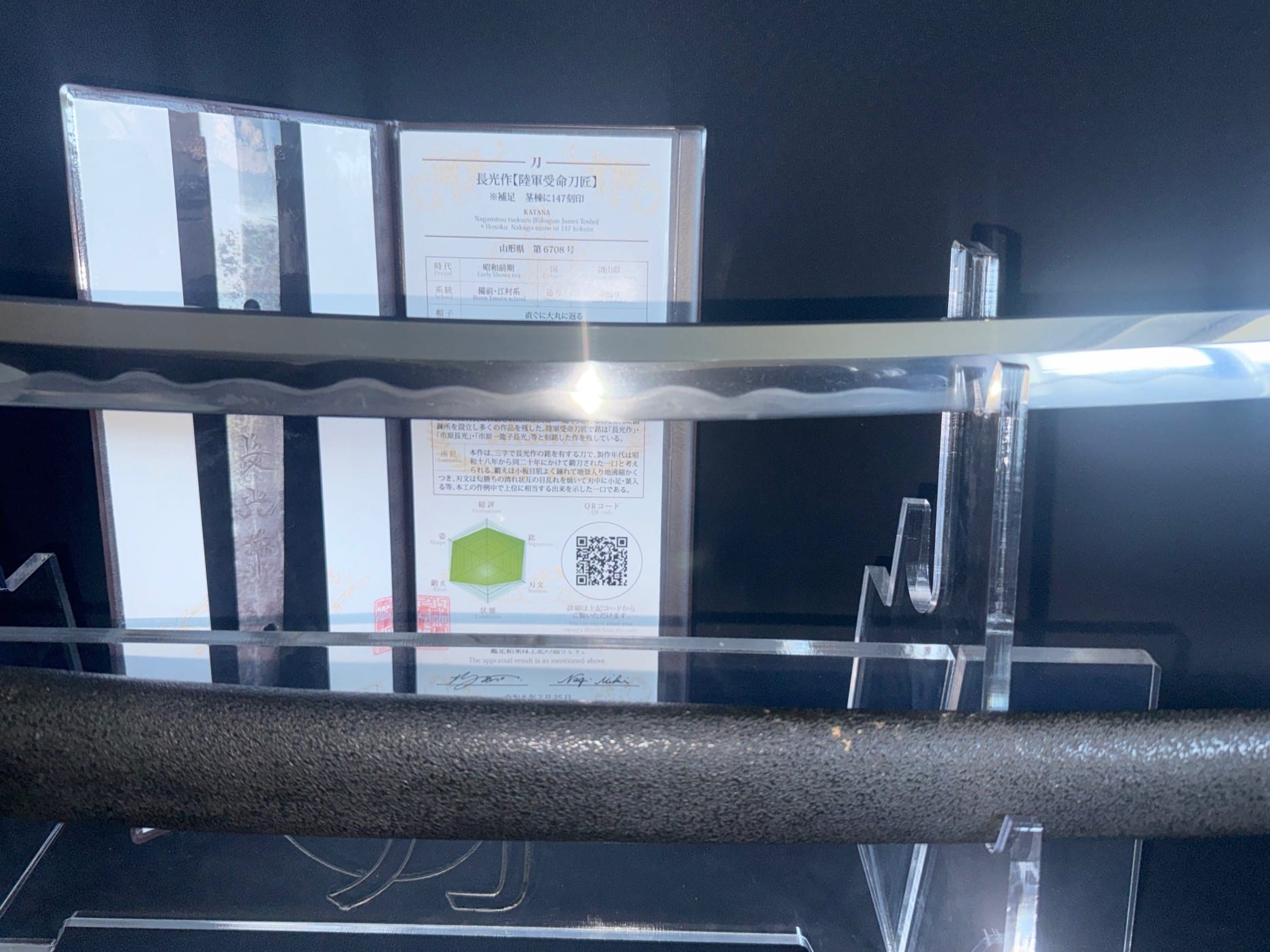
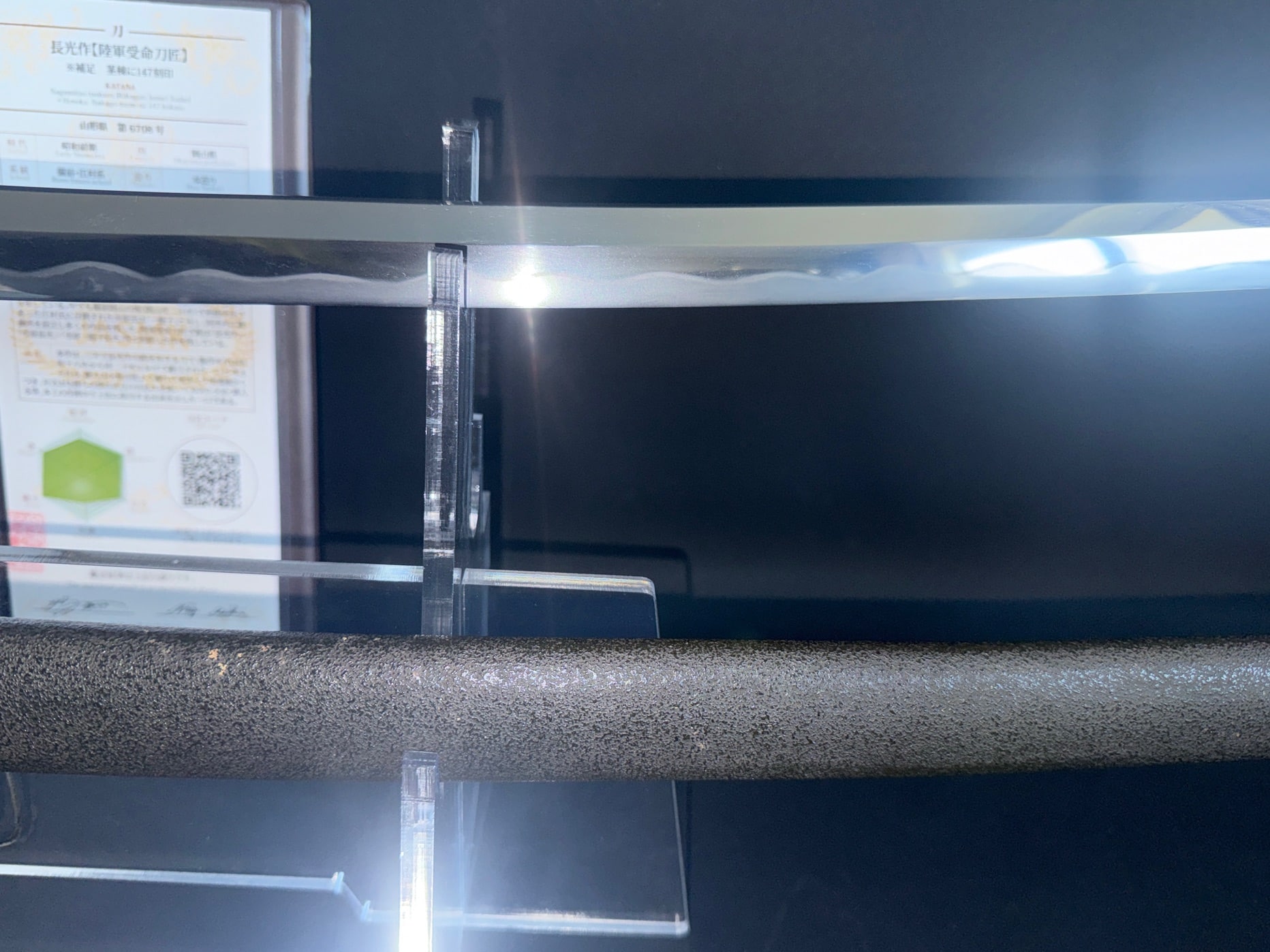
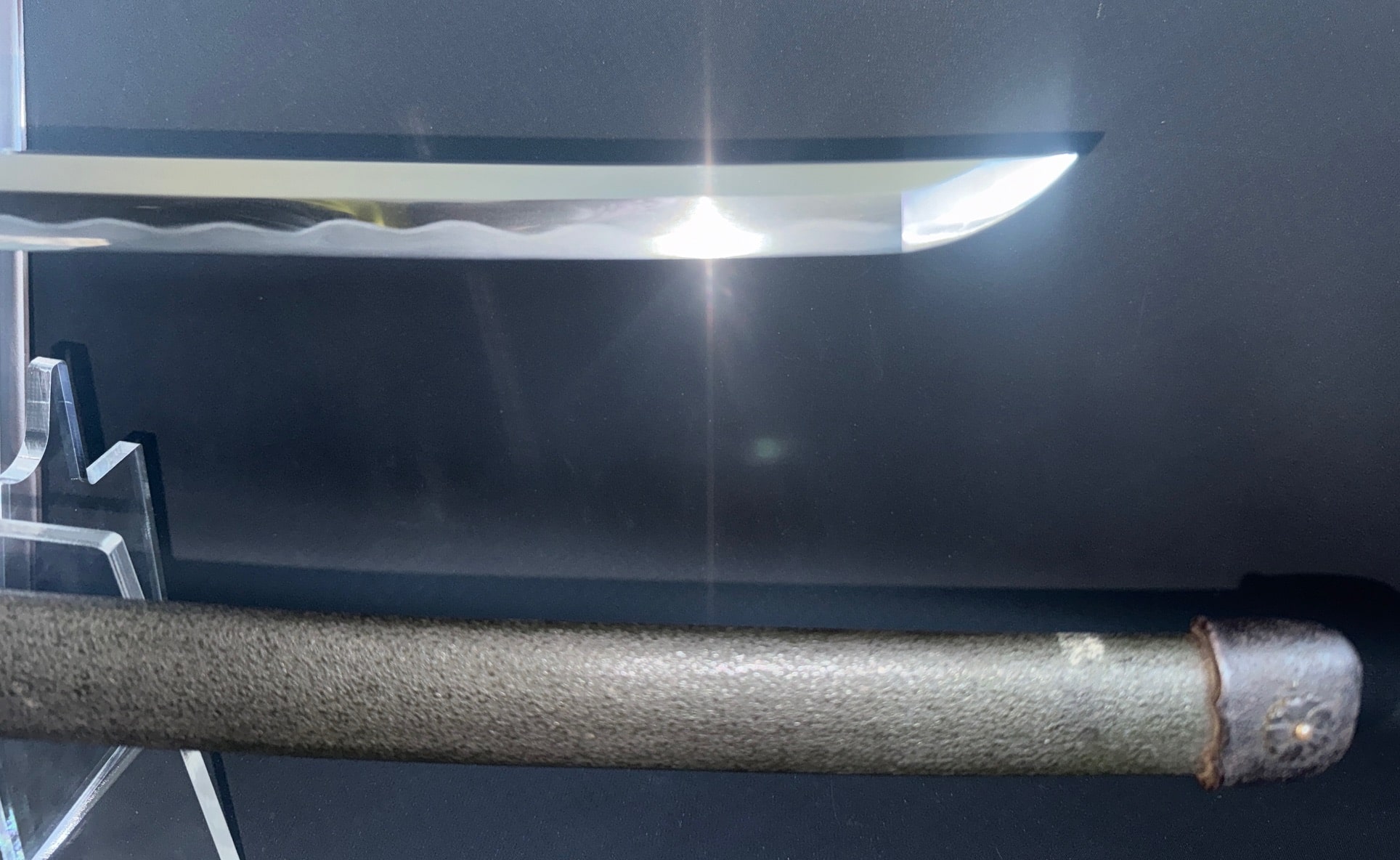
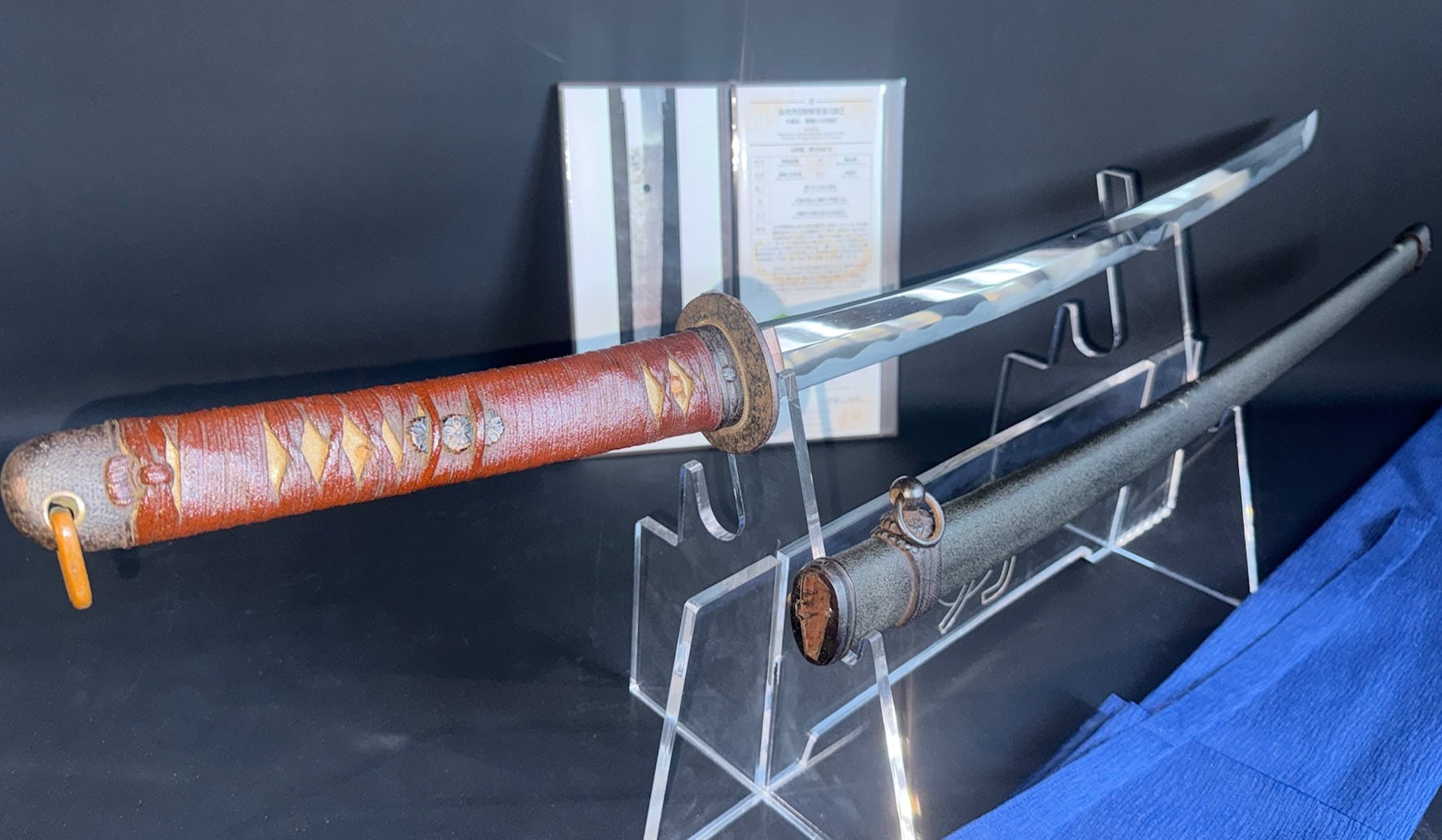
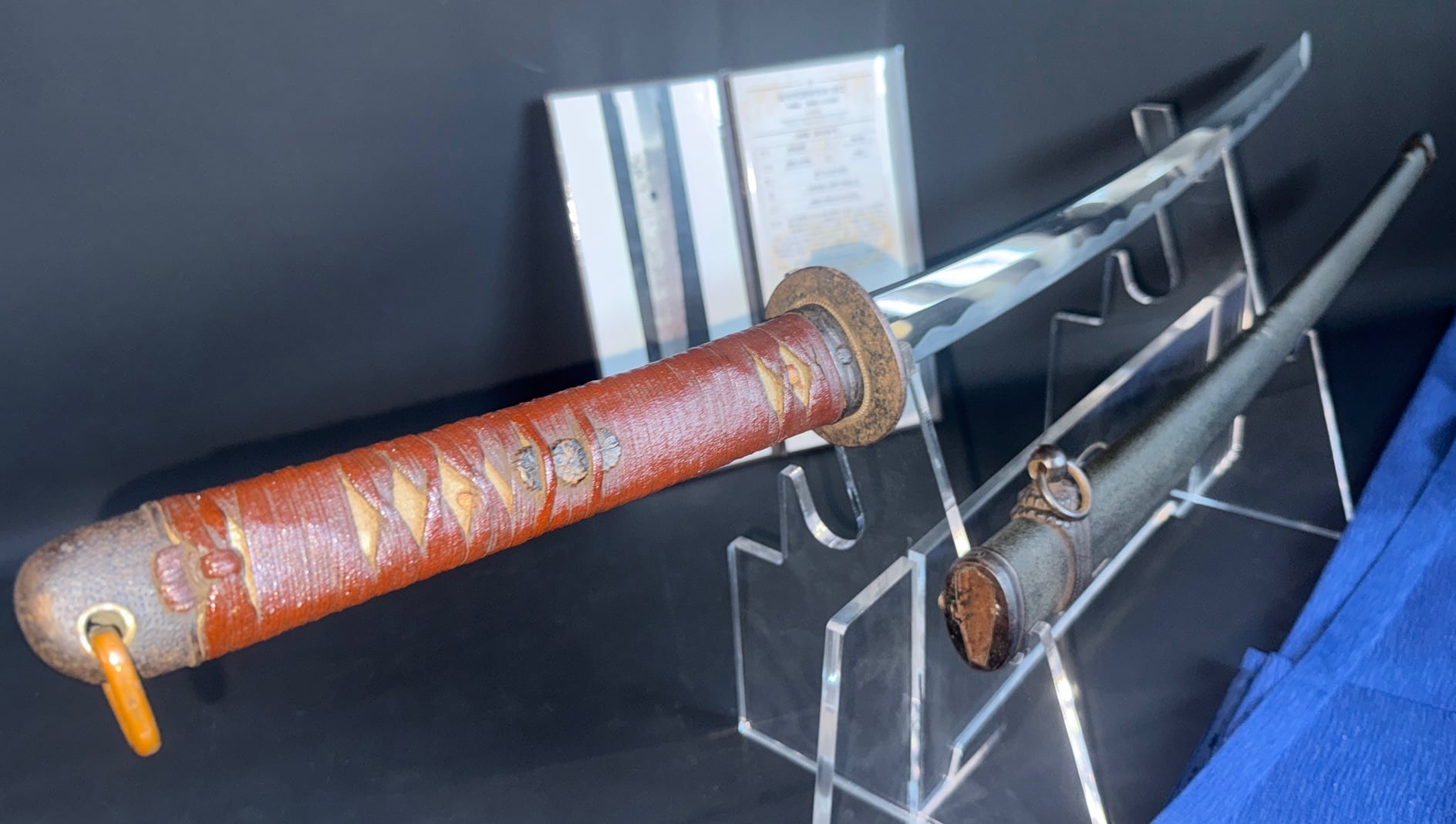

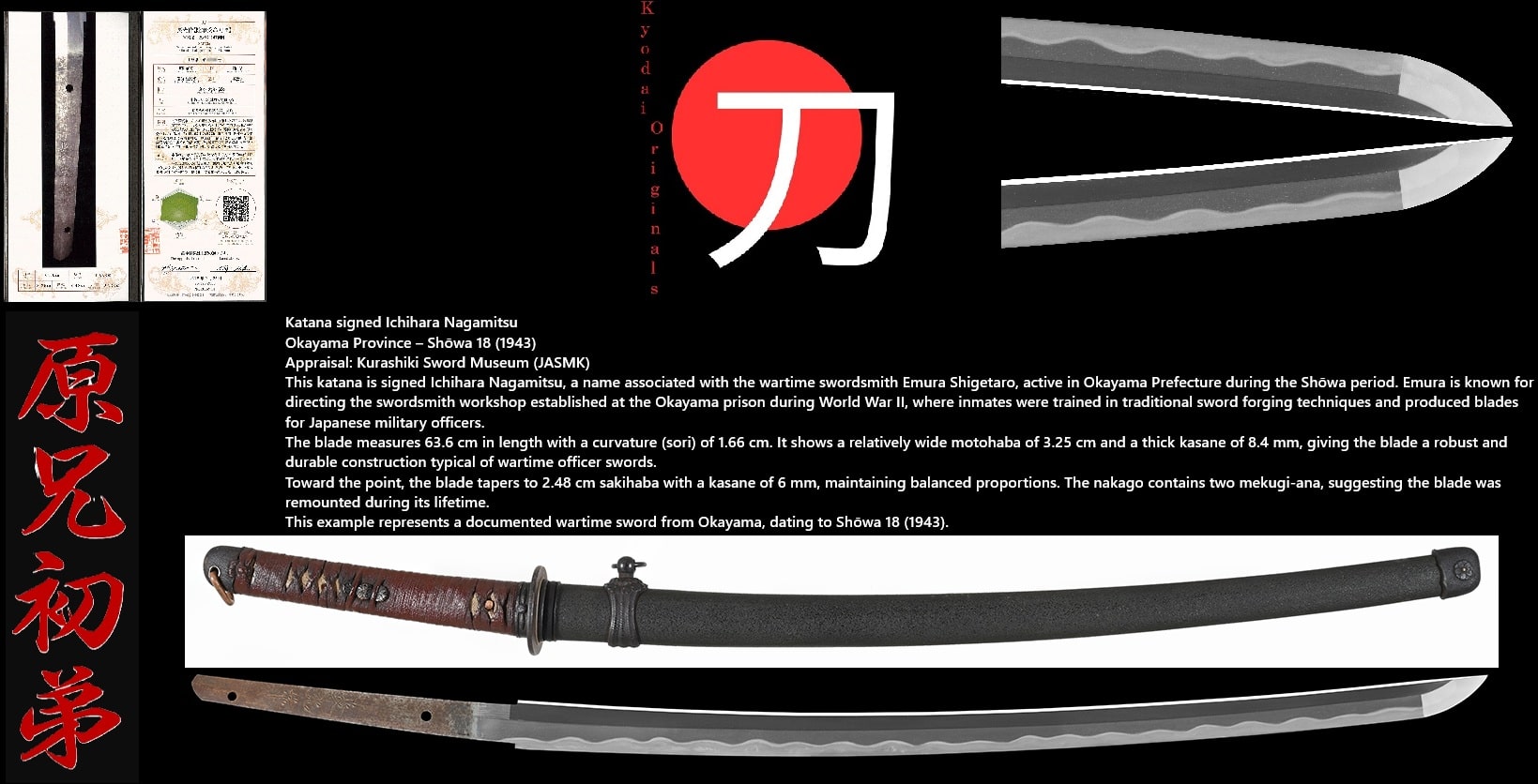
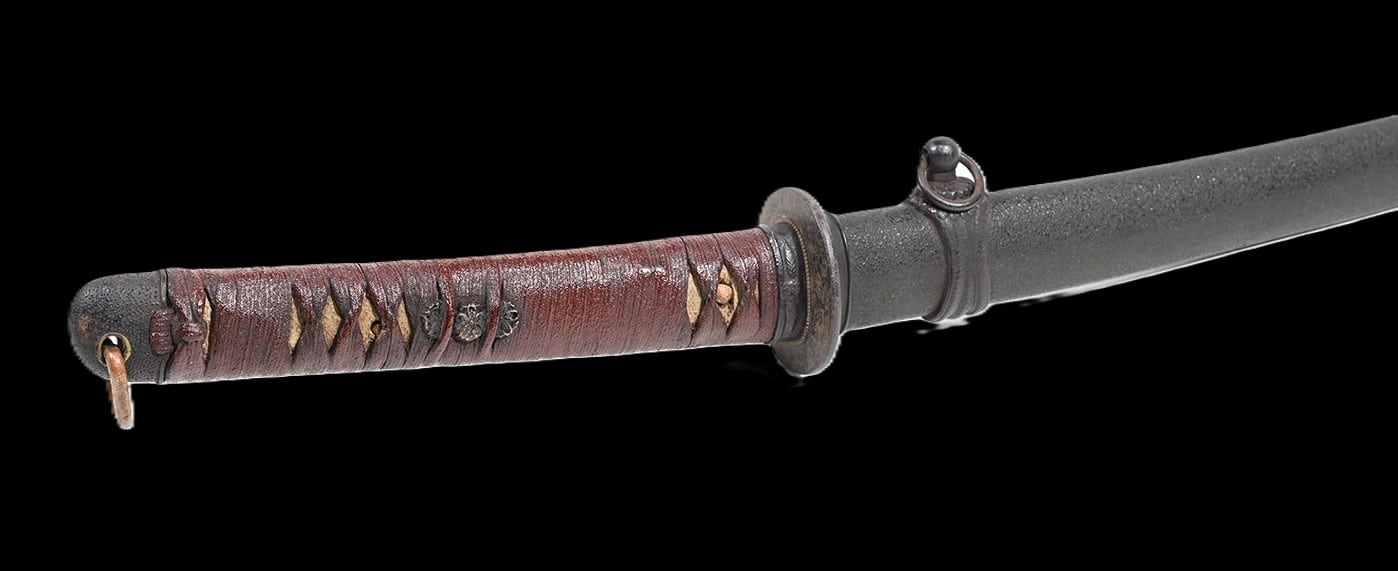
Katana signed Ichihara Nagamitsu (Emura Shigetaro)
Okayama Province Shōwa 18 (1943)
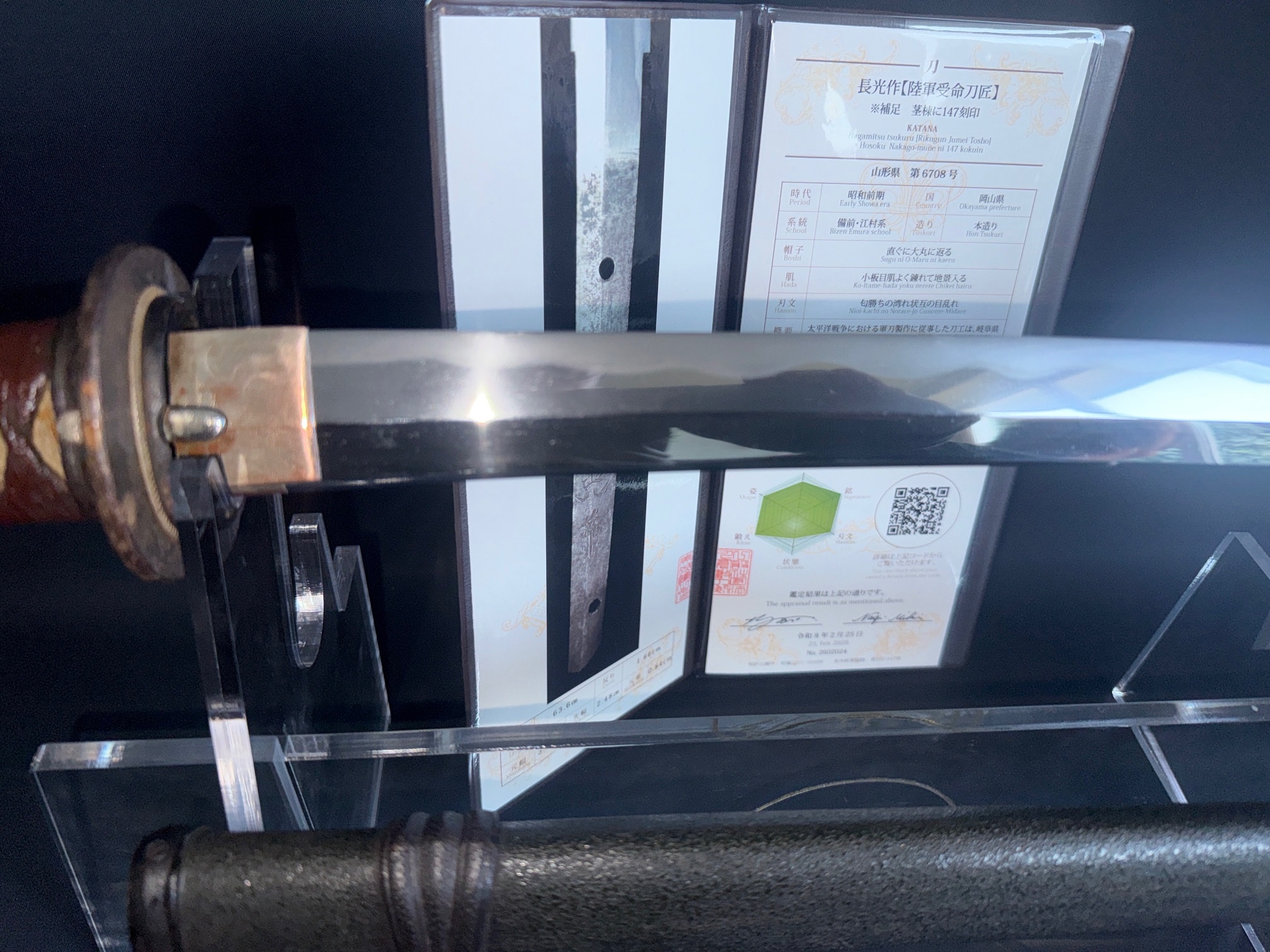
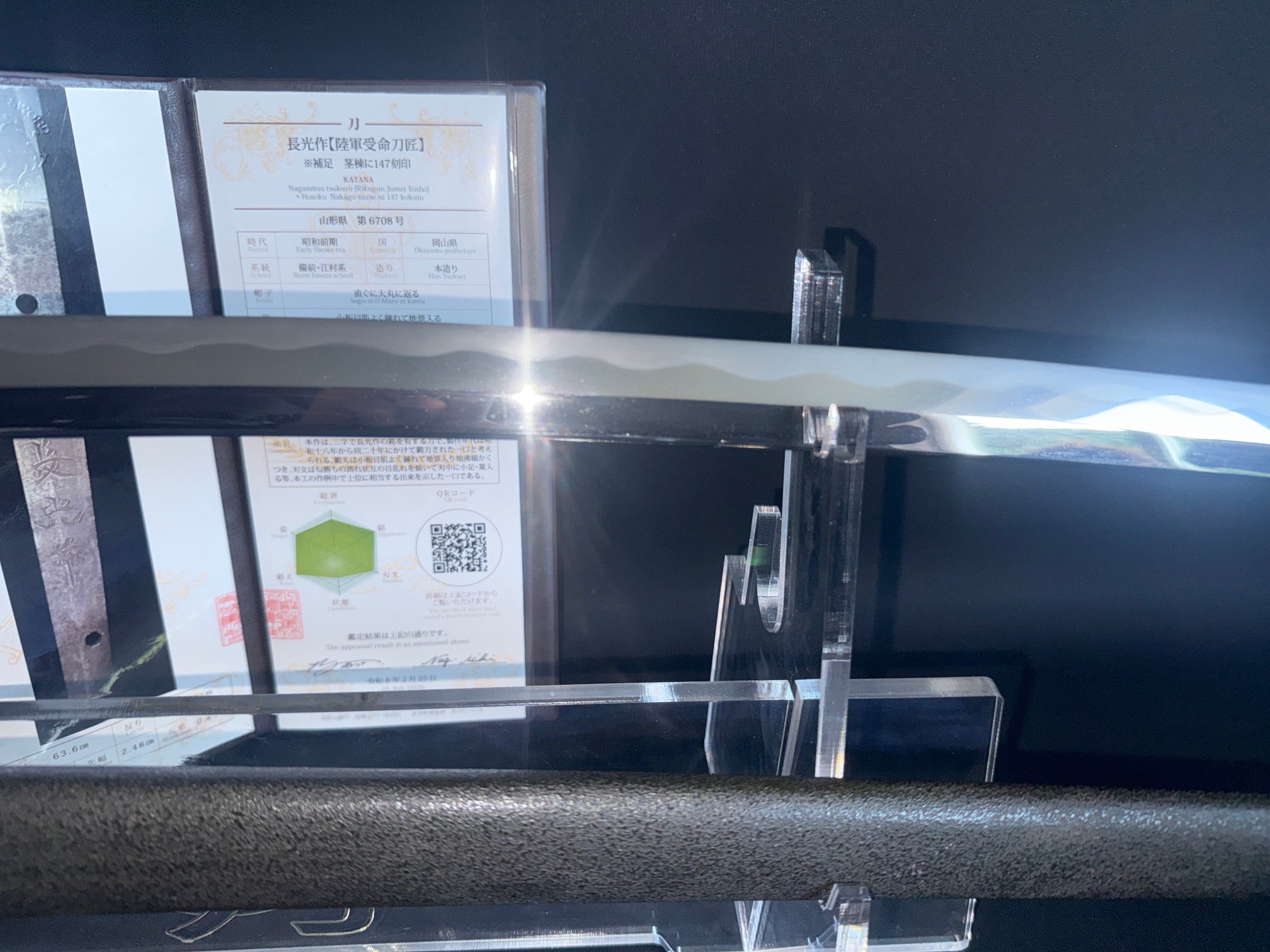
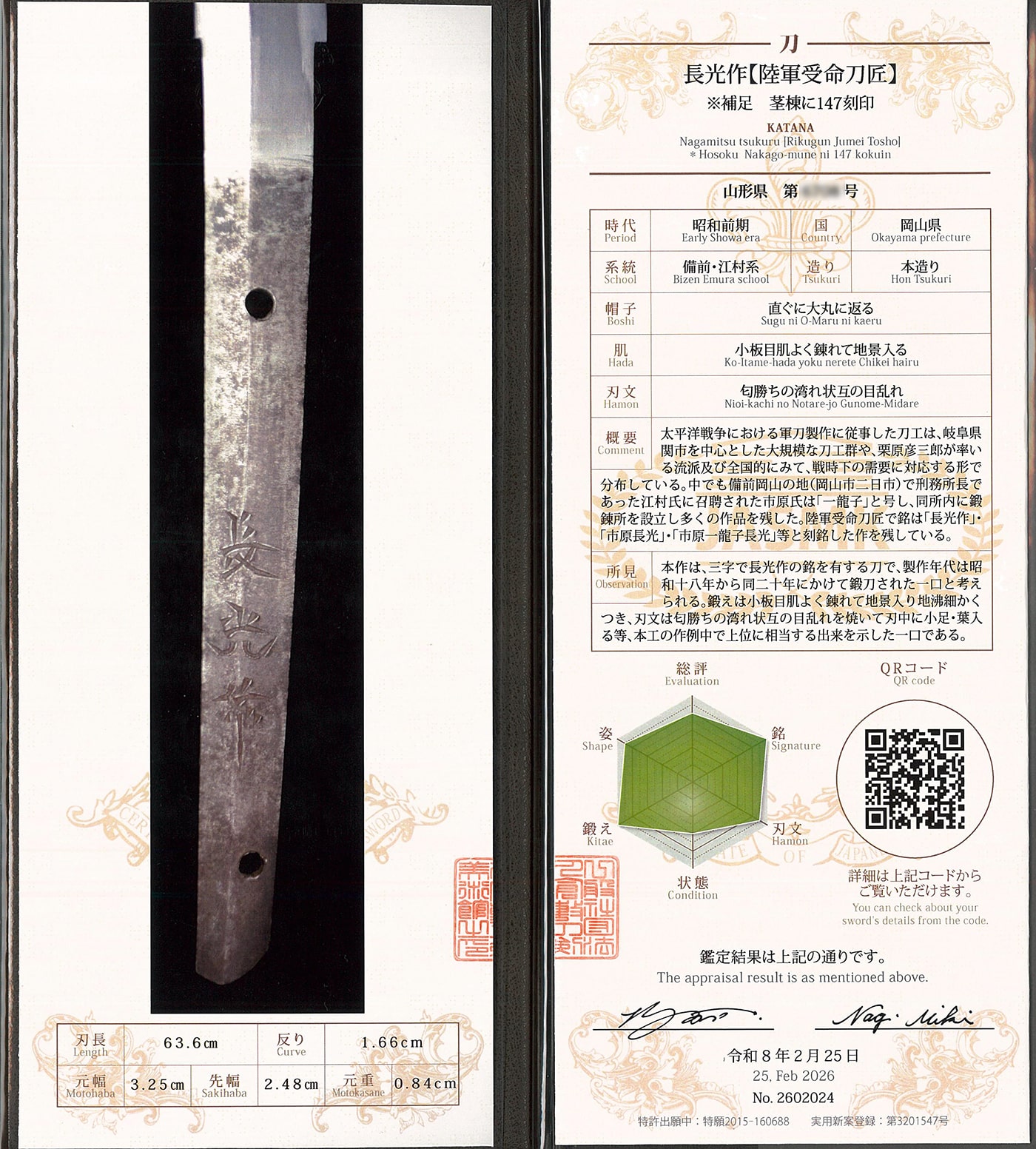
Appraisal: Kurashiki Sword Museum (JASMK)
Among the many swords produced during the turbulent years of the Pacific War, blades associated with the name Ichihara Nagamitsu occupy a distinctive and historically compelling position. The signature is closely connected with Emura Shigetaro (江村繁太郎), a swordsmith active in Okayama Prefecture during the Shōwa period who became widely known for directing one of the most unusual sword-forging programs of wartime Japan.
During the Second World War the Japanese government required large numbers of swords for military officers. In response, Emura organized and supervised a forging workshop inside the Okayama prison, where inmates were instructed in the traditional techniques of Japanese swordsmithing. Under his direction the prisoners learned the complex craft of forging, shaping, and finishing blades while producing swords intended for use by Japanese officers. Although this environment was highly unconventional, the workshop operated with an emphasis on traditional methods and craftsmanship.
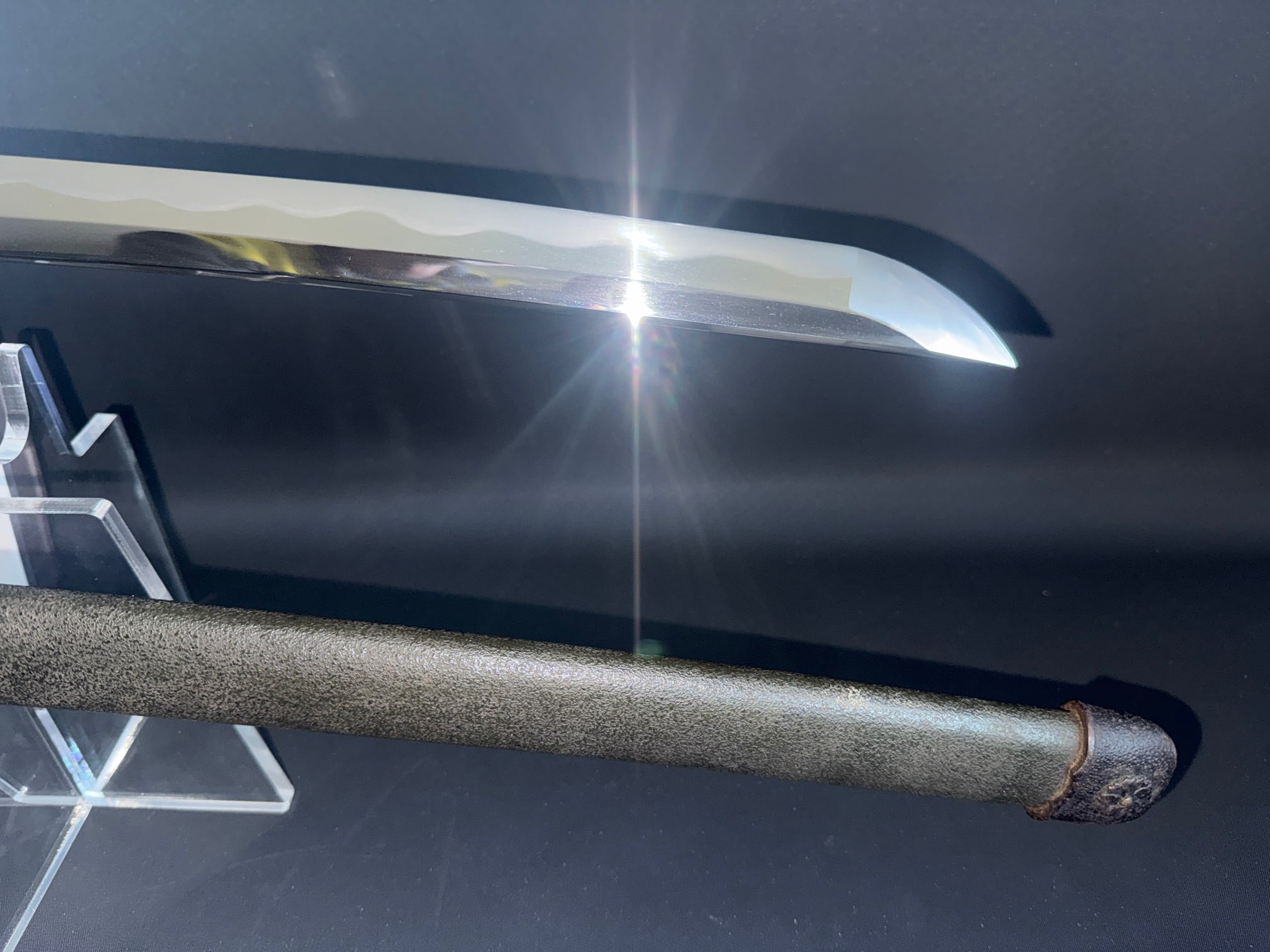
Unlike many wartime military swords that were machine-made or oil-quenched, a significant number of blades associated with Emura and the Nagamitsu signature were traditionally forged using folded steel and water hardening. For this reason they are often considered part of the category known as gendaitō, or modern traditionally made swords, rather than mass-produced military weapons. Collectors and scholars today view these swords as important examples of the continuation of Japanese swordmaking traditions during the difficult wartime period.
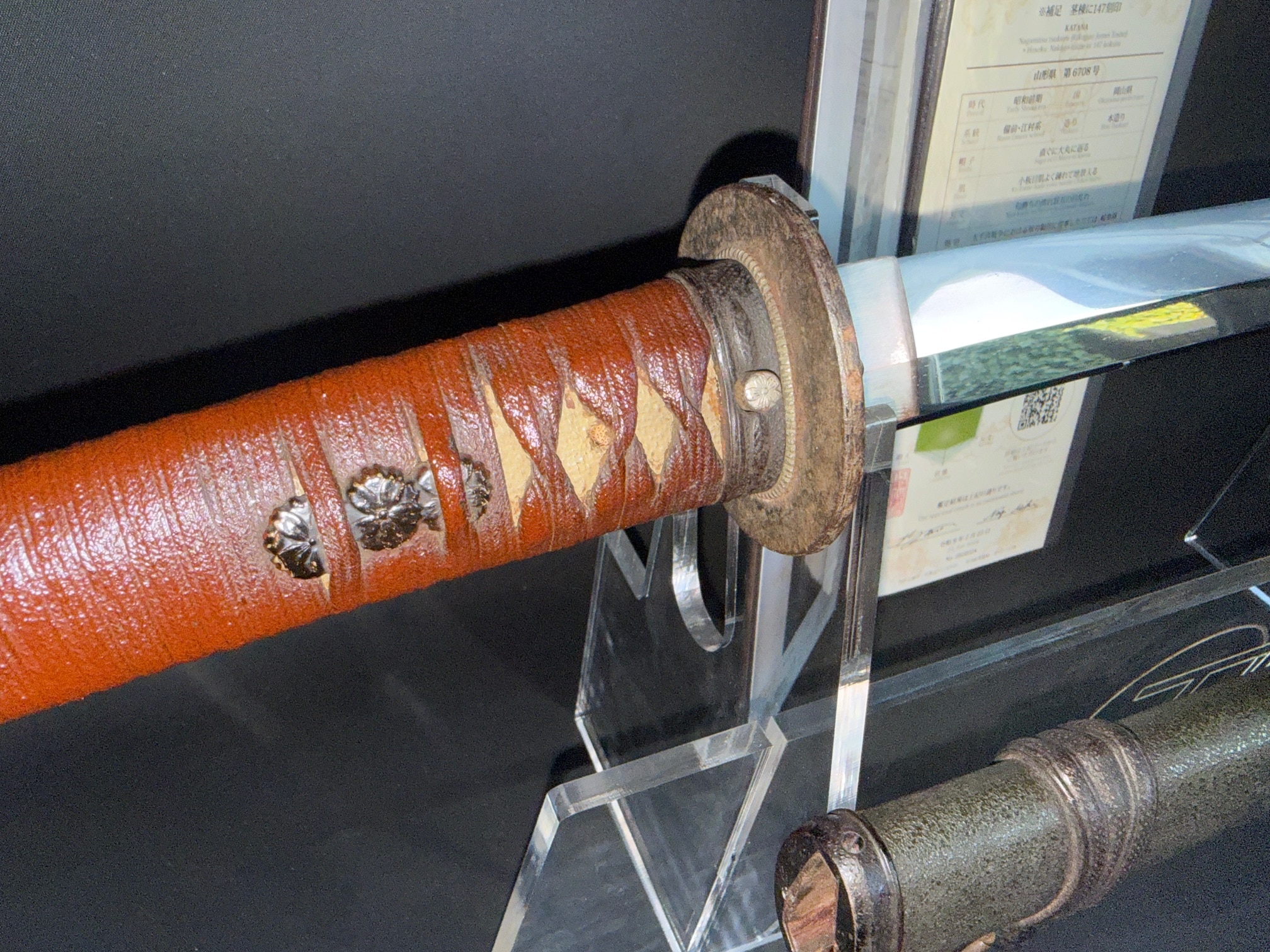
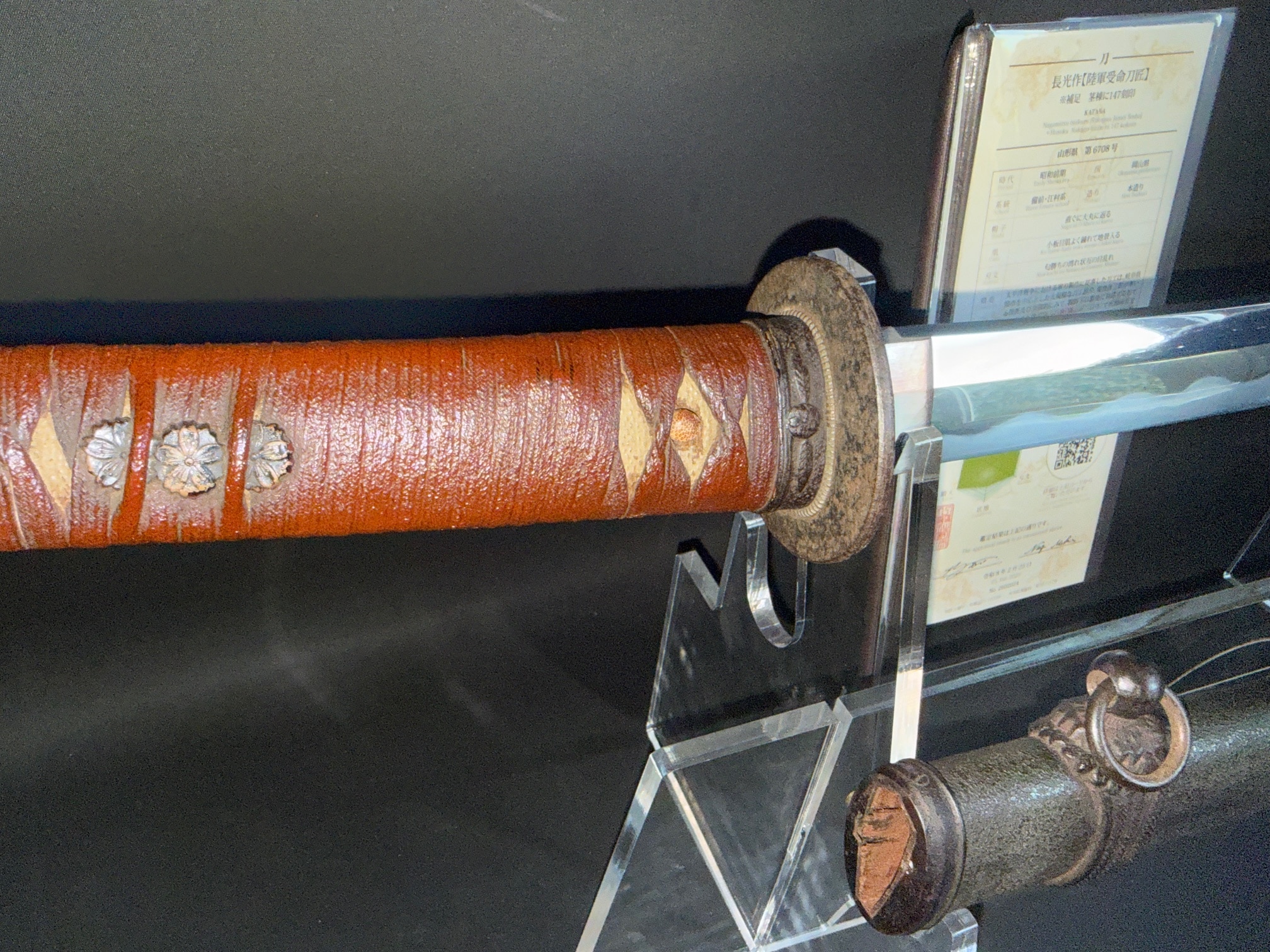
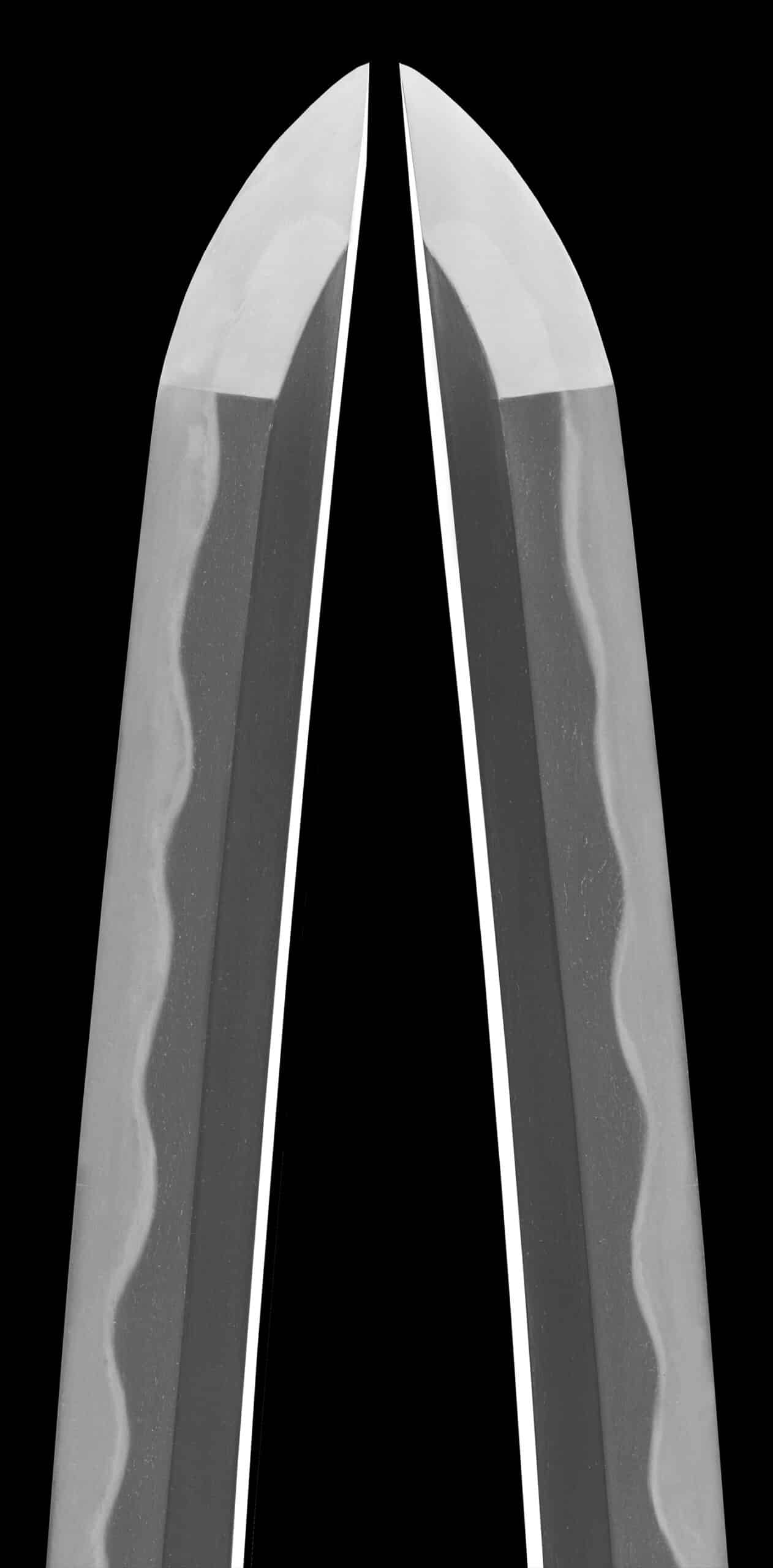
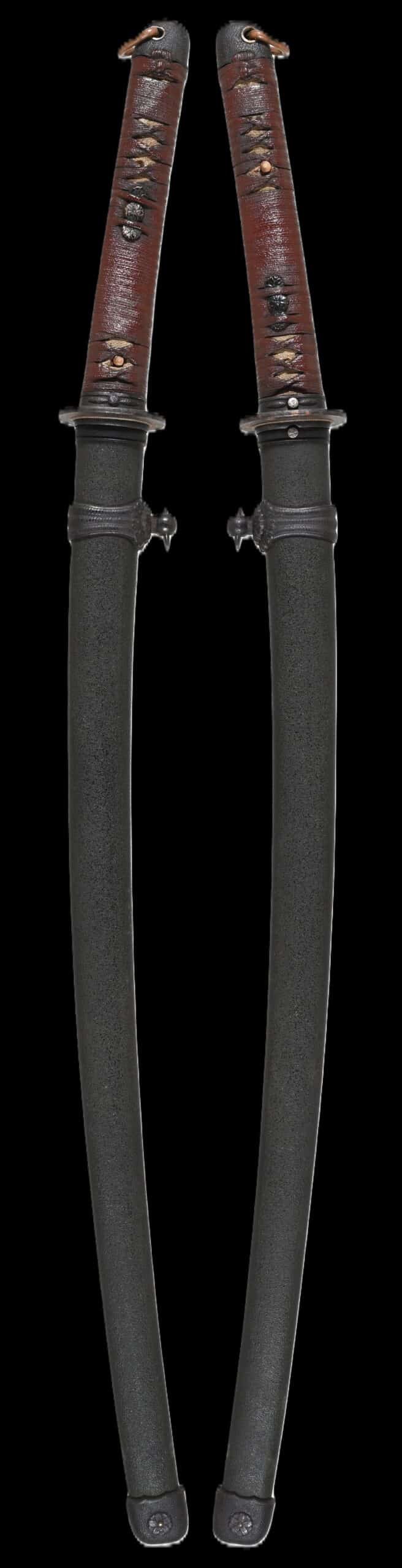
The present blade, signed Ichihara Nagamitsu, dates to Shōwa 18 (1943) and reflects the practical yet powerful proportions typical of swords produced for military officers in the later stages of the war. The blade measures 63.6 cm in length, just under two shaku one sun, with a graceful curvature (sori) of 1.66 cm. The dimensions show a strong and well-balanced construction, beginning with a wide motohaba of 3.25 cm and a substantial kasane of 8.4 mm at the base. These measurements indicate a blade designed with durability and cutting performance in mind.
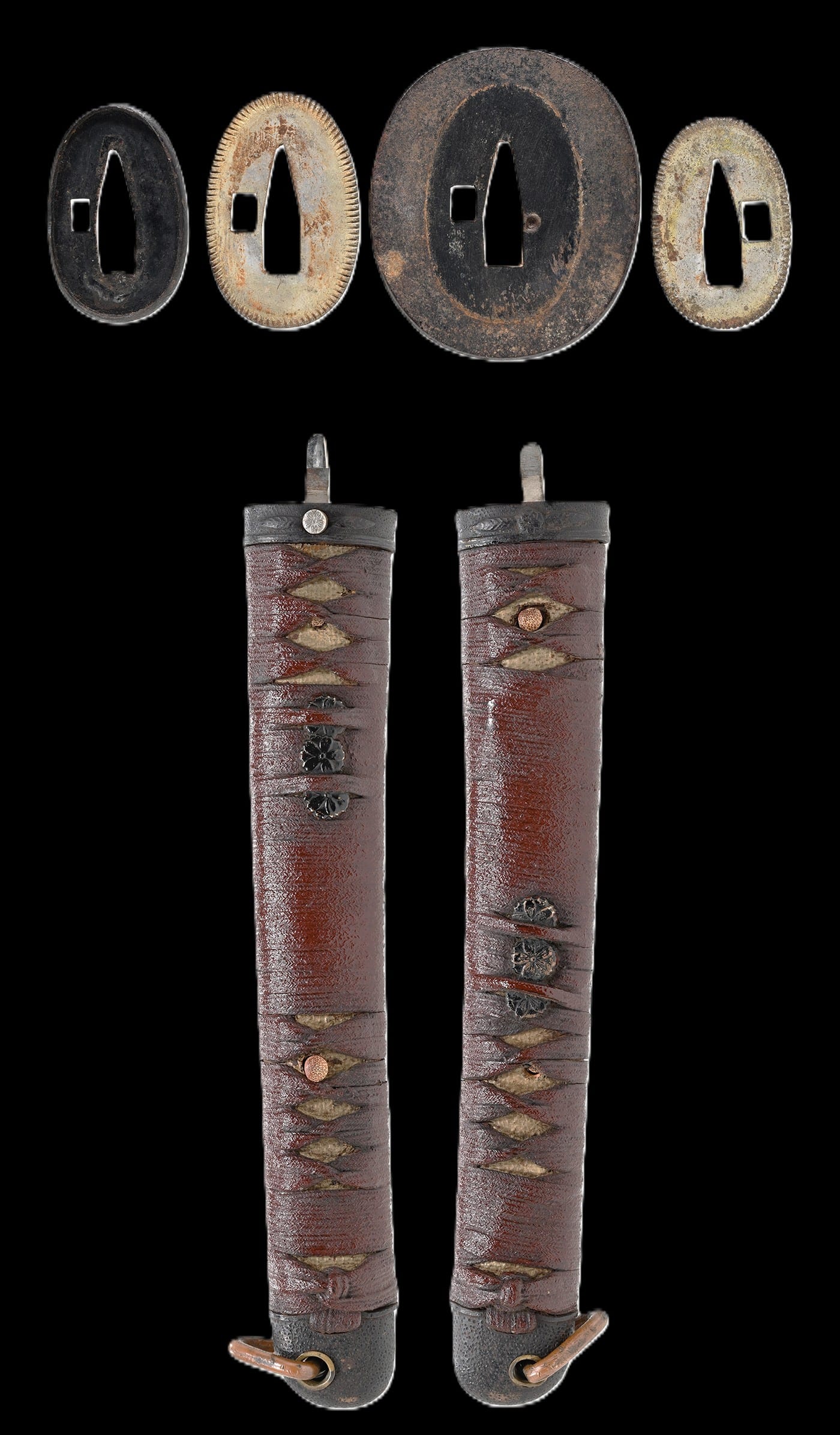
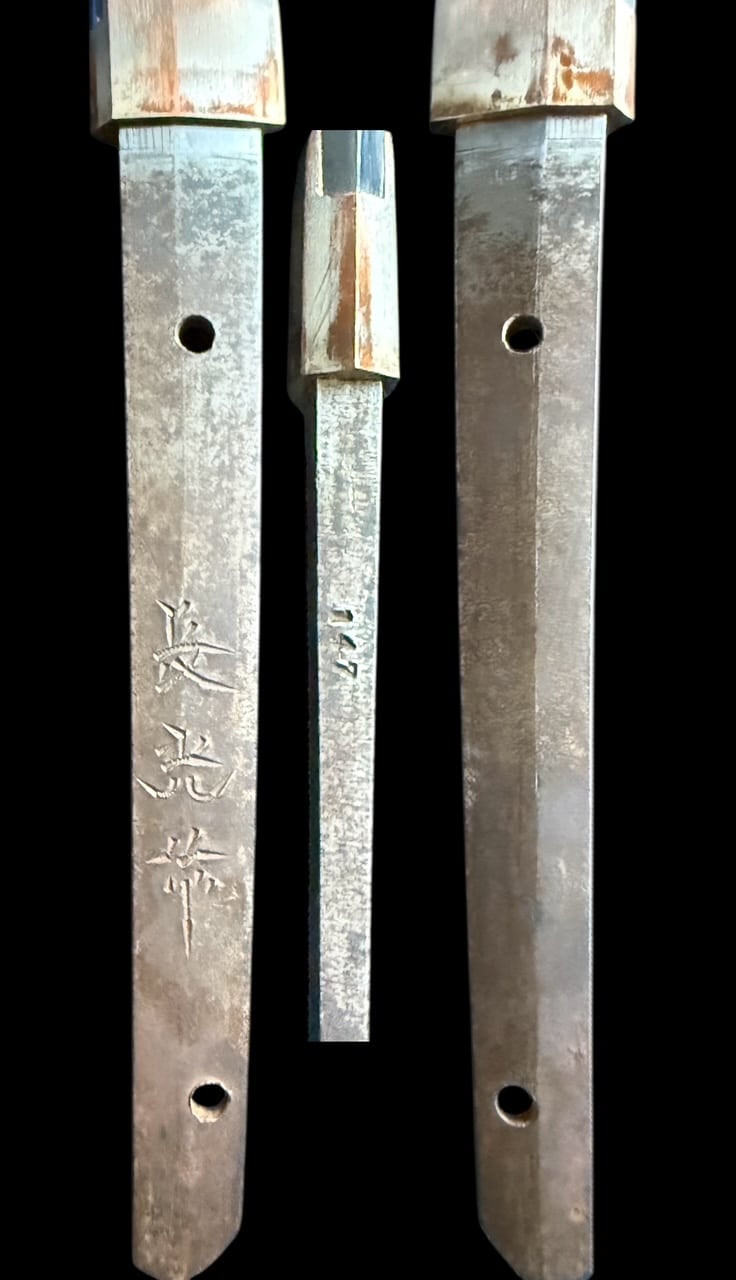
Toward the point the blade tapers to 2.48 cm sakihaba with a kasane of 6 mm, maintaining harmonious proportions between the base and the tip. Such geometry reflects the functional design of wartime officer swords while preserving the elegant lines characteristic of Japanese blades. The tang (nakago) contains two mekugi-ana, suggesting that the blade has been mounted more than once during its lifetime, a common occurrence for swords that saw military service or were later remounted for preservation.
The signature Ichihara Nagamitsu belongs to a group of mei used by Emura throughout his career. In addition to this form, blades may also be found signed Nagamitsu, Bizen Nagamitsu, Emura, Emura saku, or the longer inscription Ichihara Ichiryūshi Chounsai Emura Nagamitsu. These variations reflect both the artistic naming traditions of Japanese swordsmiths and Emura’s admiration for the historic Bizen swordmaking lineage, one of the most celebrated traditions in Japanese sword history.
Because the Okayama prison workshop involved several trained assistants and students working under Emura’s supervision, some blades bearing the Nagamitsu name were forged by craftsmen within the workshop rather than by Emura personally. Nevertheless, the entire group of swords produced under his direction represents an extraordinary chapter in the history of modern Japanese swordmaking. Their story combines elements of wartime necessity, traditional craftsmanship, and a remarkable educational program within the prison system.
The present example has been evaluated by the Kurashiki Sword Museum (JASMK), further supporting its identification as a wartime blade from Okayama Province dating to 1943. Documentation and institutional appraisal provide additional context and confidence for collectors interested in historically significant swords from the Shōwa period.
Today, swords signed Ichihara Nagamitsu / Emura are increasingly appreciated by collectors of Japanese arms and armor. They represent not only the continuation of traditional swordsmithing during wartime but also the unique story of the Okayama prison forge. Well-preserved examples such as this blade offer a tangible connection to one of the most unusual and fascinating chapters in the modern history of the Japanese sword.


