
€ 5.750,00
1 in stock
Late Edo to Early Meiji Period (19th century)
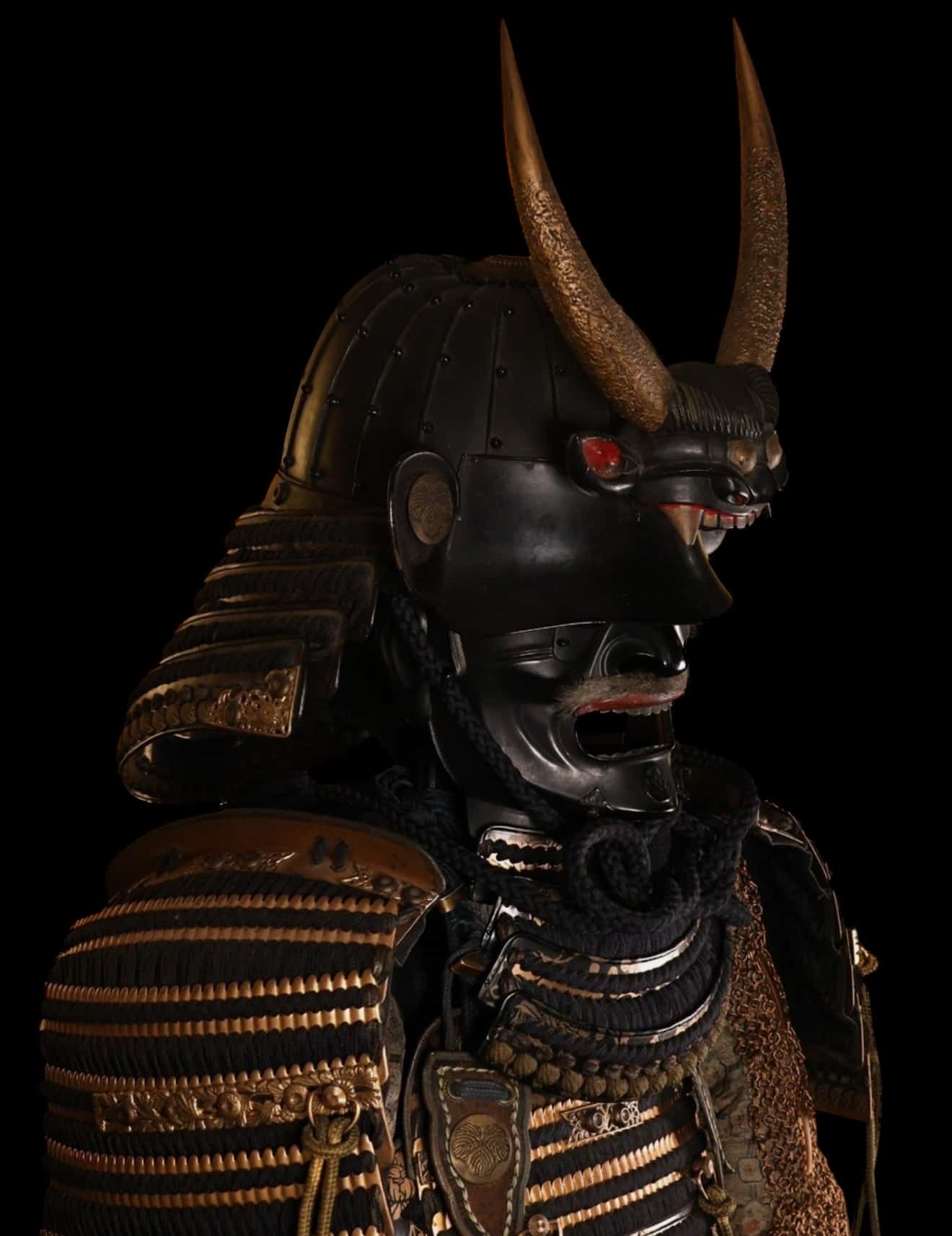
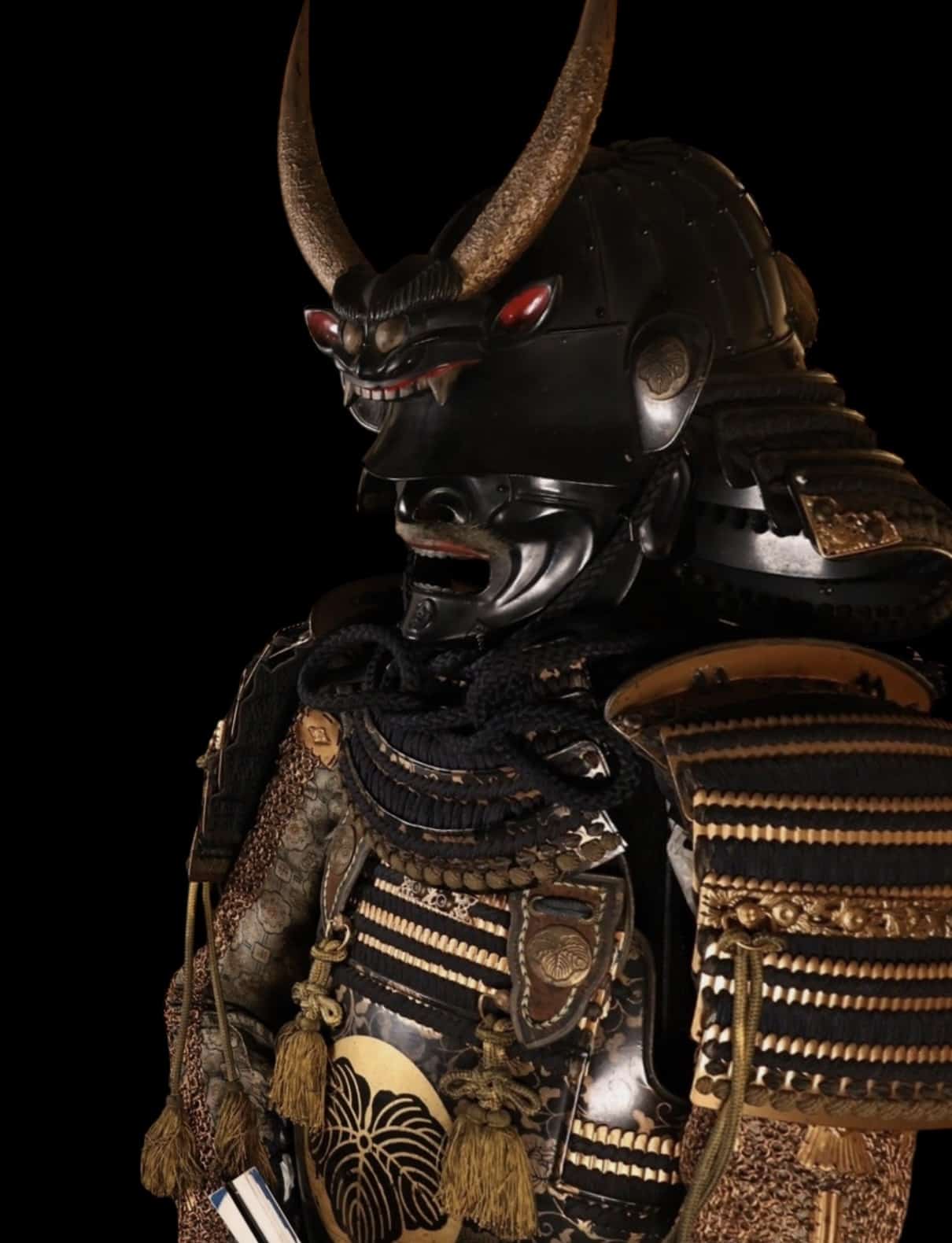
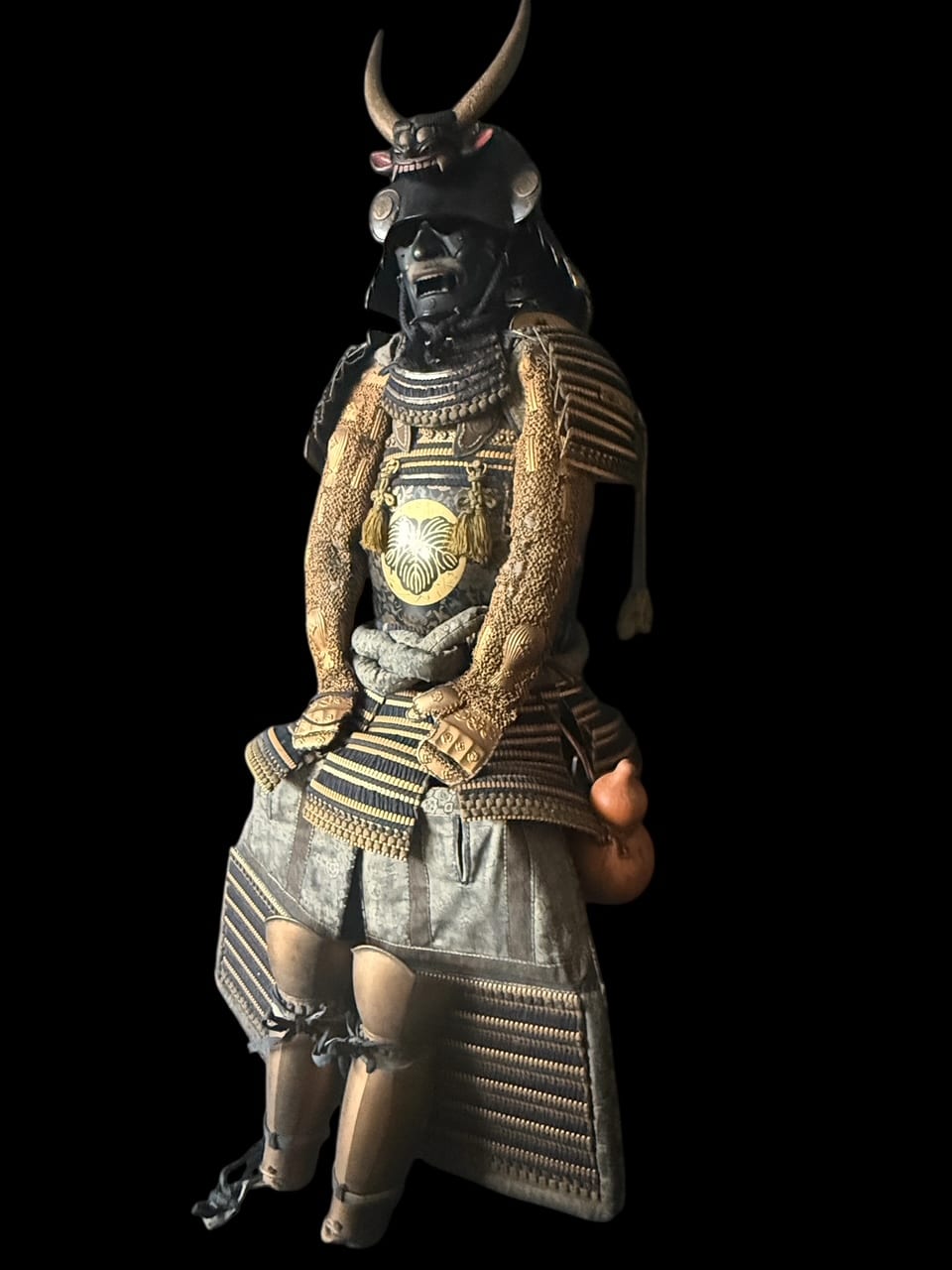
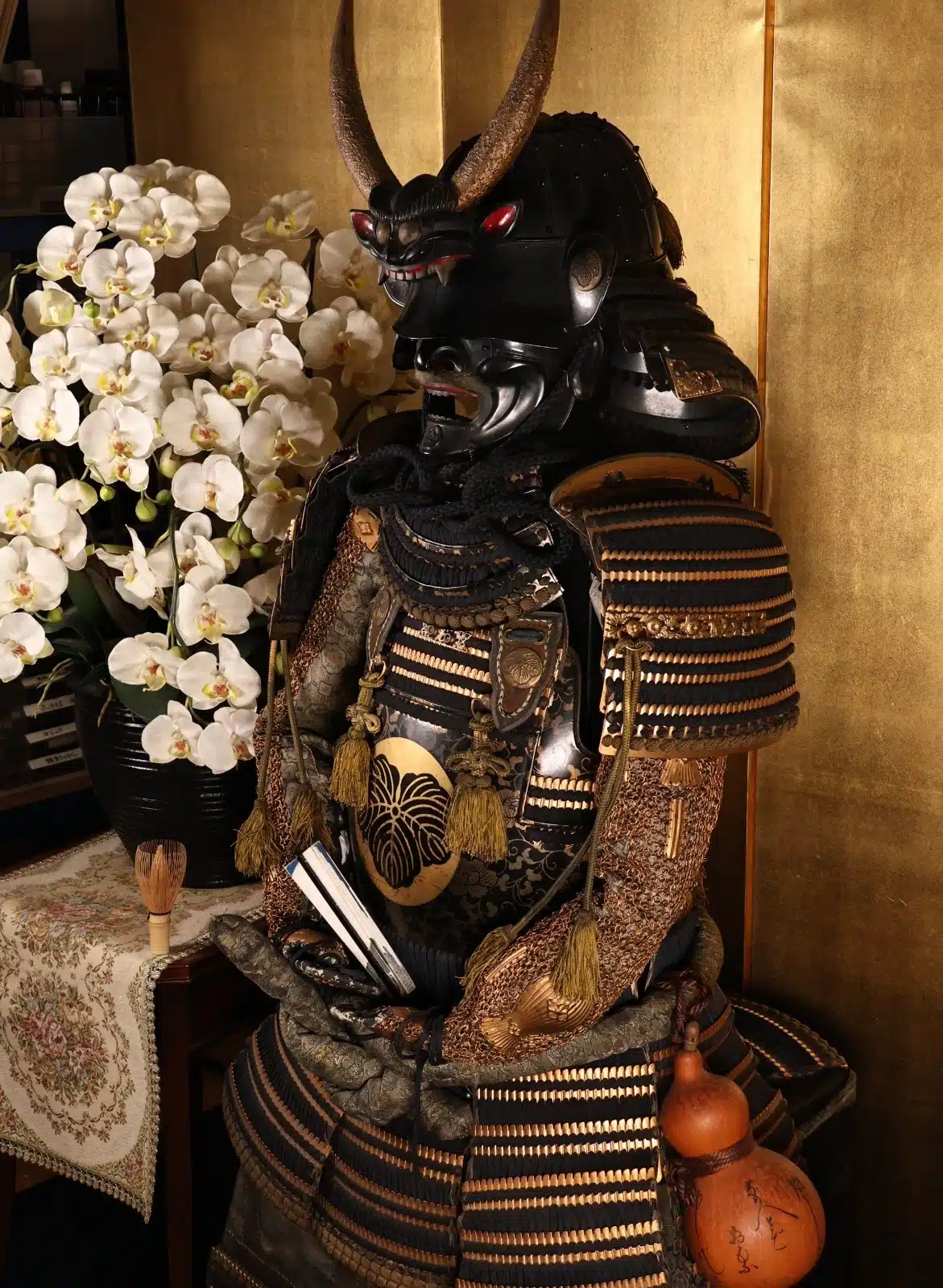
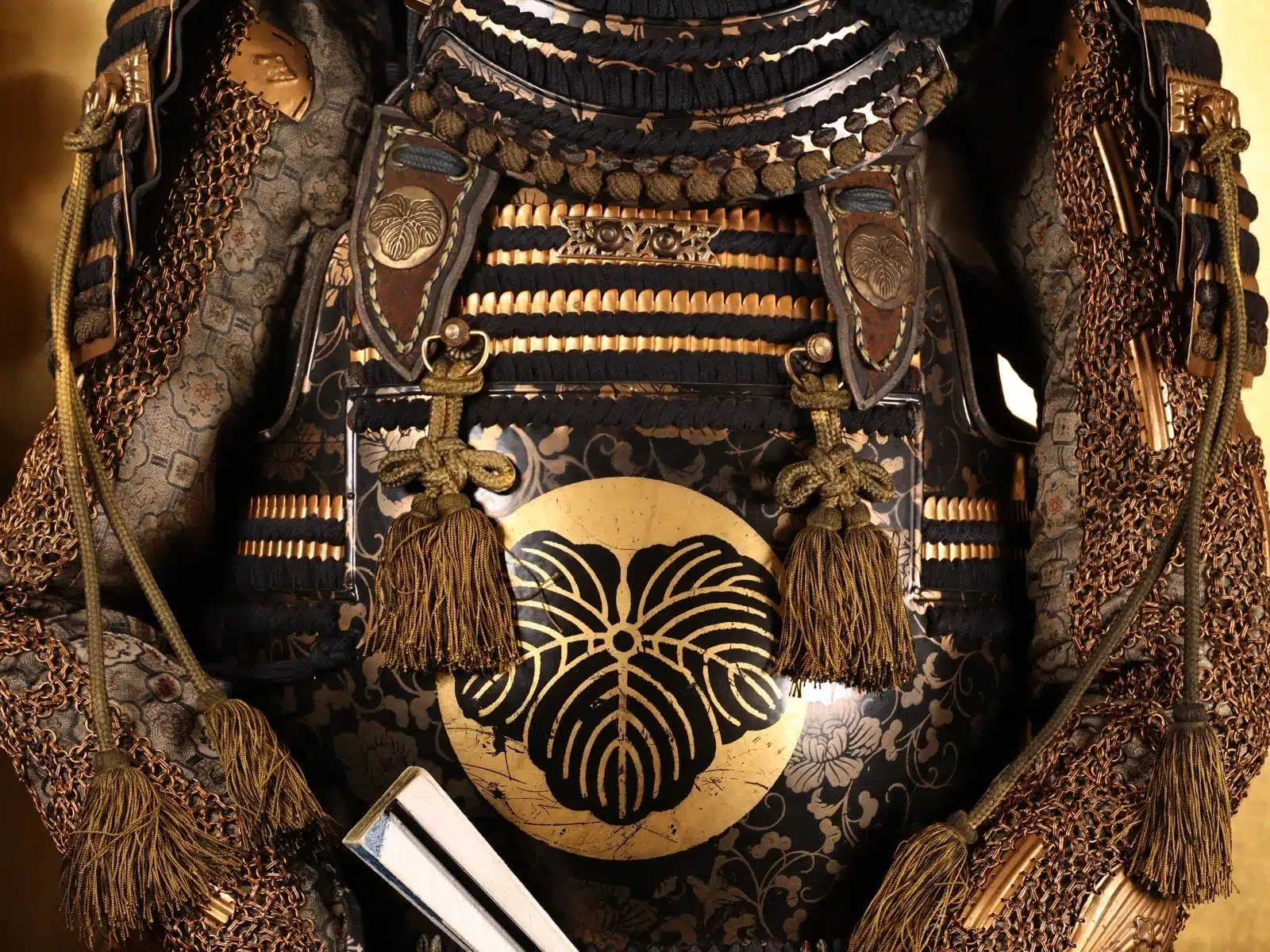
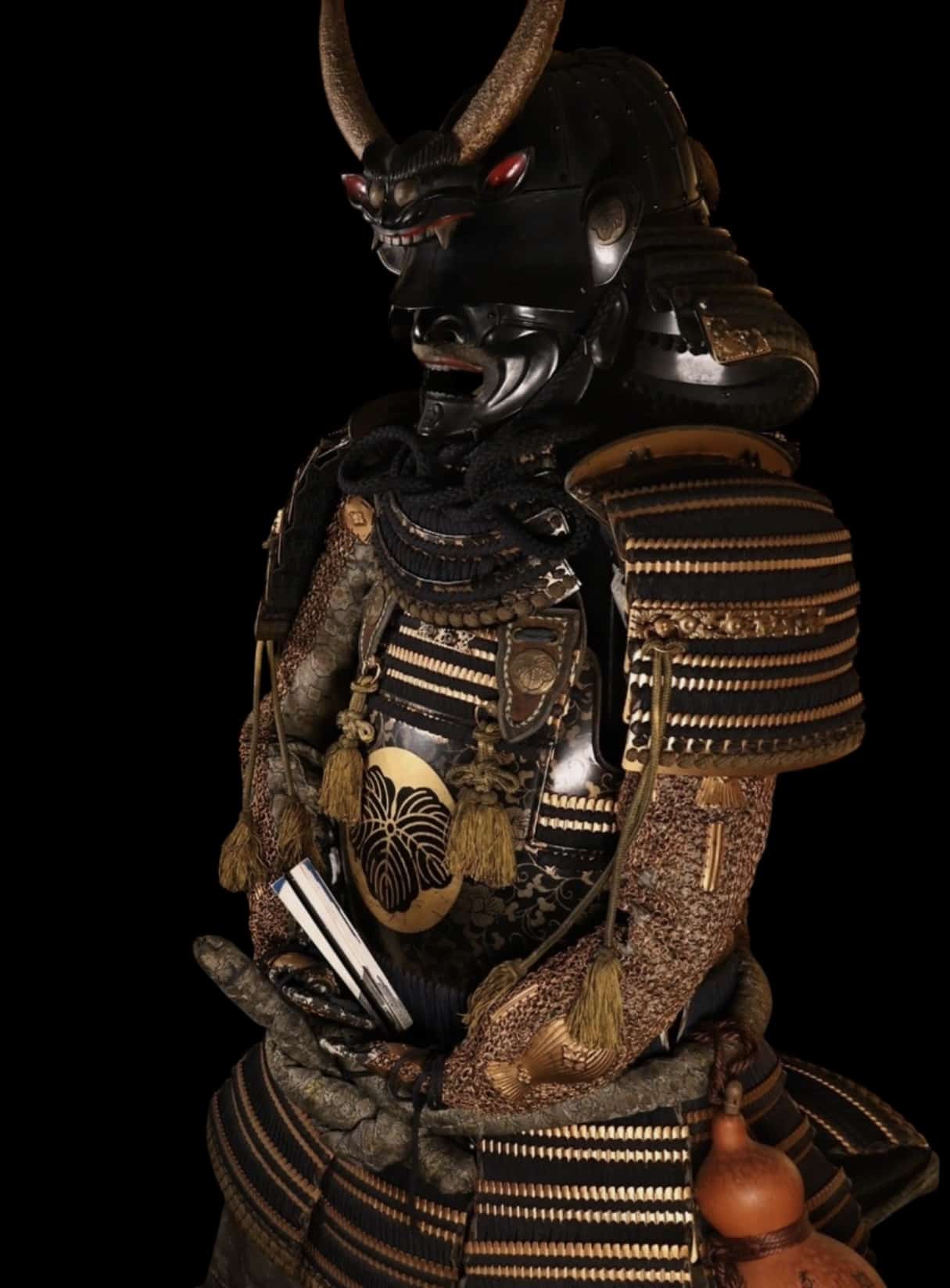
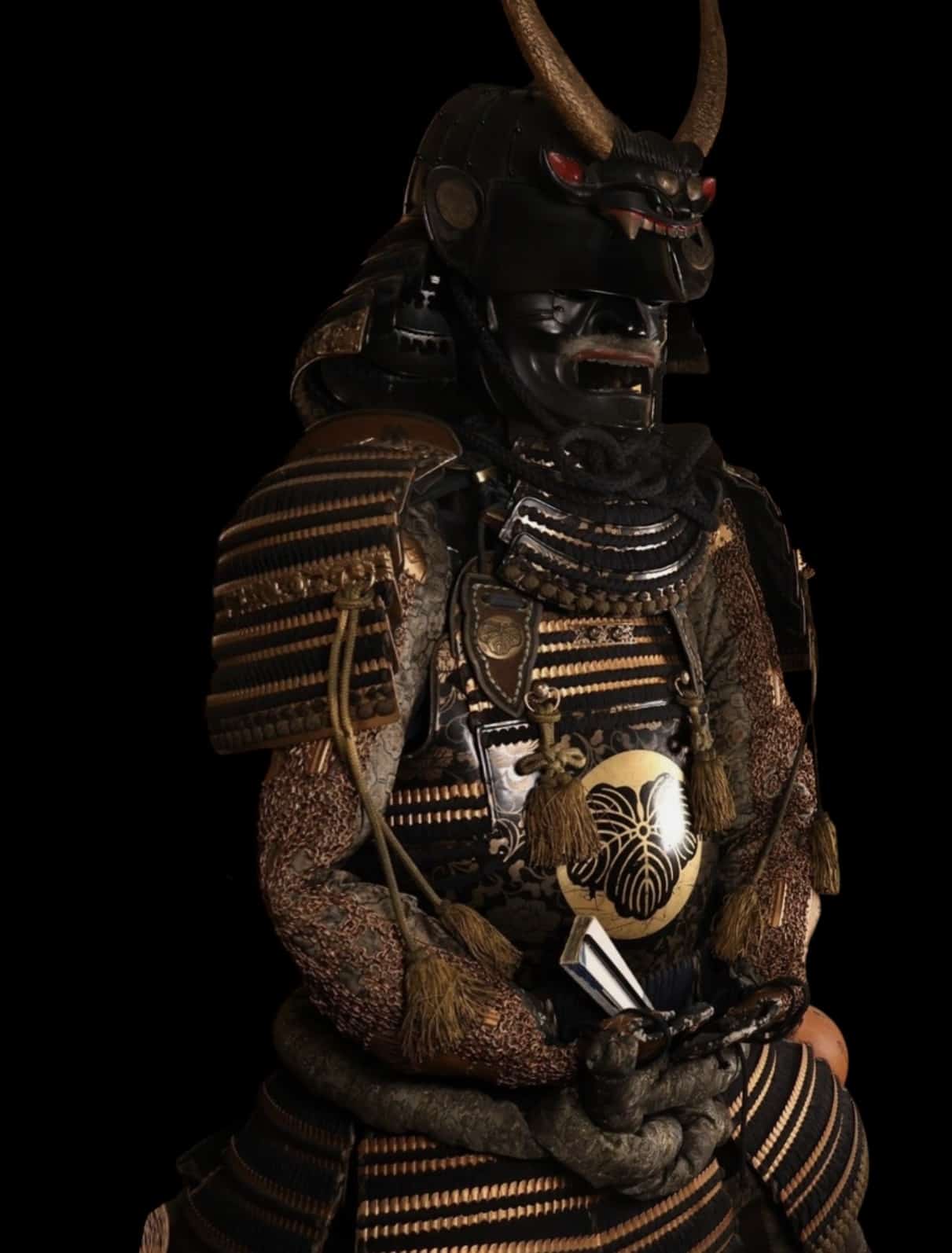
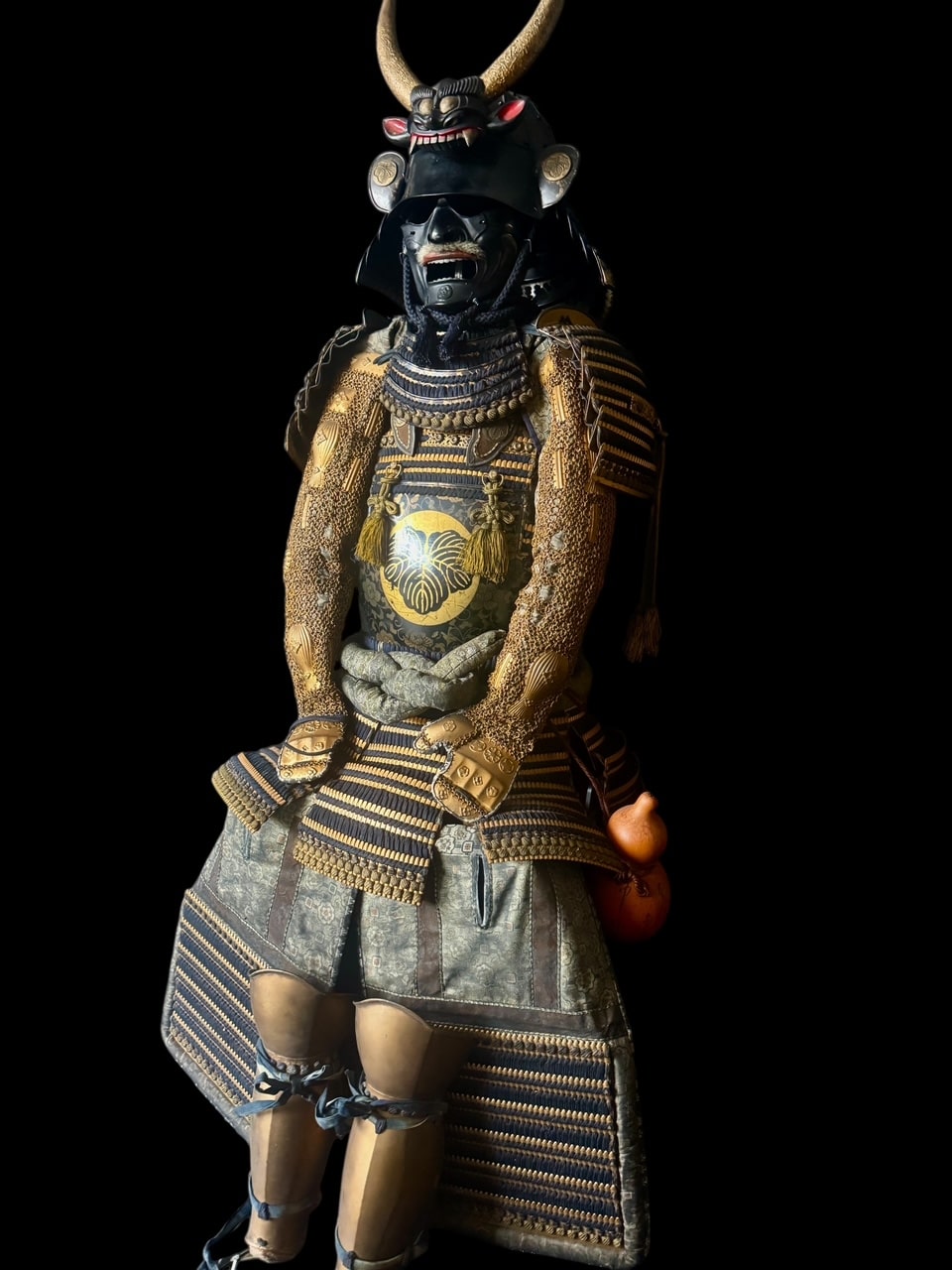
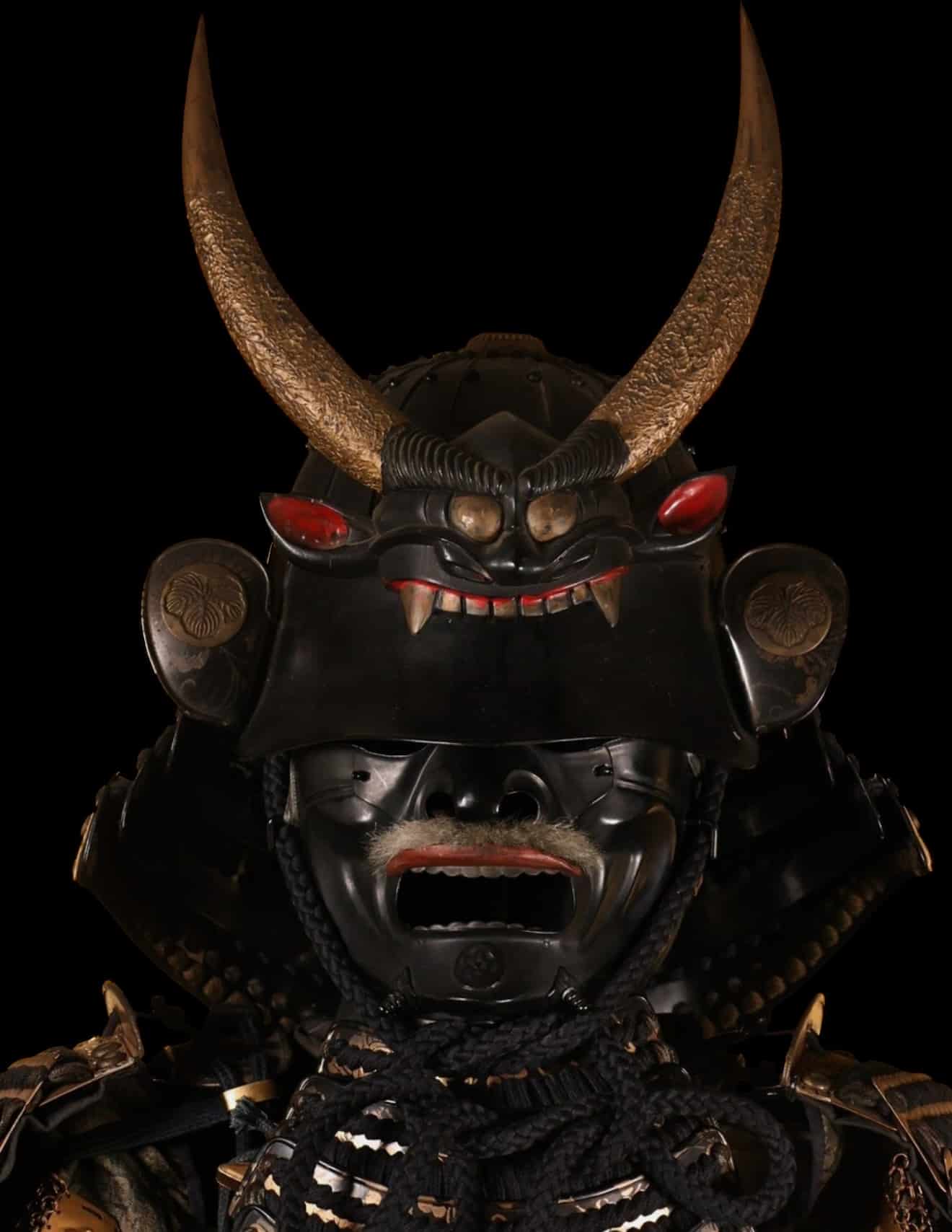
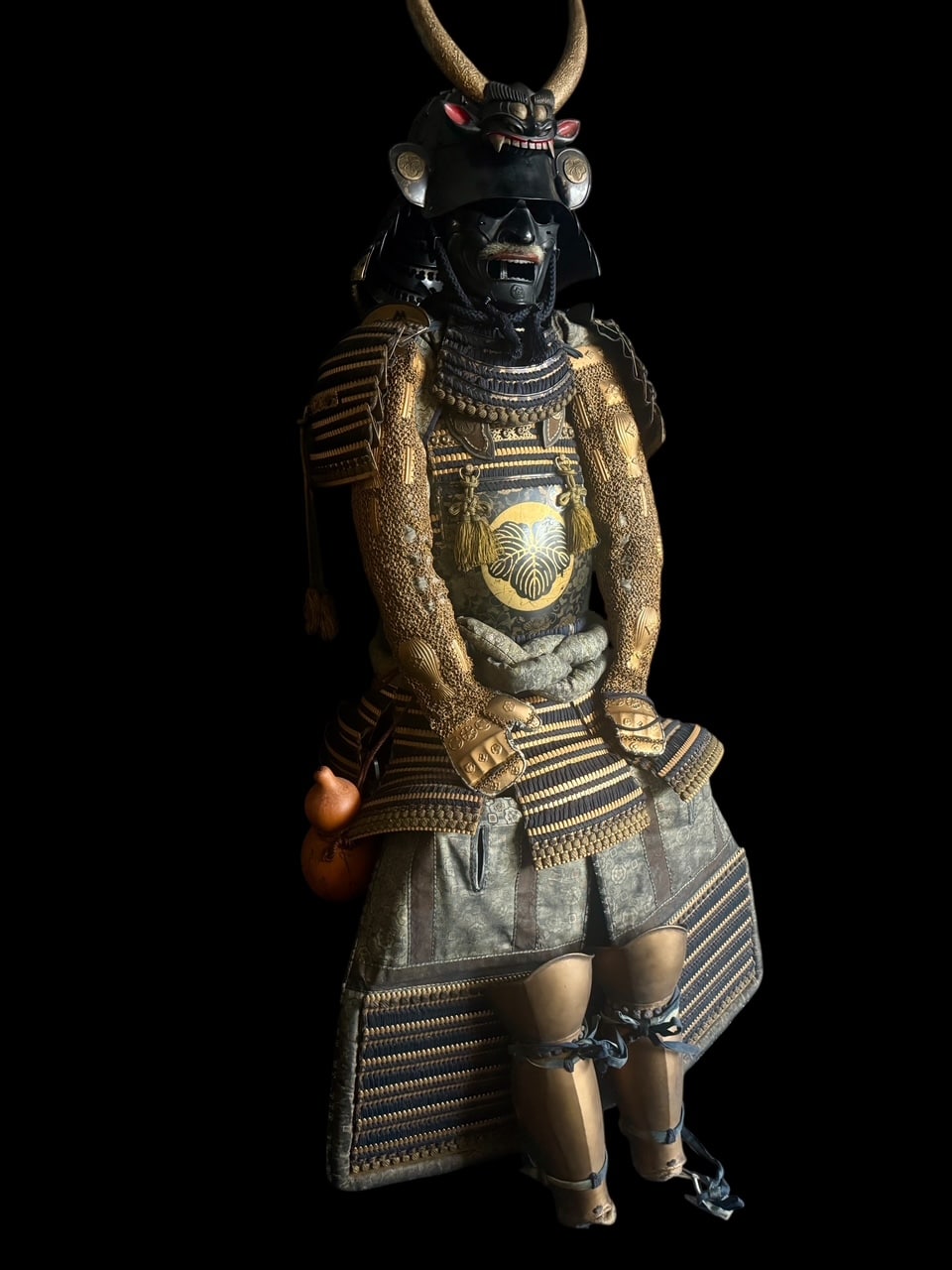
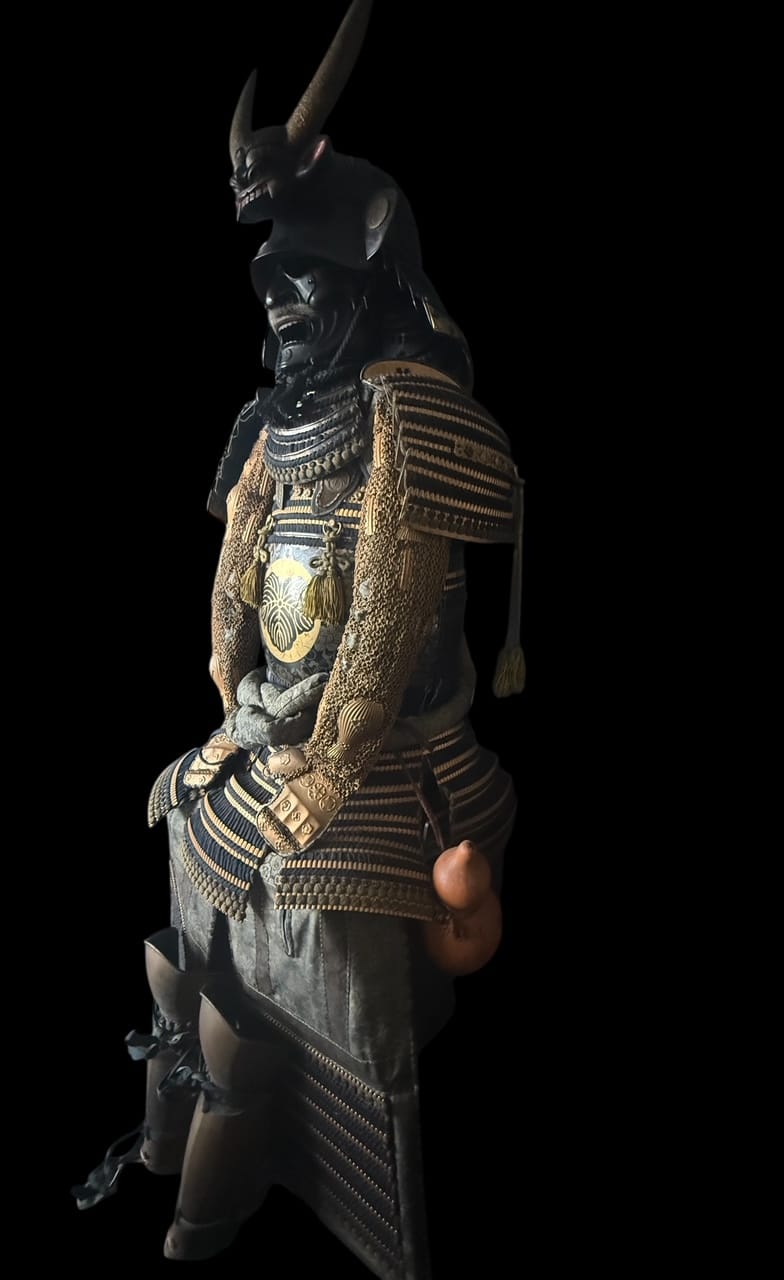
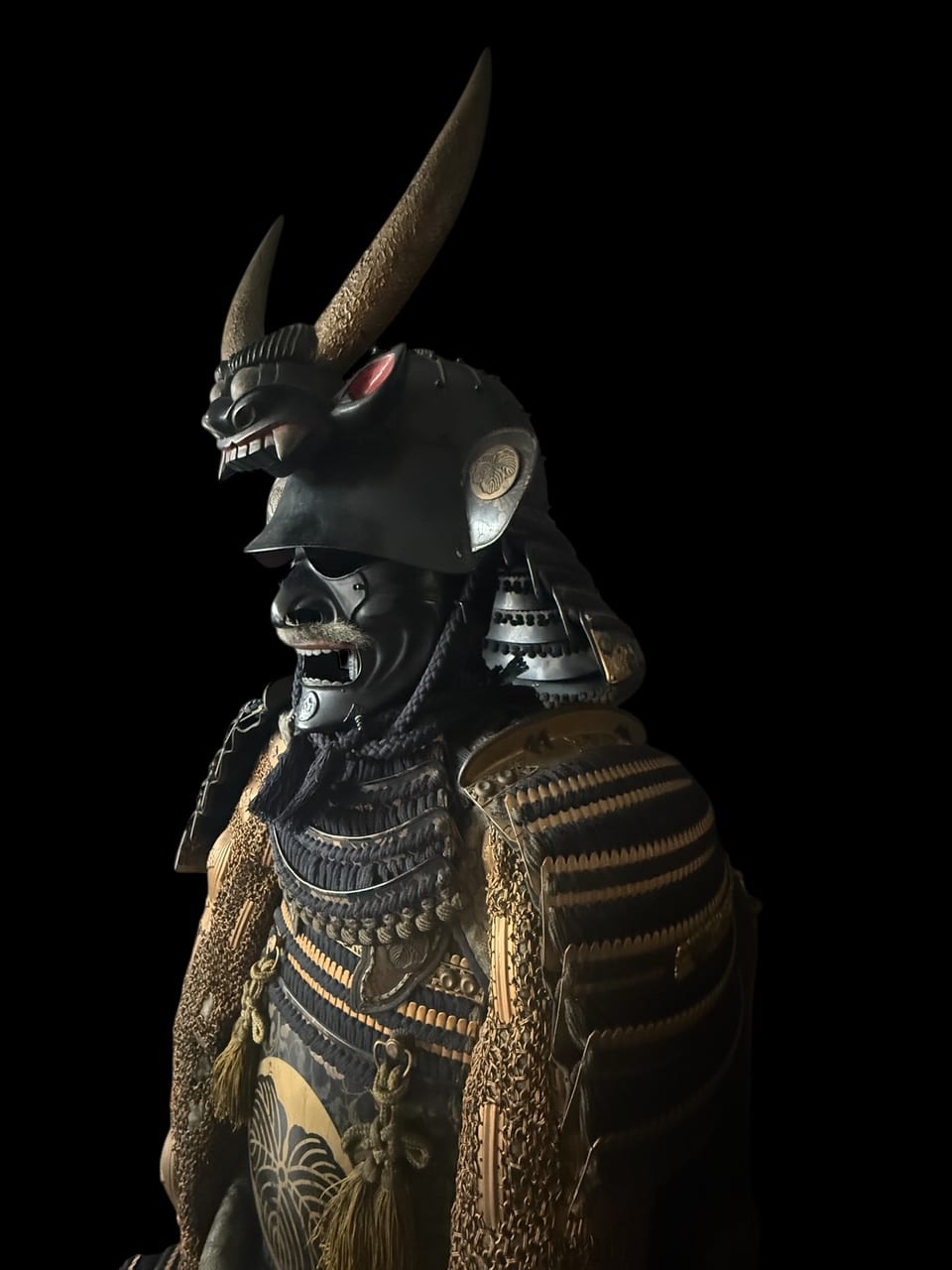
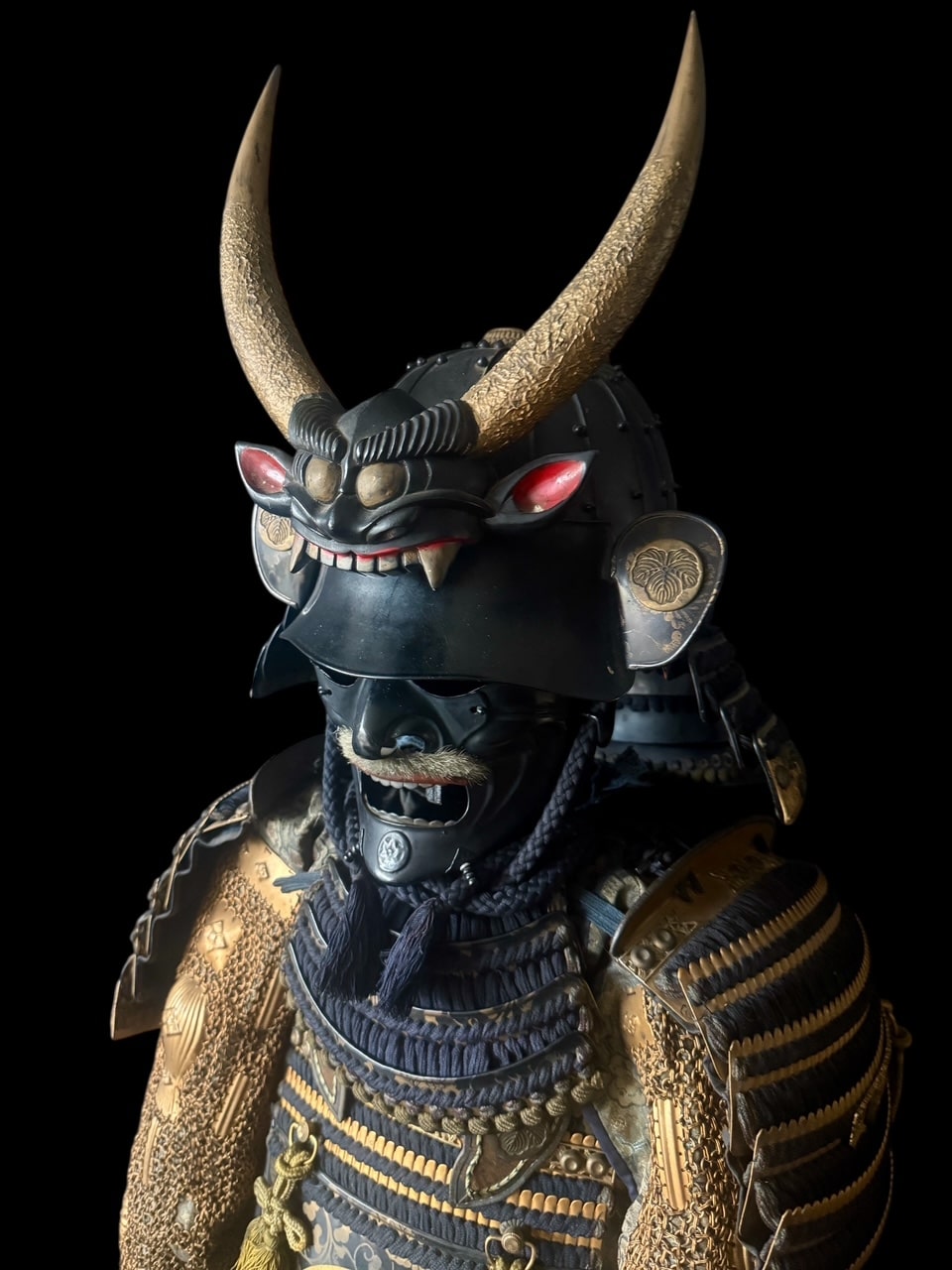
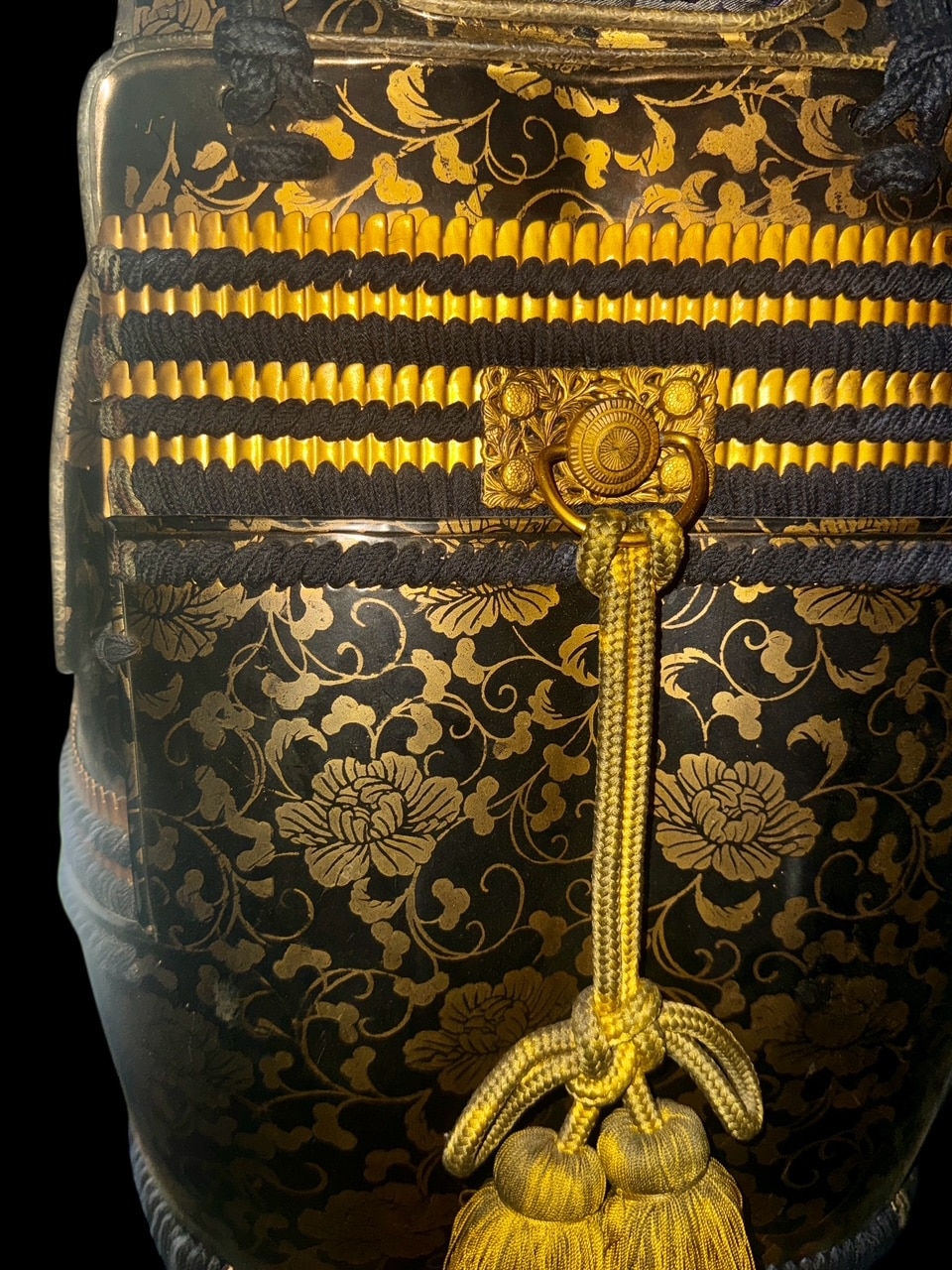
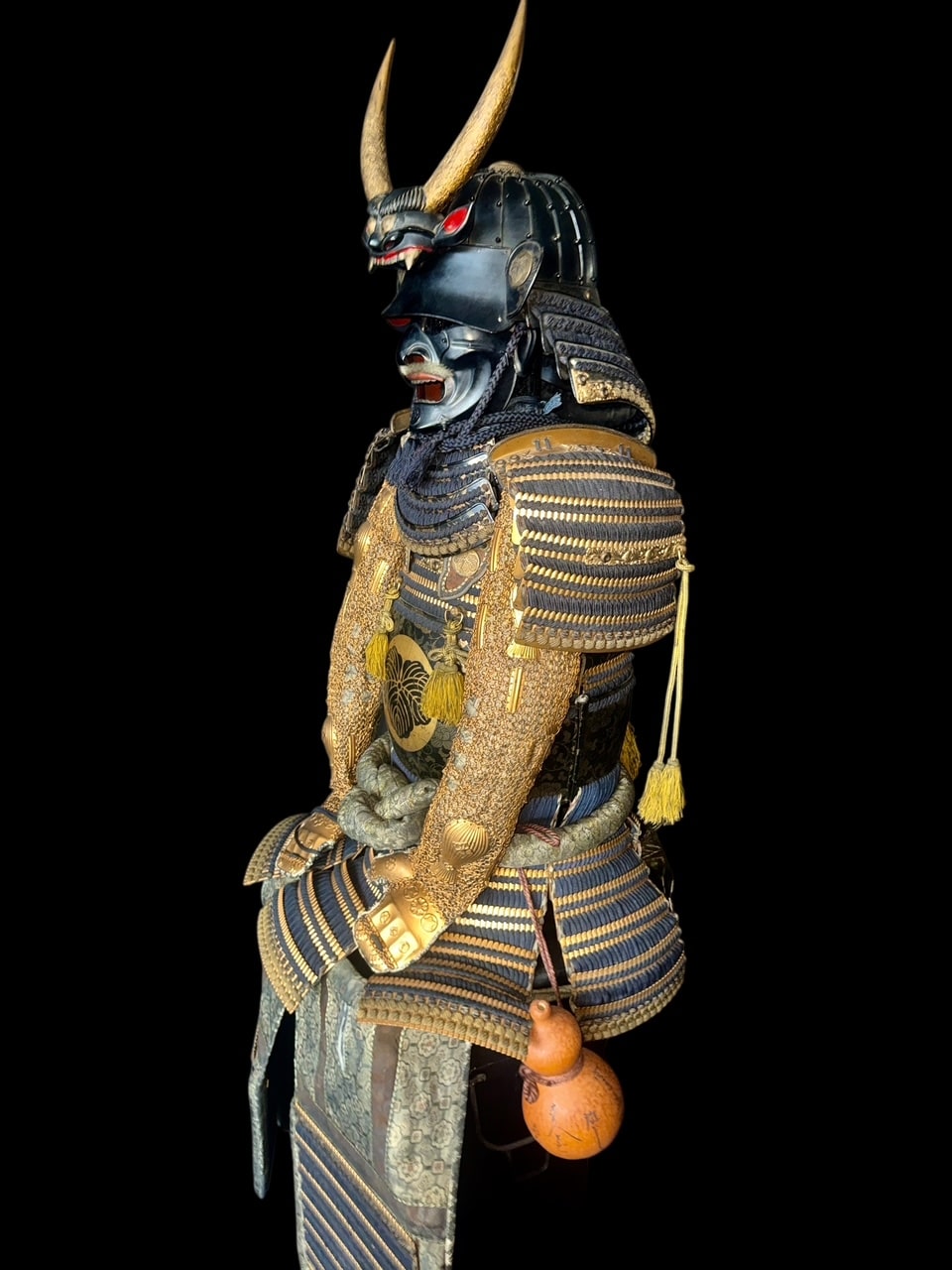
This impressive Japanese iron samurai armor (yoroi/gusoku) dates from the transitional period between the late Edo and early Meiji eras, a time when traditional martial culture was still meticulously preserved despite Japan’s rapid modernization. The armor is accompanied by its original yoroi-bitsu (armor storage chest), decorated with the distinguished Ishimochi-Jinuki Tsuta kamon, an ivy-family crest traditionally associated with resilience, longevity, and deep-rooted strength.
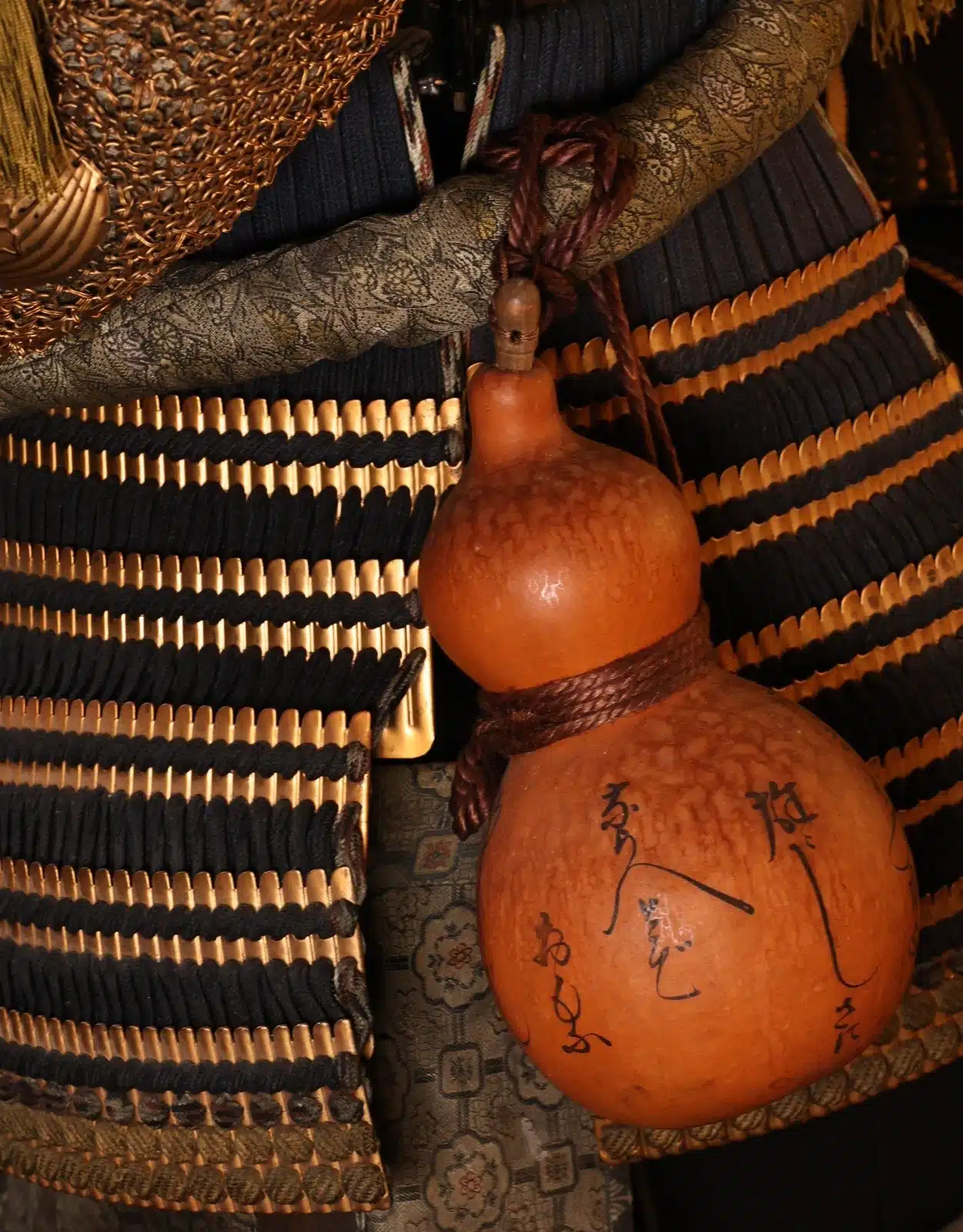
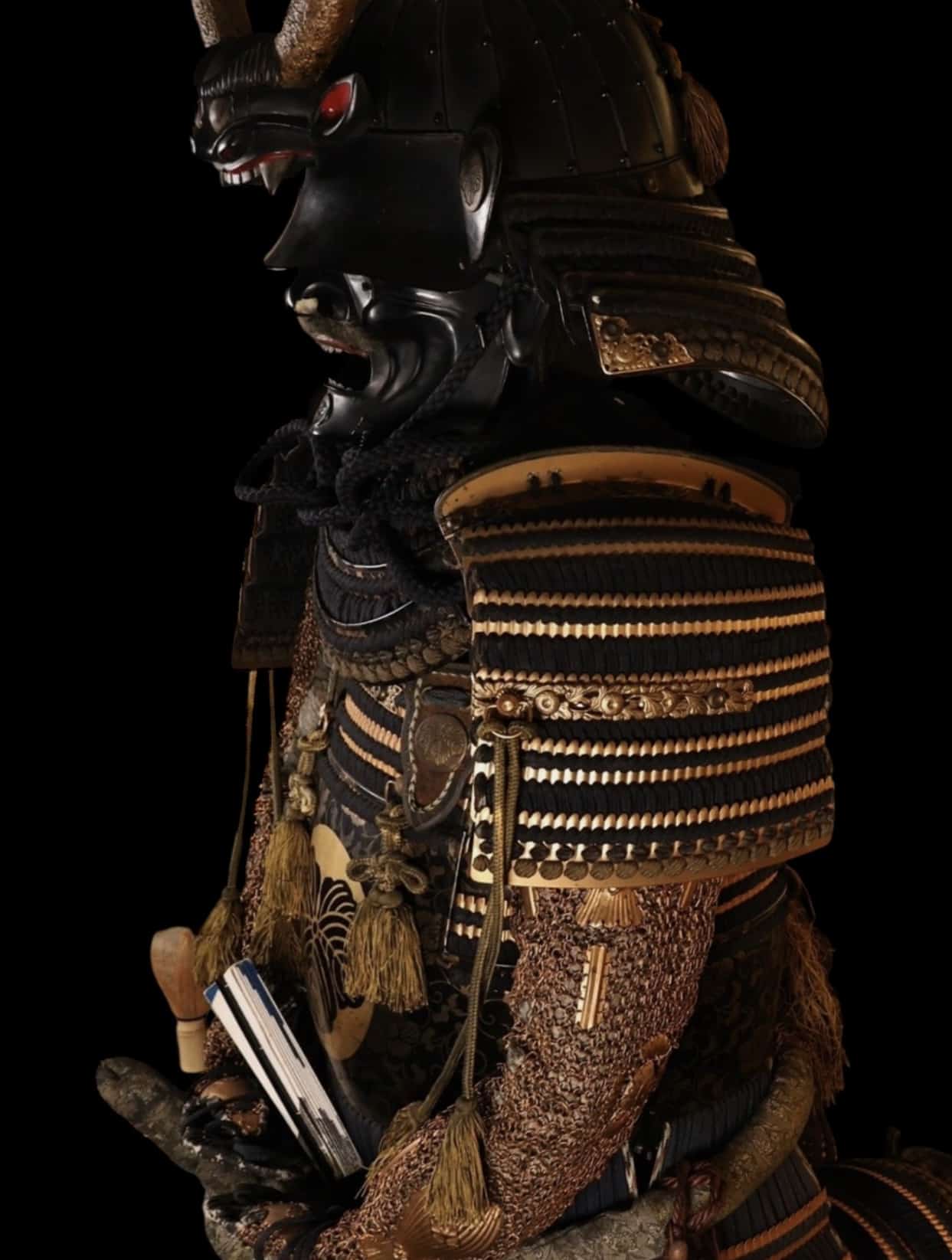
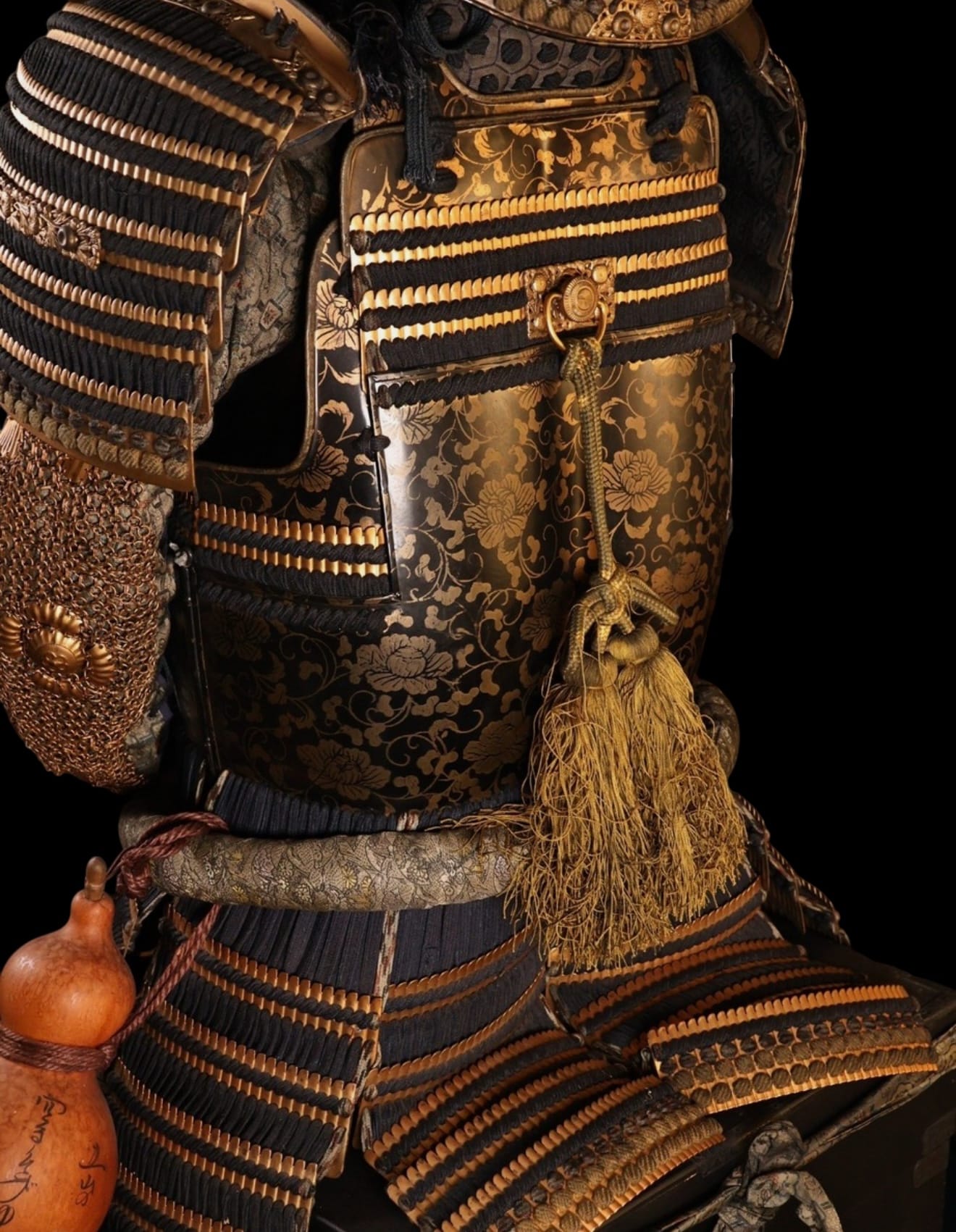
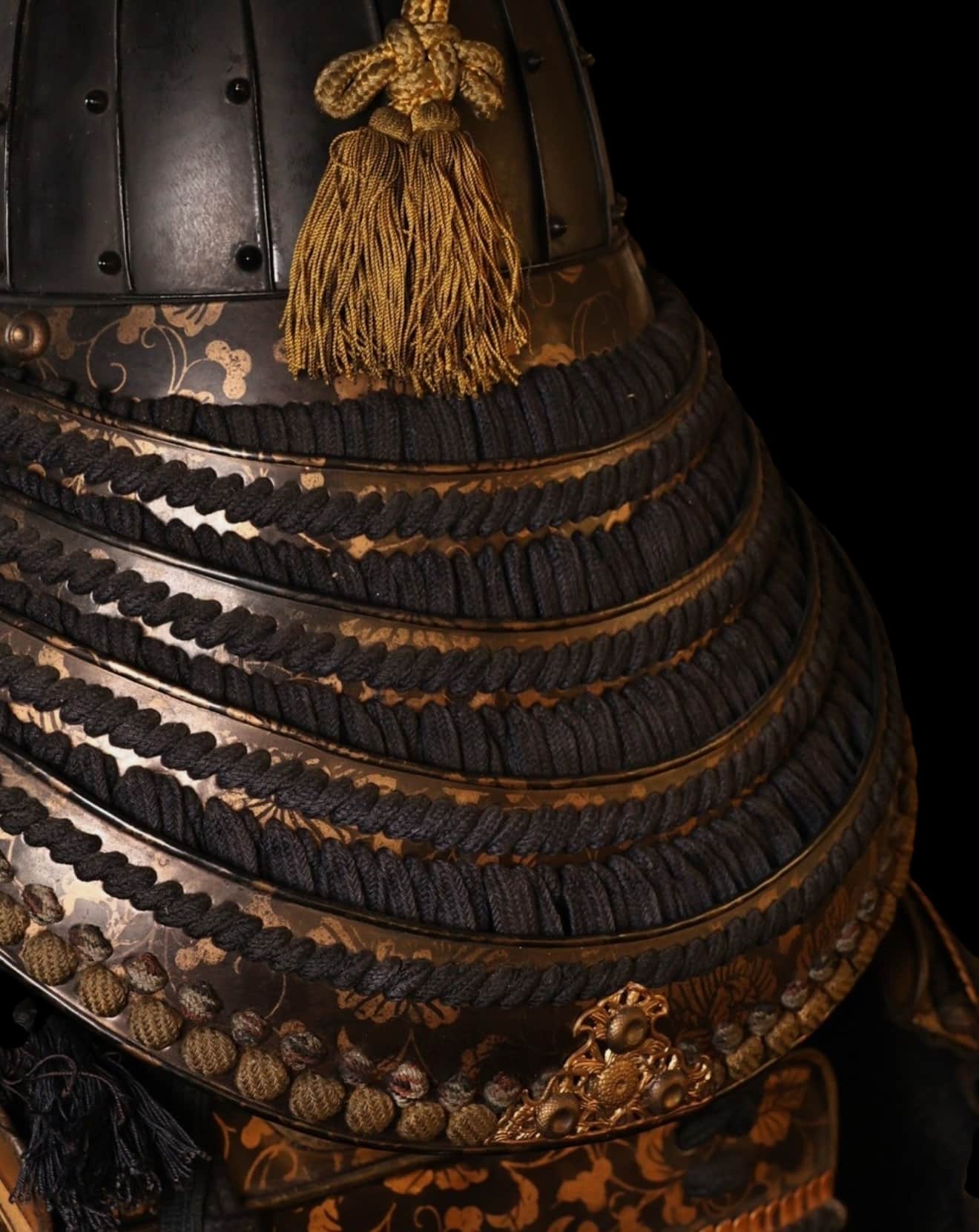
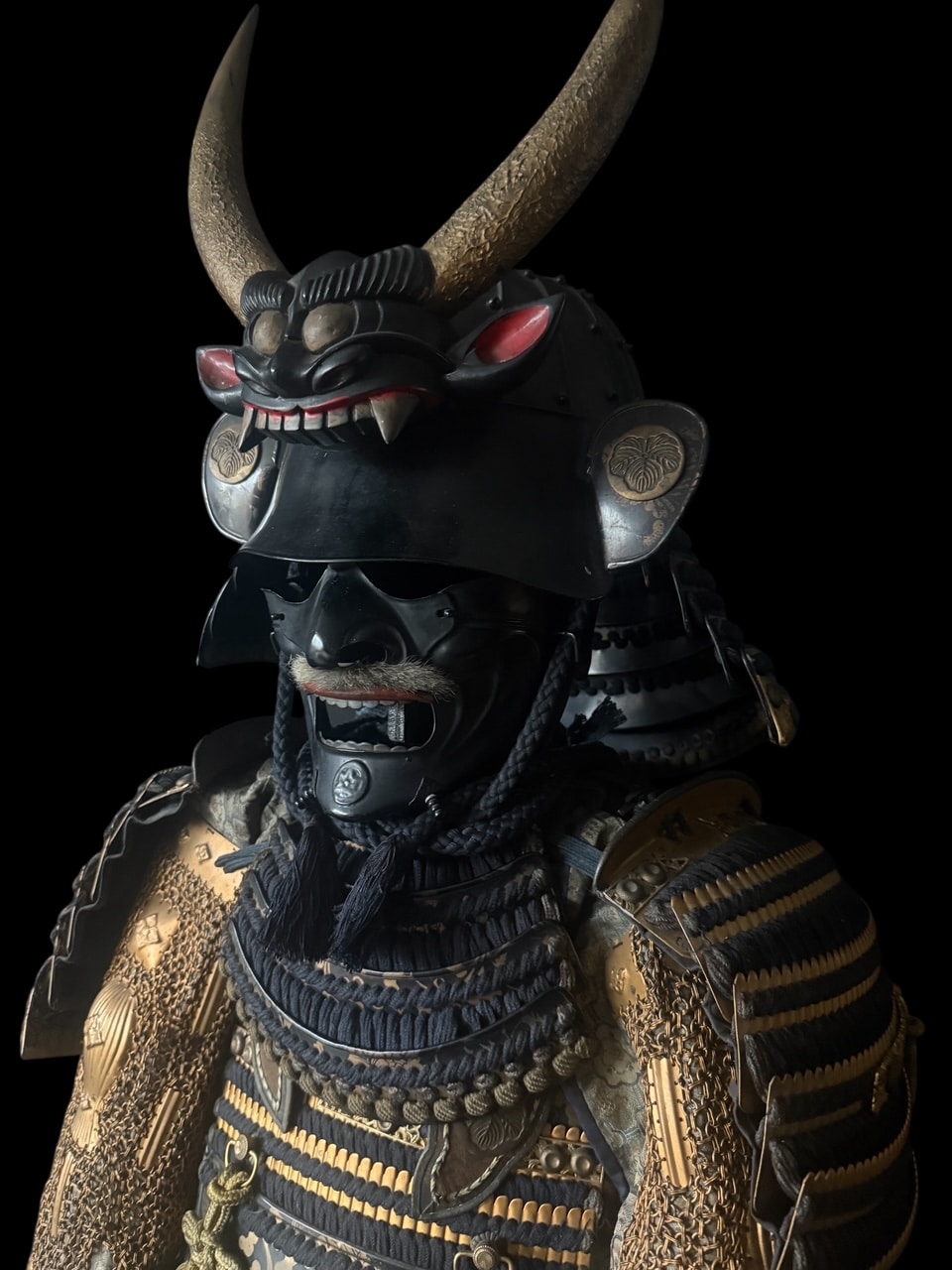
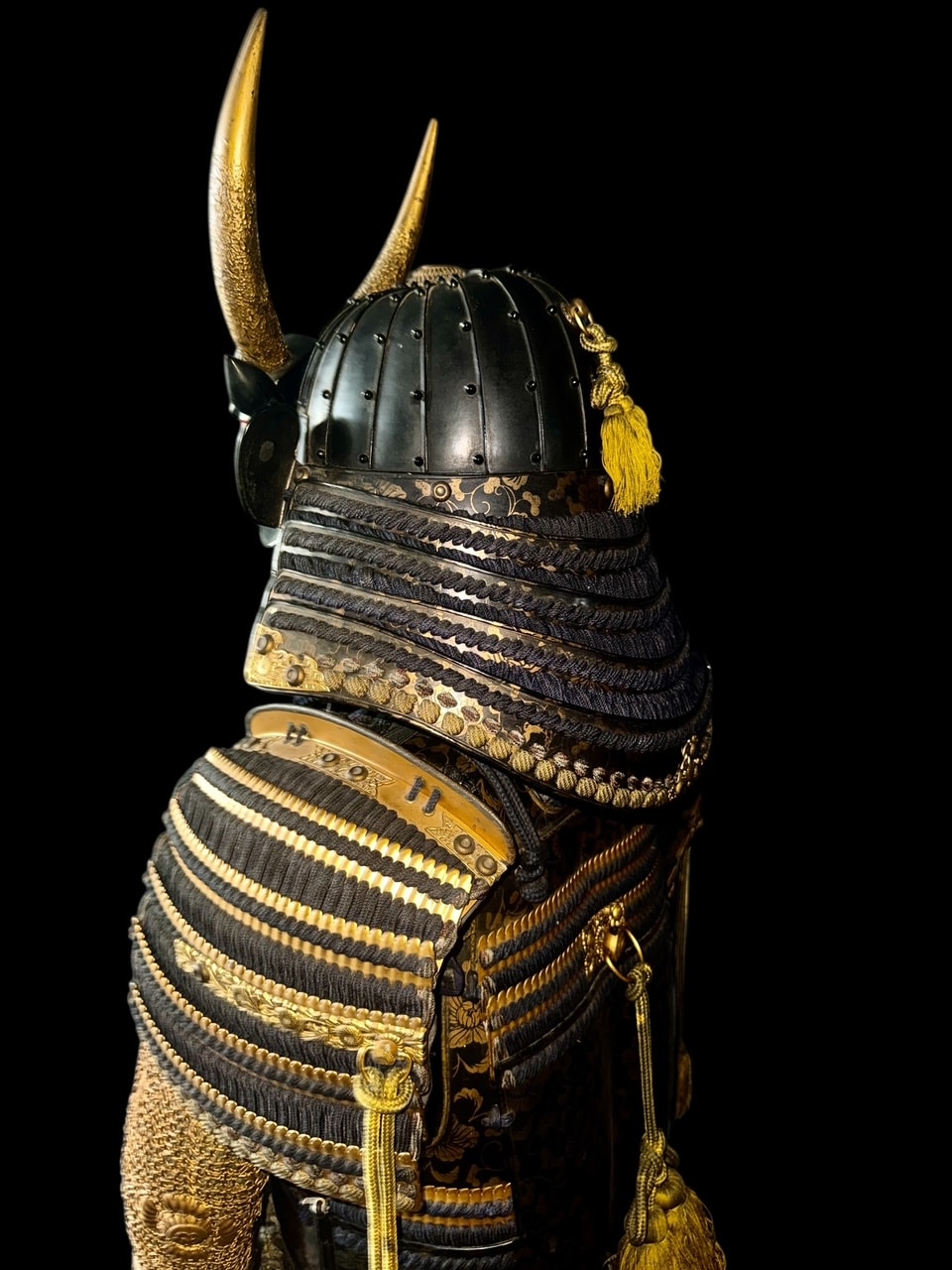
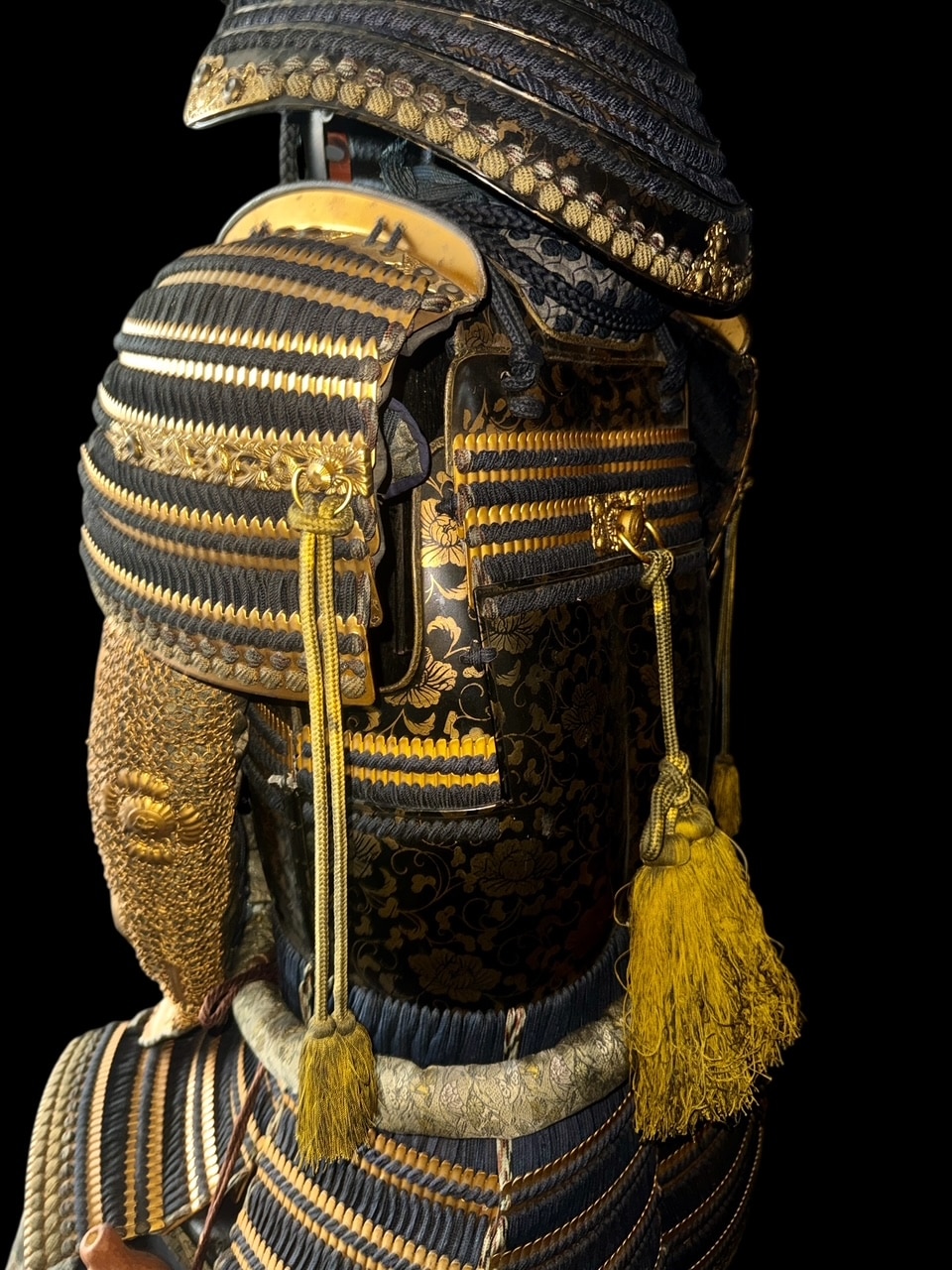
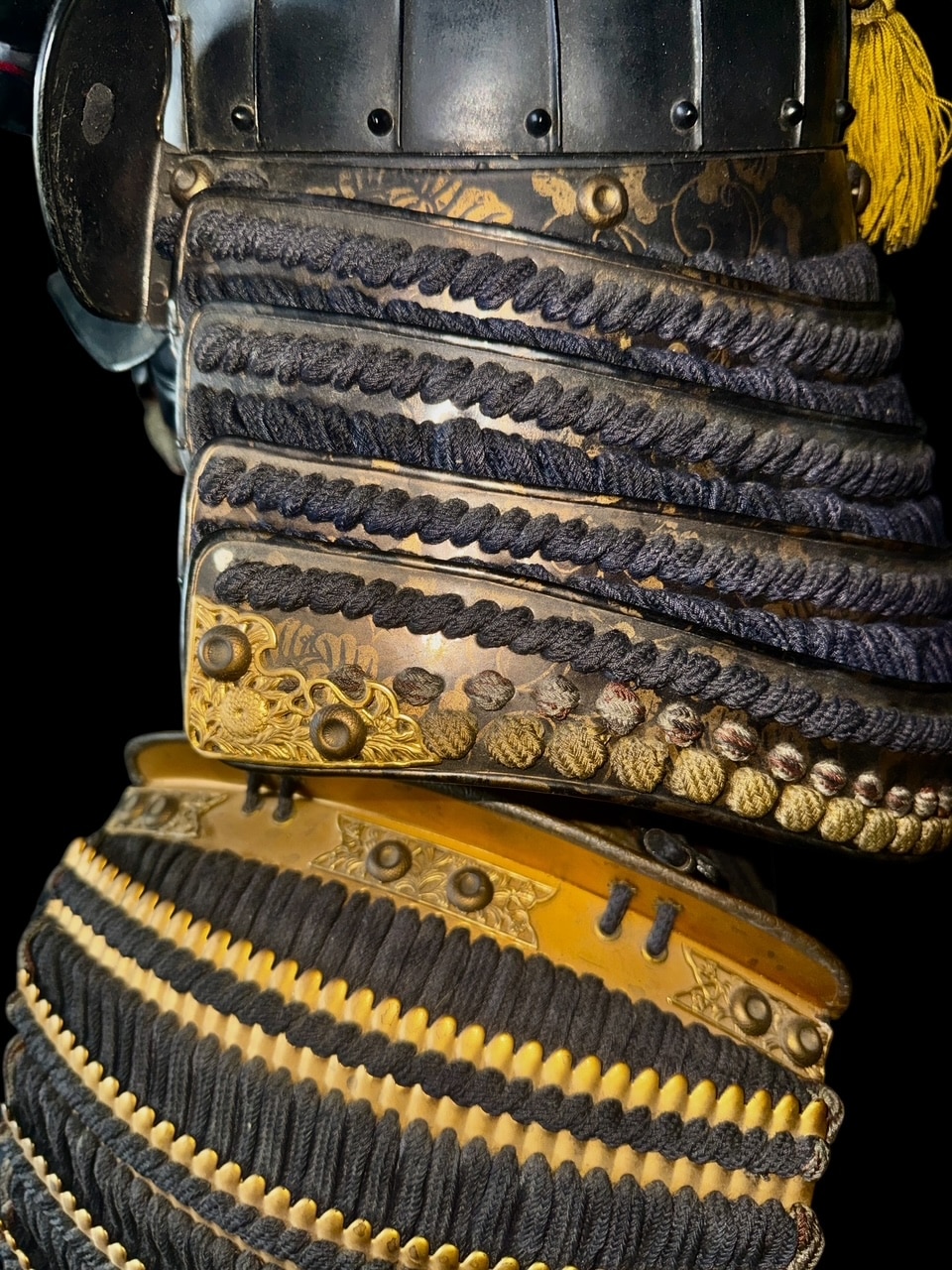
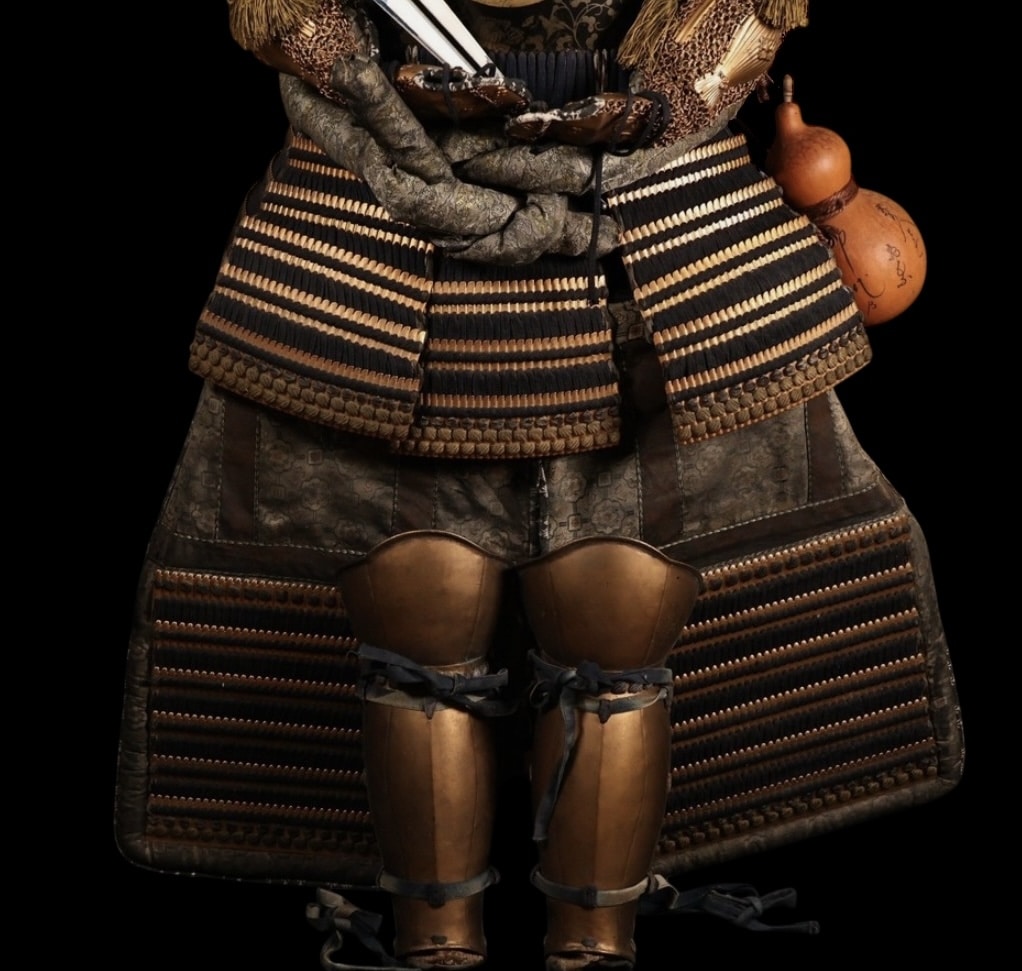
Constructed on a robust iron framework, the armor displays authentic period craftsmanship. The lacquered iron plates, layered construction, and traditional silk lacing exemplify the refined techniques employed by late samurai armorers, who continued to honor classical aesthetics even as the practical use of armor declined. The balance between strength and elegance is characteristic of high-quality armors from this era.
The kabuto is crowned with a dramatic shishi-gami maedate, depicting a fierce lion biting motif. This powerful crest gives the helmet a commanding and aggressive presence, symbolizing vigilance, protection, courage, and martial authority. Such bold maedate were often reserved for high-ranking warriors or ceremonial display, intended to project strength and intimidate opponents.
When fully assembled and displayed, the armor reaches an imposing height of 160 cm, creating a striking visual impact. Its scale and presence make it particularly suitable as a centerpiece for museum exhibitions, private collections, martial arts dōjō, or refined interior spaces with a strong historical or Japanese aesthetic.
As an authentic historical artifact, the armor exhibits scratches, areas of oxidation, and a natural patina developed through age and long-term storage. These features are entirely consistent with genuine period armor and significantly enhance its historical character. Importantly, the structure remains stable and well-suited for full-height display.
Complete armor sets from the Late Edo–Meiji transition, especially those retaining their original family crest, maedate, and storage chest, are increasingly scarce. This example represents a rare and valuable opportunity for collectors seeking an authentic and visually commanding piece of samurai history.
Displayed Assembly Size
Height: 160 cm (63.0 in)
Width: 74 cm (29.1 in)
Depth: 60 cm (23.6 in)
KvK: 51964147
C.W. Slok - Kyodai Originals
Bank: NL25 KNAB 0509 1310 18
BIC: KNABNL2H
© 2026 Kyodai Originals is made with ❤ by Nieuwblik.com


